石化

Search documents
中晟高科控制权变更之际,中景石化全球最大烷烃基地投产,产业互补脉络渐清晰
Zheng Quan Zhi Xing· 2025-07-28 03:15
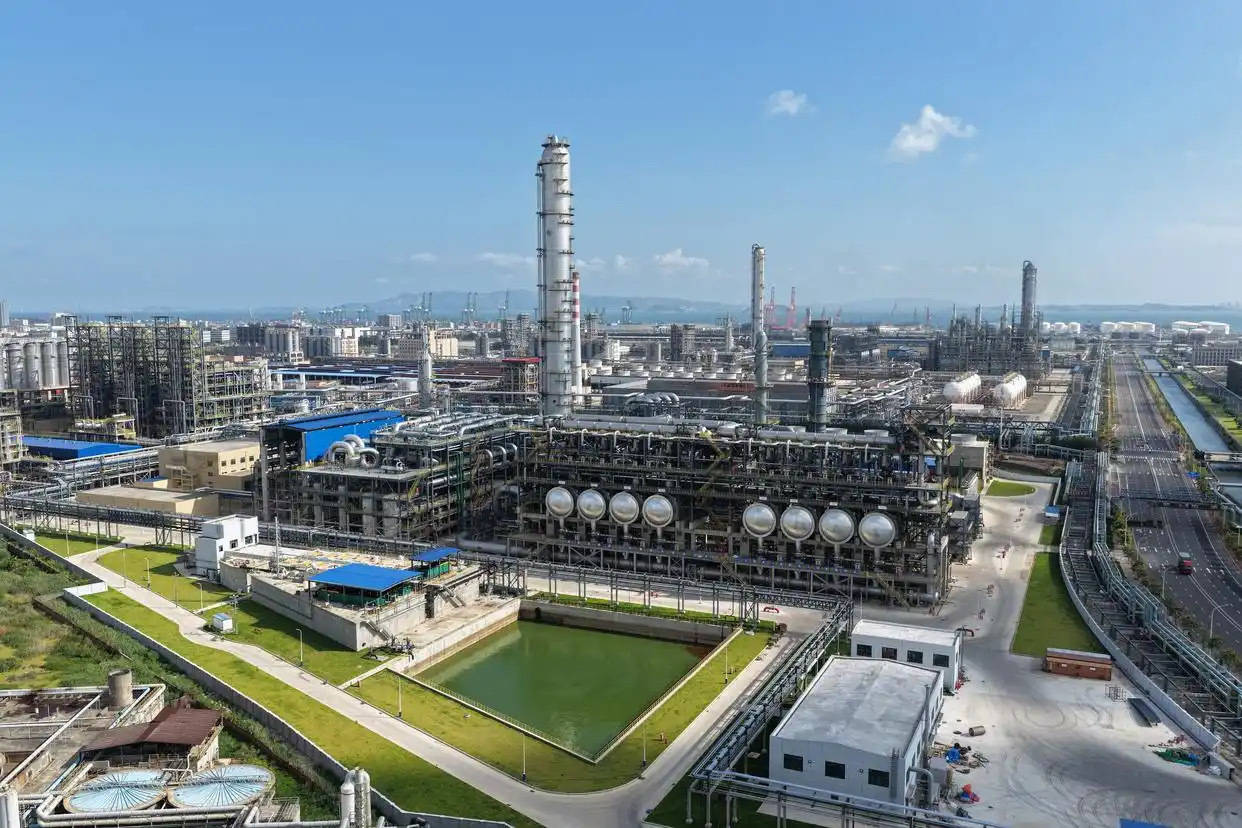
Core Viewpoint - The launch of the world's largest integrated propane production base by Zhongjing Petrochemical marks a significant leap for China in the high-end petrochemical sector, establishing a unique four-level carbon three industrial chain [2][5]. Group 1: Project Overview - The integrated production base in Fuzhou has a total investment of 30 billion yuan and an annual production capacity of 2.8 million tons of propylene and 3.8 million tons of high-performance polypropylene, making it the global leader in both propylene and polypropylene production [1][2]. - The project is expected to generate an annual output value of 60 billion yuan and stimulate over 50 billion yuan in the upstream and downstream industrial chains [2]. Group 2: Technological Advancements - The base has achieved multiple industry records, including 10 global first sets of equipment and 8 national first sets, through collaboration with top international technology firms [2][3]. - The project has successfully completed a full domestic transition from engineering design to intelligent manufacturing, setting a benchmark for the global petrochemical industry [2]. Group 3: Environmental Initiatives - The production facility emphasizes green production, achieving a 40% increase in energy utilization and a 30% reduction in carbon emissions through a circular economy model [3]. - The integration of environmental services from Zhongsheng High-Tech complements the petrochemical production process, addressing environmental challenges associated with large-scale petrochemical projects [3][5]. Group 4: Capital and Strategic Moves - The acquisition of a 22.35% stake in Zhongsheng High-Tech by Fuzhou Qianjing for 559 million yuan positions it as the controlling shareholder, linking it closely to Zhongjing Petrochemical [1][4]. - This strategic move is seen as part of a broader lifecycle management strategy for the carbon three industrial chain, enhancing the synergy between Zhongjing Petrochemical's production and Zhongsheng High-Tech's environmental services [5].

总投资300亿元!全球最大的烷烃一体化生产基地在闽建成投产
Sou Hu Cai Jing· 2025-07-28 02:13
Group 1 - The project has a total investment of 30 billion yuan, with an annual output value of 60 billion yuan, and can drive the upstream and downstream industry chain output value by over 50 billion yuan [2] - The produced propylene is essential for modern organic synthesis and is primarily used in polypropylene, acrylic acid, epoxy propane, and butanol [2] - Zhongjing Petrochemical is the world's largest producer of biaxially oriented polypropylene (BOPP) films, with five soft packaging production bases and 18 world-class production lines [2] Group 2 - The project is a showcase of high-end petrochemical industry innovation in China, collaborating with top international technology firms to achieve breakthroughs in key technologies [3] - The project has set records for the largest capacity and smallest footprint in the global polypropylene industry, enhancing energy efficiency by 40% and reducing carbon emissions by 30% [3] - The facility will utilize a significant amount of by-product hydrogen to produce new chemical materials, including BDO, which is used in lithium batteries and biodegradable plastics [4] Group 3 - The total investment for the BDO production project is 18 billion yuan, with an expected annual output value exceeding 60 billion yuan, aiming for full production within three years [4] - The project is projected to reduce industry chain costs by approximately 2.5 billion yuan annually [4]

中国思考-反内卷,药引与根治
2025-07-28 01:42
Summary of Key Points from the Conference Call Industry Overview - The report discusses the concept of "anti-involution" in the context of China's economic landscape, particularly focusing on the supply-side challenges that are more complex compared to the previous cycle from 2015 to 2018 [2][3]. Core Insights and Arguments 1. **Policy Signals**: There is a notable increase in policy signals regarding "anti-involution," with comparisons made to the supply-side reform 1.0 period. The current challenges differ significantly from those faced between 2015 and 2018 due to changes in industry competition and macroeconomic conditions [2][3]. 2. **Structural Reforms Needed**: To achieve lasting results in anti-involution, there is a consensus on the necessity for deeper structural reforms, including adjustments to local incentive mechanisms and tax reforms aimed at rebalancing towards consumption [3][10]. 3. **Recent Government Actions**: - On July 16, the State Council emphasized a combination of short-term and long-term measures to regulate competition in the new energy vehicle sector. - On July 18, the State Administration for Market Regulation held discussions with major food delivery platforms. - The Ministry of Industry and Information Technology announced supply-side reforms in ten key industries, including non-ferrous metals and petrochemicals [7]. 4. **Market Signals Ignored**: The report highlights that part of the competition's involution is due to ignored market signals, leading to continued capacity expansion despite falling prices [10]. 5. **Historical Context**: The report draws parallels between the current economic situation and past experiences, noting that anti-involution will not be a quick fix. The GDP deflator index has been negative for nine consecutive quarters since Q2 2023, indicating entrenched deflationary pressures [11]. 6. **Capacity Utilization and Industry Dynamics**: The report notes that the current overcapacity is largely in emerging industries, with 50-90% of capacity owned by the private sector, making administrative capacity reduction more challenging compared to the previous cycle [11][19]. 7. **Potential for Mergers and Acquisitions**: There is an expectation for large enterprises in the polysilicon industry to form acquisition funds to consolidate smaller firms, although execution remains uncertain due to declining demand and high inventory levels [12]. 8. **Gradual Progress Expected**: The report suggests that while some upstream industries may see moderate consolidation, the urgency for adjustment is lower compared to previous reforms [17][20]. 9. **Reform Timing and Delays**: The implementation of formal plans for capacity reduction may experience delays of 3-8 months, reflecting the complexities of the current economic environment compared to the 2015-2018 period [20]. Other Important Insights - **Demand Recovery Limitations**: The report indicates that the cyclical growth may fluctuate at lower levels due to debt and demographic challenges, with limited upside for demand recovery without decisive stimulus measures [18]. - **Need for Comprehensive Policy Mix**: The optimal policy combination would involve more aggressive demand rebalancing measures alongside faster structural reforms to achieve sustainable re-inflation [24]. - **Caution Against Overly Aggressive Measures**: The report warns that overly aggressive capacity reduction without sufficient demand support could lead to deeper deflation after a brief improvement in prices [24]. This summary encapsulates the key points discussed in the conference call, providing insights into the current state of the industry and the anticipated direction of policy and economic reforms in China.
韩国压力山大!美日贸易细则或成美韩关税谈判“风向标”
Di Yi Cai Jing· 2025-07-27 05:27
Group 1 - The core agreement between the US and Japan involves a 15% tariff on Japanese imports, with a total investment commitment of $550 billion from Japan to the US [2][4] - The agreement includes a 12.5% tariff on Japanese automobiles, in addition to a previous 2.5% tariff, totaling 15%, while steel and aluminum tariffs remain at 50% [2][4] - There are ongoing disputes regarding the details of the agreement, particularly concerning the implementation date of the 15% tariff and the interpretation of the $550 billion investment [4][5] Group 2 - Japan plans to increase its import of US rice by 75%, which will raise the total import volume to approximately 600,000 tons, while maintaining a minimum market access quota [6] - The agreement also includes significant commitments in agriculture, energy, manufacturing, and aerospace, with Japan agreeing to purchase $8 billion worth of US goods [5][6] - The Japanese government emphasizes that the increase in rice imports will not harm domestic farmers, despite concerns about the impact on local agriculture [6] Group 3 - South Korea is under pressure to negotiate a similar agreement with the US, especially in light of the recent US-Japan deal [7][8] - The new South Korean government is considering leveraging a planned investment of over $100 billion by Korean companies in the US as a bargaining chip in trade negotiations [7][8] - If South Korea fails to reach a new agreement before the August 1 deadline, a 25% tariff could severely impact its industries, particularly in sectors like semiconductors and automobiles [8][9]

拓外贸出口动能向优向新 引外资中国市场磁吸力强
Zhong Guo Fa Zhan Wang· 2025-07-26 09:07
Group 1: Trade Performance - Since the launch of the China-Europe Railway Express in 2013, the Manzhouli railway port has seen a cumulative traffic of over 30,000 trains, sending nearly 3 million TEUs, accounting for about 30% of the national total [1] - In the first half of this year, China's total import and export trade reached 21.79 trillion yuan, a year-on-year increase of 2.9%, with exports at 13 trillion yuan, growing by 7.2% [1] - The export of electromechanical products reached 7.8 trillion yuan, a year-on-year increase of 9.5%, making up 60% of total exports [1] Group 2: Foreign Investment - In the first half of 2025, 30,014 new foreign-invested enterprises were established in China, a year-on-year increase of 11.7% [2] - Direct investment net inflow from equity nature reached 31.1 billion USD, a year-on-year increase of 16% [2] - Foreign enterprises contributed significantly to China's economic growth, with foreign-invested enterprises' import and export volume reaching 6.32 trillion yuan, a year-on-year increase of 2.4% [5] Group 3: Private Enterprises - Private enterprises are the main force in exports, with their import and export volume reaching 12.48 trillion yuan, a year-on-year increase of 7.3%, accounting for 57.3% of China's foreign trade [3] - The equipment manufacturing sector, particularly in shipbuilding, automobiles, and specialized equipment, has seen double-digit growth in exports [3] Group 4: Market Dynamics - The "export rush" phenomenon has contributed to the growth in trade, with exports to non-U.S. countries maintaining rapid growth, particularly to ASEAN and the EU, with year-on-year increases of 13.0% and 6.6% respectively [4] - The net export of goods and services contributed 1.7 percentage points to China's economic growth, which is 1.0 percentage points higher than the previous year [4] Group 5: Future Outlook - Experts indicate that while the first half of the year showed resilience in foreign trade, the second half will face multiple uncertainties, including global unilateralism and protectionism [7] - The "export rush" effect may continue to drive export growth, but uncertainties in U.S. tariff policies could impact future trade dynamics [7] - The Chinese market remains an attractive option for foreign investment, with significant projects being launched, indicating a strong commitment from foreign enterprises [6]

李在明知道不能再等了,急忙派出团队直奔美国,却又被放了鸽子
Sou Hu Cai Jing· 2025-07-26 06:16
Group 1 - The core point of the article is that the recent trade agreement between the U.S. and Japan under Trump's administration may set a precedent for future negotiations between the U.S. and South Korea, complicating South Korea's economic situation [1][3][4] - Japan has agreed to invest $550 billion in the U.S. and accept a 15% tariff, which is significantly lower than the initially proposed 24% [3] - The agreement includes Japan easing import restrictions on U.S. agricultural products, indicating a "divide and conquer" strategy by the U.S. [3][11] Group 2 - South Korea's economic structure is similar to Japan's, with major exports to the U.S. including automobiles, semiconductors, and petrochemicals, leading to a trade surplus of $55.7 billion in 2024 [6] - South Korea faces increasing economic pressure, with a potential 25% tariff on all exports to the U.S. if no agreement is reached by August 1 [6][7] - The South Korean government is aware of the urgency and has decided to send officials to the U.S. for emergency negotiations to avoid high tariffs [7][12] Group 3 - A planned economic consultation between South Korea and the U.S. was unexpectedly postponed, raising concerns about U.S. intentions to apply more pressure on South Korea [9][11] - Analysts suggest that the U.S. may be waiting for a more favorable political climate to negotiate, reflecting a strategic consideration in its dealings with South Korea [9][11] Group 4 - The South Korean government has decided not to use the opening of rice and beef markets as negotiation leverage, opting instead to consider increasing imports of energy crops from the U.S. [12][14] - This decision is influenced by strong opposition from domestic agricultural groups against opening markets for U.S. agricultural products [14][16] - South Korea aims to enhance cooperation in industrial and energy sectors with the U.S., focusing on importing U.S. corn for bioethanol production, which aligns with its energy transition goals [16][18] Group 5 - The strategy of increasing energy crop imports faces challenges, including the time and investment required for implementation and the need for further negotiations with the U.S. [19] - South Korea must balance its trade relationships with other countries while addressing the pressures from the U.S. [19]
商务部:中国将与阿拉伯国家拓展光伏等可再生能源合作
Zhong Guo Xin Wen Wang· 2025-07-25 13:30
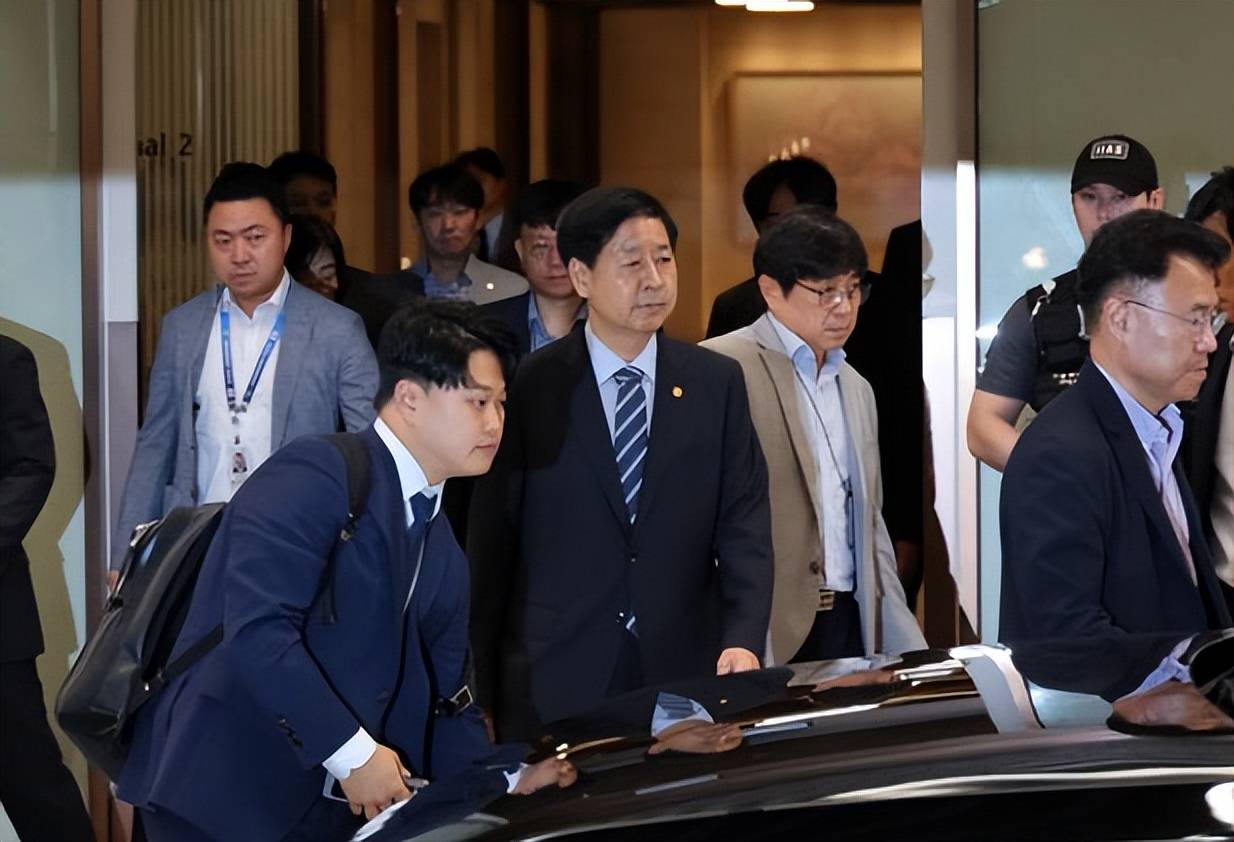
Group 1 - The Chinese Ministry of Commerce aims to strengthen traditional energy cooperation with Arab countries while expanding collaboration in renewable energy sectors such as photovoltaics, wind power, and green hydrogen [1] - The upcoming 7th China-Arab States Expo will be held from August 28 to 31 in Yinchuan, Ningxia, with a focus on innovation, green development, and prosperity [2] - In 2024, the trade volume between China and Arab countries is projected to reach $407.4 billion, reflecting a year-on-year growth of 2.3%, maintaining China's position as the largest trading partner of Arab nations [1] Group 2 - Chinese enterprises are actively investing in various production projects in Egypt, UAE, and Saudi Arabia, including metal smelting, building materials manufacturing, cotton spinning, and aquaculture [1] - There is a growing trend of mutual investment, with Arab sovereign wealth funds and companies investing in China's petrochemical, new energy, and technology sectors [1] - The economic structures of China and Arab countries are complementary, with significant potential for future cooperation in traditional sectors like energy, agriculture, and infrastructure, as well as emerging fields such as new energy vehicles, high-end equipment manufacturing, and green low-carbon technologies [1]
【金十期货热图】中国丙烯产能已占全球42%,还是全球最大的消费国,进口依赖度还高吗?一图了解。
news flash· 2025-07-25 12:29
金十期货热图 中国丙烯产能已占全球42%,还是全球最大的消费国,进口依赖度还高吗?一图了解。 18.02% 华东/ 31.13% r (1) 4.50% स्ट इ 17.52% 02 。2024年中国丙烯生产工艺分布 从工艺路线来看,传统油制路线的催化裂化和蒸汽裂解仍是国内丙烯主流 生产工艺,但PDH工艺发展速度极快,已经成为占比仅次于油制路线的工 艺。 催化裂化 丙烷脱氢(PDH) 32.3% 17.6% 中国丙烯 蒸汽裂解 煤/甲醇制 生产工艺分布 33.7% 16.4% 2024 03 · 2024年全球丙烯产能分布 东北亚 52.7% PE IX 北美 8.4% 12.8% 中京 中国 7.0% 42% 04 · 中国丙烯产能变化以及分布 中国丙烯进口量(万吨) 丙烯进口量 丙烯进口量增速 300 4% 250 0% 200 -40/0 150 -8% 100 -12% 50 -14% 0 -18% 2020年 2021年 2022年 2023年 2024年 随着国内装置的持续增加,进口依存度持续下滑,据统计2024年,中国丙 烯进口依存度降至3.65%。 中国丙烯表观消费量(万吨) 丙烯表观消费量 ...

中国股票策略 -多重积极进展推动 A 股市场情绪回升China Equity Strategy-A-Share Sentiment Rose on Several Positive Developments
2025-07-25 07:15
Summary of Key Points from the Conference Call Industry Overview - The focus is on the **A-share market** in China, with a particular emphasis on investor sentiment and regulatory developments impacting the market [1][4]. Core Insights and Arguments - **Improved Investor Sentiment**: A-share investor sentiment has improved significantly, with the weighted Morgan Stanley A-share Sentiment Indicator (MSASI) rising by **10 percentage points** to **90%**, and the simple MSASI increasing by **13 percentage points** to **83%** compared to the previous cutoff date [2][6]. - **Increased Market Activity**: Average daily turnover (ADT) for ChiNext and A-shares increased by **11%** and **5%**, respectively, indicating heightened trading activity [2]. - **Net Inflows**: Southbound trading recorded net inflows of **US$2.1 billion** from July 17-23, contributing to year-to-date net inflows of **US$101.4 billion** [3]. - **Regulatory Developments**: The Chinese government's anti-involution campaign has positively influenced market sentiment, with various regulatory bodies taking steps to manage excessive competition in key industries, including the NEV sector and online food delivery platforms [4]. - **US-China Trade Relations**: Progress in US-China trade negotiations has further bolstered market sentiment, with upcoming economic talks scheduled [4]. Additional Important Insights - **Earnings Guidance**: Despite a challenging macroeconomic backdrop, earnings guidance for Q2 2025 has shown resilience, with A-share pre-announcements improving to **-4.8%** and MSCI China rising by **6.8%** [14]. - **Caution on Overheating**: There is a warning against overestimating the potential for earnings growth recovery, suggesting that a rapid surge in consensus earnings estimates could indicate overly optimistic market expectations [16]. - **Consumer Sentiment**: The MS Consumer Pulse Survey indicates a continued lackluster consumer appetite, with concerns around job and income growth deepening in Q2 [13]. - **Long-term Outlook**: The anti-involution initiative is viewed as a constructive signal for enhancing earnings growth and improving return on equity (ROE) over the next **12-24 months**, although real change may require significant adjustments in local incentives and fiscal policies [15]. Conclusion - The A-share market is experiencing a positive shift in sentiment driven by regulatory support and improving trade relations, although caution is advised regarding the sustainability of this momentum and the underlying consumer sentiment challenges.
大规模设备更新首批1730亿落地,哪些仪器/领域收益了?
仪器信息网· 2025-07-25 03:02
Core Viewpoint - The new large-scale equipment update and consumer goods replacement policy in China, initiated in 2024, is set to significantly boost economic development by expanding funding support and coverage areas, aiming for a 25% increase in equipment investment across seven major sectors by 2027 [1][5]. Group 1: Policy Dynamics and Key Points - The funding scale for equipment updates has been expanded to 200 billion yuan, with the first batch of approximately 173 billion yuan allocated to 7,500 projects across 16 sectors [2][5]. - The second batch of funding, amounting to 81 billion yuan, is being reviewed for projects focusing on consumer goods replacement and equipment updates [5]. - The 2025 policy introduces new support areas such as electronic information and safety production, creating a "16+N" coverage system [5][8]. Group 2: Implementation Mechanism Optimization - The policy has removed the previous investment threshold of 100 million yuan for projects, lowering the entry barrier for small and medium-sized enterprises [5][7]. - A dual review mechanism of "local audit + national review" has been established to streamline the approval process [5][7]. - New upgrade directions in the energy and power sector include ten specific areas, enhancing the efficiency and safety of energy facilities [8][9]. Group 3: Comparison of 2024 and 2025 Policies - The 2024 policy focused on seven key sectors, while the 2025 policy expands to 16 sectors with a dynamic expansion mechanism [7]. - The funding intensity has increased with an additional 81 billion yuan and a 1.5% interest subsidy on loans [7]. - The 2025 policy introduces 294 new national standards, enhancing the regulatory framework for project applications [7]. Group 4: Key Supported Areas and Renovation Focus - Major industrial sectors targeted for equipment updates include petrochemicals, steel, non-ferrous metals, and machinery, focusing on replacing outdated equipment and upgrading production lines [8][10]. - Energy facilities will see upgrades in areas such as high-efficiency energy motors and waste heat recovery systems, aimed at reducing energy consumption [8][10]. - Transportation infrastructure will undergo significant updates, including intelligent systems for railways and urban transit, enhancing operational efficiency [10][11].