
纺织服装

Search documents
华利集团:控股股东拟3个月内减持1.5%
Xin Lang Cai Jing· 2025-09-12 11:55
Group 1 - The controlling shareholder, Hong Kong Junyao, holds 973 million shares, representing 83.35% of the total shares [1] - The shareholder plans to reduce holdings by up to 17.505 million shares, which accounts for 1.5% of the total shares, through block trading from October 14, 2025, to January 13, 2026 [1] - The transferee is prohibited from transferring the acquired shares within six months [1]
产业带集体“扬帆” 浙江嘉兴“三件衣服”掘金中东
Zhong Guo Xin Wen Wang· 2025-09-12 09:37
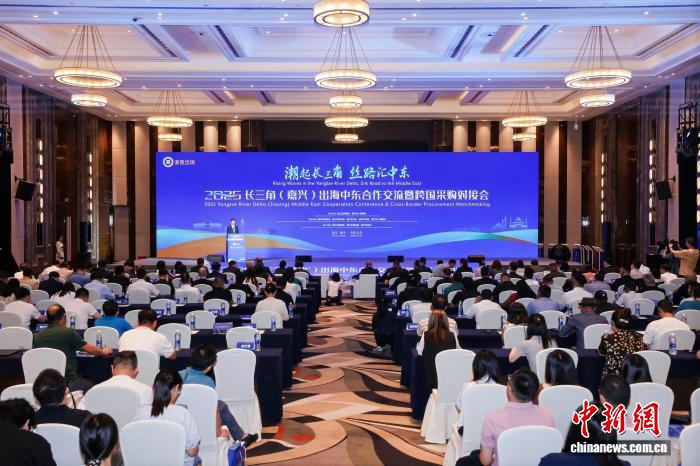
Group 1 - The core viewpoint of the article highlights the growing trade cooperation between Zhejiang and Middle Eastern countries, with a focus on the signing of five foreign trade export projects totaling $105 million, covering sectors such as photovoltaics, textiles, and machinery [1][2] - The trade volume between Zhejiang and Middle Eastern countries reached $83.1 billion in 2024, accounting for 18.45% of China's total trade with the region, with a year-on-year growth of 4.3% in the first half of 2023 [2] - A new service alliance named "Jiaxing Enterprises Going Abroad New Silk Road (Middle East)" was established to provide one-stop services for local companies, facilitating the export of Jiaxing's key industries [2] Group 2 - The event attracted over 300 participants from Middle Eastern business institutions, trade associations, and Zhejiang export service organizations, indicating strong interest in bilateral trade [2] - Notable representatives from countries like Egypt, Dubai, and Jordan emphasized the potential for collaboration in various sectors, including energy and information technology [2] - The establishment of the Haining Chaolai Cross-Border Trade Center aims to support local enterprises in their international expansion efforts [2]

森马服饰(002563):2025H1业绩有所承压,期间费用率提升致利润率下滑
Great Wall Securities· 2025-09-12 09:03
Investment Rating - The investment rating for the company is "Accumulate" [4] Core Views - The company experienced pressure on its performance in the first half of 2025, with a decline in net profit due to increased expense ratios, despite maintaining mid-single-digit growth in retail [1][2] - The company is focusing on retail transformation and expanding its overseas business, emphasizing consumer-centric strategies and brand health management [3] Financial Summary - **Revenue**: The company reported revenue of 13,661 million in 2023, with projections of 15,248 million in 2025 and 16,923 million in 2027, reflecting a growth rate of 2.5% in 2023 and an estimated 4.3% in 2025 [1] - **Net Profit**: The net profit for 2023 was 1,122 million, expected to decline to 926 million in 2025, with a significant drop of 18.6% year-on-year [1] - **Gross Margin**: The gross margin for the first half of 2025 was 46.70%, showing a slight increase of 0.59 percentage points year-on-year [2] - **Net Margin**: The net margin for the first half of 2025 was 5.19%, down by 4.05 percentage points year-on-year due to increased expense ratios [2] - **Store Count**: The company opened 540 stores and closed 629 in the first half of 2025, resulting in a total of 8,236 stores by mid-2025 [2] Business Strategy - The company is committed to a consumer-centric approach, focusing on retail transformation and enhancing operational efficiency through improved supply chain capabilities and product development [3] - The company is expanding its overseas presence, with multiple brands entering emerging markets and achieving growth in both online and offline retail channels [3] Valuation Metrics - The projected EPS for 2025 is 0.34, with corresponding P/E ratios of 16.4 for 2025, 13.3 for 2026, and 11.4 for 2027 [8]

第一上海:维持申洲国际“买入”评级 目标价79.80港元
Zhi Tong Cai Jing· 2025-09-12 07:15
Core Viewpoint - First Shanghai maintains a "Buy" rating for Shenzhou International (02313) with a target price of HKD 79.80, highlighting the company's strong performance despite fluctuations in the sports brand and macroeconomic environment [1] Group 1: Financial Performance - In the first half of 2025, the company's revenue increased by 15.3% to RMB 14.97 billion, driven primarily by volume growth, while prices in USD decreased by 0.8% [2] - Gross margin declined by 1.9 percentage points to 27.1%, mainly due to increased employee compensation in the second half of the previous year [2] - The company recorded a net profit attributable to shareholders growth of 8.4% to RMB 3.18 billion, with an interim dividend of HKD 1.38, maintaining a stable payout ratio of 60% [2] Group 2: Product and Market Performance - The sports category showed stable growth, with product segments recording changes of +9.9% for sports, +37.4% for leisure, +4.1% for underwear, and +6.0% for others [3] - Growth in the sports category was primarily driven by demand in the US and European markets, while the leisure category benefited from increased demand in Japan, Europe, and other regions [3] - Regional performance showed increases of +19.9% in Europe, +35.8% in the US, +18.1% in Japan, +18.7% in other regions, and a slight decline of -2.1% in the domestic market [3] Group 3: Operational Insights - The company expects high single-digit growth in volume in the second half of the year, with an improvement in gross margin due to faster growth in sports products [4] - In terms of capacity, the company has recruited 4,000 employees in Cambodia in the first half of the year, with a total recruitment target of 6,000 for the year [4] - The acquisition of a factory in Vietnam is expected to increase daily production capacity by 200-300 tons, with minimal impact from tariffs as the company will maintain the FOB model [4]
第一上海:维持申洲国际(02313)“买入”评级 目标价79.80港元
智通财经网· 2025-09-12 07:12
Core Viewpoint - First Shanghai maintains a "Buy" rating for Shenzhou International (02313) with a target price of HKD 79.80, highlighting the company's strong performance despite fluctuations in the sports brand and macroeconomic environment [1] Group 1: Financial Performance - For the first half of 2025, the company's revenue increased by 15.3% to RMB 14.97 billion, driven primarily by volume growth, while prices in USD decreased by 0.8% [1] - Gross margin declined by 1.9 percentage points to 27.1%, mainly due to increased employee compensation in the second half of the previous year [1] - The company recorded a net profit attributable to shareholders growth of 8.4% to RMB 3.18 billion, with overall revenue growth exceeding expectations [1] Group 2: Product and Market Performance - The sports category grew by 9.9%, while the leisure category saw a significant increase of 37.4%, driven by demand in the US, Europe, and Japan [2] - Regional performance showed Europe, the US, Japan, and other regions growing by 19.9%, 35.8%, 18.1%, and 18.7% respectively, while the domestic market declined by 2.1% [2] - The growth of major clients like Nike, Adidas, Uniqlo, and Puma was 6.0%, 28.2%, 27.4%, and 14.7% respectively, with their combined market share increasing by 2.7 percentage points to 82.1% [2] Group 3: Future Outlook and Capacity - The company expects high single-digit growth in volume for the second half of the year, with an improvement in gross margin due to faster growth in sports products [3] - In terms of capacity, the company has recruited 4,000 employees in Cambodia in the first half and plans to hire a total of 6,000 by year-end, while the acquisition of a factory in Vietnam will increase daily capacity by 200-300 tons [3] - Capital expenditure for the first half was RMB 1.5 billion, with an estimated total of around RMB 2.3 billion for the year [3]
歌力思(603808):多品牌矩阵协同效应显著,成长期国际品牌增长良好
Great Wall Securities· 2025-09-12 06:54
Investment Rating - The investment rating for the company is "Accumulate" [4] Core Views - The company has established a differentiated high-end multi-brand matrix, which is showing significant synergy effects. The brands cover various styles including commuting, social, leisure, business, and street fashion, appealing to a wide consumer demographic aged 20 to 50 [2][3] - The company is experiencing good growth trends in its international brands, with market share continuously increasing. In the first half of 2025, the company achieved a revenue of 5.42 billion CNY from the ELLASSAY brand, 2.15 billion CNY from Laurèl (up 9.6% YoY), 1.52 billion CNY from IRO (up 16.2% YoY), and 2.85 billion CNY from self-portrait (up 20.6% YoY) [3][8] Financial Summary - The company's revenue for 2023 is projected at 29.15 billion CNY, with a YoY growth rate of 21.7%. However, a slight decline is expected in 2025 with revenue estimated at 30.89 billion CNY, reflecting a growth rate of only 1.7% [1] - The net profit attributable to the parent company is expected to recover significantly, with projections of 1.82 billion CNY in 2025, up 158.8% YoY, and further growth to 2.49 billion CNY in 2026 [1][8] - The company's EPS is projected to be 0.49 CNY in 2025, 0.68 CNY in 2026, and 0.83 CNY in 2027, with corresponding P/E ratios of 16.8X, 12.3X, and 10.0X respectively [1][8]

恒辉安防最新股东户数环比下降6.97%
Zheng Quan Shi Bao Wang· 2025-09-12 06:19
Core Viewpoint - Henghui Security reported a decrease in the number of shareholders, indicating a potential shift in investor sentiment [1] Group 1: Shareholder Information - As of September 10, the number of shareholders for Henghui Security was 13,409, a decrease of 1,005 from the previous period (August 31), representing a decline of 6.97% [1] - This marks the second consecutive period of decline in the number of shareholders [1] Group 2: Stock Performance - The latest stock price for Henghui Security is 30.78 yuan, down 2.29%, while the stock has seen a cumulative increase of 5.96% since the concentration of shares began [1] - The stock experienced 6 days of increases and 4 days of decreases during the reporting period [1] Group 3: Financial Performance - For the first half of the year, Henghui Security achieved operating revenue of 593 million yuan, a year-on-year increase of 15.43% [1] - The net profit for the same period was 54.98 million yuan, reflecting a year-on-year growth of 11.82% [1] - The basic earnings per share were 0.3600 yuan, with a weighted average return on equity of 4.13% [1]
传承模范匠心 织就百年品质
Zhong Guo Zhi Liang Xin Wen Wang· 2025-09-12 06:05
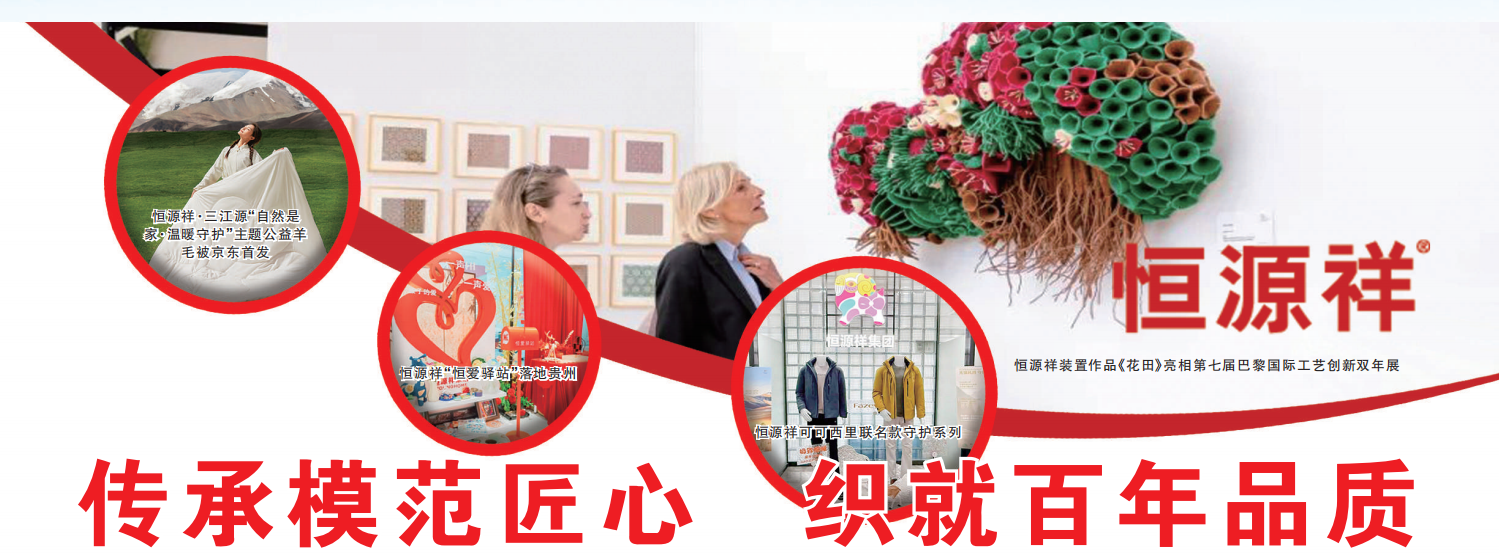
Core Viewpoint - Hengyuanxiang is committed to modernizing its brand through digital economy, low-carbon economy, and aesthetic economy, aiming to lead innovation and high-quality development as it approaches its centenary in 2025 [4][11][22] Group 1: Brand Development and Strategy - Hengyuanxiang's chairman, Chen Zhongwei, was awarded the title of "National Labor Model," highlighting the company's commitment to innovation and quality in its operations [3][13] - The company has established a "Brand Development Professional Committee" to enhance market conditions and improve consumer experience [13] - Hengyuanxiang aims to transform from "Chinese manufacturing" to a global promoter of "Chinese aesthetics" through collaborations with top global institutions [11][22] Group 2: Digital Economy Initiatives - The establishment of the "Hengyuanxiang Metaverse Research Institute" and the launch of a full-chain quality traceability system are key steps in the company's digital transformation [5][7] - Hengyuanxiang is implementing a digital design cloud platform to enhance design efficiency and reduce waste, aligning with its low-carbon goals [6][15] - The integration of digital technology with traditional craftsmanship is a focus, aiming to create a seamless value chain from design to marketing [7][17] Group 3: Aesthetic Economy and Cultural Integration - Hengyuanxiang emphasizes the importance of aesthetic economy, rooted in Shanghai's cultural heritage, to express contemporary Chinese aesthetics globally [8][10] - The company has launched various fashion initiatives, including collaborations with film channels to promote traditional culture through modern textile technology [9][10] - Hengyuanxiang's participation in international art exhibitions showcases its commitment to cultural exchange and the contemporary value of Chinese craftsmanship [10][22] Group 4: Social Responsibility and Community Engagement - Hengyuanxiang integrates public welfare and non-heritage preservation into its core strategy, exemplified by its "Hengai Action" initiative for underprivileged children [19][22] - The company has established "Hengai Stations" to support community engagement and cultural transmission, enhancing local cultural identity [20][22] - Collaborations with organizations like JD.com for eco-friendly product launches demonstrate Hengyuanxiang's commitment to sustainable development and social impact [21][22]
创新发展“晋江经验” 乘风破浪再续辉煌—— 福建晋江质量强市工作纪实
Zhong Guo Zhi Liang Xin Wen Wang· 2025-09-12 05:51
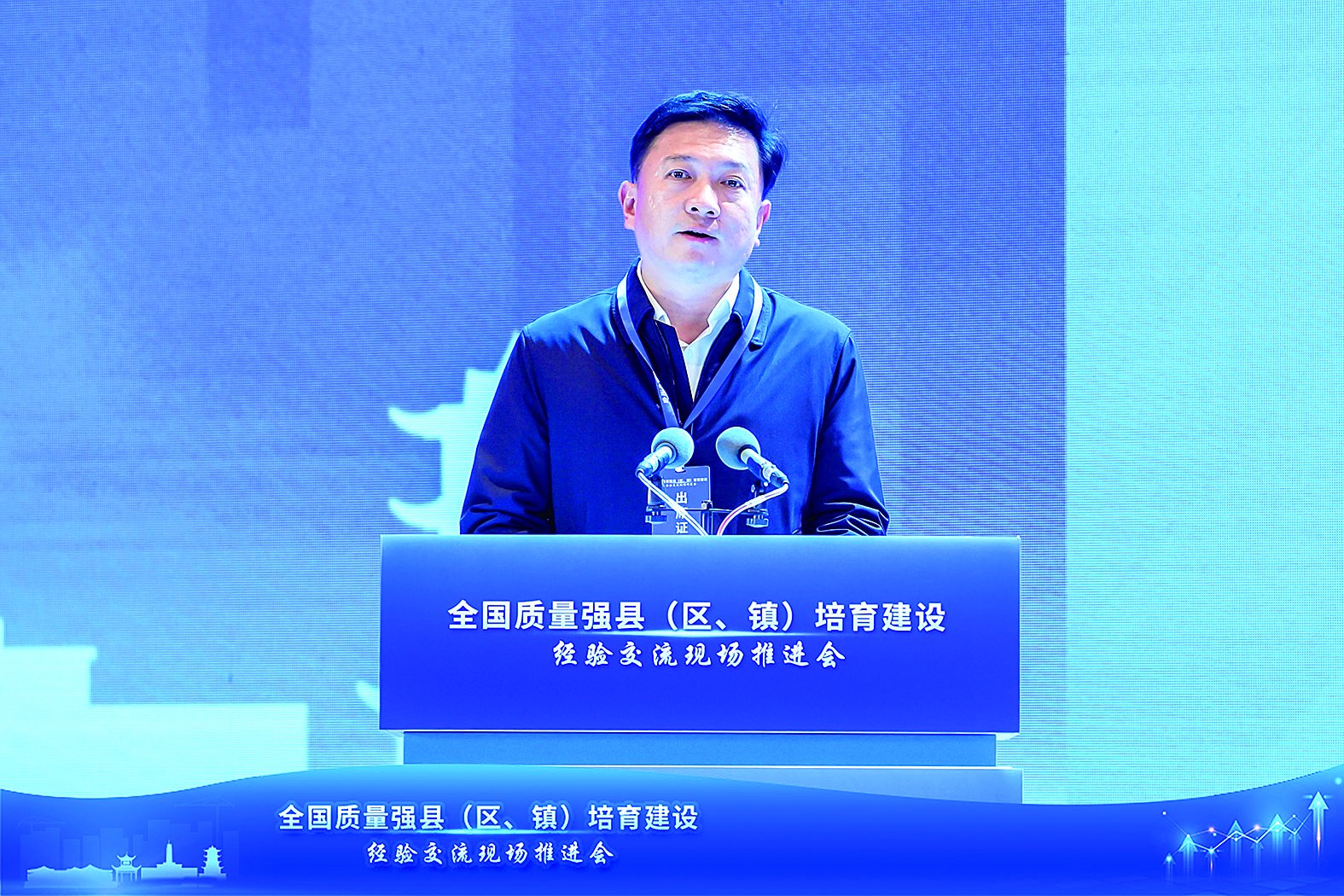
Core Viewpoint - Jinjiang City is recognized as a model for quality development in China, emphasizing the integration of quality into urban development and the promotion of high-quality economic growth through strategic initiatives and policies [1][5][28]. Group 1: Quality Development Strategy - Jinjiang has transitioned from a "Quality First" approach to a "Brand Strong City" strategy, focusing on quality as the core driver of economic growth [5][6]. - The city has established a modern industrial system centered around four leading industries (textiles, footwear, building materials, and food) and three emerging industries (integrated circuits, smart equipment, and healthcare) [8][9]. - Jinjiang's commitment to quality has led to the establishment of a "Quality Strong City" leadership group to enhance coordination and resource allocation for quality initiatives [7][9]. Group 2: Brand and Standardization - Jinjiang has cultivated a strong brand presence, with notable companies like Anta and Hengan leading the way, contributing to a significant increase in brand value and market recognition [12][13]. - The city has implemented a "Standard Leader" initiative, encouraging enterprises to develop advanced standards, resulting in participation in the formulation of numerous national and international standards [13][14]. Group 3: Innovation and Intellectual Property - Jinjiang has been recognized as a national model for intellectual property protection, with a focus on transforming intellectual property into tangible assets for businesses [14][18]. - The city has established a rapid intellectual property rights protection center and a knowledge property operation service platform to facilitate innovation and commercialization [14][18]. Group 4: Financial Support and Services - Jinjiang has introduced innovative financial products like "Quality Loans," integrating quality and brand value into credit assessments, resulting in substantial funding for local enterprises [18][19]. - The city provides tailored services for businesses, including quality management training and support for small and micro enterprises, enhancing their operational capabilities [17][19]. Group 5: Collaborative Innovation and Industry Resilience - Jinjiang promotes a collaborative model among leading enterprises, research institutions, and regulatory bodies to address common industry challenges and enhance overall quality [26][27]. - The city has established industry alliances to foster cooperation and innovation, particularly in the footwear sector, enhancing the resilience of the supply chain [21][26]. Group 6: Green Transformation - Jinjiang is actively pursuing green development initiatives, aligning with national carbon reduction goals and establishing a carbon footprint certification system for the textile industry [27][28]. - The city aims to position itself as a leader in sustainable manufacturing, enhancing its competitiveness in the global market [27][28].
2025年1-4月全国纺织服装、服饰业出口货值为842.6亿元,累计增长4.6%
Chan Ye Xin Xi Wang· 2025-09-12 01:10
Core Insights - The textile and apparel industry in China is experiencing a modest growth in export value, with a reported export value of 21.27 billion yuan in April 2025, reflecting a year-on-year increase of 2.4% [1] - Cumulatively, from January to April 2025, the total export value reached 84.26 billion yuan, marking a year-on-year growth of 4.6% [1] Company Insights - Listed companies in the textile sector include Fengzhu Textile (600493), Jiangnan High Fiber (600527), Hangmin Co., Ltd. (600987), Bailong Oriental (601339), and others [1] - The report by Zhiyan Consulting highlights the investment potential and market dynamics of the textile and apparel industry from 2025 to 2031 [1]
