
证券业

Search documents
股市赚钱效应:存款搬家,券商抢客
经济观察报· 2025-08-16 09:04
Core Viewpoint - The article discusses the recent trend of deposit "migration" from banks to non-bank financial institutions, driven by declining interest rates and the rising performance of the stock market, leading to increased deposits in non-bank financial sectors [1][5]. Group 1: Deposit Migration Trends - Recent data shows a significant increase in non-bank deposits, with a rise of 2.14 trillion yuan year-on-year, while household deposits decreased by 1.1 trillion yuan [4]. - The trend of deposit migration is reflected in the behavior of customers, with many transferring large deposits to banks that offer direct connections to securities investment accounts or investing in funds and other financial products instead of renewing deposits [2][4]. - The capital market's recovery and declining interest rates are identified as primary drivers for the shift of household deposits towards non-bank financial institutions [5]. Group 2: Bank Responses to Deposit Outflows - Banks are under pressure to retain deposits, with retail banking staff being urged to promote gold and interest rate coupons to keep personal deposits [7]. - There is a notable increase in the demand for large time deposit transfers, as investors seek to quickly access funds for stock investments [3]. - Banks are attempting to counteract deposit outflows by increasing corporate loans and encouraging businesses to open accounts for payroll and trade fund settlements [10][11]. Group 3: Impact on Securities Firms - Securities firms are experiencing a surge in client acquisition due to the influx of funds from migrating deposits, leading to increased competition among brokers [13]. - The stock market's performance has made it easier for brokers to meet their client acquisition targets, with many clients actively seeking investment opportunities in high-performing funds [14][15]. - However, the competitive landscape has intensified, with some brokers resorting to commission wars to retain high-net-worth clients, leading to potential risks of client loss [13][17].


“存款搬家”信号出现,说明什么?
Sou Hu Cai Jing· 2025-08-16 04:18
Group 1 - The core point of the article highlights a significant increase in deposits at non-bank financial institutions, indicating a shift in residents' savings behavior [1] - In July, residents' deposits decreased by 1.11 trillion yuan year-on-year, while non-bank deposits increased by 2.1 trillion yuan, suggesting a trend of residents moving their savings [1][3] - The rise in A-shares, surpassing key resistance levels, has encouraged investors, leading to a potential influx of funds from banks to the stock market [3][4] Group 2 - The current A-share market trend is stable, with lower volatility compared to previous years, which may attract more external funds back into the market [4] - Regulatory changes and a significant drop in IPOs this year have fostered a more favorable environment for the stock market, enhancing investor confidence [4] - The movement of residents' savings from banks to investments is seen as a positive development, potentially boosting consumer spending and corporate performance [4]
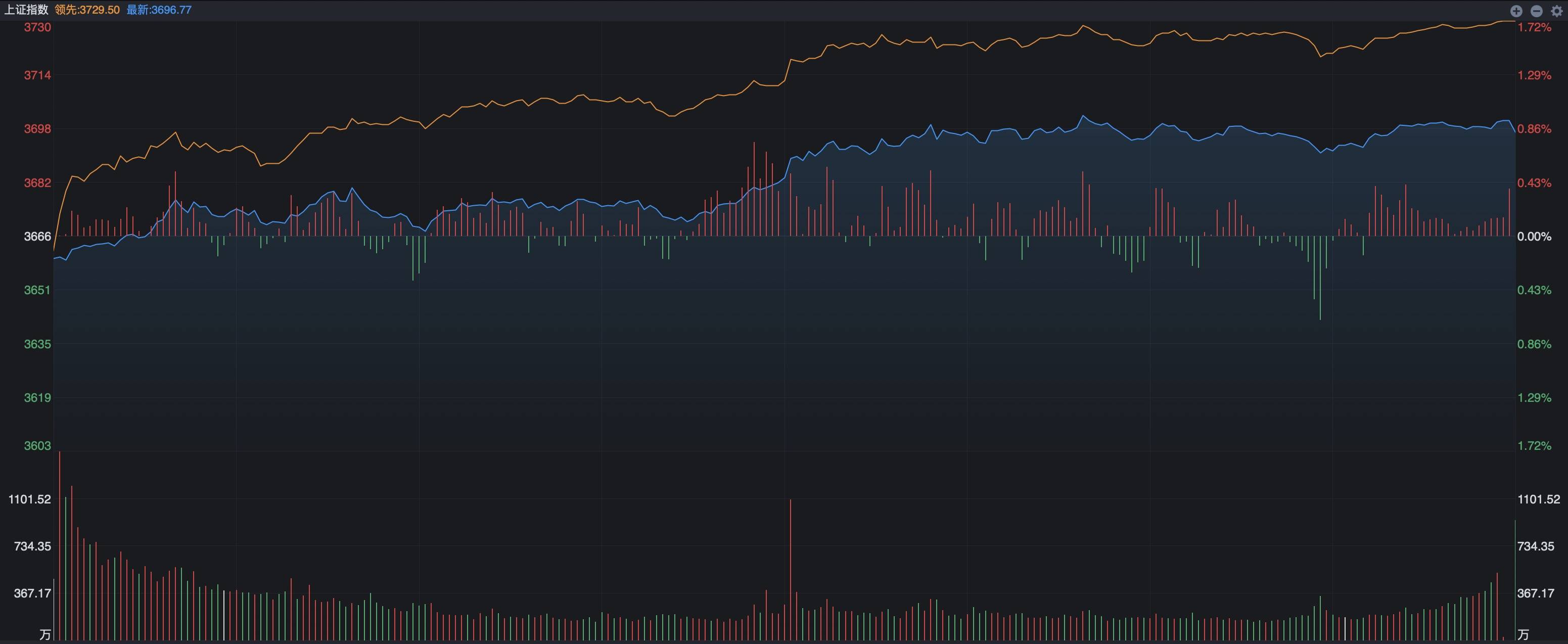
沪指一度突破关键点位,股指冲高回落
Hua Tai Qi Huo· 2025-08-15 06:51
Report Industry Investment Rating - Not provided in the given content Core Viewpoints - The recent market index has shown positive trends, but the difficulty of making profits at the individual stock level has increased. The market experienced a decline after a rise, with significantly enlarged trading volume, indicating a certain selling pressure and a need for a correction. In the short term, the difficulty of individual stock operations is expected to increase, and investors are advised to focus on opportunities to buy index futures at low prices [3] Summary by Directory Market Analysis - Domestically, financial regulatory authorities and banking associations in Shanghai, Guangdong, Zhejiang, Anhui and other places have proposed "anti - involution" measures targeting industry phenomena such as "mortgage rebates, car loan commissions, and disguised interest subsidies", calling on banks to adopt differentiated competition strategies. Overseas, the number of initial jobless claims in the US last week decreased by 3,000 to 224,000, lower than expected, and the number of continuing jobless claims in the previous week dropped to 1.953 million, slightly lower than expected [1] - In the spot market, A - share indices rose and then fell. The Shanghai Composite Index dropped 0.46% to 3,666.44 points, and the ChiNext Index fell 1.08%. Most sector indices declined, with only the non - bank financial sector closing in the green. The trading volume of the Shanghai and Shenzhen stock markets increased to 2.3 trillion yuan. Overseas, the US PPI in July soared to 3.3% year - on - year, the highest since February, far exceeding the expected 2.5%, and rose 0.9% month - on - month, the largest increase since June 2022. The three major US stock indices closed mixed [2] - In the futures market, the basis of index futures has basically converged as the current - month contracts are due for delivery today. The trading volume of index futures increased, and the positions of IH and IF contracts increased [2] Strategy - Although the recent market index trends are positive, the difficulty of individual stock operations has increased. The market is under selling pressure and has a need for correction. In the short term, it is recommended that investors focus on opportunities to buy index futures at low prices [3] Macroeconomic Charts - The report includes charts showing the relationship between the US dollar index and A - share trends, US Treasury yields and A - share trends, RMB exchange rates and A - share trends, and US Treasury yields and A - share style trends [6] Spot Market Tracking Charts - The daily performance of major domestic stock indices on August 14, 2025, shows that the Shanghai Composite Index dropped 0.46%, the Shenzhen Component Index fell 0.87%, the ChiNext Index declined 1.08%, the CSI 300 Index decreased 0.08%, the SSE 50 Index rose 0.21%, the CSI 500 Index dropped 1.20%, and the CSI 1000 Index fell 1.24% [13] Futures Market Tracking Charts - Regarding the trading volume and positions of index futures, the trading volume of IF was 153,749 (an increase of 26,975), IH was 87,090 (an increase of 20,405), IC was 112,146 (an increase of 5,277), and IM was 265,731 (an increase of 36,064). The positions of IF were 271,876 (an increase of 5,578), IH were 104,724 (an increase of 3,248), IC were 215,557 (a decrease of 9,652), and IM were 365,293 (a decrease of 6,229) [17] - The basis of index futures shows different values and changes for different contracts (current - month, next - month, current - quarter, and next - quarter) of IF, IH, IC, and IM [35] - The cross - period spreads of index futures are presented for different combinations (next - month minus current - month, next - quarter minus current - month, etc.) of IF, IH, IC, and IM, along with their daily values and changes [42][43]
债市早报:资金面整体均衡偏松,债市整体走弱
Sou Hu Cai Jing· 2025-08-15 04:12
Group 1: Domestic Market Developments - The People's Bank of China (PBOC) announced a 500 billion yuan reverse repurchase operation to maintain liquidity in the banking system, marking the second such operation in August [2] - As of the end of July, 65 institutions provided quotes for 183 bond baskets, enhancing trading efficiency and addressing liquidity issues for individual bonds [3] - The Shanghai Clearing House hosted a meeting on foreign currency repurchase clearing, highlighting a significant growth in this market, with a 93.7% year-on-year increase in transaction volume to 1.58 trillion yuan [4] Group 2: International Market Developments - The U.S. Producer Price Index (PPI) surged to 3.3% year-on-year in July, the highest level since February, with a month-on-month increase of 0.9%, indicating inflationary pressures [6] - International crude oil prices rose, with WTI crude up 2.09% to $63.96 per barrel, while natural gas prices also saw a slight increase [7][8] - Major European economies experienced an increase in 10-year government bond yields, with Germany's yield rising to 2.71% [24] Group 3: Bond Market Dynamics - The bond market showed weakness on August 14, with the yield on the 10-year government bond rising by 1.20 basis points to 1.7320% [11] - In the secondary market, several industrial bonds experienced significant price deviations, with some bonds dropping over 75% [12] - The convertible bond market also saw declines, with major indices falling and a total trading volume of 1002.91 billion yuan, down 18.25 billion yuan from the previous day [18]
央行今日开展5000亿元买断式逆回购 8月存单到期规模上升
Feng Huang Wang· 2025-08-15 03:45
Core Viewpoint - The central bank is actively conducting reverse repurchase operations to maintain liquidity in the banking system, with a net injection of 300 billion yuan expected in August due to the maturity of previous operations and ongoing government bond issuance [1][2][3]. Group 1: Central Bank Operations - The central bank conducted a 500 billion yuan reverse repurchase operation with a 6-month term, indicating a proactive approach to ensure liquidity [1][2]. - This operation follows a pattern of increased reverse repurchase activities over the past three months, reflecting a commitment to maintaining ample liquidity in the market [1][2]. - The total amount of reverse repurchase operations in August is expected to exceed 300 billion yuan, as the central bank continues to respond to the high issuance of government bonds [2][3]. Group 2: Market Conditions - The maturity of a significant volume of certificates of deposit in August, exceeding 3 trillion yuan, is creating pressure for renewal, necessitating the central bank's intervention [3]. - The ongoing issuance of government bonds is expected to accelerate, as indicated by the recent political bureau meeting, which emphasizes the need to expedite government bond issuance [3][4]. - The overall market liquidity remains relatively loose, despite some tightening pressures anticipated in the medium term due to earlier credit demand being pulled forward [4][5]. Group 3: Future Expectations - Analysts predict that the central bank may implement further monetary easing measures, including potential rate cuts, to support economic recovery and maintain favorable financing conditions for the real economy [4][6]. - The central bank is likely to utilize various liquidity tools, including reverse repos and medium-term lending facilities, to create a conducive monetary environment in the second half of the year [6].
反洗钱利国又利民 持续推动打击治理洗钱违法犯罪
申万宏源证券上海北京西路营业部· 2025-08-15 02:26
Core Viewpoint - The article emphasizes the importance of anti-money laundering (AML) efforts in protecting both the economy and the public, highlighting the significant risks and damages caused by money laundering activities [2][4][9]. Group 1: Direct Harms of Money Laundering - Money laundering undermines the stability of the economic system, leading to economic distortion and disorder [4]. - It serves as a financial lifeline for other serious criminal activities, including drug trafficking, terrorism, smuggling, corruption, fraud, and tax evasion [4]. - It poses substantial risks to banks and financial institutions, damaging the credibility of the financial system [3]. - Money laundering can result in capital outflows, affecting national foreign exchange reserves and tax revenues, potentially jeopardizing national economic security [3]. Group 2: Legal Framework and Enforcement - The Supreme People's Procuratorate has significantly increased the prosecution of money laundering cases, with 2,971 individuals prosecuted in 2023, nearly 20 times the number in 2019, and a 28.4% increase in the first half of 2024 [5]. - The legal basis for convicting money laundering includes provisions from the Criminal Law, such as Article 191, which defines the elements and penalties for money laundering [6]. - Recent amendments to the Criminal Law have expanded the scope of money laundering offenses, including the criminalization of "self-laundering" and removing previous limitations on fines [7][8]. Group 3: Measures and Strategies - The government is committed to enhancing the legal framework to combat money laundering, including clarifying standards for recognizing "self-laundering" and "third-party laundering" [8]. - Efforts to improve the effectiveness of prosecution include establishing a "dual investigation" mechanism and enhancing collaboration between judicial bodies [8]. - The overall approach reflects a zero-tolerance attitude towards money laundering, with strong measures taken to prevent and combat such activities to safeguard economic security and social stability [9].

下半年债市有哪些政策机会值得关注?
Mei Ri Jing Ji Xin Wen· 2025-08-15 01:36
Fiscal Policy - The government's net financing from bonds has reached 9.5 trillion, surpassing any year except 2023 and 2024, with an additional 4-5 trillion expected to be issued this year [1] - The issuance of government bonds is expected to accelerate, while special bonds will maintain a steady issuance pace similar to previous years [1] - There is a likelihood of additional government bond issuance in the second half of the year to support economic resilience, potentially through special treasury bonds or increased deficits [1] Monetary Policy - A prediction of stock liquidity easing in the second half of the year, but the overall impact may not be as significant as previously anticipated due to financial stability constraints [1] - The central bank is expected to restart bond purchases in the third quarter, primarily due to a lack of long-term liquidity tools [2] - The bank's net interest margin is a significant factor limiting the extent of interest rate reductions, with a focus on the sustainability of banks' profitability [2] Bond Market Outlook - The bond market is currently in a state of oscillation, with strategies suggested for gradually increasing long-term bond holdings at high yield points and reducing them at low yield points [3] - The yield curve is at a relatively high level compared to the year, indicating a neutral to low historical position, with financial stability being a key constraint on monetary policy [2][3]
当前流动性的几点关注
Tianfeng Securities· 2025-08-15 01:19
Report Industry Investment Rating No information provided in the content. Core Viewpoints - In August, liquidity has become a key factor in the bond market. The linkage between risky assets and the bond market has continued for some time, and in the medium - to long - term, the bond market is still priced based on fundamentals. Risky assets' strength is a short - term disturbance. If liquidity is stable, changes in funds flowing to risky assets are not the key to the bond market. An abundant liquidity environment is more likely to lead to a "double - bull" market for stocks and bonds. Attention should be paid to the central bank's operations, large banks' net lending levels, and the liability - side stability of bond funds and other broad - based funds [1][2]. - Although there are disturbances such as government bond supply, certificate of deposit (CD) maturities, and tax payments in August, there are also clear supporting factors. It is expected that the central bank will use various tools to maintain the stability of the money market, and the central level of money market rates will remain in a low - level volatile pattern, but special - time fluctuations need attention [4]. Summary by Directory 1. August: Liquidity Becomes a Key Factor in the Bond Market - Since July, the linkage between stocks, commodities, and bonds has attracted market attention. Liquidity plays a dual role in the stock - bond market linkage. Abundant liquidity benefits both markets, while changes in risk appetite and equity returns drive asset reallocation, causing some bond market funds to flow into stocks and commodities [1][8]. - In late July, high inter - bank liquidity demand and the rise of stocks and commodities suppressed the bond market. At the beginning of August, loose liquidity led to a "double - bull" market for stocks and bonds. From August 11 - 13, the relationship between stocks and bonds changed from a "seesaw" to a "double - bull" situation. On August 11, the central bank's large - scale net withdrawal in the open market and the strength of risky assets dragged down bond market sentiment. On August 13, the bond market showed resilience [1][8][9]. - In the second half of August, the bond market lacks a new narrative. Liquidity will continue to be crucial. The sustainability of risky assets' performance remains to be seen. If liquidity is stable, it won't be the key to the bond market. An abundant liquidity environment is more likely to lead to a "double - bull" market. Attention should be paid to the central bank's operations, large banks' net lending levels, and the liability - side stability of bond funds [2][14]. 2. July: Turbulence in the Money Market - In July, the money market had a "roller - coaster" ride, with funds loosening at the beginning, tightening in the middle, and then fluctuating again in the late stage. The central bank's operations were more targeted, with more precise and flexible liquidity injections [15]. - In terms of money prices, overnight money rates often ran below the policy rate but rose during tax payments and at the end of the month. The 7 - day money rate's central level declined, and the 7 - day money rate's stratification phenomenon was more prominent, while the overnight money rate's stratification was similar to the previous month [17]. - In terms of money quantity, the net lending of large state - owned banks decreased, while the lending of money market funds and wealth management products increased. The microstructure of money lending changed, increasing the volatility of overnight money rates [30]. - Factors affecting money supply and demand in July included precise and targeted open - market operations, government bond issuance (which decreased month - on - month but remained high year - on - year), high CD maturities with stable issuance prices, and a structural differentiation in credit in July after an unexpected increase in June [35][40][46]. 3. Current Concerns about the Money Market - Historically, August has a relatively low central level of money market rates in the second half of the year. In 2022 and 2023, there were large fluctuations at the end of August due to external policy variables [53]. - Currently, there are several concerns: high CD maturities above 3 trillion yuan in August, but banks' liability - side pressure is neutral, and the demand for price - increasing issuance is limited; continued government bond supply pressure, with the central bank likely to use various tools to maintain money market stability; and over 1.2 trillion yuan of medium - to long - term liquidity maturing in August, but a 70 - billion - yuan 3 - month buy - out reverse repurchase was carried out on August 8 [61][62][64]. - Although there are disturbances in August, there are also supporting factors such as seasonal factors and the central bank's support. It is expected that the central level of money market rates will remain low - level volatile, but attention should be paid to fluctuations at special times [66].
净投放3000亿元!央行再出手 明日将开展5000亿元买断式逆回购操作
Mei Ri Jing Ji Xin Wen· 2025-08-14 15:26
Core Viewpoint - The People's Bank of China (PBOC) is conducting a buyback reverse repo operation of 500 billion yuan to maintain liquidity in the banking system, indicating a relatively loose monetary policy in August 2023 [1][2][3]. Group 1: Reverse Repo Operations - The PBOC will conduct a buyback reverse repo operation of 500 billion yuan with a term of 6 months on August 15, 2023, following a previous operation of 700 billion yuan on August 8 [1][2]. - In August, there are 4 billion yuan of 3-month and 5 billion yuan of 6-month buyback reverse repos maturing, with a total of 3 billion yuan of Medium-term Lending Facility (MLF) also maturing [2][3]. - The total net injection of funds through the 3-month buyback reverse repo will be 3 billion yuan, while the 6-month variety will be fully offset [2]. Group 2: Market Liquidity and Policy Signals - The PBOC's actions are seen as a response to the upcoming government bond issuance peak and the large scale of maturing certificates of deposit, with a focus on encouraging financial institutions to increase credit supply [3][4]. - Analysts suggest that the PBOC will continue to use MLF and buyback reverse repos to inject medium-term liquidity, indicating a commitment to maintaining ample liquidity in the banking system [4]. - The average weighted interest rate for the interbank market has decreased, reflecting a continued decline in funding costs, which is influenced by various factors including monetary policy operations and market demand for funds [5][6].
7月非银存款同比多增1.39万亿 居民存款入市信号增强
Di Yi Cai Jing· 2025-08-14 14:04
Core Viewpoint - The significant increase in non-bank deposits in July reflects a trend of residents shifting their savings towards financial products, influenced by the recent bullish stock market and declining interest rates [1][2][5]. Group 1: Non-Bank Deposits - In July, non-bank deposits increased by 2.14 trillion yuan, a year-on-year increase of 1.39 trillion yuan, while household deposits decreased by 1.1 trillion yuan, a year-on-year decrease of nearly 0.8 trillion yuan [2]. - From January to July, non-bank deposits cumulatively increased by 4.69 trillion yuan, which is 1.73 trillion yuan more than the same period last year [2]. - Analysts suggest that the increase in non-bank deposits is driven by the end of the mid-year bank assessment period and the recent rise in the stock market, leading to a large-scale return of household savings to financial products [2][5]. Group 2: Money Supply and Liquidity - The growth rate of M2 (broad money) in July increased by 0.5 percentage points to 8.8%, exceeding market expectations of 8.3%, while M1 (narrow money) growth rate rose to 5.6%, marking a significant rebound over three consecutive months [2]. - The narrowing of the M1-M2 spread to -3.2% indicates enhanced liquidity, suggesting that households and businesses are converting time deposits into demand deposits for consumption or investment [3]. Group 3: Capital Market Expectations - There is a strong market expectation that capital markets will become a significant outlet for household deposits, with historical trends showing that each bull market is accompanied by a migration of bank deposits to capital markets [4][5]. - The estimated maturity of fixed-term deposits is substantial, with approximately 105 trillion yuan maturing by 2025 and 66 trillion yuan thereafter, which could lead to significant liquidity impacts if these funds flow into asset markets [4]. Group 4: Monetary Policy Outlook - Despite recent market optimism, July's financial data indicates slow recovery in demand, with new credit showing a negative growth for the first time in 20 years, highlighting the core contradiction in the current economic environment [7]. - The implementation of fiscal subsidy policies is expected to reduce the need for aggressive monetary easing, with analysts suggesting that the probability of interest rate cuts may decrease due to the effectiveness of targeted fiscal measures [8].