
基础设施建设

Search documents
贵州省地方债务化解观察与展望:山重水复疑无路,柳暗花明又一村
Lian He Zi Xin· 2025-12-16 11:38
1. Report Industry Investment Rating No relevant content provided. 2. Core Viewpoints of the Report - In recent years, Guizhou Province's local debt has shown characteristics such as continuous growth in scale, heavy regional debt burden, differentiated debt pressure among cities, liquidity pressure on some urban investment enterprises, concentrated redemption of urban investment bonds, and persistent negative public opinions. Despite relatively weak debt - resolution resources, with strong policy support from the central government and increasingly diverse debt - resolution means, certain achievements have been made in debt resolution. However, issues such as high credit spreads of urban investment bonds and continuous short - term liquidity pressure on urban investment enterprises still need attention. - In the short term, with the continuous implementation of a package of debt - resolution and incremental debt - resolution policies, Guizhou, as a key province, will continue to benefit, and the liquidity risk is generally controllable within the policy protection period, but the principal and interest repayment pressure on urban investment enterprises remains high. - In the long run, debt resolution depends on the self - development of local governments and urban investment enterprises. Guizhou has obvious advantages in industries such as liquor, mineral deep - processing, digital economy, new energy, characteristic agriculture, and cultural tourism. With the construction of a modern industrial system and the improvement of high - quality development levels, Guizhou is expected to resolve its debt during development [4]. 3. Summary by Relevant Catalogs 3.1 Introduction - Guizhou is an important area in China's regional coordinated development, but due to factors such as terrain, transportation, and industrial structure, its economic aggregate ranks in the middle and lower reaches nationwide, with weak fiscal strength, heavy dependence on central subsidies, and a heavy local government debt burden. Since 2018, negative public opinions in Guizhou have attracted market attention. Under the support of policies such as the "package of debt - resolution", Guizhou has actively explored debt resolution [5]. 3.2 Debt Characteristics - **Continuous growth in local debt scale and heavy regional debt burden**: As of the end of 2024, Guizhou's local government debt balance was 1753.709 billion yuan, and the debt scale of urban investment enterprises was about 900 billion yuan. Its government debt ratio and broad - based government debt ratio rank in the upper - middle level nationwide, indicating a heavy regional debt burden [7]. - **Differentiated regional debt burden, with heavier debt burdens in Guiyang and Zunyi**: As of the end of 2024, the provincial - level government debt and urban investment enterprise debt in Guizhou accounted for less than 15% and about 11% respectively, while the debt of city (prefecture) - level, district - county - level, and park - level urban investment enterprises accounted for about 48%, 22%, and 18% respectively. The urban investment enterprise debt is mainly concentrated in Guiyang and Zunyi. Guiyang, Zunyi, and Liupanshui rely more on urban investment enterprise financing, and their broad - based government debt ratios are relatively high [9]. - **Large liquidity pressure on urban investment enterprises in some cities (prefectures)**: Although the debt structure of Guizhou's urban investment enterprises is relatively reasonable, urban investment enterprises in some areas such as Qiannan, Qiandongnan, and Tongren have small cash - like assets and large short - term debt repayment pressure [12]. - **Concentrated redemption of urban investment bonds**: The issuance of urban investment bonds in Guizhou is concentrated in Guiyang and Zunyi. The redemption scale of urban investment bonds in Guizhou increased year by year from 2021 to 2023 and then decreased significantly. However, the redemption scale of due bonds in Guiyang and Zunyi is still large [14]. - **Persistent negative public opinions**: Since 2018, non - standard negative events in Guizhou's urban investment enterprises have been the highest in the country, mainly concentrated in Zunyi and Qiannan. The number of urban investment enterprises with bill overdue in Guizhou ranked third in the country from 2022 - 2024, and as of the end of October 2025, there were still 16 enterprises in the continuous overdue list, mainly concentrated in Zunyi, Guiyang, and Liupanshui [16]. 3.3 Debt - Resolution Achievements 3.3.1 Debt - Resolution Resources - **Fiscal resources**: In 2024, Guizhou's comprehensive financial resources ranked 14th in the country, with general public budget revenue of 217 billion yuan (ranked 21st) and government - funded revenue of 231.528 billion yuan (ranked 8th). Its fiscal self - sufficiency rate is less than 35%. Although the scale of state - owned land transfer income has declined since 2021, the government - funded revenue has continued to grow. The coverage of government - funded revenue for government debt interest is at a medium - upper level in the country. As of the end of 2024, Guizhou's debt space exceeded 280 billion yuan, ranking first among key provinces [22][25]. - **Financial resources**: Since 2020, the balance of local financial institutions' deposits and loans in Guizhou has continued to grow rapidly. As of the end of 2024, the balance of local financial institutions' loans and deposits ranked 19th and 25th in the country respectively, and the loan - to - deposit ratio was the highest in the country. As of November 16, 2025, the total credit line of banks for bond - issuing enterprises in Guizhou exceeded 1 trillion yuan, and the credit lines of Guizhou Bank and Guiyang Bank accounted for more than 90% of the total. The total assets and deposits of Guizhou's city commercial banks rank 16th in the country, and their coverage of urban investment enterprise debt is at a medium level in the country [27][29]. - **Local state - owned enterprise resources**: Although the number of listed companies in Guizhou ranks relatively low in the country, the total market value is at a medium level. As of the end of September 2025, the total market value of Kweichow Moutai exceeded 1.8 trillion yuan, accounting for nearly 85% of the total market value of listed companies in Guizhou. The market value of listed companies held by local state - owned enterprises in Guizhou has a relatively high coverage of urban investment enterprise debt, but the reduction of Kweichow Moutai's equity is restricted [33]. 3.3.2 Debt - Resolution Measures - **Financial support for debt resolution**: It mainly includes debt restructuring, non - standard discounted repayment, and "unified borrowing and repayment". For example, in 2022, Zunyi Road and Bridge Construction (Group) Co., Ltd. carried out loan extension and interest - rate reduction restructuring; since 2023, there have been cases of non - standard discounted repayment in many cities in Guizhou; in February 2024, Guizhou first practiced "unified borrowing and repayment" nationwide, involving a bond amount of about 3.6 billion yuan [37][38]. - **Special refinancing bonds and special new special bonds**: In 2024, Guizhou was allocated a quota of 352.8 billion yuan for special refinancing bonds, and 800 billion yuan was arranged from new local government special bonds for five consecutive years starting from 2024 for debt resolution. Since 2024, the cumulative issuance amount of special refinancing bonds and special new special bonds in Guizhou ranks among the top in key provinces, and the early redemption amount of urban investment bonds exceeds 30 billion yuan [39]. - **Activating state - owned enterprise resources for debt resolution**: "Moutai debt resolution" is a typical case, which includes equity transfer and reduction of Kweichow Moutai, bond issuance by Moutai Group to acquire the equity of Guizhou Expressway, and financing and capital operation by the finance company to relieve the liquidity pressure of state - owned platforms [41]. - **Other methods**: These include setting up emergency funds, arranging various fiscal funds, transferring the right to state - owned asset income, and using operating income. Provincial state - owned platforms also provide support such as emergency loan transfer, credit support, and credit enhancement for urban investment enterprises [42]. 3.3.3 Debt - Resolution Performance - **Significant reduction in the debt scale of bond - issuing urban investment enterprises and improvement in the financing structure**: Since the end of 2022, the debt scale of bond - issuing urban investment enterprises in Guizhou has continued to decline. The scale of bank loans and bond financing has decreased, and the proportion of bank loans and other financing has increased to about 67% and 14% respectively, while the proportion of bond financing has decreased to about 19% [44]. - **Continuous net repayment of urban investment bonds and reduced concentrated redemption pressure**: Since 2021, urban investment bonds in Guizhou and most of its cities (prefectures) have been in a state of net repayment, with an annual net repayment scale of over 35 billion yuan from 2023 - 2024. As of the end of September 2025, the scale of outstanding urban investment bonds in Guizhou was about 138 billion yuan, and the maturity scale in the next four years is relatively balanced [47]. - **Significant narrowing of the credit spread of urban investment bonds**: Since the implementation of the package of debt - resolution plans, the credit spread of urban investment bonds in Guizhou has narrowed significantly since the end of 2023, but it is still at the highest level among key debt - resolution provinces. As of the end of October 2025, the credit spread has decreased by more than 300BP compared with the beginning of 2021. However, the cash - like assets' coverage of short - term debt has decreased, and the short - term liquidity of bond - issuing urban investment enterprises is still under pressure [49][51]. 3.4 Debt - Resolution Outlook - **Short - term outlook**: With the continuous implementation of the package of debt - resolution and incremental debt - resolution policies, Guizhou will continue to benefit, and the liquidity risk is generally controllable within the policy protection period. However, the principal and interest repayment pressure on urban investment enterprises is still large due to factors such as the contradiction between debt resolution and development, restrictions on new financing, and insufficient coverage of interest by current debt - resolution policies [55][56]. - **Long - term outlook**: Debt resolution depends on the self - development of local governments and urban investment enterprises. Guizhou has obvious advantages in industries such as liquor, mineral deep - processing, digital economy, new energy, characteristic agriculture, and cultural tourism. By building a modern industrial system and promoting high - quality development, Guizhou is expected to resolve its debt during development [57].
基础设施部长表态将终止长期停滞的开发项目
Shang Wu Bu Wang Zhan· 2025-12-16 06:23
Group 1 - The government will not tolerate project delays and will cancel contracts for long-stalled development projects, initiating re-tendering processes [1] - There will be an emphasis on strengthening coordination with provincial governments to expedite project execution [1] - The government plans to promptly commence new road and bridge construction, as well as maintenance of existing roads [1] Group 2 - The Minister inspected the Tanahu Hydropower Project and the Koirala National Center for Respiratory Diseases [1]
今年经济任务完成在即,明年GDP增长目标或仍在5%左右
Xin Lang Cai Jing· 2025-12-16 01:31
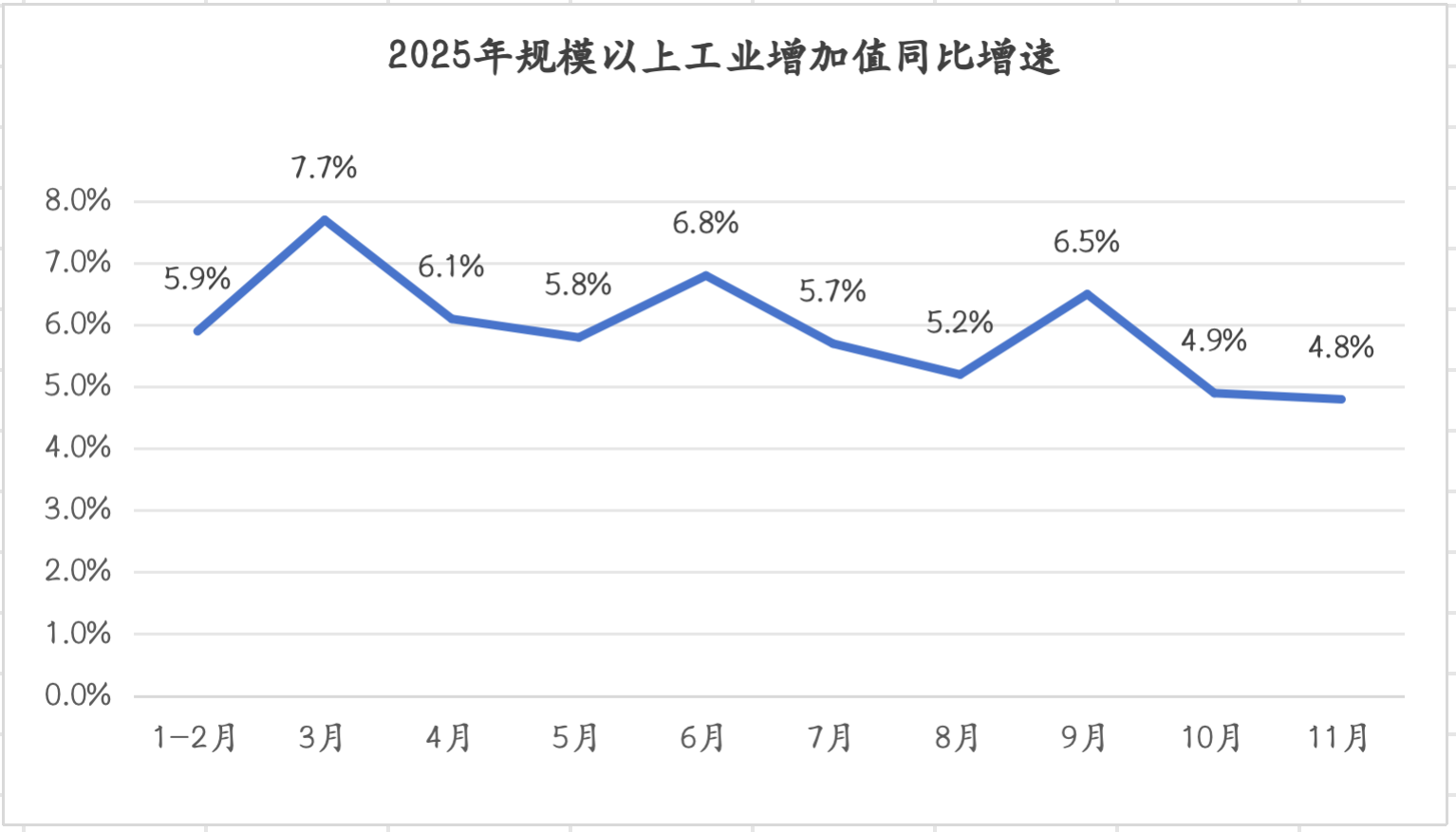
11月主要经济指标出炉,供需两端延续放缓态势。分析人士表示,今年经济社会发展目标任务即将顺利完成,明年GDP增速目标或仍在5%左右。着眼于实 现明年经济"开门红",更加积极有为的宏观政策有望前置发力。 国家统计局周一发布的数据显示,1-11月,固定资产投资(不含农户)同比下降2.6%,降幅比前10个月扩大0.9个百分点,创2020年7月以来新低。11月,规 模以上工业增加值同比增长4.8%,增速比上月略降0.1个百分点,社会消费品零售总额同比增长1.3%,增速比上月放缓1.6个百分点。 总体来看,11月中国经济呈现生产强于需求、外需好于内需的特征。 生产方面,工业增加值保持平稳较快增长,同比增速略有放缓,但环比增速加快0.27个百分点。 智通财经记者 | 张一诺 数据来源:国家统计局 制图:智通财经 "受假期扰动因素消退和外需阶段性回升影响,工业生产环比虽有所加快,但受累于内需修复偏慢、制造业动能不足、公用事业增速回落,工业增加值同比 走弱。"中国民生银行首席经济学家兼研究院院长温彬在发给智通财经的评论中称。 细分数据来看,新质生产力和出口是工业生产的两大动力来源。其中,11月,高技术工业生产同比增速较上月加 ...

国信证券荀玉根:投资增速回正靠AI和股市
Xin Lang Cai Jing· 2025-12-15 14:35
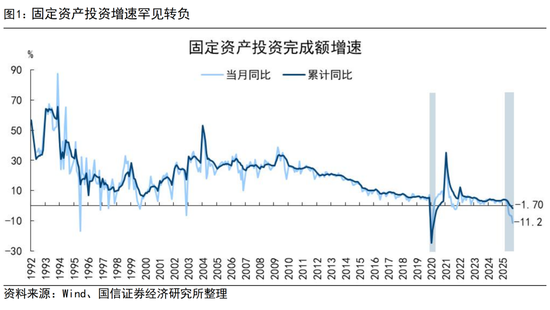
Core Conclusion - Fixed asset investment growth in China may experience its first annual negative growth since data collection began, with declines in real estate, infrastructure, and manufacturing investments [1][2][36] - To reverse the negative investment growth, reliance on the AI+ sector is essential, and the capital market must play a larger role [1][2][22] - Recommendations include accelerating the pace of technology IPOs, actively attracting long-term capital from the stock market, and increasing support for diversified financing tools like science and technology bonds [1][2][28][30][31] Investment Trends - Investment growth has been a key driver of China's economic growth, historically outpacing overall GDP growth [1][36] - The current situation marks a rare instance of negative investment growth, with a projected annual decline of -1.0% [2][36] - The decline is primarily driven by three major sectors: manufacturing, real estate, and infrastructure, which together account for over 70% of total investment [2][36] Real Estate Sector - The real estate sector has seen a significant slowdown, with cumulative investment down by -14.7% year-on-year in the first ten months of the year, and monthly growth dropping to -23.1% [6][39] - Demand-side factors include a demographic shift leading to a decrease of approximately 4.5 million eligible homebuyers compared to peak levels, and suppressed purchasing intentions due to falling housing prices [6][39] - Supply-side issues include ongoing debt risks for property companies, with approximately 524.4 billion due this year, limiting their investment capacity [6][39] Infrastructure Sector - Infrastructure investment has weakened, with a year-on-year decline of -12.1% in October [8][41] - Contributing factors include reduced funding capabilities due to a cooling land finance system and a lack of project reserves during the transition between the 14th and 15th Five-Year Plans [8][41] - Local governments are prioritizing risk prevention and debt repayment over new projects, reflecting a cautious fiscal approach [8][41] Manufacturing Sector - Manufacturing investment has shown signs of fatigue, with a year-on-year decline of -6.7% in October [10][43] - Factors include declining corporate profitability, with the median return on invested capital (ROIC) for non-financial A-share companies dropping to 2.9% from 3.7% the previous year [10][43] - The "anti-involution" policy has led to reduced capacity expansion among enterprises, while some are shifting investments abroad due to "de-globalization" trends [10][43] Historical Investment Recovery Insights - Historical data shows that previous investment recoveries were driven by demand shifts, with notable low points in 2006, 2015, and 2020 [12][45] - The 2008 recovery was fueled by a government-led stimulus plan focusing on large-scale infrastructure projects [14][47] - The 2015 recovery involved supply-side structural reforms and targeted demand stimulation through housing policy adjustments [16][51] - The 2020 recovery was characterized by a focus on new economic drivers amid the pandemic, with significant investments in high-tech sectors [18][55] Future Investment Strategies - The current investment recovery requires a focus on the AI+ sector, which presents vast opportunities and aligns with national strategic goals [22][56] - The government’s role in the economy is evolving, transitioning from direct involvement to a more supportive role that encourages private investment [26][60] - Recommendations for enhancing investment include improving the IPO process for tech companies, increasing long-term capital from the stock market, and expanding the use of science and technology bonds [28][30][31]

前11个月固定资产投资降幅有所扩大,政策将加力推动投资止跌回稳
Sou Hu Cai Jing· 2025-12-15 02:49
Group 1: Fixed Asset Investment - National fixed asset investment decreased by 2.6% year-on-year from January to November, with the decline widening by 0.9 percentage points compared to the previous ten months [1] - Infrastructure investment (excluding electricity, heat, gas, and water production and supply) fell by 1.1% year-on-year, with the decline expanding by 1.0 percentage points compared to the first ten months [2] - The central economic work conference proposed measures to "stop the decline and stabilize investment," including increasing central budget investment and optimizing local government special bond management [4] Group 2: Real Estate Investment - National real estate development investment dropped by 15.9% year-on-year from January to November, with the decline widening by 1.2 percentage points compared to the previous ten months [4] - New commercial housing sales area was 78,702 million square meters, down 7.8% year-on-year; sales amount was 75,130 billion yuan, a decrease of 11.1% [5] - The decline in real estate investment is attributed to weakened support measures and cash flow issues in the market, leading to a lack of confidence among developers [5][6] Group 3: Manufacturing Investment - Manufacturing investment grew by 1.9% year-on-year from January to November, but the growth rate fell by 0.8 percentage points compared to the previous ten months [6] - The decline in manufacturing investment growth is influenced by external economic conditions, constraints on overcapacity industries, and reduced impact from last year's large-scale equipment updates [6] - The current downturn is seen as a necessary adjustment after years of rapid growth in manufacturing investment, with expectations of negative growth in December [6]
广东珠海统筹推进城乡融合与区域联动发展
Zhong Guo Fa Zhan Wang· 2025-12-12 15:25
Core Viewpoint - The article highlights the achievements of Zhuhai City in Guangdong Province during the "14th Five-Year Plan" period, focusing on urban-rural integration and regional collaborative development initiatives. Group 1: Urban-Rural Integration - Zhuhai has advanced the "Hundred Million Thousand Project," enhancing urban-rural integration and showcasing a unique dual-city structure and island city landscape with 262 islands [1] - The western region of Zhuhai has seen significant growth, with Jinwan District entering the top 100 industrial districts in China and Doumen District recognized among the top 100 green development districts [1] - Infrastructure improvements, such as the completion of new bridges, have strengthened the dual-city development pattern, while public services in the western region have been upgraded [1] - The rural economy has flourished, with the annual fishery economy exceeding 10 billion yuan and collective rural economic income growing nearly 60% over four years [1] Group 2: Regional Collaborative Development - Zhuhai is actively participating in the construction of the Zhuxi Metropolitan Area, collaborating with Zhongshan, Jiangmen, and Yangjiang on 190 major cross-regional projects with a total investment of 1.6 trillion yuan [2] - The Huangmaohai Cross-Sea Channel has been completed, facilitating a 30-minute travel time between Zhuhai and Jiangmen, enhancing connectivity within the Greater Bay Area [2] - Over five years, Zhuhai has invested 2.778 billion yuan in supporting Yangjiang and has established the largest "reverse enclave" industrial park in the province [2] - The city is promoting deep interaction between the Zhuxi Metropolitan Area and the Guangzhou and Shenzhen metropolitan areas, accelerating various infrastructure projects to foster integration across the Pearl River Estuary [2]
错判股市上涨 对冲基金经理全力押注基建股年内仍狂赚79%
Ge Long Hui A P P· 2025-12-12 13:45
Core Insights - Hedge fund manager Bill Harnisch warned earlier this year about high market valuations and potential disruptions to global trade due to Trump's tariff agenda [1] - Harnisch concentrated over 90% of his long positions in three infrastructure construction stocks: Quanta Services, Dycom Industries, and MasTec, which are aligned with trends in artificial intelligence, high-speed internet, and clean energy [1] - The strategy resulted in a 79% return for Harnisch's $3.1 billion fund this year, significantly outperforming the S&P 500 by more than four times [1] - Looking ahead to 2026, Harnisch maintains a cautious outlook, predicting that the S&P 500 will be "flat or even down," contrary to mainstream Wall Street views [1]


香港特区政府已发行约1052亿港元等值基建债
Zhong Guo Xin Wen Wang· 2025-12-12 12:11
Core Viewpoint - The Hong Kong Special Administrative Region (HKSAR) government has issued approximately HKD 105.2 billion (equivalent to about USD 13.4 billion) in infrastructure bonds to support infrastructure projects and promote the development of the bond market [1] Group 1: Infrastructure Bonds - As of March 31, 2025, the HKSAR government has issued around HKD 105.2 billion in infrastructure bonds [1] - The funds raised through the infrastructure bond program have been fully allocated or reserved for infrastructure projects, including ten significant development projects in the Northern Metropolis [1] Group 2: Economic Impact - The Secretary for Financial Services and the Treasury, Christopher Hui, stated that the proceeds from the infrastructure bonds will be used to advance infrastructure projects that benefit the economy and people's livelihoods [1] - The infrastructure bonds provide citizens with a safe, reliable, and stable investment option, enhancing their sense of participation and benefit in the long-term development of Hong Kong [1]
祥源系爆雷交建股份70亿资产有无雷区 警惕关联应收款
Xin Lang Zheng Quan· 2025-12-12 09:29
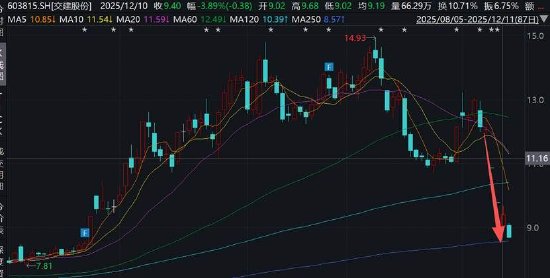
Core Viewpoint - The stock price of Jiaojian Co., a subsidiary of Xiangyuan Group, has been significantly impacted due to the financial troubles of its parent company, Xiangyuan Holdings, which has defaulted on financial products exceeding 10 billion yuan [1][2][9]. Group 1: Financial Impact and Stock Performance - Jiaojian Co. experienced a nearly 30% drop in stock price, while other subsidiaries like Haichang Ocean Park and Xiangyuan Cultural Tourism also saw declines of over 15% and 10% respectively [2][11]. - The market's negative reaction raises questions about whether the clarifications issued by the companies can effectively isolate the risks stemming from the parent company [2][4]. Group 2: Related Party Transactions and Asset Risks - Jiaojian Co. has significant related party transactions with its controlling shareholder, accumulating over 9 billion yuan in receivables from these transactions, which constitutes 13% of its total receivables and contract assets [6][7]. - The company’s receivables and contract assets have increased from 3.2 billion yuan in 2020 to 6.9 billion yuan, representing 68% of total assets as of the latest quarterly report [6][12]. Group 3: Bad Debt Provisions and Financial Health - Jiaojian Co. has a significantly lower bad debt provision for related party receivables (1.27%) compared to external receivables (6.83%), raising concerns about the adequacy of its provisions amid the parent company's financial crisis [13][17]. - The company reported a net profit of 137 million yuan for the first three quarters of the year, a 36.4% increase year-on-year, but faces potential risks of increased bad debt provisions in 2025 [13][15]. Group 4: Cash Flow and Debt Situation - Jiaojian Co. has been experiencing negative operating cash flow, with a trend of increasing cash outflows [15][17]. - The company’s total debt to total assets ratio is 22.43%, and interest expenses account for 41.35% of net profit, indicating a high burden of interest payments on its financial performance [17][18].

Vingroup拟在印投资30亿美元构建现代产业生态
Shang Wu Bu Wang Zhan· 2025-12-11 17:20
Core Insights - Vingroup has signed a memorandum of understanding with the government of Telangana, India, to invest approximately $3 billion in developing a modern industrial ecosystem in the region, marking a significant milestone in the company's international expansion efforts [1][2] Group 1: Investment and Development Plans - The investment will be phased and will cover various strategic sectors including smart cities, high-end manufacturing, healthcare, education, tourism development, renewable energy, charging infrastructure, and green mobility services, with a potential project land area of about 2,500 hectares [1][2] - Specific projects include the development of a large smart sustainable city covering approximately 1,080 hectares and a 500 MW solar power plant occupying around 485 hectares [2] Group 2: Economic and Trade Relations - The collaboration is expected to significantly boost economic growth and industrial upgrading in Telangana, while also enhancing trade relations between Vietnam and India, thereby strengthening connections between the business communities of both countries [2]