家电

Search documents
松下发布中国事业新战略:明星单品、套系家电加码,强调“Made by China”出海丨最前线
3 6 Ke· 2026-03-16 07:13
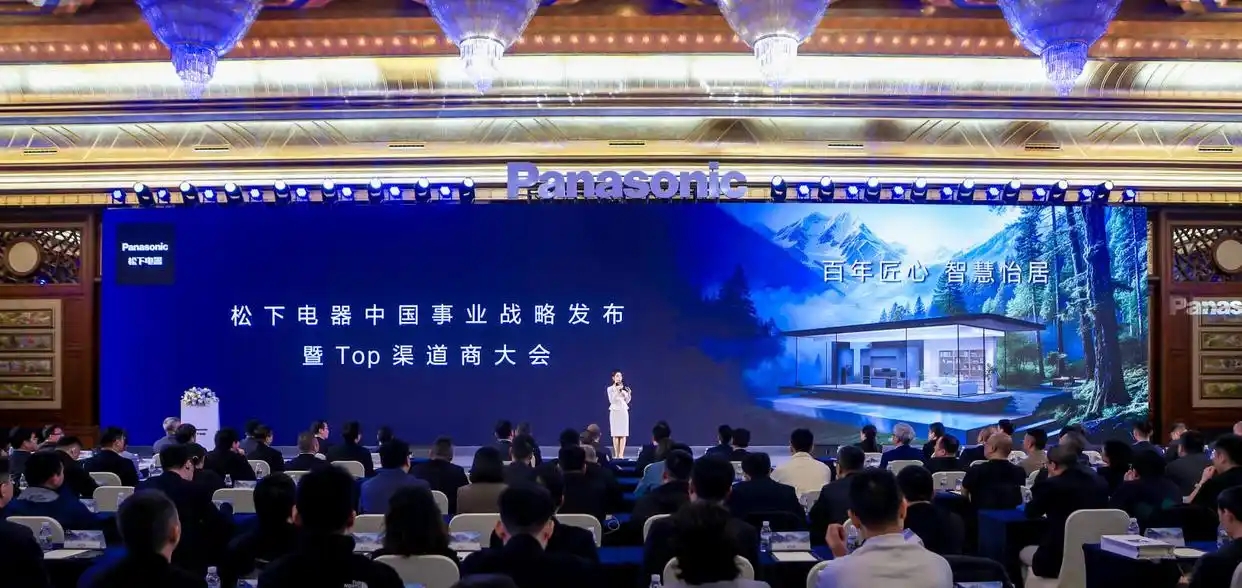
Core Insights - The recent AWE in Shanghai highlighted the challenges and strategies of the home appliance market in China, with Panasonic unveiling its new strategic direction for its Chinese operations [1][3]. Group 1: Market Characteristics - The current characteristics of the Chinese home appliance market include a continuous decline in demand and increasing competition within the existing market, leading to challenges in overall industry growth [3]. - Consumer demand is exhibiting a K-shaped differentiation, indicating varied recovery and growth patterns among different segments [3]. Group 2: Strategic Initiatives - Panasonic's Chinese operations will focus on three main strategies: 1. Continuously launching popular star products, such as the world's first four-tub heat pump washing and drying machine ALPHA G5 and the rice cooker "Fan Guang Guang," while enhancing "living space" solutions based on user experience [4]. 2. Strengthening the "one set of living space" comprehensive solution by launching flagship products like the Himalaya series and upgrading existing product lines by 2026 [4]. 3. Building an open commercial ecosystem to foster deep collaboration and synergy across the entire industry chain [4]. Group 3: Organizational Changes - Panasonic Group will initiate a new business structure in April 2026, transitioning from the China Northeast Asia Company (CNA) to the China Northeast Asia Business (CNAB), which will have a cross-business coordination function [5]. - The CNAB will focus on sustainable development, aiming to provide solutions that balance health and environmental contributions, aligning with the company's Wellness Smart health initiative [5]. Group 4: Global Expansion - Panasonic plans to expand its "Made by China" initiative, promoting innovative products originating from China to the global market, thereby accelerating its global business expansion [6].


每日市场观察-20260316
Caida Securities· 2026-03-16 02:45
Market Overview - On March 16, 2026, A-shares experienced fluctuations around the previous day's closing position, with all three major indices closing down, each declining by less than 1%[1] - The total trading volume in the Shanghai and Shenzhen markets reached 2.42 trillion yuan, a decrease of over 430 billion yuan compared to March 12[1] - Only a few sectors, including food and beverage, construction, banking, and real estate, saw gains, while the majority of sectors declined[1] Sector Performance - Energy-related sectors such as chemicals, wind power, and lithium batteries showed resilience, supporting the market amid a weak overall performance[1] - Technology sectors (computing power, AI) and non-ferrous metals collectively retreated, negatively impacting the indices[1] - Approximately 1,500 stocks rose, with the proportion of rising stocks close to 30%, remaining stable compared to March 12[1] Investment Insights - The market's recent pullback confirms a weak market effect, prompting a defensive investment style among market participants due to geopolitical tensions and energy price fluctuations[1] - Investors are advised to focus on energy-related sectors, blue-chip stocks, and the pharmaceutical sector for potential opportunities[1] Fund Flow - On March 13, the Shanghai Composite Index saw a net outflow of 3.668 billion yuan, while the Shenzhen Composite Index experienced a net inflow of 6.444 billion yuan[5] - The top three sectors for net inflow were infrastructure, batteries, and agricultural chemicals, while IT services, software development, and consumer electronics faced the largest outflows[5] Private Fund Performance - As of the end of February 2026, the average return of private equity funds reached 6.89%, with 85.04% of the 12,270 products achieving positive returns[15]
中国宏观周报(2026年3月第2周):出口集装箱运价上涨-20260316
Ping An Securities· 2026-03-16 01:13
Industrial Sector - Industrial production continues to recover, particularly in the textile and automotive sectors, with significant increases in operating rates[2] - Steel and building materials production has increased, with apparent demand recovering[2] - The operating rate for automotive tires has improved, with the full steel tire operating rate exceeding last year's levels[2] Real Estate Sector - New home sales in 30 major cities increased by 0.9% year-on-year, with a growth rate improvement of 24.2 percentage points compared to the previous week[2] - The second-hand housing listing price index decreased by 1.17% compared to the previous value[2] Domestic Demand - Retail sales of passenger cars in February fell by 25.4% year-on-year, with a cumulative decline of 18.9% for the year[2] - Major home appliance retail sales dropped by 31.1% year-on-year, a decrease of 19.2 percentage points from the previous value[2] - Domestic flight operations increased by 11.3% year-on-year, although the growth rate has slowed by 8.6 percentage points compared to the previous week[2] External Demand - Export container freight rates have risen, with the Shanghai and Ningbo export container freight rates increasing by 14.9% and 10.3%, respectively[2] - The port cargo throughput volume decreased by 6.2% year-on-year, while container throughput increased by 3.7%[2] Price Trends - The industrial product price index rose by 6.3%, with the black raw materials index increasing by 3.6%[2] - The futures price of rebar increased by 1.7%, while the spot price rose by 1.2%[2] - The agricultural product wholesale price index fell by 1.0% week-on-week, indicating seasonal declines[2]
陆家嘴财经早餐2026年3月16日星期一
Wind万得· 2026-03-15 22:55
Group 1 - Global market events include US-China trade talks, key economic data from China, and multiple central bank interest rate decisions [4][6] - Iran's military actions and conditions for ending the conflict are highlighted, with the use of advanced weaponry [5][6] - Rising oil prices have prompted the US and other countries to release strategic oil reserves, with the US planning to release 86 million barrels [5][6] Group 2 - Consumer data shows a rebound in consumption and investment in China, with retail and service consumption growing by 5.7% and 1.1% respectively [8] - The National Development and Reform Commission is focusing on improving consumer protection and standards in response to recent consumer rights issues [8] - The Hong Kong Stock Exchange is consulting on listing mechanism reforms to lower thresholds for dual-class shares and enhance IPO processes [9] Group 3 - The FOF (Fund of Funds) market has seen significant growth, with 40 new products raising a total of 61.973 billion yuan this year [9] - Active equity funds are experiencing a revival, with record subscription numbers for new funds launched recently [10] - Major announcements from listed companies include significant profit changes and strategic asset transfers [12]

能源早新闻丨1700亿!18家央企签约新疆92个项目覆盖能源算力等领域
中国能源报· 2026-03-15 22:33
Group 1: Investment and Economic Development - 18 central enterprises signed cooperation agreements with Xinjiang, covering 92 projects in energy, minerals, computing power, and equipment manufacturing, with an expected investment of approximately 170 billion yuan [2] - During the "14th Five-Year Plan" period, central enterprises in Xinjiang achieved operating income of 6.2 trillion yuan and completed investments of 1.1 trillion yuan, with 265.7 billion yuan invested in 2025, creating 107,000 new jobs [3] - The State Grid's fixed asset investment in January and February reached 75.7 billion yuan, showing a year-on-year growth of 80.6%, indicating significant investment momentum in power grid construction [4] Group 2: Energy Sector Developments - Chongqing's new energy installed capacity has surpassed 10 million kilowatts, reaching 10.07 million kilowatts following the completion of the Ding Shui Wind Power Project [4] - The U.S. Treasury Department has conditionally relaxed restrictions on energy-related transactions with Venezuela, allowing U.S. entities to engage in oil and petrochemical product development and negotiations [5] - Argentina has increased the export withholding tax rate on oil from 3.36% to 8% for several provinces, impacting the oil export sector [5] Group 3: Technological Advancements - A breakthrough in key technologies for "ultra-fine magnetic/red mixed concentrate belt roasting" has been achieved, successfully applied in a 4 million tons/year belt balling production line in Liaoning, providing a mature technical pathway for carbon reduction in the steel industry [7]
2026 AWE落幕:AI热潮下,如何扩大家电消费?
第一财经· 2026-03-15 15:38
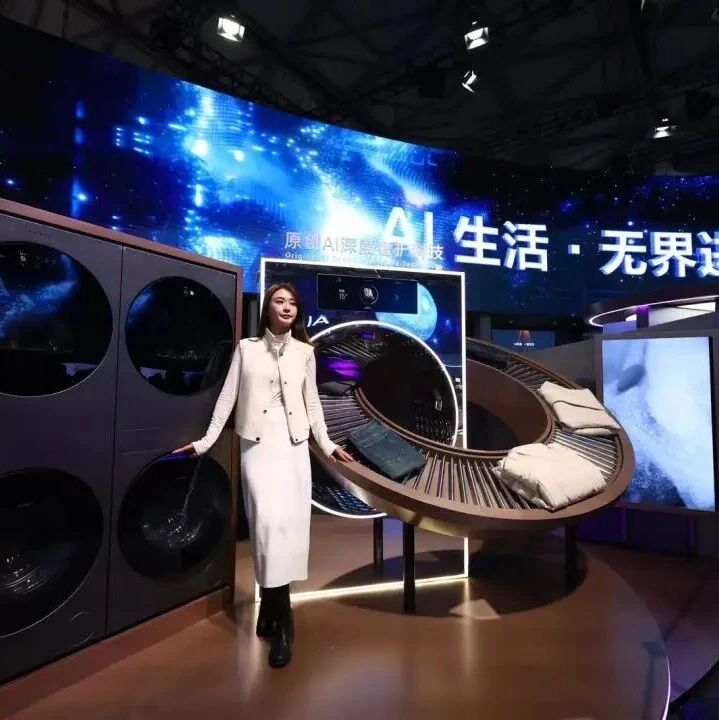
Core Viewpoint - The 2026 AWE showcased a significant shift in the home appliance industry towards AI and robotics, with traditional appliances losing attention as new AI-driven products emerged [3][4]. Group 1: Market Trends and Challenges - The Chinese home appliance market is under pressure, with a projected retail value of 8,931 billion yuan in 2025, reflecting a 4.3% year-on-year decline [6]. - The split-type air conditioner market saw a retail value of 2,357 billion yuan in the previous year, down 0.4%, with expectations of a further decline to 2,195 billion yuan this year, a decrease of 6.9% [6]. - Television sales in China dropped to 27.63 million units last year, indicating a challenging market environment [6]. Group 2: AI Integration and Innovations - AI and robotics are becoming integral to home appliances, with companies like Haier and Midea launching various AI-driven products, such as smart refrigerators and air conditioners that respond to environmental conditions [4][7]. - Haier's CEO revealed that over 9,000 product development suggestions were received via social media, leading to 17 new product initiatives [4]. - The penetration rates for smart air conditioners and refrigerators are increasing, with 26% and 57.35% respectively in the market [12]. Group 3: Strategic Moves by Companies - Gree announced a partnership with JD.com to sell 10 million AI air conditioners over the next three years, expanding its smart home appliance business [7]. - Panasonic is shifting its strategy to promote AI appliances developed in China to global markets, aiming for a 20% revenue share from the Asian market within three years [8]. - New entrants like MOVA are leveraging AI technology to create innovative products, such as AI mobile air conditioning robots, targeting high-cost markets first [13]. Group 4: Consumer-Centric Approach - The industry is increasingly user-driven, with companies focusing on addressing consumer pain points through practical innovations rather than gimmicks [6][12]. - The integration of AI in appliances is seen as a way to enhance user experience and meet evolving consumer demands, with a focus on energy efficiency and comfort [12].
2026年2月CPI涨幅扩大,PPI降幅继续收窄
Ping An Securities· 2026-03-15 14:12
Investment Rating - The industry investment rating is "stronger than the market," indicating that the industry index is expected to outperform the market by more than 5% within the next six months [20]. Core Insights - In February 2026, the Consumer Price Index (CPI) increased by 1.0% month-on-month and 1.3% year-on-year, while the Producer Price Index (PPI) rose by 0.4% month-on-month but decreased by 0.9% year-on-year, with the decline narrowing [2]. - The report anticipates a continued recovery in consumer demand as macroeconomic consumption policies are implemented [2]. - The tourism sector shows potential for growth, with leading companies responding quickly to consumer demand changes [2]. - The beauty industry is experiencing steady growth, with a focus on companies that adapt quickly to market dynamics [2]. - In the jewelry sector, there are investment opportunities in brands with potential market share growth [2]. - The media sector is advised to focus on segments related to consumer sentiment, particularly in gaming [2]. - In the food and beverage sector, leading companies are expected to enhance market share through effective brand management [2]. Summary by Relevant Sections Social Services - The tourism industry is expected to recover, with leading companies providing quality products and responding to consumer changes [2]. - The beauty industry is evolving, with a focus on companies that can quickly adapt to market changes [2]. Food and Beverage - Alcohol - Most liquor companies have seen a deeper decline in net profits compared to the previous quarter, but leading companies are expected to maintain market share through effective management [2]. - Investment focus includes high-end liquor with stable demand, mid-range liquor with national expansion, and local wines with solid market bases [2]. Food and Beverage - General - The dairy sector is seeing improved supply-demand dynamics, with leading companies entering a profit recovery phase [2]. - The restaurant supply chain is stabilizing, with sectors like condiments and frozen foods emerging from a downturn [2]. Key Company Announcements - Lin Qingxuan expects a revenue increase of approximately 98.3% to 102.5% for 2025, driven by multi-channel development and an expanding customer base [8]. - Laopuyin anticipates a revenue increase of 216% to 227% for 2025, reflecting strong market performance [9]. - The company Huangshan Tourism plans to invest approximately 4.12 billion yuan in a comprehensive renovation project to enhance its tourism offerings [8].
松下中山正春:以中国能力重塑全球竞争力
Guo Ji Jin Rong Bao· 2026-03-15 12:39
Core Viewpoint - Panasonic is set to launch a new business structure in April 2026, focusing on three key areas: solutions, components, and smart living, as part of its strategic upgrade from "China for China" to "China for Global" [1][5][6] Group 1: Business Strategy and Structure - Panasonic will transition from the China Northeast Asia Company (CNA) to the China Northeast Asia Business (CNAB), which will have a unique regional structure with cross-business coordination functions [5][9] - The new structure aims to enhance Panasonic's brand value and customer proximity while contributing to society [5][6] - The company has generated over 15 billion RMB (300 billion JPY) in operating cash flow from 2019 to 2024, attributed to product specialization, market engagement, and talent [5][6] Group 2: Competitive Advantages - Panasonic identifies "Chinese cost, Chinese speed, and Chinese model" as core components of its competitive strength in the Chinese market [6][7] - The company views the Chinese market as a leading innovation testing ground due to its rapid technology iteration and high adaptability to new challenges [6][7] Group 3: Product Development and Innovation - The kitchen appliance sector will undergo comprehensive reforms, with decision-making and R&D powers being delegated to Chinese teams to enhance efficiency and product quality [8][9] - Panasonic aims to leverage local talent and capabilities to customize products for different regional demands while maintaining a strong supply chain [7][8] Group 4: Wellness Smart Initiative - The company is committed to providing sustainable living spaces through its Wellness Smart (WS) initiative, which focuses on health, environmental friendliness, and sustainable development [12][13] - Panasonic has established a strategic headquarters for the WS initiative in Shanghai, aiming to integrate AI and IT technologies to improve construction management and deliver high-quality results [13][14] Group 5: Market Performance and Future Outlook - In 2025, Panasonic's direct sales in the appliance sector saw a 106% year-on-year increase, with market share rising over 30% [15] - The company plans to focus on promoting "living space appliances" and will reduce low-margin products to concentrate resources on high-potential offerings [15]

负债32亿!一代空调大王破产
创业家· 2026-03-15 10:08
Core Viewpoint - The article discusses the rise and fall of Chigo Air Conditioning, highlighting its rapid decline from a market leader to bankruptcy within a decade, emphasizing the importance of innovation and market adaptation in the competitive landscape of the air conditioning industry [6][8][24]. Group 1: Rise of Chigo - Chigo Air Conditioning, founded by Li Xinghao, became a significant player in the Chinese air conditioning market during the golden era of the industry, leveraging aggressive pricing and strong distribution strategies to capture market share [7][13]. - By 2004, Chigo's annual sales exceeded 2.8 million units, ranking it among the top five in the industry, and by 2009, it successfully listed on the Hong Kong Stock Exchange, with Li's net worth soaring to 1.8 billion HKD [14][18]. - The company's marketing strategies included high-profile endorsements, such as partnering with Jackie Chan, and ambitious goals to surpass competitors like Gree and Midea [16][18]. Group 2: Fall of Chigo - Chigo's decline began shortly after reaching its peak in 2010, with the company reporting its first loss in 2011, becoming the only major player to do so that year [18][19]. - Li Xinghao's decision to step back from management in 2012 led to a series of financial losses, with the company reporting a loss of 1.408 billion yuan in 2019, triggering delisting from the Hong Kong Stock Exchange [19][20]. - The reduction in R&D investment, which fell to less than 1% of sales, contrasted sharply with competitors who invested significantly more, leading to product failures and a collapse in market share [21][22]. Group 3: Bankruptcy and Restructuring - In February 2026, Chigo officially entered bankruptcy proceedings, with reported debts of 3.2 billion yuan and minimal assets remaining [8][26]. - The restructuring involved separating the core business into a new entity, Guangdong Zhigo Ge Wu Technology Co., effectively allowing the brand to continue operations while shedding historical debts [26][27]. - Despite the bankruptcy, the new entity reported a sales growth of over 45% in 2025, indicating a potential recovery in the overseas market [27][28].

2026 AWE观察:机器人公司来了家电展,家电公司都在做机器人
经济观察报· 2026-03-15 04:06
Core Insights - The 2026 AWE showcased a significant shift towards robotics and AI in the home appliance sector, with major brands like Haier, Midea, and TCL prominently featuring these technologies [2][4][10] - A new standard for smart home interoperability was introduced, aiming to unify communication between devices from different brands, addressing a major pain point in the industry [3][14][15] Group 1: Robotics and AI Innovations - The AWE featured over 60 robot models from various companies, indicating a growing trend of traditional appliance manufacturers entering the robotics space [2][5] - Notable products included the "Eight Realms" robot from Ecovacs, which integrates AI capabilities for task planning, and Haier's "Havva" series of household service robots [4][5] - AI is being integrated into traditional appliances, such as TCL's flagship TV that uses AI for automatic picture adjustments and air conditioners that monitor sleep patterns [10][12] Group 2: Industry Standards and Interoperability - The GIIC alliance announced the OneConnect standard, which aims to facilitate device interoperability across different brands, addressing the current lack of cross-brand communication [14][15] - The standard includes specifications for device access, control interfaces, and safety requirements, covering nearly 200 product categories [16][15] - The push for these standards is driven by both government initiatives and the recognition among companies that collaboration is essential for industry growth [18][19] Group 3: Market Trends and Future Directions - The home appliance industry is at a transformative point, with AI becoming a core driver of innovation, as highlighted by industry leaders during the AWE [19] - The focus is shifting from merely adding smart features to creating products that address consumer pain points and enhance value [10][19] - The establishment of the OneConnect standard is expected to lead to a more cohesive smart home ecosystem, enhancing user experience and driving market growth [17][18]