新能源汽车制造

Search documents
纯电与增程“龙虎斗”造车新势力“技术对调”打破“路线围城”
Zheng Quan Shi Bao Wang· 2025-11-12 02:31
Core Viewpoint - The Chinese electric vehicle market is witnessing a "technical route adjustment," with companies like Xpeng shifting towards range-extended electric vehicles while Li Auto accelerates its focus on pure electric models, reflecting a complex response to market demands and competitive pressures [2][4][11]. Group 1: Market Dynamics - The market currently favors range-extended and hybrid technologies, despite the long-term goal of pure electric vehicles being the ultimate target of policy [4][10]. - Xpeng's new range-extended model, the X9, features a fast-charging lithium iron phosphate battery and a large fuel tank, achieving over 450 km of pure electric range and over 1600 km of total range [5][9]. - Li Auto is increasing its commitment to pure electric vehicles, driven by competitive pressures and the need to adapt to market trends [6][10]. Group 2: Competitive Landscape - The sales of pure electric vehicles have surpassed 60% of total new energy vehicle sales in China from January to September this year, indicating a shrinking market for range-extended vehicles [6][10]. - Companies like Lantu are also entering the range-extended market, with models like the Lantu Taishan gaining traction, showcasing the competitive nature of this segment [6][9]. - The shift towards range-extended vehicles is seen as a strategic move to capture market share and respond to consumer preferences, with Xpeng's strategy viewed as a way to maintain brand value without resorting to price cuts [9][12]. Group 3: Strategic Implications - The dual approach of offering both pure electric and range-extended models is seen as a way to maximize market opportunities while addressing consumer needs [10][12]. - The integration of both technologies allows companies to leverage the benefits of each, with range-extended vehicles providing a solution to range anxiety while maintaining the driving experience of pure electric vehicles [12][13]. - The ongoing competition in the range-extended segment is expected to intensify, with more players entering the market, leading to a scenario where only the strongest will survive [9][10].



纯电与增程“龙虎斗” 造车新势力“技术对调”打破“路线围城”
Zheng Quan Shi Bao· 2025-11-11 17:58
Core Viewpoint - The Chinese electric vehicle market is witnessing a shift in technology strategies, with companies like Xiaopeng Motors and Li Auto adjusting their approaches to include both pure electric and range-extended vehicles, reflecting market demands and competitive pressures [1][2][6]. Group 1: Xiaopeng Motors' Strategy - Xiaopeng Motors has launched its first range-extended model, the Xiaopeng X9, featuring a fast-charging lithium iron phosphate battery and a large fuel tank, achieving a pure electric range of over 450 kilometers and a combined range exceeding 1600 kilometers [2]. - The company plans to adopt a dual strategy of offering both pure electric and range-extended vehicles in the future, responding to market demands where traditional fuel vehicles still hold significant market share [2][6]. - Xiaopeng's shift towards range extension is seen as a necessary compromise to address challenges such as reduced range in winter and insufficient charging infrastructure in lower-tier cities [2][6]. Group 2: Li Auto's Transition - Li Auto, initially focused on range-extended vehicles, is now increasing its efforts in the pure electric segment due to competitive pressures and the need to diversify its offerings [3][7]. - The company faces competition from other brands in the range-extended market, which has prompted it to explore pure electric options to maintain market relevance [7]. - Data indicates that pure electric vehicles accounted for over 60% of total new energy vehicle sales in China from January to September this year, with a significant increase in sales of pure electric large SUVs [3]. Group 3: Market Dynamics and Consumer Preferences - The market is evolving towards a dual approach where both pure electric and range-extended vehicles coexist, driven by consumer preferences and technological advancements [8][12]. - The competition in the range-extended segment is intensifying, with multiple companies, including Lantu and others, planning to enhance their offerings in this area [3][10]. - The overall trend suggests that while pure electric vehicles are the long-term goal, range-extended and hybrid technologies will play a crucial role in the short to medium term as the market transitions [11][12].
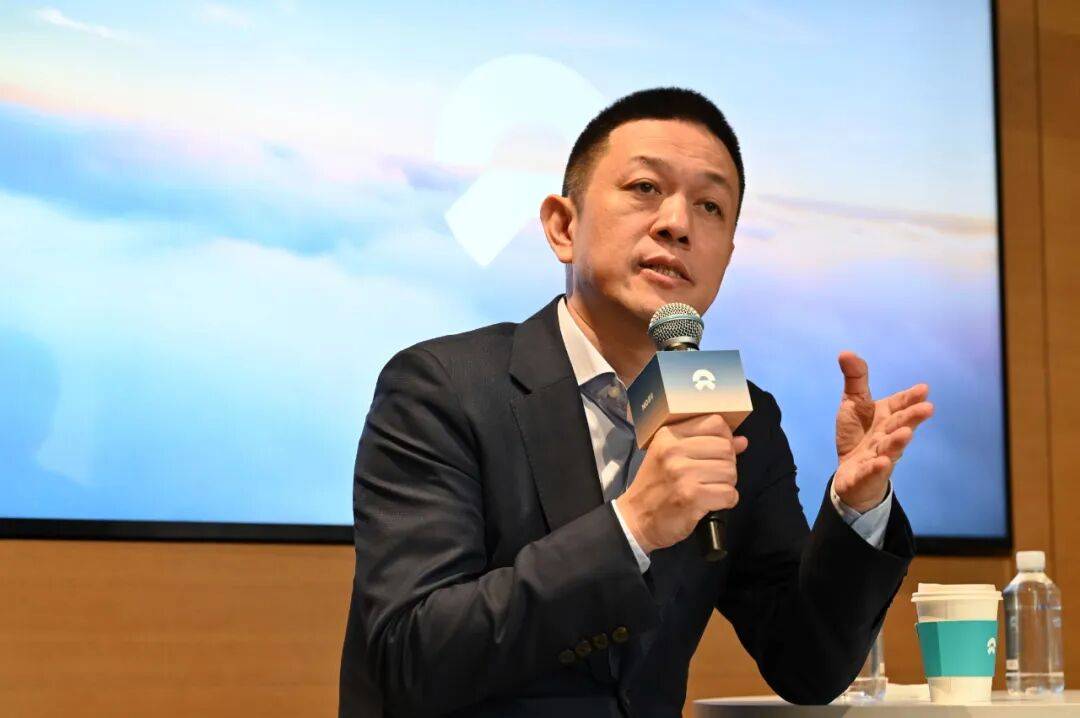
蔚来李斌回应被网暴:CEO责任之一是娱乐大家,只要不说我的家人、我的用户
Sou Hu Cai Jing· 2025-11-10 09:37
Group 1 - Li Bin, the founder of NIO, addressed the issue of online harassment during a user event, stating that as long as the comments do not target his users or family, he remains indifferent to the rumors and online attacks [1] - Li emphasized the responsibility of a CEO to entertain the public and mentioned that any significant defamation against the company or its users is unacceptable, indicating that the legal team is actively involved in handling such matters [1] Group 2 - Recent business changes at NIO Battery Technology (Anhui) Co., Ltd. were reported, with Li Bin transitioning from chairman to director, and He Xu taking over as the legal representative and general manager [3] - The company, established in October 2022 with a registered capital of 2 billion RMB, is involved in various sectors including battery manufacturing, sales, and research in electronic materials and artificial intelligence [3] Group 3 - NIO's latest financial report revealed that the company generated revenue of 19.01 billion RMB in Q2 2025, marking a year-on-year increase of 9% and a quarter-on-quarter increase of 57.9% [3] - The net loss for the same period was reported at 4.995 billion RMB, slightly improved from a net loss of 5.046 billion RMB in the same quarter of the previous year [3]

“国民好车”究竟好在哪
Chang Sha Wan Bao· 2025-11-07 10:27
Core Viewpoint - The launch of the "National Good Car" by the collaboration of JD.com, GAC, and CATL has generated significant attention due to its innovative "three-party cooperation" model, which combines the strengths of leading companies in their respective fields [1] Market Insights - The "National Good Car" is designed based on extensive consumer insights from over 700 million users and targeted surveys, capturing key consumer demands for price, space, safety, and range [2] - Key consumer expectations include: 83% of users want a price below 100,000 yuan, 94% prioritize spaciousness and seating comfort, 99% consider safety as the top priority, and 96% focus on range and charging efficiency [2] Manufacturing Excellence - The manufacturing of the "National Good Car" takes place at GAC Aion's Changsha Eco-Smart Factory, which meets top global standards in smart technology, digitalization, and environmental sustainability [2] - The vehicle emphasizes safety with a high-strength steel-aluminum hybrid body, featuring 28% of 1500MPa submarine-grade hot-formed steel, and utilizes advanced manufacturing techniques similar to those used in Tesla's Cybertruck [2] Battery Technology and Ecosystem - CATL, as the world's leading battery supplier, provides standardized batteries that enable rapid battery swapping in just 99 seconds [3] - The establishment of a battery swapping ecosystem, supported by CATL's chocolate battery swapping stations, enhances the operational efficiency for multiple car manufacturers, increasing the likelihood of mutual benefits for both car companies and owners [3] Overall Value Proposition - The "National Good Car" represents a comprehensive system of excellence, from data-driven design by JD.com to advanced manufacturing by GAC and reliable battery technology from CATL, creating a well-rounded product that is uniquely positioned within China's advanced industrial landscape [3] - The collaboration between JD.com, GAC, and CATL is seen as a starting point for future innovations in the electric vehicle sector, promising ongoing evolution and benefits for both China and the global market [3]
赛力斯港股上市,张兴海:提供符合全球用户期待的产品和服务
Ge Long Hui· 2025-11-07 01:13
Core Viewpoint - The successful IPO of Seres on the Hong Kong Stock Exchange marks a significant milestone for the company and the Chinese new energy vehicle industry, showcasing its transition from domestic competition to global engagement [1][3][17]. Company Development - Seres has evolved from a parts supplier to a key player in the high-end new energy vehicle sector over nearly 40 years, completing three major transitions [5]. - The company partnered with Dongfeng Motor in 2003 to enter vehicle manufacturing and shifted focus to new energy vehicles in 2016, leading to explosive growth [5][8]. - The collaboration with Huawei in 2021 resulted in the launch of the high-end smart electric vehicle brand "Aito," establishing a strong market presence [5][7]. Financial Performance - Seres' revenue surged from 35.8 billion yuan in 2023 to 145.1 billion yuan in 2024, a year-on-year increase of 305.5% [7]. - The company turned a profit in 2024, achieving a net profit of 5.9 billion yuan after a net loss of 2.4 billion yuan in 2023, becoming the fourth global new energy vehicle company to achieve profitability [7][8]. - In the first three quarters of 2025, Seres reported revenues of 110.53 billion yuan and a net profit of 5.31 billion yuan, indicating ongoing improvement in profitability [7]. Market Dynamics - The dual push from domestic policies and market demand has created a favorable environment for the new energy vehicle industry, with government incentives stimulating consumer purchases [9][10]. - The global market for new energy vehicles is expected to grow significantly, with projected sales reaching 42.3 million units by 2030, reflecting a compound annual growth rate of 16.3% from 2024 to 2030 [10]. Global Expansion - Seres has established a presence in key international markets, including Europe and the Middle East, capitalizing on the growing demand for high-end smart vehicles [13]. - The company’s export price for new energy vehicles increased from $5,000 to $40,000, with overseas revenue growing by 145% year-on-year in the first half of 2025 [13]. - The global expansion strategy is expected to enhance Seres' growth potential, transitioning from a "Chinese brand" to a "global brand" [13]. Capital Market Support - The IPO attracted significant interest from cornerstone investors, including sovereign funds and top public funds, raising a total of $826 million, indicating strong market confidence in Seres' business model and growth prospects [15][16]. - The dual listing strategy ("A+H") allows Seres to leverage both domestic and international capital markets, providing diverse financing options [16]. Industry Implications - Seres' successful listing serves as a model for other Chinese new energy vehicle companies, promoting a shift from domestic competition to global resource integration [16]. - The company's approach of combining capital, technology, and globalization is expected to enhance the overall competitiveness of the Chinese new energy vehicle industry on the global stage [16][17].

一度涨超14%!小鹏汽车,现场自证
Zhong Guo Ji Jin Bao· 2025-11-07 00:18
Core Viewpoint - XPeng Motors experienced a significant stock price increase, with shares rising over 14% during intraday trading and closing nearly 10% higher following the demonstration of its humanoid robot, IRON, by CEO He Xiaopeng, who confirmed that the robot contains no human inside [2][5][6]. Group 1: Robot Demonstration - He Xiaopeng publicly showcased the internal structure of the IRON robot at the launch event, cutting open its left foot to dispel rumors of a human inside [5][6]. - The demonstration was a response to public skepticism following the robot's debut at the 2025 XPeng Technology Day, where its lifelike appearance raised questions about its authenticity [6][8]. - He Xiaopeng expressed emotional difficulty in convincing the robot team to conduct a second demonstration, highlighting the team's attachment to the robot [6][9]. Group 2: Entry into Extended Range Market - XPeng Motors officially entered the extended range market with the launch of its new Kunpeng Super Extended Range technology and the pre-sale of its first extended range model, the XPeng X9 [5][11]. - The decision to enter this market was driven by the need to cater to global users facing different charging infrastructure challenges, as identified in market research conducted in Mexico and Australia [12]. - He Xiaopeng emphasized that XPeng Motors aims to be more than just a pure electric vehicle company, indicating a strategic shift in its business model [11][12]. Group 3: Future Projections - He Xiaopeng predicted a significant increase in revenue and sales scale for XPeng Motors in 2026 and 2027 compared to 2025, driven by the new extended range offerings [12]. - The company aims to address five core pain points of traditional extended range vehicles, including short electric range and slow charging speed, through its new technology [12].
京东、广汽、宁德时代三方联手!埃安UT Super下线,10万级新能源车如何突围?
Bei Jing Shang Bao· 2025-11-06 12:52
Core Insights - The Aion UT Super, a collaboration between JD.com, GAC, and CATL, officially rolled off the production line on November 5, with a market price expected around 100,000 yuan [2][8] - The vehicle targets the mass market with a focus on battery swapping technology and aims to enhance user experience through a robust service network [5][9] Pricing and Market Positioning - The anticipated price range for the Aion UT series is between 69,800 and 101,800 yuan, with market predictions centering around 100,000 yuan [8] - 83% of surveyed users expect the price to be below 100,000 yuan, indicating a strong demand for affordability in the competitive EV market [3] Product Features and Technology - The Aion UT Super features CATL's "chocolate battery," offering a range of 500 kilometers and a rapid battery swap time of approximately 85 seconds [3][4] - Advanced manufacturing techniques, such as laser spiral welding and AI visual inspection, have been implemented to enhance production efficiency and vehicle safety [3] Sales and Service Strategy - The vehicle will be available in both purchase and rental models, with the rental option providing lifetime battery warranty from CATL [4][7] - JD.com is establishing delivery centers to enhance customer service, integrating online and offline sales channels for improved accessibility [6] Infrastructure Development - CATL plans to build 1,000 battery swap stations this year, with a long-term goal of 30,000 stations to ensure convenient access for users [5][9] - The current coverage of battery swap stations is limited, which may affect user experience if not addressed promptly [9] Competitive Landscape - The 100,000 yuan EV market is highly competitive, with strong contenders like BYD Dolphin, which has sold 183,924 units this year [8] - Differentiation through marketing and service offerings will be crucial for the Aion UT Super to stand out in a crowded market [8][9]



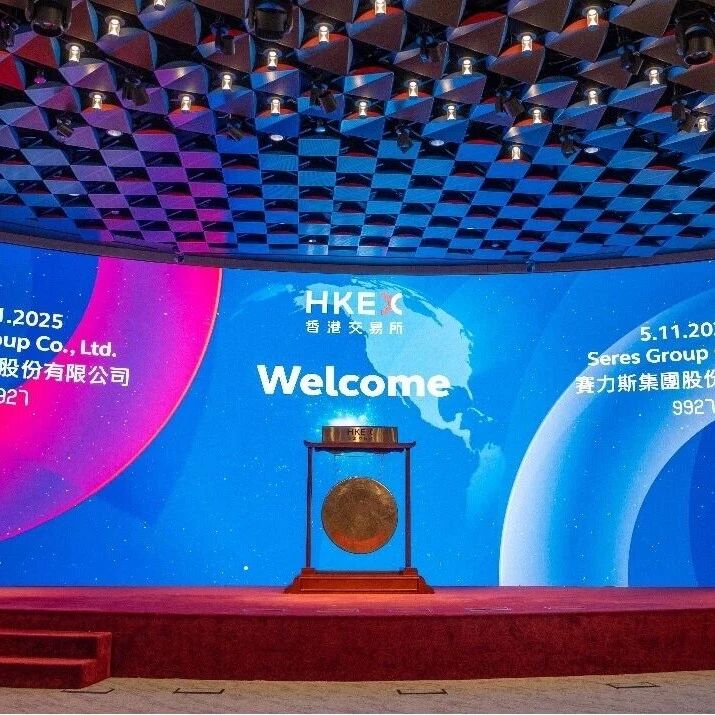
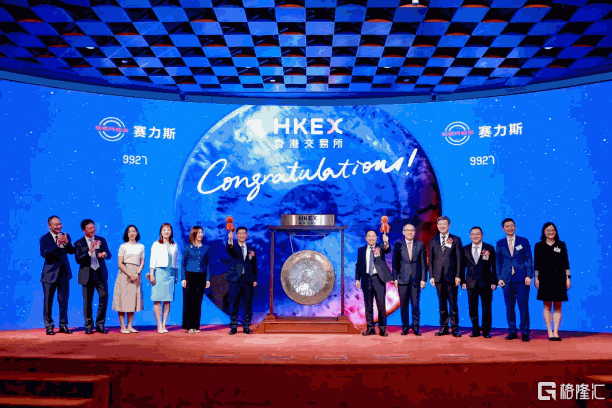
张兴海敲响港交所铜锣,赛力斯(09927)“A+H”协同高质量发展
Zhi Tong Cai Jing· 2025-11-06 04:01
Core Viewpoint - Company Saisir has officially become the first luxury new energy vehicle company to be listed in both A and H shares, solidifying its leading position in the luxury new energy vehicle market with a market share above 500,000 yuan [1][3] Fundraising and Financial Strategy - Saisir's IPO raised a net amount of 14 billion HKD, marking it as the largest IPO for a Chinese car company to date and the largest globally since 2025 [3] - The company plans to allocate 70% of the funds raised for R&D, 20% for diversified marketing, overseas sales, and charging network services, and 10% for operational funds [3] Product Performance and Market Position - The Wanjie series has achieved significant sales, with the Wanjie M9 leading the luxury vehicle segment with over 250,000 units delivered in 21 months [4] - The Wanjie brand contributed 90.3% of the company's revenue in the first half of 2025, showcasing its dominance in the luxury new energy vehicle market [3][6] Technological Advancements - Saisir has established four core technological advantages: leading technology platform, superior range extension technology, advanced driver assistance experience, and intelligent safety features [8][9] - The Wanjie M9 features over 40 advanced technologies, including industry-first innovations, which have contributed to its popularity among consumers [6] Financial Performance and Profitability - The company's gross margin improved to 26.5% in the first half of 2025, a significant increase compared to previous years, positioning it favorably against competitors [7] - Saisir is the fourth global new energy vehicle company to achieve profitability, with net profits of 5.946 billion yuan and 2.941 billion yuan for 2024 and the first half of 2025, respectively [7] Market Growth and Future Outlook - The global new energy vehicle market is expected to grow significantly, with China's penetration rate projected to reach 76.9% by 2030 [12] - Saisir's strategic partnerships and technological advancements position it well to capitalize on this growth, with expectations of continued strong sales and market share [15][16]
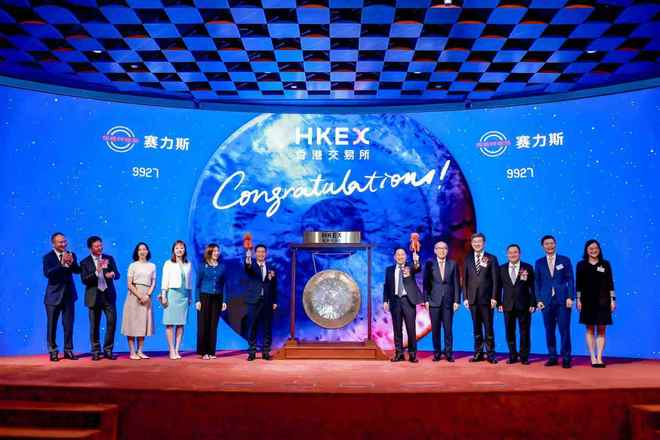
赛力斯正式挂牌港交所 开拓内地高端车全球新赛道
Xin Hua Wang· 2025-11-05 15:09
Core Viewpoint - Seres Group has become the first luxury new energy vehicle company to be listed in both A-share and H-share markets, marking a significant milestone in the industry [1] Group 1: Listing and Financial Performance - Seres Group was listed on the Hong Kong Stock Exchange on November 5, achieving a total market capitalization of HKD 228 billion at the close of trading [1] - The company raised a net amount of HKD 14.016 billion, making it the largest IPO for a mainland car company to date and the largest globally since 2025 [1] - The trading volume reached 18.59 million shares on the first day of listing [1] Group 2: Government Support and Market Trends - The Financial Secretary of the Hong Kong Special Administrative Region highlighted that over half of the companies listed in Hong Kong this year have international business operations, with an average of about half of their revenue coming from overseas markets [1] - The government plans to continue optimizing the system to enhance the vitality and competitiveness of the Hong Kong market, aiming to attract more investors and capital [1] Group 3: Future Plans and Strategic Focus - The funds raised will be primarily invested in global product research and development, marketing services, channel construction, and global production capacity [1] - The Chairman of Seres Group emphasized the company's commitment to advancing intelligent safety and green low-carbon development in the global automotive industry [1] - Seres aims to leverage its dual capital platform to strengthen safety and experience, promoting the brand's growth and accelerating the entry of Chinese high-end new energy vehicle brands into the global market [1]
赛力斯登陆港股 开启中国新能源汽车全球化新篇章
经济观察报· 2025-11-05 10:49
Core Viewpoint - The successful IPO of Seres (9927.HK) on November 5, 2025, is a significant milestone for both the company and the Chinese new energy vehicle (NEV) industry, marking a strong signal of the industry's overall upgrade [1][2]. Group 1: IPO Details - Seres raised a net amount of HKD 14.016 billion, making it the largest IPO for a Chinese car company to date and the largest globally in 2025 [2]. - The IPO involved the issuance of 100.2 million H shares, with a maximum offer price of HKD 131.50 per share [9]. - The offering attracted 22 cornerstone investors, with total subscriptions amounting to approximately USD 826 million, representing 49% of the total offering [9][11]. Group 2: Global Strategy - Seres is implementing an "A+H" dual-platform strategy to accelerate its global expansion and showcase the core competitiveness of "Chinese manufacturing" in the high-end NEV sector [6][7]. - The funds raised will be allocated as follows: approximately 70% for R&D, 20% for diversified marketing channels and overseas sales, and 10% for working capital [9]. Group 3: Financial Performance - In 2024, Seres achieved a revenue of CNY 145.114 billion, a year-on-year increase of 305.47%, with a net profit of CNY 5.946 billion and a gross margin of 23.8% [13]. - For the first three quarters of 2025, the company reported a revenue of CNY 110.534 billion and a net profit of CNY 5.312 billion, reflecting a year-on-year growth of 31.56% [13]. Group 4: Technological Innovation - Seres has established a robust technological foundation, including the Seres Super Range Extender and the Seres Magic Cube technology platform, which enhances its competitive edge [15]. - The company has significantly increased its R&D investment, reaching CNY 5.198 billion in the first half of 2025, a 154.9% increase year-on-year [14]. Group 5: Market Positioning - The brand "Wenjie" is positioned as "China's Mercedes-Benz and BMW," reflecting its dual advantages in luxury and technology [15]. - Seres plans to establish 100 brand experience centers in Europe and the Middle East by 2026, along with a comprehensive charging network [15]. Group 6: Industry Impact - Seres' IPO is seen as a pivotal moment for the Chinese NEV industry, indicating a shift towards profitability and competitiveness in the global market [13][16]. - The company's success serves as a model for the transformation of China's manufacturing sector, emphasizing innovation, sustainability, and high-quality development [18][21].