
智能手机

Search documents
雷军曾青睐的魅族手机为何“停摆”?
Jing Ji Guan Cha Wang· 2026-02-27 04:55
Core Viewpoint - Meizu's mobile business is facing a significant decline, with plans to cease operations by March 2026, marking a dramatic shift for a once-prominent brand in the smartphone market [1][2]. Group 1: Business Status - Meizu's mobile business has effectively entered a state of suspension, with the planned launch of the Meizu 23 series halted and a team-wide layoff implemented [1]. - The company announced a pause on domestic new product hardware development while seeking third-party hardware partnerships, claiming existing operations remain unaffected [1]. - In 2025, Meizu's market share in China is projected to fall below 1%, indicating a severe loss of presence in the competitive landscape [5]. Group 2: Historical Context - Founded in 2003, Meizu initially thrived in the music player market before transitioning to smartphones with the launch of the M8 in 2007, which gained significant consumer traction [2]. - The brand's decline began after failing to capitalize on critical market opportunities during the smartphone industry's evolution, leading to a series of strategic missteps [3]. - Meizu's attempts to reposition itself through various strategies, including the launch of the Meilan brand and a focus on high-end products, did not yield the desired results [3][4]. Group 3: Financial and Operational Challenges - The company has faced increasing financial losses, prompting its parent company, Geely, to halt further investments due to unsustainable losses [5]. - Reports indicate that Meizu has struggled with supplier payments, leading to significant outstanding debts and contributing to its potential bankruptcy [5]. Group 4: Future Prospects - Despite the impending closure of its mobile division, Meizu's FlymeAuto vehicle system will continue to operate independently, with existing partnerships and potential future collaborations with automotive brands [6]. - The Meizu brand may persist within Geely's ecosystem, with some employees transitioning to roles in Geely's Zeekr automotive brand [6]. Group 5: Industry Insights - The decline of Meizu serves as a cautionary tale about the necessity for continuous innovation and strategic planning in a highly competitive market [7].
国内手机市场大涨价?消息称3月后新品涨幅最低超1000元
WitsView睿智显示· 2026-02-27 04:35
Core Viewpoint - The Chinese smartphone industry is expected to experience a comprehensive price increase starting in March 2026, marking the first time all brands and product categories will see synchronized price hikes [1][2]. Group 1: Price Increase Details - From March 2026, the price increase will accelerate, with new models expected to rise by at least 1,000 yuan, while older models from major brands like OPPO, OnePlus, vivo, iQOO, Xiaomi, and Honor will also see price adjustments [1]. - The price hikes for mid-to-high-end flagship models could reach between 2,000 to 3,000 yuan [1]. - This price increase is not isolated to individual brands but is a necessary trend across the entire industry [1]. Group 2: Causes of Price Increase - The primary driver behind this price surge is the significant and unavoidable fluctuations in memory costs, particularly due to a structural shortage in mobile memory caused by the explosive growth of AI servers [1][2]. - Recent data indicates that the prices of mobile storage chips have surged over 300% in the last three months, with 1TB flash memory costs rising from over 200 yuan in 2025 to nearly 600 yuan [2]. - The first quarter of 2026 saw DRAM prices increase by 80%-95%, with the cost of 12GB LPDDR5X memory rising from 200 yuan to nearly 600 yuan [2].

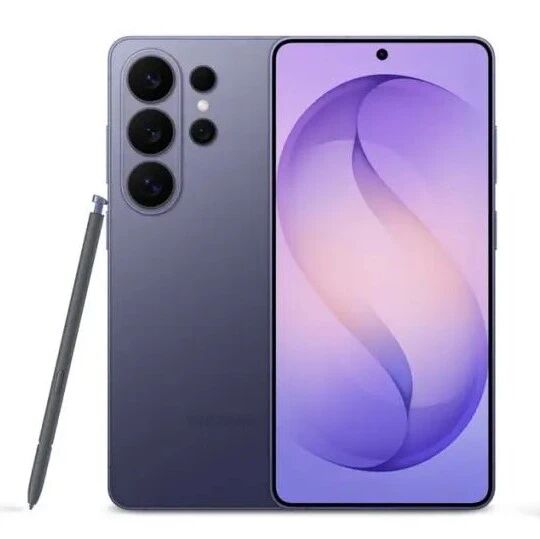
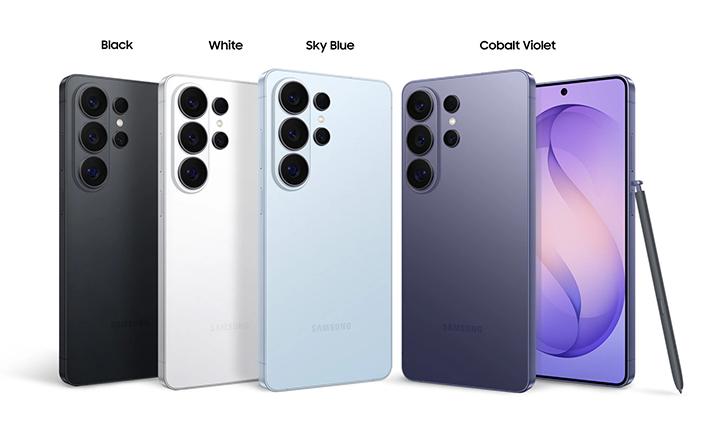
三星发布首款防窥屏旗舰手机Galaxy S26 Ultra
WitsView睿智显示· 2026-02-27 04:35
Group 1 - The Galaxy S26 Ultra features the fifth-generation Snapdragon 8 Gen 2 for Galaxy custom chip, with a significant NPU performance increase of approximately 39%, image processing performance enhancement of 24%, and CPU performance improvement of about 19% [2] - It is equipped with a 6.9-inch 3120 x 1440 QHD+ second-generation dynamic AMOLED display, supporting a refresh rate of 1 to 120Hz and a peak brightness of 2600 nits, with a color depth upgrade to 10-bit [2] - A notable feature is the built-in privacy anti-peep function, which differs from traditional anti-peep phone films by precisely controlling the light direction and range of the screen pixels, offering personalized settings for specific applications and notifications [2] Group 2 - The Galaxy S26 Ultra has a thickness of 7.9 mm and weighs 214 grams, featuring an upgraded enhanced armor aluminum frame, available in four standard colors and two exclusive colors [6] - It supports up to 16GB of RAM and 1TB of storage, and includes four rear cameras: a 200MP main camera, a 50MP ultra-wide camera, and either a 50MP or 10MP telephoto camera, with 3x and 5x optical zoom capabilities, plus a 12MP front camera [6] - The device supports various AI features such as photo editing, photo-to-sticker conversion, instant briefing, and Bixby smart assistance, with a suggested retail price starting at 9999 yuan [6]
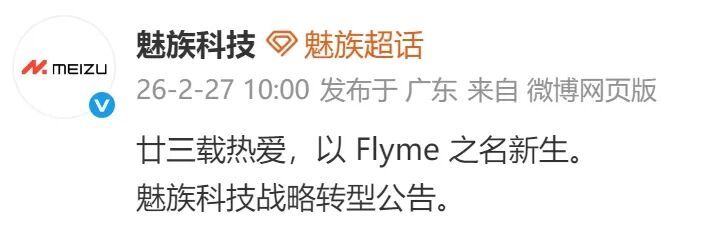
魅族回应破产退市传闻
Xin Lang Cai Jing· 2026-02-27 03:58
Core Viewpoint - Meizu officially announced a strategic transformation, pausing the development of new domestic smartphone hardware projects while maintaining existing business operations [1][4]. Group 1: Strategic Shift - Meizu will suspend the self-research hardware projects for new domestic smartphones and is actively seeking third-party hardware partners [1]. - The company emphasizes that this pause is a strategic choice to focus resources on enhancing the Flyme software ecosystem, aiming to provide system ecological empowerment for various smart devices [4][6]. Group 2: Market Context - The domestic smartphone market has become increasingly competitive, leading many brands to opt for strategic contraction [4]. - Rising memory prices have made the commercialization of new products challenging, prompting Meizu to reconsider its approach [4][6]. Group 3: Future Directions - Meizu plans to transition from a hardware-driven model to one focused on AI-driven software products, with the goal of creating a robust Flyme ecosystem [4]. - The Flyme Auto business is expected to maintain independent operations and integrate more deeply into Geely's smart automotive landscape, with a target of 3 million units by 2026 [5]. Group 4: Historical Context - Meizu was one of the early smartphone brands, launching its first model in 2009, but has struggled to compete with larger brands like Huawei and Xiaomi [5]. - The company previously sought strategic partnerships, including a collaboration with Alibaba in 2015, but did not achieve the anticipated growth [5]. Group 5: Recent Developments - In February 2024, Meizu announced an "All in AI" strategy, aiming to build AI terminals and reconstruct the Flyme system [6]. - The cancellation of the Meizu 22 Air due to rising memory costs indicates ongoing challenges in the smartphone segment [6].
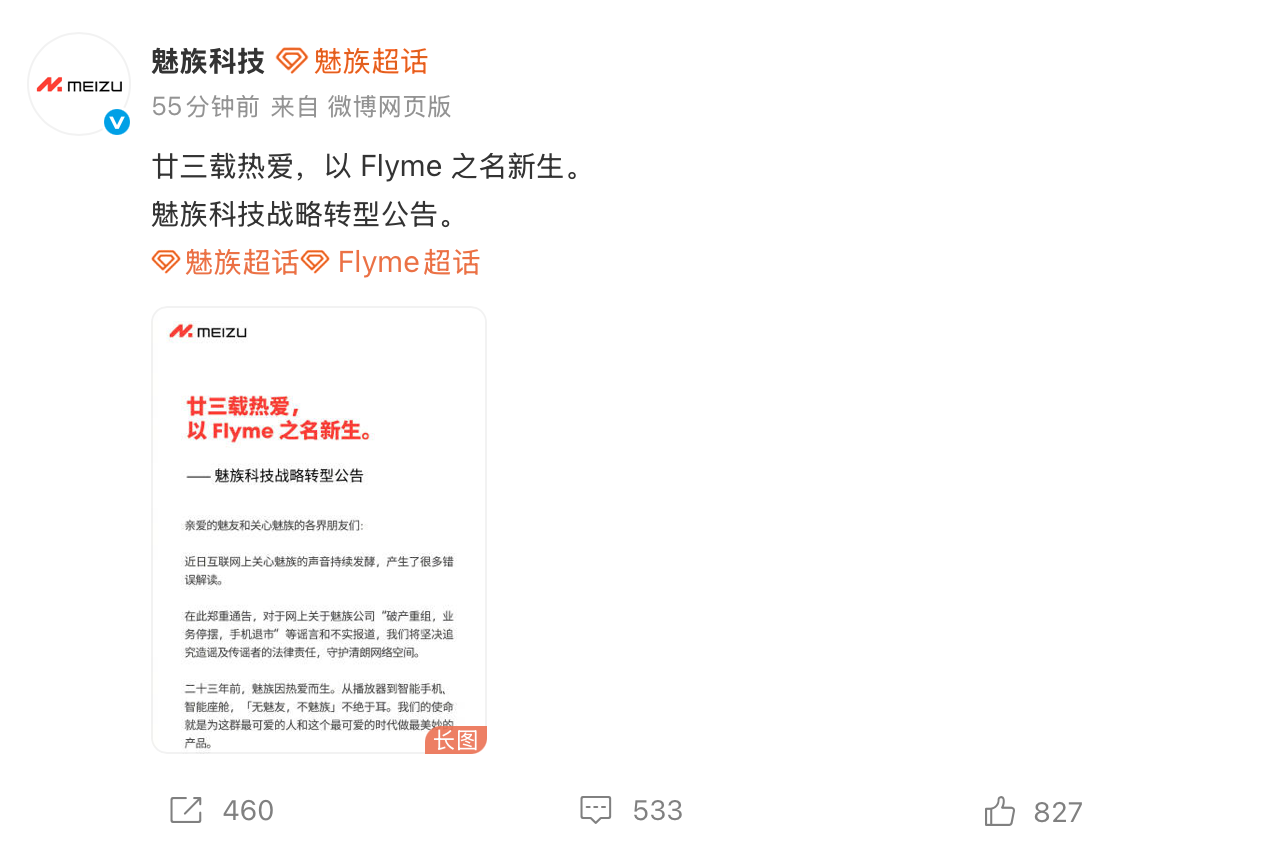
魅族回应“手机退市”等传闻:暂停国内手机自研,全面转向Flyme AI生态
Bei Jing Shang Bao· 2026-02-27 03:41
Core Viewpoint - Meizu Technology denies rumors regarding bankruptcy restructuring, business suspension, and smartphone delisting, announcing a strategic transformation towards an AI-driven ecosystem [1] Group 1: Strategic Changes - The company will suspend the development of new domestic smartphone hardware projects and actively seek third-party hardware partnerships [1] - Meizu will fully transition to an AI-driven Flyme open ecosystem, focusing on software-enabled businesses such as smart cockpit solutions [1] Group 2: Existing Business Operations - The existing business operations will not be affected, and the company will ensure the after-sales rights of current users are protected [1]
魅族官宣暂停国内手机新产品自研硬件项目,多个平台官方渠道手机已无货
Xin Lang Cai Jing· 2026-02-27 03:36
Core Viewpoint - Meizu is pausing the development of new hardware projects for domestic smartphones and is actively seeking third-party hardware partners, while existing operations will remain unaffected. The company aims to strategically transform from a hardware-centric model to an AI-driven software product focus, establishing a sustainable enterprise based on the Flyme open ecosystem [2]. Group 1: Strategic Shift - Meizu is transitioning from a hardware-led approach to an AI-driven software product strategy in response to intense competition in the domestic smartphone market [2]. - The company plans to build a sustainable enterprise centered around the Flyme open ecosystem [2]. Group 2: Market Challenges - The ongoing surge in memory prices has made the commercial viability of new products increasingly difficult, prompting Meizu to reconsider its product development strategy [2]. - Many brands in the domestic smartphone market have opted for strategic contraction due to fierce competition [2]. Group 3: Current Product Availability - Meizu's official flagship stores on platforms like Tmall and Pinduoduo currently show no smartphones for sale, indicating that products are sold out [5]. - The Meizu official website also displays messages indicating that products are "restocking" or "sold out," with customer service confirming that the company is working on replenishing stock [8]. Group 4: Historical Context - Founded in 2003, Meizu was a leader in the domestic music player market and gained a foothold in the smartphone market with the release of its first smartphone, the M8, in 2007 [8]. - In 2014, Meizu achieved over 20 million units sold in a year, marking a 350% year-on-year growth and entering the top 10 of domestic smartphone brands [8]. - In July 2022, Geely Holding Group acquired a 79.09% stake in Meizu, aiming to integrate mobile and automotive software technologies [8]. Group 5: Future Plans - Meizu's "All in AI" strategy announced in February 2024 aims to develop AI terminals, restructure the Flyme system, and build an AI ecosystem [8]. - The Flyme Auto system is projected to exceed 2.26 million units in vehicle installations by 2025, with a target of 3 million units in collaboration with Geely Group by 2026 [9].
三星存储部门漫天要价,苹果照单全收
3 6 Ke· 2026-02-27 03:31
Core Insights - The pricing strategy for memory chips is significantly impacting the profitability of Samsung's Galaxy S26 series, with a 100% price increase for LPDDR5X memory chips quoted to Apple being accepted immediately, indicating fierce competition among smartphone manufacturers for memory inventory [1][4][5] Group 1: Memory Chip Pricing and Supply Dynamics - Samsung's semiconductor division has raised the price of LPDDR5X memory chips for Apple, which will be used in the iPhone 17 series, to double the previous price, reflecting the tight supply conditions in the memory market [4][5] - Samsung's semiconductor division has abandoned long-term supply agreements in favor of quarterly contracts to maximize profits amid rising memory prices [1][5] - The initial production of the Galaxy S26 series will see memory supplied equally by Samsung's semiconductor division and Micron Technology, each providing 50% of the required LPDDR5X memory [1][6] Group 2: Impact on Samsung's Mobile Experience Division - The price increase from Samsung's semiconductor division will also affect the pricing for the mobile experience division, which is expected to face significant profitability challenges due to rising memory costs [5][10] - Samsung's mobile experience division is attempting to mitigate cost pressures by increasing the proportion of in-house developed Exynos 2600 processors in the S26 series, which is expected to account for about 30% of the chip usage [9][10] - Despite raising the retail prices of the Galaxy S26 series (S26 at $899 and S26+ at $1099), the measures taken may not fully offset the increased costs from memory price hikes [9][10] Group 3: Product Specifications and Features - The Galaxy S26 series maintains a similar design and functionality to its predecessor, with all models featuring 12GB of memory and starting storage of 256GB [10] - The base model S26 has a slightly larger screen size of 6.3 inches and an increased battery capacity of 4300mAh, while the camera specifications remain largely unchanged from the S25 series [10] - New features include advanced video stabilization, AI auto-framing, and audio erasure capabilities for popular streaming platforms [10]
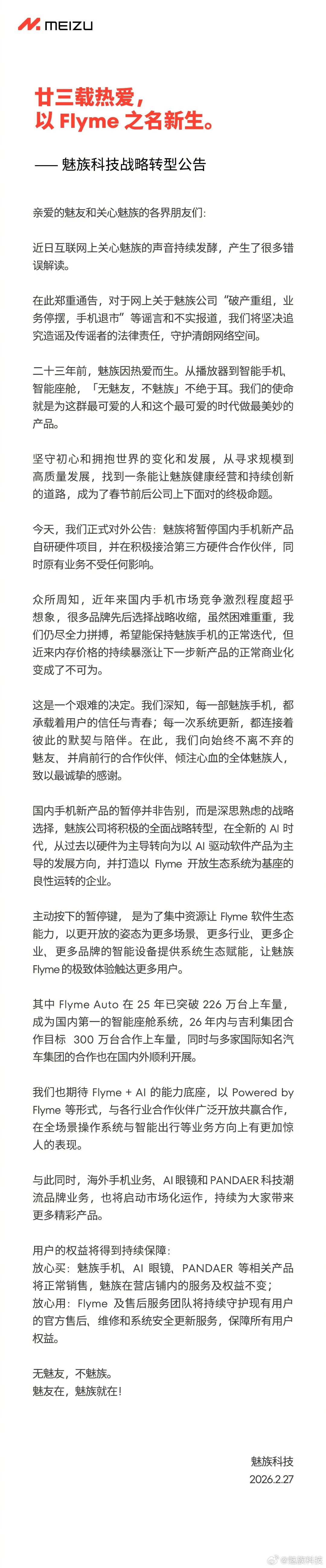
魅族发布转型公告,辟谣“破产重组,业务停摆,手机退市”
Mei Ri Jing Ji Xin Wen· 2026-02-27 03:20
Core Viewpoint - Meizu has announced a strategic shift, pausing the development of new hardware for domestic smartphones and seeking partnerships with third-party hardware providers due to intense competition and rising memory prices in the domestic market [1][4]. Group 1: Strategic Shift - The company will transition from a hardware-centric approach to focusing on AI-driven software products, aiming to create a sustainable business model based on the Flyme open ecosystem [2][4]. - Meizu's smartphone business is reportedly facing a significant halt, with plans for the Meizu 23 series being canceled and several employees leaving or transitioning within the company [2][4]. Group 2: Market Conditions - The domestic smartphone market has become increasingly competitive, leading many brands to scale back their operations [1][4]. - Rising memory prices have made the commercialization of new products unfeasible, prompting the decision to pause new hardware development [1][4]. Group 3: Future Directions - The company aims to enhance the Flyme software ecosystem, targeting broader applications across various industries and smart devices [5]. - Flyme Auto has achieved over 2.26 million units in 2025, becoming the leading smart cockpit system in China, with a goal of 3 million units in collaboration with Geely Group [5]. Group 4: User Assurance - Existing products, including Meizu smartphones, AI glasses, and PANDAER products, will continue to be sold, and customer service and support will remain unchanged [6].
廉价手机时代终结?IDC:存储短缺正重塑全球手机市场
Jin Shi Shu Ju· 2026-02-27 03:19
Core Insights - The global smartphone market is projected to shrink by 12.9% by 2026 due to an unprecedented shortage of storage chips, marking a significant crisis for the industry [2] - The forecasted smartphone shipments for 2026 are approximately 1.1 billion units, down from 1.26 billion units in the previous year, erasing years of slow growth [2] - The crisis is expected to lead to a dramatic transformation in the smartphone market regarding scale, average selling price, and competitive landscape, with relief not anticipated until mid-2027 [2] Industry Impact - The rising costs of DRAM and NAND chips are squeezing the already thin profit margins of many Android device brands, particularly affecting entry-level devices where storage costs are a larger proportion of material costs [3] - High-end smartphones, such as most of Apple's iPhone product line, are better positioned to weather the crisis, although companies like Xiaomi and Lenovo have warned that consumer prices may need to increase [4] - The era of affordable smartphones priced below $100 is considered over, with IDC stating that this segment is no longer economically viable [4]

廉价手机时代终结?IDC:存储短缺正引发前所未有的危机
Jin Shi Shu Ju· 2026-02-27 03:07
Core Insights - The global smartphone market is projected to shrink by 12.9% by 2026 due to an unprecedented shortage of storage chips, marking a significant crisis for the industry [1] - IDC forecasts that global smartphone shipments will drop to approximately 1.1 billion units in 2026, down from 1.26 billion units the previous year, erasing years of slow growth [1] - The ongoing chip cost surge, affecting both DRAM and NAND, is squeezing the already thin profit margins of many Android device brands, leading manufacturers to cut product specifications and eliminate unprofitable entry-level models [1] Industry Impact - The storage shortage is expected to last until at least mid-2027, with significant changes anticipated in market scale, average selling prices, and competitive dynamics before the crisis resolves [1] - High-end smartphones, such as most of Apple's iPhone lineup, are better positioned to weather the crisis, although companies like Xiaomi and Lenovo have warned that consumer prices may need to increase [2] - The era of affordable smartphones priced below $100 is considered no longer viable, with approximately 170 million units shipped last year in that segment [2]