
电力设备

Search documents
【19日资金路线图】两市主力资金净流出超650亿元 石油石化等行业实现净流入
证券时报· 2026-03-19 11:34
Market Overview - The A-share market experienced an overall decline on March 19, with the Shanghai Composite Index closing at 4006.55 points, down 1.39%, the Shenzhen Component Index at 13901.57 points, down 2.02%, and the ChiNext Index at 3309.1 points, down 1.11% [1] - The total trading volume for both markets reached 21109.69 billion yuan, an increase of 649.05 billion yuan compared to the previous trading day [1] Capital Flow - The net outflow of main funds from the Shanghai and Shenzhen markets exceeded 650 billion yuan, with an opening net outflow of 202.67 billion yuan and a closing net outflow of 145.38 billion yuan, totaling 655.74 billion yuan for the day [2][3] - In the last five trading days, the main funds showed a consistent trend of outflow, particularly in the ChiNext, which saw a net outflow of 201.05 billion yuan on March 19 [3][4] Sector Performance - The oil and petrochemical sectors recorded a net inflow of 19.75 billion yuan, with a slight increase of 0.30% [5][6] - Other sectors such as coal and communication also saw minor inflows, while the electronics sector faced significant outflows of 322.66 billion yuan, down 2.62% [6] Individual Stocks - The top stocks with net inflows included GuDe Electric Materials with a net buy of 91.53 million yuan and Jiuan Medical with a net buy of 90.49 million yuan [7][9] - Conversely, stocks like Tongyuan Petroleum and Tongkun Co. experienced substantial net outflows, with Tongyuan Petroleum seeing a net outflow of 24,429.23 million yuan [9] Institutional Focus - Institutions are currently focusing on stocks such as Xueda Education, rated as "Accumulate" with a target price of 50.8 yuan, indicating a potential upside of 50.70% from the latest closing price [10]


电力设备行业GTC2026点评报告:柜内电源功率提升全液冷时代来临
Yin He Zheng Quan· 2026-03-19 09:07
Investment Rating - The report maintains a "Recommended" rating for the electric power equipment industry [1]. Core Insights - The AI industry is transitioning from generative AI to inferential AI, with a significant increase in computational demand, approximately 1 million times over the past two years [2]. - Key performance indicators for AI factories include throughput efficiency and inference speed, with token efficiency being crucial for power efficiency [2]. - NVIDIA anticipates that the revenue from its Blackwell and Rubin flagship chip product lines will exceed $1 trillion by 2027, a significant increase from the previously projected $500 billion [2]. Summary by Sections Industry Progress - The AI industry is evolving towards inferential and intelligent AI, with inference and channel training becoming core computational demands [2]. - NVIDIA has defined 2025 as the "Year of Inference," focusing on optimizing AI inference processes and reducing infrastructure costs [2]. Product Developments - The Vera Rubin full-stack AI computing platform was officially launched, featuring several new chips and configurations [2]. - The computational power of the Vera Rubin platform is expected to increase by 40 million times over the next decade [2]. - Deployment efficiency for Vera Rubin has improved significantly, reducing installation time from two days to two hours [3]. Power Supply Developments - The cabinet power supply for the Vera Rubin NVL72 is expected to utilize four Powershelf units, each with a power capacity of 110KW, totaling 440KW, which is over 60% higher than previous models [2][3]. - NVIDIA plans to implement 800V high-voltage DC power supply systems to reduce data center PUE below 1.1 [2]. Liquid Cooling Developments - The Vera Rubin platform employs a 100% liquid cooling design, which is expected to enhance energy efficiency and reduce cooling costs [3]. - Future releases of higher power chips are anticipated to drive technological upgrades in liquid cooling solutions [3]. Investment Recommendations - Suggested companies to watch include those involved in cabinet power supplies, external power supplies, liquid cooling solutions, and data center storage [3].

2026年二季度策略报告:蓄势而为,更上层楼
ZHESHANG SECURITIES· 2026-03-19 08:24
Market Outlook - The market outlook remains neutrally optimistic, with the Shanghai Composite Index expected to stabilize gradually after mid-March 2026, potentially challenging the 5178-2440 range in the second half of Q2 2026[5] - A "systematic slow bull" trend is anticipated, with growth indices expected to stabilize by the end of April 2026[5] Style Rotation - Mid and large-cap stocks are expected to outperform, with a balanced focus on growth and value[6] - The valuation style is becoming more balanced, with growth and value indices showing similar performance[10] Industry Allocation - The strategy emphasizes both new and traditional energy sectors, with a focus on cyclical consumer goods[7] - Key investment directions include power equipment benefiting from "computing and electricity synergy," traditional industries undergoing value reassessment, and consumer services with significant growth potential[7] Thematic Investment - AI is reshaping value foundations, with a focus on "HALO" trading and new opportunities in token overseas expansion[8] - Investment opportunities in AI infrastructure and related technologies are highlighted[8] Economic Indicators - The U.S. unemployment rate rose to 4.4% in February 2026, the highest since December 2025, while oil prices have increased by 70% year-to-date due to geopolitical tensions[16] - The U.S. fiscal deficit for FY2025 was recorded at $1.78 trillion, with a projected deficit rate of 5.8% for FY2026[21] Consumer and Investment Trends - Consumer spending is expected to improve due to policies like the "trade-in" program and increased demand during holidays[25] - Investment growth is supported by the issuance of special bonds and new policy financial tools, with a projected increase in infrastructure investment[25] Risk Factors - Risks include unexpected international geopolitical tensions, slower-than-expected domestic economic recovery, and the subjective nature of models used for predictions[9]
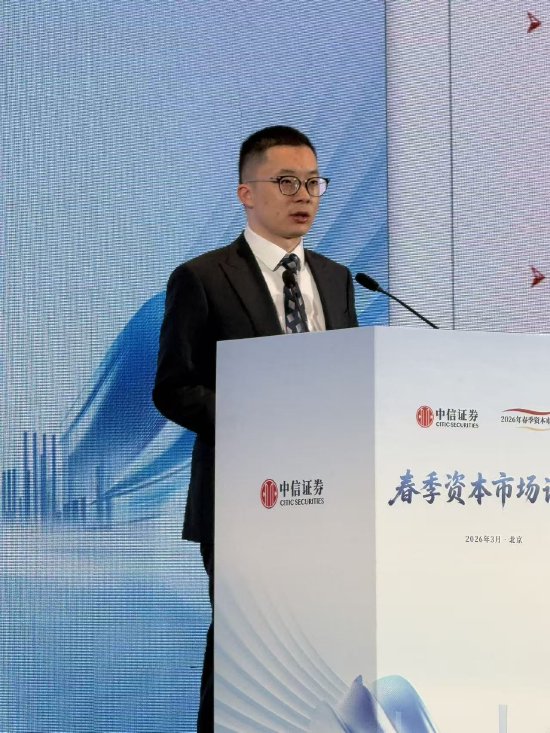
中信证券裘翔:利润率回升是A股接续牛市的关键
Xin Lang Zheng Quan· 2026-03-19 07:50
Group 1 - The core viewpoint is that the second quarter is a critical window for rebuilding confidence in the A-share market, with a focus on the stabilization and recovery of corporate profit margins as a necessary condition for the continuation of the bull market [1] - The Middle East conflict is seen as a catalyst for style switching this year, providing an opportunity to test the pricing power of China's advantageous manufacturing sector amid global supply chain disruptions [1] - Trends in the industry indicate that code inflation and physical scarcity are enhancing the pricing power of advantageous manufacturing in China, accelerated by disruptive innovation in AI and global energy supply chain disturbances [1] Group 2 - The re-evaluation of Chinese assets should not be centered around the HALO concept, as the logic differs from overseas markets; the focus should be on companies with market share and competitive advantages that can actively manage future capital expenditure [2] - The current bottom-line recommendation emphasizes industries in China with share advantages, where the cost of overseas capacity reset is high and supply elasticity is easily influenced by policy, particularly in chemicals, non-ferrous metals, power equipment, and new energy [2]

2026年二季度策略报告:蓄势而为,更上层楼-20260319
ZHESHANG SECURITIES· 2026-03-19 07:47
Market Outlook - The report maintains a neutral to optimistic view on the market, considering various factors such as international conditions, economic cycles, domestic policies, capital flows, market sentiment, and broad valuations. The Shanghai Composite Index is expected to stabilize gradually after mid-March, with growth indices potentially stabilizing by the end of April. A "systematic slow bull" market is anticipated, with the index likely to challenge the 5178-2440 range in the second half of Q2 2026 [5]. Style Rotation - The report indicates that mid to large-cap stocks will outperform, with a balanced approach between growth and value stocks. Public fund pricing power remains stable, and global liquidity is still relatively loose, supporting the dominance of mid to large-cap styles [10]. Industry Allocation - The industry allocation strategy focuses on both new and traditional energy sectors, with a particular emphasis on cyclical consumption. Key directions include: 1. Strong performers in new energy, particularly benefiting from "computing power and electricity synergy" and supply clearing in power equipment (solar, wind, lithium batteries). 2. Traditional industries are expected to undergo value reassessment, with a focus on "heavy asset" sectors such as electricity, communication services, fiberglass, steel, coke, gas, and coal mining. 3. Within cyclical products, attention should be given to relatively underperforming sectors like basic chemicals and agriculture. 4. In consumer goods, sectors such as pharmaceuticals (innovative drugs) and consumer services are highlighted due to policy support and potential for increased service consumption [7]. Thematic Investment - The report emphasizes the transformative impact of AI on value creation, highlighting investment opportunities in "HALO" trading and the overseas expansion of tokens. It suggests focusing on AI agents, embodied intelligence, and solid-state batteries as key thematic investment opportunities [8]. Economic Analysis - The report notes an improvement in economic conditions at the beginning of the year, driven by policies such as the "old-for-new" initiative and increased consumer demand during the holiday season. The issuance of special bonds and new financial tools is expected to support investment growth, while exports have shown significant strength, contributing positively to the economy [25][26]. Price Trends - The report indicates a positive trend in prices, with CPI and PPI showing signs of recovery. The core CPI reached a new high since 2019, driven by strong demand for gold and services. The PPI is also expected to turn positive sooner than anticipated, influenced by rising international oil prices and ongoing demand in the AI sector [30][34]. Policy Insights - The report outlines a shift in policy focus from quantity to quality, with a moderate expansion in fiscal policy and a continued emphasis on structural monetary policy. The GDP growth target for 2026 has been adjusted to a range of 4.5%-5%, reflecting a more pragmatic approach to economic development [37][38]. Capital Flow Analysis - The report highlights a "residential deposit migration" as a significant source of incremental capital, which may drive the index upward. The balance of margin financing and various equity funds has shown a balanced increase since July 2025, indicating a stable market environment [41][45]. Valuation Assessment - The report notes that major broad-based valuations are currently high, with the Shanghai Composite Index and other indices showing elevated price-to-earnings ratios compared to historical averages. This suggests that further market gains will require earnings growth to support high valuations [63][68].
电力设备行业:GTC 2026点评报告:柜内电源功率提升,全液冷时代来临
Yin He Zheng Quan· 2026-03-19 06:28
Investment Rating - The report maintains a "Recommended" rating for the electric power equipment industry [1]. Core Insights - The AI industry is transitioning from generative AI to inferential AI, with a significant increase in computational demand, approximately 1 million times over the past two years [2]. - Key performance indicators for AI factories include throughput efficiency and inference speed, with token generation speed being crucial for AI intelligence [2]. - NVIDIA anticipates that the revenue from its Blackwell and Rubin flagship chip product lines will exceed $1 trillion by 2027, a significant increase from the previously projected $500 billion [2]. - The Vera Rubin full-stack AI computing platform was officially launched, featuring a substantial increase in computing power, projected to rise by 40 million times over the next decade [2]. - The power supply for the Vera Rubin NVL72 is expected to be significantly enhanced, with a total power supply of 440KW, representing an increase of over 60% compared to previous models [2][3]. Summary by Sections Industry Progress - The AI industry is evolving towards inferential and intelligent AI, with a focus on optimizing AI infrastructure costs [2]. - NVIDIA's 2025 is defined as the "Year of Inference," aiming to become the most cost-effective and reliable AI infrastructure platform globally [2]. Product Developments - The Vera Rubin platform includes multiple advanced chips and has achieved a significant reduction in deployment time from two days to two hours [3]. - The platform's cooling system utilizes 100% liquid cooling, which enhances energy efficiency and reduces cooling costs [3]. Investment Recommendations - Suggested companies to watch include: - For cabinet power: Megmeet, Euron, Newray, and others [3]. - For external power: Jinpan Technology, Igor, and others [3]. - For liquid cooling solutions: Invec, Shunling Environment, and others [3]. - For data center storage: Sungrow, CATL, and others [3]. - For backup power solutions: Yiwei Lithium Energy, and others [3].
电力设备行业:GTC 2026点评报告-柜内电源功率提升,全液冷时代来临
Zhong Guo Yin He Zheng Quan· 2026-03-19 06:24
Investment Rating - The report maintains a "Recommendation" rating for the power equipment industry [3]. Core Insights - The AI industry is transitioning from generative AI to inferential AI and intelligent agents, with a significant increase in computational demand, approximately 1 million times over the past two years [3]. - Key performance indicators for AI factories include throughput efficiency and inference speed, with tokens being the core production material [3]. - NVIDIA has defined 2025 as the "Year of Inference," focusing on optimizing the entire AI inference process and reducing infrastructure costs for clients [3]. - NVIDIA's revenue outlook for data centers is optimistic, projecting over $1 trillion in revenue from the Blackwell and Rubin flagship chip product lines by 2027, a significant increase from the previously expected $500 billion [3]. Summary by Sections Industry Progress - The demand for inference and intelligence is driving the industry's growth, with a notable increase in computational needs [3]. - NVIDIA's new VeraRubin full-stack AI computing platform includes several advanced chips and is expected to enhance computational power by 40 million times over the next decade [3][4]. - The deployment of VeraRubin systems is progressing well, with Microsoft Azure already deploying the first rack [3]. Power Supply Developments - The cabinet power supply for the VeraRubin NVL72 is expected to increase from 264KW to 440KW, representing a more than 60% improvement [3][4]. - NVIDIA plans to promote 800V high-voltage DC power supply and advanced cooling technologies to reduce data center PUE below 1.1 [4]. Liquid Cooling Innovations - The VeraRubin platform utilizes a 100% liquid cooling design, which is expected to significantly improve energy efficiency and reduce cooling costs [4]. - The deployment efficiency of VeraRubin has improved dramatically, reducing installation time from two days to two hours [4]. Investment Recommendations - Suggested companies to watch include: - Cabinet Power: Megmeet, Oulu Tong, Newray, and others [4]. - External Power: Jinpan Technology, Igor, and others [4]. - Liquid Cooling Solutions: Invec, Jialing Environment, and others [4]. - Data Center Storage: Sungrow, CATL, and others [4]. - Backup Power: Yiwei Lithium Energy, and others [4].
中信证券裘翔:企业利润率回升是下阶段A股接续牛市的关键
Zhong Guo Jing Ying Bao· 2026-03-19 04:24
Group 1 - The second quarter is a critical window for rebuilding confidence in the A-share market, with long-term stabilization and recovery of corporate profit margins being a necessary prerequisite for the continuation of the bull market [1] - The A-share market is at a key juncture in terms of index, valuation, and macro liquidity, with the Shanghai Composite Index facing a significant pressure line that has persisted for 20 years since October 2007 [1] - Despite a prolonged bull market, many industries are experiencing profit margins at historical lows, indicating a structural characteristic of the current market where high valuations coexist with low profits [1] Group 2 - The rapid rise in oil prices presents an opportunity to test the pricing power of China's advantageous manufacturing sector, with the Middle East conflict acting as a catalyst for style switching in the market [2] - In the context of rising global costs and weakening financial conditions, low valuations and pricing power are crucial factors for investment [2] - The recommendation is to focus on re-evaluating the pricing power of China's advantageous manufacturing sectors, including chemicals, non-ferrous metals, power equipment, and new energy, while also increasing exposure to low-valuation factors such as insurance, brokerage, and electricity [2]
投资策略:“算电协同”投资机会梳理
GOLDEN SUN SECURITIES· 2026-03-19 03:24
Investment Strategy - "算电协同" was first included in the government work report as a new infrastructure project, emphasizing the implementation of large-scale intelligent computing clusters and collaborative computing and electricity systems[1] - The concept of "算电协同" aims to optimize the integration of computing power and electricity across various sectors, promoting high-quality development in both digital and energy economies[1] Development Stages - The "算电协同" can be divided into four stages: "initial exploration," "starting development," "deep collaboration," and "comprehensive integration," currently transitioning from "starting development" to "deep collaboration"[2] - In the "deep collaboration" stage, innovations such as green electricity direct supply and load scheduling will be scaled in suitable resource areas, with a unified computing power market established[2] Policy Implementation - The 2024 Action Plan for Building a New Power System outlines several initiatives for "算电协同," including the integration of data center needs with renewable energy resources and the exploration of green electricity supply models[3] - The report anticipates that "算电协同" will enter a new development phase following its inclusion in the government work report[3] Investment Opportunities - Key investment areas include: - Integration of computing power and electricity, focusing on source-network-load-storage and green electricity transformation[4] - Deep collaboration between the electricity grid and computing centers, emphasizing smart grid development[4] - Provision of foundational equipment such as grid and storage devices to support "算电协同" initiatives[4] Market Performance - The A-share market experienced fluctuations due to geopolitical tensions and industry dynamics, with the current equity risk premium (ERP) at 2.47%, reflecting a slight improvement in market risk appetite[7] - Most A-share indices declined, with the ChiNext Index and Shenzhen Component Index showing positive weekly performance of 2.51% and 0.76% respectively[8] Global Market Trends - Global equity markets generally declined, with the MSCI global market down 1.79% this week, while Brent crude oil prices surged by 11.27%[10][50] - The U.S. Federal Reserve's interest rate expectations have shifted, with the 2026 rate cut forecast dropping below one occurrence for the first time[9][45]
每日晨讯-20260319
ZHONGTAI INTERNATIONAL SECURITIES· 2026-03-19 03:10
Market Overview - The Hong Kong stock market continued its upward trend, with the Hang Seng Index and the Hang Seng China Enterprises Index closing at 26,025.42 points and 8,835.50 points, respectively, up by 0.6% and 0.1% [1] - Market turnover was HKD 240.4 billion, a decrease of 10.4% from the previous day's HKD 268.3 billion, indicating cautious sentiment among some investors [1] - In sector performance, composite enterprises, industrial, and financial indices rose by 2.0%, 1.7%, and 1.1%, while telecommunications, consumer staples, and energy sectors fell by 0.1%, 0.2%, and 0.7% [1] U.S. Market Performance - The U.S. stock market saw a decline, with the Dow Jones Industrial Average closing at 46,225 points, down by 1.6% [2] - The Hang Seng Index futures closed at 25,479 points, indicating a discount of 546 points, suggesting pressure on the Hong Kong market today [2] Macroeconomic Dynamics - The U.S. Federal Funds Rate remains unchanged at 3.5%-3.75%, aligning with market expectations [3] - The U.S. Producer Price Index (PPI) for February increased by 3.4% year-on-year, surpassing January's 2.9% and market forecasts of 2.9% [3] - Factory orders in the U.S. rose by 0.1% month-on-month in February, an improvement from January's -0.4%, consistent with market predictions [3] Automotive Sector Insights - Geely Automobile (175 HK) reported a 39.0% year-on-year increase in sales for 2025, with total revenue up by 25.1% and a core net profit of RMB 14.41 billion, reflecting a 36% increase [4] - The company plans a dividend payout ratio of approximately 29%, with a year-on-year increase of 51% in the dividend per share [4] - Geely's sales target for 2026 is set at 3.45 million units, a 14% increase year-on-year, with capital expenditure expected to decrease from RMB 17.9 billion to RMB 16 billion [4] Healthcare Sector Developments - The Hang Seng Healthcare Index rose by 1.1%, with Rongchang Biopharmaceutical (9995 HK) seeing a 7.4% increase in stock price following the announcement of multiple original research results at the 2026 EAU [4] - Junshi Biosciences (1877 HK) also experienced a stock price increase of 5.8% after reporting a reduction in losses for 2025 [4] New Energy and Utilities Sector Performance - The new energy and utilities sector generally saw gains, except for photovoltaic and nuclear energy [5] - Electric equipment stocks performed well, with Weisheng Holdings (3393 HK) rising by 8.6% after securing a supply contract worth approximately RMB 180 million with Brazil's CEMIG [5] - The thermal power sector also experienced increases, with Huaneng International (902 HK), Datang Power (991 HK), and Huadian International (1071 HK) rising between 0.5% and 2.3% [5]