商业地产

Search documents
中国新城市(01321.HK)与HashKey Exchange战略合作 探索合规虚拟资产配置及托管等业务
Jin Rong Jie· 2025-08-07 05:44
Group 1 - The company announced a strategic cooperation memorandum with HashKey Exchange to explore compliant virtual asset allocation and custody business opportunities [1] - The collaboration aims to enhance asset management efficiency and security by leveraging the company's experience in commercial real estate development and operations alongside HashKey Exchange's expertise as a licensed virtual asset exchange in Hong Kong [1] - HashKey Exchange operates under Hash Blockchain Limited and holds licenses from the Hong Kong Securities and Futures Commission for securities trading and automated trading services, as well as a license for a virtual asset trading platform regulated under the Anti-Money Laundering Ordinance [1]

中国新城市(01321)与HashKey Exchange订立战略合作备忘录 探索合规虚拟资产配置与托管
智通财经网· 2025-08-07 05:15
Core Viewpoint - The company has entered into a strategic cooperation memorandum with Hash Blockchain Limited to explore opportunities in compliant virtual asset allocation and custody, aiming to enhance asset management efficiency and security [1] Group 1: Strategic Partnership - The memorandum was signed on August 4, 2025, indicating a forward-looking approach to virtual asset management [1] - The collaboration aims to leverage the expertise of HashKey Exchange, a licensed virtual asset exchange in Hong Kong, to improve the company's asset management capabilities [1] Group 2: Industry Trends - The company recognizes the ongoing global digital transformation and the deepening application of blockchain technology in financial services [1] - It believes that compliant participation in virtual asset allocation will become an important supplementary direction for asset management and investment [1] Group 3: Company Strengths - The company has extensive experience and a diverse asset portfolio in commercial real estate development and operations [1] - This experience, combined with the partnership, is expected to enhance the company's asset management efficiency and diversification strategy [1]
160亿抛售中国三座"现金牛",英格卡也开始轻资产化
3 6 Ke· 2025-08-07 02:42
Core Insights - In recent years, Ingka Group has experienced significant growth in China, with its shopping centers, particularly the Huiju series, gaining popularity and achieving high foot traffic [1][2] - However, in August, Ingka Group reportedly paused its expansion plans and is considering selling ten of its Huiju shopping centers in China [1][3] - The first three centers targeted for sale are located in Wuxi, Beijing, and Wuhan, with a total estimated value of 16 billion yuan [4][6] Group 1: Expansion and Performance - The Huiju shopping centers have become a prominent example of foreign investment in China's commercial real estate, combining the "IKEA blue box" concept with mall features [2] - The opening of the Shanghai Huiju in September last year marked a significant investment of 8 billion yuan, attracting 3 million visitors in its first hundred days [1][6] - The Wuxi, Beijing, and Wuhan centers, which opened between 2014 and 2015, have been operational for over ten years and are now in a stable profit phase [8][21] Group 2: Strategic Decisions - Ingka Group's decision to sell these mature assets is driven by the need for financial recovery amid declining retail performance and the ongoing investment in new projects [10][11] - The sale will allow Ingka to recoup a substantial amount of capital, which can be reinvested into new developments and debt repayment [10][15] - By retaining operational rights while selling the properties, Ingka aims to reduce its heavy asset burden and focus on brand management and customer engagement [10][12] Group 3: Market Dynamics - The transaction aligns with current market trends, where financial institutions are increasingly acquiring stable commercial real estate assets in major cities [11][12] - The mature projects in Wuxi, Beijing, and Wuhan are attractive to insurers due to their stable rental income and location in high-demand urban areas [11][12] - The potential for future capital gains through REITs (Real Estate Investment Trusts) is also a consideration, as these mature assets can be further enhanced and packaged for public offerings [12][15] Group 4: Asset Characteristics - The ten Huiju centers represent a total investment exceeding 27 billion yuan, with an average investment of about 2.7 billion yuan per center [21][24] - The centers are strategically located in first-tier and strong second-tier cities, creating a comprehensive network across various regions [22][24] - The evolution of the Huiju brand reflects a shift from large-scale shopping centers to more integrated urban developments, indicating a response to changing consumer preferences and market conditions [23][24]


为什么消费类REITs跑赢了股市?
3 6 Ke· 2025-08-07 01:56
Core Insights - The Chinese capital market has shown a paradoxical trend where public REITs have risen by 4.8% in the first half of 2025, outperforming the Shanghai and Shenzhen 300 indices and most bond indices, despite a narrative of weak consumer spending [1][3][8] - The performance of consumer REITs, particularly those backed by shopping centers and retail properties, indicates a stable cash flow generation capability, which is more critical than consumer sales figures [4][5][6] Group 1: REITs Performance and Market Dynamics - Consumer REITs have demonstrated resilience with an average dividend yield of over 4% in Q1 2025, supported by long-term lease structures and high occupancy rates [5][8] - The divergence between consumer market trends and REIT performance suggests a need for a new analytical framework to understand the risk resilience of these assets [2][3] - The average yield of consumer REITs reached 6.1% in the first five months of 2025, significantly higher than the Shanghai and Shenzhen 300 index at -0.5% and 10-year government bonds at 2.5% [8] Group 2: Valuation and Operational Insights - REITs are valued based on stable cash flows rather than sales metrics, emphasizing the importance of tenant stability and rental agreements [4][11] - The average capitalization rate (CAP rate) for consumer assets in domestic REITs is between 4.7% and 5.2%, indicating strong cash return capabilities compared to office and industrial assets [12] - The valuation model for REITs has shifted from land appreciation to cash flow logic, reflecting a more relevant approach to current commercial market conditions [11][12] Group 3: Strategic Implications for Real Estate Companies - Real estate companies are transitioning from asset creators to asset managers, necessitating a focus on long-term operational efficiency and cash flow generation [15][16] - Companies must develop capabilities in stable operations, financial tool comprehension, and organizational restructuring to thrive in the REITs landscape [17][18] - The ability to create high-quality assets suitable for REITs will become a critical factor for real estate companies in the evolving market [19][20] Group 4: Future Trends and Investment Considerations - Investors are increasingly prioritizing the predictability of dividends over asset scarcity, indicating a shift in valuation logic towards stable cash flows [20][21] - The operational efficiency and cash flow stability of assets will be key determinants of their market value, regardless of their perceived novelty or trendiness [24][27] - The focus on sustainable cash flow and operational discipline will define the future landscape of consumer REITs, moving away from reliance on brand allure [26][31]
年底开业!长沙将新增一购物中心
Chang Sha Wan Bao· 2025-08-06 11:25
Core Insights - Aeon Mall (Xiangjiang New District) is set to open by the end of this year, featuring nearly 260 brands including Uniqlo and Muji, with ongoing interior renovations [1][2] - The mall is strategically located near Changsha High-Speed Railway West Station, covering a large consumer base with a total construction area of approximately 230,000 square meters [2] - The project includes a four-story shopping center, a six-story parking garage, and around 3,300 parking spaces, offering a diverse range of retail, dining, and entertainment options [2] Company Developments - The mall has already secured notable tenants such as the first Aeon supermarket in the west of the river, China Film International Cinema, and a flagship store featuring a high slide for children [2] - The project aims to provide a one-stop shopping experience for families and children, enhancing the overall customer experience with a focus on health, sports, and leisure activities [2][4] Design and Sustainability - The design incorporates elements of ecology, sunlight, and urban culture, creating a sustainable shopping environment [4] - The mall features three main themes: female-friendly, family-friendly, and pet-friendly spaces, along with a rooftop park to meet social and emotional needs of customers [4]

鲁楼观察 | 1.25亿!青岛高新区腾讯双创小镇855套房产法拍
Xin Lang Cai Jing· 2025-08-06 03:52
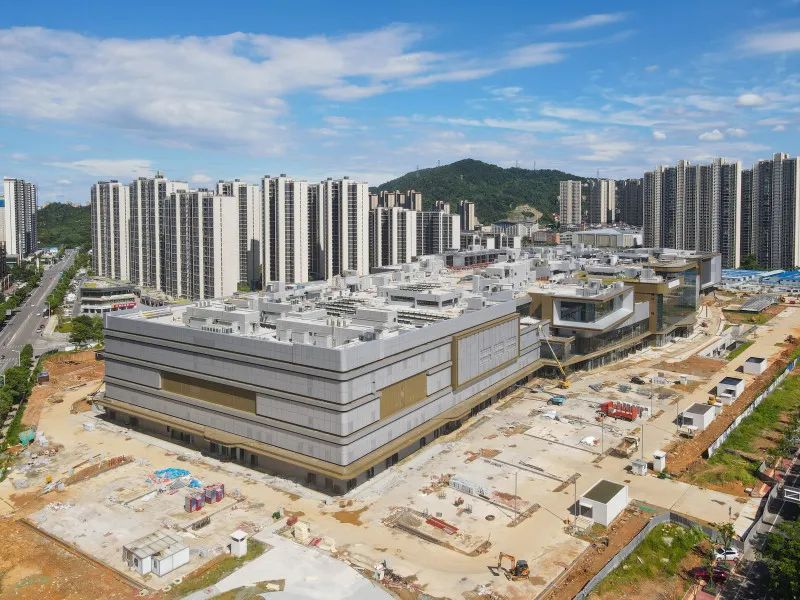
Core Viewpoint - The Qingdao Tencent Innovation Town project, which has been stagnant since 2018, is set for judicial auction with a starting price of 125 million yuan, reflecting a nearly 30% discount from its assessed value of 178 million yuan, highlighting the challenges faced by the industry in the current economic climate [1][3]. Group 1: Project Overview - The project includes 855 commercial office properties and corresponding land use rights, located at 43 Zhili Island Road, Qingdao, with a total construction area of 40,099.53 square meters [1]. - Initially launched in May 2017 with a total investment of 10 billion yuan and a planned area of 1.2 million square meters, the project aimed to create a model for "industry-city integration" [1]. - The project was once a market focus due to Tencent's brand endorsement and the operational capabilities of Sunac, but quickly fell into difficulties due to debt issues and a downturn in the commercial real estate market [1]. Group 2: Market Context - The auction has attracted 278 views but no bidders as of the announcement date, indicating a potential for a second price drop if it fails to sell [3]. - The overall market sentiment is cautious, as evidenced by the adjustment of land use from mixed commercial-residential to pure residential in recent transactions, reflecting a broader hesitance towards commercial real estate [3]. Group 3: Industry Trends - Despite the challenges faced by the Tencent Innovation Town project, Tencent continues to advance its digital industrial cooperation in Shandong, having partnered with over 700 ecosystem partners to serve more than 20,000 clients [4]. - The industry is grappling with the need to balance capital operations with industrial cultivation, as the concept of "industry-city integration" must transition from a theoretical blueprint to a practical reality [4].

龙湖、凯德、杉杉奥莱....下半年13家新商场引爆武汉!
3 6 Ke· 2025-08-06 02:40
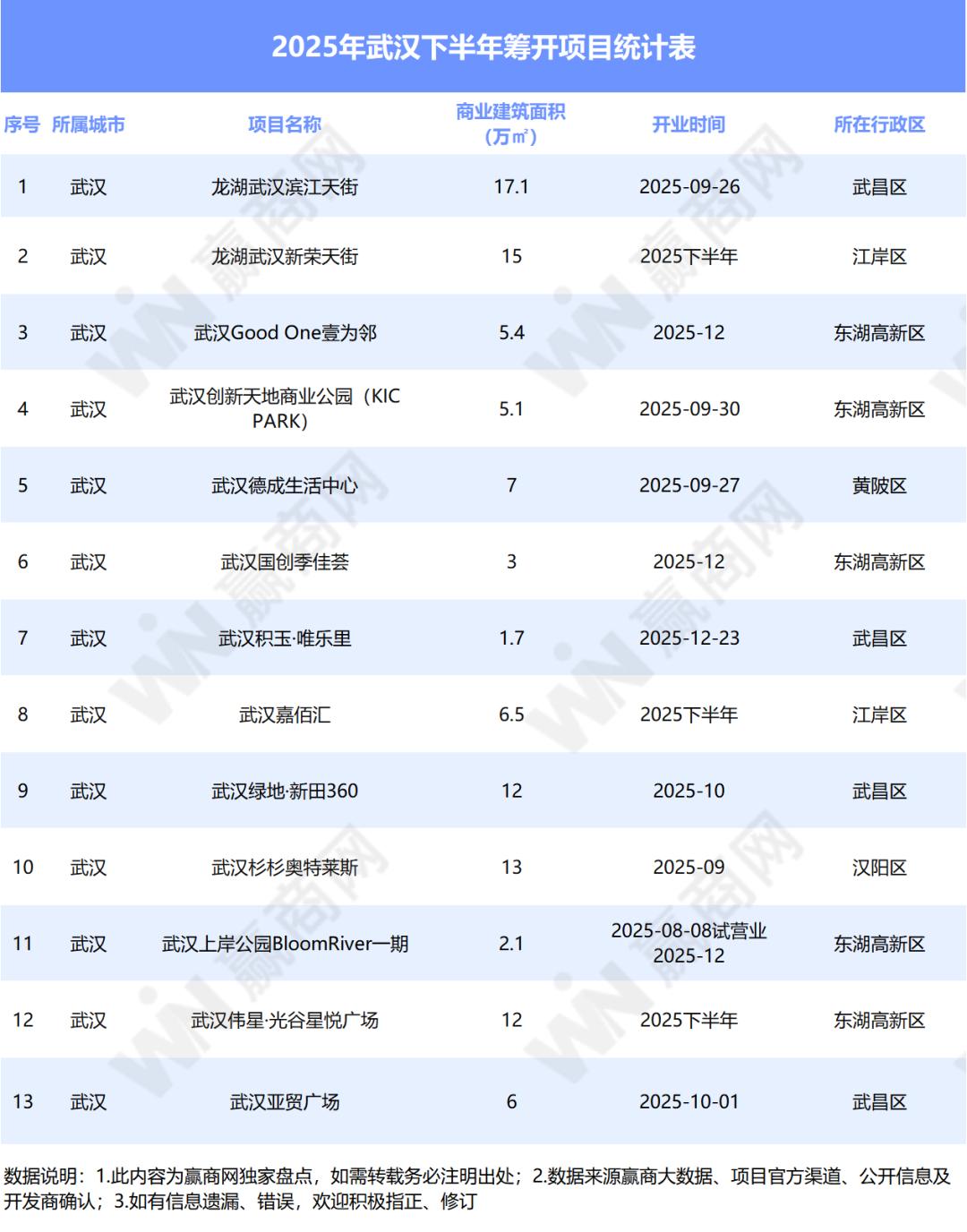
Core Insights - The commercial market in Wuhan is expected to see significant growth in the second half of the year, with 13 new commercial projects totaling over 1 million square meters set to enter the market, promoting a shift towards "quality breakthroughs" and "non-standard transformations" in the commercial sector [1][3][4] Project Overview - The new projects include various types such as park commercial, community commercial, specialty streets, regional consumption centers, and outlets, indicating a diverse commercial landscape [1][3] - The majority of new projects are new constructions, with only three focused on renovation, highlighting a trend towards new developments [3] - The projects are strategically located near transportation hubs, with several utilizing the TOD (Transit-Oriented Development) model, enhancing accessibility [3][4] Key Projects - **Longfor Wuhan Binjiang Tianjie**: Located in Wuchang District, with a commercial area of 171,000 square meters, set to open on September 26, 2025. It features a 13,000 square meter outdoor park and is well-connected to multiple subway lines [5] - **Longfor Wuhan Xinrong Tianjie**: Situated in Jiang'an District, covering 150,000 square meters, with over 90% of its leasing already completed. It includes a unique dining space and is expected to enhance the local commercial quality [6] - **Wuhan Good One**: Managed by CapitaLand, this project focuses on community integration and features a 15,000 square meter park, aiming to create a neighborhood center [9][11] - **Wuhan Innovation Tianjie Commercial Park (KIC PARK)**: A knowledge community commercial park with a total area of 51,000 square meters, expected to open on September 30, 2025, with a strong focus on sustainability and community engagement [11] - **Wuhan Greenland New Tian 360**: A rebranded shopping center with a total area of 120,000 square meters, set to open in October 2025, featuring a unique design and a variety of retail and entertainment options [14] - **Wuhan Fushun Outlets**: Covering 130,000 square meters, this outlet mall is set to open on September 25, 2025, and aims to combine leisure and shopping experiences [16] Market Trends - The commercial landscape in Wuhan is becoming increasingly competitive, with major operators, including state-owned, private, and foreign enterprises, accelerating their market presence [4] - Light-asset projects are gaining traction among leading operators, indicating a shift in strategy towards more flexible and adaptive business models [4]

每日投行/机构观点梳理(2025-08-05)
Jin Shi Shu Ju· 2025-08-05 13:45
Group 1 - UBS expects the US stock market to decline in August due to worsening economic data, which may present a buying opportunity [1] - Goldman Sachs predicts the Federal Reserve will begin a series of three 25 basis point rate cuts starting in September, with a potential 50 basis point cut if unemployment rises further [2] - Deutsche Bank suggests that the sentiment for Fed rate cuts may continue to rise, especially after disappointing labor market reports [2] Group 2 - Dutch International Bank analysts indicate that OPEC+ may end its production increase as summer demand wanes and inventories rise [3] - Barclays forecasts that the European Central Bank will cut rates once more, with a 25 basis point reduction expected in December [4] - Barclays also notes that credit rating improvements in peripheral Eurozone countries are helping to narrow government bond yield spreads [4] Group 3 - MUFG analysts highlight that traders are concerned about potential secondary tariffs on Russian oil exports by the US, which could impact supply amid rising OPEC+ production [5] - Citic Securities believes the Chinese liquor industry is rapidly bottoming out, with leading companies adjusting channel structures for better market opportunities [7] - Citic Securities also anticipates a comprehensive price increase for mainstream and niche storage products in Q3, driven by seasonal demand [8] Group 4 - Huatai Securities expresses optimism about the commercial real estate sector under a value reassessment logic, particularly for operators with strong shopping center assets [9] - GF Securities sees significant potential in the STAR Market, driven by regulatory liquidity and the potential for capital inflows [10] - China International Capital Corporation notes that the commercialization of genetically modified crops will continue to accelerate, enhancing food security [12]
中指研究院商业地产月报:7月监测到1亿元以上大宗交易12宗 二季度消费REITs底层资产运营稳健
智通财经网· 2025-08-05 11:40
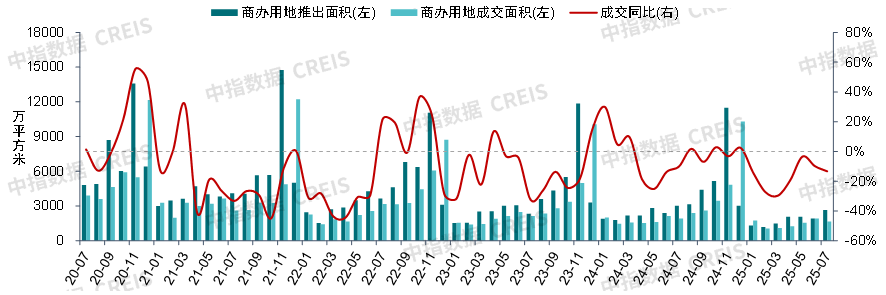
Group 1: Core Insights - The central government emphasizes the need to effectively release domestic demand potential and implement consumption-boosting policies [2][4] - In July 2025, the Central Political Bureau meeting highlighted the importance of expanding consumer demand while fostering new growth points in service consumption [2] - The issuance of CMBS/CMBN and similar REITs products by real estate-related companies reached approximately 65.4 billion yuan in the first seven months of 2025, marking a 26% year-on-year increase [10][12] Group 2: Market Performance - From January to July 2025, the planned commercial and office land area launched and transacted in 300 cities was 126.63 million square meters and 102.97 million square meters, respectively, showing year-on-year declines of 22.3% and 16.1% [6][8] - In July 2025, 12 large transactions were monitored, with a total transaction amount of 4.3 billion yuan, primarily in commercial real estate [8][9] Group 3: Policy Dynamics - The State Council's meeting on July 31 approved the "Artificial Intelligence+" action plan to promote the large-scale commercial application of AI, aiming to enhance domestic economic vitality [3] - Local governments, such as Shanghai and Beijing, have introduced specific measures to boost consumption, including optimizing tax refund environments and promoting cultural tourism [4][5] Group 4: Company and Project Developments - New City Holdings reported a total commercial operating revenue of 6.944 billion yuan in the first half of 2025, reflecting an 11.8% year-on-year growth [19] - Hualian Group launched its community commercial brand "Jinlongxin," focusing on creating a vibrant community lifestyle [22] - The first outlet project by China Resources Land, "Wanda Binhai Shopping Village," is set to open in December 2025, aiming to create a fashionable resort destination [25]
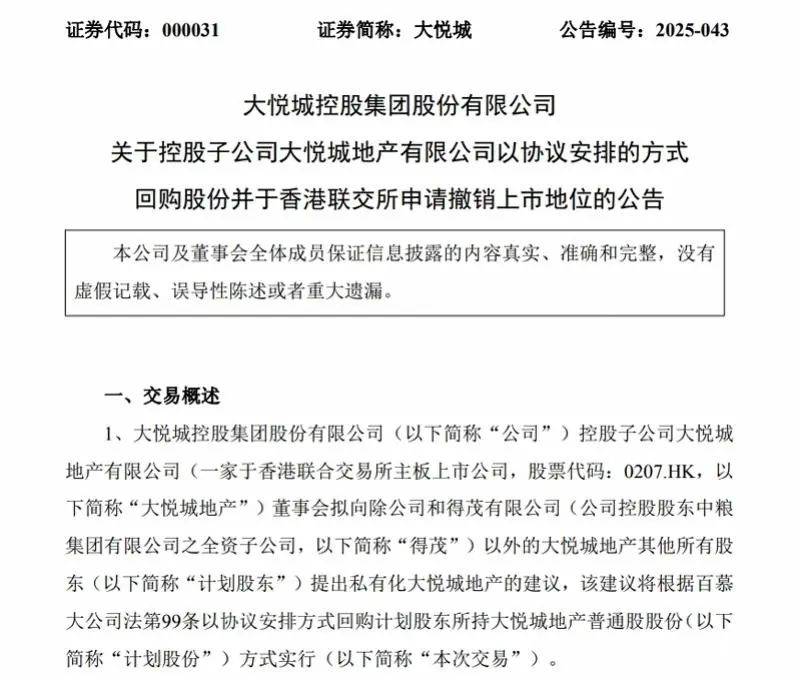
大悦城之困!
Sou Hu Cai Jing· 2025-08-05 08:35
Core Viewpoint - Dalian Wanda Group's subsidiary, Dalian Wanda Commercial Properties, announced plans to privatize and delist from the Hong Kong Stock Exchange due to insufficient stock liquidity and limited financing capabilities, aiming to streamline management and improve operational efficiency [1][13][15]. Group 1: Company Actions - Dalian Wanda Commercial Properties intends to repurchase shares through an agreement and has applied for delisting from the Hong Kong Stock Exchange, officially initiating the privatization process [1]. - The company resumed trading on August 1, with a closing price of HKD 0.54, marking a single-day increase of 45.95% [3]. - As of August 4, the stock price decreased to HKD 0.53, with a total market capitalization of HKD 75.42 billion [5]. Group 2: Financial Performance - Dalian Wanda Commercial Properties has faced continuous losses over the past three years, with net losses of RMB 2.883 billion, RMB 1.465 billion, and RMB 2.977 billion for 2022, 2023, and 2024 respectively, totaling RMB 7.325 billion [16]. - The company’s stock price has remained below HKD 1 since May 2018, with an average daily trading volume of less than HKD 3 million prior to suspension [13][14]. - The company reported a market capitalization of approximately HKD 76.85 billion as of August 1, with a price-to-book ratio of 0.24 [13]. Group 3: Market Context - The company is focusing on developing and managing urban complexes and commercial properties, primarily under the "Dalian Wanda" brand, in key cities such as Beijing and Shanghai [10]. - Dalian Wanda Commercial Properties has established a presence in major city clusters, including Beijing-Tianjin-Hebei, Yangtze River Delta, Guangdong-Hong Kong-Macao Greater Bay Area, Chengdu-Chongqing, and the Yangtze River middle reaches [11]. - The broader retail environment for high-end shopping malls is challenging, with other companies like Beijing SKP and Hang Lung Properties also experiencing significant revenue declines [22][23].