
公用事业

Search documents
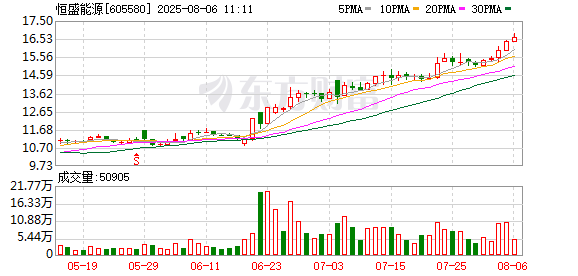
恒盛能源涨2.20%,股价创历史新高
Zheng Quan Shi Bao Wang· 2025-08-06 03:11
公司发布的一季报数据显示,一季度公司共实现营业收入2.24亿元,同比增长21.67%,实现净利润 4430.99万元,同比增长77.43%,基本每股收益为0.1600元,加权平均净资产收益率3.92%。(数据宝) (文章来源:证券时报网) 恒盛能源股价创出历史新高,截至9:46,该股上涨2.20%,股价报16.74元,成交量155.98万股,成交金 额2583.75万元,换手率0.56%,该股最新A股总市值达46.87亿元,该股A股流通市值46.87亿元。 证券时报·数据宝统计显示,恒盛能源所属的公用事业行业,目前整体跌幅为0.13%,行业内,目前股价 上涨的有31只,涨幅居前的有洪通燃气、华光环能、涪陵电力等,涨幅分别为10.01%、9.42%、 3.52%。股价下跌的有90只,跌幅居前的有胜通能源、联美控股、世茂能源等,跌幅分别为8.76%、 1.26%、1.12%。 ...


New Jersey Resources(NJR) - 2025 Q3 - Earnings Call Transcript
2025-08-05 15:00
Financial Data and Key Metrics Changes - In Q3 2025, the company reported an EPS of $0.06 per share compared to a net financial loss of $0.09 per share in the previous year, marking a significant turnaround [20] - Year-to-date NFE reached $313.4 million or $3.13 per share, an increase of nearly 55% year-over-year, driven by higher utility margins and improved performance across various segments [20][21] Business Line Data and Key Metrics Changes - New Jersey Natural Gas remains the strongest contributor to NFEPS, benefiting from a recent rate case settlement and customer growth [8] - Clean Energy Ventures (CED) is expected to contribute over 20% of NFEPS this year, supported by high-performing operating assets and the monetization of the residential solar portfolio [8] - The Save Green program saw a capital projection increase of over 30%, with expected investments rising to $90 million to $95 million, driven by growing adoption of efficient HVAC systems [10][11] Market Data and Key Metrics Changes - The company serves approximately 588,000 customers, with over 90% being residential, primarily in economically vibrant counties experiencing solid population growth [9] - The storage and transportation segment is positioned to serve growing energy demand, with favorable market conditions for storage [17] Company Strategy and Development Direction - The company raised the lower end of its fiscal 2025 NFEPS guidance range to $3.20 to $3.30 per share, reflecting strong operating performance and greater visibility into full-year results [6][7] - The capital plan for fiscal 2025 and 2026 ranges from $1.3 billion to $1.6 billion, aligning with a long-term NFEPS growth target of 7% to 9% [21] - The company emphasizes a disciplined capital deployment strategy focused on utility infrastructure, clean energy investments, and optimizing storage and transportation capabilities [21][24] Management's Comments on Operating Environment and Future Outlook - Management expressed confidence in the company's ability to navigate changing environments and allocate capital effectively to meet evolving customer needs [25][26] - The company is optimistic about the resolution of the Adelphia Gateway rate case and expects to file an offer of settlement with FERC soon [17][32] Other Important Information - The company maintains a strong balance sheet with $825 million of credit capacity across its facilities, supporting its capital plan and working capital needs [24] - The Save Green program is highlighted as a key strategic advantage, providing benefits to customers while supporting decarbonization goals [11][61] Q&A Session Summary Question: Impact of Adelphia rate case settlement in 2026 - Management indicated that details are still under negotiation and will be shared once finalized [31][32] Question: CEV's 131 megawatt target relative to initial expectations - Management clarified that the target reflects projects nearing construction and expressed confidence in achieving capital targets despite market dynamics [33][34] Question: Timeline for Leaf River expansion decision - Management expects to narrow down the expansion details in the coming months, with a focus on customer needs and regulatory approvals [40][52] Question: Strength of Storage and Transportation segment - Management attributed strong performance to a robust natural gas market and increased demand for infrastructure [41] Question: Higher CapEx in Save Green program - Management noted strong demand for energy-efficient systems and effective program execution as key drivers for increased CapEx [60] Question: Future dividend considerations - Management stated that dividend increases will align with historical growth rates and past performance [54] Question: Interest in gas infrastructure growth projects - Management confirmed ongoing investments in reliability and infrastructure to support customer growth [64]

2025年8月可转债市场展望:从仓位走向结构
Shenwan Hongyuan Securities· 2025-08-05 14:41
Report Industry Investment Rating No relevant information provided. Core Viewpoints of the Report - In July, the convertible bond market continued its upward trend, with the equal - weighted index significantly outperforming the weighted index. The median convertible bond price reached a maximum of 129 yuan, approaching the level at the beginning of 2022, but the structure showed that low - priced bonds were significantly higher than those at the beginning of 2022, while high - priced bonds were significantly lower [2][9]. - The July market was a "second - derivative" fluctuation, while the equity "first - derivative" remained positive. Before the September 3 parade, A - shares may have opportunities, and the dumbbell strategy (high - dividend + micro - cap stocks) may rebound. The convertible bond market will continue to follow the underlying stocks and remain strong [2]. - The new VAT policy on the interest income of bonds such as treasury bonds may increase the cost - effectiveness of stable and low - volatility convertible bonds, and the buying volume of bond - type convertible bonds and the entire convertible bond market may increase [2]. - After short - term winning - rate volatility pricing, the market will shift to odds - based advantages. It is recommended to pay attention to the cost - effectiveness improvement of bank convertible bonds and high - elasticity varieties, and the future will shift from position - based victory to structure - based victory [4]. Summary According to Relevant Catalogs 1. Review of the Convertible Bond Market in July: Recovery under Strong Equity - **Price and Index Performance**: The convertible bond market continued to rise in July, with a steeper upward slope compared to June. The equal - weighted index significantly outperformed the weighted index, and there was a slight pullback at the end of the month. The median convertible bond price reached a maximum of 129 yuan and closed at around 127 yuan at the end of the month [2][9]. - **Style and Sector Performance**: In July, small - cap and low - rating styles were dominant again, and their excess performance since the beginning of the year reached a new high. The pharmaceutical sector led the rise, while the financial sector significantly underperformed other sectors since 2025 [10][12][15]. - **Comparison with Underlying Stocks**: Convertible bonds slightly underperformed the underlying stocks, but the underperformance margin further narrowed compared to June. The convertible bond market showed strong performance overall, and its valuation advantage was significant [16][21]. - **Valuation Situation**: The convertible bond valuation confirmed an upward trend, with the 100 - yuan premium rate rising to a maximum of 33% in July. The current high - valuation problem is mainly reflected in the low - parity area, while the 120 - 130 yuan parity is still a valuation depression [22][24][27]. 2. Outlook for the Convertible Bond Market in August: Shifting from Position - Based Victory to Structure - Based Comparison - **Equity Market and Convertible Bond Market**: The short - term adjustment of the equity market is due to the full implementation of the market rotation and catch - up market, and the market has returned to a volatile state. Before the September 3 parade, A - shares may have opportunities, and the convertible bond market will follow the underlying stocks and remain strong [2][46]. - **Valuation of Convertible Bonds**: The high valuation of convertible bonds may be maintained because the overall risk of the stock market is controllable. However, the absolute valuation of bond - type convertible bonds is relatively high, and there are potential adjustment risks. After the short - term adjustment, they have certain cost - effectiveness [48][53][60]. - **Impact of VAT Policy**: The adjustment of the bond VAT policy may increase the attractiveness of bond - type convertible bonds. After the tax increase, the cost - effectiveness of pure bonds decreases, and the buying volume of bond - type convertible bonds may increase [63][66]. - **Cost - Effectiveness of Different Types of Convertible Bonds**: The cost - effectiveness of high - dividend and low - volatility convertible bonds such as bank convertible bonds may increase, and attention should also be paid to high - elasticity varieties and individual bonds with odds advantages [4]. 3. Bond Selection Directions and Targets in August - **Bond Selection Directions**: First, pay attention to the directions favored by the high - to - low shift in the August market, such as bank convertible bonds and some "bank - like" convertible bonds; second, focus on small - cap growth sectors such as self - controllability and national defense and military industries; third, pay attention to convertible bonds that are not subject to forced redemption or have been listed for less than 6 months; fourth, pay attention to convertible bonds that can replace underlying stocks [4]. - **Targets in August**: Low - volatility convertible bonds include Lvdong Convertible Bond, Hengyi Convertible Bond 2, etc.; stable convertible bonds include Bo 25 Convertible Bond, Guanghe Convertible Bond, etc.; high - volatility convertible bonds include Daotong Convertible Bond, Jiahe Convertible Bond, etc. [4]
牛两个月了 钱愣是赚不到
Datayes· 2025-08-05 12:58
Market Overview - The A-share market experienced a comprehensive rise, with the Shanghai Composite Index increasing by 0.96%, the Shenzhen Component Index by 0.59%, and the ChiNext Index by 0.39% [7] - The total trading volume in the Shanghai and Shenzhen markets reached 16,160.55 billion, an increase of 976.95 billion compared to the previous trading day [7] Investor Sentiment - A significant portion of retail investors are facing losses, with 99.9% of accounts with less than 10,000 yuan experiencing losses, and 97% of accounts between 10,000 to 100,000 yuan also in the red [1][2] - In contrast, 90% of accounts with over 1 million yuan reported profits, indicating a disparity in performance among different account sizes [2] Sector Performance - The communication sector saw the largest net inflow of funds, followed by automotive, banking, electronics, and machinery sectors [20] - The PEEK materials sector showed strong performance, with several stocks reaching the daily limit, driven by increased interest in lightweight materials for robotics [7] Financing Trends - The financing balance in the market has reached 19,713 billion, surpassing the levels seen during the 2015 market peak, indicating a potential for further growth [3] - The overall market volume remains relatively low at 1.6 trillion, suggesting that while there is upward momentum, the market may lack sufficient strength for sustained growth [5] Key Developments - The upcoming launch of Apple's iPhone 17 series, which is expected to fully transition to eSIM technology, is anticipated to impact related stocks positively [6] - The Chinese government has initiated several policies to support new industrialization, including financial support for key technology sectors such as integrated circuits and advanced materials [13] Institutional Activity - Institutional investors showed a net inflow of 138.16 billion, with notable purchases in the communication and automotive sectors [20] - The top individual stocks attracting institutional interest included Zhangjiang Hi-Tech, Dongxin Peace, and Changcheng Military Industry [20] Valuation Insights - The current price-to-earnings (PE) ratios in various sectors indicate that some, like agriculture and non-bank financials, are at historically low levels, suggesting potential investment opportunities [32]
举牌21次!入市热情仍在高涨!
Jin Rong Shi Bao· 2025-08-05 08:00
Group 1 - The core viewpoint of the articles highlights a continuing trend of insurance funds actively participating in the capital market through share acquisitions, with a total of 21 instances reported this year, surpassing the 20 instances recorded for the entirety of 2024 [1][2] - The surge in insurance companies' share acquisitions is attributed to adjustments in asset allocation strategies, driven by supportive policies aimed at encouraging long-term capital market investments [1][2] - In July alone, four insurance companies, including Lianan Life and Taikang Life, engaged in share acquisitions, indicating sustained enthusiasm among insurers [1] Group 2 - The companies targeted for acquisitions include major banks and various sectors such as public utilities, energy, transportation, and technology, with bank stocks being the most frequently acquired [2] - Ping An Life has notably acquired bank stocks seven times this year, with multiple instances of re-acquisition for Postal Savings Bank and Agricultural Bank [2] - The regulatory environment has significantly boosted insurance funds' market participation, with a reported fund utilization balance of 34.93 trillion yuan as of the end of Q1, reflecting a 5.03% increase from the end of 2024 [3] Group 3 - Recent policy adjustments by the Ministry of Finance aim to enhance the assessment of insurance fund performance, promoting a longer-term investment approach and increasing equity investment ratios [3] - The outlook for the second half of the year suggests that the trend of insurance funds acquiring shares will continue, supported by ongoing policy initiatives that facilitate long-term investments [3]





洞见 | 申万宏源杨成长:综合价值管理赋能上市公司形成四大合力
申万宏源证券上海北京西路营业部· 2025-08-05 01:59
蛋多元投资合力 提高上市公司综合价值(五 □ 上市公司并非仅是大股东约资产,更是多元投资者共同拥有的资产。不同类型的投资者落于不同的投资逻辑,对上市公司的 期望和环价标准也存在差异。因此,如何将各类投资者之间的分歧转化为协同发展的合力,是上市公司的 关键 #公司并非仅是大股东的资产,更是 户。因此,如何将省 市公园的好结脑园面中 人 A 酸流通! 博服为代表 单人搏图 = %,而以个人投资者、专业投资机构为 《女神殿占比之 中古代理 NA STAT I + RAD A A B H 位 赫 从 2018 生附 63.9%下腰 24 编的 57.05 收费明值 九届本的 上市公贸股权的结构的 播 灯 下 发 7 会化成良了投资 体的表示什家10套给 市公司的发展高不开多元报登人的 对上市公司务 吸引多元社会登本共同助力全 理要目的之 长药、信息科技、人工程 又,对于 影院上市人 超少的上市公司》 品牌论 on W x 只外 随着口比 相缘通过股在大全城區 公司 t 000 from 1 上市外置行为形成电灯 载,对于不同行业的上市 财税价值 块上市公司,会 一位在在占赛首位,投资人看重其 在和较高的摩资产收益率, ...
社保基金二季度现身14只股前十大流通股东榜
Zheng Quan Shi Bao Wang· 2025-08-05 01:34
Group 1 - The core viewpoint of the article highlights the movements of social security funds in the stock market, revealing that they appeared in the top ten circulating shareholders of 14 stocks by the end of the second quarter, with a total holding of 175 million shares valued at 4.237 billion yuan [1][2] - Social security funds increased their holdings in 5 stocks and initiated positions in 4 new stocks, while reducing their stakes in 4 stocks [1][2] - The stock with the highest number of social security fund shareholders is Su Shi Testing, with 3 funds listed among the top ten shareholders, holding a total of 14.862 million shares, accounting for 2.94% of the circulating shares [1][2] Group 2 - Among the stocks held by social security funds, 12 companies reported year-on-year net profit growth in their semi-annual reports, with Ding Tong Technology achieving the highest growth rate of 134.06%, followed by Hui Jia Times and Cangge Mining with increases of 62.64% and 38.80% respectively [2] - The distribution of stocks held by social security funds shows that 10 are from the main board, 2 from the ChiNext board, and 2 from the Sci-Tech Innovation board, with a concentration in the pharmaceutical and electrical equipment industries [2] - Since July, the average increase of stocks heavily held by social security funds is 10.24%, outperforming the Shanghai Composite Index, with Ding Tong Technology showing the best performance with a cumulative increase of 44.64% [2][3]



皖天然气股价微涨0.83% 股东户数连续两期下降
Jin Rong Jie· 2025-08-04 18:17
Group 1 - The latest stock price of Anhui Natural Gas is 8.53 yuan, an increase of 0.83% compared to the previous trading day [1] - The company operates in the public utility sector, focusing on the construction and operation of long-distance natural gas pipelines, CNG/LNG, and urban gas services [1] - The total share capital of the company is 490 million shares, with 485 million shares in circulation [1] Group 2 - As of July 31, 2025, the number of shareholders is 15,100, a decrease of 151 shareholders, representing a decline of 0.99% [1] - This marks the second consecutive period of decline in the number of shareholders, with a cumulative decrease of 4.36% since May 30 [1] - The average number of shares held per shareholder has increased to 32,200 shares, with an average market value of 270,400 yuan, which is higher than the industry average [1] Group 3 - On August 4, the net inflow of main funds was 3.186 million yuan, while the cumulative net outflow of main funds over the past five days was 33.877 million yuan [1]

全球股市立体投资策略周报8月第1期:关税影响渐退,降息博弈升温-20250804
GUOTAI HAITONG SECURITIES· 2025-08-04 15:07
Market Performance - Global markets experienced a general decline, with MSCI Global down by 2.2%, MSCI Developed down by 2.3%, and MSCI Emerging down by 1.6% [8][15][17] - Among developed markets, the Australian S&P 200 showed the best performance with a decline of only 0.1%, while the French CAC40 was the weakest, down by 3.7% [8][15] - In the emerging markets, the Taiwan Weighted Index was the best performer, up by 0.3%, while the Hang Seng Index was the worst, down by 3.5% [8][15] Trading Sentiment - Trading volume increased across major indices, with the Hang Seng Index reaching 198 billion shares and a turnover of 736.1 billion USD, while the S&P 500 had a turnover of 58.6 billion USD [24] - Investor sentiment in the Hong Kong market improved, with short-selling accounting for 13.5% of total turnover, while North American sentiment showed a decline [24][29] - Volatility increased in the US markets, while it decreased in the Hong Kong market [24][30] Fund Flows - Global macro liquidity expectations turned more accommodative, with the market anticipating 2.4 rate cuts by the Federal Reserve within the year [53][56] - Significant capital inflows were observed in the Hong Kong market, with a total of 18.3 billion HKD flowing in during the last week [61][65] - The net inflow of funds into the Hong Kong market was primarily driven by stable foreign capital, amounting to 13.8 billion HKD [61] Earnings Expectations - The earnings expectations for the Hang Seng Index were revised down from 2195 to 2191 for 2025, with the financial sector seeing the largest upward revision [66][68] - The S&P 500's earnings expectations were adjusted upward from 265 to 267, with the technology sector experiencing the most significant increase [66][68] - The Eurozone STOXX50 index saw a slight downward revision in earnings expectations from 336 to 335 for 2025 [66][68]
2025年8月金股组合:8月金股策略,布局新高
GUOTAI HAITONG SECURITIES· 2025-08-04 09:41
Group 1: Strategy Overview - The report emphasizes that the Chinese economy is undergoing a transformation, leading to a "transformation bull market" in the stock market, with expectations for new highs in the future [1][15][16] - Key investment themes include a focus on financials, growth sectors, and certain cyclical industries, as the market adjusts and gains confidence [1][2][3] Group 2: Key Investment Recommendations - The August stock selection includes: 1. Banking: China Merchants Bank 2. Non-bank: CICC and New China Life Insurance 3. Overseas Technology: Tencent Holdings and Kuaishou-W 4. Electronics: Cambricon Technologies, Chipone Technology, and Suzhou Tianmai 5. Computing: Dingjie Smart and Anheng Information 6. Machinery: Hengli Hydraulic and Mingzhi Electric 7. Military: AVIC Shenfei 8. Coal: Shaanxi Coal and Chemical Industry 9. Light Industry: Sun Paper 10. Agriculture: Muyuan Foods 11. Transportation: SF Express 12. Pharmaceuticals: MicroPort Medical 13. Real Estate: China Resources Mixc Lifestyle 14. Utilities: Huadian International Power [1][4][12] Group 3: Banking Sector Insights - The banking sector is expected to face revenue pressure but maintain positive net profit growth, with a gradual recovery in net interest margins anticipated [22][23] - China Merchants Bank is projected to benefit from economic recovery, with an upward revision of net profit growth forecasts for 2025-2027 [25][26][27] Group 4: Non-Banking Sector Insights - The impact of the new tax on bond interest income is expected to be limited for the non-banking sector, with continued optimism for growth in this area [30][32] - CICC is forecasted to see significant profit growth driven by active trading and investment recovery, with an increase in EPS estimates for 2025-2027 [33][34] Group 5: Technology Sector Insights - Major tech companies are increasing capital expenditures significantly, particularly in AI, indicating a robust growth trajectory for the sector [43][45] - Tencent is expected to leverage AI to enhance its core business, with revenue and profit projections being adjusted upwards for 2025-2027 [45][46][47]


