咖啡

Search documents
从星巴克到瑞幸,咖啡的“限定”降价谎言
3 6 Ke· 2025-06-13 01:41
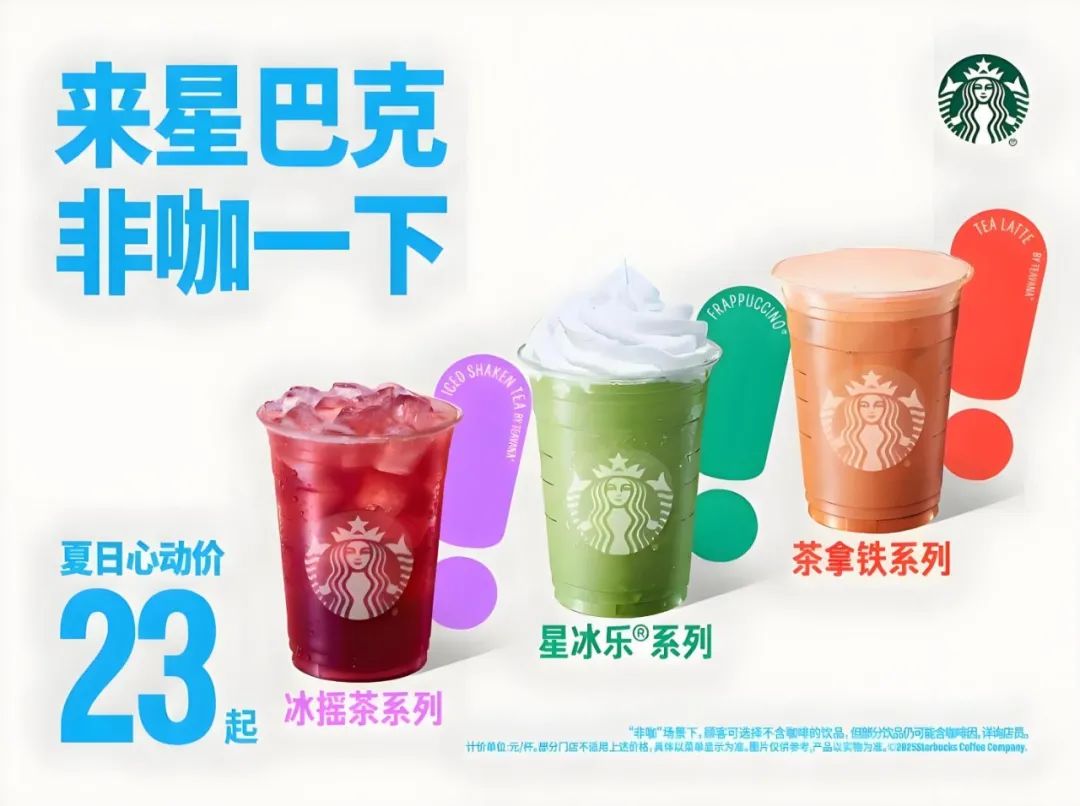
Core Insights - Starbucks China has officially announced a price reduction for non-coffee beverages, with an average decrease of 2-6 yuan, marking the first large-scale direct price cut in its 25 years in China [1][3] - The price reduction is seen as a defensive strategy in response to market competition, particularly in the context of the ongoing beverage market rivalry, which includes not just coffee but also tea and convenience store offerings [3][6] Group 1: Price Reduction Strategy - The price cut is limited to non-coffee drinks such as Frappuccino, iced tea, and tea lattes, while coffee drinks remain unaffected, although consumers can still benefit indirectly by customizing their orders [1][3] - This move comes amid a competitive landscape where other brands, like Luckin Coffee, are also adjusting their pricing strategies, indicating a broader trend in the beverage market [3][11] - The reduction aims to enhance store efficiency and attract more customers during non-coffee sales periods, aligning with consumer demand for value [11][13] Group 2: Market Dynamics - The beverage market is currently experiencing heightened competition, with brands vying for consumer attention across various categories, leading to a zero-sum game where market share is at stake [6][11] - The price reduction is part of a larger trend in brand management this year, as companies seek to navigate the challenges posed by fluctuating raw material costs and changing consumer preferences [6][11] - The competitive landscape is further complicated by the rise of delivery services, which have shifted consumer habits and increased price sensitivity among customers [17][22] Group 3: Future Implications - Starbucks' strategy may lead to further price adjustments across its product lines as it seeks to maintain competitiveness in a rapidly evolving market [24] - The ongoing price war suggests that both Starbucks and Luckin Coffee may continue to explore aggressive pricing strategies to secure market share, despite the risks associated with such approaches [24][25] - The focus on enhancing store operational efficiency and expanding into lower-tier markets is crucial for both brands as they adapt to changing consumer demands and competitive pressures [13][16]



价格大战,一杯咖啡低至不到两元
Nan Jing Ri Bao· 2025-06-13 00:07
价格大战,一杯咖啡低至不到两元 行业协会呼吁"别卷了",本土咖啡盼"突围" □ 南京日报/紫金山新闻记者 王国俊 "真没想到,一大杯咖啡只要不到两块钱,太便宜了。"市民常利英接过外卖小哥送来的一杯美式咖啡感 叹。 6月,随着天气越来越热,也到了茶饮咖啡消费旺季。与以往不同的是,在各大外卖平台的"补贴狂 欢"下,今年咖啡价格大幅下跌,甚至卖出了矿泉水的价格。 消费者之"乐":实现咖啡"自由" 平台竞争之"热":击穿底价的外卖大战 这一轮的咖啡价格大幅下跌,其中一个特别重要的原因是"外卖大战"及巨额补贴。 今年2月,京东杀入外卖赛道,亮出了巨额补贴的"杀手锏",直接和美团"开打",用户最欢迎的是咖啡 奶茶品类。饿了么和淘宝在4月也加入这场外卖大战,同样给了咖啡奶茶品类很多优惠补贴。 京东曾发布战报称,库迪咖啡在京东外卖的销量累计突破4000万单。淘宝闪购当时上线后的24小时内, 库迪咖啡的销量快速上升至平台咖啡类目第一。 6月9日上午9时30分的非高峰时段,记者在南京南站附近一家知名品牌连锁咖啡店前发现,10分钟内, 就有9名快递小哥送走了14份咖啡;而店内,4名店员正在不停忙碌,眼前备餐台上还有七八份待取外卖 ...
Plush获融资;H&M集团创始家族收购股权;滴滴重返巴西外卖市场
Sou Hu Cai Jing· 2025-06-12 14:17
Funding and Expansion - Plush, a DTC personal care brand, has raised 470 million INR (approximately 4.7 million USD) in its latest funding round, led by Rahul Garg with participation from several strategic investors [3] - The funds will be used to expand offline operations, enhance brand building, and increase market influence [3] - Plush, founded in 2019, focuses on women's care and personal care products, including menstrual care, intimate health, hair removal, and personal hygiene [3] Corporate Control and Shareholding - The Persson family, through their investment tool Ramsbury, has increased their stake in H&M Group from 35.5% to nearly 64% over the past nine years, now controlling about 70% of the capital and 85% of the voting rights [6] - This increase in shareholding indicates the family's intent to regain more control over the company [6] Acquisitions and Strategic Moves - Kering Eyewear has announced the acquisition of Italian manufacturer Lenti from Safilo, which specializes in mold forming and surface treatment for various applications [8] - The acquisition aims to enhance Kering Eyewear's internal R&D capabilities for developing innovative high-performance Italian-made sunglasses [8] - Coupang Group is integrating Farfetch with R.Lux to enter the luxury goods market in South Korea, leveraging local services and operations to expand Farfetch's business [10] Market Entry and Expansion - Didi's brand 99Food has launched its delivery service in Goiânia, Brazil, marking its return to the Brazilian market after a previous exit [12] - Didi has a strong foundation in Brazil, with approximately 700,000 active riders and 50 million active users across over 3,300 towns [12] - Luckin Coffee plans to open a store in downtown Manhattan, New York, as part of its international expansion strategy [15][16] Sustainability Initiatives - Chanel has launched Nevold, a B2B center focused on developing circular materials to promote sustainability in the luxury goods and broader apparel industry [18] - The project aims to transform waste textiles into new materials, enhancing the economic competitiveness of recycled materials [18] Market Expansion Plans - Korean fashion e-commerce platform Musinsa plans to enter the Chinese and Japanese markets by opening physical stores as part of its global expansion strategy [21] - Musinsa currently offers around 8,000 Korean fashion brands and aims to tap into China's vast consumer market [22] Corporate Developments - Authentic Brands Group has established its Asia-Pacific headquarters in Shanghai, covering nearly 2,000 square meters to support business expansion in the region [24] - Woolrich has appointed its CFO Lorenzo Flamini as the new CEO, following a strategic partnership with a local operator for its business in Greater China [27]


茶咖日报|美媒:中国咖啡巨头“瑞幸”酝酿向美国强势扩张
Guan Cha Zhe Wang· 2025-06-12 14:14
Group 1: Luckin Coffee Expansion - Luckin Coffee, China's largest coffee chain, is planning to expand into the U.S. market, with its store count in mainland China already more than double that of Starbucks [1] - Despite a previous financial scandal that led to its delisting from NASDAQ, Luckin Coffee has made a strong comeback, leveraging unique flavors and significant discounts [1] - The company is set to open its first store in downtown Manhattan, which is seen as a critical test market for international brand expansion, particularly for Chinese brands [1][2] Group 2: Business Model and Challenges - Luckin Coffee's business model is centered around technology, allowing Chinese consumers to order via WeChat, which enhances efficiency compared to traditional coffee shop experiences [2] - Analysts estimate that while prices in the U.S. will still be lower than Starbucks, the price gap will be smaller than in China [2] - The high cost of labor and the need for diverse payment methods in New York could increase operational costs for Luckin Coffee [2] Group 3: Tea Industry Developments - Tea Baidao launched a new lychee drink series that sold 50,000 cups within an hour of release, showcasing strong consumer demand [3] - The company utilizes fresh lychee fruit from Guangdong, employing modern supply chain techniques to ensure freshness during transportation [3] - Tea Baidao has improved its supply chain efficiency, with 92% of stores achieving next-day delivery and 95% receiving multiple deliveries per week [4] Group 4: Campus Market Potential - Bawang Chaji opened its first campus store at Tsinghua University, achieving over 2,200 cups sold on the opening day, indicating strong potential in the student market [5] - The brand has established a presence in nearly 200 universities across China, with popular products making up a significant portion of sales [5] Group 5: Investment in Tea and Coffee Industry - Zhejiang Fino Group has initiated a tea and coffee industrial park project with an investment of approximately 4 billion yuan, expected to generate an annual output value of 5 billion yuan upon completion [6] - The project includes a smart factory focused on various beverage products, with a planned annual capacity exceeding 180,000 tons [6] Group 6: Lavazza's Strategic Partnerships - Lavazza has renewed its collaboration with Lamborghini, following a successful initial partnership, to create a unique coffee product tailored for the luxury automotive brand [7] - The brand has established a significant presence in China, opening over 100 stores in major cities since its entry into the market [7]

喝惯了美式拿铁?摩氏咖啡热销超2亿杯,解锁东方新风味
Zhong Guo Chan Ye Jing Ji Xin Xi Wang· 2025-06-12 13:06
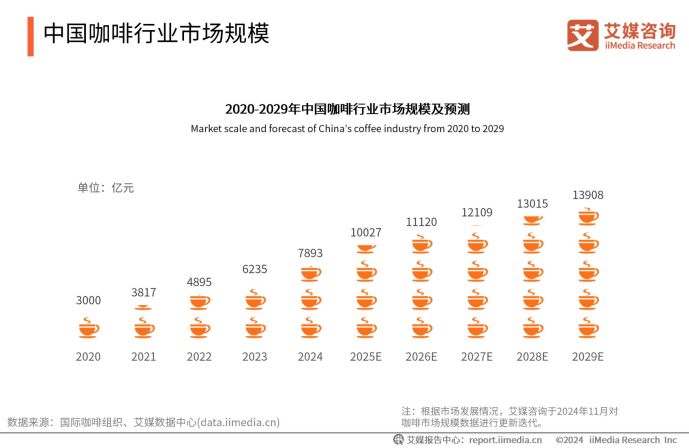
Core Insights - Mo's Coffee has been recognized as the "Pioneer of Chinese Milk Coffee" by iiMedia Research, a leading third-party data mining and analysis agency in the new economy sector [1][6] - The coffee industry in China is experiencing rapid growth, with the market size projected to reach 789.3 billion yuan in 2024 and expected to exceed 1 trillion yuan by 2025, potentially reaching 1,390.8 billion yuan by 2029 [1][3] Industry Trends - The coffee market is witnessing diversified consumer demands, with an increasing preference for functional, healthy, and localized flavors, leading to a competitive landscape focused on personalized and differentiated products [3][6] - The acceptance of innovative coffee varieties is high among consumers, particularly for "Chinese coffee" that blends traditional flavors with modern health concepts, reflecting a new consumption trend in fast-paced lifestyles [3][6] Company Strategy - Mo's Coffee leverages 20 years of experience in the food industry to develop innovative products that cater to Chinese tastes, establishing itself as a key player in the Chinese milk coffee segment [6][10] - The brand combines traditional Chinese beverage inspirations with Western coffee techniques, creating a differentiated competitive advantage in the instant coffee market [6][8] Product Development - Mo's Coffee focuses on creating a rich flavor experience with its milk coffee products, using natural ingredients like milk and coconut milk, and incorporating traditional elements such as osmanthus and jasmine [8][9] - The company emphasizes health by using real milk instead of traditional non-dairy creamers, significantly enhancing the nutritional value and aligning with current consumer preferences for low-sugar options [9][10] Market Position - Mo's Coffee has maintained a leading position in the e-commerce instant coffee sector, with cumulative sales exceeding 200 million cups in 2024, targeting a wide demographic from Generation Z to seniors [9][10] - The brand has been recognized at various industry events, including being the designated coffee brand for the China-ASEAN Expo for five consecutive years and receiving nominations for the FBIF WOW Food Innovation Award [9][10]
又有40+曾经的“排队王”撑不住了...
创业邦· 2025-06-12 12:50
以下文章来源于赢商网 ,作者李玉玲 赢商网 . 这里有你需要的零售商业地产行业资讯、深度分析、知识和数据 来源丨赢商网(ID:winshang) 作者丨李玉玲 编辑丨熊舒苗 付庆荣 图源丨赢商网拍摄 品牌闭店潮,此起彼伏。 据赢商网不完全统计,今年 1-3月又有超过40家典型品牌进行闭店。 Gucci上海关2店、 茑屋书店 连撤 2店、永辉超市90天关273家店等消息,不断引发热议。 图源: 永辉超市 其中, 【永辉超市】 闭店最为激进,一季度门店数量较去年同期锐减 273家,2025 年计划关闭 200 -350家效益不佳的门店; 【永旺超市】 因财务亏损和租金压力 无奈 关闭部分门店; 【沃尔 玛】 一季度关了 3 家门店,过去五年其中国卖场门店总数减少了123 家;即将退市的 【人人乐】 一季度亏损7962万元,门店数量从巅峰时期的超百家缩水至仅剩32家。 困境之下,超市行业求变, 引入 "胖东来模式"成为流行解法 。 【永辉超市】 动作迅速,截至 今年 6 月13日已完成 100 家门店调改,计划 2025 年调改门店达 200 家左右,2026 年完成所有存量门 店调整 。【 物美超市】积极跟进,首 ...


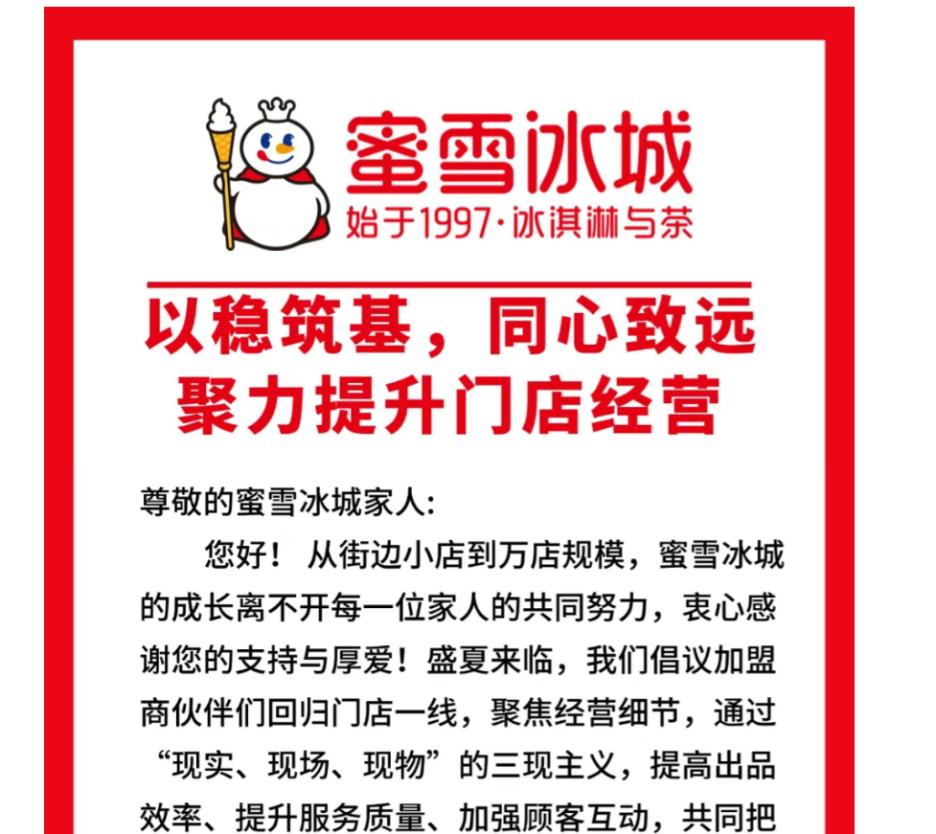
蜜雪冰城宣布放缓开店,乡镇市场只招本地人
3 6 Ke· 2025-06-12 06:33
Core Viewpoint - The recent adjustments in the franchise policy of Mixue Ice City aim to optimize store layout, slow down the overall expansion pace, and focus on special channel store development in response to increasing market competition and declining store performance [1][3][11]. Summary by Relevant Sections Franchise Policy Adjustments - Starting from June 11, 2025, Mixue Ice City will implement changes to its franchise policy, including optimizing store layout, adjusting protection ranges, and encouraging franchisees to return to frontline operations [1]. - Existing franchisees with strong performance will receive more opportunities for new store applications, while new franchisees will be restricted from opening stores in blank towns unless they have local residency [1][11]. Market Conditions and Performance Metrics - The industry is entering a phase of stock competition, with a significant slowdown in store growth. In 2024, the total number of brand stores decreased by 16,000, with a growth rate dropping from 32.5% to 11.12% [3]. - As of December 2024, Mixue Ice City had over 41,000 stores, with daily average GMV per store declining from 4,144 yuan in 2021 to 4,127 yuan in 2023, and gross margin for franchise stores decreasing from 32.03% to 30.10% during the same period [3][11]. Strategic Focus Areas - Mixue Ice City is focusing on three main areas to enhance store revenue: encouraging franchisees to return to frontline operations, promoting the establishment of special channel stores, and imposing stricter requirements for new store franchises in blank towns [4][7][11]. - The company has previously implemented a policy requiring franchisees to complete a minimum of 90 hours of in-store presence each month to ensure better service quality [4][5]. Special Channel Development - The emphasis on special channel stores is a response to the competitive landscape, with other brands also focusing on high-traffic areas such as hospitals and schools [7][11]. - The operational challenges of these special channel locations are acknowledged, but they offer higher customer flow stability and profitability once established [11]. Local Market Strategy - The requirement for franchisees to have local residency and manage stores personally in blank towns is aimed at ensuring that operators understand local consumer habits and are committed to long-term operations [11]. - This strategy is designed to improve the survival rate of new stores in low-traffic, high-difficulty markets [11].

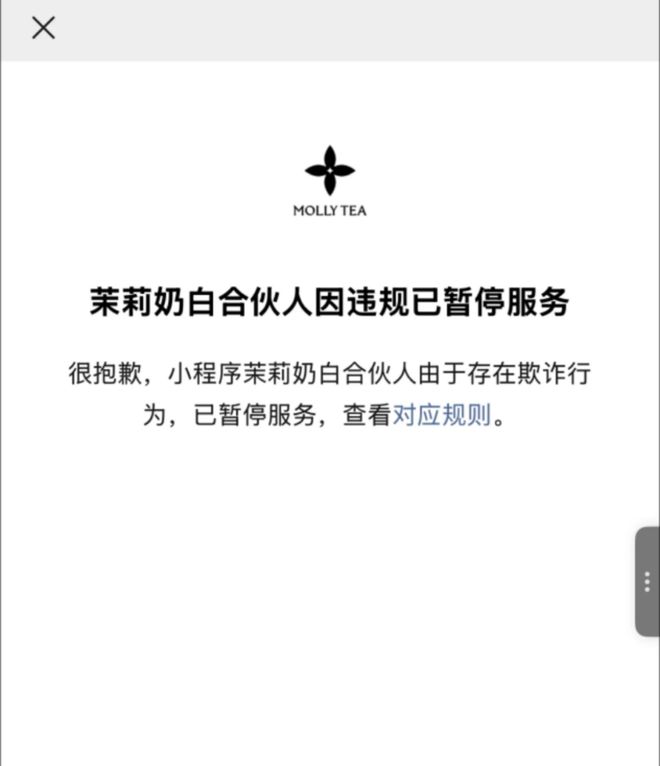
“茉莉奶白合伙人”小程序被曝因“欺诈”暂停服务
Guan Cha Zhe Wang· 2025-06-10 11:32
Group 1: Consumer Complaints and Issues - In May, the Black Cat Complaints platform reported that consumers frequently found foreign objects in snacks purchased from Tea Yan Yue Se, leading to unresolved complaints despite customer service inquiries [1] - The Black Cat Complaints platform received nearly 26.42 million effective complaints from consumers by the end of May 2025, with over 790,000 complaints recorded in May alone [1] Group 2: Business Operations and Partnerships - The "Jasmine Milk White Partner" mini-program was suspended due to allegations of fraud, impacting potential franchisees seeking information about joining the brand [2][4] - Nova Coffee has partnered with Zhongshang Lawson to enter convenience stores, launching its first batch of cooperative stores in Hefei, enhancing its market presence [8] Group 3: Market Performance and Growth - During the 2025 Lemon Season Festival, Lemon Season reported a total GMV exceeding 60 million, marking a 30.2% increase compared to the same period in 2024, with a significant rise in membership and Z-generation consumer engagement [6] - Lemon Season plans to expand its store footprint in Singapore and Australia, following successful openings in Malaysia and Cambodia [7] Group 4: Stock Market Developments - The Shenzhen Stock Exchange announced the inclusion of brands like Buluco, Guming, and Mixue Group in the Hong Kong Stock Connect list, allowing southbound funds to invest in these new consumer stocks [5] - Analysts suggest that while this is a short-term positive for stock prices, high valuations and upcoming lock-up expirations may pose challenges in the medium term [5]
幸运咖“不幸”,蜜雪下一步豪赌“田间地头”?
海豚投研· 2025-06-10 11:03
Core Viewpoint - The article analyzes the growth potential of Mixue Ice City, focusing on its business model, market expansion, and the competitive landscape within the beverage industry, particularly in the context of the current market valuation and growth opportunities [2][4]. Group 1: Market Overview - The current market for ready-to-drink beverages is divided into packaged and freshly made drinks, with the latter experiencing significant growth due to consumer demand for freshness and social engagement [6][7]. - Freshly made beverages have increased their market share from 24% in 2019 to nearly 40% currently, with projections suggesting it could reach 50% by 2028 [8][10]. Group 2: Growth Potential of Mixue Ice City - The potential for Mixue Ice City to expand its store count is significant, with estimates suggesting a possible increase to 57,000 to 61,000 stores across China, representing a 50%-60% growth from current levels [10][14]. - The analysis indicates that the brand's growth will be driven by capturing market share from other beverage brands, particularly local non-chain tea shops, as well as expanding into rural areas where competition is less intense [16][24]. Group 3: Competitive Landscape - The competitive environment has intensified due to a price war among beverage brands, leading to a reduction in average product prices from 15-20 RMB to 10-15 RMB [18][20]. - Mixue Ice City has maintained a low closure rate of 3.1% in 2024, allowing it to capitalize on the market share vacated by struggling competitors [21]. Group 4: Expansion into Rural Markets - Mixue Ice City has begun expanding into rural areas, with over 4,900 stores established in towns by the end of 2024, and plans to increase this number significantly in the coming years [23][24]. - The brand's pricing strategy aligns well with rural consumer spending power, making it well-positioned to dominate in these markets [24][25]. Group 5: Challenges for Lucky Coffee - The coffee brand Lucky Coffee, acquired by Mixue, has struggled to gain traction, primarily due to its focus on lower-tier markets and a lack of brand recognition compared to competitors like Luckin Coffee [29][32]. - Lucky Coffee's average monthly revenue is only 60% of that of Mixue Ice City, and its profitability is hindered by higher costs associated with coffee bean procurement [39][40]. - The potential for Lucky Coffee to expand is limited, with estimates suggesting it could reach around 9,400 stores, but this is contingent on developing coffee consumption habits in lower-tier markets [41][43].
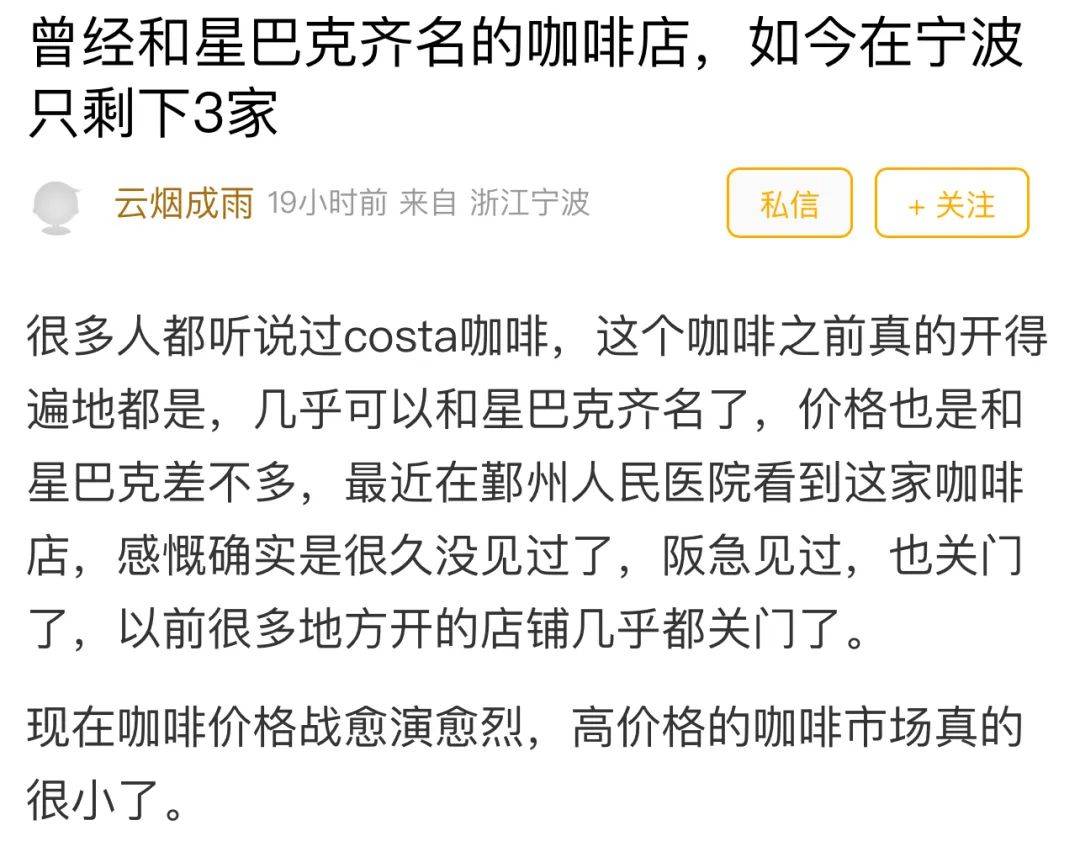
价格战愈演愈烈,曾经和星巴克齐名的咖啡品牌,如今在宁波正常营业的只剩两家
Sou Hu Cai Jing· 2025-06-10 08:11
Core Insights - Starbucks announced a price reduction for several products starting June 10, contrasting with the struggles faced by Costa Coffee, which has seen a significant decline in its presence in the market [1][4]. Company Overview - Costa Coffee was founded in London in 1971 and entered the Chinese market in 2006, positioning itself as a premium brand slightly above Starbucks, claiming to embody European aristocratic charm [4]. - In 2020, Costa Coffee began withdrawing from various markets, including a complete exit from Qingdao and temporary closures in Beijing and Shanghai [4]. Market Position - Over the past five years, the coffee market has become increasingly competitive, with Costa Coffee's operational stores in Ningbo decreasing from four to only two currently [4]. - Starbucks continues to grow, benefiting from its strong marketing and social attributes, which Costa Coffee lacks, leading to perceptions of Costa's products as less competitive in terms of price and taste [6]. Consumer Sentiment - Consumer feedback indicates dissatisfaction with Costa Coffee's pricing and product quality compared to Starbucks, with comments highlighting the lack of compelling reasons to choose Costa over its competitors [7][9]. - Despite challenges, Costa Coffee has shifted focus towards ready-to-drink products, which may appeal to its loyal customer base [21].