建筑

Search documents
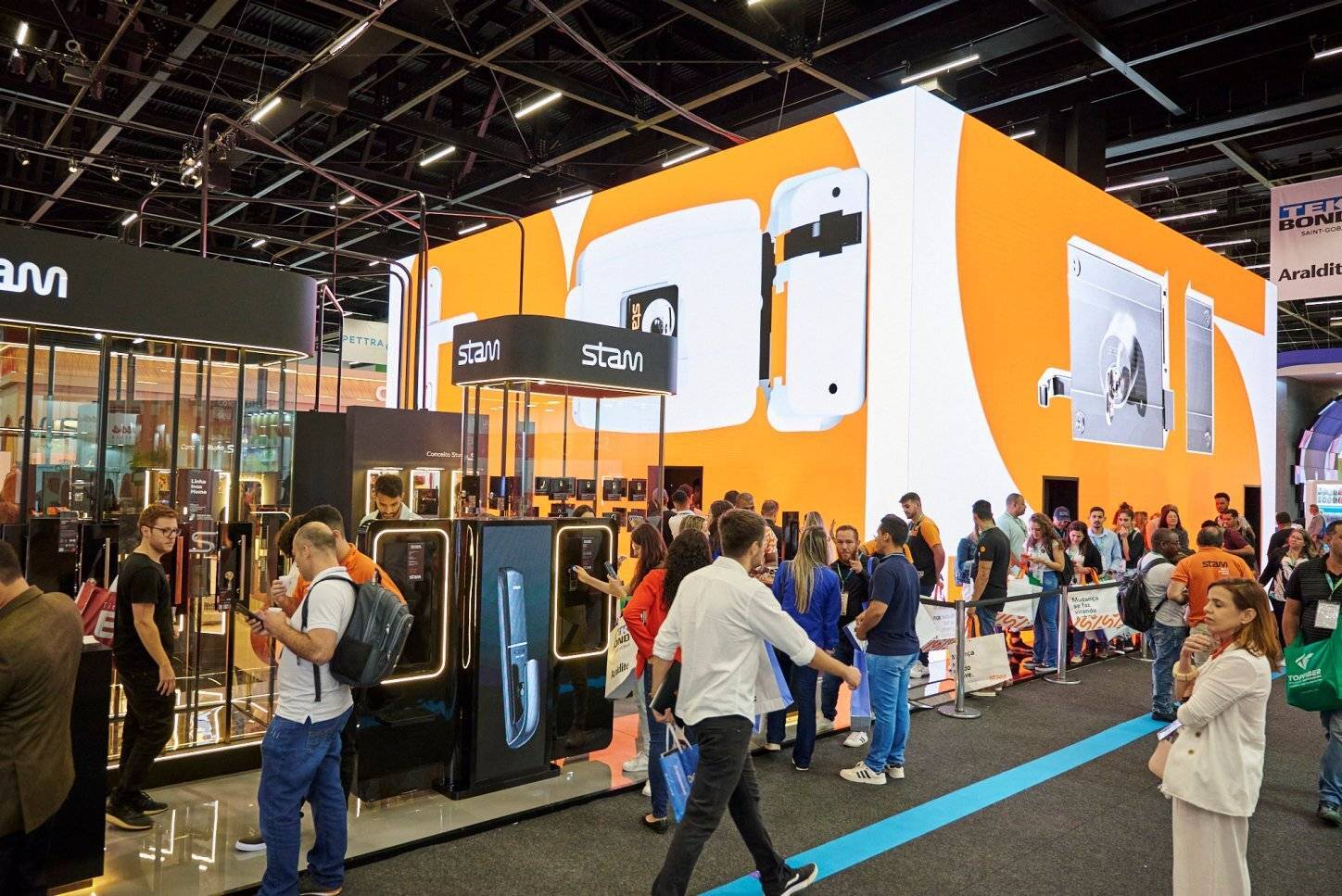
2026年巴西圣保罗国际五金建材FEICON
Sou Hu Cai Jing· 2025-08-12 02:31
Group 1 - The event is the largest and most influential construction industry trade fair in Brazil and South America, organized by Reed Exhibitions Alcantara Machado, aiming to enhance participation and resource flow between international exhibitors and buyers [5] - The exhibition will take place from April 7-10, 2026, at the São Paulo Exhibition Center, with a yearly frequency [1] - In 2019, the exhibition covered an area of 85,000 square meters, featured 2,000 brands, and attracted 100,000 buyers, generating a transaction volume of 520 million USD [5] Group 2 - The exhibition showcases a wide range of products including outdoor gardening supplies, windows and doors, interior and exterior decoration materials, hardware tools, and construction engineering equipment [3] - The 2022 edition of the fair saw over 700 participating brands and displayed more than 2,400 products, with 15 Chinese exhibitors showcasing various tools and materials [6] - Brazil's hardware and building materials market is rapidly growing, with increasing reliance on imports, making it a new growth point for Chinese exports [8] Group 3 - Brazil has announced new economic stimulus measures to address slowing economic growth and declining industrial production, including tax reductions and support for export enterprises [8] - The South American market is a key export region for Chinese products, particularly in construction ceramics, stone materials, and sanitary ware, which have gained recognition for quality and affordability [8] - Challenges for Chinese companies in the Brazilian market include rising manufacturing costs, increased competition, and a lack of competitiveness in high-end products [8]

安徽建工等在重庆荣昌新设高速公路公司
Zheng Quan Shi Bao Wang· 2025-08-12 01:17
Group 1 - Anhui Construction Group has established a new highway company in Chongqing Rongchang with a registered capital of 200 million yuan [1] - The business scope of the new company includes sales of metal materials, construction materials, non-metallic minerals and products, and daily necessities [1] - The company is jointly held by Anhui Construction and other stakeholders [1]

智通港股沽空统计|8月12日
智通财经网· 2025-08-12 00:23
Summary of Key Points Core Viewpoint - The report highlights the top short-selling stocks in the market, indicating significant investor sentiment against these companies, with notable short-selling ratios and amounts for specific stocks [1][2]. Group 1: Top Short-Selling Ratios - Anta Sports (82020) has the highest short-selling ratio at 100.00% with a short-selling amount of 97,800 CNY [2]. - China National Offshore Oil Corporation (80883) follows with a short-selling ratio of 90.59% and a short-selling amount of 1,305,000 CNY [2]. - Tencent Holdings (00700) has a short-selling ratio of 87.99% with a short-selling amount of 1,125,000 CNY [2]. Group 2: Top Short-Selling Amounts - Meituan (03690) leads in short-selling amount with 1.136 billion CNY and a short-selling ratio of 23.98% [2]. - Xiaomi Group (01810) has a short-selling amount of 1.04 billion CNY and a short-selling ratio of 16.20% [2]. - Tencent Holdings (00700) also appears in this category with a short-selling amount of 1.007 billion CNY and a short-selling ratio of 15.29% [2]. Group 3: Top Short-Selling Deviation Values - Tencent Holdings (80700) has the highest deviation value at 45.57%, indicating a significant difference from its average short-selling ratio over the past 30 days [2]. - China National Offshore Oil Corporation (80883) has a deviation value of 42.14% [2]. - China State Construction International (03311) shows a deviation value of 34.50% [2].





德国7月破产企业数量同比增长19.2%
Zhong Guo Xin Wen Wang· 2025-08-11 23:17
Core Insights - The number of companies applying for standard bankruptcy procedures in Germany increased by 19.2% year-on-year in July 2025, marking the largest increase since October of the previous year [1] - The Federal Statistical Office noted that standard bankruptcy procedures are only included in statistics after the first ruling by the bankruptcy court, indicating that actual bankruptcy applications often occur about three months earlier [1] Bankruptcy Statistics - In May, a total of 2,036 companies reported bankruptcy applications, representing a 5.3% increase compared to the same month last year [1] - The total claims from creditors amounted to approximately €3.2 billion, which is lower than the €3.4 billion reported in the same period last year [1] - The transportation and storage sector experienced the highest frequency of bankruptcies, with 10.9 bankruptcies per 10,000 companies, followed by the construction sector (9.4) and the accommodation and food service sector (9.0) [1] Economic Context - Economic experts from the German Chamber of Commerce and Industry (DIHK) indicated that the economic crisis in Germany is ongoing, with the past two years of economic recession having weakened the liquidity of many companies [1] - The Halle Institute for Economic Research (IWH) suggested that the increase in bankruptcies is not only related to economic downturns but also to the long-term effects of low interest rates that previously suppressed bankruptcies and government support during the pandemic that allowed some already fragile companies to survive [1] - Since mid-2022, rising interest rates and the cessation of aid have triggered a "compensatory effect" leading to increased corporate bankruptcies [1]
张瑜:“估值-股息”四象限看各行业位置
一瑜中的· 2025-08-11 15:17
Core Viewpoint - The "valuation-dividend" quadrant analysis framework indicates that industries with low valuation (P/E percentile < 50%) and high dividend yield (> 3%) (Quadrant II) exhibit significant excess returns, while high valuation and low dividend yield industries (Quadrant IV) face notable correction risks. The food and beverage industry has transitioned from a high valuation trap (Quadrant IV) in 2021 to a low valuation and high dividend yield zone (Quadrant II) after four years of valuation digestion, enhancing its investment attractiveness and safety margin due to a low valuation level (12.0% historical percentile) and a relatively high dividend yield (3.6%) [2][6]. Group 1: Valuation-Dividend Quadrant Model - The "valuation-dividend" quadrant model is constructed using valuation and dividend dimensions to assess industry allocation value. The horizontal axis represents the P/E percentile, calculated using dynamic historical percentiles from the past 20 years, while the vertical axis represents the rolling dividend yield from the past 12 months. Quadrant I includes high valuation (historical percentile > 50%) and high dividend yield (> 3%) industries, Quadrant II includes low valuation (historical percentile < 50%) and high dividend yield (> 3%) industries, Quadrant III includes low valuation (historical percentile < 50%) and low dividend yield (< 3%) industries, and Quadrant IV includes high valuation (historical percentile > 50%) and low dividend yield (< 3%) industries. Historically, industries in Quadrant II tend to have better risk-return ratios and allocation value, while Quadrant IV industries require caution [4][15]. Group 2: Historical Validation - As of the end of 2023, the banking industry was in Quadrant II, with a dividend yield of 6.0% and a P/E percentile of only 0.3%. This configuration highlighted the industry's allocation value, leading to a significant outperformance of the banking sector, which rose by 52.83% from early 2024 to August 8, 2025, outperforming the broader market by 30.64 percentage points [18]. - In contrast, during the market peak in Q3 2021, the food and beverage and power equipment industries were in Quadrant IV, with dividend yields of 1.1% and 0.4%, and P/E historical percentiles of 78.0% and 82.3%, respectively. These industries subsequently underperformed the market, with returns from Q4 2021 to August 8, 2025, being -34.82% and -34.75%, lagging the broader market by approximately 35 percentage points [19]. Group 3: Food and Beverage Industry Transition - The food and beverage industry has transitioned from a risk zone to a value zone, entering Quadrant II as of August 8, 2025, with a P/E percentile of 12.0% and a dividend yield of 3.6%. This shift signifies a qualitative change, as the current low valuation level and relatively high dividend yield enhance the industry's allocation cost-effectiveness and safety margin [22]. Group 4: Weekly Economic Observation - The Huachuang Macro WEI index rose to over 7%, reaching 7.28% as of August 3, 2025, up from 6.35% on July 27, 2025. The increase is primarily driven by infrastructure (asphalt operating rate) and durable goods consumption (passenger car sales) [7][25]. - In real estate, the decline in residential sales has narrowed, with a year-on-year decrease of -17% in the first week of August across 67 cities, compared to -22% in July [8][29]. - The operating rate of asphalt facilities was 31.7% as of August 6, 2025, showing a year-on-year increase of 5.2%, while cement dispatch rates were at 39.2%, slightly down from the previous week but better than the same period last year [33].
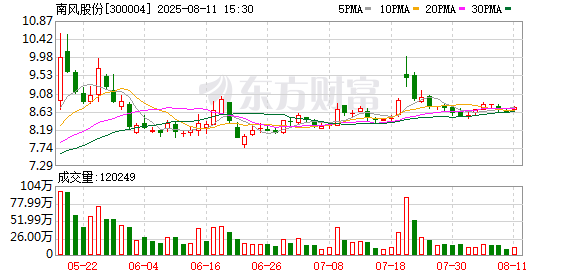
南风股份:董事史旭光辞职
Mei Ri Jing Ji Xin Wen· 2025-08-11 08:25
南风股份(SZ 300004,收盘价:8.73元)8月11日晚间发布公告称,史旭光先生因个人原因,申请辞去 公司第六届董事会董事职务,同时辞去董事会战略委员会、薪酬与考核委员会委员职务。辞去以上职务 后,史旭光先生不再担任公司任何职务。 2024年1至12月份,南风股份的营业收入构成为:核电行业占比46.66%,工业与民用建筑行业占比 25.72%,地铁隧道行业占比25.33%,其他业务占比2.29%。 (文章来源:每日经济新闻) ...

发掘格局优化与盈利修复的机会:反内卷政策下的行业比较
Guohai Securities· 2025-08-11 07:18
Investment Rating - The report focuses on identifying investment opportunities in industries that are expected to benefit from the "anti-involution" policy, particularly in coal, steel, and building materials sectors, which are characterized by high levels of internal competition and effective policy execution [7][19]. Core Insights - The report addresses key questions regarding the existence of a clear investment theme in the market, the establishment of a systematic and quantifiable analysis framework for industry selection, and the roadmap and timeline for investments [7]. - The macroeconomic context highlights that industrial profits are under pressure, with the Producer Price Index (PPI) experiencing negative growth for 33 consecutive months as of June 2025, leading to intensified competition within industries [7][14]. - The "anti-involution" policy has emerged as a national agenda aimed at optimizing industry structures and restoring profitability, driven by strong policy guidance [7][19]. - A dual-dimensional analysis model was constructed to evaluate the impact of the "anti-involution" policy on various industries, focusing on execution efficiency and the degree of internal competition [7]. - The investment conclusion emphasizes a focus on supply-side clearing, with coal, steel, and building materials industries expected to achieve rapid supply-side clearing and a V-shaped recovery in profitability due to their characteristics of high internal competition and high execution efficiency [7][19]. Summary by Sections Current Macroeconomic Background - Industrial enterprises are facing profit pressures, with the PPI continuing to contract, indicating a challenging environment for profitability [9][14]. - The report notes a significant correlation between PPI and industrial profits, suggesting that a recovery in prices is essential for profit recovery [14]. Model and Methodology - A quantitative model was developed to screen industries that would benefit from the "anti-involution" policy, focusing on execution efficiency and internal competition levels [7]. Conclusions and Strategies - The report suggests that industries such as coal, steel, and building materials are likely to be the first to experience supply-side clearing and profitability recovery, making them core areas of focus for investment [7][19].
每日市场观察-20250811
Caida Securities· 2025-08-11 05:07
Market Overview - The market experienced a slight decline on August 11, 2025, with a trading volume of 1.74 trillion RMB, down approximately 110 billion from the previous trading day[1] - The majority of industries saw gains, particularly in construction, building materials, steel, and non-ferrous metals, while sectors like computers, electronics, media, and non-bank financials faced declines[1] - The market's strength weakened, with reduced volatility compared to the previous day, and no panic sentiment was observed during the intraday decline[1] Sector Performance - Cyclical industries led the gains, although they generally had lower trading volumes[1] - The technology sector underwent a correction, which is seen as a technical adjustment after significant gains in prior days, indicating that the market's tech-driven style is not necessarily over[1] - Recent performance disclosures from leading semiconductor firms showed an increase in capacity utilization, and advancements in AI models were noted, suggesting ongoing focus on semiconductors, AI, and applications[1] Fund Flow and Trade Data - On August 8, 2025, the Shanghai Composite Index saw a net inflow of 9.658 billion RMB, while the Shenzhen Composite Index experienced a net outflow of 0.174 billion RMB[3] - The total trading volume for the day was 1.71 trillion RMB, a decrease of 115.3 billion from the previous day, with the Shanghai index down 0.12%, Shenzhen down 0.26%, and the ChiNext down 0.38%[2] Economic Indicators - In the first seven months of 2025, China's total goods trade reached 25.7 trillion RMB, reflecting a year-on-year growth of 3.5%, with exports at 15.31 trillion RMB (up 7.3%) and imports at 10.39 trillion RMB (down 1.6%) [7] - In July 2025, the total goods trade value was 3.91 trillion RMB, with exports at 2.31 trillion RMB (up 8%) and imports at 1.6 trillion RMB (up 4.8%) [7] Fund Dynamics - In the past week, 68.968 billion RMB flowed into ETFs, with the total ETF scale nearing 4.7 trillion RMB, indicating a significant interest in core asset allocation[13] - A total of 255 funds have suspended large-scale subscriptions in the past two weeks, reflecting a trend of limited purchases across various fund types, including actively managed and quantitative funds[14]
超4200股上涨,沪指再刷年内新高!
2 1 Shi Ji Jing Ji Bao Dao· 2025-08-11 04:22
Core Points - The A-share market opened higher on August 11, with the Shanghai Composite Index reaching a new high for the year [2] - The total trading volume in the Shanghai and Shenzhen markets was 1.14 trillion yuan by midday [2] - The Shanghai Composite Index rose by 0.51%, the Shenzhen Component Index increased by 1.48%, and the ChiNext Index gained 1.99% [2] - Over 4,200 stocks in the market experienced gains, indicating a positive market sentiment [2] Sector Performance - PEEK material concept stocks saw significant gains, with Zhongxin Fluorine Materials achieving four consecutive trading limits in five days [2] - Computing hardware stocks showed strong fluctuations, with Shenghong Technology reaching a historical high [2] - Local stocks from Xinjiang maintained their strength, with companies like Xinjiang Communications Construction hitting trading limits [2] - Sectors such as PEEK materials, lithium mining, CPO, and PCB led in terms of percentage gains, while banking, electricity, gold, and oil & gas sectors experienced declines [2]
新疆本地股持续活跃 新疆交建等多股涨停
Xin Lang Cai Jing· 2025-08-11 01:57
Group 1 - The core viewpoint of the article highlights the active performance of local stocks in Xinjiang, with several companies reaching their daily price limit [1] - Notable stocks that experienced a surge include Xinjiang Jiaojian, Guotong Co., Tiensheng Co., Beixin Road and Bridge, Qingsong Jianhua, and Bayi Steel, all hitting the daily limit [1] - Other companies such as Xiyu Tourism, Tianshan Co., and Western Construction saw their stock prices increase by over 5% [1] Group 2 - The establishment of the Xinjiang Railway Group, with a registered capital of 95 billion RMB, is a significant development in the region [1]