
储能

Search documents
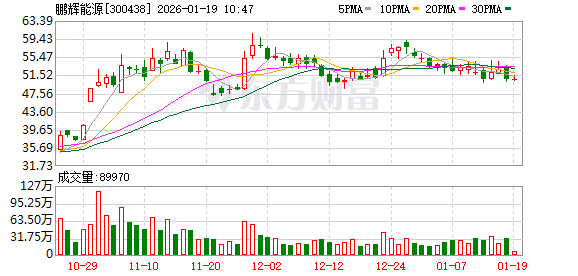
鹏辉能源&四川中孚绿色水电铝用户侧储能项目并网投运
Zhong Guo Xin Wen Wang· 2026-01-19 02:46
Core Viewpoint - The successful commissioning of the 107.12MW/428.48MWh green hydropower aluminum user-side energy storage project marks a significant step in the transformation of the green energy sector in Guangyuan, aiming to establish it as "China's Green Aluminum Capital" [2] Group 1: Project Overview - The energy storage project is a collaboration between leading companies Penghui Energy and Zhongfu Industrial, with Sichuan Zefeng Power Design Co., Ltd. responsible for the EPC contracting [2] - The project commenced construction on July 30, 2025, and was completed within a hundred days, overcoming challenges such as soft geological conditions and continuous rainfall [2] Group 2: Technical Specifications - The energy storage station has a charging and discharging power of 107.12 MW and a maximum storage capacity of 428.48 MWh, supplying all stored electricity directly to the Sichuan Zhongfu aluminum production system [3] - The project is expected to reduce electricity costs for Sichuan Zhongfu by approximately 140 RMB per ton of electrolytic aluminum, leading to annual savings of over 60 million RMB [3] Group 3: Economic and Environmental Benefits - The energy storage station enhances the operational efficiency and stability of the regional power system, ensuring a balance between electricity supply and demand [3] - It is projected to save approximately 19,700 tons of standard coal and reduce carbon dioxide emissions by about 52,000 tons annually, setting a benchmark for low-carbon transformation in high-energy industries [3] Group 4: Future Plans - Penghui Energy plans to deepen collaboration with enterprises in the Guangyuan aluminum industry, focusing on the construction of a "zero-carbon park" during the 14th Five-Year Plan period [4] - The company aims to invest in projects such as photovoltaic power generation, wind power, charging and swapping stations, energy storage stations, smart microgrids, and green electricity direct connections [4] - The ultimate goal is to establish a regional intelligent microgrid characterized by clean, low-carbon, safe, controllable, flexible, efficient, and friendly interactions, contributing to the national new power system construction [4]


百川畅银成立智储热能科技新公司
Xin Lang Cai Jing· 2026-01-19 02:45
Group 1 - Baichuan Zhichu (Shangqiu) Thermal Energy Technology Co., Ltd. has been established recently, focusing on energy storage technology services and key technologies for waste heat power generation [1] - The company's business scope includes research and development of resource regeneration technology and utilization of waste heat, pressure, and gas [1] - Baichuan Changyin holds 100% ownership of the newly established company [1]
储能-氢能行业更新推荐
2026-01-19 02:29
Summary of Key Points from the Conference Call Industry Overview - The conference call focuses on the energy storage and hydrogen energy industry in China, highlighting the acceleration of energy storage projects through pricing mechanisms and policy adjustments, particularly in capacity electricity fees [1][2][5]. Core Insights and Arguments - The global electrochemical energy storage project bidding volume is expected to add nearly 1.5 TWh by 2025, with Asia accounting for 75% and China nearly half of that total [1][3]. - The core drivers for the 2025 energy storage market include the increasing share of wind and solar power generation and the deepening of electricity market reforms, drawing lessons from developed markets like the US and Europe [2][5]. - The capacity electricity fee policy is highly anticipated, as it will provide better guidance for investors in the context of a new power system with a higher proportion of renewable energy [5]. Growth Trends - By 2025, the energy storage market is projected to see significant growth, with a focus on large-capacity, long-life battery cells and advanced Power Conversion Systems (PCS) [3][6]. - The green hydrogen economic tipping point is approaching, with costs expected to decrease due to improved efficiency in hydrogen production and the implementation of green electricity direct connection policies [12][13]. R&D Trends and Competitive Landscape - Energy storage product development is focused on two levels: battery cells and PCS, with advancements aimed at increasing capacity and efficiency [6][7]. - The international trade environment is becoming increasingly complex, leading domestic energy storage companies to expand overseas to optimize profit structures amid intense domestic competition [8][9]. Policy Expectations - The capacity electricity fee policy is expected to be beneficial for energy storage, as it addresses the pricing challenges in a market with a growing share of renewable energy [5]. Hydrogen Energy Development - Hydrogen energy is still in the early stages of commercialization but is seen as a crucial method for decarbonizing non-electric sectors [12]. - The demand for green hydrogen is driven by strict decarbonization requirements in the shipping industry, with significant policies being implemented by the EU and the International Maritime Organization [14][15]. Companies to Watch - Key players in the green methanol production sector include China Tianying and Jidian Co., which have secured long-term agreements with major shipping companies, ensuring sales certainty and long-term profits [17]. - In the fuel cell vehicle sector, companies like Reformed Energy and Yihuatong are leading, with market shares exceeding 20%, benefiting from new subsidies and cost reductions [19]. Conclusion - The energy storage and hydrogen energy sectors are poised for significant growth driven by policy support, technological advancements, and increasing demand for renewable energy solutions. Companies that can navigate the competitive landscape and leverage international opportunities are likely to thrive in this evolving market [8][9][10].

数据中心提振效果显现,美国及中东大储需求高增
Zhong Guo Neng Yuan Wang· 2026-01-19 02:06
Core Insights - The report from Huazhong Securities highlights significant growth in energy storage installations in both domestic and international markets, with a focus on new energy storage technologies and upcoming projects in various regions [1][2]. Demand Side - Domestic market: In 2025, new energy storage installations are expected to reach 58.6 GW/175.3 GWh, with a December 2025 tender scale of 22.5 GW/55.8 GWh, showing a year-on-year increase of 75% and a month-on-month increase of 88% [2]. - Indian market: By 2025, energy storage system installations are projected at 0.5 GWh, with tenders for standalone storage at 45 GWh and solar storage projects at 15.2 GWh. The Indian government mandates the integration of 4 GW/17 GWh of electrochemical storage projects by the 2025-26 fiscal year without delays [1][2]. High ROE Market - Germany: By December 2025, energy storage installations are expected to be 394 MWh, a decrease of 20.4% year-on-year. The breakdown includes 210 MWh for household storage, down 26.83% year-on-year, and 159 MWh for large-scale storage [3]. - Italy: In Q2 2025, energy storage installations reached 817 MW/2728 MWh, reflecting a year-on-year increase of 48% and 75% respectively [3]. - The UK: As of Q3 2025, there are 121.76 GW of energy storage projects awaiting construction, an increase of 21.83 GW from Q2 [3]. Leading Indicators - Europe: The average wholesale electricity price in nine core European countries is projected to be €111.44/MWh by December 2025, a 7% increase month-on-month [4]. - Australia: In Q3 2025, the net income from energy storage in the national electricity market reached $111.9 million, a year-on-year increase of 47% [4]. - The US: The number of pending projects has increased by 17% year-on-year, while the prices for utility-scale storage systems have decreased by 11% [4]. Supply Side - In December 2025, the average tender price for domestic energy storage systems is expected to be 0.669/0.455 yuan/Wh for 2/4-hour systems, with a month-on-month change of +12%/-3% [6]. - In the first three quarters of 2025, global energy storage cell shipments reached 410.45 GWh, a year-on-year increase of 98.5%, with total energy storage system shipments at 286.35 GWh [6].
万和财富早班车-20260119
Vanho Securities· 2026-01-19 01:43
Core Insights - The report emphasizes the importance of identifying investment opportunities and risks in the current market landscape, particularly focusing on sectors poised for growth such as AI, energy transition, and semiconductor industries [1]. Domestic Financial Market - The Shanghai Composite Index closed at 4101.91, down by 0.26%, while the Shenzhen Component Index closed at 14281.08, down by 0.18%. The ChiNext Index also saw a decline of 0.20%, closing at 3361.02 [2]. Macro News Summary - The State Council is reviewing measures to boost consumer spending and is focusing on new growth points in service consumption [4]. - The China Securities Regulatory Commission has initiated an investigation into Rongbai Technology for misleading statements regarding a major contract [4]. Industry Dynamics - The energy storage industry is entering a new growth phase driven by AI infrastructure, energy transition, and grid congestion, with related stocks such as Kelon Electronics and Jinrong Tianyu highlighted [5]. - Elon Musk has announced plans to produce 10,000 Starship rockets annually, indicating significant long-term growth potential in the commercial space sector, with stocks like Guoji Jinggong and Aerospace Morning Light being relevant [5]. - TSMC's financial report has led to a surge in US semiconductor stocks, suggesting a new growth opportunity for the semiconductor supply chain, with companies like Jingce Electronics and Zhongwei Company being mentioned [5]. Company Focus - Time Space Technology (605178) is strategically enhancing its semiconductor storage capabilities by leveraging the Shenzhen industrial ecosystem [6]. - Yanjing Co., Ltd. (300658) plans to acquire 98.54% of Yongqiang Technology, marking its entry into the integrated circuit interconnect materials sector [6]. - Jing Shan Light Machinery (000821) is addressing historical issues and has initiated a comprehensive internal control system upgrade [6]. - Starry Sky Technology (002439) has signed a framework agreement with Hong Kong Broadband to provide network security products and solutions [6]. Market Review and Outlook - On January 16, the market opened high but closed lower, with a total trading volume of 3.03 trillion, an increase of 120.8 billion from the previous trading day. Over 2900 stocks declined [7]. - The semiconductor supply chain showed strong performance, with stocks like Changdian Technology hitting a five-year high. Storage chip concepts also saw significant gains, with companies like Baiwei Storage reaching historical highs [7]. - The report maintains a positive outlook on AI investments and the recovery of global manufacturing, particularly in industrial commodities such as copper, aluminum, tin, lithium, crude oil, and oil transportation [7].
中金 | “稳市”机制研究系列(2):两融制度调整强化“稳市”能效
中金点睛· 2026-01-19 01:31
Core Viewpoint - The article discusses the recent adjustments in the margin requirements for margin trading in the A-share market, emphasizing the importance of stabilizing the market and promoting long-term healthy development [1][4]. Group 1: Margin Trading Adjustments - On January 14, the minimum margin ratio for investors financing the purchase of securities was raised from 80% to 100%, reducing the maximum leverage from 2.25 to 2 [1]. - As of January 16, the margin trading balance in the A-share market reached a historical high of 2.7 trillion yuan, although its relative scale remains reasonable at 2.63% of the free float market capitalization [1][2]. Group 2: Market Monitoring and Turnover Rates - The A-share market experienced a rapid increase in turnover, with total trading volume reaching 3.99 trillion yuan on January 14, indicating heightened investor sentiment [2]. - The turnover rate based on free float market capitalization exceeded 5%, suggesting that investor sentiment is overheated, which could lead to increased market volatility [2][6]. Group 3: Long-term Market Outlook - The article suggests that a focus on steady market progress ("稳进") is preferable to rapid increases, as high turnover rates and margin adjustments can help return the market to a more rational investment approach [3]. - The improvement in the fundamental aspects of the market is expected to be gradual, with a shift from valuation recovery to profit expectation improvement anticipated in 2026 [3][4]. Group 4: Investment Recommendations - The article recommends focusing on sectors with growth potential, such as AI technology, innovative pharmaceuticals, and energy storage, which are entering a favorable cycle [5]. - It also highlights the importance of overseas expansion as a growth opportunity, particularly in sectors like home appliances and engineering machinery [5]. - Additionally, it suggests looking into high-dividend stocks and sectors that may benefit from policy support, such as chemicals and renewable energy [5].

【点金互动易】存储芯片+封测,公司两处封测厂处于满产状态并在扩产,具备多层堆叠封装工艺能力
财联社· 2026-01-19 01:10
Group 1 - The article emphasizes the importance of timely and professional information interpretation in investment, focusing on extracting investment value from significant events and analyzing industry chain companies [1] - The storage chip and packaging testing industry is highlighted, with two packaging factories operating at full capacity and expanding, showcasing advanced multi-layer stacking packaging technology. This leading high-end storage chip packaging company serves applications in big data servers and cloud computing centers [1] - In the energy storage sector, the company has a revenue contribution of 20%-30% from the Americas, being a key supplier to major clients like Tesla and Google, while maintaining a leading market share in solar inverters [1]

固态电池加速产业化,太空光伏潜力可期
Zhong Guo Neng Yuan Wang· 2026-01-19 00:56
Industry Overview - The electrical equipment index (10679) increased by 0.79%, outperforming the market during the week of January 12-16. Lithium batteries rose by 1.5%, new energy vehicles by 1.29%, and photovoltaics by 0.87%. However, wind power, power generation equipment, and nuclear power saw declines of 4.74%, 4.15%, and 2.09% respectively [1][2] - The top five gainers in the sector included Huaguang Co., Yihua Tong, Sanbian Technology, Hezhong Technology, and Baobian Electric. The top five losers were Xiangrikui, Yijing Photovoltaic, Goldwind Technology, Baosheng Co., and Aerospace Machinery [2] Storage Sector - The Ukrainian Prime Minister ordered an acceleration in the import of electricity and additional power equipment. Four departments are strengthening government investment funds towards storage and new energy industries [3] - Jiangxi's virtual power plant is expected to have a regulation capacity exceeding 1GW by 2027, with several pilot projects being implemented [3] - Trina Storage signed a large contract in Latin America, solidifying its position among the top five storage solution providers in the region [3] Electric Vehicle Market - In December, electric vehicle sales reached 1.71 million units, with a year-on-year increase of 28%. Exports accounted for 2.58 million units, up 103% year-on-year [3] - The China Association of Automobile Manufacturers reported a decline in new energy passenger vehicle retail sales in January 2026, with a year-on-year decrease of 38% [3] Company Insights - Keda Technology expects a net profit of 600-660 million yuan for 2025, representing a year-on-year increase of 52.21%-67.43% [4] - Zhenyu Technology anticipates a net profit of 500-550 million yuan for 2025, with a projected increase of 96.9%-116.6% [4] - Rongbai Technology expects a net profit of approximately 30 million yuan in Q4 2025, but a full-year loss of 190-150 million yuan [4] - TCL Zhonghuan plans to invest in a new energy project and has signed a cooperation framework agreement [5] Investment Strategy - The storage sector is expected to see over 60% growth in 2026, driven by strong demand and supply constraints. The U.S. Inflation Reduction Act is anticipated to boost installations [6] - The lithium battery sector is projected to recover in March 2026, with a forecasted 5-10% growth in domestic sales [6] - The wind power sector is expected to see significant growth, with domestic offshore wind capacity projected to exceed 8GW by 2025 [6] Investment Recommendations - Companies such as CATL, Sungrow Power, and Sanyuan Electric are highlighted as strong investment opportunities due to their leadership in their respective sectors [7][8] - The report emphasizes the potential of companies involved in solid-state batteries, energy storage, and electric vehicle components, suggesting a favorable outlook for these sectors [7][8]



电力设备行业跟踪周报:固态电池加速产业化,太空光伏潜力可期
Soochow Securities· 2026-01-19 00:50
Investment Rating - The report maintains an "Accumulate" rating for the power equipment industry [1] Core Insights - The solid-state battery industry is accelerating its industrialization, and the potential for space photovoltaic technology is promising [1] - The energy storage sector is expected to see significant growth, with a projected increase of over 60% in 2026 due to rising demand and government support [3][6] - The report highlights the strong performance of various segments within the power equipment industry, including electric vehicles, lithium batteries, and photovoltaic technologies [3] Industry Trends - The electric equipment sector saw a 0.79% increase, outperforming the market, with lithium batteries rising by 1.5% and new energy vehicles by 1.29% [3] - The report notes that the global energy storage system shipments are expected to reach 498 GWh in 2025, a year-on-year increase of 99% [3] - The report emphasizes the importance of government investment in energy storage and new energy sectors, with significant projects underway in regions like Jiangxi [3] Company Performance - Companies like Keda and Zhenyu Technology are expected to see substantial profit growth, with Keda projecting a net profit increase of 52.21%-67.43% for 2025 [3] - The report mentions that major companies are entering strategic partnerships and expanding their production capacities, such as Ganfeng Lithium and CATL [3][4] - The report also highlights the expected losses for companies like Junda and Longi Green Energy, indicating challenges in the current market environment [3][4] Investment Strategy - The report suggests a strong outlook for energy storage, lithium batteries, and solid-state technologies, recommending investments in leading companies such as CATL, Sunpower, and Sanyuan Electric [3][4] - It emphasizes the potential for growth in the humanoid robotics sector, with Tesla leading the market and significant opportunities for component manufacturers [6] - The report advises investors to focus on companies with strong technological advantages and overseas market channels, particularly in the AIDC sector [6]



电力设备行业跟踪周报:固态电池加速产业化,太空光伏潜力可期-20260119
Soochow Securities· 2026-01-19 00:30
Investment Rating - The report maintains an "Accumulate" rating for the power equipment industry [1] Core Insights - The solid-state battery industry is accelerating its industrialization, and the potential for space photovoltaic technology is promising [1] - The energy storage sector is expected to see significant growth, with a projected increase of over 60% in 2026 due to rising demand and government support [3][6] - The report highlights the strong performance of electric vehicle sales and the increasing demand for lithium batteries, with a notable rise in lithium carbonate prices [3][6] Industry Trends - The power equipment sector has shown a strong performance, with electric vehicle sales reaching 1.71 million units in December, a year-on-year increase of 28% [3] - The global energy storage system shipments are expected to reach 498 GWh in 2025, a year-on-year growth of 99% [3] - The report notes that the domestic energy storage market is expected to experience a compound annual growth rate of 30-50% over the next three years [3] Company Performance - Companies like Ningde Times and BYD are highlighted for their strong growth potential, with Ningde Times expected to maintain a low valuation despite being a global leader in power and energy storage batteries [5] - The report mentions that companies such as Keda and Ganfeng Lithium are well-positioned to benefit from the rising prices of lithium and other battery materials [4][5] - Specific companies like Sunpower and Longi Green Energy are noted for their strong market positions in the inverter and solar panel sectors, respectively [5] Investment Strategy - The report suggests a focus on energy storage and lithium battery sectors, with recommendations for companies that are expected to benefit from the ongoing demand surge [3][4] - It emphasizes the importance of solid-state battery technology and the potential for significant returns in the robotics sector, particularly with Tesla's upcoming Gen3 robot [6] - The report advocates for investments in companies with strong supply chain capabilities and those that are positioned to capitalize on emerging market trends in energy and automation [6]