咖啡

Search documents
5月CPI同比下降0.1%,星巴克下调非咖产品价格 | 财经日日评
吴晓波频道· 2025-06-10 00:49
点击报名 ▲科学出海 中国5月CPI同比下降0.1% 6月9日,国家统计局公布数据显示,2025年5月份,全国居民消费价格指数(CPI)同比下降0.1%,环比下降0.2%。同比数据中,城市持平,农 村下降0.4%;食品价格下降0.4%,非食品价格持平;消费品价格下降0.5%,服务价格上涨0.5%。1—5月平均,全国居民消费价格比上年同期下 降0.1%。 2025年5月份,全国工业生产者出厂价格指数(PPI)同比下降3.3%,环比下降0.4%;工业生产者购进价格同比下降3.6%,环比下降0.6%。1— 5月平均,工业生产者出厂价格和购进价格比上年同期均下降2.6%。(国家统计局官网) |点评| 中国5月CPI继续保持低位运行,国内需求回暖的速度相对较慢。5月包括汽油、燃油等能源价格走低,与"五一"假期居民出行意愿提 升,机票、旅游价格修复相抵消。除了部分"国补"涉及的行业外,多数消费品行业需求仍有待提振。值得注意的是,由于国内居民收入端增长 有限,购买享受"国补"的家电等产品后,对其他消费品的消费意愿就会有所降低,形成此消彼长的关系。 5月国际原油价格以及国内煤炭价格双双走弱,带动PPI继续走低。国内PPI近两 ...


首家二手多品类循环仓店“超级转转”开业;AI初创公司硅基流动完成A轮融资|未来商业早参
Mei Ri Jing Ji Xin Wen· 2025-06-09 23:35
Group 1 - The first second-hand multi-category circular warehouse store "Super Turn" opened in Beijing, covering over 3000 square meters and offering a variety of second-hand products, marking a strategic move by the company in a competitive second-hand market [1] - The AI startup SiliconFlow completed a Series A financing round of several hundred million yuan, led by Alibaba Cloud, indicating its growth potential and industry value as it lowers the barrier for developers to use advanced AI models [2] - Kudi Coffee signed a strategic cooperation memorandum with the Rwandan Ministry of Agriculture to invest in a coffee plantation, which includes various demonstration parks, leveraging Rwanda's quality coffee resources for competitive advantage [3] Group 2 - ProLogis announced the operation of an energy storage project tailored for Shentong Express, with a total capacity of 2.75MW/5.83MWh, marking a significant step in energy optimization within the logistics industry [4] - The collaboration between ProLogis and Shentong Express aims to provide comprehensive energy services across the country, reflecting a forward-looking approach in response to rising electricity costs and stricter environmental requirements in the logistics sector [4]

微短剧观察:国内饱和,出海盈利?丨南财号联播
2 1 Shi Ji Jing Ji Bao Dao· 2025-06-09 09:41
"在美国的小城镇里,有着非常大的商机,比任何人,也包括我,所想象的要多得多。"沃尔玛创始人山 姆·沃尔顿在其自传《富甲美国》中的这句断言,正在当代中国县域市场得到全新诠释。不过,颇具戏 剧性的是,这位零售业传奇人物可能不会想到,其创立的、定位中产精英的山姆会员商店,会以另一种 形式在中国下沉市场生根发芽——无数代购们正跨越数百公里,用最原始的商业模式,为这个零售巨头 完成"最后一公里"的渠道下沉。而在这场代购热潮中,一个显著的变化已经发生:继"网上接单超市抢 购""路边摆摊现场分装"之后,会员超市代购发展出了实体店模式。代购实体店为何会兴起?代购实体 店是一门好生意吗?详情>> 微短剧观察:国内饱和,出海盈利? 中国的微短剧产业链,从IP生产、制作包装、平台搭建、到后端运营等上下游的相关布局,已经清晰完 善,甚至出现饱和的趋势。在微短剧作品逐年递增、市场扩容速度减缓的情况下,微短剧出海为行业带 来新的增量空间。2025年一季度,全球短剧应用的内购收入接近7亿美元,是2024年第一季度的近4倍。 此外,全球短剧应用的下载量在2025年第一季度达到了3.7亿次,显著的增长趋势令行业振奋。眼看海 外微短剧市场的数据 ...

艾瑞咨询授予墨客咖啡“中国双燃配方冻干管理咖啡开创者”认证,以技术创新引领功能性咖啡新赛道
艾瑞咨询· 2025-06-09 09:22
近日,艾瑞咨询基于对功能性咖啡行业的深度研究与技术分析,正式授予墨客咖啡( MOCK)"中 国双燃配方冻干管理咖啡开创者"认证。该认证聚焦产品工艺创新、配方科学性与行业影响力等维 度,通过严谨的桌面研究及成分分析,充分肯定墨客咖啡在推动功能性咖啡品类升级中的里程碑意 义。 行业升级:科技驱动功能性咖啡进入 "双燃"时代 随着健康消费需求的爆发式增长,功能性咖啡赛道迎来结构性升级机遇。艾瑞咨询研究显示,中国 速溶咖啡市场规模已突破 785.8亿元(2023年),年均增速稳定在6%以上。其中,兼具代谢激发与 减脂功效的"双燃配方冻干咖啡"成为高端细分市场的核心增长引擎。这一趋势源于三大驱动力: 健康诉求升级: 年轻消费群体对体重管理、代谢调节的需求显著提升, "一杯多效"产品成为新刚 需。 技术革新突破: 冻干工艺在保留咖啡天然风味的同时,大幅提升活性成分留存率,为功能化升级 奠定基础。 行业规范完善: 政策对食品安全追溯与功效验证的严格要求,推动市场向科学化、标准化发展。 在此背景下,墨客咖啡凭借对冻干技术与功能性配方的深度融合,率先定义 "双燃咖啡"新品类, 填补了行业空白。 第一燃(提神燃脂): 以阿拉比卡 ...

获悉,6月9日,挪瓦咖啡与中商罗森宣布达成合作,挪瓦咖啡正式入驻罗森便利店,并于合肥上线第一批合作门店。罗森同时推出每周一周四咖啡买一送一、咖啡周卡与四种咖啡套餐组合。
news flash· 2025-06-09 09:15
华尔街见闻获悉,6月9日,挪瓦咖啡与中商罗森宣布达成合作,挪瓦咖啡正式入驻罗森便利店,并于合 肥上线第一批合作门店。罗森同时推出每周一周四咖啡买一送一、咖啡周卡与四种咖啡套餐组合。 ...
星巴克抢占下午茶市场,“非咖”产品平均降价5元左右
Xin Lang Cai Jing· 2025-06-09 03:51
Core Insights - Starbucks China is focusing on the non-coffee beverage market, aiming to create an all-day service scenario with the concept of "morning coffee, afternoon non-coffee" [1] - The company plans to launch a new summer pricing strategy for its three main product lines—Frappuccino, Iced Tea, and Tea Latte—starting June 10, with an average price reduction of around 5 yuan for large cups, bringing the minimum price to 23 yuan [1] - The competitive landscape in the Chinese coffee market is intensifying, with the total number of coffee shops expected to exceed 200,000 by 2024, despite a net increase of only 17,000 stores due to closures [1][2] Market Dynamics - The coffee penetration rate in China is high, limiting growth potential, while the tea beverage market is rapidly expanding with numerous brands gaining market share [2] - Starbucks aims to tap into the consumption potential of its existing audience in the tea and non-coffee beverage sectors through product line innovation [2] - The three main product lines in the non-coffee category have shown strong growth potential, with Frappuccino being a popular summer choice and Iced Tea sales increasing significantly over the past three years [2] Afternoon Tea Segment - The afternoon tea consumption period has become a competitive market for many brands, and Starbucks is innovating and adjusting prices to attract more customers during this time [5] - Recently, Starbucks collaborated with Disney to launch three new co-branded Iced Teas, enhancing consumer interest and driving foot traffic during the afternoon tea hours [5] - As of 2024, Starbucks China has nearly 140 million total members, providing a substantial potential customer base for expanding afternoon tea consumption [5] Financial Performance - For fiscal year 2024, Starbucks China reported a net revenue of $2.958 billion, with fourth-quarter net revenue of $783.7 million, reflecting a quarter-over-quarter growth of 6% [5] - However, same-store sales decreased by 14%, with average prices down by 8% and comparable transaction volume declining by 6% [5] - In the first quarter of fiscal year 2025, revenue in China reached $744 million, a year-over-year increase of 1%, but same-store sales still fell by 6% [5]


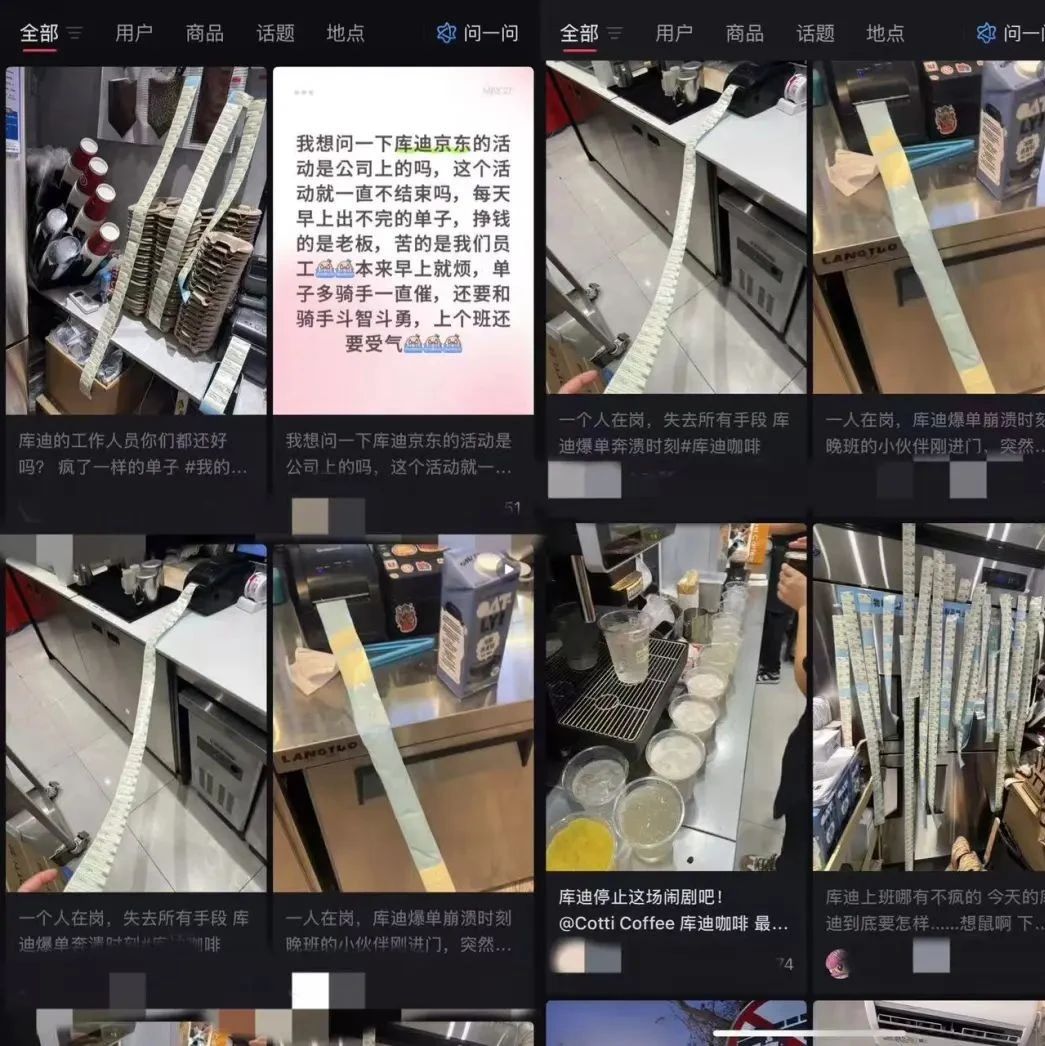
咖啡最低1.68元、门店日销千单,月薪5000的库迪店员忙到崩溃
凤凰网财经· 2025-06-08 14:30
蓝鲸新闻 咖啡最低1.68元、门店日销千单,月薪5000的库迪店员忙到崩溃 原创 阅读全文 分享一篇文章。 ...
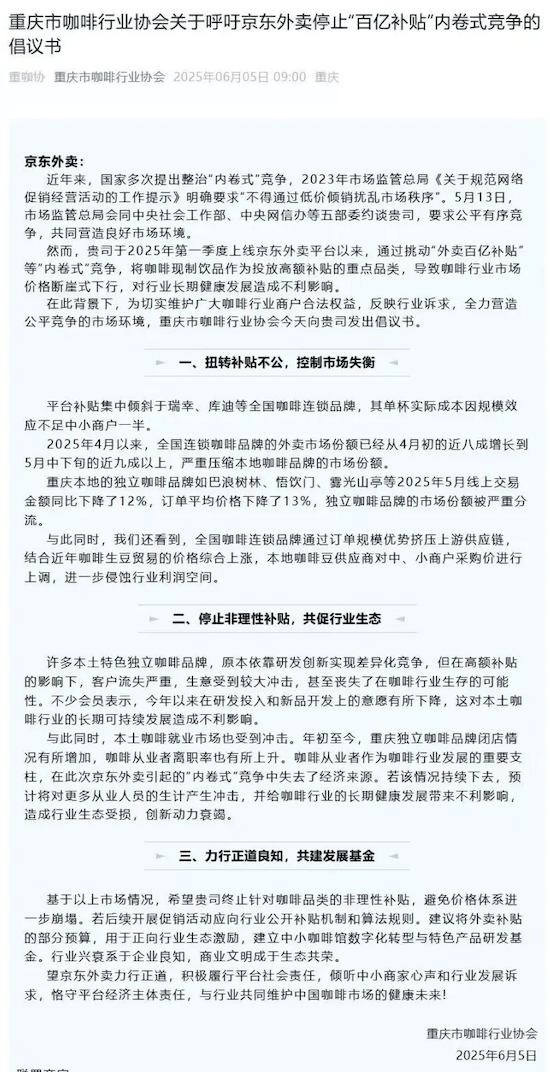
京东外卖“百亿补贴”是市场创新的必然选择,而非行业破坏者
Sou Hu Cai Jing· 2025-06-06 15:23
一封倡议书引发的行业讨论,这封倡议书来自重庆市咖啡行业协会,关于呼吁京东外卖停止"百亿补贴"内卷式竞争的倡议书,据圈内好友评论文章中称,该 倡议书因为某种未知原因删除,但是上游新闻、板扎在线、正北方网等媒体相继报道,并引发大量网络关注和讨论。笔者却想说,格局打开,切勿因小失 大。 监管应维护公平竞争,而非保护特定群体 针对外卖行业竞争中存在的问题,已经由市场监管总局牵头对京东、美团与饿了么等平台企业进行了约谈。其中《人民日报》评论文章认为,此次约谈,既 是纠偏,也是规范,更为行业发展点明方向:合法规范经营,公平有序竞争。摒弃恶性竞争,摆脱无谓"内卷",真正把经历用于保障消费者、商家与骑手合 法权益,方能更好维护"舌尖上的安全",实现行业健康发展。 而该倡议书将京东外卖百亿补贴这种常规市场行为,定义为非理性补贴,并且要求后续促销活动向行业公开补贴机制和算法规则等,因为几家地方性咖啡店 无力市场竞争,就开始呼吁并建议等一系列道德大棒来干预市场竞争的自由性。监管的职责是防止垄断,比如当年的"二选一",而非限制企业通过合法补贴 进入市场,如若因部分商家受损就叫停创新,反而会固化现有利益格局,阻碍行业进步,因为京东外卖 ...

网点累计达258座,浙江石油大力拓展咖啡业务
Guan Cha Zhe Wang· 2025-06-06 13:38
Group 1: Coffee Business Expansion - Zhejiang Petroleum has established a total of 258 coffee business outlets, significantly expanding its coffee service network across highways, urban areas, and counties [1] - The company launched its own brand TIKI COFFEE at 68 gas stations in Taizhou, Huzhou, and Lishui in May, enhancing its coffee service offerings [1] - Marketing activities such as free coffee with fuel purchases are designed to create a synergistic "fuel + coffee" ecosystem [1] Group 2: Health Beverage Innovations - Good Want You has introduced a new series of health drinks featuring red dates, including products like red date eight-treasure tea and red date ginger water [2] - The company is open to consumer suggestions for new products, indicating a commitment to innovation in health-focused food offerings [2] Group 3: Tea Industry Trends - The McKinsey report suggests that the tea industry should focus on "essential quality of life" products, emphasizing the health benefits and inherent value of tea [3] - New tea brands are successfully implementing a "rural encirclement of cities" strategy, targeting lower-tier cities to capture market opportunities [3] - There is potential for developing quality, affordable tea products and creating relaxing tea spaces to cater to health-conscious consumers [3] Group 4: Sustainable Sourcing in Beverage Industry - Heytea has achieved zero pesticide residue in the cultivation of kale, which will be used in its products nationwide [4] - The company has undergone extensive third-party testing, confirming the absence of chemical pesticides and fertilizers in its kale supply [4] - The successful launch of the kale-based beverage has led to a broader application of kale in the new tea drink sector [4] Group 5: Market Outlook for Tea Brands - Everbright Securities has initiated a buy rating for the tea brand Guming, which plans to open 2,000 new stores this year, focusing on provinces like Anhui [5] - The projected net profits for Guming from 2025 to 2027 are estimated at 1.961 billion, 2.356 billion, and 2.761 billion RMB, with corresponding earnings per share of 0.82, 0.99, and 1.16 RMB [5] - The introduction of coffee products is expected to positively impact same-store sales and overall revenue [5]

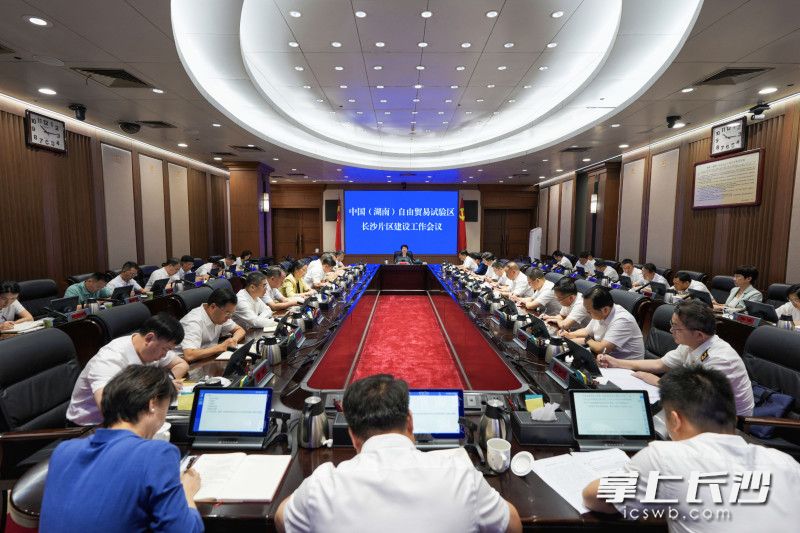
吴桂英主持召开湖南自贸试验区长沙片区建设工作会议
Chang Sha Wan Bao· 2025-06-06 03:45
Core Viewpoint - The meeting emphasized the importance of enhancing the Hunan Free Trade Zone's capabilities in institutional innovation, foreign trade competitiveness, industrial support, and environmental attractiveness to contribute to the development of an inland reform and opening-up highland [4][5]. Group 1: Meeting Overview - The construction work meeting for the Changsha area of the Hunan Free Trade Zone was held on June 5 [3]. - The meeting was chaired by Wu Guiying, the Secretary of the Provincial Party Committee, who highlighted the need to implement the strategic elevation of the free trade zone [5]. Group 2: Achievements and Responsibilities - This year marks the fifth anniversary of the Hunan Free Trade Zone, which has been responsible for testing systems for the nation and promoting local development [4]. - The Changsha area has continuously explored and innovated to support the strategic positioning of "one industry, one park, one corridor" [4]. Group 3: Strategic Goals and Initiatives - The Changsha Free Trade Zone aims to enhance institutional innovation, foreign trade competitiveness, industrial support, and environmental attractiveness [5]. - Key initiatives include promoting bonded maintenance outside the comprehensive bonded zone, new-type barter trade management, and improving foreign trade policies [5]. - The focus will also be on strengthening the equipment manufacturing industry, developing the coffee industry, and enhancing the biopharmaceutical sector [5]. Group 4: Organizational Support - There is a call for strengthening organizational guarantees, clarifying responsibilities, and coordinating efforts to build a team knowledgeable in trade, industry, capital, and market [5]. - The goal is to create a strong synergy to promote the high-quality development of the Changsha Free Trade Zone [5].