
文旅产业

Search documents
文艺扎进泥土 在乡村诗意栖居(文艺赋美乡村)
Ren Min Ri Bao· 2026-02-04 00:56
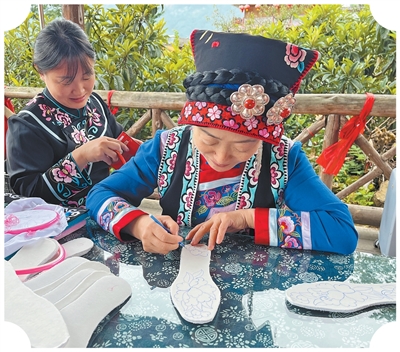
Core Viewpoint - The article emphasizes the importance of integrating cultural and artistic elements into rural development, showcasing how traditional crafts and arts can enhance the economic and social fabric of rural communities in Mianyang, Sichuan Province [7][10][14]. Group 1: Cultural and Economic Development - The Central Document No. 1 released on February 3 signals a strong commitment to prioritizing agricultural and rural development, advocating for the promotion of "cultural arts beautifying rural areas" to enrich cultural products and services [7]. - The integration of traditional arts, such as Qiang embroidery and Cao Gai mask-making, into local economies has transformed these crafts into viable industries, contributing to the overall prosperity of rural areas [10][12]. - By 2025, it is projected that the per capita income of residents in Shiyi Village, Beichuan Qiang Autonomous County, will exceed 100,000 yuan, highlighting the economic impact of cultural initiatives [10]. Group 2: Community Engagement and Cultural Revival - The revival of traditional crafts has led to increased community engagement, with local artisans teaching younger generations, thus fostering a sense of cultural pride and continuity [13]. - The Cao Gai mask-making workshop has become a cultural landmark, attracting both locals and tourists, and facilitating cultural exchanges through hands-on experiences [12][14]. - The transformation of rural areas into "internet celebrity" destinations, driven by social media and cultural tourism, has further enhanced the visibility and appreciation of traditional crafts [14]. Group 3: Future Prospects - The establishment of the "Non-Heritage Longzhou" cultural district in Mianyang is set to open on New Year's Day 2026, aiming to create a vibrant space for cultural exchange and innovation [14]. - The ongoing development of infrastructure, such as new highways, is expected to improve accessibility to these cultural sites, further boosting tourism and local economies [13][14].

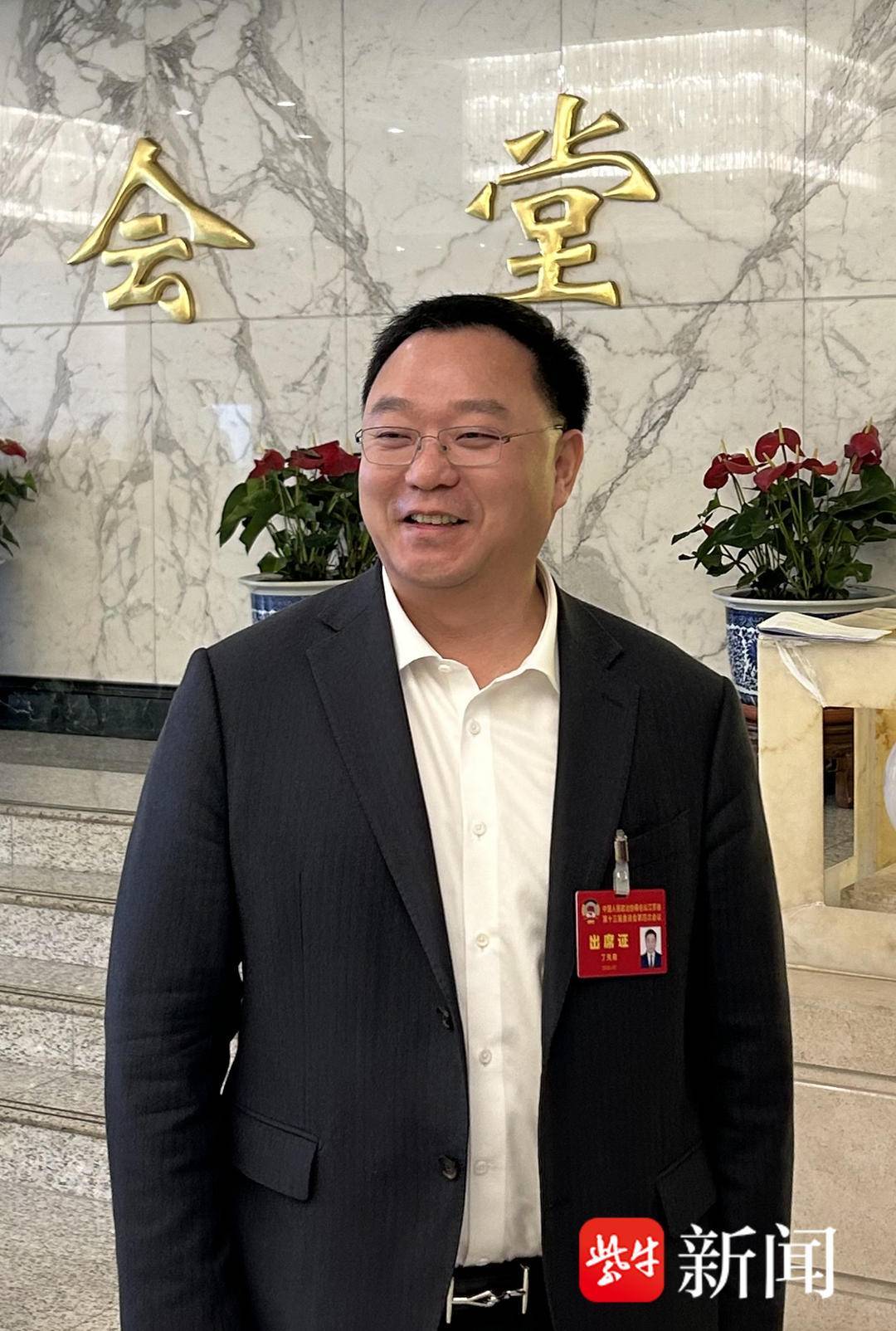
2026江苏两会|丁先喜委员:让更多优质文化资源变为有竞争力的旅游产品
Sou Hu Cai Jing· 2026-02-03 15:20
Group 1 - The government work report emphasizes the empowerment of culture in economic and social development, aiming to continuously strengthen the cultural tourism industry, which boosts confidence among entrepreneurs [1] - There is a notable shift in consumer demand within the cultural tourism market towards deep experiences, cultural immersion, emotional value, educational travel, and wellness sports, indicating a transition to more complex needs [3] - The report highlights ten key tasks for the year, including the empowerment of culture in economic development and the continuous growth of the cultural tourism industry, reflecting the importance of cultural tourism integration in Jiangsu [3] Group 2 - The combination of artificial intelligence and terminal devices is expected to enhance material living standards, leading to a greater focus on improving spiritual life as a direction for economic and social development [3] - There remains significant potential for the effective transformation of abundant cultural resources in Jiangsu into competitive tourism products, cultural goods, or digital experiences, indicating room for value extraction and innovative development [3] - The future of the cultural tourism sector is seen as promising, particularly with the integration of platform economy, internet economy, and new technologies like artificial intelligence, suggesting substantial growth opportunities [3]
十点新变化——2026年地方两会点评
一瑜中的· 2026-02-03 14:39
Group 1: GDP Targets - This year, Guangdong Province has set a range target for GDP growth for the first time in seven years, with a target of 4.5%-5.5% [3][21] - A total of 15 provinces have lowered their GDP targets by 0.5 percentage points, while 12 provinces have kept their targets stable compared to last year [15][21] - The weighted average GDP growth target for 29 provinces is estimated to be 5.0%, slightly down from 5.24% last year [3][15] Group 2: Investment Trends - Major project investment growth in six economic provinces has decreased by 0.7% this year, compared to a growth of 3% last year [5][25] - Non-economic provinces like Fujian, Shanghai, Jiangxi, and Shaanxi have seen a significant decline in major project investment growth, with a combined decrease of 8.1% this year [5][25] - Investment in real estate, particularly in urban village and old community renovations, has shown significant declines in several provinces, such as Zhejiang and Chongqing [6][30] Group 3: Funding Sources - There are two potential improvements in investment funding: increased issuance of policy financial tools and optimization of special bond usage [7][33] - Provinces like Guangdong have committed to regular issuance of policy financial tools, indicating a potential increase in central government support [7][33] - Some provinces, including Henan and Jilin, are focusing on optimizing the use of special bonds to enhance project funding [7][33] Group 4: Investment Directions - Investment focus this year is shifting towards areas such as public welfare, new infrastructure represented by computing power, and urban renewal projects [8][36] - Provinces like Guangdong and Shandong are increasing investments in public welfare projects, with Shandong aiming to maintain 80% of fiscal spending on public welfare [8][36] - New infrastructure projects related to computing power are being prioritized in several provinces, including Guangdong and Hubei [8][36] Group 5: Industry Focus - There is an increased emphasis on AI and related technologies, with at least 27 provinces making deployments in this area [9] - Other industries receiving attention include low-altitude economy, hydrogen energy, nuclear energy, and biomedicine [9] Group 6: Consumption Trends - There is a stronger focus on service consumption, particularly in cultural tourism, events, inbound tourism, and new consumption trends [10] - Provinces are emphasizing the importance of consumer spending in areas such as entertainment, AI consumption, and the metaverse [10] Group 7: Ecological Construction - The focus of ecological targets has shifted from energy consumption constraints to carbon emission restrictions [11] - Local governments are concentrating on enhancing the application of new energy in the power sector [11] Group 8: Reforms - Multiple provinces have expressed intentions to integrate into the construction of a unified national market [12][10]

新春将至山水和鸣,惠州环两山建筑艺术计划焕新大湾区文旅体验
Nan Fang Nong Cun Bao· 2026-02-03 09:03
Core Viewpoint - The "Ring Two Mountains Architectural Art Plan" in Huizhou has made significant progress, with the core project "Dongpo Leisure" featuring 16 themed stations now fully operational, aiming to enhance cultural tourism and local economic development during the upcoming Spring Festival [3][20][45]. Group 1: Project Overview - The plan integrates architectural art, Dongpo culture, and policy support to stimulate winter tourism consumption and improve urban-rural aesthetics, contributing to Huizhou's development as a "garden in the Greater Bay Area" [5][6][44]. - The project is aligned with national and provincial strategies for regional coordinated development and high-quality growth in rural areas, featuring a 218-kilometer scenic tourism road connecting key attractions [9][10][11]. Group 2: Economic Impact - The plan aims to transform Huizhou's tourism landscape from a "transit stop" to a "destination experience," enhancing the integration of accommodation, experiences, and culture [33][40]. - The initiative has attracted eight major domestic hotel brands and enabled local residents to increase income through various channels, including homestay operations and selling local products [35][39]. Group 3: Cultural and Artistic Integration - The "Dongpo Leisure" themed stations are designed to revitalize the ancient Dongpo culture, with contemporary artists and architects drawing inspiration from Su Dongpo's "Sixteen Pleasures of Life" [23][24]. - The architectural designs, such as the award-winning "Half Mountain Cloud Sea Station," create immersive experiences that connect visitors with nature and local culture [25][30]. Group 4: Marketing and Promotion - Huizhou's cultural and tourism bureau has launched a "Warm Winter Enjoy Huizhou" campaign, distributing special consumption vouchers to guide tourist spending in the area [17][20]. - The strategic marketing efforts are expected to make the "Ring Two Mountains Architectural Art Plan" a popular choice for tourists during the Spring Festival, showcasing Huizhou's innovative approach to traditional cultural tourism [45][46].

西藏自治区发展改革委主任卫强:因地制宜构建高原特色现代化产业体系
Zhong Guo Xin Wen Wang· 2026-02-03 07:28
Group 1: Development of Key Industries - Tibet will vigorously develop characteristic agriculture and animal husbandry, aiming for a grain output of 1.1496 million tons and vegetable, meat, egg, and milk outputs to exceed one million tons by 2025 [1] - The clean energy industry has rapidly developed since the 14th Five-Year Plan, with installed power capacity expected to exceed 33 million kilowatts by 2025, including over 13 million kilowatts already built [2] - The resource processing industry has significant potential, with the Tibetan medicine production value projected to reach 3.4 billion yuan in 2024 [3] Group 2: Modern Service Industry and Logistics - The rural logistics network in Tibet has achieved 100% coverage, with full automation of rural postal routes, enhancing service delivery in remote areas [4] - The region will expand the "free shipping to Tibet" initiative and improve logistics for agricultural products, while also focusing on healthcare, elderly care, and property services [4] Group 3: Cultural and Tourism Integration - Tibet's tourism market is expected to receive 70.7337 million domestic and international visitors by 2025, reflecting a year-on-year growth of 10.71% [5] - The region aims to integrate culture and tourism, enhancing public cultural services and tourism facilities while developing a modern tourism industry with low environmental impact [5] Group 4: Emerging Industries - The low-altitude economy is being cultivated, with 70 companies in the low-altitude aviation sector and a total of 1,738 flight hours projected by 2025 [6] - The region will develop a low-altitude flight testing industry to address unique geographical challenges, expanding applications in areas such as aerial rescue and logistics [6]
新华视点丨文旅新体验点亮消费新图景
Xin Hua Wang· 2026-02-03 06:46
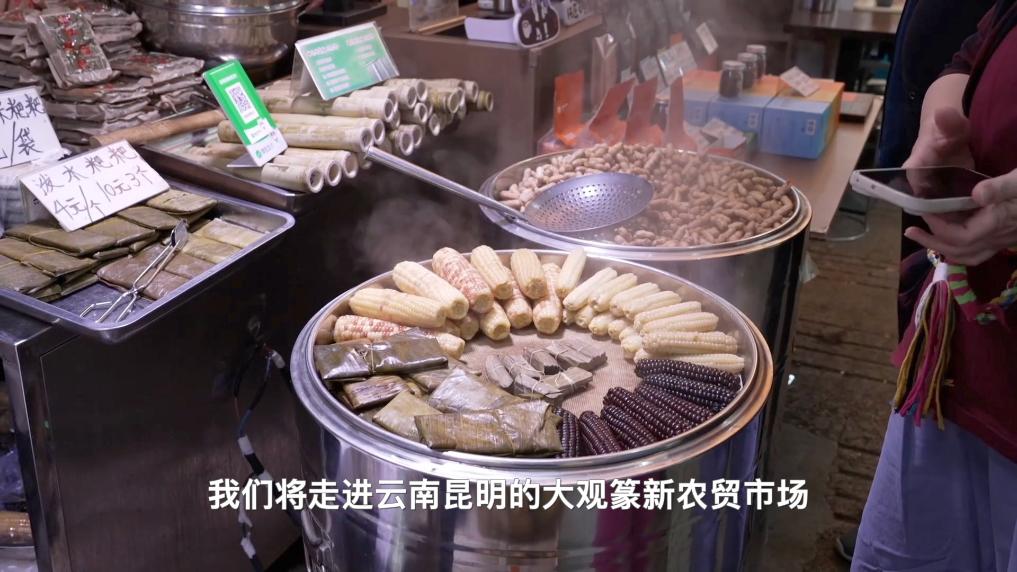
Group 1: Transformation of Local Consumption - The local consumption scene is evolving, transforming from a simple grocery shopping area to a vibrant space filled with diverse flavors and activities, exemplified by the Daguanzhuan New Agricultural Market in Kunming, which attracts 50,000 visitors daily and is referred to as a "local cultural museum" [1][8] - The market has undergone multiple upgrades to balance the needs of livelihood security and consumption enhancement, with the second phase of the project set to be completed by August 2025, featuring improved infrastructure and optimized spatial layout based on "category zoning + scene interaction" principles [5][6] - The transformation of the market reflects clear policy directions aimed at promoting service consumption and enhancing service supply capabilities, as outlined in the "Special Action Plan to Boost Consumption" issued by the Central Committee of the Communist Party of China and the State Council [6][8] Group 2: Rise of Experience-Based Consumption - Knowledge-based experiential consumption is gaining popularity in the tourism market, shifting from traditional sightseeing and shopping to experiences centered around personal interests, driven by policies aimed at expanding domestic demand and fostering new growth points in service consumption [10][15] - Cultural and heritage spaces are evolving from mere exhibition functions to complex experiential scenarios, allowing visitors to engage interactively with cultural artifacts, as seen in the archaeological research institute in Chongqing [12][15] - The shift in consumer preferences from material consumption to service-oriented consumption is evident, with traditional tourism focusing on standardized products, while experiential consumption emphasizes user participation in content design, making it more appealing to consumers [16]
春运大考需要用心作答
Hai Nan Ri Bao· 2026-02-03 04:34
2月2日,2026年春运拉开帷幕,我省机场、港口、车站游人如织,空气中弥漫着归来的喜悦和出游 的欢欣。为迎接封关首年的首个春运,我省交通运输、旅文等多部门提前部署,以系列扎实举措对接旅 客需求,呵护每一段美好旅程。 对不少旅客而言,春运是一场甜蜜的奔赴,而对于交通保障等部门而言,春运是一场全方位、多维 度的"大考"。这是封关之后首个春运,适逢"史上最长"春节假期,人气旺、流量高。数据显示,琼州海 峡春运期间预计运送旅客超466万人次、车辆超117万台次,同比分别增长12%和10%。做好今年的春运 保障,不仅是对运输能力的考验,更是对封关后协同机制、通关效率、服务效能的全面检验。 保障春运,运力是"硬支撑",是旅客最为关注的焦点。为应对激增的客流量,我省"海陆空"加大运 力,优化供给。比如,琼州海峡新增两艘新能源专业化运输船舶,新能源车运输保障能力由去年的日均 3500台次提升至5000台次;美兰机场联合多家航空公司在海口至北京、上海、广州、深圳等热门航线增 加航班;铁路部门加开广州白云站至海口站临时旅客列车。以强运力对接高客流,让出行选择更便捷, 护航旅客安心出行。 春运涉及交通运输方方面面,在提升运力的同时 ...
内江市威远县:书写中国式现代化县域答卷
Xin Lang Cai Jing· 2026-02-02 23:09
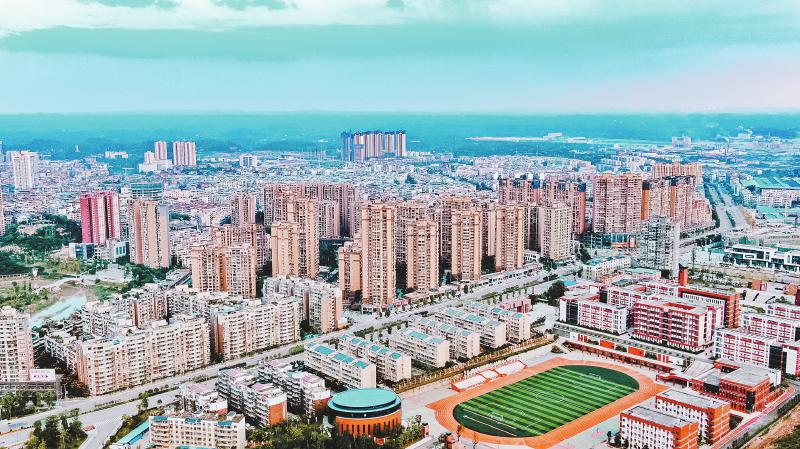
Economic Development - The regional GDP of Weiyuan has crossed two hundred billion thresholds, reaching 500 billion, with an average annual growth of 7.2% in per capita GDP over the past five years [2] - Weiyuan aims to leverage the Chengdu-Chongqing economic circle for industrial growth, logistics enhancement, and overall modernization [2] Industrial Upgrade - Weiyuan has transitioned from traditional industries to advanced sectors, with significant projects like hydrogen-based vertical furnaces and vanadium electrolyte production now operational [3] - The county's industrial output value reached 628.56 billion, accounting for 94.24% of the total industrial output [3] - New projects in sustainable bio-aviation fuel and vanadium electrolyte are accelerating the region's industrial transformation [3] Agricultural Development - The black goat farming industry in Weiyuan has surpassed 1.6 billion in total output value, supported by various agricultural events and projects [4] - The county is focusing on building a modern industrial system and enhancing production capabilities in agriculture [4] Social Improvement - Weiyuan has invested 4.278 billion in urban renewal projects, completing 106 renovations of old residential areas and adding significant green spaces [5] - Educational and healthcare resources have been expanded, with 8,880 new educational slots and improved medical facilities [5] Child and Elderly Care - A comprehensive childcare service center is set to open, providing services for infants and toddlers, with a total investment of 15.58 million [6] - Plans for enhancing elderly care services include the establishment of support centers and community service institutions [6] Cultural and Tourism Development - Weiyuan has developed its local cuisine brand, "Weiyuan Lamb Soup," and organized food festivals to promote local products [7] - The region has created new tourism attractions, including two national 4A scenic spots and a provincial tourism resort [8] - Future plans include improving tourism infrastructure and cultural heritage protection to enhance the local tourism brand [9]
体验经济 不止贴心 更要懂心
Xin Lang Cai Jing· 2026-02-02 21:08
Group 1 - The core viewpoint of the articles highlights a significant shift in consumer behavior from purchasing physical goods to seeking experiential value, indicating a transformation in the consumption landscape [1][2][4] - The "14th Five-Year Plan" suggests implementing actions to enhance the service industry's capacity and quality, positioning the experience economy as a new economic type that emphasizes customer satisfaction and psychological engagement during consumption [1][2] - The experience economy is evolving from being an added value to traditional services into an independent and core economic element, where the value lies in the consumer's active participation in the creation process [2][3] Group 2 - Current consumer decision-making is characterized by a dual drive of rationality and emotion, with consumers willing to pay a premium for emotional experiences and self-identity [3][4] - The tourism industry is shifting from traditional "check-in" experiences to deep engagement, focusing on experience design capabilities rather than just resource endowments [3] - There is a societal transition from "material cultural needs" to "needs for a better life," where the scarcity is not in products but in opportunities that provide joy, resonance, belonging, and self-actualization [4] Group 3 - Businesses are transforming from merely selling products to creating immersive environments that allow consumers to become part of the experience, thus enhancing customer relationships [3][4] - The experience economy faces challenges such as content homogenization, high dependency on human resources, and the ease of replicating creative ideas, which the industry must address [4] - The future of the experience economy is anticipated to be centered around human needs, offering higher quality and more sustainable immersive experiences through the integration of digital and real-world elements [4]
盈新发展:公司将积极探索布局着眼于超越传统业务结合的、更深层次的“双向赋能”
Zheng Quan Ri Bao Zhi Sheng· 2026-02-02 13:41
Core Viewpoint - The company aims to explore a deeper level of "dual empowerment" by integrating traditional business models with advanced technologies in the semiconductor industry to enhance the smart upgrade of the cultural tourism sector [1] Group 1: Business Strategy - The company acknowledges the differences in business models between its two main modules but is committed to leveraging semiconductor technologies such as chips and computing power to empower the cultural tourism industry [1] - The management emphasizes compliance with laws and regulations in its operations, ensuring a structured approach to business development [1] Group 2: Performance Improvement - The two business segments are expected to collaboratively enhance the company's profitability, fundamentally improving performance and increasing shareholder returns [1] - The strategy aims to build a mutually beneficial and synergistic industrial ecosystem, which will strengthen the company's risk resistance and long-term competitiveness [1]
