智能汽车

Search documents
Rightware:联合高通发布ISR解决方案 重塑CES 2026智能驾驶HMI新生态
Zhong Guo Qi Che Bao Wang· 2026-01-19 07:53
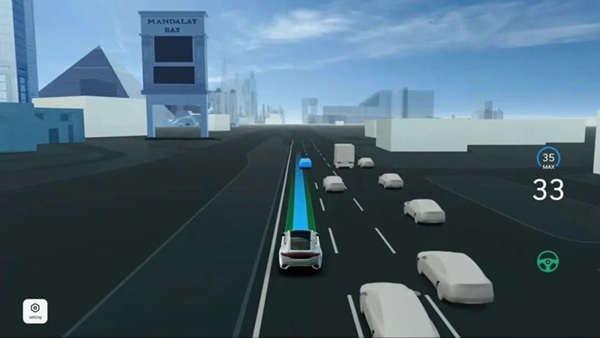
Core Insights - The collaboration between Rightware and Qualcomm has led to the launch of the IntelliSphere Reality (ISR) solution, which aims to redefine human-machine interaction (HMI) in smart vehicles, setting a new benchmark in the high-level intelligent driving HMI sector [1][2]. Industry Overview - The automotive industry is rapidly advancing into the AI implementation phase, with electric vehicles becoming the primary platform for AI technologies. HMI is crucial for enhancing user experience and differentiating products among automakers [1]. Solution Features - The ISR solution addresses common issues in traditional smart driving HMIs, such as fragmented displays and information overload, by integrating map data, spatial reality technology, and surround view camera video streams into a single real-time visualization interface [2][5]. - The Qualcomm Snapdragon Ride™ Elite platform provides the necessary computational power and safety architecture to support the ISR solution, ensuring smooth operation of multi-source data processing and real-time rendering [4][5]. Advantages of ISR Solution - Seamless interaction reduces cognitive load by transforming abstract data into visual representations, aligning with the design principle of minimizing distractions in smart cabins [5][6]. - Efficient utilization of computational power optimizes performance loss by synchronously processing AVM data, significantly reducing system performance drain and reserving hardware capabilities for advanced intelligent driving functions [5][6]. - Enhanced driving safety is achieved through a 360° visualization system that integrates map data and environmental perception information, improving safety warning capabilities for drivers [6]. - The ISR solution's strong market adaptability allows it to be integrated across various platforms, facilitating the standardization of advanced intelligent driving features across multiple vehicle brands and models [6]. Company Commitment - Rightware emphasizes its commitment to leveraging its expertise in HMI to drive innovation in smart cockpit and intelligent driving technologies, focusing on user experience and technological iteration to provide competitive solutions for global automakers [6].


内存价格“涨疯”背后:智能汽车被AI“卡脖子”
Feng Huang Wang· 2026-01-19 02:26
Core Insights - The automotive industry is facing a significant crisis due to rising costs and supply shortages, particularly in memory chips, which are becoming critical hardware for smart vehicles [2][4][5] - The competition for memory resources is intensifying as the automotive sector competes with AI and consumer electronics giants, impacting the speed and structure of China's automotive industry's smart transformation [1][4] Cost Pressures - The automotive industry is experiencing a crisis characterized by soaring prices and supply shortages, with memory chip prices significantly affecting manufacturing costs [2][5] - The demand for memory in high-end smart vehicles has surged, with storage requirements increasing from several GB to 64GB or even 256GB, pushing costs higher [2][4] - The global DRAM market has entered a "super bull market," with some high-end products seeing price increases of several times within a year, potentially adding thousands of yuan to the cost of each vehicle [2][3] Supply Chain Challenges - The automotive sector is at a disadvantage in the allocation of memory chip production capacity, as AI industries demand high-bandwidth memory and server-grade DDR5, leading to a structural shortage [2][4] - Predictions indicate that memory chip supply satisfaction rates may fall below 50%, posing risks of both high costs and unavailability for automakers [3][4] Competitive Landscape - The memory crisis is reshaping the competitive dynamics within the automotive industry, with larger companies better positioned to absorb costs and secure supplies compared to smaller firms [6][7] - Companies focusing on smart driving systems, which require significant memory resources, are under the most pressure, potentially leading to hidden price adjustments or conservative promotional strategies [6][7] Strategic Responses - To navigate the crisis, the automotive industry must proactively seek solutions, such as signing long-term supply agreements and accelerating the validation of domestic memory chip production [8][9] - The crisis may prompt a shift in competitive focus from hardware specifications to the optimization of software and algorithms, emphasizing the need for deeper integration of hardware and software [8][9] Long-term Implications - The memory price surge reflects a broader clash between the automotive sector and global technology trends, serving as a pressure test for companies to adapt and innovate [9] - Successful navigation of this crisis could lead to enhanced market share and a more resilient competitive stance within the complex global supply chain [9]
华为乾崑智驾 ADS 4.1 升级点公布,支持 eAES 防夹心、驾驶员失能靠边停等
Xin Lang Cai Jing· 2026-01-19 01:26
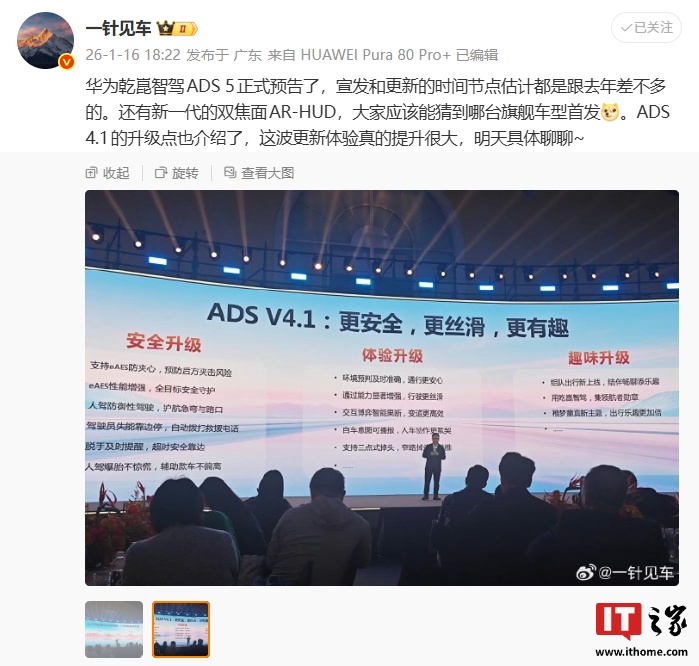
Core Viewpoint - Huawei announced the upgrades of its QianKun Intelligent Driving ADS 4.1 during the media day on January 16, focusing on safety, experience, and fun enhancements [1][6]. Safety Upgrades - Support for eAES anti-clamping to prevent rear-end collision risks - Enhanced eAES performance for all-target safety protection - Defensive driving assistance for sharp turns and intersections - Automatic emergency call when the driver is incapacitated - Timely alerts for hands-off driving, ensuring safe stopping - Assistance for drivers during tire blowouts to prevent vehicle deviation [3][11]. Experience Upgrades - Improved environmental prediction for safer passage - Enhanced driving smoothness through significant capability improvements - Intelligent interaction for efficient lane changes - Vehicle intent broadcasting for better human-vehicle collaboration - Support for three-point turns, allowing elegant maneuvers in narrow roads - New group travel feature for enjoyable companionship during trips [7][13]. Fun Upgrades - Upcoming releases include ADS 5, Harmony Cabin 6, and the next-generation digital chassis engine XMC, with details to be revealed before the April Beijing Auto Show - LCoS dual-focus AR-HUD will debut on the new Wanjie M9 - New sensor hardware will first be featured in Wanjie M9 and ZunJie S800 [6][12].
杭州云动智能汽车技术股份有限公司(H0333) - 整体协调人公告-委任
2026-01-18 16:00
香港聯合交易所有限公司及證券及期貨事務監察委員會對本公告的內容概不負 責,對其準確性或完整性亦不發表任何聲明,並明確表示,概不就因本公告全部 或任何部分內容而產生或因依賴該等內容而引致的任何損失承擔任何責任。 – 2 – (於中華人民共和國註冊成立的股份有限公司) (e) 本公告(及其所載資料)僅供參考,不構成或組成在美國(包括其領土及屬地、 美 國 任 何 州 及 哥 倫 比 亞 特 區)或 任 何 其 他 進 行 有 關 發 售 或 出 售 即 屬 違 法 的 司 法 管 轄 區 發 行 或 出 售 本 公 司 任 何 證 券 之 任 何 要 約,或 招 攬 購 買、認 購 或 以 其 他 式 獲 取 本 公 司 任 何 證 券 之 任 何 要 約 的 一 部 分。本 公 司 認 為 自 身 為「外 國 私 人 發 行 人」(「外國私人發行人」)(定 義 見1933年 美 國 證 券 法(經 修 訂)(「美 國證券法」)第405條),擬 於 開 展 其 業 務 時 盡 可 維 持 其 作 為 外 國 私 人 發 行 人 的 地 位。本 公 司 的 證 券(「證 券」)並 無 亦 不 會 根 據 美 國 證 ...
TikTok Shop在欧洲四国推出本地托管模式;创想三维携手阿里云优化3D打印云服务丨36氪出海·要闻回顾
36氪· 2026-01-18 14:09
Group 1 - TikTok Shop launched a local hosting model in four European countries, allowing merchants to stock goods in local warehouses while TikTok handles storage, sales, delivery, and returns [5] - Temu introduced a local seller program in the UAE to enhance delivery efficiency and diversify product offerings, enabling local businesses to sell on its platform [5] - WeChat mini-programs are projected to exceed 5 billion uses by 2025, with significant growth in cross-border transactions, particularly in Malaysia, New Zealand, and the UK [6] Group 2 - ZhiYuan Robotics opened its first overseas robot experience center in Malaysia, aligning with the country's "Industry 4.0" strategy [6] - Creality launched a new sub-brand SPARKX at CES, integrating with Alibaba Cloud to enhance 3D printing services and improve user experience [7] - Xpeng Motors plans to establish a localized supply chain team in Europe and ASEAN by 2026 to enhance operational efficiency and support local production [8] Group 3 - CATL opened the largest overseas new energy after-sales service center in Riyadh, providing comprehensive lifecycle services for various products [9] - VortexInfo showcased an autonomous road cleaning robot at the Abu Dhabi Sustainability Week, focusing on smart city applications [10] - Gongye Technology secured hundreds of millions in financing to accelerate the development of overseas sales channels [10] Group 4 - Kickstarter reported that eight out of the top ten popular projects in 2025 were from Chinese brands, raising nearly $140 million [13] - China's exports of industrial robots exceeded imports in 2025, establishing the country as a net exporter of industrial robots [14] - The trade of AI-related products in China is expected to grow significantly, with a notable increase in exports of high-end components and electrical equipment [14]

内存价格“涨疯”背后:智能汽车被AI“卡脖子”
经济观察报· 2026-01-18 05:54
Core Viewpoint - The automotive industry is facing a critical crisis due to soaring memory prices and supply shortages, which are significantly impacting the profitability and operational strategies of car manufacturers [2][4][8]. Group 1: Cost Pressures - The automotive sector is experiencing a crisis characterized by intertwined price surges and supply shortages, with memory prices being a major concern [4]. - The demand for memory in high-end smart vehicles has escalated from several GB to 64GB or even 256GB, with some approaching TB levels, making memory a crucial hardware component [4]. - The global DRAM market has entered a "super bull market," with some high-end products seeing price increases of several times within a year, potentially raising manufacturing costs by thousands of yuan per vehicle [4][8]. Group 2: Supply Chain Challenges - The automotive industry is at a disadvantage in the competition for memory resources against the AI sector, which has a higher profit margin and capital investment [7]. - The forecast of a storage chip supply satisfaction rate of less than 50% indicates that car manufacturers face not only high costs but also the risk of unavailability [5]. - The shift in production capacity towards high-bandwidth memory for AI applications has exacerbated the supply challenges for the automotive sector [7]. Group 3: Competitive Landscape and Strategic Responses - The memory crisis is reshaping the competitive landscape, with leading car manufacturers better positioned to absorb costs and secure supplies through long-term agreements [11]. - Companies with robust supply chain management are likely to demonstrate greater resilience, while those with weaker systems may struggle to maintain production stability [10][11]. - The crisis may force car manufacturers to adjust configurations, potentially leading to a slowdown in the advancement of smart vehicle technologies [11]. Group 4: Long-term Strategies - The automotive industry must proactively seek solutions to build a more resilient supply chain, including signing long-term supply agreements and accelerating the validation of domestic storage chips [13]. - Future competitiveness will rely more on the integration of software and hardware rather than solely on hardware specifications, pushing the industry towards optimizing algorithms and system architectures [13]. - Leading manufacturers may adopt vertical integration strategies similar to Tesla and BYD, investing in core components like chips to secure better supply chain positions [13].
中国公司全球化周报|TikTok Shop在欧洲四国推出本地托管模式/创想三维携手阿里云优化3D打印云服务
3 6 Ke· 2026-01-18 05:49
Group 1: Events and Forums - The "Dubai Business Forum - China" will take place in Shenzhen on May 14, 2026, focusing on economic collaboration and investment opportunities between China and Dubai [2] Group 2: Company Developments - TikTok Shop has launched a local hosting model in four European countries, allowing merchants to stock goods in local warehouses while TikTok handles logistics [3] - Temu has introduced a local seller program in the UAE to enhance delivery efficiency and expand product offerings [3] - WeChat mini-programs are projected to surpass 5 billion uses by 2025, with significant growth in cross-border transactions [4] - ZhiYuan Robotics has opened its first overseas robot experience center in Malaysia, aligning with the country's "Industry 4.0" strategy [4] - Creality has launched a new sub-brand SPARKX at CES, integrating with Alibaba Cloud for enhanced 3D printing services [5] - Xpeng Motors plans to establish a localized supply chain team in Europe and ASEAN by 2026 to improve operational efficiency [6][7] - WeRide has deployed over 1,000 Robotaxis globally, with operations in Guangzhou, Beijing, and Abu Dhabi [7] - BYD has achieved a record high in exporting new energy buses, leading the industry for three consecutive years [7] - CATL has launched the largest overseas service center for new energy in Riyadh, providing comprehensive lifecycle services [8] - VortexInfo showcased an autonomous road cleaning robot at the Abu Dhabi Sustainability Week, focusing on smart city applications [8] Group 3: Investment and Financing - Gongye Technology has secured hundreds of millions in financing to enhance overseas sales channels [9] - Bay Measurement has completed over 100 million A+ round financing to strengthen its overseas business layout [9] - Huaxuan Sensor has completed a new round of strategic financing to accelerate global market expansion [9] - OMOWAY has raised tens of millions in Pre-A and Pre-A+ rounds to support the production and development of self-balancing electric motorcycles [10] - Haiwei Co. has received a 300 million yuan strategic investment to support lightweight component manufacturing [10] Group 4: Policies and Market Trends - Kickstarter's 2025 data shows that Chinese brands dominate the top ten popular projects, raising nearly $140 million [11] - China's high-tech product exports grew by 13.2% in 2025, with industrial robots becoming a net export product for the country [12] - The trade of AI-related products in China is expected to grow significantly, aligning with global trends [12]





佑驾创新(2431.HK)公司信息更新报告:L4无人车业务打开成长空间;股东增持彰显信心
Ge Long Hui· 2026-01-18 02:46
Group 1 - The company has officially delivered its first batch of unmanned logistics vehicles, marking a significant entry into the unmanned logistics sector with the launch of the "Xiao Zhu Unmanned Vehicle" brand and two models, T5 and T8 [1] - The management has reported that the cumulative order volume has exceeded 1,000 units since the launch, with an expectation to deliver 10,000 unmanned logistics vehicles this year across cities like Shenzhen, Chengdu, Xi'an, and Jiangyin [1] - The introduction of the T5 and T8 models covers various logistics scenarios, including express logistics, urban distribution, and fresh cold chain, showcasing the company's ability to meet diverse market needs [1] Group 2 - The chairman and CEO, Dr. Liu Guoqing, purchased a total of 150,000 H shares in the open market, representing 0.04% of the company's issued shares, indicating confidence in the company's long-term investment value [2] - Horizon Robotics, a cornerstone investor, also increased its stake by acquiring 688,200 H shares this month, further demonstrating confidence in the company's future development [2] - The company has repurchased approximately 3 million H shares for a total amount of HKD 44.8786 million, reflecting its commitment to providing reasonable returns to shareholders [2] Group 3 - The company is accelerating its strategic layout in intelligent driving, gaining more designated projects from major manufacturers and continuing to advance its L4 business, which is expected to enhance revenue growth significantly [2] - Revenue projections for 2025 and 2026 are set at RMB 1.01 billion and RMB 1.6 billion, respectively, with anticipated year-on-year growth rates of 53.0% and 59.6% [2] - The target price is set at HKD 36.70, based on an 8x price-to-sales ratio, with a strong buy rating maintained [2]
朝闻道 20260119:指数震荡整固,优化持仓结构
Orient Securities· 2026-01-17 09:03
Group 1: Market Strategy - The market is currently experiencing a phase of consolidation with a long-term bullish outlook, suggesting a focus on structural adjustments rather than short-term speculative trading [3][4] - Mid-cap blue-chip stocks, particularly in the cyclical and manufacturing sectors, are gaining traction, with a strategy emphasizing mid-cap blue chips as ballast and technology growth as a supporting force [3][4] - Relevant ETFs include Hang Seng Tech ETF (513130) and China Concept ETF (513050) [3] Group 2: Industry Strategy - The magnesium industry is poised for significant growth, with the magnesium-aluminum ratio at a historical low of 0.75, indicating a favorable environment for magnesium alloy applications [4] - The global electrolytic aluminum market is expected to remain tight in 2026, enhancing the cost-effectiveness of magnesium alloys, particularly in the automotive and robotics sectors [4] - Key companies in the magnesium sector include Baowu Magnesium Industry (002182) and Xingyuan Zhuomag (301398) [4] Group 3: Thematic Strategy - The demand for inductive encoders is set to rise as robot mass production approaches, with potential market expansion estimated at 5.4 billion yuan if mass production reaches one million units [5] - Inductive and magnetic encoders are expected to see widespread application in robotic joints due to their lightweight and robust performance characteristics [5] - Relevant companies in this space include Huichuan Technology (300124) and Xinjie Electric (603416) [5]

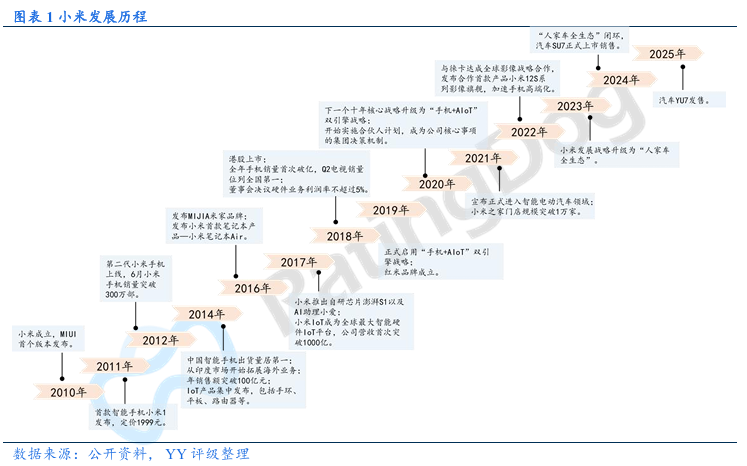
小米集团:“人家车全生态”,小米要打高端局
Zheng Quan Ri Bao· 2026-01-16 11:06
Core Viewpoint - Xiaomi Group is a leading consumer electronics and smart manufacturing company in China, known for its "extreme cost-performance" strategy. The company is pushing for a high-end transformation, with the launch of its electric vehicle, the Xiaomi SU7, in 2024, marking a significant step in its "home, car, and ecosystem" strategy [1]. Group 1: Company Overview - Xiaomi's business model is described as a "triathlon," focusing on market expansion through cost-effective hardware, profit generation via high-margin internet services, and enhanced sales efficiency through a new retail model that integrates online and offline channels [1]. - The company has established a stable user base, with its internet services primarily driven by advertising and value-added services [2]. Group 2: Smartphone Segment - Smartphones are Xiaomi's core products, with a strong competitive position in emerging markets. The company is transitioning from a low-cost to a high-end market strategy, including collaborations with Leica for high-end imaging and the development of its own 3nm smartphone chip, expected to launch in 2025 [2]. - Despite the growth in average selling price (ASP) for high-end smartphones, Xiaomi's ASP remains lower than that of domestic competitors like Samsung and Vivo, indicating a need for further brand elevation [2]. Group 3: IoT and Consumer Products - Xiaomi is a global leader in the smart IoT platform, with a product ecosystem structured as "1+4+N." The synergy between its various business segments is expected to enhance overall performance [3]. - The company faces competition in the home appliance sector, particularly from leading brands, and may encounter growth pressures due to the reduction of government subsidies [3]. Group 4: Smart Automotive - Xiaomi entered the smart electric vehicle market in 2021, and the SU7 has quickly become a bestseller due to its high configuration, competitive pricing, and brand influence. However, challenges such as supply chain rigidity and increasing market competition are present [3]. - Concerns regarding the safety of autonomous driving features and the overall driving experience of Xiaomi vehicles have been raised, necessitating further validation of their technology [3]. Group 5: Financial Analysis - The company's revenue has seen rapid growth in recent years, driven by its high-end transformation and automotive business expansion. Gross margins are on the rise, indicating improved profitability [4]. - Xiaomi's R&D expenses have significantly increased, but remain at a reasonable proportion of revenue. The company maintains a healthy cash flow and liquidity position, with a debt-to-asset ratio around 50% [4].