电商平台

Search documents
抖音电商发布服饰行业经营指南,明确禁止销售非全新服饰
Sou Hu Cai Jing· 2026-01-05 09:00
Group 1 - Douyin E-commerce released a clothing industry operation guide on January 5, aimed at providing clear compliance requirements and operational suggestions to merchants and creators based on recent inspections that identified regulatory risk scenarios [1][3] - The guide explicitly prohibits the sale of non-new clothing in any form, except for trendy luxury items, due to potential health and safety risks, product wear, and size discrepancies that could lead to consumer complaints [3] - Merchants and creators are forbidden from using terms like "second-hand," "defective goods," or "tail goods" to imply that products are not in new condition, with violations resulting in product bans, store closures, or penalties [3] Group 2 - Douyin E-commerce warns operators against using "abnormally low prices" or "only 1 order per item" as marketing tactics, and prohibits non-standard methods like "proxy bidding links" to evade platform audits, which could lead to price and product information opacity [3] - The platform emphasizes the importance of accurately describing product conditions and pricing reasonably to avoid consumer impulse buying and subsequent disputes over product mismatches [3] - The guide also regulates the sale of clothing through blind boxes at unusually low prices, highlighting that such marketing practices lack transparency and can obscure key information about the product's condition, leading to consumer dissatisfaction and high return rates [3]


从曲周麦田到峨边竹林,全产业链实践点亮“拼多多杯”第三届科技小院大赛
Huan Qiu Wang· 2026-01-05 06:05
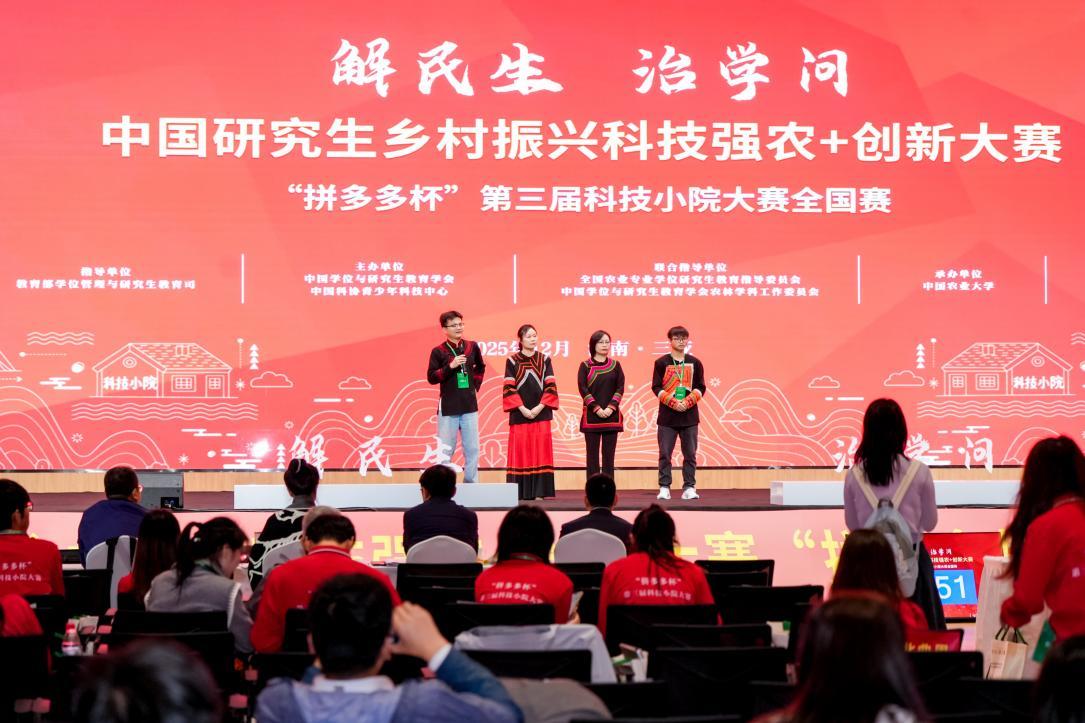
Core Insights - The "Pinduoduo Cup" Third Technology Courtyard Competition concluded successfully, focusing on transforming theoretical knowledge into practical agricultural solutions for rural revitalization and agricultural strength [1][3] - The competition involved 247 teams from 87 graduate institutions, with 22 teams advancing to the finals, showcasing significant student innovation in addressing real agricultural issues [1][3] Group 1: Competition Overview - The competition theme was "solving people's livelihood and addressing academic questions," aimed at providing talent and technological support for rural revitalization [1] - The event featured a rigorous selection process, including qualification reviews and on-site evaluations by an "Academician Flying Team" [1][9] - Six teams won first prize, including those from Henan Agricultural University and China Agricultural University, while 16 teams received second prize [1] Group 2: Role of Pinduoduo - Pinduoduo has been a key supporter of the competition since 2020, contributing to event planning, evaluation, and project implementation [3][12] - The company launched a "100 billion support" plan to assist projects in technology implementation and agricultural product sales [3][12] - Pinduoduo's involvement has helped create a platform for showcasing agricultural technology achievements and nurturing young agricultural talents [3][12] Group 3: Success Stories from Technology Courtyards - The Hebei Quzhou Liu Village Technology Courtyard established a company to address low profitability and high management tasks in premium wheat cultivation, successfully integrating the production and sales chain [4] - The Sichuan Ebian Bamboo Technology Courtyard developed a comprehensive production model, significantly increasing bamboo shoot yields and creating local employment opportunities [6][7] - Both courtyards benefited from Pinduoduo's support, leading to increased sales and local economic growth, with the wheat courtyard generating approximately 150,000 yuan in revenue from bread sales [4][6] Group 4: Future Directions - The competition will continue to evolve, with plans for new categories and enhanced evaluation methods to foster innovation in rural revitalization [9][10] - Pinduoduo aims to provide systematic support across various aspects, including funding, talent cultivation, and market access, to enhance the development of technology courtyards [12][15] - The integration of technology courtyards with rural revitalization efforts is expected to deepen, contributing significantly to local economies and agricultural advancements [15]

从一张砂纸,看中国制造的竞争力
Xin Lang Cai Jing· 2026-01-04 15:12
Core Viewpoint - The article highlights the competitive advantages of Chinese e-commerce platforms, showcasing their ability to offer extremely low prices and innovative customer service strategies, which are reshaping the global e-commerce landscape [1][3][5]. Group 1: Pricing Strategy - A set of three sandpapers was sold for only 1.03 RMB, and after a reward for leaving a review, the effective cost could drop to 0.5 RMB [1][3]. - The seller compensates customers with additional products, such as a sponge sand block worth 10 RMB, to enhance customer satisfaction and encourage positive reviews [3][5]. - This pricing strategy aims to increase sales volume and build customer loyalty, ultimately leading to larger orders in the future [5]. Group 2: Market Dynamics - The article suggests that low prices allow sellers to negotiate better terms with suppliers and logistics companies, enhancing their competitive edge [5]. - It notes that the e-commerce market is becoming increasingly dominated by a few major players, leading to the gradual decline of small local businesses [5]. - The competitive landscape is expected to extend globally, with successful Chinese sellers likely to dominate international markets due to their experience in a highly competitive domestic environment [5]. Group 3: Comparison with U.S. E-commerce - The lowest price for sandpaper on U.S. platforms like eBay and Amazon is significantly higher, at 8.95 USD (approximately 63 RMB) and 7 USD (approximately 50 RMB) respectively, indicating a stark price difference [11][12]. - U.S. e-commerce platforms have higher operational costs, with fees for sellers ranging from 15% to 45% of sales, which contrasts with the lower costs faced by Chinese sellers [12][14]. - The dominance of Chinese sellers in the U.S. online grocery market is noted, with the article suggesting that they are capturing significant market share while U.S. small businesses struggle [12][19]. Group 4: Future Trends - The article discusses the emergence of Chinese e-commerce platforms like Temu, TikTok Shop, and Shein, which are reshaping global e-commerce dynamics and achieving significant growth in international markets [15][17]. - By 2025, Temu is projected to become the second-largest global e-commerce site, with a focus on improving delivery times through overseas warehouses [17]. - The integration of AI technology in Chinese e-commerce is highlighted as a key factor in enhancing customer service and operational efficiency, further solidifying their competitive advantage [18]. Group 5: Trade Surplus and Economic Impact - China's trade surplus is projected to reach approximately 1.15 trillion USD in 2025, a record high in human economic history, significantly surpassing previous peaks from Germany and Japan [19][22]. - The article emphasizes that China's manufacturing sector is not only robust but is also evolving to meet global demands, indicating a shift from merely producing low-cost goods to offering a comprehensive ecosystem of supply chain, logistics, and e-commerce [21].

10秒做选品开款 1688产业带商家将有自己的AI智能体
Nan Fang Du Shi Bao· 2026-01-04 13:56
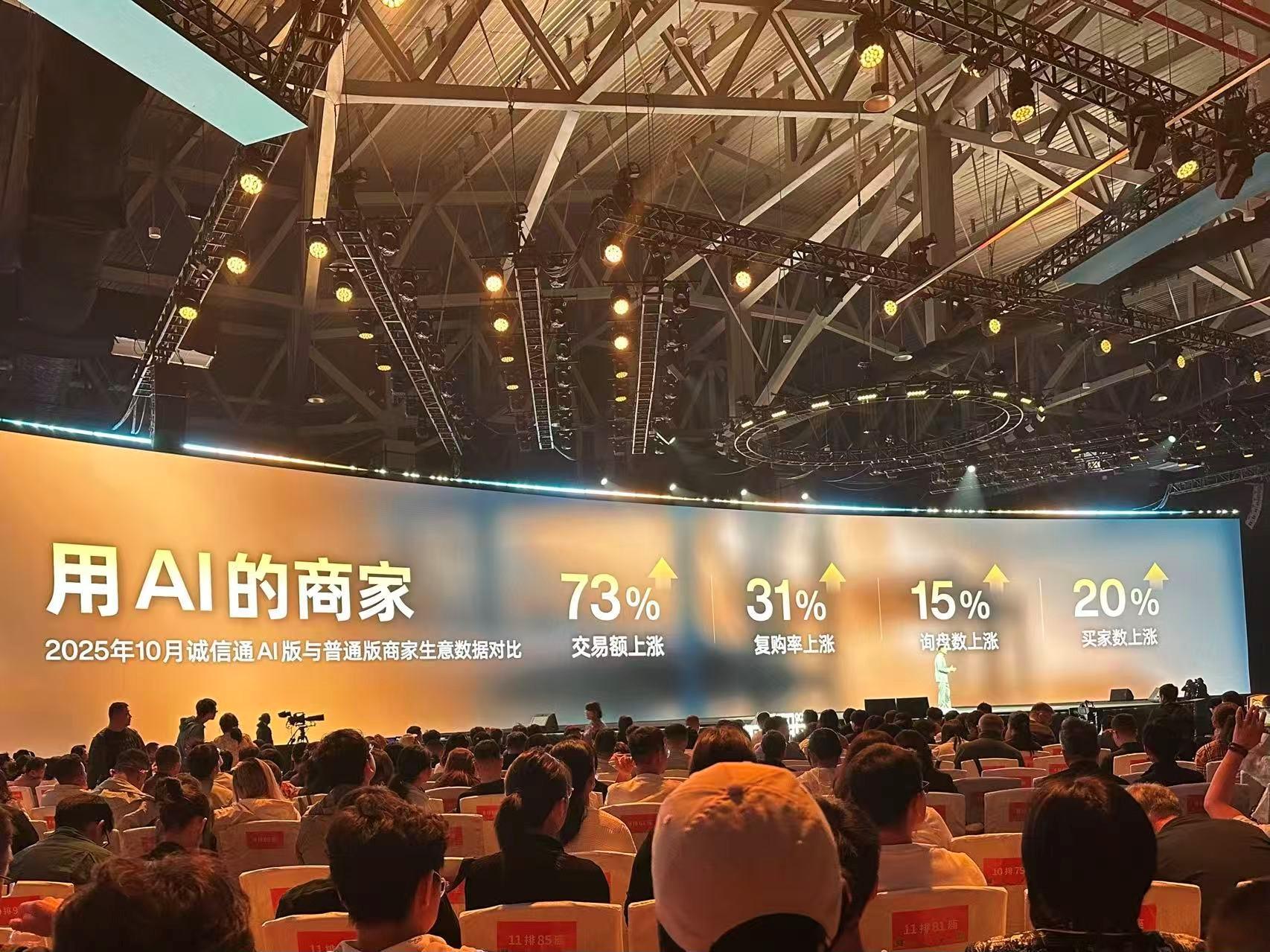
Core Insights - 1688 is transitioning from a trading platform to an AI-driven digital supply chain platform by 2026, aiming to enhance decision-making for businesses through an independent AI agent [1] - The year 2025 is identified as the year when small and medium enterprises (SMEs) fully embrace AI, with AI significantly improving product gross margins in a competitive B2B environment [1] - 1688's strategy "All in AI" involves launching and iterating various AI products tailored for both buyers and sellers, including an AI version of the 1688 app and specialized AI tools for cross-border entrepreneurs [1] Group 1 - As of December 30, 2025, over 290,000 out of more than 1 million merchants on the 1688 platform are using AI daily [1] - Merchants using the AI version of 1688's integrity service saw a 73% increase in transaction volume and a 31% increase in repurchase rates compared to those not using AI [1] Group 2 - In a recent speech, the CEO of 1688 highlighted the potential of a "digital twin market," where business ideas can be tested in a virtual environment using AI before implementation in the real world [5] - The AI version of 1688's integrity service offers four core capabilities: AI product selection, AI smart marketing, AI customer management, and AI business analysis [5] - 1688 aims to create a comprehensive AI agent that understands customer businesses and data, providing decision-making support and optimized workflows for SMEs in industrial clusters [5]

1688将推出商家端独立AI智能体
Bei Jing Shang Bao· 2026-01-04 10:37
Core Insights - In 2026, 1688 will launch a fully independent AI intelligent agent aimed at assisting businesses in leveraging AI for their operations, which will be available to merchants outside the 1688 platform [1] - As of December 30, 2025, over 290,000 out of more than 1 million merchants on the 1688 platform are using 1688 AI daily [1] - The introduction of the "Integrity Pass AI Version" in October last year led to a 73% increase in platform GMV and a 31% rise in repurchase rates [1] Company Developments - The focus of AI product usage is currently more concentrated among top merchants, while small and medium-sized enterprises show significant variation in AI acceptance due to factors like perception and geography [1] - 1688 plans to enhance the decision-making accuracy of the "Integrity Pass AI Version" and improve AI's understanding of industry depth, along with optimizing the product's interactive interface [1] - Multiple AI products and intelligent agents, including the 1688 Integrity Pass AI Version, 1688 AI App, and cross-border AI intelligent agent "Ao Xia," will continue to be launched throughout 2025 [1]
从麦田到竹林,“拼多多杯”第三届科技小院大赛交出兴农答卷
Zhong Guo Jing Ji Wang· 2026-01-04 09:08
Group 1 - The "Pinduoduo Cup" Third Technology Small Courtyard Competition concluded successfully in Sanya, focusing on transforming classroom theories into innovative solutions for agricultural and rural issues, supporting rural revitalization and agricultural strength [1][3] - A total of 247 teams from 87 graduate training institutions participated, with 22 teams advancing to the national finals, and six teams winning first prize [1][3] - Pinduoduo has been a key supporter of the competition since 2020, contributing to project implementation and agricultural product sales connections, with plans to continue this support through a "100 billion support" initiative [3][12] Group 2 - The technology small courtyards have expanded to over a thousand villages since their inception in 2009, emphasizing the importance of addressing real problems for local communities [3][12] - The competition introduced a new format with five tracks focusing on technology-driven agriculture, youth assistance, digital benefits, entrepreneurship, and multi-dimensional integration, enhancing the engagement of participating teams [10][13] - The "Academician Flying Team" was introduced to provide on-the-ground evaluations, increasing the credibility of the competition and allowing for direct interaction between students and farmers [10][13] Group 3 - The Hebei Quzhou Liu Village Technology Small Courtyard successfully established a company to address low profitability in high-quality wheat cultivation, creating a complete supply chain from planting to product sales [4][5] - The Sichuan Ebian Bamboo Technology Small Courtyard developed a production model that increased bamboo shoot yields from 100 pounds to 500 pounds per acre, while also training over 500 local farmers [7][8] - Pinduoduo's support through e-commerce channels has significantly boosted sales, with the Liu Village Technology Small Courtyard selling over 20,000 bread products, generating approximately 150,000 yuan in revenue [5][8] Group 4 - Pinduoduo aims to provide comprehensive support for technology small courtyards, focusing on funding, talent cultivation, and market connections, to enhance agricultural productivity and rural development [12][15] - The competition has effectively trained students in connecting production with market demands, allowing them to navigate previously inaccessible parts of the supply chain [15] - The integration of technology small courtyards with rural revitalization efforts is expected to yield greater contributions to local economies and agricultural innovation [15]
关于电商平台监管失职问题的调查
Sou Hu Cai Jing· 2026-01-03 08:41
Core Viewpoint - The investigation reveals serious regulatory failures by e-commerce platforms regarding the sale of the Concept 180 anti-gravity capsule, which is associated with illegal imports, qualification fraud, and false advertising [1]. Group 1: Regulatory Failures - E-commerce platforms have shown a lack of diligence in verifying the qualifications of sellers, allowing a company without import qualifications to sell the Concept 180 capsule as an "imported product" [2]. - There is a prevalence of false advertising on multiple e-commerce platforms, with claims such as "imported from Spain" and "EU certified," which violate advertising laws, yet the platforms have not taken action against these claims [3]. - Consumer complaints regarding false advertising and quality issues have been met with indifference from the platforms, which have failed to take effective measures to address these concerns [4]. Group 2: Legal Responsibilities and Consequences - Legal experts indicate that e-commerce platforms may bear joint liability for consumer losses due to their failure to fulfill verification and regulatory responsibilities, allowing consumers to seek compensation from the platforms [5]. - Regulatory authorities are expected to enhance oversight of e-commerce platforms, ensuring they fulfill their responsibilities and imposing penalties on those that fail to comply [5]. Group 3: Root Causes and Impacts - Industry insiders suggest that the regulatory shortcomings reflect a significant imbalance between commercial interests and social responsibilities, as platforms prioritize traffic and transaction commissions over compliance [6]. - This short-sighted approach not only harms consumer interests but also undermines long-term platform development and erodes consumer trust, damaging the overall integrity of the e-commerce market [6]. Group 4: Regulatory Measures and Recommendations - Regulatory bodies plan to strengthen special oversight of e-commerce platforms, focusing on the verification of seller qualifications and the handling of false advertising [11]. - A credit evaluation system for e-commerce platforms will be established to record compliance with regulatory responsibilities, guiding platforms towards more responsible operations [11]. - E-commerce platforms are urged to adopt a proper business philosophy, enhance seller qualification checks, and monitor advertising content to foster a fair and trustworthy trading environment [11].
泰国对价值1泰铢以上网购进口商品征税
Zhong Guo Xin Wen Wang· 2026-01-01 16:26
Core Points - Thailand has implemented a new online shopping import tax policy starting January 1, which removes the previous tax exemption for goods valued under 1,500 Thai Baht and imposes taxes on all imported goods valued over 1 Thai Baht [1][2] - The policy aims to create a fairer competitive environment, improve tax collection efficiency, and enhance the quality and compliance standards of imported goods [1] - The government expects that prices for certain products, particularly clothing and apparel, may increase by approximately 20% to 30% due to the new tax [1] - Approximately 97% of imported goods on e-commerce platforms will have taxes pre-calculated in their prices, allowing consumers to make a single payment without additional customs fees [1] - The customs department is collaborating with major e-commerce platforms to strengthen product audits and ensure compliance with Thai industrial standards and regulations [1] Summary by Category Tax Policy Changes - The new import tax policy applies to all online purchases valued over 1 Thai Baht, replacing the previous exemption for goods under 1,500 Thai Baht [1] - The initiative is designed to narrow the gap between local businesses, especially small and medium enterprises, and previously untaxed low-priced foreign imports [1] Price Impact - Clothing and apparel prices are projected to rise by 20% to 30% as a result of the new tax policy, while other products will vary based on applicable tax rates [1] E-commerce Compliance - The government has implemented measures to ensure the convenience of online shopping, with 97% of imported goods already including taxes in their listed prices [1] - Enhanced collaboration with e-commerce platforms like Lazada, Shopee, TikTok, SHEIN, and TEMU aims to ensure that non-compliant products are removed from sale and prohibited from import [1]
“仅退款”又遭“薅羊毛”!买家用AI假图申请退款,商家:几乎每天都有疑似案例,很难识别,就算识别出痕迹也很难举证
Mei Ri Jing Ji Xin Wen· 2025-12-31 13:26
Core Viewpoint - A new trend of fraudulent refund claims using AI-generated images is emerging in the e-commerce sector, exploiting the "refund only" policy, which poses challenges for merchants in identifying and managing these claims [1][2][4]. Group 1: AI-Generated Image Fraud - Merchants report that some buyers are using AI tools to create fake images to support refund requests, making it difficult for sellers to verify the authenticity of claims [1][2]. - The identification of AI-generated images relies heavily on manual inspection, and even when anomalies are detected, proving the buyer's dishonesty is challenging [1][4]. - The frequency of such fraudulent claims is not high, but they still occur regularly, leading to increased operational difficulties for merchants [2][4]. Group 2: Challenges in Refund Processing - Merchants often resort to negotiating with customers rather than outright rejecting refund requests, as the cost of returning items can be prohibitive [4][5]. - The "refund only" policy has led to a rise in contentious refund requests, prompting platforms to allow merchants to negotiate directly with customers [5][6]. - Merchants have developed verification rules to combat fraudulent claims, such as requiring buyers to provide specific evidence when claiming refunds [4][6]. Group 3: Legal and Ethical Implications - The use of AI-generated images to falsely claim product defects may violate legal principles of honesty and could be classified as civil fraud [8][9]. - Legal experts suggest that sellers have the right to challenge fraudulent refund claims in court, especially if the fraudulent behavior is significant [8][9]. - E-commerce platforms are encouraged to enhance their rules and verification processes to better protect sellers from fraudulent claims [9][10]. Group 4: Industry Response and Future Directions - E-commerce platforms have begun implementing measures to combat AI-generated image fraud, including real-time detection of altered images [9][10]. - The introduction of regulations requiring AI-generated content to include watermarks is expected to help in identifying fraudulent images [12][13]. - Collaboration among e-commerce platforms, AI technology companies, and legal entities is essential to create a healthier ecosystem and mitigate the risks associated with AI misuse [10][18].
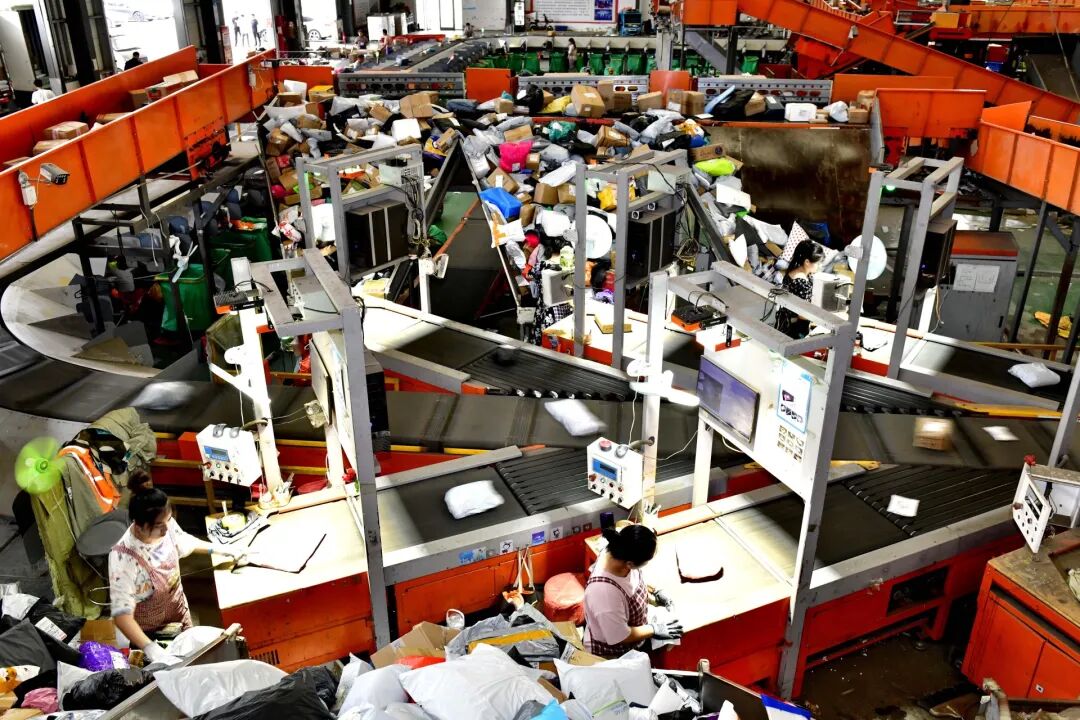
俄罗斯电商平台“招商”中国卖家
经济观察报· 2025-12-31 03:07
Core Insights - The article highlights the growing interest of Chinese businesses in the Russian market, which is perceived as a nearby incremental market amidst increasing competition in the European and American markets [2][4]. Market Space - The Russian market has been described as a "market vacuum" between 2022 and 2023, where products could sell easily [4]. - Ozon, a major e-commerce platform in Russia, reported that by 2025, the daily order volume from Chinese sellers exceeded 2 million, with a year-on-year growth of 2.5 times [5]. - During the recent "Black Friday" sales, Chinese sellers generated over 20 million orders, with a total GMV growth of 4 times compared to the previous year [5]. Consumer Behavior - Russian consumers are beginning to show more discerning preferences, moving from a "just have products" mentality to a more selective approach [7]. - There is a notable shift in product categories, with increased interest in home goods and apparel, as younger Russians are reducing their use of carpets, leading to a rise in demand for advanced cleaning products [7]. Logistics and Efficiency - The logistics efficiency in Russia is highlighted as a key advantage, with a typical supply chain cycle from China to Russia taking 30 to 45 days [12]. - Ozon has established numerous logistics centers across China to support this efficiency, covering all major transport routes to Russia [14]. Currency and Pricing - Currency fluctuations pose significant risks for sellers, but Ozon has implemented a pricing mechanism that allows sellers to price in RMB, mitigating exchange rate risks [17]. - This pricing strategy provides a stable revenue environment for Chinese sellers [17]. Returns Management - A new policy set to launch in 2026 will allow Chinese sellers to resell returned goods directly from Ozon's warehouses in Russia, transforming returns from a loss into potential sales [19]. Regulatory Changes - The Russian government is cracking down on "gray customs" practices, which could increase compliance costs for sellers [22]. - Starting in 2026, the tax exemption for cross-border small packages will gradually decrease, impacting the competitive landscape [22]. Brand Development - There is a growing trend among Russian consumers towards brand recognition, with a willingness to pay a premium for better service and quality [22]. - Chinese brands are increasingly adopting advanced marketing techniques, including AI-generated models for product promotion, to adapt to local market preferences [25]. Regional Influence - The Russian market serves as a gateway to the broader Russian-speaking region, with significant trade growth expected with Central Asian countries [28]. - Ozon aims to double its GMV and order volume by 2026, supported by enhanced logistics and marketing strategies [28].