
军工

Search documents
全球资产大涨,黄金升破4220美元,比特币近18万人爆仓
2 1 Shi Ji Jing Ji Bao Dao· 2025-10-16 02:31
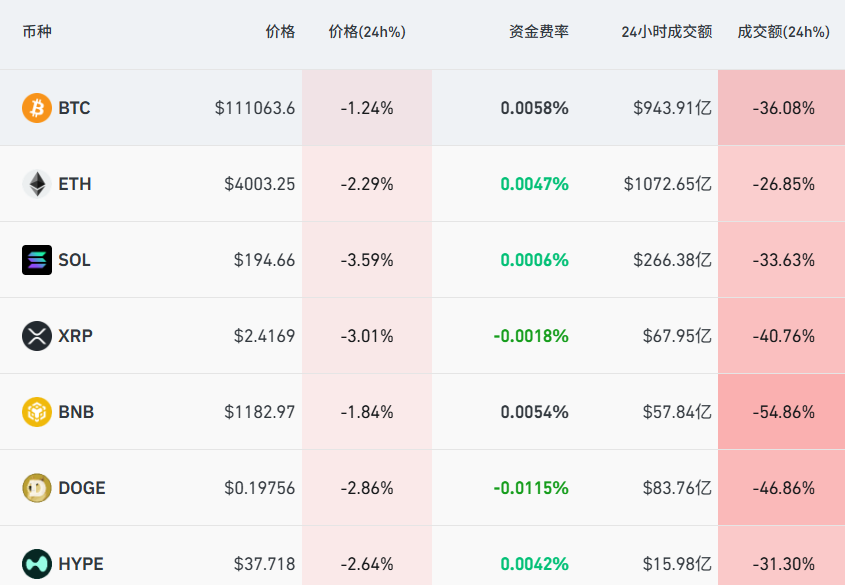
Market Performance - Asian stock markets, gold, and oil all experienced gains on October 16, with the A-share market showing positive performance, particularly in military and communication sectors [1] - The Hang Seng Index opened higher, and gold stocks continued to rise, with Zhu Feng Gold increasing over 9% [1] - The South Korean Composite Index rose over 2%, while the Nikkei 225 Index increased by approximately 0.7% [1] Commodity Prices - Spot gold prices surpassed $4,220 per ounce, marking a $200 increase over the week and achieving new highs for four consecutive trading days [2] - Brent crude oil futures rose by nearly 1% [2] Cryptocurrency Market - The cryptocurrency market saw a general decline, with a significant drop in trading volume, leading to approximately 178,000 liquidations totaling $443 million [3] - Major cryptocurrencies such as Bitcoin and Ethereum experienced price decreases of 1.24% and 2.29%, respectively, with Bitcoin trading at $111,063.6 and Ethereum at $4,003.25 [4] Federal Reserve Outlook - The Federal Reserve is expected to lower interest rates at the end of October, as indicated by the recent Beige Book report, which noted minimal changes in U.S. economic activity [6] - Market sentiment suggests that concerns over the job market are overshadowing inflation worries, leading to expectations of a rate cut [6] - Analysts predict that a rate cut could enhance the attractiveness of emerging market assets and support global stock market performance [6]

军工股走强 成飞集成涨停
Jing Ji Guan Cha Wang· 2025-10-16 02:18
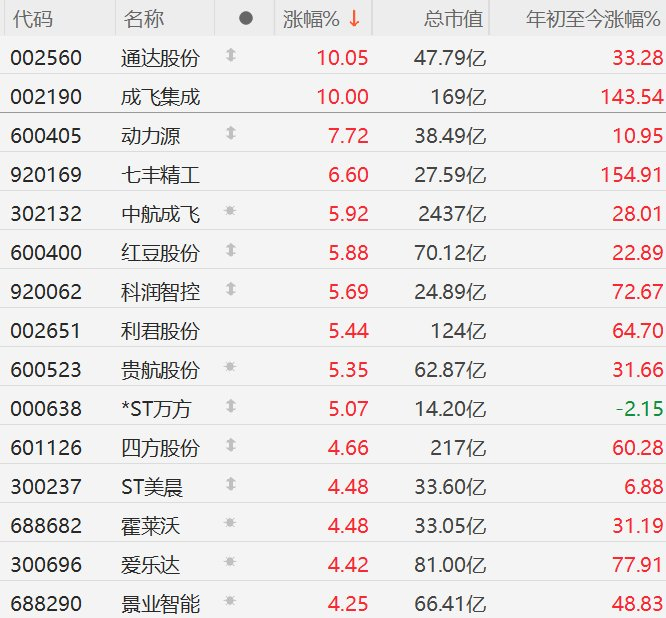
Group 1 - Military stocks showed strong performance at the beginning of trading, with Tongda Co. and Chengfei Integration hitting the daily limit, while Dongli Source rose over 7% and Qifeng Precision increased by over 6% [1] - Other companies such as AVIC Chengfei, Hongdou Co., Kerun Zhikong, Lijun Co., and Guihang Co. also saw gains exceeding 5% [1] - The Indonesian Defense Minister confirmed the country's intention to purchase Chinese J-10 fighter jets, although he did not disclose specific details regarding the timeline or quantity of the procurement [1]


A股开盘|上证指数跌0.29% 充电桩板块高开
Di Yi Cai Jing· 2025-10-16 02:07
Core Viewpoint - The three major stock indices opened lower, indicating a bearish market sentiment at the start of trading [1] Market Performance - The Shanghai Composite Index opened at 3900.68 points, down 0.29% - The Shenzhen Component Index opened at 13064.26 points, down 0.42% - The ChiNext Index opened at 3008.37 points, down 0.58% [1] Sector Performance - The charging pile sector opened high, with companies like Jingquanhua and Aotexin hitting the daily limit - The pharmaceutical, military, and photovoltaic sectors showed active performance - The robotics concept experienced a pullback, with Sanhua Intelligent Control opening nearly 5% lower - The rare earth, cultivated diamond, and EDA concepts generally declined [1] Company Specifics - Tianpu Co., Ltd. resumed trading with a limit down after experiencing 15 consecutive days of limit up [1]
A股异动丨军工股走强,成飞集成涨停,红豆股份涨超5%
Ge Long Hui A P P· 2025-10-16 02:00
Core Viewpoint - The A-share market saw a strong performance in military stocks, particularly with companies like Tongda Co. and Chengfei Integration hitting the daily limit, following Indonesia's confirmation of plans to purchase Chinese J-10 fighter jets [1] Group 1: Stock Performance - Tongda Co. (002560) increased by 10.05%, with a total market value of 4.779 billion [2] - Chengfei Integration (002190) rose by 10.00%, with a market capitalization of 16.9 billion [2] - Power Source (600405) gained 7.72%, with a market value of 3.849 billion [2] - Qifeng Precision (920169) saw a rise of 6.60%, with a market cap of 2.759 billion [2] - AVIC Chengfei (302132) increased by 5.92%, with a market value of 243.7 billion [2] - Hongdou Co. (600400) rose by 5.88%, with a market capitalization of 7.012 billion [2] - Kairun Intelligent Control (920062) increased by 5.69%, with a market value of 2.489 billion [2] - Lijun Co. (002651) rose by 5.44%, with a market capitalization of 12.4 billion [2] - Guihang Co. (600523) increased by 5.35%, with a market value of 6.287 billion [2] Group 2: Year-to-Date Performance - Chengfei Integration (002190) has seen a year-to-date increase of 143.54% [2] - Qifeng Precision (920169) has a year-to-date increase of 154.91% [2] - Kairun Intelligent Control (920062) has increased by 72.67% year-to-date [2] - Lijun Co. (002651) has a year-to-date increase of 64.70% [2] - Guihang Co. (600523) has increased by 31.66% year-to-date [2]
A股开盘速递 | A股集体低开 沪指跌0.29% 稀土永磁、人形机器人等板块领跌
智通财经网· 2025-10-16 01:40
Group 1 - A-shares opened lower with the Shanghai Composite Index down 0.29% and the ChiNext Index down 0.58% [1] - The charging pile sector showed active performance, while rare earth permanent magnets, cultivated diamonds, and humanoid robots experienced significant declines [1] Group 2 - Industrial trends and market conditions remain the core focus for investment strategies, with recommendations to invest in domestic demand sectors such as agriculture, beverages, and brokerage insurance [1] - The upcoming quarterly reports and the Fourth Plenary Session are expected to influence market strategies, emphasizing self-sufficiency and sectors benefiting from the "14th Five-Year Plan" [1] - Key sectors highlighted include military industry, domestic computing industry chain, innovative pharmaceuticals, North American computing chain, gaming, and batteries [1] Group 3 - Market outlook remains optimistic for the fourth quarter, with expectations for a technology-led rally and potential new highs in sectors like overseas computing, semiconductors, and robotics [2] - The concept of "anti-involution" is seen as crucial for the transition from structural bull to a comprehensive bull market, particularly in solar energy and chemicals [2] - Hong Kong stocks are expected to benefit from global easing and the emergence of new economic trends [2] Group 4 - The probability of continued rebound in stock indices is high, with the Shanghai Composite Index expected to steadily approach the 4,000-point mark, while large technology remains the main focus for investment [3]

美防长敦促盟国增购美制武器以加强对乌军援
Xin Hua She· 2025-10-15 23:17
Group 1 - The core message emphasizes the urgency for NATO allies to increase military support for Ukraine through the "Ukraine Priority Needs List" mechanism, which encourages the purchase of U.S. weapons [1] - The NATO defense ministers' meeting focused on coordinating military aid and long-term defense support for Ukraine, with a call for more countries to contribute financially [1] - The "Ukraine Priority Needs List" mechanism has already seen contributions exceeding $2 billion from countries like the Netherlands, Denmark, Norway, Sweden, and Germany for U.S. military equipment [1] Group 2 - Ukraine's President Zelensky confirmed that the first batch of military aid valued at $1 billion under the "Ukraine Priority Needs List" has begun delivery, including Patriot missiles [1] - Discussions are ongoing between the U.S. and Ukraine regarding a potential $900 billion arms sale, which includes long-range weapons [1] - The Russian government maintains an open stance towards negotiations, expressing that Western arms supplies to Ukraine hinder a peaceful resolution to the conflict [2]
稀土牌只是开胃菜,第二张王牌已炸,外媒:美再工业将彻底被扼杀
Sou Hu Cai Jing· 2025-10-15 15:54
Core Points - The recent escalation in US-China trade tensions is marked by China's new export controls on rare earth materials and synthetic diamonds, which are critical for high-tech and defense industries in the US [2][3][5] - The US stock market reacted negatively, losing $2 trillion in value, with significant drops in major tech stocks following the announcement of these measures [2][6] Group 1: Export Controls - China announced export controls on rare earth materials, requiring licenses for mining, refining, and related technologies starting November 8 [3][5] - The controls include five categories of heavy rare earth metals and extend to high-tech applications such as chip manufacturing [5][8] - The measures are expected to increase global rare earth prices by over 20% due to China's dominant position, supplying 80% of the world's rare earths [3][5] Group 2: Impact on US Industries - The US heavily relies on China for rare earths, with 70% of its supply coming from China, which poses a risk to its defense and semiconductor industries [3][6] - The export controls on synthetic diamonds, crucial for cooling high-density AI chips, could severely impact the US's ability to expand its data centers and semiconductor production [9][11] - The US Department of Defense has indicated that shortages in rare earths could directly affect military production capabilities [3][6] Group 3: Global Reactions - The EU is coordinating with the US to assess the impact on supply chains and is looking to increase imports from Australia and Canada [3][5] - Other countries like India are attempting to ramp up domestic production of rare earths, but their current capacity is insufficient to meet global demand [5][11] - The situation has prompted discussions among US allies about diversifying supply chains, but immediate alternatives to Chinese materials are limited [11]
【公告全知道】可控核聚变+机器人+固态电池+数据中心+军工!公司产品成功应用于国家超算中心
财联社· 2025-10-15 15:42
Group 1 - The article highlights significant announcements in the stock market, including "suspension and resumption of trading, shareholding changes, investment wins, acquisitions, performance reports, unlocks, and high transfers" [1] - Important announcements are marked in red to assist investors in identifying investment hotspots and preventing various black swan events [1] - The article emphasizes the importance of timely information for investors to discern and find suitable listed companies [1] Group 2 - A company is involved in controllable nuclear fusion, with products successfully applied in the national supercomputing center [1] - Another company plans to participate in a fund project focused on rare metals, including rare earth permanent magnets and AI intelligence, with a total scale of 2 billion [1] - A company related to photovoltaic energy is undergoing a change in its controlling shareholder [1]

中方重拳出击起效了,特朗普遭遇3连败,美专家:史无前例?
Sou Hu Cai Jing· 2025-10-15 14:54
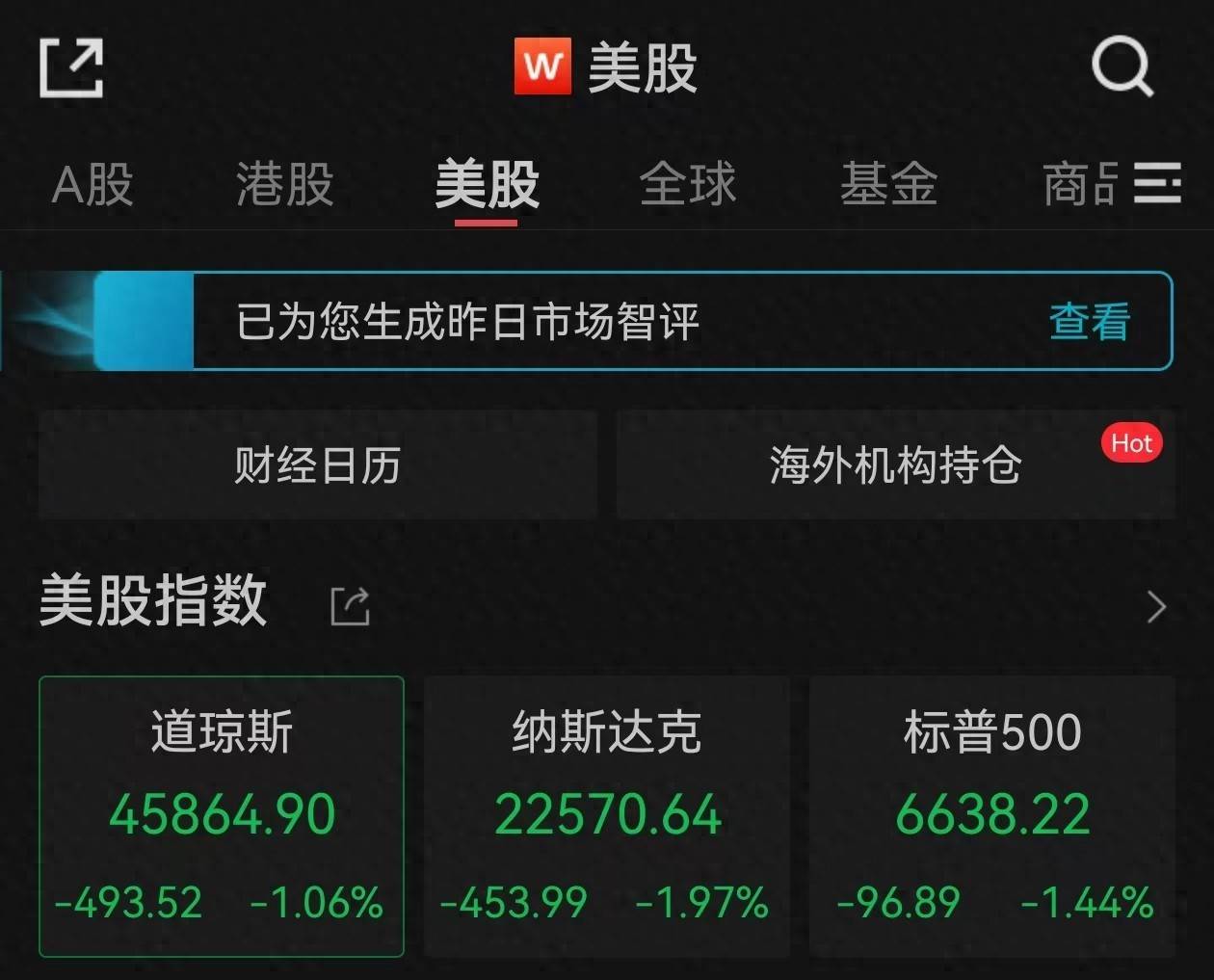
Group 1 - The announcement of a 100% tariff increase on Chinese goods by Trump led to a significant market reaction, with the S&P 500 index losing $700 billion in just three minutes and a total daily loss of $1.65 trillion, marking the largest single-day loss since the pandemic began in 2020 [1] - Trump's tariff strategy appears to target high-end manufacturing sectors in China, such as semiconductor equipment and industrial robots, while excluding Christmas consumer goods to avoid domestic backlash [3] - China's response includes new regulations on rare earth exports, which could severely impact U.S. military production, as many defense systems rely on Chinese rare earth materials [3] Group 2 - China has initiated a legal battle against the U.S. at the WTO regarding the imposition of special port fees, while also launching antitrust investigations into U.S. mergers, indicating a strategic shift to a rules-based counterattack [5] - Major shipping companies have suspended routes to U.S. West Coast ports, leading to significant delays and increased costs for U.S. retailers like Walmart and Amazon, who are now facing rising operational costs due to the tariff war [5] - The political landscape in the U.S. is becoming increasingly divided, with bipartisan efforts to limit Trump's tariff powers, reflecting growing discontent with his trade policies [7] Group 3 - The U.S. judicial system has recently ruled against Trump's tariff measures, stating they are unconstitutional, which has led to a wave of lawsuits from multinational companies seeking refunds on tariffs paid, amounting to over $20 billion [7][9] - The U.S. economy is facing severe challenges, with federal debt surpassing $36 trillion and interest payments exceeding $1 trillion annually, contributing to rising inflation and potential stagflation risks [11] - The Federal Reserve's dilemma of maintaining high interest rates to control inflation could lead to a significant GDP contraction by 2026, as per simulations [12] Group 4 - The ongoing government shutdown has affected 600,000 federal employees and critical services, further complicating Trump's political standing as his approval ratings plummet [14] - Internationally, traditional allies like the EU and Japan are hesitant to fully align with U.S. policies against China, instead opting to strengthen trade relations with China, as evidenced by a 9.2% increase in trade between China and the EU [16] - The combination of legal, economic, and political crises in the U.S. is unprecedented, creating a vicious cycle that exacerbates each issue, leading to a complex governance failure [18]
长城军工跌7.36%,沪股通龙虎榜上净卖出1444.30万元
Zheng Quan Shi Bao Wang· 2025-10-15 13:56
Core Viewpoint - Longcheng Military Industry (601606) experienced a significant decline of 7.36% in its stock price, with a trading volume of 5.009 billion yuan and a turnover rate of 13.31% on the day of the report [1] Trading Activity - The stock was listed on the Shanghai Stock Exchange's "Dragon and Tiger List" due to a daily price deviation of -8.57%, with net selling from the Shanghai-Hong Kong Stock Connect amounting to 14.443 million yuan [1] - The top five trading departments accounted for a total transaction volume of 8.06 billion yuan, with buying transactions totaling 315 million yuan and selling transactions totaling 491 million yuan, resulting in a net selling of 176 million yuan [1] - The Shanghai-Hong Kong Stock Connect was the third-largest buying department and the second-largest selling department, with buying and selling amounts of 68.8392 million yuan and 83.2822 million yuan, respectively [1] Fund Flow - The stock saw a net outflow of 488 million yuan in main funds, with a significant outflow of 321 million yuan from large orders and 167 million yuan from major funds [1] - Over the past five days, the main funds experienced a net inflow of 217 million yuan [1] Margin Trading Data - As of October 14, the margin trading balance for the stock was 872 million yuan, with a financing balance of 863 million yuan and a securities lending balance of 896.56 thousand yuan [2] - In the past five days, the financing balance increased by 346 million yuan, representing a growth of 66.86%, while the securities lending balance increased by 3.8543 million yuan, reflecting a growth of 75.41% [2] Financial Performance - According to the semi-annual report released on August 26, the company achieved a revenue of 699 million yuan in the first half of the year, marking a year-on-year growth of 29.55%, but reported a net loss of 27.4009 million yuan [2]
