
投资银行

Search documents
高盛:市场乐观情绪掩盖衰退风险 短线策略及流动性或驱动美股继续走高
智通财经网· 2025-08-06 12:56
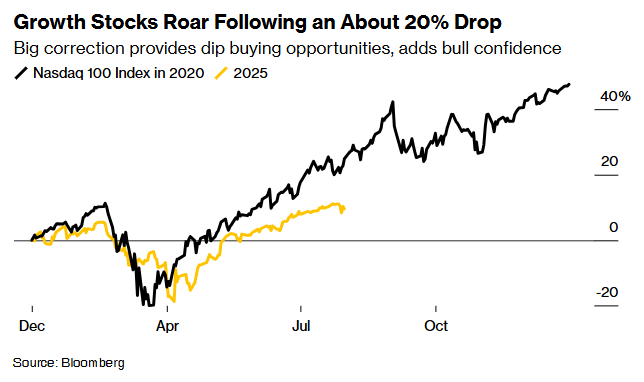
智通财经APP获悉,高盛宏观交易员Paolo Schiavone表示,美国经济衰退的可能性为30%,这听起来像 是一个危险信号,但全球股市仍然活跃,因为与市场势头相反的押注"几乎显得不合常理"。 Paolo Schiavone在一份报告中表示:"关键点在于,市场无法看得足够远。这就是为什么它会忽视衰退 风险。"他认为,投资者可能会无视潜在的劳动力市场放缓,而是将焦点放在充裕的流动性、以及人工 智能和财政信贷扩张等结构性增长主题上。 在强劲的企业盈利和对降息的押注掩盖了广泛关税影响担忧的背景下,美国股市接近历史高位。与此同 时,尽管经济增长可能正在放缓的数据信号出现,投资者仍纷纷回流科技巨头和人工智能概念板块。 掉期交易员目前预计,到2026年年中,美联储将降息逾100个基点。随着短期国债大量发行向货币市场 注入流动性,现金储备极为充裕。与此同时,自标普500指数从4月关税引发的抛售中反弹后,短线资金 已大举入市。 Paolo Schiavone表示,这些趋势跟随型投资者(CTA)现在掌控着大部分"热钱"股权流动。这导致市场出 现短视迹象,因为"他们的单一策略('让赢家跑')几乎不给基本面看空者留下空间"。他补 ...


高盛交易员:全球股市一路高歌,对美国衰退风险充耳不闻
Hua Er Jie Jian Wen· 2025-08-06 11:51
对美国经济衰退风险充耳不闻,本轮全球股市牛还能坚持多久? 高盛宏观交易员Paolo Schiavone表示,尽管美国经济衰退概率高达30%,但全球股市仍保持强劲走势,因为在当前市场动能面前"做空几乎显得不 合常理"。 Schiavone在给客户的最新报告中指出:"关键在于市场无法看到足够远的未来,这就是为什么它会忽视经济衰退风险。"他认为,投资者可能会忽 略劳动力市场放缓的可能性,转而专注于强劲的流动性以及人工智能和财政信贷扩张等结构性增长主题。 这位高盛交易员表示,由于短期策略盛行且波动性受到抑制,很少有人愿意与仍然完整的上升趋势作对。他指出,市场正显现出短视的迹象,因 为趋势跟踪投资者"单一的操作手册('让赢家继续跑')为基本面看空者留下的空间很小"。 在这种环境下,Schiavone认为阻力最小的路径仍然是向上,这解释了为什么市场能够在经济衰退风险升高的背景下保持强势。 流动性充裕推动市场乐观情绪 掉期交易员目前预期美联储到2026年中期将降息超过100个基点。大量短期国债发行向货币市场注入流动性,使得资金供应充足。与此同时,快钱 投资者在标普500指数从4月关税驱动的抛售中反弹后大举入市。 Schia ...
8.6犀牛财经晚报:国家电网用电负荷连续三天创历史新高 恒大地产等被执行16.7亿元
Xi Niu Cai Jing· 2025-08-06 10:22
Group 1: National Grid and Electricity Demand - National Grid's electricity load reached a historical high of 1.233 billion kilowatts from August 4 to 6, an increase of 53 million kilowatts compared to last year's peak of 1.180 billion kilowatts [1] - The load is expected to remain above 1.2 billion kilowatts on August 7, with a potential decrease later in the week due to rain and cooler temperatures [1] Group 2: Gaming Laptop Market - The Chinese consumer gaming laptop market saw a year-on-year growth rate of 24.3% in Q2 2025, significantly outpacing the overall consumer PC market [1] - This growth is driven by the demand for high-performance devices from university students and core gaming enthusiasts, as well as the rapid evolution of gaming content [1] Group 3: Real Estate and Office Leasing - Adidas will establish its new Greater China headquarters in a 32,400 square meter office building in Shanghai's West Bund, expected to be completed in Q1 2026 [2] - This leasing transaction is one of the largest in Shanghai's Grade A office market in 2023 [2] Group 4: Bankruptcy and Financial Performance - Claire's, a fashion jewelry manufacturer, filed for bankruptcy protection for the second time since 2018, with estimated assets and liabilities between $1 billion and $10 billion [2] - Evergrande Real Estate Group has recently been executed for over 1.67 billion yuan, with a total of over 55.9 billion yuan in outstanding execution amounts [2] Group 5: Financial Results - Jerry Holdings reported a net profit of 1.241 billion yuan for the first half of 2025, a year-on-year increase of 14.04% [6] - Tiantan Biological's net profit for the same period was 633 million yuan, reflecting a year-on-year decrease of 12.88% [7] - Shunbo Alloy achieved a net profit of 177 million yuan, marking a significant year-on-year increase of 110.56% [8] Group 6: Market Performance - The Shanghai Composite Index rose by 0.45% with a trading volume of 1.73 trillion yuan, indicating a broad market rally with over 3,300 stocks rising [9] - PEEK material concept stocks and military stocks saw significant gains, while pharmaceutical stocks experienced a downturn [10]



Vatee万腾:美国非农数据回头看遭大幅下修,就业强劲表象松动?
Sou Hu Cai Jing· 2025-08-06 10:20
Core Insights - The recent employment data signals a potential weakening in the U.S. labor market, contrary to the prevailing perception of strength [1][3] - Goldman Sachs has revised down the non-farm employment numbers for May and June by a total of 258,000, marking the largest two-month adjustment since 1968 [1][3] - A significant downward revision of 550,000 to 950,000 is anticipated in the upcoming annual benchmark revision, which could reshape market views on labor market strength [1][4] Employment Data Adjustments - The monthly adjustment of 258,000 alters the market's assessment of employment growth for May and June, revealing cracks in the narrative of continuous job expansion [3][4] - The scale of the upcoming benchmark revision is expected to be unprecedented, potentially ten times larger than the previous adjustment of 50,000 in January 2023 [4] Diverging Indicators - Other employment-related indicators, such as the NFIB small business survey, JOLTS job openings data, and the ECI employment cost index, are showing signs of fatigue, indicating a slowdown in hiring and job demand [5] - This inconsistency in data is raising concerns in the market regarding the robustness of the labor market [5] Implications for Federal Reserve Policy - The Federal Reserve has previously relied on the narrative of a strong labor market to justify maintaining high interest rates; however, if the downward revisions are confirmed, it may necessitate a reassessment of economic resilience [5][6] - Current market expectations suggest a high probability (over 90%) that the Federal Reserve will begin to cut interest rates in September, which could accelerate if the labor market is found to be overestimated [6] Economic Outlook - The lagging effects of consecutive interest rate hikes over the past two years may be starting to manifest in the labor market, potentially leading to more dovish sentiments [7] - The downward revision of non-farm data challenges market consensus and could exert pressure on expectations for a soft landing of the U.S. economy, adding complexity to future Federal Reserve policy decisions [7]

高盛交易员:美股一路高歌 市场对衰退风险充耳不闻
Ge Long Hui A P P· 2025-08-06 10:03
Core Viewpoint - A 30% probability of a U.S. economic recession may seem alarming, but global stock markets remain resilient due to current market momentum, making short-selling appear illogical [1] Group 1 - The market is unable to see far enough into the future, which is why it tends to overlook recession risks [1] - Investors may be ignoring the potential slowdown in the labor market, focusing instead on strong liquidity and structural growth themes such as artificial intelligence and fiscal credit expansion [1]
市场综述:欧洲股市回吐涨幅,美国股指期货小幅上涨
Xin Lang Cai Jing· 2025-08-06 09:40
欧洲股市回吐此前涨幅,美国股指期货小幅上涨,投资者正在评估美国总统唐纳德・特朗普最新的关税 威胁、令人失望的经济数据以及大量企业盈利报告。 斯托克欧洲 600 指数在上涨 0.4% 后变动不大,原 因是该地区一些大型企业的业绩喜忧参半。标准普尔 500 指数期货上涨约 0.3%,交易员们正等待麦当 劳和华特迪士尼等公司的盈利报告。 周二的数据显示,美国服务业表现疲软,同时物价压力居高不 下,这引发了人们对美联储政策挑战的担忧。特朗普加大了关税攻势,称他将对从俄罗斯购买能源的国 家加征关税,并很快宣布对半导体和药品进口征收关税。尽管如此,强劲的企业盈利和对降息的押注目 前仍在提振股市。 XBT 研究总监凯瑟琳・布鲁克斯表示:"总体而言,大西洋两岸不错的企业盈利对股 市形成支撑,这在一定程度上缓解了人们对美国经济放缓以及特朗普总统对关税的持续痴迷给全球经济 带来影响的担忧。" 美国股市接近历史高点,原因是在数据显示经济增长可能放缓之际,投资者重新涌 入科技巨头和人工智能相关交易。高盛集团宏观交易员保罗・斯基亚沃内表示,押注市场势头逆转 "几 乎显得不合理"。 瑞银财富管理首席投资官马克・黑费勒表示,任何抛售都将为 ...
特朗普解雇劳工统计局局长,引发美国“数据政治化”风险
Di Yi Cai Jing· 2025-08-06 09:23
Core Viewpoint - The dismissal of the U.S. Bureau of Labor Statistics (BLS) director by President Trump raises concerns among economists and market participants regarding the credibility of economic data, which is crucial for monetary and fiscal policy formulation [1][3][5] Economic Data Credibility - Economists warn that the credibility of economic data is easily damaged and difficult to restore, impacting policy decisions [3][5] - The International Statistical Institute states that Trump's actions violate UN principles aimed at protecting factual statistical data, urging the government to restore public confidence [3] - Experts highlight that the disruption caused by Trump's policies, such as tariffs and immigration enforcement, complicates data collection and affects labor supply [3][5] Market Reactions - Market participants express concerns that the political nature of the BLS's leadership could undermine investor confidence in U.S. dollar assets [7][8] - Following the news of the BLS director's dismissal, safe-haven assets like gold saw significant price increases, indicating market anxiety over the future of dollar assets [7][8] - The bond market reflects heightened concerns, with long-term U.S. Treasury yields showing increased risk premiums, suggesting investor expectations of rising inflation [8] Historical Context - Historical examples, such as Greece's debt crisis and Turkey's statistical agency leadership changes, illustrate the long-term consequences of compromised data credibility on investor trust and market stability [5][6]

特朗普解雇劳工统计局局长引发美国“数据政治化”风险,市场已开始定价
Di Yi Cai Jing Zi Xun· 2025-08-06 09:09
Group 1 - The dismissal of the Bureau of Labor Statistics (BLS) director by President Trump raises concerns about the credibility of economic data, which is crucial for monetary and fiscal policy formulation [1][3] - Economists warn that the trust in economic data is easily damaged and difficult to restore, which could lead to adverse effects on the economy [3][5] - The political appointment of key statistical positions in the U.S. creates a risk of data politicization, undermining the integrity of economic statistics [3][4] Group 2 - Market participants express concerns that the trust in U.S. economic data is vital for the attractiveness of dollar assets to foreign investors, and Trump's actions may further weaken this trust [7][8] - Following the news of the BLS director's dismissal, there was a notable increase in safe-haven assets like gold, indicating market anxiety regarding the long-term outlook for dollar assets [7][8] - The bond market is reflecting fears about Trump's economic policies, with long-term U.S. Treasury yields showing a higher risk premium, suggesting expectations of rising inflation [8][9]

高盛观点|2025年下半年并购前瞻:战略增长新征程
高盛GoldmanSachs· 2025-08-06 09:05
Core Viewpoint - Despite macroeconomic headwinds, the M&A market continues to show resilience, with a significant increase in global M&A transaction volume in the first half of 2025, up by 29% year-on-year [1] Group 1: M&A Activity Trends - In the first half of 2025, the number of mega-deals (transactions over $10 billion) reached a historical high, driven by corporate focus on long-term growth and increased confidence from CEOs in operational investments and strategic mergers [2] - The Asia-Pacific region saw a notable increase in mega-deal activity, with transactions between $1 billion and $5 billion rising by 57% year-on-year, while the Americas and Europe, the Middle East, and Africa experienced increases of 42% and 9%, respectively [3] Group 2: Financial Institutions and Investment Behavior - Financial investment institutions are actively deploying capital, showing a cautious yet progressive investment approach amid macroeconomic uncertainties [4] - The role of financial investment institutions in supporting corporate development is becoming increasingly critical, with sustained high demand for key assets [5] Group 3: Corporate Strategies for Value Creation - Corporate spin-offs and organizational streamlining are essential strategies for unlocking shareholder value, particularly in a favorable interest rate environment and recovering stock markets [6] - In response to de-globalization trends, companies are simplifying their structures to mitigate risks and enhance value, with geopolitical tensions and regional regulatory differences driving businesses to reorganize by region [7] Group 4: Regional M&A Dynamics - The Asia-Pacific region is experiencing a dual acceleration in both cross-border and local M&A activities, as companies seek to diversify revenue sources and expand into high-growth emerging markets [8]

华尔街神算子:就业数据崩塌将迫使美联储政策转向 或支持更高股市估值
Zhi Tong Cai Jing· 2025-08-06 06:55
Group 1 - Goldman Sachs issued a warning regarding significant downward revisions to U.S. employment data, with a total adjustment of 258,000 jobs for May and June, marking the largest two-month revision since 1968 outside of recession periods [1] - The downward revisions were evenly distributed between the public and private sectors, indicating a broader impact on the labor market [1] - Goldman Sachs anticipates further downward adjustments, predicting a potential reduction of 550,000 to 950,000 jobs in the upcoming non-farm employment benchmark revision, which could lower monthly job growth estimates for 2024-2025 from 145,000 to a range of 65,000-100,000 [1] Group 2 - Tom Lee from Fundstrat highlighted that the magnitude of the employment data revisions indicates a significant deviation from the Federal Reserve's dual mandate of employment and inflation, suggesting a more severe labor market issue than previously recognized [2] - Lee predicts an imminent shift in Federal Reserve policy, which could lead to higher price-to-earnings ratios as lower interest rates enhance investor interest in risk assets [2] - Following the release of disappointing July non-farm employment data, market expectations for two interest rate cuts by the Federal Reserve by the end of December have intensified [2]