发电

Search documents
中国华电发布“华电智”大模型 将全面实施“人工智能+”行动
Xin Lang Ke Ji· 2025-11-04 02:44
Core Insights - China Huadian has launched the "Huadian Smart" large model, which significantly enhances predictive accuracy and operational efficiency in the energy sector [1][2] - The model includes a world-first runoff prediction capability, improving prediction accuracy by 5% and increasing hydropower utilization in the Wujiang River basin from an average of 5.8% to 10.8% over the past decade [1] - The company has developed a comprehensive AI innovation system named "1265N," focusing on integrating AI with energy production to address challenges such as the volatility of renewable energy output [1][2] Group 1 - The "Huadian Smart" model is central to the company's AI capabilities, supporting six technical pillars and enabling five business areas, resulting in over 300 intelligent agents [2] - The model features a unique "vertical and horizontal" architecture, covering the entire energy industry lifecycle from planning to management [2] - The company aims to implement the "Artificial Intelligence +" initiative during the 14th Five-Year Plan, promoting AI applications in high-value scenarios like solar and wind energy [2]
山东滨州:沉睡资产正焕新
Jing Ji Ri Bao· 2025-11-01 02:21
Core Insights - The transformation of the Huaneng Zhanhua Thermal Power Company into Shandong's largest wind-solar power station demonstrates effective resource revitalization and project upgrades, significantly increasing power generation efficiency [1] - The "government-court linkage" approach in Binzhou combines judicial expertise with government resources to address complex bankruptcy issues, ensuring environmental responsibilities are prioritized during corporate restructuring [1] - The initiative to revitalize dormant state-owned assets in Binzhou aims to clear "sleeping assets" by 2027, with a current asset revitalization rate of 24.2%, exceeding initial targets [2] Group 1 - The Huaneng Shandong Company invested nearly 100 million yuan to initiate a new energy project, transitioning from coal to renewable energy generation [1] - The Binzhou Water Development Group is implementing a transformation model that utilizes idle land and facilities to create a high-end equipment manufacturing park, projected to generate an annual output value of 850 million yuan [2] - The focus on "tailored solutions" for asset disposal allows each asset to find the most suitable path based on its unique conditions, enhancing overall efficiency [3] Group 2 - The Binzhou government has completed asset revitalization worth 3.21 billion yuan, with state-owned enterprises experiencing a year-on-year increase in total assets and operating income of 15.89% and 20.29%, respectively [3] - The transformation of the original wetland restoration technology center into a space for aerospace culture education is expected to attract 1 million visitors annually, generating 50 million yuan in revenue [3] - The ongoing revitalization efforts are characterized as a long-term battle requiring comprehensive coordination and targeted breakthroughs to optimize the layout of state-owned capital [3]
辽宁能源:10月30日召开董事会会议
Mei Ri Jing Ji Xin Wen· 2025-10-30 18:29
Core Viewpoint - Liaoning Energy announced the results of its 21st meeting of the 11th Board of Directors, which was held via telecommunication on October 30, 2025, and reviewed the proposal for the company's Q3 2025 report [1] Group 1: Company Financials - For the first half of 2025, Liaoning Energy's revenue composition was 64.94% from coal and 35.06% from power generation [1]

专访张昕:地方碳市场应与全国市场互补,稳定碳价需调节供给
2 1 Shi Ji Jing Ji Bao Dao· 2025-10-30 12:18
Core Viewpoint - Green development is emphasized as a fundamental aspect of China's modernization, with a focus on achieving carbon peak and expanding the national carbon emissions trading market [1] Group 1: National Carbon Emissions Trading Market - The national carbon emissions trading market has been operational for four years, covering over 2,200 key emission units in the power sector, making it the largest carbon market globally in terms of greenhouse gas emissions coverage [1] - The market's design optimization and the relationship between local pilot markets and the national unified carbon market are critical issues that need to be addressed [1][2] - The carbon price fluctuations reflect the market's sensitivity to policy changes, with significant price movements observed around compliance deadlines [3][4] Group 2: Local Carbon Markets - Local carbon markets have provided valuable experience for the national carbon emissions trading market, but they should not disrupt the national market's construction and must complement it [2] - Local pilot markets can focus on managing small and medium-sized enterprises and explore total carbon emission quota controls tailored to local needs [2] Group 3: Carbon Price Dynamics - Carbon price fluctuations are normal, with the market currently being a compliance-driven one, where prices have shown a pattern of rising before compliance deadlines and stabilizing afterward [3][4] - Recent policies, such as the allocation and transfer of quotas, may lead to increased supply and potential price declines [4] Group 4: Market Stability and Risk Management - Establishing a robust market adjustment mechanism is essential to stabilize carbon prices and address market issues, emphasizing the need for transparency and stability in policies [5] - The involvement of financial institutions in the carbon market is encouraged, but it requires the establishment of sound trading and risk management systems [6] Group 5: Preparation for EU Carbon Border Adjustment Mechanism - Companies should prepare for the EU's Carbon Border Adjustment Mechanism by enhancing their carbon trading systems and ensuring accurate carbon footprint calculations [6][7] - Businesses are advised to adopt low-carbon practices and develop internal carbon management systems to effectively track emissions and identify reduction opportunities [7]
浙能电力前三季度营收净利双降,子公司中来股份亏损近4亿
Zhong Guo Jing Ying Bao· 2025-10-30 00:07
Core Viewpoint - Zhejiang Energy Power reported a decline in both revenue and net profit for the first three quarters of 2025, primarily due to lower electricity sales prices and decreased revenue from its subsidiary Zhonglai Co., which specializes in photovoltaic products [1] Financial Performance - For the first three quarters of 2025, Zhejiang Energy Power achieved operating revenue of 58.814 billion, a year-on-year decrease of 11.29% [1] - The net profit attributable to shareholders was 6.230 billion, reflecting a year-on-year decline of 6.96% [1] Subsidiary Performance - Zhonglai Co. reported operating revenue of 3.898 billion for the first three quarters of 2025, down 14.21% year-on-year [1] - The subsidiary incurred a net loss of 398 million, which is a 31.06% decrease compared to the previous year [1] Company Overview - Zhejiang Energy Power is the largest power generation company in Zhejiang Province, engaged in various energy sectors including thermal, gas, nuclear, and combined heat and power [1] - The company gained control of Zhonglai Co. in 2023, which focuses on photovoltaic auxiliary materials, high-efficiency batteries, and components [1]



全国碳交易市场价格出现波动?生态环境部:短暂波动属正常
Nan Fang Du Shi Bao· 2025-10-29 10:05
Core Viewpoint - The recent fluctuations in the national carbon emission trading market prices are normal and influenced by multiple factors such as supply-demand relationships, market expectations, trading behaviors, and market psychology [1][4]. Group 1: Market Expansion and Impact - The State Council approved the inclusion of the steel, cement, and aluminum smelting industries into the carbon emission trading market, marking a significant step in promoting green and low-carbon transformation in these sectors [3]. - The carbon market's expansion is expected to enhance emission reduction responsibilities for enterprises, transitioning from intensity control to total volume control during the 14th Five-Year Plan period, with a focus on stable carbon emission industries by 2027 [3][5]. Group 2: Low-Carbon Investment and Innovation - The carbon market has driven low-carbon investments and accelerated the innovation and promotion of green low-carbon technologies, with enterprises integrating carbon asset management into their daily operations [4]. - The carbon trading has reportedly reduced the overall emission reduction costs in the power generation sector by approximately 35 billion RMB during the first two compliance cycles, indicating a positive impact on cost-effectiveness in the newly included industries [4]. Group 3: Future Directions - The Ministry of Ecology and Environment plans to further expand the coverage of the carbon market, prioritize total volume control in stable carbon emission industries, and enhance the pricing function of the carbon market to reflect true emission reduction costs [5].
环境部:到2027年碳市场基本覆盖工业领域主要排放行业
Di Yi Cai Jing· 2025-10-29 07:15
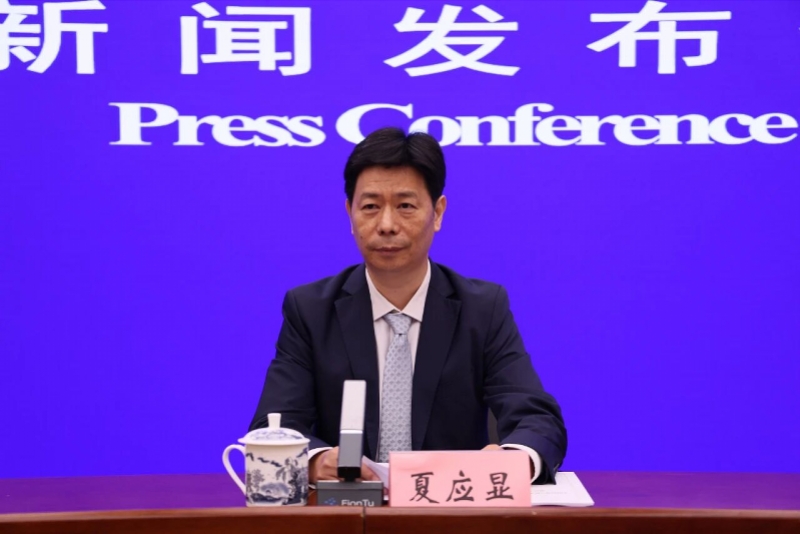
Core Points - The national carbon emissions trading market will gradually shift from intensity control to total control during the "14th Five-Year Plan" period, with a goal to cover major industrial emission sectors by 2027 [1][2] - The Ministry of Ecology and Environment aims to expand the coverage of the national carbon emissions trading market and implement total quota control and paid allocation [1][2] - The inclusion of the steel, cement, and aluminum industries in the carbon emissions trading market is expected to enhance corporate responsibility for emissions reduction [2][4] Summary by Sections Carbon Market Development - The central government has issued its first document on carbon market construction, demonstrating a strong commitment to addressing climate change [1] - The Ministry of Ecology and Environment will accelerate the establishment of the national carbon market and expand its coverage to major emission industries by 2027 [1][2] Voluntary Emission Reduction Market - The development of a voluntary emission reduction trading market is being expedited, with a focus on creating a comprehensive methodological system to support social voluntary reductions [2][5] - As of October 28, the voluntary emission reduction trading market has registered 31 projects and achieved a total transaction volume of 3.25 million tons, with a transaction value of 270 million yuan [5] Industry Impact - Since the launch of the national carbon market, the power generation sector has established internal carbon management systems, leading to reduced emissions costs by approximately 35 billion yuan during the first two compliance periods [4] - The diversification of industry participants following the inclusion of steel, cement, and aluminum is expected to facilitate cross-industry resource allocation and lower overall emissions reduction costs [4]
南网储能:10月28日召开董事会会议
Mei Ri Jing Ji Xin Wen· 2025-10-28 09:52
Group 1 - The core point of the article is that Nanfang Energy Storage announced a board meeting to discuss the change of accounting firm and provided details on its revenue composition for 2024 [1] - Nanfang Energy Storage's revenue for 2024 is primarily derived from the power generation industry, accounting for 98.13% of total revenue, with other businesses contributing 1.45% and other industries 0.42% [1] - As of the report, Nanfang Energy Storage has a market capitalization of 40.2 billion yuan [1] Group 2 - The A-share market has surpassed 4000 points, marking a significant resurgence after a decade of stagnation, with technology leading the market's transformation into a new "slow bull" pattern [1]

大行评级丨花旗:维持粤海投资“买入”评级 预测今年股息回报率可达6.2%
Ge Long Hui· 2025-10-28 03:21
Core Viewpoint - Citigroup's research report indicates that Yuehai Investment recorded a net profit of HKD 4.067 billion in the first three quarters, representing a year-on-year growth of 13.2% [1] Financial Performance - In the third quarter, net profit increased by 12.6% year-on-year to HKD 1.4 billion, primarily due to the absence of losses following the sale of GD Land in January this year [1] - Other business segments showed stable performance, with contributions from water services, rental income, and department store operations increasing [1] - Conversely, contributions from hotel operations, power generation, and toll road businesses decreased [1] Investment Outlook - Citigroup maintains a "Buy" rating for Yuehai Investment, with a target price set at HKD 8 [1] - The expected dividend payout ratio for this year is projected to be no less than 65%, with a forecasted dividend yield of 6.2% by 2025, which is considered attractive [1] - The company has committed to maintaining its dividend payments until 2030, suggesting sustainability in its dividend policy [1]
燃气发电会是未来能源转型过程的终极方案之一
财富FORTUNE· 2025-10-27 14:04
Core Viewpoint - The global energy investment is projected to reach $3.3 trillion by 2025, with approximately two-thirds allocated to clean energy technologies, indicating a structural shift from fossil fuels over the past decade [1]. Group 1: Energy Transition Challenges - The energy transition is a complex process that requires balancing carbon footprint management, energy security, and grid stability, especially as AI accelerates demand for electricity [1]. - Stability is deemed essential for energy transition, ensuring reliable power supply for production, daily life, and societal stability [1]. Group 2: Renewable Energy Integration - The increase in renewable energy has posed significant challenges for grid stability, as evidenced by widespread power outages in Spain and Portugal due to high renewable penetration [3]. - China has managed to maintain grid stability despite a large integration of renewable energy, showcasing its effective balance in this area [3]. Group 3: Role of Gas Power - Gas power generation is viewed as a necessary transitional solution, with gas turbines capable of rapid response to grid demands and emitting about half the carbon of coal [4]. - Global gas power generation orders rose from 21 GW in 2021 to an expected 80 GW in 2023, indicating a threefold increase in demand over three years [4]. Group 4: Energy Ecosystem - The relationship between different energy types is evolving into an ecosystem where renewable energy requires stable backup sources, such as coal, storage, or gas power [5]. - Hydrogen is identified as a potential energy storage solution, which can be produced from renewable sources and used to stabilize the grid when renewable generation is inconsistent [5].