石油与天然气

Search documents
小伙伴都惊呆了!美天然气连续二天暴涨近60%,这一夜油价终于守住了涨幅
Xin Lang Cai Jing· 2026-01-21 23:45
Group 1 - Oil prices continued to rise due to extreme cold weather, which led to a significant spike in natural gas prices, with a daily increase of 30% and a cumulative rise of over 60% in two days. This cold weather also boosted demand for heating, resulting in a two-month high for diesel prices in Europe and the US, which in turn supported a rebound in crude oil prices [3][20]. - The International Energy Agency (IEA) reported a notable oversupply pressure in the oil market, adjusting the 2026 oil demand growth forecast upward by 70,000 barrels per day to 930,000 barrels per day, compared to last year's growth of 850,000 barrels per day. The global oil supply growth forecast was also revised to 2.5 million barrels per day from the previous estimate of 2.4 million barrels per day [4][23]. - IEA emphasized that the large inventory levels are suppressing oil price increases and stated that it is currently unable to fully assess the impact of recent geopolitical developments on the oil market [4][23]. Group 2 - The IEA's report indicated that ample global oil supply is alleviating concerns regarding geopolitical risks associated with oil production and exports from Venezuela, Iran, and Russia. The report noted that while the geopolitical dynamics' impact on the oil market is not fully understood, the current inventory levels provide some comfort to market participants [7][23]. - The Middle Eastern benchmark crude, Murban, has seen a rise for three consecutive trading days, supported by strong demand from Asian buyers seeking alternatives to US supplies. Indian refiners are also using Murban crude to replace Russian oil, which has bolstered the price of this flagship light sour crude from the UAE [8][24]. - The state-owned Indian Oil Corporation has awarded a one-year procurement tender for Iraqi and Omani crude oil and is seeking to purchase Murban crude from the UAE through another tender [10][25].


破“三低”困局 走“三分”之路
Xin Lang Cai Jing· 2026-01-21 20:32
Core Viewpoint - Jilin Oilfield is undergoing a transformation towards a diversified energy model, focusing on oil, natural gas, and renewable energy, while aiming for high-quality development and sustainability by 2030 [2][4][11]. Group 1: Historical Development - Jilin Oilfield was established in 1961, marking the beginning of oil exploration in Jilin Province, which had previously been oil-free [4]. - The oilfield has a rich history of overcoming challenges, including resource scarcity and high development costs, while contributing significantly to national energy security [5][11]. - The oilfield's production milestones include reaching an annual output of 186 million tons by 1979 and over 400 million tons by 1997, establishing itself as one of China's major oilfields [5]. Group 2: Current Operations and Goals - Jilin Oilfield is implementing a "325" development strategy, focusing on maintaining stable production, enhancing operational efficiency, and fostering a collaborative work environment [2]. - The company aims to achieve a production equivalent of 600 million tons by 2025, 800 million tons by 2028, and over 1 billion tons by 2030, marking a significant growth trajectory [2]. Group 3: Green Energy Initiatives - The oilfield has made strides in renewable energy, producing 1.47 billion kilowatt-hours of green electricity by 2025, which has led to significant cost savings and reduced carbon emissions [7][8]. - Jilin Oilfield is developing a CCUS (Carbon Capture, Utilization, and Storage) project, expected to transport 4.3 million tons of CO2 annually, contributing to both carbon reduction and enhanced oil recovery [8]. Group 4: Technological Innovation - The company is leveraging technology to enhance operational efficiency, including the use of smart sensors and data management systems to monitor production in real-time [10][11]. - Investment in technology has increased from 430 million yuan to 510 million yuan between 2021 and 2025, underscoring the company's commitment to innovation as a core driver of transformation [11].

道达尔能源CEO:预计欧盟未来将放弃对可持续航空燃料的授权
Xin Lang Cai Jing· 2026-01-21 13:09
Core Viewpoint - The CEO of TotalEnergies, Patrick Pouyanne, indicated that the EU may abandon its authorization for sustainable aviation fuels, similar to its recent decision to reconsider the ban on new internal combustion engine vehicles starting in 2035 [1][1]. Group 1: Company Insights - TotalEnergies is capable of producing sustainable aviation fuels [1]. - The reluctance of airlines to pay four times the price of conventional aviation fuel poses a challenge for the adoption of sustainable aviation fuels [1]. Group 2: Industry Context - The potential shift in EU policy regarding sustainable aviation fuels reflects broader trends in regulatory approaches to energy and transportation [1]. - The discussion at the World Economic Forum highlights the ongoing debates around sustainability and the economic viability of alternative fuels in the aviation sector [1].

TotalEnergies CEO expects EU sustainable aviation fuel to be dropped in future
Reuters· 2026-01-21 12:50
Core Viewpoint - TotalEnergies CEO Patrick Pouyanne indicated that the European Union is likely to ban sustainable aviation fuel in the future, similar to its ban on new combustion-engine cars starting in 2035 [1] Group 1 - The EU's potential ban on sustainable aviation fuel reflects a broader trend in regulatory measures aimed at reducing carbon emissions in the transportation sector [1] - The comparison to the combustion-engine car ban highlights the EU's commitment to transitioning towards more sustainable energy sources [1]

首个海上膜脱碳工程回收伴生气超2000万方
Zhong Guo Hua Gong Bao· 2026-01-21 02:43
Core Viewpoint - China National Offshore Oil Corporation (CNOOC) has successfully implemented the country's first offshore membrane decarbonization demonstration project, achieving the recovery of over 20 million cubic meters of associated gas and efficient decarbonization, recovery, and resource utilization [1] Group 1: Project Overview - The Huizhou 32-5 platform is one of the high-yield oil platforms in the eastern South China Sea oil field, serving as a pilot for advancing green and low-carbon transformation [1] - The project has innovatively established a technical system for efficient carbon dioxide capture, reinjection, and storage [1] Group 2: Technical Process - The project process includes three main stages: raw gas pretreatment, membrane separation decarbonization, and post-membrane treatment and recovery [1] - The membrane separation decarbonization stage utilizes a self-developed membrane decarbonization device by CNOOC, which occupies less space and consumes less energy, making it highly suitable for offshore platform environments [1] Group 3: Innovation and Impact - In the post-membrane treatment and recovery phase, the project innovatively employs the same well injection and production technology, allowing for the compression and safe reinjection of carbon dioxide without affecting oil extraction [1] - This approach addresses the challenge of resource constraints in offshore platform well slots and provides a replicable and scalable new pathway for carbon storage in offshore oil fields [1]

综合晨报-20260121
Guo Tou Qi Huo· 2026-01-21 02:29
Report Industry Investment Ratings No relevant content provided. Core Views of the Report - The main tone of the crude oil market is a bearish pattern dominated by loose supply and demand, with limited short - term upside potential for oil prices [2]. - Precious metals remain strong, and a long - position mindset should be maintained [3]. - For various metals, non - ferrous metals such as copper, aluminum, zinc, etc., and energy and chemical products like fuel oil, asphalt, etc., as well as agricultural products including soybeans, corn, etc., each have their own supply - demand situations and price trends, and corresponding investment strategies are proposed [4][22][36]. Summary by Related Categories Energy - **Crude Oil**: Geopolitical tensions are controllable, supply is relatively loose, and inventory is accumulating. The short - term upside of oil prices is limited, and the market is under pressure [2]. - **Fuel Oil & Low - sulfur Fuel Oil**: The fuel oil market is geopolitically driven. High - sulfur fuel oil may be strong in the near - term due to geopolitical uncertainties, while low - sulfur fuel oil faces supply pressure but has some support from the rise in gasoline and diesel cracking spreads [22]. - **Asphalt**: The price fluctuates with crude oil, and the market is in an oscillating pattern. Attention should be paid to the arrival of Venezuelan crude oil [23]. Metals - **Precious Metals**: They continue to be strong, and a long - position mindset should be maintained due to the weakening confidence in US dollar assets [3]. - **Base Metals** - **Copper**: The price dropped overnight. It is recommended to hold an option combination and consider short - selling with a small position [4]. - **Aluminum**: The price continued to adjust. The support level for Shanghai aluminum is at 23,500 yuan after breaking 23,800 yuan [5]. - **Zinc**: The price slightly declined. In the short - term, it is not expected to fall deeply, but there is downward pressure in the medium - term [8]. - **Lead**: The price is in a low - level oscillation pattern, with a price range of 17,000 - 17,800 yuan/ton [9]. - **Nickel and Stainless Steel**: Shanghai nickel is in a high - level oscillation, and a long - position mindset should be maintained [10]. - **Tin**: The price opened high and closed low. Attention should be paid to the substantial reduction in positions of Shanghai tin [11]. - **Carbonate Lithium**: The price is in a high - level oscillation, and risk prevention should be noted [12]. - **Industrial Silicon**: The price is likely to oscillate, and there is hedging pressure above the 9,000 yuan/ton mark [13]. - **Polysilicon**: The futures price rebounds weakly, and the spot price is expected to rise steadily [14]. - **Ferrous Metals** - **Steel (Thread & Hot - rolled Coil)**: The price oscillates in a range. Demand expectations are weak, and attention should be paid to market trends [15]. - **Iron Ore**: The price is expected to oscillate in the short - term, with a relatively loose supply - demand situation [16]. - **Coke**: The price is likely to follow a weak oscillation [17]. - **Coking Coal**: The price is likely to follow a weak oscillation [18]. - **Manganese Silicon**: The price oscillates downward. Attention should be paid to the "anti - involution" impact and cost support [19]. - **Silicon Iron**: The price oscillates downward. The supply decreases significantly, and demand has some resilience [20]. Chemicals - **Urea**: The price is weakly stable. In the short - term, it may decline slightly, while in the long - term, it is likely to oscillate strongly within a range [24]. - **Methanol**: The price is expected to oscillate and remain stalemate [25]. - **Pure Benzene**: The price oscillates strongly in the short - term [26]. - **Styrene**: The supply - demand situation supports the price [27]. - **Polypropylene, Plastic & Propylene**: The supply is tight, but demand support is expected to weaken, and the upward driving force of the supply - demand fundamentals may be insufficient [28]. - **PVC & Caustic Soda**: PVC is expected to increase in the long - term, and a low - buying strategy is recommended. Caustic soda continues to be weak [29]. - **PX & PTA**: In the second quarter, there are opportunities for PX processing margin and positive spreads, and the PTA processing margin is moderately repaired [30]. - **Ethylene Glycol**: The price oscillates at the bottom. In the second quarter, supply - demand may improve, but it is under long - term pressure [31]. - **Short - fiber & Bottle - grade Chip**: Short - fiber follows the cost, and bottle - grade chip has some improvement in processing margin but faces long - term capacity pressure [32]. Building Materials - **Glass**: The price is in a weak situation. In the long - term, it needs to reduce capacity, and low - buying opportunities can be considered when the price drops to around 1,000 yuan [33]. Rubber - **20 - rubber, Natural Rubber & Butadiene Rubber**: The demand is gradually recovering, the supply of natural rubber is decreasing, and a wait - and - see strategy is recommended [34]. Agriculture - **Soybeans & Soybean Meal**: South American weather is improving, and the US soybeans are in a bottom - oscillation trend. Attention should be paid to US soybean exports and South American weather [36]. - **Soybean Oil & Palm Oil**: They are expected to oscillate within a range [37]. - **Rapeseed & Rapeseed Oil**: The prices are expected to bottom - out and oscillate, with rapeseed oil slightly stronger than rapeseed meal [38]. - **Soybean No. 1**: The price drops, and attention should be paid to policies and the spot market [39]. - **Corn**: The price of Dalian corn futures is likely to oscillate weakly in the short - term [40]. - **Pigs**: The short - term rebound of hog futures may end, and the price is expected to reach a low point in the first half of next year [41]. - **Eggs**: In the short - term, the prices of futures and spot are weakening, while in the long - term, a low - buying strategy can be maintained [42]. - **Cotton**: Zhengzhou cotton is in a high - level oscillation. It may continue to adjust, and a wait - and - see strategy is recommended [43]. - **Sugar**: The international and domestic sugar markets have different production situations, and short - term sugar prices face some pressure [44]. - **Apples**: The futures price回调, and the market focus shifts to demand [45]. - **Timber**: The price is at a low level, and a wait - and - see strategy is recommended [46]. - **Pulp**: The price rises slightly. A wait - and - see strategy is recommended, and attention should be paid to the increase in the price of downstream base paper [47]. Financial Products - **Stock Index**: A - shares fell, and short - term attention should be paid to geopolitical situations and the subsequent changes in the sharp fluctuations of US and Japanese bonds [48]. - **Treasury Bonds**: In the short - term, the yield curve may remain steep, and opportunities to flatten the curve can be considered [49].
国际油价收涨超1.5%
Sou Hu Cai Jing· 2026-01-20 22:39
Core Viewpoint - WTI and Brent crude oil futures experienced significant price increases, indicating a bullish trend in the oil market as they approach previous high levels [1] Group 1: Crude Oil Futures - WTI February crude oil futures rose by $0.90, a 1.51% increase, closing at $60.34 per barrel, nearing the January 14 closing price of $62.02 [1] - Brent March crude oil futures increased by $0.98, a 1.53% rise, closing at $64.92 per barrel [1] Group 2: Other Energy Futures - NYMEX February natural gas futures settled at $3.9070 per million British thermal units [1] - NYMEX February gasoline futures closed at $1.8238 per gallon [1] - NYMEX February heating oil futures ended at $2.3385 per gallon [1]
成品油价格或迎年内首次上调
Qi Lu Wan Bao· 2026-01-20 13:57
Group 1 - The domestic refined oil retail prices are expected to increase for the first time in 2023, with a predicted rise of 85 yuan per ton for both gasoline and diesel [1] - As of January 19, the reference crude oil change rate was 2.03%, leading to an increase in retail prices of approximately 0.07 yuan per liter for 92 and 95 gasoline, and 0.07 yuan for 0 diesel [1] - After the price adjustment, the standard price for 92 gasoline in Zibo will rise to around 6.74 yuan per liter, while 95 gasoline will increase to approximately 7.23 yuan per liter [1] Group 2 - Geopolitical risks continue to create uncertainties that may disrupt international oil prices, while macroeconomic pressures and industry oversupply are suppressing upward momentum [2] - Analysts predict that the global oil supply will remain relatively loose by 2026, with structural oversupply pressures continuing, leading to a rebalancing period characterized by inventory accumulation and price pressure [2] - The next price adjustment window is scheduled to open on February 3, 2026 [2]

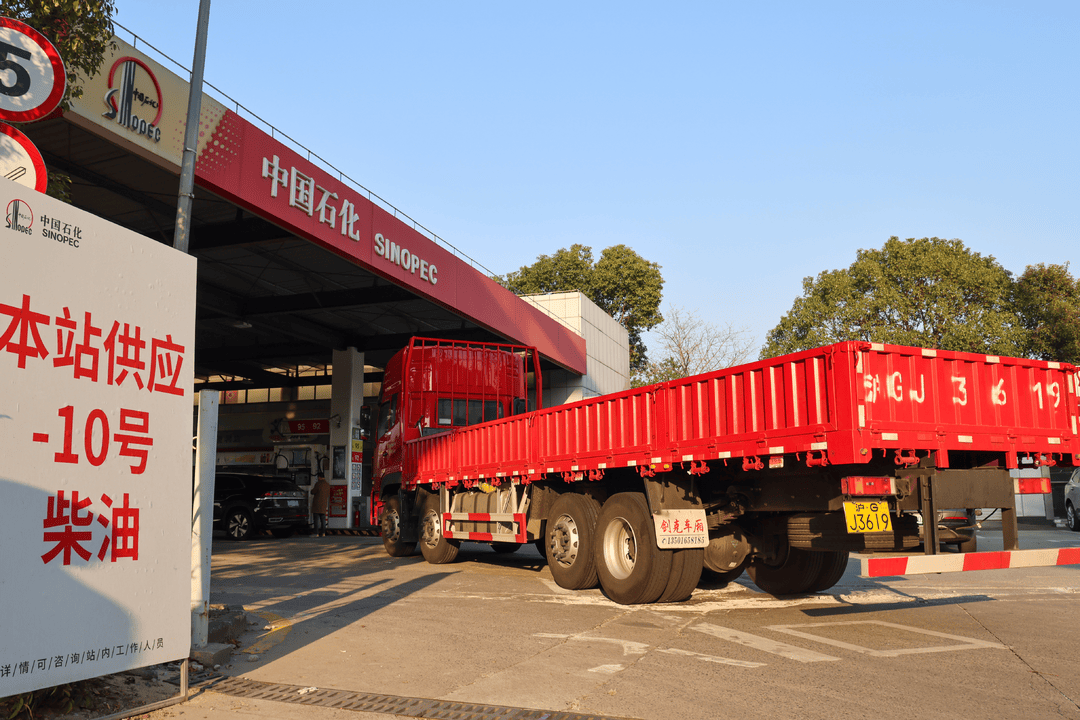
应对寒潮 中国石化上海65座加油站供应-10号柴油
Sou Hu Cai Jing· 2026-01-20 12:42
Core Viewpoint - China Petroleum & Chemical Corporation (Sinopec) has proactively deployed -10 diesel supply points in Shanghai to meet the increased demand for fuel during the cold weather, ensuring the supply chain remains stable and efficient [1][3]. Group 1: Supply Chain Management - Shanghai Petroleum has coordinated with various refining enterprises to stockpile -10 diesel resources in advance, utilizing smart monitoring to track inventory levels at gas stations [3]. - The company has strategically positioned supply points along national and provincial roads, highways, and at key logistics hubs to ensure timely delivery and service [3]. Group 2: Safety and Education - Shanghai Petroleum has organized winter driving safety education for fuel carriers, implementing measures to prevent slipping and freezing during transportation [3]. - The company is prioritizing the supply of -10 diesel for essential services, including logistics and long-distance buses, to balance supply across different regions [3]. Group 3: Supply Points - A total of 65 gas stations in Shanghai have been designated to supply -10 diesel, with specific locations listed for public access [4].

抓紧去加油!今晚,油价调整
Sou Hu Cai Jing· 2026-01-20 11:44
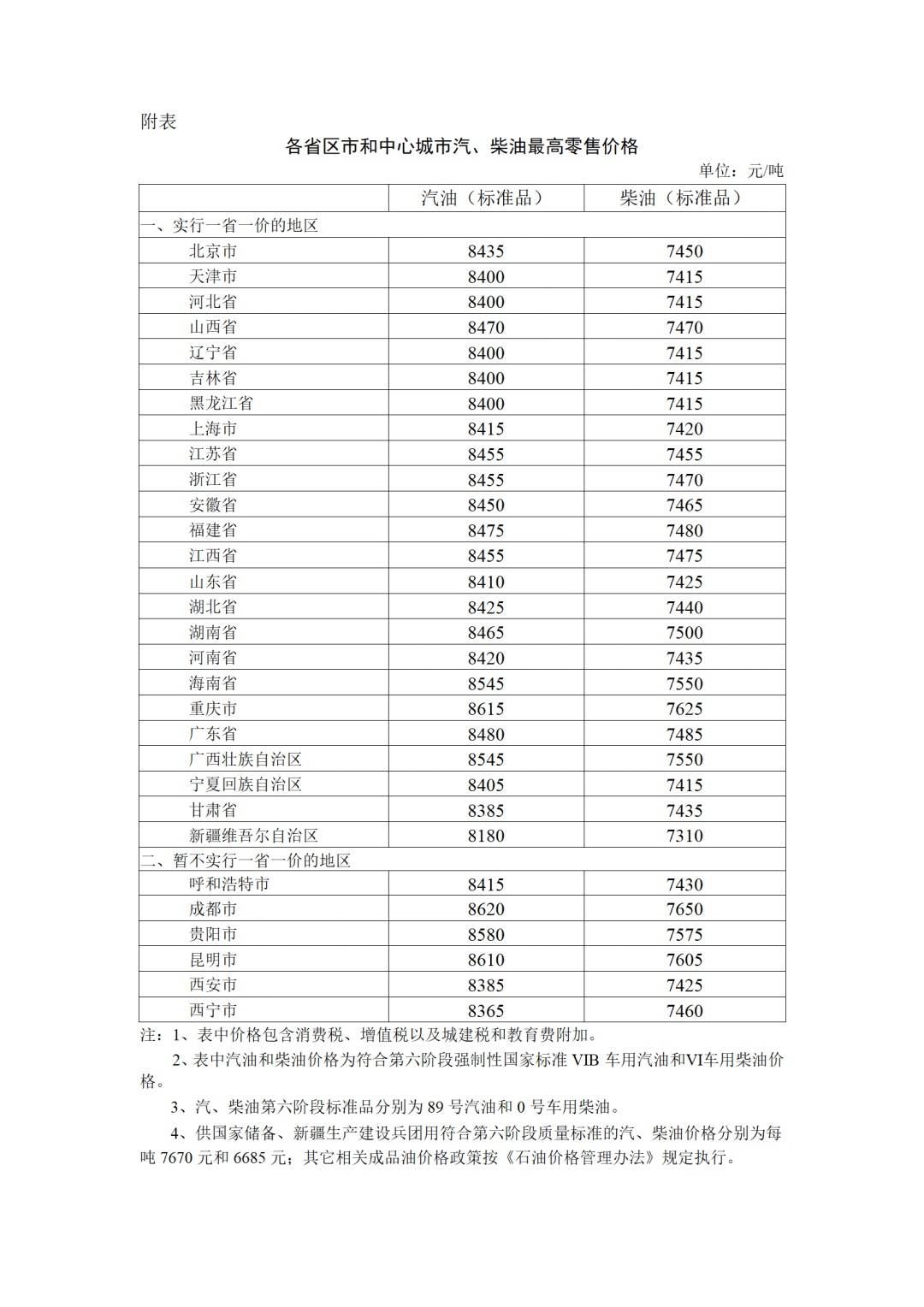
Core Viewpoint - Recent fluctuations in international oil prices have led to an increase in domestic gasoline and diesel prices in China, effective from January 20, with a rise of 85 yuan per ton for both fuels [1]. Group 1: Price Adjustments - The average price comparison of the first ten working days of January indicates a price adjustment in accordance with the current refined oil pricing mechanism [1]. - The new maximum retail prices for gasoline and diesel across various provinces and central cities have been established, reflecting the price increase [2][3]. Group 2: Market Regulation - Major oil companies, including PetroChina, Sinopec, and CNOOC, are required to ensure stable supply and adhere to national pricing policies [1]. - Local authorities are tasked with enhancing market supervision and strictly enforcing compliance with national pricing regulations to maintain normal market order [1].