船舶

Search documents
李乐成:加快建设现代化产业体系
Ren Min Ri Bao· 2026-01-13 03:15
Core Viewpoint - The interview with Li Lecheng, Minister of Industry and Information Technology, emphasizes the importance of implementing the spirit of the Central Economic Work Conference to ensure a strong start for the "14th Five-Year Plan" by focusing on innovation-driven development and building a modern industrial system with international competitiveness [2][3]. Group 1: Industrial Economic Stability - The industrial economy in China is expected to maintain stability and growth, with a focus on four key areas: stabilizing growth in key industries and regions, expanding effective demand, promoting value creation, and enhancing the vitality of business entities [3][4]. - Key industries and regions account for 80% of the total industrial output, necessitating targeted support and policy measures to ensure their growth [3]. Group 2: Modernization of the Industrial System - The "14th Five-Year Plan" aims to accelerate the modernization of the industrial system by promoting intelligent, green, and integrated development in manufacturing [5][6]. - Traditional industries will undergo renewal through the implementation of targeted upgrade plans, while new industries will be developed to create new growth drivers [5][6]. Group 3: Technological Innovation - The Ministry plans to enhance the integration of technological and industrial innovation, focusing on high-quality technological supply and the establishment of national manufacturing innovation centers [8][9]. - There will be an emphasis on increasing the participation of enterprises in major national technology projects and enhancing their innovation capabilities [8]. Group 4: Digital Transformation - The Ministry will promote the digital transformation of manufacturing through the large-scale application of industrial internet and artificial intelligence technologies [10][11]. - Efforts will be made to improve data quality and facilitate the digital transition of enterprises, particularly small and medium-sized enterprises [10][11].
韩国1月前10天芯片出口同比飙升45.6%,但汽车出口大幅下滑
Xin Lang Cai Jing· 2026-01-12 04:08
Core Insights - South Korea's exports decreased by 2.3% year-on-year in the first 10 days of January, primarily due to weak performance in the automotive, shipbuilding, and steel sectors, despite strong demand for semiconductors [2][4]. Export Performance - Total exports for the period from January 1 to 10 reached $15.55 billion, down from $15.92 billion in the same period last year [3]. - Semiconductor exports surged by 45.6% to $4.64 billion, accounting for 29.9% of total exports, an increase of 9.8 percentage points compared to the previous year [4]. - Automotive exports fell by 24.7% to $1.01 billion [4]. - Shipbuilding exports decreased by 12.7% to $0.923 billion [4]. - Steel product exports declined by 18.7% to $0.976 billion [4]. Export Destinations - Exports to mainland China increased by 15.4% to $3.87 billion [4]. - Exports to the United States dropped by 14.7% to $2.27 billion [4]. - Exports to Taiwan rose significantly by 55.4% to $0.852 billion [4]. - Exports to the European Union fell by 31.7% to $1.1 billion [4].
机械行业研究:看好商业航天、机器人、核聚变、船舶和工程机械
SINOLINK SECURITIES· 2026-01-11 05:53
Investment Rating - The SW Machinery Equipment Index increased by 5.39% during the week of January 5 to January 9, 2026, ranking 10th among 31 primary industry categories [12][14]. Core Insights - The report anticipates a significant increase in domestic rocket launches in 2026, driven by the urgent demand for satellite deployment [21]. - The robotics sector is expected to experience a strong market trend in Q1 2026, with advancements in humanoid robots [21]. - The nuclear fusion energy sector is highlighted as a potential investment opportunity during the 14th Five-Year Plan period, with significant technological breakthroughs reported [22]. - The global shipbuilding industry is showing signs of recovery, with new ship prices increasing and order volumes significantly improving [31]. - The engineering machinery sector is entering an upward cycle, with robust domestic and export sales of excavators and loaders [35]. - The report indicates varying degrees of industry performance, with general machinery under pressure, while engineering machinery and railway equipment show positive trends [46][45]. Summary by Sections 1. Stock Portfolio - Recommended stocks include Chaojie Co., Feiwo Technology, Guanglian Aviation, Hengli Hydraulic, Lianchuang Optoelectronics, XCMG, SANY Heavy Industry, Zoomlion, LiuGong, and China Shipbuilding [10]. 2. Market Review - The SW Machinery Equipment Index rose by 5.39% in the first week of 2026, outperforming the CSI 300 Index, which increased by 2.79% [12][14]. 3. Key Data Tracking 3.1 General Machinery - The manufacturing PMI was reported at 50.1% in December, indicating a slight recovery [23]. 3.2 Engineering Machinery - Excavator sales reached 23,095 units in December, marking a year-on-year increase of 17.6% [35]. 3.3 Railway Equipment - Railway fixed asset investment has maintained a steady growth rate of around 6% since 2025 [45]. 3.4 Shipbuilding - The global new ship price index reached 184.65 in December, with a month-on-month increase of 0.17% [46]. 3.5 Oil Service Equipment - The oil service equipment sector is stabilizing, with high demand in the Middle East [49]. 3.6 Industrial Gases - A decrease in raw material prices is expected to improve profitability in the steel sector, boosting demand for industrial gases [55]. 3.7 Gas Turbines - GEV's new gas turbine orders grew by 39% year-on-year in the first three quarters of 2025, indicating a robust market [57].




极光湾申请电机控制方法专利,能够提高目标设备的运行安全性
Sou Hu Cai Jing· 2026-01-10 11:11
Group 1 - The core viewpoint of the news is the patent application by Aurora Bay (Ningbo) Intelligent Technology Co., Ltd. for a motor control method aimed at improving operational safety by preventing torque anomalies [1] - The patent, published under CN121291156A, was applied for on November 2025 and focuses on a method that listens for zero torque limit requests related to a target motor [1] - The method involves determining a torque limit strategy based on operational conditions associated with torque anomaly events, allowing for proactive prevention of such events [1] Group 2 - Aurora Bay (Ningbo) Intelligent Technology Co., Ltd. was established in 2013 and primarily engages in the automotive manufacturing industry, with a registered capital of 282.8 million RMB [2] - The company has made investments in one other enterprise, participated in 178 bidding projects, and holds 1,067 patent records [2] - Aurora Bay Technology Co., Ltd., founded in 2012, focuses on manufacturing for railways, ships, aerospace, and other transportation equipment, with a registered capital of 500 million RMB [2] - This company has invested in ten enterprises, participated in 63 bidding projects, and holds 1,171 patent records [2]
东华测试:公司产品广泛应用于国防工业、航空航天等国家重点发展行业和领域
Zheng Quan Ri Bao Wang· 2026-01-09 13:45
Group 1 - The company, Donghua Testing (300354), has indicated that its products are widely used in key national development industries and fields [1] - The applications of the company's products include defense industry, aerospace, civil engineering, engineering machinery, rail transportation, and shipping [1]

研奥股份:公司产品已应用的磁悬浮列车项目有广州清远磁悬浮列车等
Zheng Quan Ri Bao Zhi Sheng· 2026-01-09 13:11
Core Viewpoint - The company has actively participated in magnetic levitation train projects and will continue to engage in market bidding for such projects in the future [1] Group 1: Company Involvement - The company's products have been applied in several magnetic levitation train projects, including the Guangzhou Qingyuan magnetic levitation train, medium and low-speed magnetic levitation test vehicles, and the new generation of conventional high-speed magnetic levitation prototype [1] Group 2: Future Engagement - The company will continue to monitor and actively participate in the bidding progress of magnetic levitation train projects in the market [1]
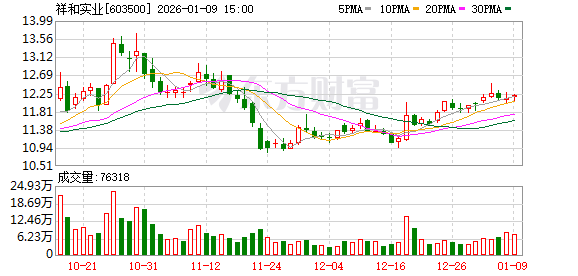
祥和实业:关于公司通过高新技术企业重新认定的公告
Zheng Quan Ri Bao· 2026-01-09 11:44
Group 1 - The core point of the article is that Xianghe Industrial has been re-certified as a national high-tech enterprise, allowing it to enjoy tax benefits for three consecutive years from 2025 to 2027 [2] Group 2 - The announcement was made on January 9, indicating the company's ongoing commitment to innovation and technology [2] - The re-certification is managed by the National High-tech Enterprise Recognition Management Work Leading Group Office [2] - This recognition is expected to provide significant financial advantages to the company through tax incentives [2]


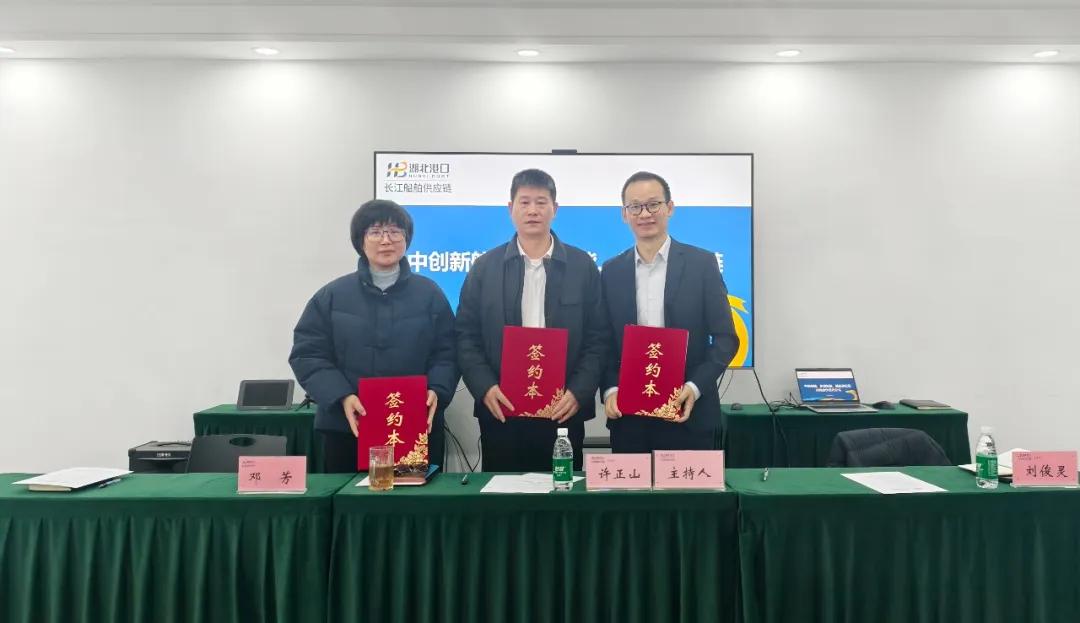
中创新航“电池入江”,三方签约力推“电化长江”!电动船舶时代全面加速
Xin Lang Cai Jing· 2026-01-09 06:37
Core Viewpoint - The strategic cooperation agreement signed on January 7 between Zhongchuang Innovation, Hubei Yangtze River Shipbuilding Supply Chain Co., Ltd., and Hubei Donghu New Energy Technology Co., Ltd. aims to promote the electrification of inland vessels, green shipping, and zero-carbon ports, contributing significantly to the "Electrification of the Yangtze River" strategy [1][2][3]. Group 1 - Zhongchuang Innovation will leverage its expertise in high-performance batteries and intelligent control systems to integrate with the shipbuilding resources of Hubei Yangtze River Shipbuilding Supply Chain and the application service advantages of Donghu New Energy Technology [3][5]. - The collaboration will focus on establishing a standard system for electric vessels that emphasizes zero emissions, low noise, and high reliability [3][5]. - A multi-layered cooperation model will be developed, encompassing "technical collaboration, market development, and standard co-construction" to create competitive overall solutions for electric vessels [3][5]. Group 2 - The partnership aims to innovate business models and accelerate the promotion of demonstration projects, providing replicable and scalable implementation paths for the "Electrification of the Yangtze River" [3][5]. - Zhongchuang Innovation will continue to play a leading role in technology, collaborating with partners in the shipping industry to expand the application of electric vessels in freight, passenger transport, and port operations [3][5]. - The initiative is expected to contribute significantly to the transformation towards green shipping through industrial collaboration [3][5].
1/8财经夜宵:得知基金净值排名及选基策略,赶紧告知大家
Sou Hu Cai Jing· 2026-01-08 16:38
Core Insights - The article provides an overview of the latest net asset values of various funds, highlighting the top-performing and bottom-performing funds as of January 8, 2026 [2][3]. Fund Performance Summary Top 10 Funds by Net Value Growth - The top-performing funds include: 1. GF Zhaoli Mixed C with a net value of 1.1368, up by 6.99% 2. GF Zhaoli Mixed A with a net value of 1.1552, also up by 6.99% 3. Great Wall Growth Mixed C at 1.6011, up by 6.78% 4. Great Wall Growth Mixed A at 1.6235, up by 6.77% 5. China Europe Semiconductor C at 1.7705, up by 6.41% 6. China Europe Semiconductor A at 1.7891, up by 6.41% 7. Noah Select Return Mixed at 2.9280, up by 6.32% 8. Zhongjia Advantage Enterprise A at 2.0340, up by 6.21% 9. Zhongjia Advantage Enterprise C at 1.9435, up by 6.21% 10. Qianhai Kaiyuan Shanghai-Hong Kong Deep Strong Domestic Industry Mixed at 1.7213, up by 5.87% [2]. Bottom 10 Funds by Net Value Decline - The underperforming funds include: 1. Guotou Ruijin Silver Futures (LOF) A at 2.1311, down by 3.56% 2. Xin'ao Industry Upgrade Mixed A at 2.5970, down by 3.21% 3. Xin'ao Industry Upgrade Mixed C at 2.5900, down by 3.18% 4. E Fund Shanghai-Shenzhen 300 ETF Link C at 1.2617, down by 2.94% 5. E Fund Shanghai-Shenzhen 300 ETF Link A at 1.2700, down by 2.93% 6. E Fund Financial Industry Stock Initiation C at 1.7282, down by 2.92% 7. E Fund Financial Industry Stock Initiation A at 1.7617, down by 2.92% 8. Puyin Ansheng CSI Securities Company 30 ETF Link A at 1.2132, down by 2.87% 9. Puyin Ansheng CSI Securities Company 30 ETF Link C at 1.2031, down by 2.87% 10. Xin'ao Economic Preferred Mixed C at 1.7061, down by 2.86% [3]. Market Analysis - The Shanghai Composite Index showed slight fluctuations, closing down, while the ChiNext Index opened lower and then fell back, with a total trading volume of 2.82 trillion yuan. The number of rising stocks was 3,731 compared to 1,595 declining stocks, with 111 stocks hitting the daily limit up and 6 hitting the limit down [6]. - Leading sectors included aviation and shipbuilding, both rising over 4%, while the securities and insurance sectors fell over 2% [6]. Fund Strategy Insights - The GF Zhaoli Mixed C fund has shown rapid net value growth, indicating a potential shift in investment strategy towards commercial aerospace [7]. - The Xin'ao Industry Upgrade Mixed A fund has underperformed, with a high concentration of holdings (70.43%) in various sectors, including robotics and new energy, but lacking a clear investment logic [9].
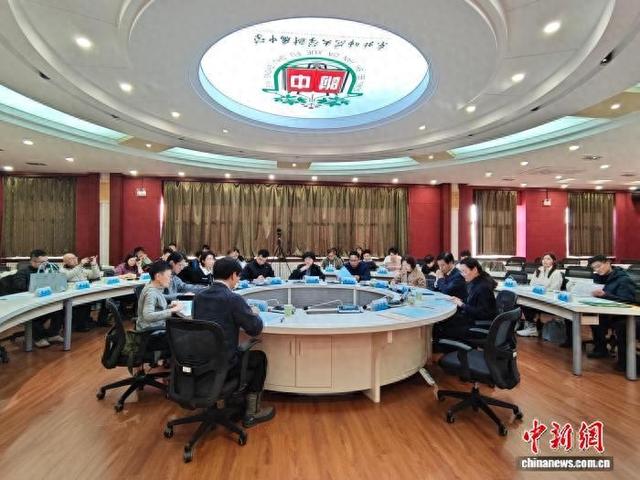
教育为媒 吉港两地中学深化互动交流
Zhong Guo Xin Wen Wang· 2026-01-08 13:36
Group 1 - A delegation from Hong Kong, consisting of school leaders and teachers, visited Jilin Changchun to participate in the "Huaxia Expo Looking at Today" inter-school exchange activity, aimed at deepening interactions across multiple fields between the two regions [1][3] - The event was co-hosted by the Jilin Provincial United Front Work Department and China Merchants Group, featuring discussions on curriculum innovation, science and technology education, and student development between educators from both regions [3] - The delegation visited the Northeast Normal University Affiliated High School, where they toured various facilities and engaged in a friendly basketball match, emphasizing the shared educational goals despite geographical distance [3] Group 2 - The delegation also visited the Jilin Provincial Modern History Exhibition, which showcased over 1,200 historical images, 70 data charts, and more than 1,000 valuable artifacts, illustrating the historical progress of Jilin over the past 300 years [5] - At the headquarters of China FAW Group, members experienced various new energy and intelligent connected vehicles, gaining insights into related technologies [6] - The visit to CRRC Changchun Railway Vehicles Co., Ltd. allowed the delegation to observe high-speed train assembly processes and learn about China's independent innovation in high-speed rail technology [6]