
财政

Search documents
发债快慢之间的财政线索——4月财政数据点评
一瑜中的· 2025-05-22 15:02
Core Viewpoints - The article emphasizes that under pressure on the revenue side, the government may rely more on debt issuance this year, as tax revenue has decreased by 2.1% year-on-year and land sales revenue has dropped by 11.4% [2][11] - It suggests that the fiscal policy will likely require incremental debt to maintain its strength throughout the year, especially if there is no significant improvement in revenue [2][6] Group 1: Debt Issuance and Fiscal Policy - The government has accelerated debt issuance since the beginning of the year, with net financing expected to reach 13.9 trillion yuan, an increase of 2.2 trillion yuan compared to last year [5][12] - As of May 20, the known net financing of government debt reached 6.2 trillion yuan, achieving 44.9% of the annual target, compared to 22.5% during the same period last year [5][12] - The article indicates that if the revenue side does not improve significantly, the government may need to increase its debt issuance to maintain fiscal strength [6][13] Group 2: Non-Deficit Debt and Investment Focus - In the second quarter, non-deficit debt is expected to accelerate, reflecting a marginal shift in fiscal support towards investment [8][22] - As of May 20, the net financing of non-deficit debt reached 2 trillion yuan, with a progress rate of 36.5%, indicating a focus on investment projects [22][23] - The article highlights that the acceleration of non-deficit debt issuance may signal increased fiscal support for infrastructure and other investment projects [23][28] Group 3: Special Refinancing Bonds and Local Government Debt - The issuance of special refinancing bonds has progressed rapidly, with a known progress rate of 77.8% as of May 20, indicating a focus on managing local government debt [28][29] - The article notes that local government hidden debts remain under strict control, with the central government expected to play a key role in increasing budgetary bonds and quasi-fiscal capital injections [29][31] - The emphasis is placed on the central government's commitment to not increasing hidden debts, reinforcing fiscal discipline [29][31] Group 4: Revenue and Expenditure Insights - In April, fiscal revenue showed a year-on-year increase of 1.9%, with tax revenue turning positive, particularly in the equipment manufacturing and technology sectors [31][33] - The article mentions that the expenditure progress for January to April was the fastest since 2020, with a notable increase in infrastructure spending in April [44][50] - The government’s focus on accelerating special bond issuance and enhancing fiscal support for projects is expected to continue, with a projected increase in government fund income [50][56]


4月财政数据点评:发债快慢之间的财政线索
Huachuang Securities· 2025-05-22 10:45
Group 1: Fiscal Performance Overview - In April, general fiscal revenue increased by 2.7% year-on-year, compared to a decline of 1.7% in March[2] - General fiscal expenditure rose by 12.9% year-on-year in April, up from 10.1% in March[2] - From January to April, tax revenue decreased by 2.1% year-on-year, while land sales revenue fell by 11.4%[3] Group 2: Debt Issuance Insights - The government bond issuance has accelerated, with net financing expected to reach 13.9 trillion yuan this year, an increase of 2.2 trillion yuan from last year[3] - As of May 20, net financing reached 6.2 trillion yuan, achieving 44.9% of the annual target, compared to 22.5% during the same period last year[3] - The cumulative net financing of government bonds has increased by 3.6 trillion yuan year-on-year, exceeding the expected annual increase of 2.2 trillion yuan[4] Group 3: Investment and Spending Trends - Non-deficit bonds are catching up in issuance, indicating a shift towards investment support in fiscal policy[7] - Infrastructure spending showed a significant increase in April, with urban community spending rising by 6.8% and transportation spending by 10.6%[8] - The progress of fiscal spending from January to April was the fastest since 2020, with a completion rate of 31.5% of the budget[54] Group 4: Revenue and Expenditure Dynamics - Tax revenue growth turned positive in April at 1.9%, while non-tax revenue hit a new low for 2024[34] - The growth in government fund income was driven by a recovery in land sales revenue, which increased by 4.3% in April[64] - The expenditure growth rate for government funds surged to 44.7% in April, significantly up from 27.9% in March[64]
4月财政数据点评:收入改善,支出提速
GOLDEN SUN SECURITIES· 2025-05-21 08:42
Report Industry Investment Rating No relevant information provided. Core Viewpoints of the Report - In April, the broad fiscal revenue turned slightly positive, and the intensity of fiscal expenditure continued to increase. Looking ahead, both domestic and external demands are under pressure due to the fluctuating tariff policies, so incremental fiscal policies are still worth expecting [1][4]. Summary by Relevant Catalogs Revenue Side - In April, the year - to - date tax revenue growth rate turned positive for the first time, the non - tax revenue growth rate declined, and the general budget revenue growth rate slightly increased. From January to April, the central general public budget revenue decreased by 3.8% year - on - year, while the local general public budget revenue increased by 2.2% year - on - year [1][10]. - In terms of taxes, personal income tax and enterprise income tax had relatively high growth rates. New - quality productivity supported tax growth. The government - funded revenue growth rate turned positive for the first time in nearly a year, which may be related to the improvement in land transactions at the beginning of the year and the lag in land transfer revenues, but its sustainability remains to be seen [2][12]. Expenditure Side - In April, the expenditure of the general public budget maintained a relatively high growth rate, and the expenditure growth rate of government - funded funds further increased, indicating that fiscal expenditure was front - loaded. Structurally, the expenditure on social sciences, culture, and education increased significantly [3][16]. - Measured by the broad deficit, fiscal efforts were intensified and were earlier than in previous years. As of April, the cumulative broad fiscal deficit was 2.65 trillion yuan, and the current cumulative broad deficit rate was 1.9%, higher than the same period from 2021 - 2024 and similar to that in 2020 [4][22].
财政部3个月期国库现金定存中标利率1.82%,上次为2.28%。财政部2个月期国库现金定存中标利率1.81%,上次为2.05%。
news flash· 2025-05-20 02:38
Group 1 - The Treasury Department's 3-month Treasury cash management bill auction yield is 1.82%, down from the previous yield of 2.28% [1] - The Treasury Department's 2-month Treasury cash management bill auction yield is 1.81%, down from the previous yield of 2.05% [1]
蓝佛安:财政是国家治理的基础和重要支柱;民营经济促进法公布,5月20日施行|每周金融评论(2025.4.28-2025.5.4)
清华金融评论· 2025-05-05 10:30
热点 聚焦 蓝佛安:财政是国家治理的基础和重要支柱 01 5月1日出版的最新一期《求是》杂志,刊发财政部党组书记、部长蓝佛安的署名文 章《更加积极财政政策的科学设计与成功实践》,传递出积极财政政策设计的丰富 内容和实施重点。蓝佛安表示,财政是国家治理的基础和重要支柱。新时代以来, 面对错综复杂的国内外发展环境,习近平总书记高度重视财政工作,为财政工作定 调指向,亲自决策、亲自部署一系列重大财政政策,有力促进了经济稳定运行,维 护了社会大局稳定。新时代我国财政政策的设计与实践,是习近平经济思想在财政 领域的生动体现。在财政政策实践中,我们深刻体会到,坚持以习近平经济思想为 指引,坚决贯彻落实好党中央决策部署,我国经济发展就没有迈不过去的坎、闯不 过去的关,必须加力实施更加积极的财政政策,推动中国经济巨轮破浪前行。 《清华金融评论》观察 蓝佛安部长强调"财政是国家治理的基础和重要支柱",这一表态体现了以下核心内涵 和政策方向:一是财政的全局性作用。财政不仅是经济调控工具,更是国家治理体系 的关键。此外财政是应对复杂挑战的"压舱石"。二是当前政策发力重点。财政政策可 提振民生与消费。财政可助力风险防范与改革深化。三 ...

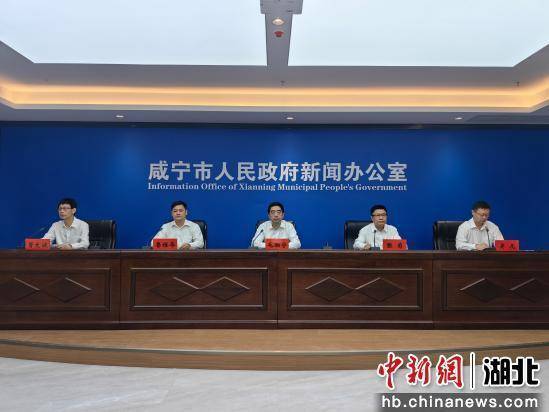
湖北咸宁构建大财政体系 激活高质量发展新动能
Sou Hu Cai Jing· 2025-04-28 09:29
Core Viewpoint - The Hubei Xianning government is focusing on enhancing its fiscal capacity to support the development of the Wuhan metropolitan area as a key growth engine for green development [1][3]. Fiscal Performance - In 2024, Xianning's general public budget revenue reached 11.568 billion yuan, with a year-on-year growth of 12.1%, outperforming the provincial average by 6.7 percentage points [3]. - The city maintained a strong focus on social welfare, with over 78% of expenditures allocated to people's livelihood [3]. Revenue Generation Strategies - The fiscal department aims for a 7% growth in general public budget revenue, employing various strategies to expand revenue sources [4]. - Initiatives include establishing incentive mechanisms, promoting tax policies to support key industries, and enhancing investment attraction [4]. - The department is also focusing on revitalizing idle assets, including 46,000 acres of undeveloped land and old factories [4]. Policy Support for Development - The fiscal department is leveraging long-term special bonds and local government bonds to support five major initiatives [5]. - A total of 3.633 billion yuan is allocated for industrial chain investment, while 2.285 billion yuan is designated for technological innovation and industry integration [5]. - Government investment of 5.783 billion yuan is directed towards key projects, aiming to stimulate social capital participation [5]. Social Welfare and Expenditure Structure - The fiscal department is optimizing its expenditure structure to enhance public satisfaction, implementing policies for direct fund allocation [7]. - The department plans to reduce general expenditures by 10% and redirect those funds to education, healthcare, and elderly care [7]. Reform and Mechanism Enhancement - Xianning is advancing fiscal reforms to create a comprehensive fiscal system, targeting over 1 trillion yuan in total assets by 2025 [8]. - The establishment of a 3 billion yuan regional mother fund aims to attract projects in various sectors, including culture and tourism [8]. - The city is also reforming its fiscal system at the district level and incentivizing green industry development in rural areas [8].
财政深度:从“四本账”透视2024,债务压力区域分化与财税政策应对的再平衡
Great Wall Securities· 2025-04-25 12:03
Group 1 - The fiscal system in China shows significant revenue and expenditure differentiation, with public budget tax revenue growth slowing to 1.35% year-on-year in 2024, while non-tax revenue relies on local asset revitalization, raising sustainability concerns [1][2] - Government fund budgets are impacted by a 12.18% year-on-year decline in land transfer fees, with over 80% of local revenue dependent on land sales [1][2] - The balance of local government debt is highlighted, with special debt accounting for 65% of total local government debt, and interest payments on 30-year treasury bonds reaching 352.9 billion yuan, representing 4.5% of public budget expenditure [1][2] Group 2 - Regional fiscal differentiation is intensifying, with the East relying on high-tech industries to alleviate pressure, while the North shows mixed results due to real estate impacts, and the Southwest faces challenges from declining land finance [2][3] - National tax revenue is projected to decline by 3.4% in 2024, exacerbating conflicts with rigid growth in social spending, and the retreat of land finance reveals hidden risks in special debt coverage [2][3] - The central-local fiscal relationship is continuously optimizing, with central transfer payments reaching 1 trillion yuan, accounting for 84% of local primary revenue, and reforms focusing on matching local responsibilities with fiscal powers [1][2][3]