
化工

Search documents
化工ETF(159870)盘中净申购3.6亿份,巴斯夫上调TDI价格
Xin Lang Cai Jing· 2026-02-05 02:57
Group 1 - BASF has announced a price increase of $200 per ton for its Lupranate TDI products in the Asia-Pacific region (excluding mainland China) and MEAIF region, effective February 4, 2026, due to rising costs in sustainable business development, transportation, energy, and regulation [1] - The price increase represents an approximate 11% rise from the pre-increase market price of around $1750 per ton for TDI products in the Asia-Pacific region [1] - The chemical industry ETF (159870) has seen mixed performance among its constituent stocks, with Guangdong Hongda leading with a 1.49% increase, while Lianhong Xinke experienced a decline [1] Group 2 - As of January 30, 2026, the top ten weighted stocks in the CSI Chemical Industry Theme Index (000813) include Wanhua Chemical, Salt Lake Co., Cangge Mining, Tianci Materials, Hualu Hengsheng, Hengli Petrochemical, Juhua Co., Baofeng Energy, Yuntianhua, and Rongsheng Petrochemical, collectively accounting for 44.82% of the index [2]

青岛上市迎来开门红!2026年山东首家A+H企业诞生
Sou Hu Cai Jing· 2026-02-05 02:52
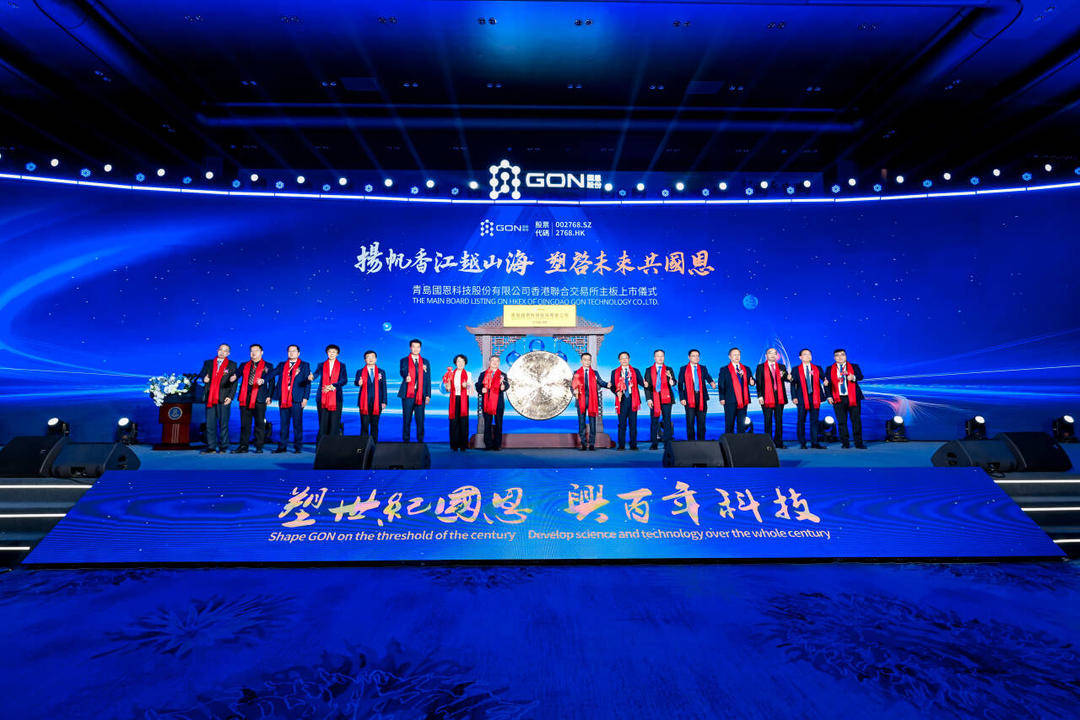
Group 1 - The core viewpoint of the article highlights the successful listing of Guoen Technology on the Hong Kong Stock Exchange, marking it as the first company in Shandong Province to achieve A+H dual listing in 2026, and the eighth H-share listed company in Qingdao [1][3] - On its first trading day, Guoen Technology's stock surged by 37.06%, reaching a market capitalization of HKD 14.864 billion, indicating a strong market performance [1] - The company specializes in the dual sectors of chemical new materials and health, focusing on upstream and downstream products such as gelatin and collagen [3] Group 2 - Guoen Technology raised approximately HKD 1 billion through the issuance of 30 million H-shares, with the funds earmarked for expanding production capacity in Thailand and domestically, establishing regional headquarters, and upgrading existing production bases [3] - The IPO received significant market recognition, with the public offering being oversubscribed by 2,251.85 times and the international placement by 10.03 times, making it one of the most highly subscribed new stocks recently [3] - The successful listing contributes to the growth of Qingdao's stock exchange, which now has 21 listed companies and has raised over HKD 13 billion through IPOs, with additional companies awaiting approval for listing [3]

化工行业 “东升西落”,中国全球竞争力提升;化工行业ETF易方达(516570)标的指数近一年涨超45%
Sou Hu Cai Jing· 2026-02-05 02:51
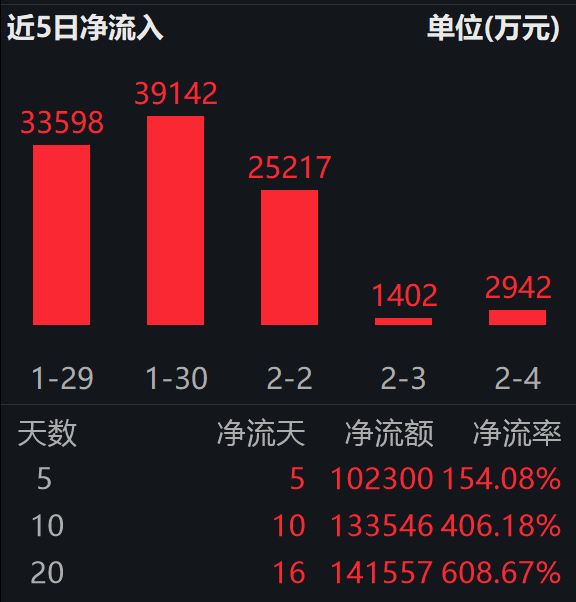
Group 1 - The China Petroleum and Chemical Industry Index (H11057) has decreased by 0.74% as of 9:54, with major stocks like Wanhua Chemical down 0.33%, China Petroleum down 1.04%, and China Petrochemical down 1.08% [1] - The index has seen a significant increase of 45.87% over the past year [1] - The E Fund Chemical Industry ETF (516570), which tracks the index, has attracted substantial capital inflow, totaling over 1.3 billion yuan in the last 10 days, with the latest fund size reaching 1.631 billion yuan [1] Group 2 - The European Chemical Industry Council (Cefic) reported a sixfold increase in closed production capacity in the European chemical industry from 2022 to 2025, totaling 37 million tons, which accounts for approximately 9% of the total European chemical capacity [3] - According to customs data, China's export quantity index for chemical raw materials and products is projected to average 113.0 in 2025, indicating a year-on-year growth of about 13.0% in monthly export volume [3] - Everbright Securities noted a trend of "East rising, West falling" in the chemical industry, highlighting the increasing global competitiveness of Chinese chemical companies, which helps absorb new production capacity and enhances China's market share and brand influence globally [3]
期货市场交易指引2026年02月05日-20260205
Chang Jiang Qi Huo· 2026-02-05 02:45
Report Industry Investment Rating The report does not explicitly mention an overall industry investment rating. However, it provides specific trading suggestions for various commodities in different sectors: - **Macro - Finance**: Long - term bullish on stock indices, suggesting buying on dips; expecting treasury bonds to trade in a range [1][5] - **Black Building Materials**: Short - term trading for coking coal, range trading for rebar, and buying on dips for glass [1][7][8] - **Non - ferrous Metals**: Suggesting to wait and see for copper, aluminum, and nickel; range trading for tin, gold, silver; expecting lithium carbonate to trade in a range [1][10][12] - **Energy and Chemicals**: Range trading for PVC, styrene, rubber, urea, methanol; temporarily waiting and seeing for caustic soda and soda ash; expecting polyolefins to trade weakly in a range [1][19][21] - **Cotton and Textile Industry Chain**: Expecting cotton and cotton yarn to adjust in a range, apples and jujubes to trade in a range [1][29][30] - **Agriculture and Animal Husbandry**: Suggesting short - term short - selling on rebounds for live pigs, hedging post - holiday contracts at high prices for eggs, being cautious about chasing high prices for corn and waiting for rebounds to hedge; expecting soybean meal to trade in a short - term range; expecting edible oils to have a limited short - term correction [1][31][35][38] Core Viewpoints The report analyzes the market conditions of various commodities from multiple aspects such as supply, demand, cost, and macro - factors, and provides corresponding trading strategies. It emphasizes the importance of considering factors like geopolitical situations, policy changes, and seasonal factors in commodity trading. Summary by Category Macro - Finance - **Stock Indices**: The market is resilient. With employment slowing down and service index rising in the US, and various geopolitical and policy factors, stock indices are expected to trade in a range in the short - term and be bullish in the long - term. It is recommended to buy on dips [5] - **Treasury Bonds**: There is no obvious major negative factor in the bond market. After the early - year repair, the scope for further decline in bond yields is limited. Treasury bonds are expected to trade in a range [5] Black Building Materials - **Coking Coal**: The coal market is volatile in the short - term. Although prices have risen slightly, the sustainability of the price increase is limited due to factors such as weak downstream demand and approaching holidays. It is recommended for short - term trading [7][8] - **Rebar**: The futures price is slightly higher than the electric furnace off - peak electricity cost and lower than the flat - rate electricity cost. With a short - term policy vacuum and seasonal increase in inventory, it is expected to trade in a range [8] - **Glass**: Supply has increased slightly, and inventory is higher than in previous years. Although there are some positive factors in the real estate sector, demand is weak. It is recommended to buy on dips in the 1030 - 1050 range [8][9] Non - ferrous Metals - **Copper**: Macro factors have led to significant price fluctuations. Supply is tight, but demand is weak. There is a risk of price correction at high levels. It is recommended to wait and see [10] - **Aluminum**: Bauxite and alumina prices are under pressure. With the approach of the Spring Festival, demand is weakening. It is recommended to strengthen observation [12] - **Nickel**: Although the reduction of the Indonesian nickel ore quota has boosted prices, the current market has fully priced in this factor. The fundamentals are weak. It is recommended to wait and see [13][14] - **Tin**: Supply is tight, and downstream consumption maintains rigid demand. It is expected to trade in a range. Attention should be paid to supply resumption and downstream demand [14] - **Silver and Gold**: The nomination of the new Fed chairman has led to a price correction. However, due to concerns about the US economy and the trend of de - dollarization, the medium - term price center is expected to move up. They are expected to trade in a range [16] - **Lithium Carbonate**: Supply is affected by factors such as mine shutdowns, and demand is in the off - season. It is expected to trade in a range [17][18] Energy and Chemicals - **PVC**: The cost is at a low level, supply is high, and domestic demand is weak. Although there is support from exports, there are uncertainties. It is recommended to be cautious about chasing high prices [19] - **Caustic Soda**: Demand is weak, and supply pressure is high. There is short - term delivery pressure. It is recommended to wait and see [21] - **Styrene**: Inventory reduction expectations support the price rebound, but the current valuation is high. It is recommended to be cautious about chasing high prices and pay attention to cost and supply - demand changes [21] - **Rubber**: The supply is in a seasonal reduction phase, and the cost is supported. However, inventory is accumulating, and demand is limited. It is expected to trade in a range [23] - **Urea**: Supply is increasing, and demand from compound fertilizer enterprises is rising. The inventory level is relatively low. It is expected to trade in a range of 1730 - 1830 [25] - **Methanol**: Supply is decreasing, and demand from the methanol - to - olefins industry is weakening. The market is affected by geopolitical and port arrival factors. It is expected to trade in a range [26][27] - **Polyolefins**: Supply pressure is increasing, demand is in the off - season, and there is inventory accumulation pressure. It is expected to trade weakly in a range. It is recommended to short on rebounds [27][28] - **Soda Ash**: Supply is expected to decrease, and demand from downstream industries is weak. The cost is rising, and the downward space of the price is limited. It is recommended to wait and see [28] Cotton and Textile Industry Chain - **Cotton and Cotton Yarn**: Global cotton production has decreased, and consumption has increased, leading to a decrease in inventory. After a continuous rise, the price is in a high - level range adjustment. It is recommended to be cautious in the short - term and optimistic in the long - term [29][30] - **Apples**: The overall market is stable and weak, with limited trading volume in some areas. The price varies by region [30] - **Jujubes**: The acquisition price in the Xinjiang region is in a certain range, and the market is trading in a range [30] Agriculture and Animal Husbandry - **Live Pigs**: In the short - term, supply and demand are both increasing, and the price is not optimistic. In the long - term, the supply in the first half of the year is expected to increase, and the price in the second half of the year may be stronger due to capacity reduction. It is recommended to short on rebounds for off - season contracts and be cautious about long - term bullishness [31][32] - **Eggs**: The current egg price has rebounded, but the supply pressure will be postponed after the Spring Festival. It is recommended to hedge post - holiday contracts at high prices [33][34] - **Corn**: In the short - term, the market is balanced. In the long - term, the supply - demand pattern is relatively loose, which limits the price increase. It is recommended to be cautious about chasing high prices and wait for rebounds to hedge [35][36][37] - **Soybean Meal**: In the short - term, the M2603 contract is expected to trade in a range. The 05 contract should pay attention to the 2800 - 2850 pressure level. It is recommended to operate within the range [37] - **Edible Oils**: The short - term trend of the three major edible oils is high - level oscillation. It is recommended to buy on dips. Palm oil is affected by factors such as inventory reduction in Malaysia and Indonesian production cuts; soybean oil is supported by factors such as US soybean exports and biodiesel policies; rapeseed oil is affected by factors such as the import of Canadian rapeseed [38][40][41][43]
【财经分析】中国大宗商品价格指数创3年半新高 行业分化明显
Zhong Guo Jin Rong Xin Xi Wang· 2026-02-05 02:36
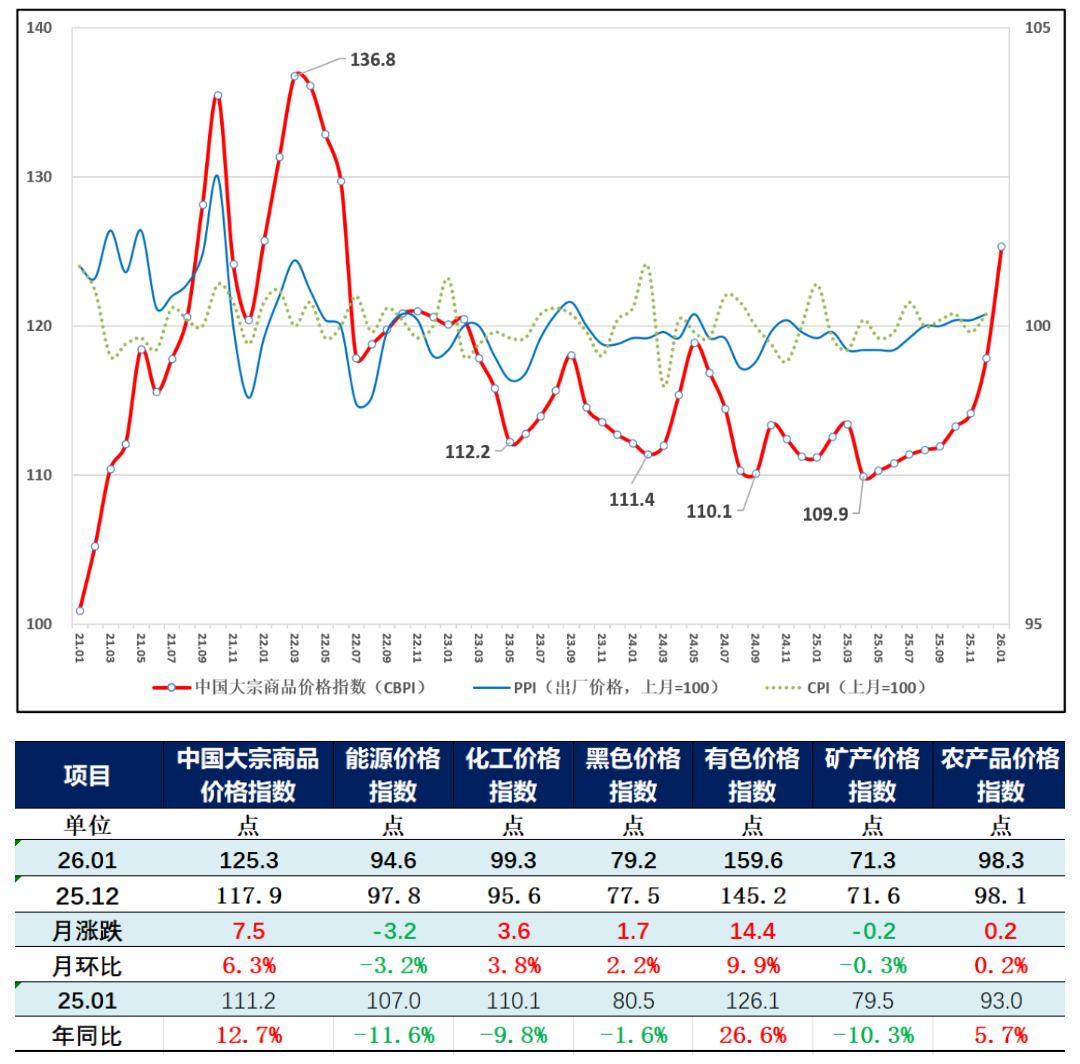
Core Insights - The China Commodity Price Index (CBPI) for January 2026 reached 125.3 points, marking a month-on-month increase of 6.3% and a year-on-year increase of 12.7%, the highest since July 2022 [1][10] - The rise in commodity prices is attributed to supportive policies and optimistic market expectations, while challenges remain from international geopolitical changes and volatile global commodity futures prices [1][10] Price Index Summary - The non-ferrous price index surged to 159.6 points, with a month-on-month increase of 9.9% and a year-on-year increase of 26.6%. Key drivers include the depreciation of the US dollar and geopolitical factors [4] - Lithium carbonate prices increased by 48.4% month-on-month, driven by strong demand from the electric vehicle and energy storage sectors, alongside supply concerns [4] - The chemical price index rose to 99.3 points, with a month-on-month increase of 3.8% but a year-on-year decrease of 9.8%. This increase is influenced by rising international oil prices and pre-holiday inventory demands [6] - The agricultural product price index slightly increased to 98.3 points, with a month-on-month rise of 0.2% and a year-on-year increase of 5.7%, attributed to pre-festival stocking [6] Sector-Specific Insights - The mineral price index fell to 71.3 points, with a month-on-month decrease of 0.3% and a year-on-year decrease of 10.3%, due to seasonal demand slowdowns [8] - The energy price index declined to 94.6 points, with a month-on-month drop of 3.2% and a year-on-year decrease of 11.6%, primarily due to lower downstream demand during the traditional off-season [8] - The black metal price index rose to 79.2 points, with a month-on-month increase of 2.2% but a year-on-year decrease of 1.6%, reflecting mixed market sentiments and pressures on steel production [8] Commodity Price Movements - Among 50 monitored commodities, 33 saw price increases while 17 experienced declines in January. The top three gainers were lithium carbonate, refined tin, and refined nickel, with increases of 48.4%, 20.2%, and 19.5% respectively [9] - The largest declines were observed in corrugated paper, caustic soda, and coke, with decreases of 13.1%, 7%, and 6.9% respectively [9]

大摩闭门会-金融-房地产-化工行业更新
2026-02-05 02:21
Summary of Key Points from Conference Call Industry Overview Real Estate Market - The liquidity in the real estate market is constrained by sales rather than financing, with residents holding a pessimistic view on leveraging and housing prices. The cancellation of the "three red lines" has limited impact [1][3] - Recent increases in the real estate sector are primarily driven by market sentiment and capital rotation, with expectations of a pullback in February and March due to decreased transaction volumes during the Spring Festival and a generally poor outlook for 2025 [1][5] - Companies like Longfor, Greentown, and Jinmao may issue profit warnings due to expected underperformance [5] Recommendations - Companies to watch include China Resources Land and Xincheng Holdings, which are expected to benefit from commercial real estate operations and domestic demand stimulus policies. China Resources' performance in 2025 may not meet expectations, but growth in 2026 and 2027 is anticipated [1][6] Banking and Insurance Sector - The banking sector is starting the year rationally, with reasonable GDP growth across provinces supporting stable development. Strong sales in funds and insurance are beneficial for the market environment [1][7] - The insurance sector is expected to continue its growth trajectory, driven by strong sales, high profit margins, and good investment returns. Ping An Group aims for a mid-term ROE of over 15% through asset management loss reduction and improved life insurance profitability [1][8][10] Future Outlook for Insurance - The insurance industry is projected to maintain rapid growth in 2026, supported by expanded distribution networks and favorable regulatory policies [9] Chemical Industry - Recent stock performance in the chemical sector has exceeded expectations, with price increases driven by capital rotation rather than fundamental improvements. Current valuations are at high percentiles within a 10-year range, while product prices remain low [1][21] - Downgrades for companies like Xinghecheng and Wanhua are warranted due to valuations exceeding reasonable levels, with expectations of a market correction in the short term [1][22][23] Specific Company Insights - Xinghecheng faces significant pressure in 2026 due to intense competition in the methionine market and low vitamin prices, while Wanhua's MDI prices are weaker than expected [23] Additional Insights - Futu Holdings is accelerating the integration of Tianxing Bank, increasing its stake to 68%, and plans to launch more integrated banking and securities products in 2026 [1][14] - AIA (AIA Group) is expected to perform strongly in 2025, with a positive outlook for 2026, supported by a rebound in the Chinese market and ongoing share buyback plans [1][15] - Futu is also making strides in the cryptocurrency space, with applications for licenses in multiple regions, including Hong Kong, to enhance customer experience [1][16] This summary encapsulates the key points discussed in the conference call, highlighting the current state and future outlook of the real estate, banking, insurance, and chemical industries, along with specific company insights and recommendations.





金银巨震-风格切换-策略周中谈
2026-02-05 02:21
Summary of Key Points from Conference Call Records Industry Overview - The records primarily discuss the **gold and silver markets**, highlighting their volatility and the impact of macroeconomic factors on prices [1][2][3]. Core Insights and Arguments 1. **Volatility in Gold and Silver Prices**: The significant fluctuations in gold prices are attributed to excessive prior gains and the involvement of leveraged funds, which triggered a chain reaction of sell-offs when stop-loss mechanisms were activated. Silver, due to its dual financial and industrial nature, exhibited even greater volatility [1][2]. 2. **Weakening Dollar**: The decline of the US dollar is identified as a crucial factor driving up international metal prices, stemming from issues related to US fiscal discipline and global capital's distrust in the dollar system. Events like the Greenland purchase and rumors surrounding the Federal Reserve chairmanship have intensified expectations of dollar depreciation [1][3][4]. 3. **Potential Policies under Walsh**: The new Fed chair, Walsh, is expected to implement a combination of balance sheet reduction and interest rate cuts aimed at controlling inflation, reducing government debt burdens, and encouraging productive investment. This could lead to a stronger dollar in the long term, which may suppress resource prices but benefit high-growth sectors like AI [5][8]. 4. **European Capital Flows**: There has been a notable shift in European capital away from US assets towards European and emerging market assets, driven by US fiscal issues and geopolitical risks. This trend has weakened demand for US equities and bonds, further exacerbating dollar depreciation pressures [4][6]. 5. **Challenges of Balance Sheet Reduction**: The feasibility of the Fed's balance sheet reduction remains uncertain, as it involves managing a large volume of government debt while maintaining liquidity stability. Successful implementation could raise long-term interest rates, limit government debt expansion, and lead to a decline in risk assets [7][11]. 6. **Impact on High-Growth Sectors**: While the balance sheet reduction and interest rate cut policy may pose some negative impacts, the interest rate cuts are seen as beneficial for high-growth sectors like AI, as they lower financing costs and stimulate investment [8][9]. 7. **Market Reactions to New Fed Chair**: Historical data indicates that new Fed chairs often lead to increased market volatility, with significant declines in the S&P 500 index observed in the months following their appointment. This suggests potential risks for the market following Walsh's confirmation [12]. Other Important Insights 1. **ETF Sell-offs by National Team**: Recent concentrated sell-offs of broad-based ETFs by the national team resulted in a significant outflow of approximately 913.4 billion yuan, accounting for 60% of the total market value held at year-end. However, it is anticipated that further sell-offs will not occur, maintaining a relatively ample liquidity environment [15]. 2. **Investment Opportunities Post-Spring Festival**: The upcoming spring season is expected to present investment opportunities, particularly in technology growth sectors such as power equipment and AI, as well as in the financial sector, which has been under pressure from previous ETF sell-offs [16][18]. 3. **Sector-Specific Insights**: - The coal industry is affected by policy adjustments in Indonesia, while the food and beverage sector is under scrutiny due to low institutional positions and changing sales expectations during the Spring Festival [20]. - The long-term investment focus for 2026 is on technology and resource sectors, with a particular emphasis on TMT (AI, semiconductors) and resource commodities undergoing revaluation [21][22][23]. 4. **Strategic Value of Gold**: The current favorable outlook for gold is linked to the perceived decline of US power, suggesting that as long as Trump remains in power, gold prices may continue to rise [22]. 5. **New Valuations in Chemical and Machinery Sectors**: The chemical sector, especially large refining capacities, is seen as having strategic value that requires revaluation. Similarly, the machinery sector is expected to find new value positioning in the current environment [23].
中物联: 2026年1月中国大宗商品价格指数为125.3点 同比上涨12.7%
智通财经网· 2026-02-05 01:53
Core Insights - The China Commodity Price Index (CBPI) for January 2026 reached 125.3 points, marking a month-on-month increase of 6.3% and a year-on-year increase of 12.7%, the highest since July 2022 [1][3] - The increase in the index is attributed to optimistic business expectations and ongoing production expansion, supported by government policies [1] - However, challenges arise from international geopolitical changes, loose monetary policy expectations, and volatile commodity futures prices, necessitating careful risk assessment and macroeconomic policy adjustments [1] Price Index Summary - The CBPI increased to 125.3 points from 117.9 points in December 2025, with significant contributions from various sectors [3] - The energy price index decreased to 94.6 points, down 3.2% month-on-month and down 11.6% year-on-year [3] - The chemical price index rose to 99.3 points, up 3.8% month-on-month but down 9.8% year-on-year [3] - The black metal price index increased to 79.2 points, up 2.2% month-on-month and down 1.6% year-on-year [3] - The non-ferrous metal price index surged to 159.6 points, up 9.9% month-on-month and up 26.6% year-on-year [3] - The agricultural product price index slightly increased to 98.3 points, up 0.2% month-on-month and up 5.7% year-on-year [3] - The mineral price index fell to 71.3 points, down 0.3% month-on-month and down 10.3% year-on-year [3] Commodity Price Movements - Among 50 monitored commodities, 33 (66%) saw price increases while 17 (34%) experienced declines [4] - The top three commodities with the highest month-on-month price increases were lithium carbonate (up 48.4%), refined tin (up 20.2%), and refined nickel (up 19.5%) [4] - The commodities with the largest month-on-month price declines were corrugated paper (down 13.1%), caustic soda (down 7%), and coke (down 6.9%) [4] Comparative Analysis - The CBPI trends align with the Producer Price Index (PPI) and Consumer Price Index (CPI) for December, which saw a month-on-month increase of 0.2% [5] - The CBPI has shown a consistent upward trend alongside international commodity indices such as CRB and S&P GSCI [5] - Geopolitical tensions in North America and the Middle East, along with a weakening US dollar, have contributed to rising international oil prices and record highs in copper prices [5] - January saw historical highs in gold and silver prices, although significant declines occurred later in the month due to margin adjustments and Federal Reserve announcements [5]
创3年半来新高!从1月份中国大宗商品价格指数透视市场总体回稳向好
Yang Shi Wang· 2026-02-05 01:49
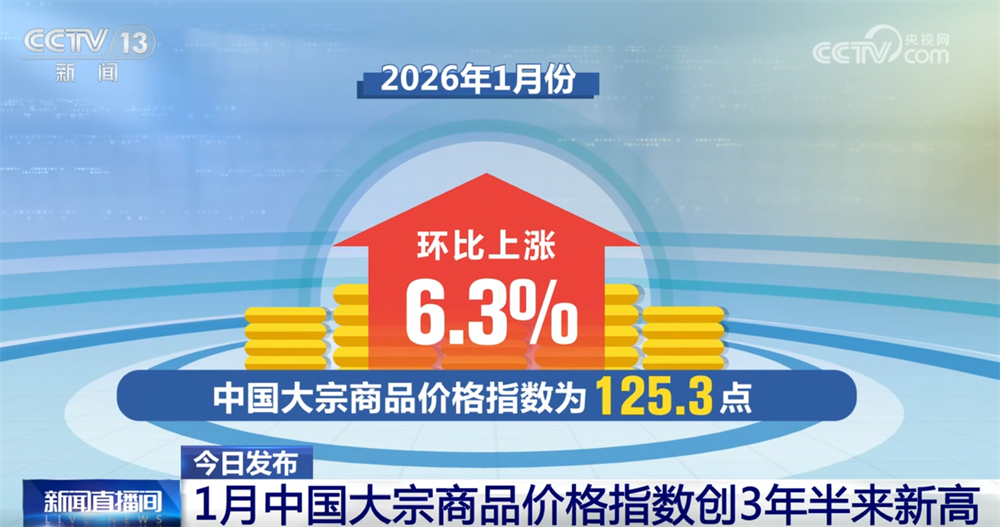
Group 1 - The core viewpoint of the article indicates that the Chinese commodity price index has shown a continuous upward trend for nine months, reaching a three-and-a-half-year high in January 2026, with a month-on-month increase of 6.3% [1] - In January 2026, the Chinese commodity price index stood at 125.3 points, with 33 out of 50 monitored commodities experiencing price increases [1] - Key commodities with significant price increases include lithium carbonate, refined tin, and refined nickel, which rose by 48.4%, 20.2%, and 19.5% respectively compared to the previous month [1] Group 2 - From an industry perspective, the price indices for non-ferrous metals and chemical products have risen significantly, increasing by 9.9% and 3.8% respectively, influenced by expectations of loose international monetary policy, geopolitical factors, and futures market dynamics [3] - The agricultural product market has shown a slight recovery in price index, with a month-on-month increase of 0.2%, indicating a balance in supply and demand [3] Group 3 - Experts suggest that the rise in the commodity price index in January reflects a general stabilization and positive trend in the market, but also warns of increased volatility in international financial markets and the need for enhanced risk assessment and macro policy adjustments to maintain stability in supply chains [5]
和顺科技(301237.SZ):碳纤维基材产品以T800级及以上、M级高性能碳纤维为主打方向
Ge Long Hui· 2026-02-05 01:45
Core Viewpoint - The company focuses on high-performance carbon fiber materials, specifically T800 grade and above, targeting the aerospace and high-end equipment manufacturing sectors with stringent material performance requirements [1] Group 1 - The company's carbon fiber products are primarily centered around T800 grade and above, as well as M grade high-performance carbon fiber [1] - The company has a clear target positioning in the high-end field of high-performance carbon fiber [1] - The company aims to precisely align with core application scenarios that have strict standards for material performance, such as aerospace and high-end equipment manufacturing [1]