电动汽车

Search documents
小鹏汽车欧洲市场海外本地化生产 三季度首批G6、G9量产下线
Zheng Quan Shi Bao Wang· 2025-09-15 04:24
Core Viewpoint - Xiaopeng Motors is advancing its localization strategy in Europe by partnering with Magna in Graz, Austria, to enhance electric vehicle production, with the first localized production project set to launch in Q3 2025 [1][2]. Group 1: Localization and Production - The first localized production project will commence in Q3 2025, with the initial models being Xiaopeng G6 and G9 rolling off the production line [1]. - Xiaopeng Motors has expanded its global presence since entering the European market in 2021, now covering over 46 countries and regions [1]. - In the first seven months of 2025, Xiaopeng's overseas sales reached 18,701 units, marking a 217% year-on-year increase [1]. Group 2: Market Position and Strategy - Xiaopeng Motors has become the top-selling Chinese brand in the mid-to-high-end electric vehicle segment in Europe, with over 8,000 registrations in the first half of the year [1]. - The G6 model contributed 67% of the European sales, indicating strong market demand [1]. - The company has established a research and development center in Munich, Germany, to enhance its understanding of European consumer needs and accelerate local innovation [2]. Group 3: Future Plans and Market Trends - Xiaopeng plans to produce a wider range of models at the Magna factory, including electric sedans and SUVs, to cater to diverse consumer preferences in Europe [2]. - The collaboration with Magna aligns with Xiaopeng's long-term vision to strengthen its capabilities in the European market [2]. - The European automotive market is undergoing a shift towards electrification, with increasing consumer acceptance and demand for electric vehicles, making Xiaopeng's localization efforts timely [2][3].
上市 5 个月便下架,特斯拉 Cybertruck 最便宜款终止销售
Huan Qiu Wang Zi Xun· 2025-09-15 04:20
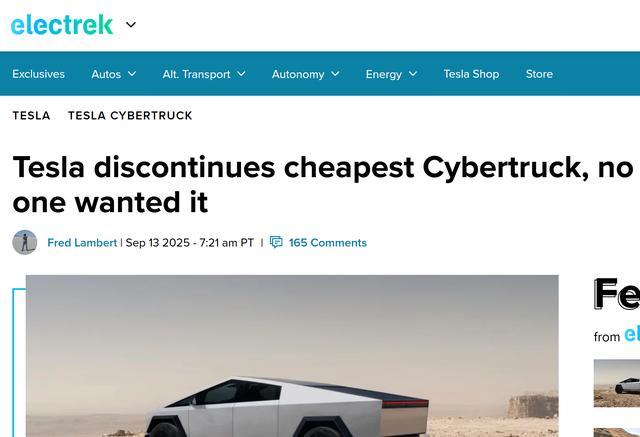
Group 1 - The core point of the article is that Tesla has discontinued the rear-wheel drive version of the Cybertruck, which was intended to be a more affordable option for consumers, due to disappointing market performance and low sales figures [1][3]. - The Cybertruck series has not met Tesla's initial expectations, with only about 20,000 units sold annually, far below the projected capacity of 250,000 to 500,000 units [1][3]. - The rear-wheel drive version was launched at a starting price of $70,000, a $10,000 reduction from the all-wheel drive version priced at $80,000, but it suffered from significant configuration cuts that diminished its value proposition [3]. Group 2 - To control costs, Tesla removed key features from the rear-wheel drive version, including one electric motor, active air suspension, and other essential components, leading to a lack of market acceptance [3]. - There has been almost no consumer interest in the rear-wheel drive version, as potential buyers are unwilling to sacrifice core features for a lower price [3]. - Tesla has officially removed the rear-wheel drive option from its online configurator, indicating the formal discontinuation of this model [3].


小鹏汽车开启海外本地化生产:首批新车在欧洲量产下线
Xin Lang Cai Jing· 2025-09-15 02:21
Core Insights - Xiaopeng Motors announced a deep collaboration with Magna's factory in Graz, Austria, to enhance local production of electric vehicles in Europe [1] - The first localized production project is set to launch in Q3 2025, with the initial models being Xiaopeng G6 and G9 [1] - Since entering the European market in 2021, Xiaopeng Motors has expanded its presence to over 46 countries and regions globally [1] - From January to July 2025, Xiaopeng Motors reported overseas sales of 18,701 units, marking a 217% year-on-year increase [1] Company Developments - The partnership with Magna aims to leverage existing production lines for efficient manufacturing [1] - The Graz facility will not only produce the G6 and G9 but is also expected to manufacture additional Xiaopeng models in the future [1] Market Expansion - Xiaopeng Motors began its European journey in Norway and has since achieved significant growth in international markets [1] - The substantial increase in overseas sales indicates a strong demand for Xiaopeng's electric vehicles in the European market [1]
小鹏汽车加速欧洲市场布局,开启海外本地化生产
Jing Ji Guan Cha Wang· 2025-09-15 01:35
经济观察网 2025年9月15日,小鹏汽车正式官宣欧洲本地化生产的重要规划,与位于奥地利格拉茨的麦 格纳工厂展开深度合作,借助该工厂现有的成熟生产线,大力推动电动汽车在欧洲的本地化生产进程。 小鹏汽车首个欧洲本地化生产项目于2025年Q3,在奥地利格拉茨麦格纳工厂正式启动,首批小鹏G6与 小鹏G9顺利量产下线。未来,该工厂还将投产更多小鹏车型。 ...
曝法拉第股价靠虚假订单、换标中国MPV拉升,贾跃亭回应;滴滴24年平均抽成14%,官方:抽成不等于利润;微信将关闭京东购物入口
雷峰网· 2025-09-15 00:23
Key Points - Didi announced an average commission rate of 14% for all orders in 2024, clarifying that commission does not equate to profit as most funds are used for subsidies and platform maintenance [4] - Didi's platform saw a year-on-year growth of 12.4% in Q2, reaching 3.376 billion orders, with an average daily order volume of 37.1 million [4] - Faraday Future (FF) faces allegations of using fake orders to support its stock price, with the company’s founder, Jia Yueting, denying these claims and stating that legal action will be taken [7] - Neta Auto held its first creditor meeting after announcing bankruptcy restructuring, revealing a total debt of approximately 51 billion yuan with only 15.5 million yuan in cash [8] - Lingxin Qiaoshou aims to reduce the price of its dexterous hands to below 500 yuan within three years, having recently completed a multi-hundred million yuan angel round of financing [9] - Alibaba's acquisition of AutoNavi is highlighted as a strategic move to compete against Meituan, with significant developments in local services and map integration [10] - WeChat will close the JD shopping entry as of September 30, following the expiration of a three-year strategic cooperation agreement [11] - Xiaopeng Motors plans to invest 500 billion yuan annually in R&D, with 300 billion yuan allocated to AI, aiming for profitability in Q4 [14] - Tesla is accused of favoring visa employees over American citizens to reduce labor costs, with a lawsuit filed alleging systematic discrimination [22] - Amazon is set to launch consumer-grade AR glasses by late 2026 or early 2027, with plans for a specialized version for delivery drivers [24]

特斯拉(TSLA.US)德国工厂拟增产 称全球市场需求强劲
Zhi Tong Cai Jing· 2025-09-14 23:45
Core Viewpoint - Tesla plans to increase production capacity at its German factory for the remainder of the year, driven by strong sales performance despite facing significant competition in the German market [1] Group 1: Production Plans - Tesla's Berlin factory head, André Thierig, stated that the company has revised its production plans upward for the third and fourth quarters due to impressive sales data [1] - The factory is expected to supply products to over 30 markets, all of which are showing positive development trends [1] Group 2: Market Challenges - The German market is particularly competitive, with strong pressure from Chinese competitors impacting Tesla's performance [1] - Data from the German Federal Motor Transport Authority (KBA) indicates that Tesla's sales in Germany fell by over 50% year-on-year in July, with only 1,110 vehicles sold [1] - Cumulative sales from January to July show a significant year-on-year decline of 57.8% [1]
项昊宇:东亚区域经济发展呼唤新型“雁群模式”
Huan Qiu Wang· 2025-09-14 22:58
Core Insights - The East Asian regional cooperation is at a critical juncture, facing challenges from de-globalization, technological competition, and geopolitical tensions, necessitating a shift from the traditional "Flying Geese" model to an innovative "Flying Flock" model for economic resurgence [1][10] Group 1: The "Flying Geese" Model - The "Flying Geese" model, proposed by Japanese economist Akamatsu, describes a linear industrial transfer from advanced economies to lower-cost regions, characterized by vertical division of labor and export-driven growth [2][3] - This model has historically driven East Asia's economic miracle, but its foundational conditions have changed, leading to a lack of new "Little Dragons" and "Little Tigers" [2][3] Group 2: Changes in Economic Dynamics - China's rapid development has transformed East Asia's economic landscape, positioning it as a "leading goose" and disrupting the traditional gradient transfer model [3] - The global value chain is undergoing restructuring, with modular division of labor replacing complete industrial transfers, making it harder for latecomer countries to achieve comprehensive industrialization [3] - Revolutionary changes in technology paradigms, with digital and green economies emerging as new growth engines, require countries to build digital and green infrastructures to keep pace with development [3][4] Group 3: Geopolitical Impacts - Geopolitical tensions, particularly the U.S. push for economic decoupling from China, are reshaping global supply chains and disrupting the previously stable regional industrial division [4] Group 4: Lessons from the "Flying Geese" Model - Despite the decline of the "Flying Geese" model, its successful experiences can inform current strategies, emphasizing the need for East Asian economies to embrace openness and inclusivity against protectionism [5] - A new development framework, termed the "multi-core innovation collaborative network," is proposed, moving away from a linear model to a decentralized structure with multiple core nodes [5][6] Group 5: Implementation of the New Model - To realize the new "Flying Flock" model, regional cooperation is essential, including upgrading trade agreements like RCEP, investing in new infrastructure, and establishing regional innovation funds [8][9] - Countries must actively engage in regional governance, with China playing a pivotal role as a network hub, while developed economies like Japan and South Korea should act as key nodes to facilitate regional industrial upgrades [9] Group 6: Political Consensus and Cooperation - The advancement of East Asian regional cooperation is not solely an economic issue; it also requires rebuilding political consensus and cooperation to counteract the resurgence of Cold War mentalities [10]
特斯拉突传利好,销量或“触底反弹”
Zheng Quan Shi Bao· 2025-09-14 22:53
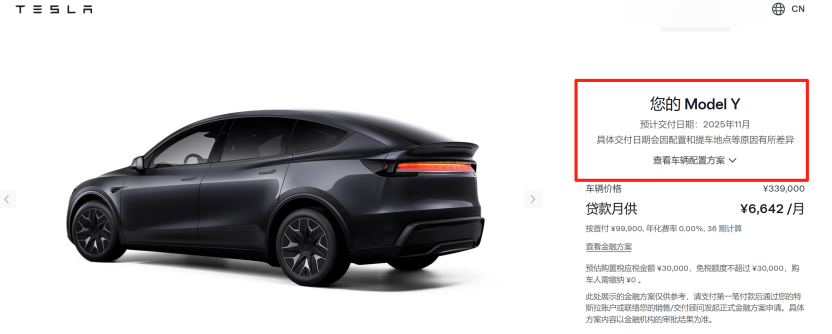
Core Viewpoint - Tesla is experiencing a potential sales rebound in Europe and China, with production plans being adjusted upward due to positive sales data, signaling a strategic response to previous declines in the market [1][4][6]. Group 1: Sales Performance - Tesla's German factory has increased its electric vehicle production plans for Q3 and Q4, indicating a recovery in sales [1]. - In China, the Model Y L has sold out for October, with delivery dates pushed to November 2025, suggesting strong demand [2]. - Despite a 5.4% year-on-year decline in sales in China for the first half of 2025, the overall market for new energy vehicles grew by 40.3% [4]. - In August 2025, Tesla's wholesale sales in China were 83,192 units, showing a 22.6% increase month-on-month, despite a 4% year-on-year decline [4]. - In Europe, Tesla's sales have seen significant declines, with new car registrations in Germany down 39% in August and 56% year-to-date [4][5]. Group 2: Market Challenges - Tesla faces multiple challenges in the European market, including a limited product lineup and increased competition from both new entrants and traditional automakers [5]. - The political stance of CEO Elon Musk has also contributed to consumer resistance, further complicating Tesla's market position [5]. Group 3: Strategic Developments - Elon Musk's return to focus on Tesla, following his political engagements, is seen as a positive factor for the company's future [6]. - Tesla has proposed a groundbreaking $1 trillion compensation plan for Musk, contingent on achieving ambitious goals, including expanding into autonomous taxi services and increasing the company's market value significantly [7]. - The upcoming release of the Optimus V3 humanoid robot is expected to be a major focus for Tesla, with mass production planned for 2026 and a target of producing 1 million units [8][9].
中加经贸拉锯战收场?加拿大松口后,中方精准反制显效
Sou Hu Cai Jing· 2025-09-14 19:12
Group 1 - The Canadian government, led by Prime Minister Carney, expressed a desire for high-level economic dialogue with China, indicating a shift in approach due to the challenging economic realities faced by Canada [1] - In response to the U.S. political changes, Canada imposed significant tariffs on Chinese imports, including a 25% tariff on steel and aluminum and a 100% tariff on electric vehicles, aiming to protect domestic industries [2] - The agricultural sector in Canada is heavily reliant on exports to China, with nearly 40% of canola and 70% of peas exported to the Chinese market, making it vulnerable to trade tensions [6][4] Group 2 - The steel industry in Canada faces increased costs due to tariffs on Chinese steel products, which could undermine the competitiveness of Canadian steel manufacturers reliant on Chinese raw materials [7] - Canada’s participation in military exercises with the U.S. and the Philippines has heightened tensions with China, intertwining economic issues with security concerns [8] - The Canadian government is experiencing domestic pressure as inflation rises and public support declines, with a drop from 50% to 43% in approval ratings amid rising living costs [14] Group 3 - China has responded to Canadian tariffs with its own retaliatory measures, including a 100% tariff on canola oil and 25% on seafood and pork, directly impacting Canadian agricultural exports [6][19] - The energy sector in Canada is facing challenges as China shifts its energy imports away from Canada towards other suppliers like Russia and Saudi Arabia, limiting opportunities for Canadian energy exports [13] - The disconnect between federal and provincial governments in Canada complicates trade relations, as provinces like Alberta and Quebec seek to maintain ties with China despite federal policies [14][18] Group 4 - The Canadian government’s reliance on U.S. strategic interests in its trade policy has led to significant economic repercussions, particularly for the agricultural and manufacturing sectors [19] - The Canadian government is urged to reconsider its approach, focusing on domestic industry and public needs rather than solely aligning with U.S. policies, to stabilize its economy [21][23] - The ongoing trade tensions highlight the importance of respecting market dynamics and the need for Canada to balance its international relations with domestic economic stability [23]
特斯拉,突传利好!
Zheng Quan Shi Bao· 2025-09-14 14:51
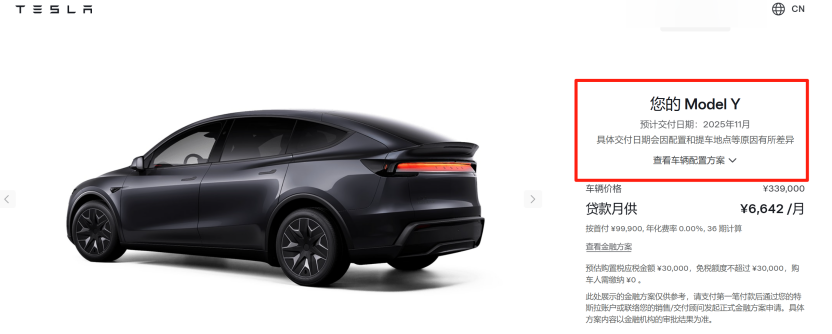
Core Viewpoint - Tesla is signaling a rebound in sales, particularly in its German factory, which has adjusted its production plans upward due to strong sales data, indicating a potential recovery in the European market [1][4]. Group 1: Sales Performance - Tesla's sales in Europe have been declining, with significant drops in new car registrations, including a 39% decrease in Germany and a 56% drop in the first eight months of the year [4][5]. - In China, Tesla's sales for the first half of 2025 were 263,400 units, down 5.4% year-on-year, while the overall new energy vehicle market grew by 40.3% [4]. - Despite challenges, there are signs of recovery, with Tesla's Model Y L selling out in China, leading to a delivery estimate pushed to November 2025 [2][4]. Group 2: Market Challenges - Tesla faces multiple challenges in the European market, including a limited product lineup, increased competition, and backlash against CEO Elon Musk's political stance [5][6]. - The company has implemented price cuts, such as reducing the price of the Model 3 Long Range from 269,500 CNY to 259,500 CNY, which may help boost sales in China [4]. Group 3: Leadership and Future Plans - Elon Musk's return to focus on Tesla after stepping back from political engagements is seen as a positive factor for the company's recovery [6][7]. - Tesla has proposed a groundbreaking compensation plan for Musk, potentially worth $1 trillion, contingent on achieving ambitious goals, including expanding into autonomous taxi services and increasing the company's market value significantly [7][8]. - The company is shifting its focus towards artificial intelligence and robotics, with plans for mass production of the Optimus V3 robot by 2026, which is expected to play a crucial role in Tesla's future value [8][9].