
生猪养殖

Search documents
水牛不变 水温有点凉
Datayes· 2025-08-26 11:55
Core Viewpoint - The current A-share market sentiment is at a historically high level, indicating potential adjustments ahead, with various sectors showing signs of crowding and liquidity issues [4][7][31]. Market Overview - The A-share market experienced mixed performance, with the Shanghai Composite Index down by 0.39%, while the Shenzhen Component rose by 0.26% and the ChiNext Index fell by 0.75% [12]. - Total market turnover was 27,112.62 billion, a decrease of 4,664.29 billion from the previous day, with over 2,800 stocks rising [12][20]. Sector Performance - The consumer electronics sector saw gains, driven by the upcoming Q3 traditional peak season for new product launches, including AI smartphones and AR glasses [12]. - The pig farming sector became active again, with government initiatives to stabilize prices as demand increases with the school season [12]. - The gaming sector reacted positively to the approval of new domestic and imported games, leading to significant stock movements [12]. Investment Strategies - Morgan Stanley highlighted that the current market rally is liquidity-driven, with a focus on sectors like AI, innovative pharmaceuticals, and smart driving, which are less correlated with traditional deflationary sectors [7][8]. - The report emphasized the need for capital market reforms to convert liquidity into a sustainable bull market, suggesting adjustments to dividend policies and share buyback regulations [8]. Institutional Activity - Northbound capital saw a total transaction volume of 3,634.61 billion, with significant activity in stocks like Northern Rare Earth and Heng Rui Medicine [23][25]. - The net inflow of institutional funds was notable in sectors such as computing, basic chemicals, and electronics, while the pharmaceutical sector experienced the largest outflow [20][31]. Economic Policies - The State Council's initiative on "Artificial Intelligence+" aims for deep integration of AI across six key sectors by 2027, promoting smart products and technological innovation [16]. - Plans for urban renewal include the renovation of 25,000 old urban communities, with significant progress reported in several provinces [17]. Company Announcements - Northern Rare Earth reported a 45.24% increase in revenue for the first half of 2025, with net profit soaring by 1,951.52% [18]. - Aerospace Science and Technology announced a revenue decline of 11.04% for the same period, but a significant increase in net profit by 2,161.91% [18]. - Fuxing Pharmaceutical entered a licensing agreement with Sitala for the development of diagnostic and therapeutic products outside of China [17].



光明肉业:子公司债务致资产减值,预计减少上半年归母净利润1.3亿元
Xin Lang Cai Jing· 2025-08-26 10:48
Group 1 - The core point of the article is the announcement by Guangming Meat Industry regarding the debt situation of its subsidiary, Hebei Zhongwang Agricultural Technology Co., Ltd. [1] - Hebei Zhongwang, established in October 2017 with a registered capital of 300 million yuan, primarily engages in pig farming, breeding, and related technical services [1] - Guangming Meat Industry holds a 51% stake in Guangming Agricultural Technology, which in turn owns 94% of Hebei Zhongwang [1] Group 2 - Hebei Zhongwang has received various legal documents from local courts regarding its debt situation, as detailed in a previous announcement on August 22 [1] - The debt issue has led to indications of impairment in some of Hebei Zhongwang's long-term assets, prompting the company to prepare for a potential impairment loss estimated to reduce its net profit attributable to shareholders by approximately 130 million yuan for the first half of the year [1] - The impairment amount is unaudited and will be confirmed by the annual audit, and the debt issue is not expected to significantly impact the company's normal operations [1] Group 3 - The impairment provision related to the debt issue requires board approval, indicating a level of uncertainty that investors should be aware of [1]

A股尾盘跌势加快,这一板块昨日爆发今天就被按在地板,又来无理威胁:“要么交稀土,要么交200%关税!”外交回应了……
雪球· 2025-08-26 08:42
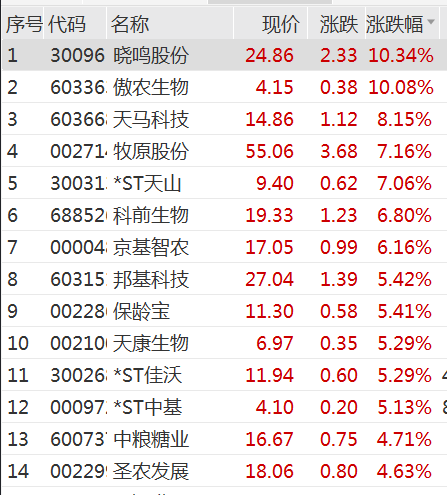
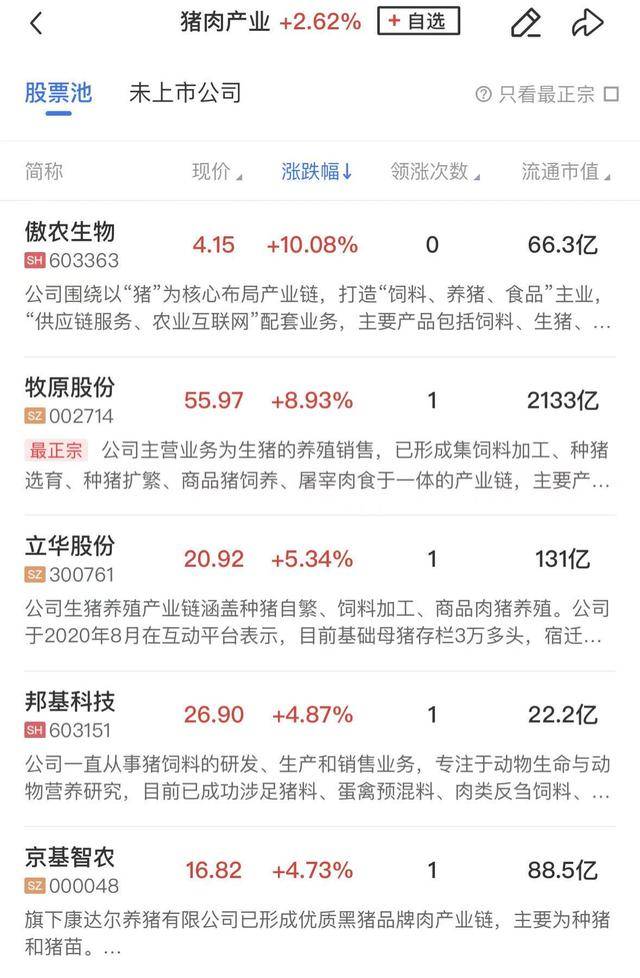
Core Viewpoint - The article discusses the mixed performance of A-shares, highlighting the fluctuations in various sectors, particularly the strong performance of the consumer electronics and pork sectors, while the rare earth sector faced a pullback due to regulatory news and geopolitical tensions [2][3][5][10][15]. Sector Summaries Rare Earth Sector - The rare earth sector experienced a significant pullback after a previous surge due to the announcement of new regulatory measures. Leading companies like Northern Rare Earth fell over 6%, with several others declining more than 5% [5][9]. - The geopolitical context includes strong statements from U.S. President Trump regarding tariffs on Chinese rare earth magnets, which adds pressure to the sector [9]. Consumer Electronics Sector - The consumer electronics sector saw a notable increase, driven by the upcoming Apple iPhone 17 launch and strong earnings reports. Companies like GoerTek and Luxshare Precision hit their daily price limits, with Luxshare's revenue growing by 20.18% year-on-year [10][13]. - The overall performance of 79 consumer electronics companies showed a combined net profit of 499.56 billion yuan, marking an 18.55% increase from the previous year [13]. Pork Sector - The pork sector showed a strong performance, with leading company Muyuan Foods rising over 7%. The sector is responding to recent government interventions aimed at stabilizing pork prices, which have been under pressure due to low market prices [15][18]. - The average price of live pigs has dropped to 13.75 yuan per kilogram, prompting the government to initiate pork reserve purchases to support prices [18][19].



中央冻猪肉收储即将开启,畜牧ETF收涨2.56%
Sou Hu Cai Jing· 2025-08-26 08:22
消息面上,近日,由于夏季天气炎热、消费季节性偏弱,加之前期二次育肥生猪出栏,猪肉市场供应有 所增加,生猪价格小幅回落。据监测,近日全国平均猪粮比价跌至6∶1以下,按照《完善政府猪肉储备 调节机制 做好猪肉市场保供稳价工作预案》规定,进入三级预警区间。国家发展改革委表示,将于近 期会同有关部门开展中央冻猪肉储备收储。 银河证券指出,关于2025年猪价走势,全年均价或相对平稳运行,差异在于优秀猪企完全成本持续优 化,带来养殖利润超预期。此外,2025年以来猪企产能变化节奏、行业二育情况、出栏体重等方面或受 相关影响而带来超预期变化,值得重点关注。数据方面,7月CPI同比持平,农产品贸易累计逆差降 16%。7月我国农产品进口金额186.78亿美元,同比+5.14%,出口金额83.85亿美元,同比+1.59%,贸易 逆差102.93亿美元,同比+8.21%。 国泰海通表示,随8月最后一周进入中报密集期,预计整个养殖板块将呈现负债率下降和归母净利润同 比提升的趋势,从而进入中报行情。此外,猪价已进入三级预警区间,政府启动猪肉收储以稳定价格。 行业层面,稳价降体重的调控措施将持续;龙头企业则将继续演绎降成本、降负债和增分 ...

涨停潮!消费电子,午后爆发!
Zheng Quan Shi Bao· 2025-08-26 08:09
Group 1: Market Performance - The A-share market experienced a mixed performance with the Shanghai Composite Index closing down 0.39% at 3868.38, while the Shenzhen Component Index rose 0.26% [1] - Over 2800 stocks in the market saw an increase, indicating a broad-based rally despite some adjustments in previously popular sectors like AI chips and innovative drugs [1] - The Hong Kong market also faced adjustments, with the Hang Seng Index dropping over 1% [1] Group 2: Huawei Concept Stocks - Huawei concept stocks showed strong performance, with the Huawei Kunpeng Index and Huawei Harmony Index both rising over 2% [2] - Notable stocks included Junyi Digital, which hit a 20% limit up, and other companies like Tuowei Information and Runhe Software also saw significant gains [2] - Huawei is set to launch a new AI SSD product on August 27, which may impact the AI storage market in China [2] Group 3: Organizational Changes at Huawei - Huawei announced a large-scale organizational restructuring within its cloud business unit, affecting dozens of lower-level departments and potentially impacting over a thousand employees [3] - The restructuring aims to focus on core teams in product, public cloud services, and R&D, with a strategic emphasis on AI and computing industries [3] Group 4: Pork and Chicken Stocks - Stocks in the pork and chicken sectors performed strongly, with companies like Xiaoming Co. and Aonong Biological hitting their daily limit up [4] - The strong performance in these sectors reflects positive market sentiment and potential growth in the meat industry [4] Group 5: Performance of Leading Pork Producer - Muyuan Foods reported a revenue of approximately 76.46 billion yuan for the first half of 2025, a year-on-year increase of 34.46%, with net profit soaring by 1169.77% [6] - The company attributed its success to technological innovation and management optimization, leading to a decrease in production costs [6] Group 6: Consumer Electronics Sector - The consumer electronics sector saw a significant rally, with stocks like Fenda Technology and GoerTek hitting their daily limit up [6] - The upcoming launch of the iPhone 17 series by Apple is expected to initiate a three-year major redesign cycle, enhancing the appeal of its flagship products [8] - The third quarter is traditionally a peak season for consumer electronics, with expectations for new AI smartphones and AR glasses to drive hardware upgrades [8]
ETF今日收评 | 农业相关ETF涨近3% 稀土、人工智能相关ETF跌幅居前
Mei Ri Jing Ji Xin Wen· 2025-08-26 07:59
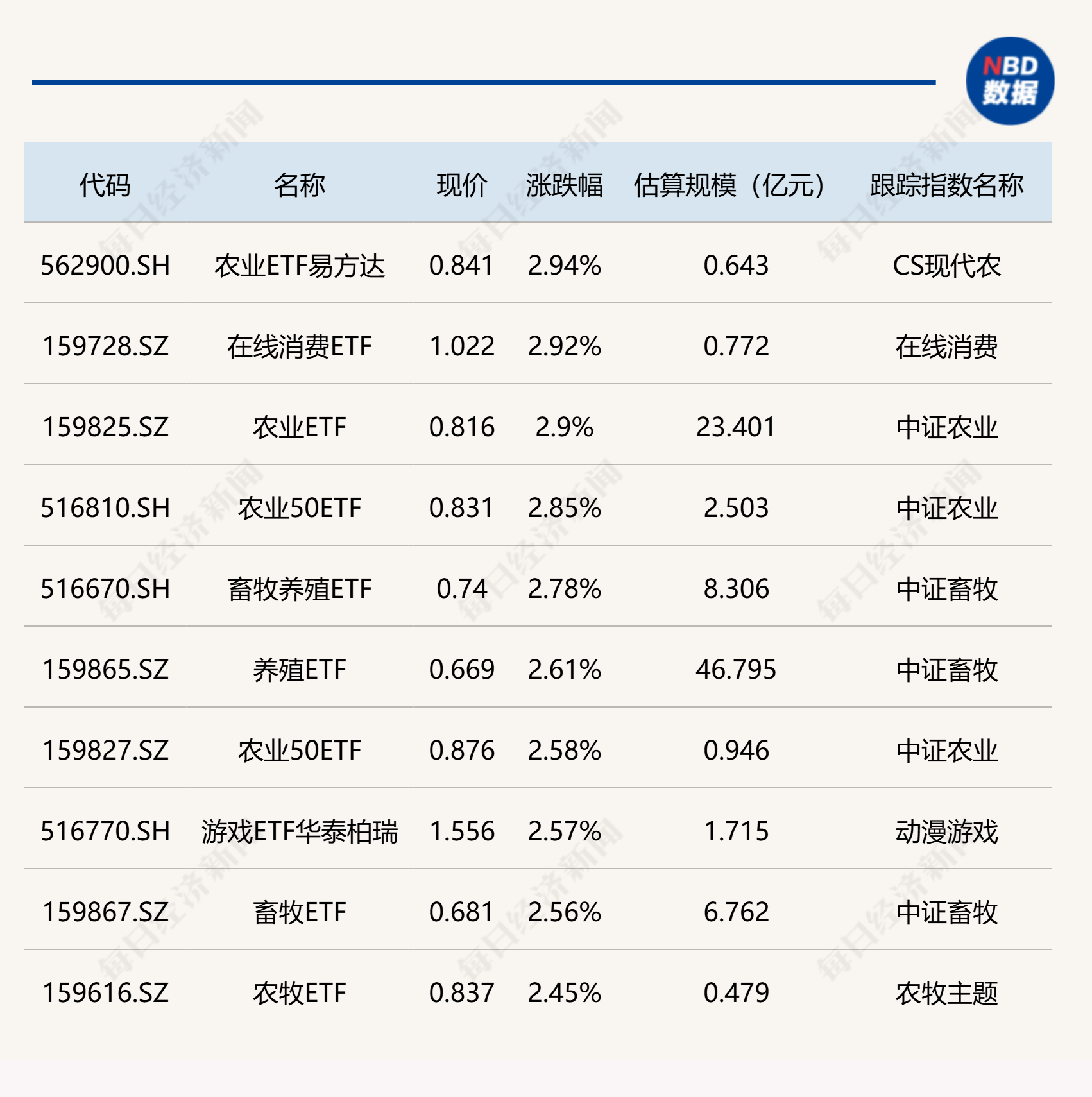
Market Overview - The market experienced fluctuations with mixed performance across the three major indices, while consumer electronics stocks showed resilience, and agriculture and gaming stocks were active [1] - Agricultural-related ETFs saw an increase of nearly 3% [1] ETF Performance - The following agricultural ETFs reported significant gains: - Agricultural ETF by E Fund: 2.94% increase [2] - Online Consumption ETF: 2.92% increase [2] - Other agricultural ETFs also showed positive performance, with increases ranging from 2.58% to 2.9% [2] Industry Insights - Analysts recommend focusing on the pig farming industry for both defensive and offensive investment opportunities, noting that most listed companies in this sector are currently at historical low market valuations, indicating substantial upside potential [4] - In contrast, several rare earth and artificial intelligence-related ETFs experienced declines exceeding 3% [4] Future Trends - The demand for high-end magnetic materials is expected to grow rapidly due to ongoing policies promoting "carbon neutrality," alongside a recovery in traditional manufacturing and the acceleration of humanoid robots [7] - The technology sector's investment focus is projected to remain on AI, with advancements in large models and exploration by Chinese tech companies leading to broader applications and productivity improvements across various industries, including advertising, gaming, management software, and smart vehicles [7]
A股收评:沪指震荡下跌0.39%,消费电子、游戏板块逆势活跃
Ge Long Hui· 2025-08-26 07:30
Market Overview - A-shares showed mixed performance with the Shanghai Composite Index down 0.39% at 3868 points, while the Shenzhen Component Index rose 0.26% [1][2] - The total trading volume in the Shanghai and Shenzhen markets was 2.68 trillion yuan, a decrease of 462.1 billion yuan from the previous trading day [1] Sector Performance Positive Performers - The poultry and pork sectors saw significant gains, with stocks like Aonong Bio and Muyuan Foods rising over 10% and 7% respectively [4][5] - The gaming sector was active, with 166 domestic games approved in August, leading to stocks like 37 Interactive Entertainment hitting the daily limit [6][7] - The consumer electronics sector also performed well, with stocks such as GoerTek and Fenda Technology reaching their daily limits [8][9] - The beauty and personal care sector experienced a broad increase, highlighted by Jiahen Cosmetics hitting a 20% limit up [10] Negative Performers - The CRO sector faced declines, with Sunshine Guohe dropping over 9% and several other stocks falling more than 4% [12] - The rare earth permanent magnet sector also saw a downturn, with Baotou Steel and Northern Rare Earth both dropping over 6% [13] - The military industry sector experienced declines, with stocks like Feilihua and Tianqin Equipment falling over 4% [15] Regulatory Developments - The National Development and Reform Commission reported that the national average pig-to-grain price ratio has fallen below 6:1, entering a warning zone, prompting measures to stabilize the pork market [5]

午报三大指数探底回升全线翻红,两市半日缩量近4000亿,猪肉、游戏板块涨幅居前
Sou Hu Cai Jing· 2025-08-26 07:10
Market Overview - The market showed a slight recovery in early trading, with the three major indices rising slightly. The Shanghai Composite Index increased by 0.11%, the Shenzhen Component Index rose by 0.73%, and the ChiNext Index gained 0.21% [1] - The total trading volume in the Shanghai and Shenzhen markets was 1.68 trillion yuan, a decrease of 398.3 billion yuan compared to the previous trading day [1] Sector Performance - The gaming sector saw a collective surge, with companies like 37 Interactive Entertainment hitting the daily limit. The approval of 173 game licenses in August, the highest this year, is expected to boost revenue for game developers [3][4] - The pig farming sector also performed well, with stocks like Aonong Biological and Muyuan Foods seeing significant gains. The average pig-to-grain price ratio has dropped below 6:1, prompting government intervention to stabilize the market [1][2] - The Huawei Ascend concept stocks were active, with companies like Tuowei Information and Zhengyuan Wisdom reaching their daily limits. Huawei Cloud announced increased investment in intelligent computing resources [6][17] Company Highlights - Aonong Biological's stock rose by 10.08%, focusing on the pig industry chain, including feed and meat production [2] - Tuowei Information reported a net profit of 78.81 million yuan for the first half of the year, a year-on-year increase of 2263% [6] - Cambridge Technology's net profit for the first half of the year was 121 million yuan, up 51.12% year-on-year, indicating strong performance in the optical communication sector [24][26] Investment Insights - The pig farming industry is expected to experience high profitability despite a projected price decline in 2025, driven by improved cost control capabilities [2] - The gaming industry is likely to see accelerated revenue growth due to the recent surge in game license approvals, benefiting companies with strong IP reserves [4] - The chemical sector is witnessing price increases for pesticides, driven by rising raw material costs and regulatory changes, suggesting potential profitability improvements for companies in this space [7][22]
生猪养殖行业“反内卷”政策密集发布,建信中证农牧主题ETF(159616)跟踪指数冲高上涨2.41%
Sou Hu Cai Jing· 2025-08-26 07:06
Group 1 - The China Securities Agricultural and Animal Husbandry Theme Index (931778) increased by 2.41%, with notable stock performances including Muyuan Foods (002714) up 7.51%, Tiankang Bio (002100) up 6.04%, and Jiangshan Co. (600389) up 5.74% [1] - Recent policies aimed at regulating the pig farming industry have been intensively released, including a proposal from the National Development and Reform Commission in early June to not increase production capacity and to stabilize prices, followed by a meeting in late July where the Ministry of Agriculture urged core enterprises to strictly implement capacity control measures [1] - On August 13, an industry association meeting advocated for reducing production capacity to 39.5 million pigs, with several leading enterprises responding positively to the capacity control policies, indicating a reduction in the breeding sow inventory [1] - Despite continued profitability in fattening and breeding segments, the ongoing implementation of anti-involution policies and the need to mitigate pandemic risks are expected to lead to a reduction in industry capacity [1] - Glyphosate prices have rebounded from a low point, with some product demand recovering; from Q3 2025, the average market price of glyphosate increased by 11.2% compared to Q2 [1] - The pesticide industry shows rigid demand but is currently at the bottom of the industry cycle, characterized by "increased volume but reduced profits," with ongoing destocking bringing global pesticide channel inventory closer to reasonable levels [1] Group 2 - The China Construction Bank China Securities Agricultural and Animal Husbandry Theme ETF (159616) closely tracks the China Securities Agricultural and Animal Husbandry Theme Index, which selects 50 listed companies involved in grain planting, seed production, pesticide and fertilizer, agricultural machinery, livestock farming, feed production, and animal health [2]


牧原股份(002714):养殖成本优势突出,高分红积极回报股东
China Post Securities· 2025-08-26 06:31
Investment Rating - The report maintains a "Buy" rating for the company, indicating an expected relative price increase of over 20% compared to the benchmark index within the next six months [6][11]. Core Insights - The company reported a significant revenue increase of 34.46% year-on-year, reaching 764.63 billion yuan, with a remarkable net profit growth of 1169.77% to 105.30 billion yuan, driven by declining costs [3][4]. - The company has a strong cash flow position, with net cash flow from operating activities amounting to 173.51 billion yuan, a 12.13% increase year-on-year, and a reduced debt ratio of 56.06% as of the end of Q2 2025 [3][4]. - The company is committed to returning value to shareholders, proposing a cash dividend of 9.32 yuan per 10 shares, totaling 50.02 billion yuan, which represents 47.50% of the net profit for the first half of 2025 [5]. Summary by Sections Company Overview - Latest closing price is 51.38 yuan, with a total market capitalization of 280.7 billion yuan and a P/E ratio of 15.57 [2]. Financial Performance - The company achieved a net profit of 105.30 billion yuan in the first half of 2025, with a significant increase in sales volume of live pigs by 44.84% year-on-year [3][4]. - The average cost of pig farming decreased from 13.1 yuan/kg in January to 11.8 yuan/kg in July, positioning the company as a leader in cost efficiency within the industry [4]. Future Outlook - The earnings per share (EPS) forecasts for 2025, 2026, and 2027 are projected at 3.57 yuan, 5.26 yuan, and 5.58 yuan respectively, reflecting a positive growth trajectory [6][10].