
新能源

Search documents
重庆“知识产权综合保护联系点”总数已达431家(人民网)
Ren Min Wang· 2026-01-23 03:43
Core Viewpoint - The Chongqing People's Procuratorate has established "Intellectual Property Comprehensive Protection Contact Points" to enhance the protection of intellectual property rights, particularly in high-quality development sectors such as new energy vehicles and electronic manufacturing [1][2] Group 1: Intellectual Property Protection Initiatives - A total of 431 enterprises have been established as "Intellectual Property Comprehensive Protection Contact Points" across the city and district levels [1] - These contact points focus on major industries including artificial intelligence, integrated circuits, biomedicine, and new energy, while also covering geographical indications and intangible cultural heritage [1] - The initiative aims to prioritize and expedite the handling of intellectual property cases involving enterprises, increasing the crackdown on infringement crimes and maximizing economic loss recovery for businesses [1] Group 2: Collaboration and Support Mechanisms - The procuratorial authorities have established collaborative mechanisms with intellectual property administrative departments, public security agencies, and courts to enhance case handling efficiency through information sharing and dual-direction case referral [2] - Regular communication mechanisms have been set up between the procuratorial authorities and enterprises to understand their specific needs regarding trademark infringement, patent disputes, and trade secret protection [2] - Expert consultations are organized for cases involving enterprises, along with the issuance of typical case studies and the development of industry-specific intellectual property risk guidelines to extend the effectiveness of case handling [2] Group 3: Future Directions - The Chongqing procuratorial authorities plan to build a "rapid, precise, and collaborative" judicial protection system for intellectual property through the contact points, supporting high-quality enterprise development and contributing to the construction of a science and technology innovation hub in Chongqing [2]

华宝新机遇混合A:2025年第四季度利润21.36万元 净值增长率0.5%
Sou Hu Cai Jing· 2026-01-23 03:01
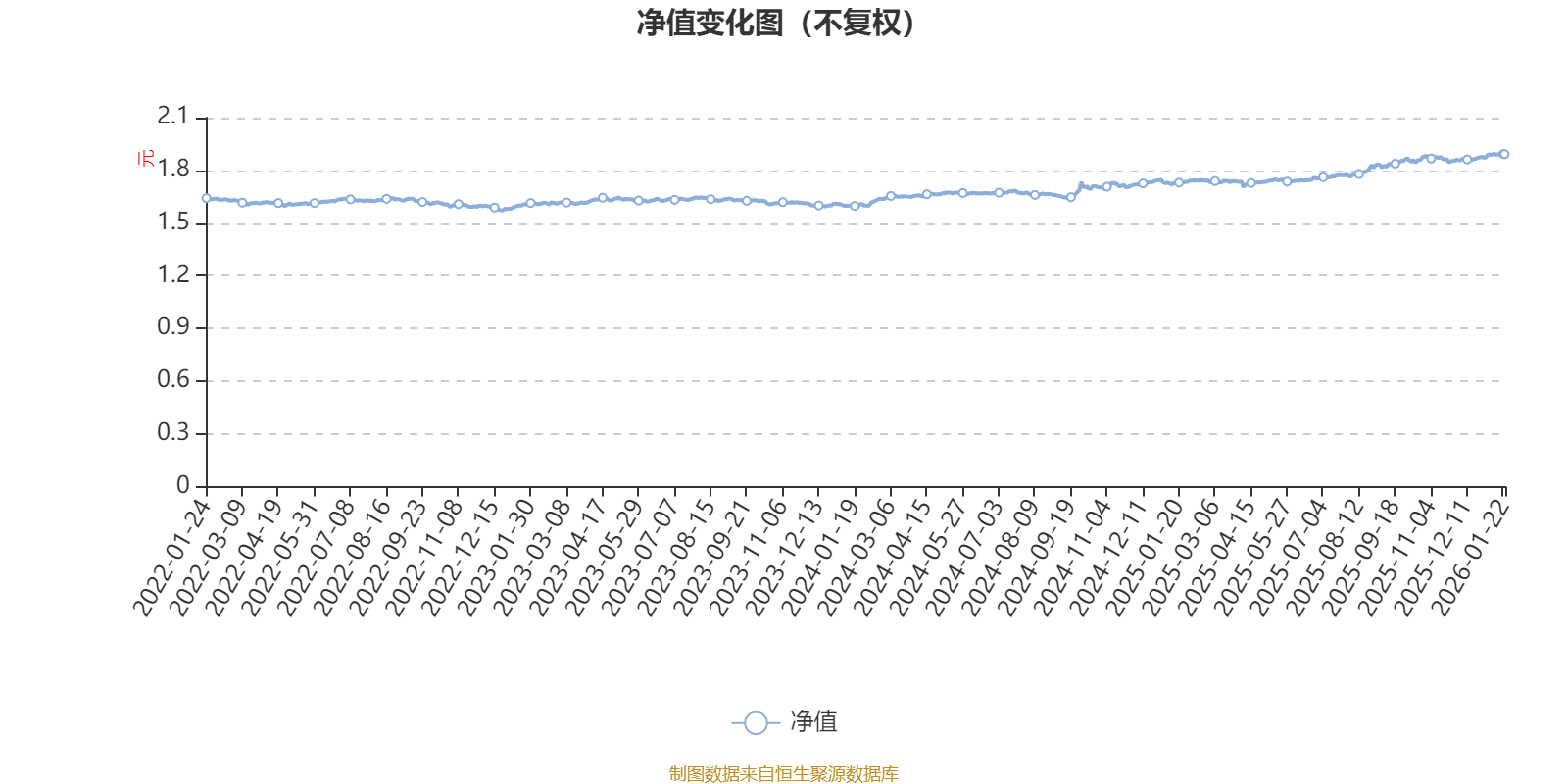
Core Viewpoint - The AI Fund Huabao New Opportunities Mixed A (162414) reported a profit of 21.36 thousand yuan for Q4 2025, with a weighted average profit per fund share of 0.0091 yuan, and a net asset value growth rate of 0.5% during the reporting period [3]. Fund Performance - As of January 22, the fund's unit net value was 1.892 yuan, with a total fund size of 45.62 million yuan [3][16]. - The fund's performance over various periods includes a 1.82% growth rate over the last three months, 6.71% over the last six months, 9.46% over the last year, and 17.43% over the last three years, ranking it 1060/1286, 1017/1286, 1102/1286, and 607/1286 respectively among comparable funds [5]. Investment Strategy - The fund maintained an overall equity asset position during Q4, focusing on stocks with high profitability and industry representation while monitoring valuation comparisons across different sectors [4]. - The fund's average stock position over the last three years was 34.08%, significantly lower than the industry average of 72.57% [14]. Risk Management - The fund's maximum drawdown over the last three years was 3.32%, ranking 47/1264 among comparable funds, with the largest single-quarter drawdown recorded at 5.06% in Q2 2019 [11]. Top Holdings - As of December 31, the fund's top ten holdings included Kweichow Moutai, CATL, Zijin Mining, Bank of China, Inspur, Bank of Communications, Zhongwei Company, Industrial and Commercial Bank of China, China Life, and SMIC [19].

合肥蔚电科技公司更名蔚来能源
Sou Hu Cai Jing· 2026-01-23 02:54
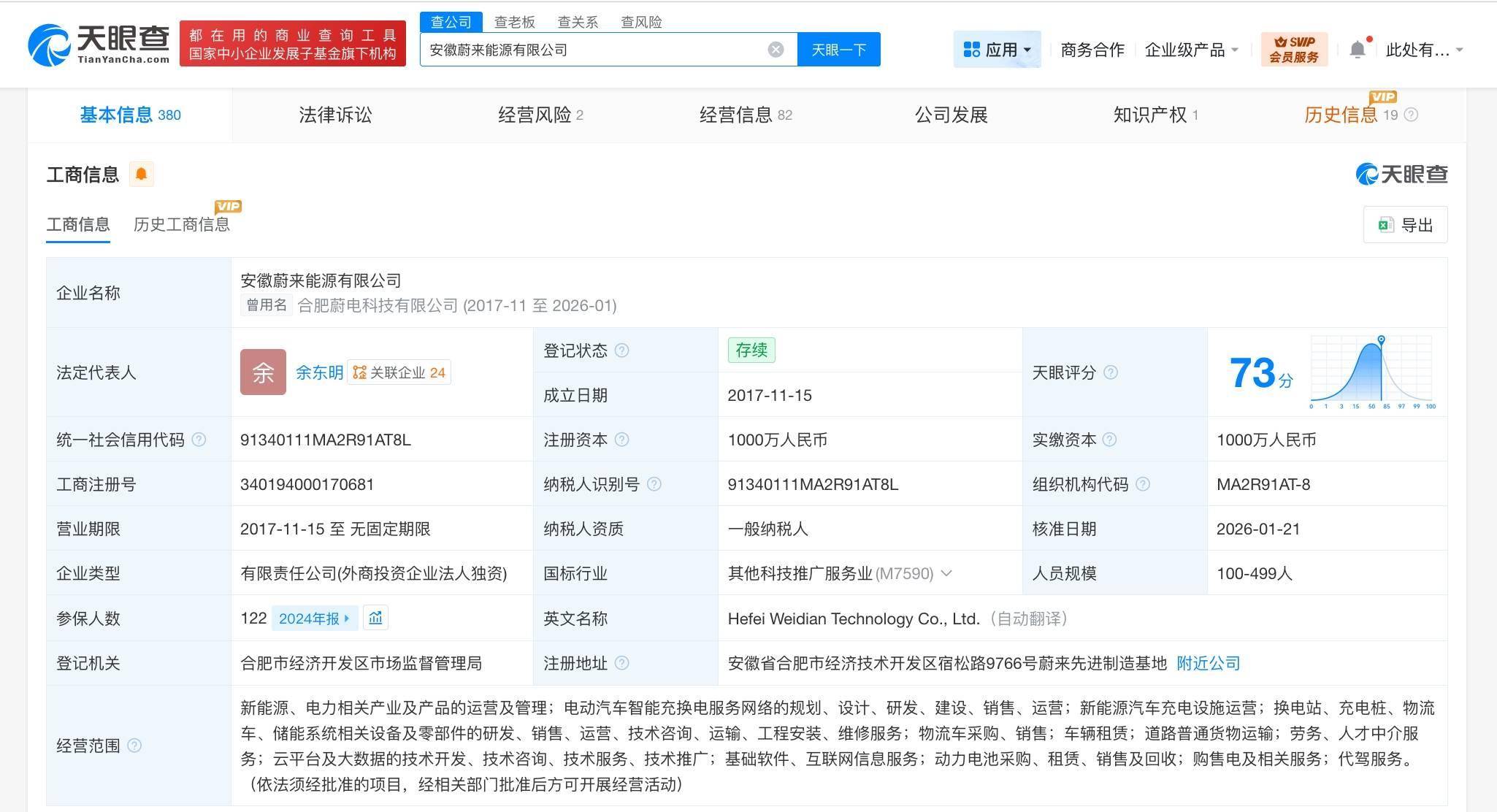
天眼查工商信息显示,近日,合肥蔚电科技有限公司发生工商变更,企业名称变更为安徽蔚来能源有限公司,同时,部分高管也发生变更。 该公司成立于2017年11月,法定代表人为余东明,注册资本1000万人民币,经营范围含新能源、电力相关产业及产品的运营及管理,电动汽车智能充换电服 务网络的规划、设计、研发、建设、销售、运营等。股东信息显示,该公司由武汉蔚来能源有限公司全资持股。 | | 省公司 查老板 查关系 查风险 都在用的商业资 间工具 | | --- | --- | | | 安徽蔚来能源有限公司 × 国家中小企业发展子基金旗下机构 | | 基本信息 380 | 法律诉讼 经营风险2 经营信息 82 | | 工商信息 4 MIP | | | 工商信息 历史工商信息 | | | | 安徽蔚来能源有限公司 | | 企业名称 | 曾用名 合肥蔚电科技有限公司 (2017-11 至 2026-01) | | 法定代表人 | 登记状态 2 作写 余 余东明 猛关联企业 24 | | | 成立日期 2017-11-1 | | 统一社会信用代码 ○ | 91340111MA2R91AT8L 注册资本 2 1000万人[ | | ...

2026宏观展望:周期的力量
Guang Fa Qi Huo· 2026-01-23 02:17
Report Industry Investment Rating No relevant content provided. Core Viewpoints of the Report - In 2026, the world will be in a macro - background of deepening "de - globalization" and the resonance of loose fiscal policies of major economies. Supply - chain vulnerability and demand expansion will lead to a tightening of resource supply - demand relations, and intensify strategic competition for key minerals and energy [1]. - China's economy will be based on the principle of "internal stability and external control" in 2026. Exports will remain a mainstay, investment will play a supporting role, and consumption will focus on equipment updates and service - scenario innovation. The de - dollarization trend and the weakening of the US dollar credit will bring opportunities for international capital inflows into RMB assets, and Sino - US competition will focus on technology and supply - chain security [1]. - In 2026, a macro - hedging portfolio should be constructed under the premise of seeking certainty. Commodity assets will have prominent allocation value, with the order of commodity > equity > bond. Attention should be paid to potential uncertainties such as recessions in Europe and the US, domestic inflation repair, geopolitics, and real - estate risks [2]. Summary by Directory I. Cycle Changes: Resonance of "De - globalization" and Loose Fiscal Policies (1) The Wave of De - globalization: From Great - Power Games to the G2 Pattern - International events such as the COVID - 19 pandemic, the Russia - Ukraine war, and the Trump administration's high - tariff policies have led to the wave of de - globalization, which is essentially the reshaping of the world order [6]. - Traditional capitalist powers like the US and the UK are withdrawing from international alliances, while emerging - market countries led by China are exploring new international cooperation models. A G2 competition pattern between China and the US is gradually taking shape in key technologies and resources [7]. - The wave of de - globalization has increased the vulnerability of the global supply chain, deteriorated the global trade environment, and accelerated the rotation and increased the volatility of global major assets. The credit systems of the US dollar and US Treasury bonds have been shaken [9]. (2) Loose Fiscal Resonance: Upward Global Manufacturing and Inventory Cycles - In 2026, the fiscal policies of major overseas economies such as the US, Europe, and Japan are expected to expand further. The US "big and beautiful" bill may increase the fiscal deficit by $4.1 trillion in the next decade, and EU countries will increase their defense spending to 5% of GDP by 2035. Japan will implement a trillion - level economic stimulus plan. This will lead to an increase in economic activity demand and drive up the global manufacturing and inventory cycles [15]. (3) Resource Shortage: Tightening Supply - Demand Balance - De - globalization has increased supply - chain vulnerability, and loose fiscal policies will stimulate demand, leading to a tightening of the global industrial supply - demand relationship. Countries will pay more attention to resource competition for national security. The US is seizing resources through trade control and military actions. Core resources such as minerals and energy will see price increases in 2026 [16]. II. The Game between Endogenous Momentum and External Changes (1) Endogenous Economic Transformation: Long - Term Policy Guidance of the 15th Five - Year Plan - In 2026, as the starting year of the 15th Five - Year Plan, China aims to achieve a reasonable GDP growth rate while gradually realizing structural transformation. New - quality productivity sectors such as AI, biomedicine, and new energy will become new pillar industries [17]. - Investment will be the supporting force for achieving economic growth goals, while consumption will be the main growth driver. Exports will remain a mainstay due to factors such as reduced Sino - US trade - dispute volatility, fiscal expansion in developed economies, and the rise of emerging markets. Investment in infrastructure, manufacturing, and new areas will support economic growth, and real - estate's negative impact on the economy is expected to turn neutral [18][19][23]. - In the consumption area, policies will focus on releasing existing demand through subsidies and exploring incremental demand by expanding service - consumption scenarios [27]. (2) External Changes and Game: Coexistence of Challenges and Opportunities - The weakening of the US dollar credit due to the expiration of the "petro - dollar" agreement and the establishment of a new cross - border settlement mechanism provides an opportunity for RMB assets. International capital will flow back to the Asia - Pacific market and drive up the prices of RMB - denominated assets. China can promote RMB internationalization [30]. - Sino - US relations will remain a key variable in 2026. The two countries have long - term competition and phased balance in technology and resource issues. The competition pattern will not change significantly, and extreme decoupling is unlikely [31]. III. Guidance on Major Asset Allocation: Constructing a Macro - Hedging Portfolio (1) Between "Change and Constancy": Unchanging Competition Relations and Changing Cycle Rotations - The long - term competition exists among all global economies due to limited resources and growing economic demand. China's economic recovery has three main lines: technological independence, price repair, and expansion of domestic demand. The US will try to avoid recession and stagflation, and continue to rely on the stock market and AI to support the economy [33]. (2) 2026: Seeking Certainty and Constructing a Major Asset Portfolio: Commodity > Equity > Bond - In 2026, asset allocation should pursue certainty and balance risks. Attention should be paid to risks such as recessions in Europe and the US, slow domestic inflation repair, intensified de - globalization, and a downward real - estate market [36]. (3) Grasping the Rhythm and Main Lines in the Short, Medium, and Long Terms - Based on economic - cycle theory, in the high - inflation and high - growth stage (2026 - 2027 expected), commodities will be dominant. Different commodity sectors will rotate in the order of risk pricing, expected trading, and real - situation regression [37]. - In 2026, the four quarters will be dominated by different factors: Q1 is dominated by short - term liquidity, driving up the prices of precious metals and non - ferrous metals; Q2 focuses on correcting the mid - term narrative; Q3 verifies the long - term logic; Q4 is for brewing cross - year expectations [39].
宁德时代北京新能源科技公司成立 注册资本1000万
Sou Hu Cai Jing· 2026-01-23 01:57
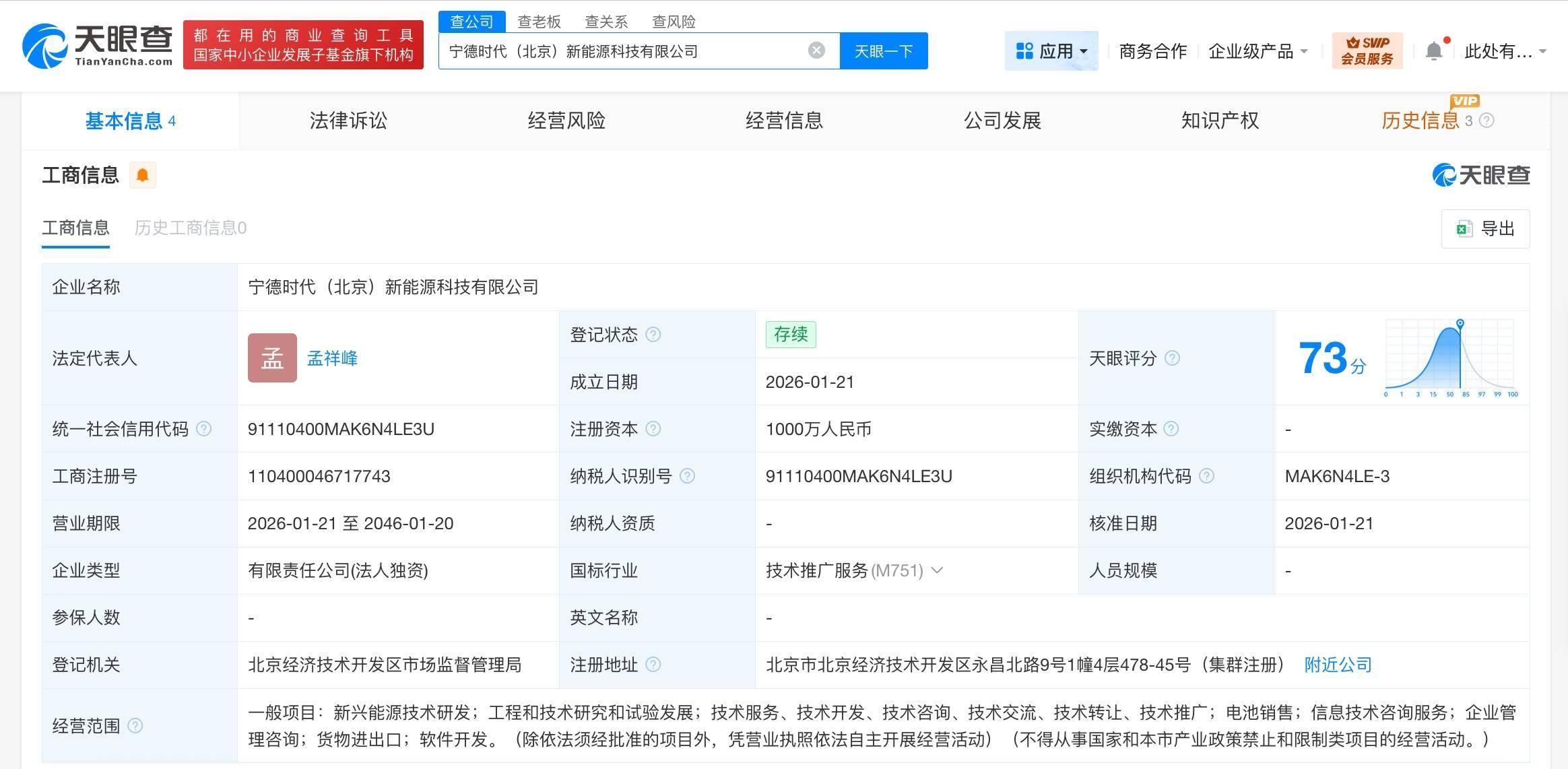
来源:市场资讯 天眼查工商信息显示,近日,宁德时代(北京)新能源科技有限公司成立,法定代表人为孟祥峰,注册资本1000万人民币,经营范围含新兴能源技术研发、 工程和技术研究和试验发展、电池销售、信息技术咨询服务、企业管理咨询、软件开发等。股东信息显示,该公司由宁德时代(300750)全资持股。 ...

以“AI+”点燃新型工业化发展引擎
Xin Hua Ri Bao· 2026-01-23 01:40
Core Viewpoint - Suzhou Industrial Park is embarking on a new industrialization journey centered around "AI + Manufacturing," demonstrating strategic determination and continuous innovation in the face of global manufacturing intelligence trends [1] Group 1: Industrial Development Strategy - The park has focused on new industrialization for three consecutive years, maintaining its commitment to "industrial-based region, manufacturing-strong region" while adapting its tactical approach based on technological and industrial upgrades [1] - The strategic progression consists of three phases: the first phase emphasized "intelligent transformation and digitalization," the second phase focused on "strengthening the industrial chain," and the third phase aims for deep integration of "AI + manufacturing" to enhance quality and efficiency [1] Group 2: Economic Performance - The industrial economy of the park has accelerated, with the total industrial output value surpassing 600 billion and 700 billion, projected to reach 736.2 billion by 2025, with an average annual growth rate of 6.8% [2] - High-tech industries account for 72.5% of the total industrial output value, showcasing strong growth potential [2] - The park has nurtured 7 industrial enterprises with over 10 billion in revenue, 72 listed companies, and over 3,200 national high-tech enterprises, forming a robust enterprise ecosystem [2] Group 3: AI Integration and Future Plans - The park aims to achieve an industrial output value exceeding 770 billion this year, focusing on smart, green, and integrated development across five dimensions: industrial quality and efficiency, enterprise development capability, technological innovation, "AI +" initiatives, and green development [3] - The transition from "adding AI" to "AI-driven" signifies a shift in competitive focus from individual factory intelligence to the overall regional industrial ecosystem leveraging AI for systemic transformation [3] Group 4: Policy Framework and Implementation - A comprehensive policy framework supporting "AI + manufacturing" has been established, including action plans and measures to drive the development of AI in manufacturing [4][5] - The policy emphasizes "scene-driven" and "element support" strategies, facilitating real manufacturing scenarios to uncover AI needs and enhance innovation ecosystems [4][5] Group 5: Case Studies and Industry Impact - Companies like Suzhou YR Technology have successfully scaled from millions to billions in revenue by deeply integrating AI into their manufacturing processes, demonstrating the potential of AI in enhancing productivity [5] - AI companies in the park, such as Sobot, are leveraging their technological innovations to empower various industries, with expectations of significant revenue growth in the coming years [5]

视频丨顶压前行、逆势增长 出口商品清单看中国外贸新变化
Yang Shi Xin Wen Ke Hu Duan· 2026-01-23 01:32
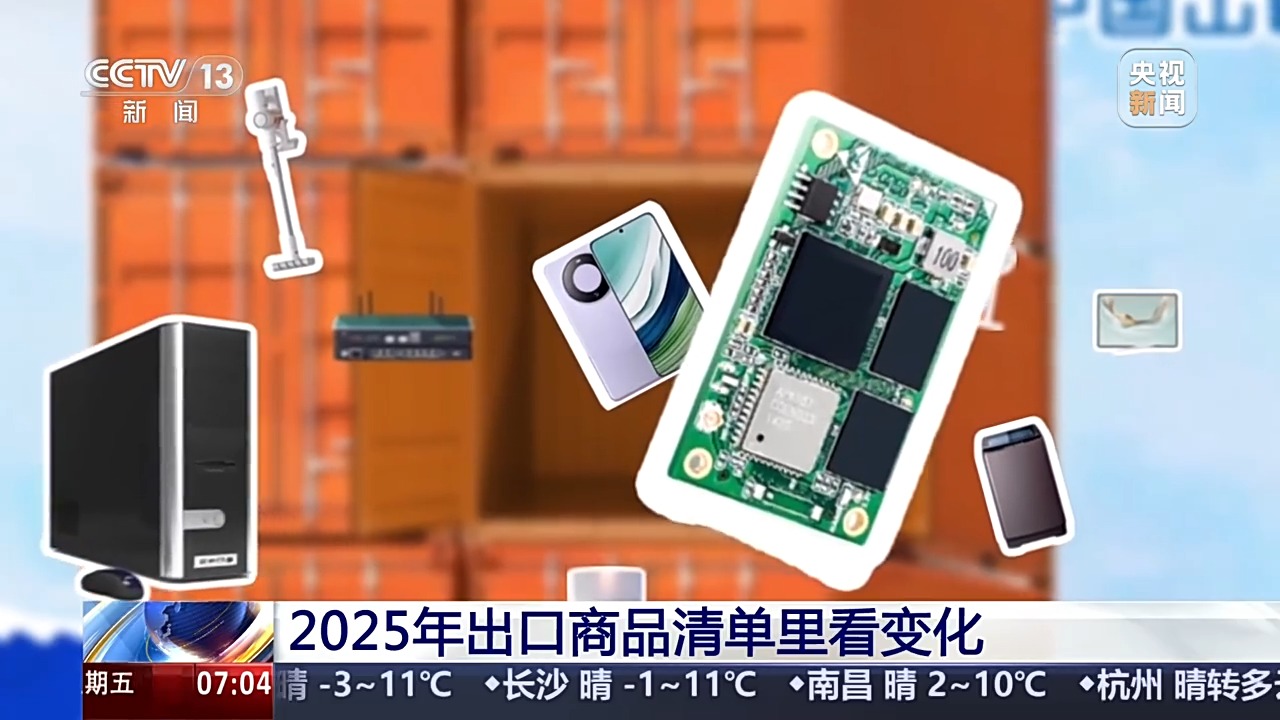
Core Viewpoint - China's foreign trade has shown resilience and growth over the past year, with notable changes in export products, particularly in high-tech sectors and emerging markets like Africa and Europe [2][4]. Group 1: Export Trends - The trend of "five increases and one decrease" indicates significant growth in exports to Asia, followed by Africa and Europe, with similar growth scales [2]. - High-tech products such as integrated circuits, smartphones, and data processing equipment have seen increased demand in Asia due to the region's push for green, smart, and digital transformation [4]. - In 2025, exports to Europe have shown new characteristics, with notable increases in products like transformers, air conditioners, and ice cream, contributing to a diverse export portfolio [6]. Group 2: Key Products - Transformers have experienced a 35.6% year-on-year increase in exports in 2025, driven by a supply gap in the U.S. and Europe and the need for updated electrical infrastructure [6][12]. - Drones have seen an impressive export growth of 45% in 2025, expanding their application beyond aerial photography to public service and specialized uses [14]. - The overall export product structure has shifted, with significant growth in categories like container ships and passenger vehicles, as well as high-tech products in biotechnology and aerospace [14]. Group 3: Market Dynamics in Africa - In Africa, exports of Chinese products have surged, with a 26.5% year-on-year increase, driven by consumer goods and major projects like offshore production platforms [6]. - In South Africa, multifunctional Bluetooth speakers have gained popularity, reflecting local consumer preferences for innovative designs [16]. - Nigeria has seen a 75% increase in sales of Chinese solar products, indicating a growing acceptance and integration of renewable energy solutions in the market [18][20].
全球大公司要闻 | 苹果官网降价1000元,京东推黄金手机壳
Wind万得· 2026-01-23 00:13
Group 1 - Alibaba's chip company Pingtouge plans to go public, leading to a positive market reaction and a significant increase in its stock price, reaching a new high since November last year [2] - Tesla's CEO Elon Musk announced plans to sell the humanoid robot Optimus to the public by the end of 2026 or 2027, while also expanding solar power capacity to 100 GW annually, indicating long-term strategies in renewable energy and AI [2] - Kioxia confirmed that its production capacity is fully sold out this year due to AI demand, with supply tightness expected to last until 2027, marking an unprecedented super cycle in the storage chip market [2] Group 2 - Xiaomi announced a share buyback plan of up to HKD 2.5 billion to stabilize its stock price and enhance investor confidence [5] - Yushutech clarified that it has not disclosed any sales data for 2025, with actual humanoid robot shipments expected to exceed 5,500 units [5] - Ruichuang Micro-Nano anticipates a net profit growth of approximately 93% year-on-year in 2025, reflecting strong market demand and competitive advantages [5] - Hengyi Petrochemical plans to repurchase shares worth between RMB 500 million to 1 billion to enhance stock value and protect shareholder interests [5] - Zhaoyi Innovation expects a net profit of around RMB 1.61 billion in 2025, a year-on-year increase of approximately 46%, with revenue projected at RMB 9.203 billion, up 25% [5] Group 3 - SpaceX is preparing for an IPO with an estimated valuation of $800 billion, potentially raising over $29 billion, which would be the largest IPO in history [7] - Apple is expanding the responsibilities of hardware chief John Ternus, signaling a potential succession plan, and is working on an AI chatbot based on Google's Gemini technology [7] - Microsoft has seen target price downgrades from Citigroup and Wells Fargo, while launching a new AI model capable of understanding language commands [7] - Amazon plans to cut thousands of corporate jobs as part of an ongoing layoff strategy and is launching a new "European Sovereign Cloud" service [7] - Meta's lobbying expenditures are expected to exceed $26 million in 2025, with Threads surpassing 400 million monthly active users [7] Group 4 - Mitsubishi Fuso is forming a joint venture with Foxconn to develop and produce electric buses in Japan [12] - Reliance Industries in India is reportedly set to purchase Russian oil compliant with sanctions in February and March [12] - Air India is expected to announce a $1.6 billion loss primarily due to accidents and flight cancellations [12] Group 5 - Volkswagen Group is projected to lead in European electric vehicle sales in 2025, with a 56% year-on-year increase to 274,400 units, surpassing Tesla [14] - Mercedes-Benz launched a new electric GLC based on the MB.EA platform, with plans to introduce over 15 new models by 2026 [14] - Nestlé is initiating the sale of its water division, preparing for up to €3 billion in financing, while also investing $60 million in Pakistan [14] - Rio Tinto reported higher-than-expected copper production in Q4 and plans to cut production at its Yarwun alumina refinery by 40% [14]
宿迁新材料产业晋级千亿方阵
Xin Hua Ri Bao· 2026-01-22 22:03
Group 1 - The core objective of Suqian City is to accelerate the growth of its advantageous industries, targeting a total output value of over 520 billion yuan from six industrial clusters by 2025, with the new materials industry becoming the third trillion-yuan industrial cluster after new energy and high-end textiles [1] - Suqian City will implement the "New Round of Trillion-Level Industry Attack Three-Year Action Plan (2025-2027)" focusing on strengthening, supplementing, and extending the industrial chain to develop the new materials industry cluster, with 72 key projects including green platinum nano materials [1] - The city aims to enhance its manufacturing sector by optimizing financial, land, and talent resources, achieving the third-highest growth rate in manufacturing loans in the province, thereby providing solid support for the quality and efficiency of the industrial cluster [1] Group 2 - In 2026, Suqian plans to strengthen its "619" advanced manufacturing system, targeting an industrial output value exceeding 560 billion yuan, with all six industrial clusters achieving over 100 billion yuan and 19 industrial chains exceeding 10 billion yuan [2] - The new materials industry is expected to focus on high-end and differentiated markets, aiming for an output value of 110 billion yuan, while mature trillion-yuan clusters like new energy and high-end textiles will consolidate their advantages through smart transformation initiatives [2] - The city is set to build a modern industrial system that supports multi-polar and collaborative development, accelerating the establishment of a technology-driven digital manufacturing base in the Yangtze River Delta [2]
经济发展新旧动能加快转换
Jing Ji Ri Bao· 2026-01-22 21:59
Group 1 - The core viewpoint emphasizes that the transition from old to new economic drivers is a complex process characterized by coexistence and mutual stimulation, leading to profound adjustments in industrial layout, employment structure, and regional economic patterns [1][4] - By 2025, China's economy is projected to exceed 140 trillion yuan, showcasing resilience and a significant transformation towards a more advanced economic structure [1] - The high-tech manufacturing sector is expected to account for 17.1% of the industrial added value, with equipment manufacturing reaching 36.8%, both significantly outpacing the average industrial growth rate [1] Group 2 - The consumer market is shifting from goods consumption to service consumption, with service retail expected to grow by 5.5%, outpacing goods retail by 1.7 percentage points [2] - Investment in fixed assets is anticipated to decline by 3.8% in 2025, influenced by a decrease in real estate investment, yet the investment structure is optimizing towards technology innovation and industrial upgrades [2] - The transition is driven by policy guidance, market demand, and technological innovation, with China's large-scale market providing ample application scenarios and a complete industrial system fostering innovation [3] Group 3 - Future characteristics of the transition include integration across industries, resilience in economic structure, and a higher level of openness to global markets, which will introduce external resources for new economic drivers [4] - The process of transitioning will not be a simple linear replacement but rather a complex interplay of old and new, with emerging industries experiencing growth opportunities while traditional sectors face transformation challenges [4]