资产管理

Search documents
比特币巨鲸转向华尔街:超30亿美元通过ETF回流传统金融体系
Hua Er Jie Jian Wen· 2025-10-21 13:46
Core Insights - Large Bitcoin holders are transferring wealth from blockchain to Wall Street balance sheets through new ETFs, allowing them to incorporate digital assets into the regulated financial system without selling [1][2] - A regulatory change this summer permits large investors to conduct "physical exchanges," enabling Bitcoin to be exchanged for ETF shares, a process that has been widely used in most ETFs but was only approved for Bitcoin products in July [1][3] Group 1: Benefits of Conversion - By converting Bitcoin into ETF shares, investors can maintain the same exposure to cryptocurrency while transforming it into a form recognized by the financial system [3] - Holdings in brokerage accounts can be used as collateral for loans, estate planning, and other financial operations, which are cumbersome and risky in private digital wallets [3][4] - Wealth management services are enhanced for investors who transfer significant Bitcoin holdings into ETFs, allowing them to access higher levels of service [4] Group 2: Market Dynamics - There is a growing demand for these conversion transactions as large Bitcoin holders recognize the convenience of holding exposure within existing financial advisor or private banking relationships [4][6] - BlackRock has facilitated over $3 billion in such conversion transactions, indicating strong interest from investors in moving their holdings to wealth management platforms [1][4] - As regulatory clarity increases, more investors and financial institutions are expected to participate in these conversion transactions, further integrating Bitcoin into the mainstream financial system [6] Group 3: Wall Street's Role - More Wall Street institutions are likely to utilize these physical exchange transactions, with banks playing a limited role in facilitating these trades, particularly in the ETF creation process [5] - The irony of Bitcoin's evolution is noted, as it was originally created to escape traditional finance, yet its largest holders are now seeking to reintegrate into that system [6]

深圳财富管理总规模超31万亿元 设立全国首只AIC母基金
Sou Hu Cai Jing· 2025-10-21 12:28
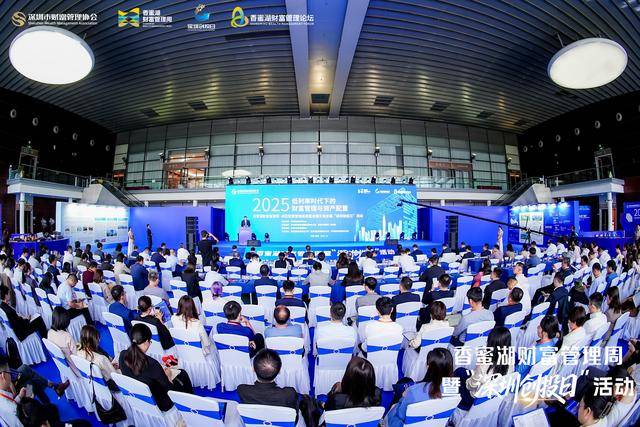
Core Insights - The "2025 Xiangmi Lake Wealth Management Week" is a significant annual event aimed at promoting Shenzhen as an international wealth management center, featuring over 900 representatives from various financial institutions [1][3] - Shenzhen's wealth management ecosystem has grown to manage over 31 trillion yuan, nearing the levels of Hong Kong and Singapore, with a strong focus on integrating technology and finance [4][5] Group 1: Wealth Management Growth - As of now, the total assets under management by trust, wealth management, and insurance asset management institutions in China exceed 100 trillion yuan, with a year-to-date growth of nearly 6% and a year-on-year increase of over 15% [3] - Shenzhen's wealth management institutions manage assets exceeding 31 trillion yuan, with the financial center of Futian accounting for approximately 60% of this total [4][5] Group 2: Financial Innovation and Collaboration - The establishment of the first AIC mother fund in Shenzhen, with a scale of 7 billion yuan, aims to support the city's "20+8" industrial development strategy [6] - The wealth management sector in Shenzhen is actively exploring new paths for value creation through technology innovation and industrial upgrades, particularly in emerging industries [5] Group 3: Market Position and Future Outlook - By the end of 2024, the total asset management scale in China is projected to reach approximately 163 trillion yuan, with Shenzhen's share being 31 trillion yuan, ranking third among major cities [7] - The Shenzhen Wealth Management Association has facilitated a growth of 2 trillion yuan in the Bay Area's wealth management sector and organized over 90 exchange events in the field [9][10]

贝莱德、道富调整规则保住法债仓位 欧元区“黄金位置”岌岌可危
智通财经网· 2025-10-21 09:04
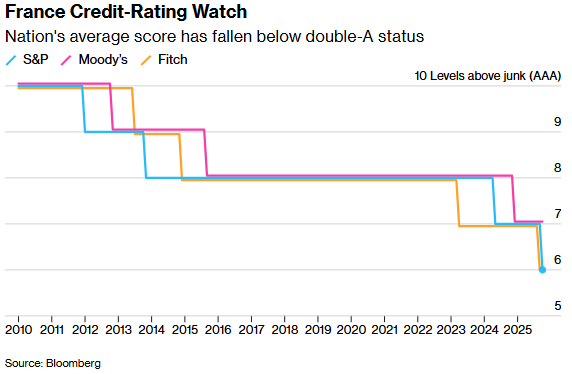
Core Insights - Major asset management firms are modifying investment rules to avoid forced selling of French government bonds following a downgrade in credit ratings [1][3] - State Street and BlackRock have adjusted their funds' benchmarks to allow continued holding of French bonds despite the downgrade [1][5] - The recent downgrade by S&P Global Ratings has led to concerns about potential forced sales by funds with strict investment criteria [3][7] Group 1: Investment Strategy Adjustments - State Street's fund, with a size of €1 billion (approximately $1.2 billion), and BlackRock's fund, sized at €289 million, have removed strict AA credit rating benchmarks [1] - BlackRock's ETF successfully avoided the impact of the French downgrade by adjusting its benchmark rules, which were previously stricter than other indices [3][5] - State Street's fund has shifted to a customized index that allows for more flexibility in investment criteria, with French bonds making up 39% of its holdings [5][6] Group 2: Market Implications - The downgrade of French bonds has raised concerns about potential forced sales, which could lead to high transaction costs and concentrated portfolios [3][4] - Despite the downgrade, French bonds remain within the investment-grade category, which is crucial for many bond funds [7] - Analysts suggest that if France's rating continues to decline, it may lose its favorable position among Eurozone issuers, potentially leading to higher bond yields [10]

全球保险巨头加速转向私募资产 贝莱德:此为“结构性转变”非短期配置
Zhi Tong Cai Jing· 2025-10-21 06:56
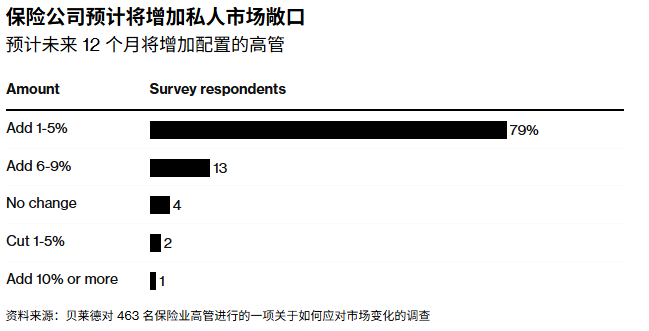
Core Insights - The global insurance industry, managing $23 trillion in assets, is planning to increase allocations to private markets as a strategy to smooth long-term returns [1] - A survey of 463 insurance executives revealed that 93% expect to increase private asset holdings in the next 12 months, while only 3% anticipate a decrease [1] - Investment-grade private credit, including infrastructure debt and private bonds, remains the most favored asset class among investors [1] Group 1 - Insurance companies have increasingly embraced alternative assets, with private equity firms acquiring insurance companies driving growth in private credit, raising concerns among lawmakers about potential risks in the $1.7 trillion market [4] - Executives in the insurance industry are currently prioritizing the diversification and low volatility potential of private assets over merely seeking higher returns [4] - Liquidity is the primary concern for insurance executives when selecting private assets [4] Group 2 - The interest in private assets is seen as a long-term structural shift rather than a trend driven by low interest rates, according to BlackRock's global insurance strategist Mark Erikson [5] - Despite significant investments in private credit by large insurance companies, smaller firms are also beginning to increase their allocations to alternative assets [4] - Following the prolonged low interest rate environment since the 2008 financial crisis, insurance companies have turned to private markets for yield, and recent interest rate hikes have not led to a reduction in private asset allocations [4]
达利欧复制了“AI达利欧”:谈论投资时“有本人80%的效果”
美股IPO· 2025-10-21 03:37
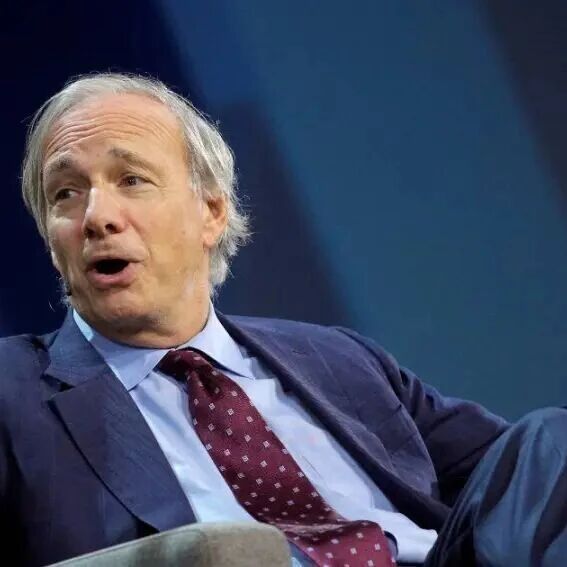
Core Insights - Ray Dalio has launched his AI clone "Digital Ray," which is designed to replicate his unique investment principles and decision-making logic, achieving 80% effectiveness in investment discussions and 95% in life principles [1][2][8] - The AI clone aims to serve as a "thought partner" for a broader audience, allowing for unlimited dialogue and the dissemination of Dalio's lifelong learnings [8][10] Group 1: AI Clone Development - The AI clone is a natural extension of Dalio's work over the past 40 years, beginning with the establishment of a computer decision-making system shortly after founding Bridgewater Associates [2][12] - Dalio emphasizes the distinction between his AI clone and general language models, stating that the clone replicates specific individual values, perspectives, and preferences, unlike generic AI products [5][14] - The AI clone has undergone extensive training, with Dalio documenting his principles and decision rules over decades, which were then programmed into the system [19][21] Group 2: Performance and Testing - Initial tests indicate that "Digital Ray" can engage in conversations with approximately 95% similarity to Dalio's views on life and work principles, and 80% on topics related to markets and investments [23] - The AI clone is expected to improve further with ongoing training, potentially surpassing Dalio in knowledge and decision-making speed [22][23] Group 3: Future Implications - Dalio's initiative may signal a transformation in how financial expertise is disseminated, moving from static formats like books to interactive, personalized AI interactions [8][10] - The development of personalized AI clones could lead to a future where individuals have tailored AI companions that reflect their values and preferences, enhancing decision-making processes [27]
日股再创新高,野村:日股的关键在于高市早苗能撑多久
美股IPO· 2025-10-21 03:37
Core Viewpoint - The Japanese stock market is experiencing a strong upward trend, driven by expectations of stable government and economic reforms under the leadership of new Prime Minister Kishi Sanae, rather than solely relying on inflationary policies [1][5][6]. Group 1: Market Performance - On October 21, the Japanese stock market opened strong, rising by 1% to reach 49,675.43 points, setting a new historical high [2]. - The Tokyo Stock Exchange index also followed suit, approaching its historical peak [2]. Group 2: Market Dynamics - The driving force behind the market's momentum is the strong expectation that Kishi Sanae's government will maintain an expansionary fiscal policy [5]. - The concept of "Kishi trading" is evolving from a focus on inflationary measures and weak yen to a greater emphasis on political stability and structural economic reforms [6]. Group 3: Political Support and Market Stability - Political support rates are critical for the sustainability of the stock market's upward trend. A recent poll indicated a support rate of 44% for Kishi Sanae's cabinet, significantly higher than previous administrations, while the Liberal Democratic Party (LDP) support stands at only 20% [7]. - Analysts suggest that a weak government may rely more on inflationary measures, which could undermine the foundation of "Kishi trading" [7]. Group 4: Cautious Investor Sentiment - Despite the market's enthusiasm, some investment managers express caution regarding the new coalition government's stability and its ability to implement expansive policies [8]. - Concerns have been raised about the political and economic limitations that may hinder Kishi's ability to pursue a large-scale expansion agenda [8].
达利欧复制了“AI达利欧”
Hu Xiu· 2025-10-21 03:16
Core Insights - Ray Dalio, founder of Bridgewater Associates, is developing an AI clone named "Digital Ray" to digitize his investment principles and decision-making framework for broader audience engagement [1][2][6] - The AI clone aims to facilitate unlimited conversations, allowing users to explore the thought processes of one of the world's most successful investors [7][8] Group 1: AI Clone Development - The AI clone is a natural extension of Dalio's work over the past 40 years, designed to replicate his unique perspectives and decision-making style [3][19] - "Digital Ray" has achieved an 80% effectiveness in discussing market and investment topics and a 95% effectiveness in discussing life and work principles compared to Dalio himself [3][23] - The AI clone is distinct from general language models (LLMs) as it focuses on specific individual values and preferences, rather than being a generic product [5][14] Group 2: Investment Philosophy and Impact - Dalio's investment insights are highly regarded, with a personal wealth of $19.2 billion and Bridgewater managing $92 billion in assets [6] - The introduction of the AI clone may signify a transformation in how financial expertise is disseminated, moving from static formats to interactive, personalized channels [7][8] - Dalio's approach emphasizes the importance of integrating individual values and principles into decision-making processes, which he believes enhances the effectiveness of AI in providing guidance [9][28] Group 3: Future Prospects - The AI clone is currently in its early stages, with ongoing testing and improvements expected to enhance its capabilities [17][24] - Dalio envisions a future where personalized AI can serve as trusted decision-making partners, surpassing the limitations of current general AI models [29][30] - The development of "Digital Ray" reflects a broader trend towards creating individualized AI that aligns with users' preferences and values, potentially revolutionizing personal and professional decision-making [29][30]
达利欧复制了“AI达利欧”:谈论投资时“有本人80%的效果”
Hua Er Jie Jian Wen· 2025-10-21 01:31
Core Insights - Ray Dalio, founder of Bridgewater Associates, has introduced an AI clone named "Digital Ray" that encapsulates his investment principles and decision-making framework, aiming to provide a digital "thought partner" for a broader audience [1][3][16] - The AI clone is designed to replicate Dalio's unique perspectives and values, achieving approximately 80% effectiveness in market discussions and 95% in life and work principles [1][16] - Dalio distinguishes his AI clone from general large language models (LLMs), emphasizing that the clone embodies specific individual traits and decision-making philosophies, unlike LLMs which are generalized and may contain inaccuracies [3][9][21] Group 1: AI Clone Development - The AI clone represents a natural extension of Dalio's work over the past 40 years, beginning with the establishment of computer decision systems shortly after founding Bridgewater [6][7] - The AI clone aims to facilitate unlimited conversations with individuals Dalio previously could not engage with due to time constraints [6][8] - The training of the AI clone involved extensive documentation of Dalio's principles and decision-making processes, allowing it to perform at a level comparable to Dalio himself [13][15] Group 2: Distinction from General AI - Dalio's AI clone is designed to replicate specific individual characteristics, including values, perspectives, and preferences, making it a reliable decision-making guide [9][10] - Unlike LLMs, which are seen as general products lacking philosophical wisdom and creativity, the AI clone is tailored to reflect Dalio's unique insights [3][21] - The AI clone's ability to engage in deep conversations and provide personalized advice sets it apart from existing AI models, which often deliver generic responses [12][22] Group 3: Future Implications - The introduction of Digital Ray may signal a transformation in how financial expertise is disseminated, offering an interactive and personalized channel for learning from successful investors [3][16] - Dalio anticipates that as the AI clone evolves, it will become more knowledgeable and capable of making faster decisions, potentially surpassing its human counterpart [16][17] - The ongoing development and testing of the AI clone aim to refine its capabilities, with the expectation that it will serve as a valuable thought partner for users [17][18]
高盛高喊“逢低布局” 称这三家高收益另类资产管理巨头风险回报比具“吸引力”
智通财经网· 2025-10-20 22:33
Core Viewpoint - High-yield alternative asset management firms are facing stock price pressure due to a series of high-profile bankruptcies raising concerns about bad debts, but Goldman Sachs sees this as a potential "buying opportunity" for Apollo Global Management, Ares Management, and Blue Owl Capital [1][2] Group 1: Market Sentiment and Stock Performance - The recent bankruptcies of First Brands and Tricolor have heightened tension in the debt market, with JPMorgan CEO Jamie Dimon warning that seeing one "cockroach" often indicates more to come [1] - Year-to-date, Apollo Global Management's stock has dropped approximately 13%, Ares Management by about 18%, and Blue Owl Capital nearly 30% [1] - Goldman Sachs notes that the current risk-reward ratio for these three companies is becoming increasingly attractive, maintaining a "buy" rating for Apollo and Ares, while giving Blue Owl a "neutral" rating [1] Group 2: Default Risks and Private Credit - Current market focus on defaults is primarily on traditional bank-led syndicate loans rather than private credit, with non-performing loans in private credit at only about 1%, significantly lower than the 3%-4% peak during past downturns and 7%-8% during the financial crisis [1] - Even if defaults are controlled, asset management companies' stock prices may still be pressured by redemption pressures, which could weaken fee income [2] - Private credit funds typically have long lock-up periods, and retail funds often limit quarterly redemptions to 5% of assets, which helps stabilize management fees despite market fluctuations [2] Group 3: Valuation and Future Outlook - The private credit concept has been overly successful in the past three years, leading to inflated expectations and stock prices for asset management companies [2] - Despite potential pressures in 2025, these companies have significantly outperformed the S&P 500 over the past three years [2] - Current valuations reflect this reality, with Ares' forward P/E ratio over 24 times (up from 17 times three years ago), Apollo at 14 times (up from 8 times), and Blue Owl at 17 times (up from 14 times) [2] - The combination of manageable bad debts, limited redemptions, stable fee bases, and valuation corrections suggests that current pullbacks may present opportunities for long-term investors rather than signaling an end [2]



金融破段子 | 明天后天大后天的市场,都无法预测
中泰证券资管· 2025-10-20 11:31
Core Viewpoint - The article discusses the phenomenon of overconfidence in investment decisions, highlighting how investors often make contradictory judgments based on market movements, leading to poor decision-making and increased trading costs [5][8]. Group 1: Investor Behavior - Investor A's behavior illustrates the tendency to make impulsive decisions based on recent market performance, switching from aggressive buying to a defensive stance within a short period [4][6]. - Overconfidence is a common trait among investors, leading them to overestimate their abilities and make high-frequency decisions that may not reflect the actual market conditions [5][8]. Group 2: Market Dynamics - The article emphasizes the unpredictability of the market, stating that even in a bullish phase, short-term market movements are difficult to forecast [8]. - It warns that frequent decision-making, especially with low-quality judgments, can result in higher transaction costs and losses [8]. Group 3: Decision Quality - The importance of improving decision quality is highlighted, especially during periods of strong market performance, where thorough research is essential for portfolio adjustments [8]. - The article references Peter Lynch's warning about the false confidence many investors have in predicting stock prices, suggesting that such beliefs are often contradicted by market realities [8].