
商业零售

Search documents
北京CBD千亿规模国际级商圈初步建成
Sou Hu Cai Jing· 2026-01-14 15:51
Core Insights - Beijing CBD has established itself as a significant international business district, ranking sixth globally and second in Asia during the "14th Five-Year Plan" period [1][2] Economic Contribution - The tax revenue from Beijing CBD accounts for over 60% of the total tax revenue in Chaoyang District during the "14th Five-Year Plan" [2] - There are over 140 buildings in the CBD generating tax revenues exceeding 100 million yuan, with one building surpassing 1 billion yuan, three buildings over 500 million yuan, and 20 buildings over 100 million yuan [2] Internationalization and Competitiveness - The CBD hosts more than 10,000 foreign enterprises and 125 regional headquarters of multinational companies, along with nearly 300 foreign-licensed financial institutions, representing about 80% of the district [2] - The area has achieved a card consumption amount exceeding 120 billion yuan for three consecutive years, maintaining its position as the top consumer area in the city [2] - Beijing CBD has been recognized as the top consumer competitive business district in China by Forbes for three consecutive years and is set to be included in the top tier of the world-class business district list by 2025 [2] Future Development Plans - The CBD aims to drive high-quality development through high-level openness, focusing on becoming an "International Consumption Central Vitality Zone" [2] - Plans include upgrading consumption formats, enhancing the introduction of international brands, and creating unique consumption landmarks by 2026 [2] - The introduction of tax refund services and cultural IP activities is intended to optimize the consumption environment, aiming for a vibrant city core that operates 24/7 [2] Legal and Financial Integration - The establishment of the "Beijing International Law and Business Integration Demonstration Zone" is underway, leveraging the CBD's legal and business service foundation [3] - The zone aims to create a rule system aligned with international standards and enhance cross-border service capabilities through a comprehensive service center [3] - Future initiatives will include pressure testing in areas such as commercial arbitration and intellectual property, as well as pilot programs for joint ventures between domestic and foreign law firms [3] Financial Sector Development - The CBD will also develop a new quality productivity integration demonstration area to attract platform headquarters and leading industry enterprises [3] - Plans are in place to establish an international financial hub to draw significant financial institutions and enhance financial services for the real economy [3]

新华百货(600785.SH):目前不存在市场传闻所述的向上市公司注入半导体等相关资产的事项
Ge Long Hui A P P· 2026-01-14 14:20
格隆汇1月14日丨新华百货(600785.SH)公布,公司关注到有个别投资者在相关媒体平台发表不实言论及 传闻,针对公司控股股东协议转让部分股份事宜,将涉及后期向公司注入半导体、集成电路、芯片等相 关资产,引发公司股票市场波动。经核实,目前不存在市场传闻所述事项。公司当前经营主业为商业零 售,目前经营活动、经营秩序正常,外部市场环境、行业政策亦未发生重大变化。不存在与公司有关的 应披露而未披露的其他重大事项。 ...

从“卖商品”到“造场景”,湖滨商圈解锁消费新次元
Mei Ri Shang Bao· 2026-01-14 06:22
Core Insights - The article highlights a transformative consumer revolution occurring in the Hangzhou Lakeside business district, shifting from traditional retail to immersive experience-driven consumption [1][2][3] Group 1: Business Transformation - The Lakeside business district, with a commercial area of 500,000 square meters, is transitioning from a "selling products" model to a "creating scenes" ecosystem, recognized as a national model for consumer scene innovation [1] - The Lakeside Yin Tai in77 features a "Return to Hogwarts" theme, showcasing detailed recreations of iconic elements from the Harry Potter series, attracting numerous fans and enhancing the immersive experience [1][3] Group 2: Technological Empowerment - Digital technology is enhancing consumer experiences, with the "Xizi Bridge" becoming a popular attraction featuring a 2400 square meter outdoor 3D LED screen that can draw up to 20,000 visitors during peak events [2] - The introduction of the AI cultural tourism space and a VPS open-source system aims to expand the boundaries of digital consumption and provide a platform for tech companies to create virtual reality content [2] Group 3: Consumer Engagement - The Lakeside business district is evolving into a vibrant ecosystem where commercial spaces facilitate unique consumer encounters, demonstrating the shift from mere product transactions to immersive experiences [3] - Lakeside 88, transformed from a traditional shopping center, has become a hub for anime and gaming enthusiasts, with 60% of its 89 brand stores focusing on the "pan-dimensional" theme, resulting in a significant increase in foot traffic [3] Group 4: Emerging Trends - The newly opened Gonglian CC "Dimension Station" has quickly gained popularity, attracting major IP brands and establishing a strong presence in the two-dimensional market, with 10 new companies setting up in the area [4] - Notable global IP companies have established independent subsidiaries in the district, reinforcing the area's position in the two-dimensional industry landscape [4]
涡阳入选全国县域商业“领跑县”
Xin Lang Cai Jing· 2026-01-13 16:42
Core Insights - The Ministry of Commerce has recognized Guoyang County in Bozhou, Anhui Province, as a model for high-quality county-level commercial development, showcasing its innovative vitality and development momentum [2] Group 1: Logistics and E-commerce Development - Guoyang County has established a smart logistics distribution system at the county, town, and village levels, integrating resources from 10 courier companies to create a 16,000 square meter e-commerce logistics park, significantly improving efficiency and reducing labor costs [2] - The county has achieved same-day delivery for rural areas, with courier prices reduced by over 20%, facilitating the flow of quality industrial products to rural areas and local agricultural products to urban markets [2] Group 2: E-commerce Growth and Services - Guoyang County has provided comprehensive e-commerce services to over 200 businesses and individuals, including training, online store setup, product photography, and trademark registration, resulting in full coverage of administrative villages by rural e-commerce [3] - The county's online retail sales of rural products are projected to reach 2.18 billion yuan in 2024, with 9,006 online stores operating within the county [3] Group 3: Economic Growth and Consumer Market - The county's total retail sales of consumer goods are expected to grow from 25.68 billion yuan in 2023 to 27.09 billion yuan in 2024, reflecting a year-on-year increase of 5.5%, with a forecast of 28.39 billion yuan by 2025 [3] - Guoyang County's GDP is projected to exceed 50 billion yuan in 2024, with over 8,900 new urban jobs created and fixed asset investment reaching 17.44 billion yuan, marking a 5% year-on-year growth [4]
北京商业论坛解码消费新赛道
Bei Jing Shang Bao· 2026-01-13 15:42
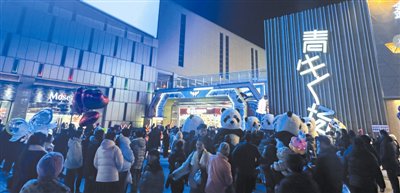
Core Insights - The emerging force centered around fashion consumption is significantly shaping the commercial competitiveness of cities and unlocking infinite possibilities for future development [1] - The 2025 Beijing Commercial Forum will focus on "Trendy Transformation: New Demand and New Supply," highlighting the dynamics of emerging consumption and its impact on Beijing's commercial landscape [1] Group 1: Emerging Consumption Trends - Emerging consumption is driving a transformation in Beijing's commercial landscape, moving from traditional transaction spaces to integrated environments [1] - Trends such as fashion consumption and emotional consumption are gaining traction, showcasing strong market potential and becoming key pathways for elevating Beijing's commercial quality [1][2] - The "14th Five-Year Plan" emphasizes the importance of new demand leading to new supply, creating a dynamic interaction that shapes the future commercial landscape [1] Group 2: Blue Book Insights - The annual report "2025 Beijing Commercial Development Blue Book" will present new consumption logic, scenarios, and dynamics, focusing on "Emotional Value," "Scenario Innovation," and "Cultural Cross-Border" [2] - The report highlights a shift in consumer behavior from "functional satisfaction" to "experience enhancement," with emotional value activating consumption momentum [2][3] - Unique local shops are creating distinctive Citywalk routes, becoming landmarks that integrate culture, commerce, and tourism in Beijing [2] Group 3: Forum Agenda and Collaborations - The forum will address market trends in fashion consumption, pet economy, and trendy toys, providing insights into business model iterations and user operations [3] - A strategic cooperation agreement will be signed between the "Top Ten Commercial Brand Activities" committee and Ningbo Bank Beijing Branch to explore how financial services can better meet consumer needs [3] - The forum aims to answer questions about the future direction of Beijing's commercial landscape and how fashion will reshape consumption [3]
海汽集团:万宁分公司拟与海南万家福玛特商贸有限公司签订《房屋(场地)租赁合同》
Ge Long Hui· 2026-01-13 12:19
Core Viewpoint - The company aims to leverage its station resources to explore the potential of the tertiary industry, reduce pressure on its main business, and promote sustainable development by publicly leasing the old bus station in Wanning [1] Group 1: Leasing Details - The company approved the public leasing of the Wanning old bus station building, which has a total area of 1,634.46 square meters [1] - The lease term is set for 9 years, with a preparation period for renovations not exceeding 6 months [1] - The annual rent is not less than the assessed rent of 341,340 yuan, translating to a monthly rent of 28,445 yuan [1] Group 2: Financial Terms - A security deposit of 100,000 yuan is required, with rent payments to be made quarterly [1] - The rental fee will increase by 1% every three years [1] Group 3: Business Scope - The permitted business activities for the leased space include legal commercial operations such as catering, tea arts, and chess [1] - The final leasing rights were awarded to Hainan Wanjiafu Mart Trading Co., Ltd. [1]

自贸港迎百年巴博盛会,华商论坛聚四海英才
Sou Hu Wang· 2026-01-12 07:38
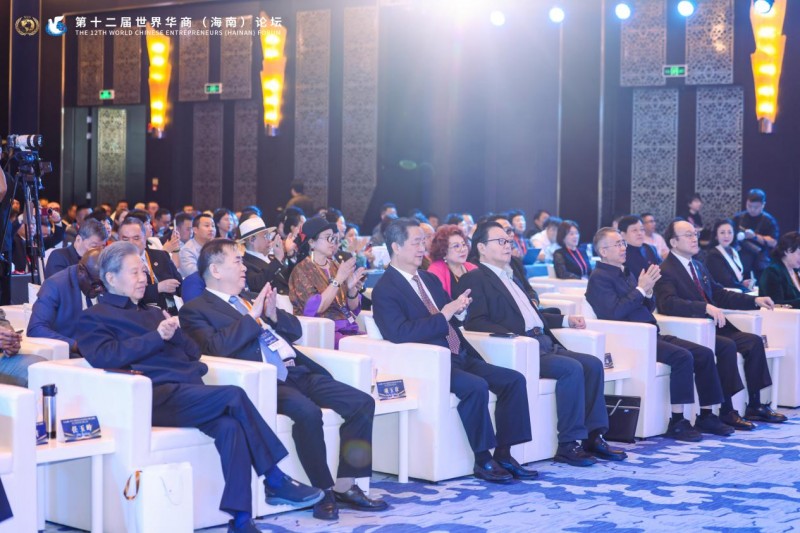
Core Viewpoint - The 110th Panama-Pacific International Exposition and the 12th World Chinese Business Forum were held in Sanya, Hainan, focusing on "inheriting a century-old brand and revitalizing the national economy," highlighting the achievements of Chinese brands and the strategic opportunities presented by Hainan's free trade port [1][2]. Group 1: Event Overview - The event gathered representatives from UN NGOs, various countries' Chinese business communities, and diplomatic missions, facilitating deep exchanges on brand economy and global cooperation [1]. - The forum passed the "World Chinese Business (Hainan) Declaration," outlining a common direction for the future development of the Chinese business community [2]. Group 2: Key Speakers and Insights - Ren Yuling, former member of the National Committee of the Chinese People's Political Consultative Conference, emphasized the role of global Chinese businesses in economic development and cultural integration [2]. - Business leaders, including Ubat from the US-China Economic and Trade Promotion Association, highlighted Hainan's unique policy advantages as a core platform for international competition and promoting national brands [4]. Group 3: Awards and Recognition - The awards ceremony recognized 18 outstanding companies across various sectors, with the highest honor, the "Special Gold Award," going to Cangzhou Golden Lion International Hotel and Xinheng Shopping Mall for their achievements in service systems and customer experience [24][26]. - The event also featured the presentation of the "International Heritage and Contribution Award" and the "Outstanding Contribution Award" to key figures, acknowledging their roles in promoting international exchanges [15][17]. Group 4: Impact on Hainan and Future Prospects - The event is seen as a significant opportunity for Hainan to enhance its international influence and drive the upgrade of its modern service industry, attracting global business attention and resources [21]. - The successful hosting of the event is viewed as a continuation of the century-old spirit of the Panama-Pacific Exposition, establishing a platform for Chinese brands to gain international recognition and fostering a cooperative bridge for mutual benefits [31].
A股午评:沪指涨0.75% 两市半日成交额突破2.3万亿
2 1 Shi Ji Jing Ji Bao Dao· 2026-01-12 04:02
Market Performance - The Shanghai Composite Index rose by 0.75%, the Shenzhen Component Index increased by 1.31%, and the ChiNext Index gained 1.17% [1] - The trading volume in the Shanghai and Shenzhen markets reached 2.31 trillion yuan, an increase of 245.5 billion yuan compared to the previous trading day [1] - Over 3,800 stocks in the market experienced gains, with 139 stocks hitting the daily limit up [1] Sector Highlights - The AI application sector saw a significant surge, leading to a wave of limit-up stocks, including Ingrity Media with five consecutive limit-ups over six days, and others like Liou Co., Meian Health, Tianxia Show, and Shenguang Group with two consecutive limit-ups [1] - The commercial aerospace sector continued its strong performance, with Luxin Investment achieving ten limit-ups in twelve days, and Goldwind Technology and Tongyu Communication also showing notable gains [1] - The photovoltaic sector was active, with Dongfang Risen hitting the 20% limit-up [1] - The retail sector also saw gains, with Maoye Commercial and Sanjiang Shopping both hitting limit-ups [1] Declining Sectors - The oil and gas, as well as coal sectors, experienced the largest declines in the market [1]
场景焕新、业态融合、服务升级 北京商业多维激活消费新动能
Bei Jing Shang Bao· 2026-01-11 12:12
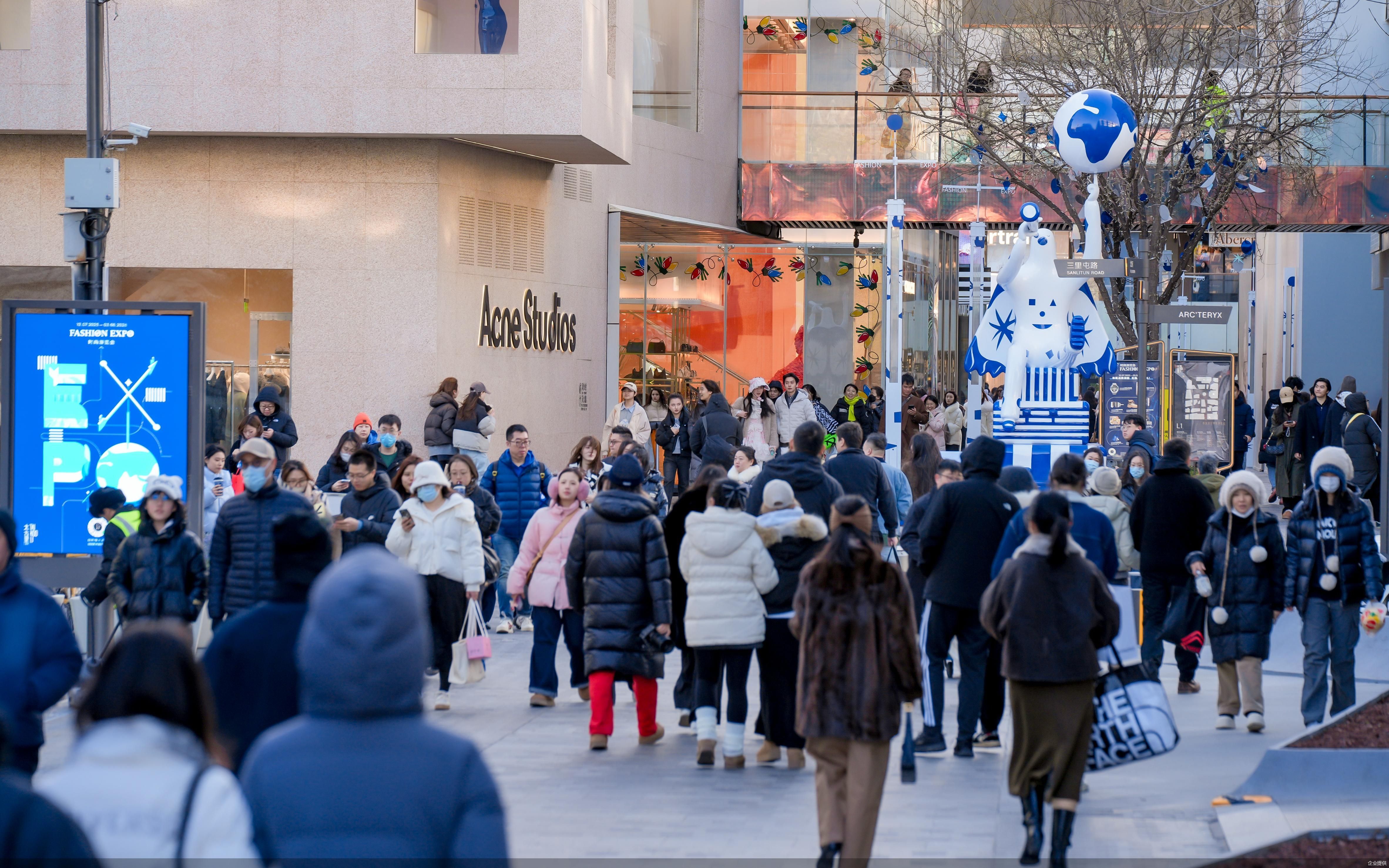
Core Insights - The national business work conference emphasized accelerating the cultivation of new growth points in service consumption and releasing the potential of service consumption [9] - Beijing has made significant progress in innovating and upgrading physical commerce, aiming to expand and upgrade commodity consumption and create an international consumption environment [1] Group 1: Commercial Supply Expansion - In the past year, Beijing's physical commerce has achieved breakthroughs in commercial supply, spatial layout, and experiential innovation, injecting strong vitality into the consumption market [4] - Over 960 new stores were added in Beijing from January to November 2025, with over 5,000 new stores established since 2019, including 12 global launch centers [4] - The city is focusing on transforming commercial spaces from "single function" to "multi-experience" through quality enhancement policies and creating a fusion matrix of various themes [5][6] Group 2: Restaurant Service Innovation - The restaurant sector has become a key driver of domestic demand, with a significant increase in customer traffic and sales during the 2026 New Year holiday [7] - Data shows that 58.1% of surveyed restaurants reported stable or increased customer flow, while 69.6% saw stable or increased takeaway orders [7] - The Beijing government is promoting high-quality development in the restaurant industry through various initiatives, including the establishment of characteristic dining streets and support for brand stores [8] Group 3: Future Outlook - Beijing's commercial strategy will focus on "scene renewal, business integration, and service upgrades," with plans to enhance the first-release economy and support the establishment of first-store gathering centers [13] - The city aims to create a more international consumption environment by improving high-quality supply, supporting international consumption clusters, and enhancing foreign payment services [13]
伊朗8名安全人员在骚乱中殉职
Xin Lang Cai Jing· 2026-01-11 11:01
Core Viewpoint - Eight Iranian security personnel were killed during riots in multiple cities from August 8 to 9, highlighting the escalating violence and unrest in the region [1] Summary by Relevant Categories Security and Law Enforcement - The Iranian police reported that eight security personnel sacrificed their lives while attempting to quell the riots, facing heavy gunfire and attacks from armed assailants [1] - Approximately 200 individuals identified as "terrorist leaders and operational heads" have been arrested across the country [1] Weapons and Violence - Significant quantities of ammunition and weapons, including grenades and Molotov cocktails, were seized from the rioters' hideouts [1] - Armed rioters have reportedly set fire to 26 residential homes, 34 mosques, 40 banks, 15 shopping centers, and 13 government buildings [1]