
纺织服装

Search documents
新春走基层|总台春晚这条“骐骥驰骋”红色羊绒围巾出自河北品牌
Xin Lang Cai Jing· 2026-02-16 18:20
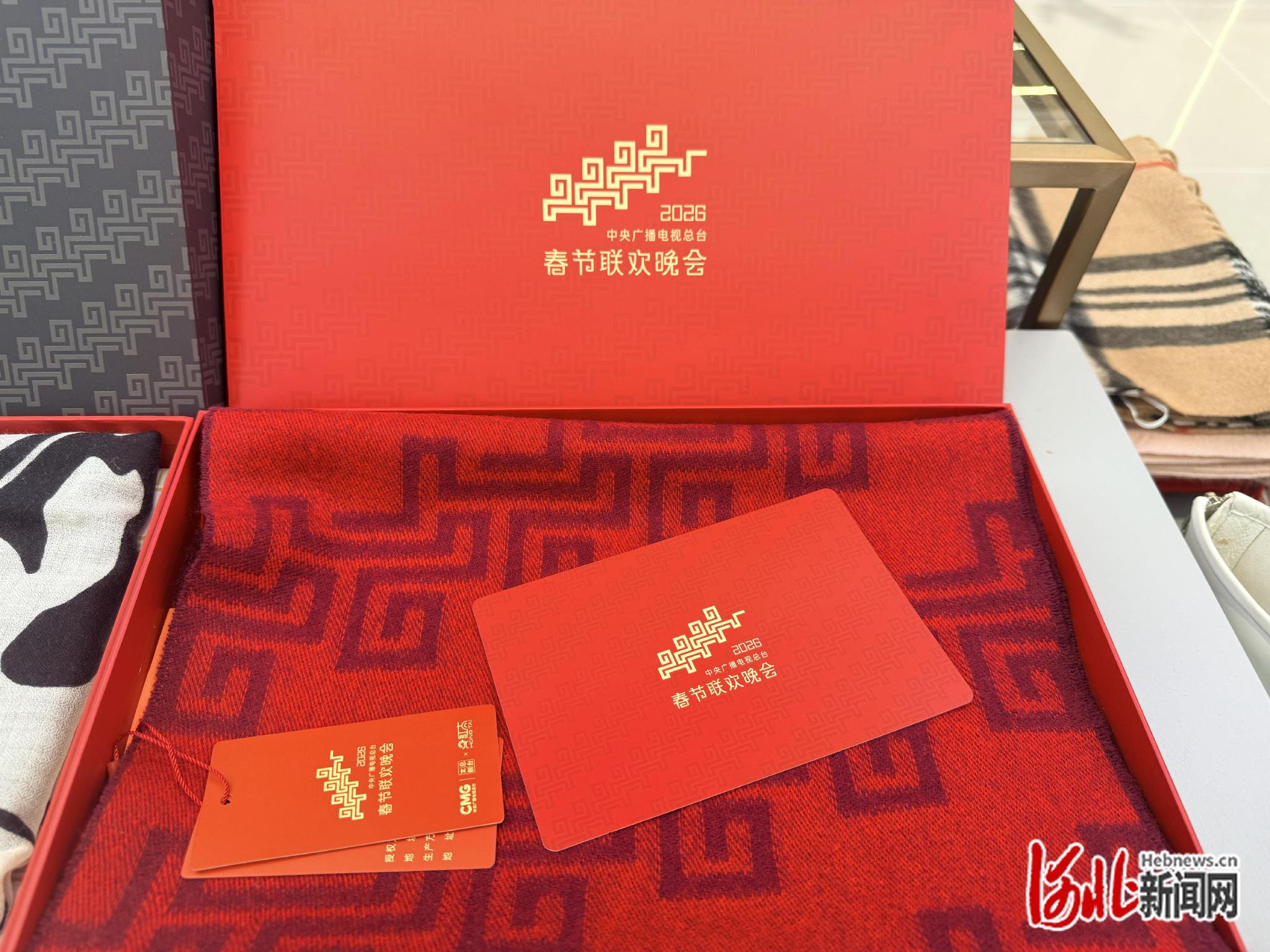
(来源:河北新闻网) 早在春晚开始前,红太与总台春晚的联名款羊绒围巾就已走进消费市场,成为畅销年货。 2025年12月18日,红太羊绒正式入选2026年"大春晚季"版权文创产品后,清河羊绒小镇红太羊绒体验馆的订货电话便持续火爆。"当时围巾还没正式开售, 就有老顾客拿着发布会截图来咨询预订。"店长王秋艳回忆道。 1月10日,联名款羊绒围巾在门店正式上架。其中,"骐骥驰骋"红围巾凭借男女老少皆宜的百搭属性与浓厚的节日氛围成为爆款,"一天能卖出上百条,销量 是其他款式的十倍。"店长王秋艳介绍。此外,蓝色商务款"驰骋之境"同样备受追捧,而黑白高端款"旷野马影"则成为年轻顾客青睐的"文艺年货",三款围 巾销量可观,市场反响热烈。 转自:河北新闻网 见习记者于歆 2026年总台春晚舞台上部分演员及嘉宾佩戴的"骐骥驰骋"红色羊绒围巾,出自河北品牌!由邢台市清河县的河北红太集团生产,这是该品牌首次深度参与春 晚文创产品供应。 这款围巾以马年春晚主标识"骐骥驰骋"为设计灵感,将四个"马"字以云雷纹结构编织,构成天马行空的美学意象、龙马精神的奋进姿态。通体的中国红基 底,不仅契合春节的喜庆氛围,更成为春晚舞台上一抹亮眼的文化符号 ...

山东汶上:服装产业从织造到“智造”
Xin Hua She· 2026-02-16 00:46
Core Insights - The textile and apparel industry in Jining, Shandong, is experiencing a transformation through digitalization, enhancing productivity and efficiency in production processes [1][2] Group 1: Industry Overview - Jining's textile and apparel sector is a traditional strength, with nearly 700 registered enterprises producing over 400 million garments annually [1] - The local industry is adapting to the demand for small-batch and fast-fashion production, utilizing advanced technologies such as automatic cutting machines and digital pattern machines [1][2] Group 2: Company Innovations - Aisi Garment Co., Ltd. has improved its production efficiency by 15% with the implementation of smart assembly lines, processing over 200 sets of clothing daily [1] - Hongruixuan Garment Co., Ltd. leverages an "industrial brain" system that provides eight service modules for production intelligence and digital marketing, enabling rapid adjustments to product design based on global trends [2] - The county aims to create a high-end, intelligent, and green flexible manufacturing base for apparel, enhancing the local business environment and promoting digital empowerment [2]
2025年1-12月纺织服装、服饰业企业有13745个,同比下降0.54%
Chan Ye Xin Xi Wang· 2026-02-15 01:00
Group 1 - The core viewpoint of the article highlights a slight decline in the number of textile and apparel enterprises in China, with a total of 13,745 companies reported for the year 2025, a decrease of 75 companies or 0.54% compared to the previous year [1][1][1] - The textile and apparel industry accounts for 2.61% of the total industrial enterprises in China, indicating its significance within the broader industrial sector [1][1][1] Group 2 - The report referenced is titled "2026-2032 China Textile and Apparel Industry Market Dynamics and Investment Potential Research Report," published by Zhiyan Consulting, a leading industry consulting firm in China [1][1][1] - The data regarding the number of enterprises is based on statistics from the National Bureau of Statistics, with a focus on large-scale industrial enterprises, which have a minimum annual main business income threshold of 20 million yuan since 2011 [1][1][1]

市商务局发布2026年我市贸易促进计划
Sou Hu Cai Jing· 2026-02-14 20:07
Overall Situation - The trade promotion plan focuses on key industries such as industrial machinery, construction materials, healthcare, food, textiles, and vehicles, targeting markets in the Middle East, South America, and countries along the Belt and Road Initiative [2] - A total of 100 domestic and international exhibitions have been selected for the trade promotion plan, including 89 goods trade exhibitions, 7 service trade exhibitions, and 4 cross-border e-commerce exhibitions [2] Organization and Implementation - The trade promotion plan is divided into key exhibitions and recommended exhibitions, with support policies for key exhibitions developed by the municipal commerce bureau in collaboration with the finance bureau [3] - Local commerce departments are encouraged to create tailored policies for recommended exhibitions based on municipal support policies [3] Requirements - All units are required to disseminate the trade promotion plan widely and provide comprehensive support for enterprises participating in exhibitions, including regular tracking and feedback on exhibition participation [4] - Emphasis is placed on effectively utilizing business development funds and coordinating with local finance departments to ensure funding support for foreign trade enterprises [4]
中国消费名品名单公布,江苏+20
Sou Hu Cai Jing· 2026-02-14 12:12
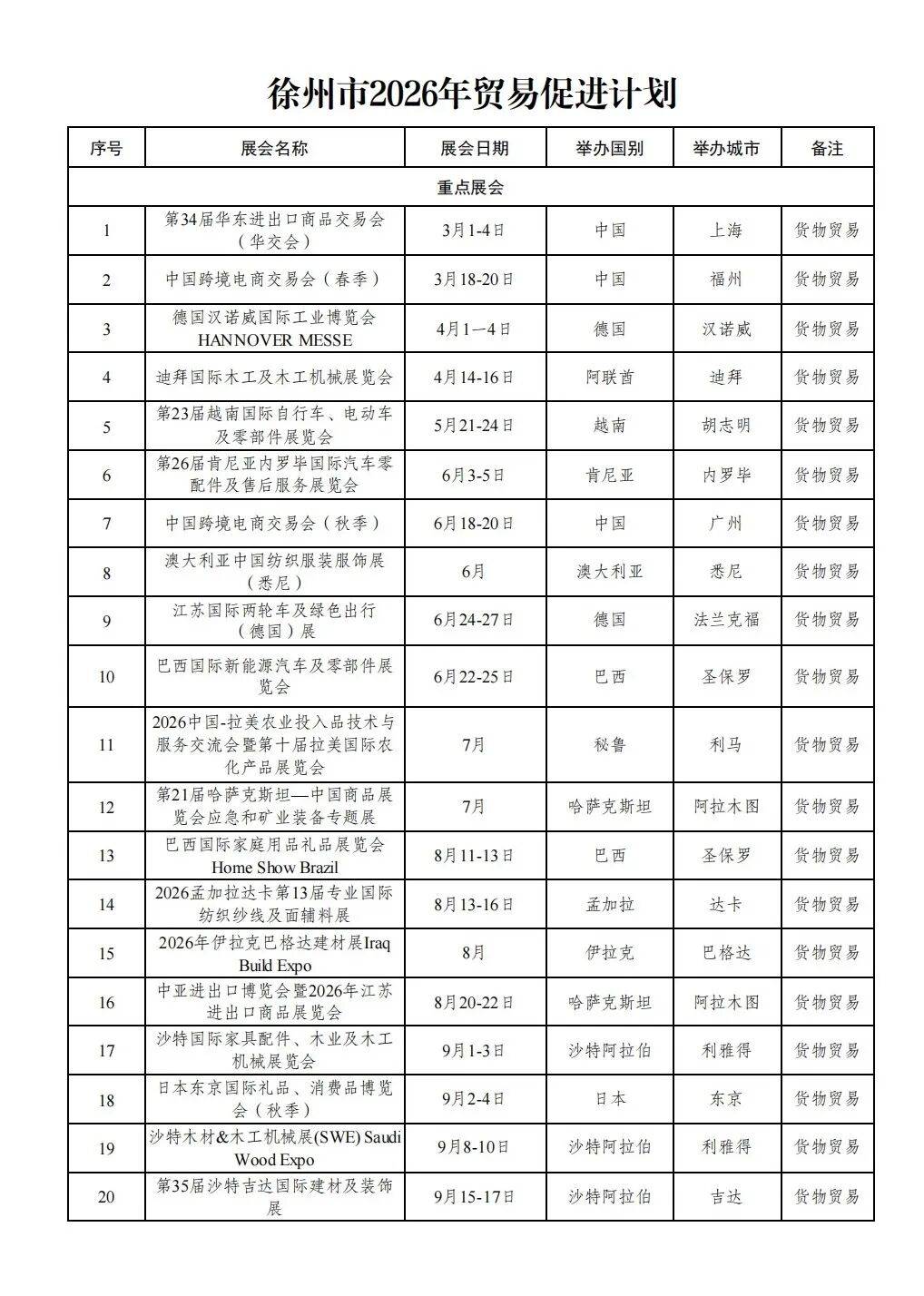
Core Viewpoint - Jiangsu Province has 20 brands recognized in the latest 2025 China Consumer Brand List, highlighting the province's commitment to high-quality consumer goods and brand development [1][3]. Group 1: Brand Recognition - The "China Consumer Brand" list includes 276 brands, consisting of 165 enterprise brands, 76 regional brands, and 35 brands for specific demographics [1][3]. - Notable brands from Jiangsu include Yanghe and Hengshun as "Historical Classics," while brands like Shenghong, Hongdou, and Saint Elephant are recognized as "Era Quality Products" [3]. Group 2: Regional Brands - Five regional brands from Jiangsu are recognized: Danyang Glasses, Changshu Outdoor Sportswear, Yixing Ceramics, Hangji Toothbrush, and Xinghua Condiments [3][13]. Group 3: Specific Demographic Brands - Brands catering to specific demographics include Goodbaby and Gong An Kang for "Maternal and Child Products," and Su Yun for "Assistive Products" [3][19]. Group 4: Compliance and Support - Companies on the list are required to operate with integrity, fulfill social responsibilities, and continuously provide high-quality products and services [3][19]. - Local governments will enhance promotion and support for these recognized brands, aiming to cultivate distinctive industries and quality consumer brands [3].



又一资本大佬栽了,2000亿资本帝国一夜崩塌
凤凰网财经· 2026-02-14 10:29
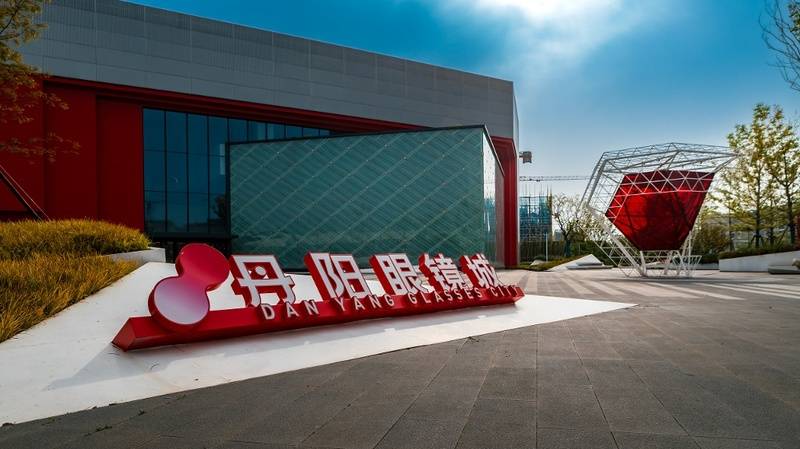
Core Viewpoint - The article discusses the downfall of Li Zhaoting, the former richest person in Shijiazhuang and head of the Dongxu Group, highlighting his recent detention by the police and the financial scandals that led to the collapse of his business empire [2][4][17]. Group 1: Li Zhaoting's Detention and Company Impact - On February 13, 2024, it was announced that Li Zhaoting, the actual controller of the listed company Jialinjie, was detained by the Shijiazhuang Public Security Bureau, with the company claiming that operations remain normal despite his legal troubles [2][16]. - Jialinjie, as the last remaining listed company of the Dongxu Group, reported a stock price of 3.16 yuan per share and a market value of 2.605 billion yuan on February 14, 2024 [2]. Group 2: Financial Fraud and Penalties - Li Zhaoting's downfall was preceded by a financial fraud investigation that revealed significant misconduct from 2015 to 2019, including the inflation of revenue by 47.825 billion yuan and profits by 13.001 billion yuan [6][8]. - The Dongxu Group was found to have illegally raised 7.565 billion yuan and 3.5 billion yuan through fraudulent means in 2017 and 2018, respectively, leading to a record penalty of 1.7 billion yuan imposed by regulatory authorities in 2025 [8][9]. Group 3: The Rise and Fall of the Dongxu Empire - Li Zhaoting founded the Dongxu Group in 1997, which became a leading manufacturer in the CRT equipment sector, later transitioning to LCD glass substrates [10][11]. - At its peak, the Dongxu Group had a debt of 142.6 billion yuan, with a staggering 94.03% of its debt being short-term, indicating a highly leveraged business model that was vulnerable to market changes [12][14]. - The financial issues became apparent in 2019 when Dongxu Guangdian had 18.3 billion yuan in cash but could not repay 3.5 billion yuan in bonds, signaling underlying problems [14]. Group 4: Current Status of Jialinjie - Jialinjie reported a revenue of 918 million yuan and a net profit of 51.996 million yuan for the first three quarters of 2025, reflecting a year-on-year growth of 205.46% [16]. - Despite the turmoil surrounding its actual controller, Jialinjie remains a focus for investors, questioning its ability to operate independently under the current circumstances [16].
光伏大佬李兆廷被拘留,身家曾超200亿元
Xin Lang Cai Jing· 2026-02-14 06:35
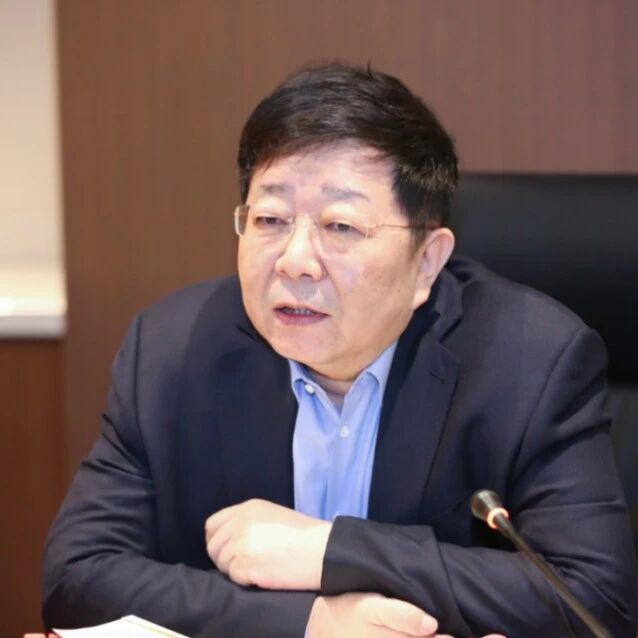
Core Viewpoint - The recent detention of Li Zhaoting, the actual controller of Jia Lin Jie, has raised concerns about the company's stability and its connection to the troubled Dongxu Group, which has faced significant legal issues related to financial fraud [1][4][10]. Company Overview - Jia Lin Jie (002486.SZ) announced on February 13, 2026, that its actual controller, Li Zhaoting, was detained by the Shijiazhuang Public Security Bureau, with ongoing investigations [1][7]. - The company confirmed that it has not received any requests for assistance in the investigation and that its control structure remains unchanged, with normal operations continuing [8]. - Jia Lin Jie specializes in the production and sales of high-end fabric and garments, with key products including plush fabrics, wool fabrics, functional sports fabrics, garments, and protective gear [4][9]. Financial Performance - For the first three quarters of 2025, Jia Lin Jie reported revenue of 918 million yuan, representing a year-on-year increase of 3.49%, and a net profit attributable to shareholders of 52 million yuan, reflecting a significant year-on-year growth of 205.46% [4][9]. Market Context - As of February 13, 2026, Jia Lin Jie’s stock price increased by 0.32%, closing at 3.16 yuan per share [5][12]. - The Dongxu Group, which has deep equity ties with Jia Lin Jie, controls over 21% of the company's shares through direct holdings and its wholly-owned subsidiary [8].

光伏大佬李兆廷被拘留,身家曾超200亿元
21世纪经济报道· 2026-02-14 06:24
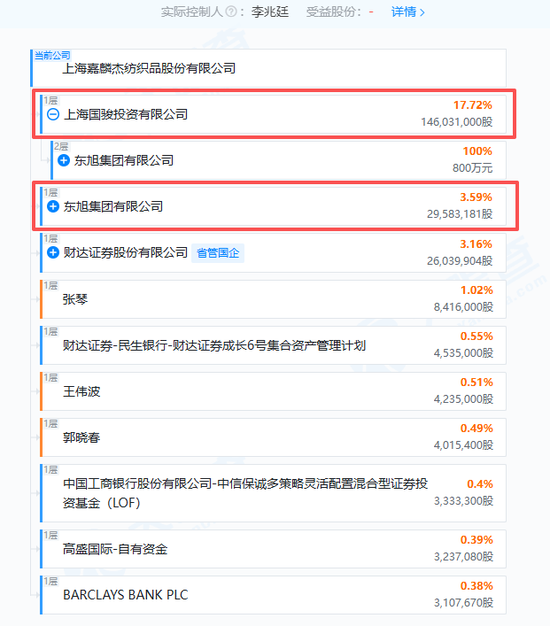
Core Viewpoint - The article discusses the recent detention of Li Zhaoting, the actual controller of Jia Lin Jie, and the implications for the company and its associated group, Dongxu Group, amidst ongoing investigations into financial misconduct [1][3]. Group 1: Company Overview - Jia Lin Jie (002486.SZ) announced on February 13, 2026, that its actual controller, Li Zhaoting, has been detained by the Shijiazhuang Public Security Bureau, with investigations ongoing [1]. - Despite the detention, Jia Lin Jie stated that it has not received any requests for assistance from authorities and that its control structure remains unchanged, with normal operations continuing [1]. - As of February 13, 2026, Jia Lin Jie reported a revenue of 918 million yuan for the first three quarters of 2025, reflecting a year-on-year increase of 3.49%, and a net profit attributable to shareholders of 52 million yuan, up 205.46% year-on-year [5]. Group 2: Shareholding Structure - Dongxu Group controls over 21% of Jia Lin Jie through direct holdings and its wholly-owned subsidiary, Shanghai Guojun Investment Co., Ltd. [1]. - The shareholding structure indicates a significant financial interdependence between Dongxu Group and Jia Lin Jie, with Dongxu Group holding 17.72% and 3.59% of shares directly [2]. Group 3: Financial Misconduct Allegations - Dongxu Group has been implicated in serious financial misconduct, including fabricating business activities and false accounting, leading to inflated revenues of 47.825 billion yuan and profits of 13.001 billion yuan from 2015 to 2019 [3]. - The group was found to have fraudulently issued bonds worth 3.5 billion yuan and illegally raised 7.565 billion yuan through stock issuance, with a total of 16.959 billion yuan in misappropriated funds from its subsidiaries [3].

深夜突发!资本大佬被刑拘,东旭系彻底爆雷
Xin Lang Cai Jing· 2026-02-14 05:57
Core Viewpoint - The sudden detention of Li Zhaoting, the actual controller of Jialinjie, has caused significant turmoil in the capital market, marking a critical moment in the ongoing issues surrounding the "Dongxu System" and its financial scandals [3][11]. Group 1: Company Overview - Jialinjie (002486.SZ) is currently the only remaining A-share listed company under the "Dongxu System," which has seen the collapse of its other major entities, Dongxu Optoelectronics and Dongxu Lantian [3][10]. - The company specializes in the production and sales of high-end fabric and garments, reporting a revenue of 918 million yuan and a net profit of approximately 51.99 million yuan for the first three quarters of 2025 [5][18]. Group 2: Li Zhaoting's Background and Legal Issues - Li Zhaoting, born in July 1965, was once a prominent figure in the photovoltaic industry and the creator of the "Dongxu System," which peaked with a wealth of 23.5 billion yuan in 2019 [3][16]. - This is not the first time Li has faced regulatory scrutiny; he was previously investigated for information disclosure violations and fined 589 million yuan by the Hebei Securities Regulatory Bureau, resulting in a lifetime ban from the securities market [5][18]. Group 3: The "Dongxu System" Collapse - The "Dongxu System," once a benchmark for private enterprises in Hebei, has faced a significant decline due to high debts and ongoing scandals, with its empire crumbling from a peak of success [6][19]. - Dongxu Optoelectronics, a core platform of the "Dongxu System," was heavily impacted by financial fraud, inflating revenues by 16.76 billion yuan and profits by 5.63 billion yuan from 2015 to 2019 [8][21]. - Dongxu Lantian, initially part of the "Dongxu System," has since distanced itself due to ongoing losses and has become a marginal enterprise [9][22]. Group 4: Market Response and Company Actions - Following Li Zhaoting's detention, Jialinjie quickly issued a statement to distance itself from Li and the "Dongxu System," asserting that he does not hold any position in the company and that operations remain normal [5][18]. - The company emphasized that it has not been asked to assist in any investigations and that control of the company has not changed [5][18].


突发!某金融大佬被拘!
Xin Lang Cai Jing· 2026-02-14 05:35
Core Viewpoint - The company, Jialinjie, announced that its actual controller, Li Zhaoting, has been detained by the Shijiazhuang Public Security Bureau, but the company's control remains unchanged and operations are normal [1][6]. Group 1: Company Background - Li Zhaoting, born in July 1965, was a prominent figure in the photovoltaic industry and the leader of the "Dongxu system" [3][8]. - In 2019, Li Zhaoting was the richest person in Shijiazhuang with a wealth of 23.5 billion yuan, controlling three listed companies: Dongxu Optoelectronics (delisted), Dongxu Lantian (delisted), and Jialinjie [3][8]. - Jialinjie, established in 2001, focuses on the research and sales of high-end outdoor sports fabric and garments, including self-developed knitted fabric series [3][8]. Group 2: Regulatory Issues - Between 2024 and 2025, Li Zhaoting and his companies faced investigations by the China Securities Regulatory Commission for violations such as information disclosure and fraudulent issuance, resulting in fines totaling approximately 1.7 billion yuan [3][8]. - The Hebei Securities Regulatory Bureau issued a warning to Li Zhaoting and imposed a fine of about 590 million yuan, along with a lifetime ban from the securities market for him and four others [3][8]. Group 3: Financial Performance - According to Jialinjie's Q3 2025 report, the company achieved a revenue of 918 million yuan in the first three quarters, with a net profit attributable to shareholders of 51.996 million yuan, representing a year-on-year increase of 205.46% [4][9]. - The company's net profit for Q3 alone was 22.247 million yuan, showing a significant year-on-year growth of 451.31% [4][9]. - The non-recurring net profit for the first three quarters was 49.578 million yuan, reflecting a year-on-year increase of 318.59% [4][9].
