美妆护肤

Search documents
2025高品质消费品牌TOP100行业趋势观察⑧ | 618大促功效护肤霸榜 国际品牌卷土重来!成分营销埋隐患
Nan Fang Du Shi Bao· 2025-06-16 14:27
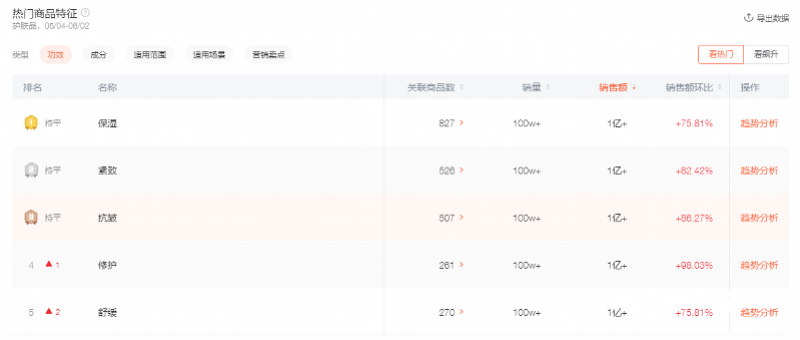
Core Insights - The article highlights the launch of the "High-Quality Consumption Observation" series by Southern Metropolis Daily, focusing on nine popular consumption sectors including beauty economy, sports and outdoor, food and health, smart consumer electronics, pet economy, experience economy, interest consumption, cross-border e-commerce, and consumption technology [1] - The report indicates a significant growth trend in the beauty and personal care market, particularly in the skincare segment, with a year-on-year retail sales increase of 4.4% in May and 4.1% from January to May [1] - The article emphasizes the shift towards efficacy-driven skincare products, with consumers increasingly demanding solutions for specific skin issues, leading to a notable rise in sales for products like sunscreen and hair care [1][12] Industry Trends - The beauty industry is witnessing a rise in "ingredient-focused" marketing, with brands emphasizing core ingredients to meet consumer demands for efficacy [11][25] - The competition in the high-end cosmetics market is intensifying, with international brands re-entering the Chinese market and dominating sales rankings during major promotional events like the 618 shopping festival [30][31] - Online sales channels have surpassed 50% of the market share in the cosmetics industry, with brands increasingly relying on e-commerce platforms for revenue growth [22][24] Brand Performance - Notable brands such as Proya and Han Shu have reported significant revenue growth, with Proya achieving over 10.7 billion yuan in 2024, while Han Shu's sales on Douyin reached 6.7 billion yuan [35][36] - The article mentions that brands like Huaxi Biological and Juzhibio have seen substantial revenue increases, with Juzhibio's revenue growing by 57.2% to 5.54 billion yuan in 2024 [7][33] - The performance of brands is increasingly tied to their ability to innovate and effectively market their products, particularly in the context of ingredient transparency and efficacy claims [11][25] Consumer Behavior - Consumers are becoming more rational in their purchasing decisions, focusing on product efficacy, ingredient transparency, and value for money, which is pushing brands to invest more in research and development [25][26] - The demand for specific skincare solutions, such as anti-aging and repair products, is driving growth in niche markets within the beauty sector [12][25] - The rise of content-driven e-commerce, including live streaming and social media sales, is reshaping how beauty brands engage with consumers and drive sales [24][30]


潮玩被Z世代抢疯了,泡泡玛特暴涨200%!哪只ETF才是港股"新消费"的纯度王者?
Jin Rong Jie· 2025-06-16 11:05
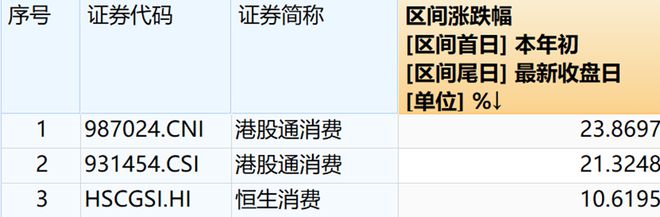
Group 1 - The Hong Kong stock consumer sector has shown remarkable growth this year, led by new consumption forces such as trendy toys, IP economy, and beauty products, reflecting a shift in consumer behavior among the younger generation who prioritize emotional value in their purchases [1] - As of June 16, 2023, stocks like Pop Mart, Mixue Ice City, and Lao Pu Gold have seen significant price increases, with Pop Mart rising 205%, Lao Pu Gold increasing 296%, and Mixue Ice City up nearly 90% year-to-date [1] - The "self-pleasure economy" driven by 260 million Chinese Gen Z consumers (born between 1995-2009) is reshaping consumption patterns, with over 40% of young consumers making purchasing decisions based on emotional value [1] Group 2 - The Hang Seng Consumer Index (HSCGSI.HK) and the Hong Kong Stock Connect Consumer Index are the two main indices for investing in the Hong Kong consumer sector, with the latter including the CSI Hong Kong Stock Connect Consumer Theme Index and the Guozheng Hong Kong Stock Connect Consumer Theme Index [2] - As of June 16, 2023, the three major indices have shown year-to-date performance, with the Guozheng Hong Kong Stock Connect Consumer Index up 23.87%, the CSI Hong Kong Stock Connect Consumer Theme Index up 21.32%, and the Hang Seng Consumer Index up 10.62% [3] - The Hang Seng Consumer Index focuses on essential consumer sectors, showing a lower risk of 31.12% compared to the other two indices, which have risks of 37.54% and 32.82% respectively [3] Group 3 - Three ETFs closely track the Hang Seng Consumer Index, with year-to-date returns of 10.54%, 9.39%, and 9.99% respectively, and a total net inflow of 12.27 billion, 7.31 billion, and 0.09 billion [5] - The CSI Hong Kong Stock Connect Consumer Theme Index includes major internet technology companies, with top holdings like Alibaba and Tencent, making it suitable for investors looking for a blend of consumption stability and technology growth [5] - Four ETFs track the CSI Hong Kong Stock Connect Consumer Theme Index, with year-to-date returns ranging from 18.53% to 20.08% and total net inflows between 1.58 billion and 4.37 billion [7] Group 4 - The Guozheng Hong Kong Stock Connect Consumer Theme Index, which includes diverse new consumption sectors such as jewelry, beauty, trendy toys, and dining, has shown a strong performance with a year-to-date increase of 23.87% [7] - The newly established ETFs tracking the Guozheng Hong Kong Stock Connect Consumer Theme Index are aimed at investors looking to capitalize on the consumption trends driven by Gen Z [9] - For conservative investors, the Hang Seng Consumer Index and its ETFs are recommended for their defensive characteristics, while those seeking a balanced exposure to technology and consumption may consider the CSI Hong Kong Stock Connect Consumer Index ETFs [10]

中国贵妇又捧出一个IPO
投中网· 2025-06-15 06:47
Core Viewpoint - The article highlights the remarkable growth and transformation of Lin Qingxuan, a Chinese skincare brand, under the leadership of its founder Sun Laichun, emphasizing its journey from near bankruptcy to becoming a leading player in the high-end skincare market with a focus on camellia oil products [4][5][10]. Group 1: Company Overview - Lin Qingxuan was founded by Sun Laichun, who registered the brand name 20 years ago, and has since become a benchmark in the anti-wrinkle skincare sector in China [5][6]. - The brand has achieved significant sales milestones, with a cumulative sales volume of 30 million bottles of its star product, the camellia oil, and has maintained the top position in facial oil sales in China for 11 consecutive years [8][10]. Group 2: Financial Performance - Lin Qingxuan's revenue is projected to grow from 6.91 billion yuan in 2022 to 12.10 billion yuan in 2024, marking a 75% increase [10]. - The net profit has reversed from a loss of 5.93 million yuan to a profit of 1.87 billion yuan during the same period [10]. - The camellia oil product line has seen revenue growth from 2.18 billion yuan to 4.48 billion yuan, increasing its share of total revenue from 31.5% to 37% [11]. Group 3: Market Position and Strategy - Lin Qingxuan has positioned itself as a high-end domestic skincare brand, ranking first in retail sales among Chinese high-end skincare brands and being the only domestic brand in the top 15 of high-end skincare brands in China [11]. - The company has successfully transitioned to online sales, with online revenue reaching 7.14 billion yuan in 2024, accounting for 59.1% of total revenue [12]. Group 4: Future Plans and Market Trends - Lin Qingxuan plans to use IPO funds to enhance its high-end domestic brand image, expand into Southeast Asia, and develop new anti-wrinkle technologies [15]. - The high-end anti-wrinkle skincare market in China is expected to grow at a compound annual growth rate of 21.2%, from 59.4 billion yuan in 2024 to 155.5 billion yuan by 2029 [15].
当莱珀妮们不再甘当“贵妇品牌”
FBeauty未来迹· 2025-06-14 10:18
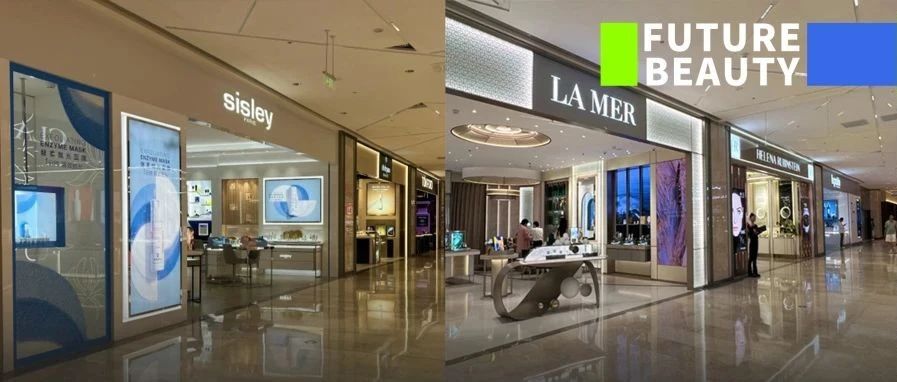
Core Viewpoint - Luxury skincare brands in China are undergoing a profound transformation to adapt to market growth constraints and changing consumer environments, focusing on technological investment, localized research, flexible product forms, and experiential communication to redefine their value in consumers' minds [2][14][40] Group 1: Market Dynamics - The high-end beauty market in China is experiencing a slowdown, with a compound annual growth rate (CAGR) decline of 3% from 2021 to 2024, leading to a market size reduction from 257.8 billion to 236.4 billion yuan, a loss of 21.4 billion yuan [15] - The luxury goods market is also facing challenges, with a projected sales decline of 18%-20% in 2024, returning to 2020 levels, indicating a shift from high-speed growth to a stable market [15] - Despite the overall market contraction, high-end beauty brands are maintaining low but stable share expansion, with brands like La Mer showing double-digit growth [17] Group 2: Product Innovation and Consumer Engagement - Sisley launched a new foundation in February that emphasizes a "makeup and skincare" trend, featuring a unique formula with three key benefits and a wide range of shades to cater to personalized consumer needs [4] - La Mer's new product launch in April focuses on oil control and anti-aging, targeting the growing oil skin care market in China, which is expected to exceed 50 billion yuan by 2025 [6][8] - La Prairie introduced a travel-sized version of its new caviar essence, reflecting a trend among luxury brands to lower the entry barrier for consumers and enhance product accessibility [11][12] Group 3: Consumer Behavior and Brand Strategy - The luxury beauty market is witnessing a shift towards "smart luxury," where consumers are more discerning and value-driven, leading to a decline in brand loyalty and impulsive purchases [19][20] - Brands are now required to emphasize scientific efficacy and product performance, moving away from traditional emotional marketing strategies [20][30] - High-end brands are increasingly focusing on localized research and product customization to meet the unique needs of Chinese consumers, such as addressing specific skin types and environmental factors [22][23] Group 4: Future Outlook - The transformation of luxury skincare brands is characterized by a balance between maintaining core brand values and embracing innovation, with a focus on technology, localization, and enhanced consumer experiences [39][40] - The future winners in the luxury beauty market will be those who can uphold the essence of luxury while understanding and responding to the evolving demands of Chinese consumers [40]
深度:如何构建品牌稀缺性?
Hu Xiu· 2025-06-12 01:42
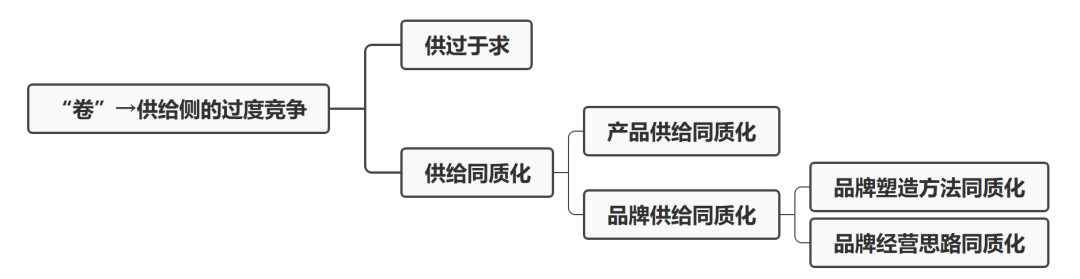
Core Viewpoint - The concept of "competition" in the consumer goods sector has intensified, evolving from mere growth to a survival mode, affecting even niche categories that were previously less competitive [1][4]. Group 1: Nature of Competition - The essence of "competition" is characterized by oversupply and supply homogenization, driven by excessive competition on the supply side [4]. - Two main factors contribute to this phenomenon: oversupply due to a high number of competitors and the homogenization of supply, where many brands follow similar paths, leading to a crowded market [4][6]. Group 2: Brand Homogenization - The trend of brand homogenization has become more pronounced in recent years, with brands increasingly adopting similar strategies and methods, resulting in a lack of differentiation [8][9]. - The rise of e-commerce has lowered the barriers for brand creation, leading to an explosion of brands and consequently, a homogenization of brand offerings [8][9]. Group 3: Building Brand Scarcity - To escape the cycle of homogenization, brands need to focus on creating scarcity through unique brand positioning and innovative strategies [10][11]. - The differentiation of brands can be achieved by understanding the dual nature of branding: as a tool for business strategy and as a result of consumer perception [12][14]. Group 4: Positioning Theory - The essence of consumer goods business is rooted in "concept" and the competition for consumer mindshare through effective positioning [20]. - Many brands tend to adopt a simplistic approach to positioning, focusing solely on product categories, which can lead to a lack of differentiation in a saturated market [21][22]. Group 5: Multi-Dimensional Brand Image - A multi-dimensional brand image is more difficult to replicate and can provide a competitive edge, as seen in successful brands like Apple [37][38]. - Building a multi-dimensional brand requires a cohesive narrative and alignment with business strategies to create a strong brand identity [38].
新消费快讯|阿迪达斯开售宠物服装挖掘它经济;Mush扩展隔夜燕麦产品线
新消费智库· 2025-06-11 12:46
New Consumption Overview - Fujian Liangkouzi Food Co., Ltd. launched beef pies using a 72-layer Chinese pastry technique and Canadian wheat flour with Anchor butter [3] - Jelly Brown partnered with Lai Yi Hu to introduce three new yogurt fruit and vegetable drinks [3] - Stone Island opened a flagship store in Hangzhou, enhancing its presence in the Chinese market [3] - Luckin Coffee introduced a new vegetable tea product in collaboration with SpongeBob SquarePants [6] - Gu Ming launched a new coconut latte, offering 10,000 free vouchers for consumers [6] Investment and Financing - Aifenda submitted its registration as a high-tech enterprise focused on HVAC home products [7] - Junhe Alliance Bio completed several rounds of financing totaling over 600 million yuan [7] - Tantu Technology secured hundreds of millions in Series B financing to enhance core component development [7] - Dolce & Gabbana received 150 million euros in new debt financing for expansion in beauty and real estate [9] - L'Oréal is reportedly interested in acquiring the UK skincare brand Medik8 for 1 billion euros [9] Major Companies - Adidas launched its first pet clothing line, tapping into the pet economy [10] - RIMOWA collaborated with Vitra to release a limited edition series for 2025 [11] - Three Squirrels established a new food company with a registered capital of 5 million yuan [11] - Mush expanded its overnight oats product line, introducing protein-rich options [14] - Giant Biotech plans to establish a Southeast regional headquarters in Xiamen [14]

界面·财经号优质稿件TOP20|2025年5月榜
Xin Lang Cai Jing· 2025-06-10 08:13
Group 1 - The sanitary napkin industry faces a trust crisis after issues were exposed on CCTV's 315 Gala, leading to Huang Zitao's rapid development and launch of the Duowei brand, achieving sales of 40 million in its first live stream, priced at less than 60% of traditional brands [2] - The beauty industry remains strong, with Proya surpassing Shanghai Jahwa with a revenue of 10.778 billion, marking a significant shift as the top ten companies now require a minimum revenue of 2.569 billion, and R&D investments have surged, with companies like Shiseido and Giant Bio seeing over 40% growth in R&D spending [2] - The cruise industry is attempting to recover from a price collapse in the summer of 2024, with some routes seeing price drops of 60%, leading companies like Royal Caribbean and Aida Cruises to introduce cultural crossover themes to attract customers, resulting in a record of 30,000 people entering and exiting Shanghai Port in a single day during the May Day holiday [2] Group 2 - The value of intellectual property (IP) is being reaffirmed, as Light Media's "Nezha: The Devil's Child" grossed 15 billion at the box office, with a net profit increase of 374.79% to 2.016 billion in the first quarter, despite concerns over the film industry's reliance on single IPs [3] - Consumer-facing IP commercialization is booming, with brands like Liangpinpuzi and Qiaqia collaborating over 50 times, generating 7.1 billion in revenue; the Palace Museum's dining experience has become a trend with an average spending of 500 per person, showcasing the overwhelming success of cultural IP in driving consumer behavior [3] - The traditional employment relationship is evolving, as seen in the live stream featuring Dong Mingzhu and Meng Yutong, highlighting a shift from loyalty to a more flexible employment approach among younger generations [3]
孩子王,买下2500家养发店
投资界· 2025-06-10 07:51
Core Viewpoint - The acquisition of the hair care brand "Siyu" by "Kids King" for 1.65 billion yuan marks a strategic expansion from maternal and infant retail into the beauty and hair care sector, aiming to capture a broader family-oriented customer base [1][11]. Group 1: Acquisition Details - Kids King announced the acquisition of the domestic hair care chain "Siyu" for a total consideration of 1.65 billion yuan, with the deal involving multiple stakeholders including Jiangsu Xingsiyu and Giant Biological [1][3]. - The transaction consists of two parts: the transfer of 100% equity of Jiangsu Xingsiyu and a subsequent cash purchase of 100% equity of Siyu Industrial [3][4]. - The new shareholder structure will see Kids King holding 65%, with other investors including Giant Biological and the original founders [3][4]. Group 2: Strategic Rationale - Kids King aims to leverage its extensive chain operation experience and digital technology to enhance Siyu's operational efficiency and digital capabilities [4]. - The partnership with Giant Biological is intended to improve Siyu's research and development capabilities, creating a comprehensive product ecosystem for hair care [4][11]. - The acquisition is seen as a way to tap into the growing demand for hair care services, especially among families, thus broadening Kids King's customer demographic [11][12]. Group 3: Market Position and Growth - Siyu has established itself as a leading brand in the hair care industry with over 2,500 stores nationwide and a membership base exceeding 2 million [7][8]. - The brand's growth trajectory includes significant milestones such as surpassing 1,000 stores in 2014 and expanding into medical beauty services [7][8]. - The acquisition price reflects a valuation of approximately nine times Siyu's projected net profit for 2024, indicating strong investor confidence in the brand's future performance [11]. Group 4: Background of Key Players - Kids King, founded by entrepreneur Wang Jianguo, has successfully transitioned from a maternal and infant retail focus to a broader family-oriented service provider [1][12]. - Wang Jianguo's investment firm, Xingnahe Capital, has previously invested in various sectors including beauty and healthcare, indicating a strategic approach to diversifying investments [12][14]. - The original founders of Siyu, Chen Yingyan and Wang Deyou, have played a crucial role in establishing the brand's market presence and will continue to be involved post-acquisition [3][4].
一周新消费NO.312|醉象停止日本市场运营;必胜客App全面接入京东支付
新消费智库· 2025-06-08 12:07
New Product Launches - Jiu Yu launched coconut matcha powder, made from 100% matcha and coconut water powder, with a matcha content of ≥ 5% [3] - Xi Zhi Lang introduced NFC fruit pulp jelly, using fresh fruit pulp within 24-48 hours, with a fruit content of ≥ 40% [3] - Chao Le Zi collaborated with Harry Potter to launch new ice cream flavors [3] - Koko Manfen released three new fruit tea products, emphasizing natural tea polyphenols [5] - Oreo launched a limited edition cookie in collaboration with Selena Gomez, featuring chocolate and cinnamon flavors [16][20] Financing Activities - BlissClub, a women's activewear brand, completed a financing round totaling $530 million [14] - Miraggio, a handbag and accessories brand, raised $650 million in its first round of institutional financing [15] - Nutriearth established a distribution partnership with AIDP to expand its vitamin D3 oil market in North America [9] Market Developments - Pizza Hut's app fully integrated with JD Pay, launching promotional activities to attract customers [8] - Topologie, a French outdoor brand, opened its first store in mainland China [8] - Drunk Elephant announced its exit from the Japanese market, ceasing all sales channels by June 30, 2025 [28] Industry Trends - e.l.f. Beauty announced a $1 billion acquisition of Hailey Bieber's skincare brand, marking its largest acquisition to date [27] - The collaboration between君乐宝 and Synodis aims to promote local production of high-end cream [8] - The launch of new products by major brands indicates a trend towards innovative and health-focused offerings in the food and beverage sector [16][20]
艺恩数据:2025年代言营销市场结构重估与情绪红利洞察报告
Sou Hu Cai Jing· 2025-06-07 01:36
Group 1 - The endorsement marketing market is showing signs of recovery in the first five months of 2025, with a 5.4% year-on-year increase in the number of endorsers and a 1.4% increase in the number of brands [1][15][16] - The beauty and skincare industry leads with 590 official endorsers, marking a 34.9% year-on-year growth, while the commercial/service sector sees the highest growth rate at 38.5% [1][15] - Brands are increasingly favoring mid-tier and lower-tier celebrities, with the proportion of B and C-list stars rising by 7.8% year-on-year, and more brands are building endorser matrices, with a 5.3% increase in brands announcing two or more endorsers [1][37][39] Group 2 - In the entertainment sector, popular works significantly boost commercial value, with top stars like Xiao Zhan, Bai Lu, and Dilireba leading the rankings due to their ongoing hit series [2][13] - Sports stars, particularly top athletes, have seen a 100% year-on-year increase in endorsement numbers, despite a 31% decline overall in non-Olympic years [2][24][29] - Emotional marketing strategies are emerging, including emotional resonance marketing and nostalgia-driven campaigns, which resonate well with younger audiences [3][4] Group 3 - The Lunar New Year has led to a surge in short-term endorsements for stars like Zhao Yazhi and Ye Tong, reflecting the seasonal connection between traditional culture and endorsement marketing [3][32] - The endorsement market is becoming more diversified, with brands focusing on emotional resonance and precise audience targeting to enhance marketing effectiveness [3][4] - The rise of short drama actors as new influencers is notable, with over 15 brands collaborating with them in the first five months of 2025 [40][42]