汽车

Search documents
无方向盘踏板的Cybercab正式下线意味着什么
2 1 Shi Ji Jing Ji Bao Dao· 2026-02-20 08:26
Group 1 - The core point of the article is that Tesla's first mass-produced Cybercab, which lacks a steering wheel and pedals, marks a significant milestone in the commercialization of autonomous driving, transitioning from concept to production [1] - The industry landscape is changing as Tesla shifts from merely selling cars to becoming a mobility service provider, focusing on fleet operations and mileage-based revenue, which will pressure domestic automakers to enhance their autonomous driving capabilities and operational efficiency [2] - The supply chain will undergo rapid transformation, with companies that secure key components for autonomous vehicles, such as onboard computing power and vehicle-to-everything (V2X) technology, gaining a competitive edge [2] Group 2 - The commercialization of autonomous vehicles faces significant challenges, including regulatory hurdles in the U.S. that require special exemptions for vehicles without traditional controls, and similar restrictions in China regarding L4 autonomous vehicle licensing [3] - Technical challenges remain, particularly regarding the reliability of vision-based systems in adverse weather and complex traffic conditions, as well as uncertainties around mass production quality and failure rates [3] - Consumer trust is a critical barrier, with unresolved issues regarding passenger safety, insurance policies, and liability in the event of accidents, indicating that a comprehensive framework is yet to be established [4] Group 3 - The launch of the Cybercab is a milestone but not the endpoint, signaling the start of the race for autonomous driving commercialization, which is expected to take at least two to three more years to integrate into daily life [5] - Chinese automakers should not panic but must accelerate their efforts in smart and autonomous technologies to maintain their competitive advantage, especially since they are already leading in electrification [5]

首次访华前,德国总理默茨找中国问题专家吃饭,想问这个问题
Xin Lang Cai Jing· 2026-02-20 08:22
Group 1 - German Chancellor Merz is preparing for his first visit to China from February 24 to 27, aiming to establish connections with Chinese leadership and discuss future cooperation between Europe, Germany, and China [1][3] - Merz has engaged with six China experts, including scholars and business figures, to gather insights on how to effectively communicate with Chinese leaders and to advocate for a fairer trade environment for German industries [3][4] - Approximately 30 business executives from major companies such as Bayer, Volkswagen, Siemens, Adidas, and BMW are expected to accompany Merz on his visit, indicating strong interest from the German business community in enhancing ties with China [3][4] Group 2 - German companies are facing increasing competition from Chinese counterparts, leading to heightened concerns about the "China impact" within Germany, while there are diverging interests between the political and business sectors regarding China policy [4] - Despite concerns, many German firms are expanding their investments in China and relocating production capacities there, benefiting from the growing exports of Chinese companies [4] - The current economic relationship between Germany and China is marked by significant friction, and establishing a "new normal" in bilateral relations could lay the groundwork for future cooperation [5][6]

宝马CEO最新涉华表态:对中国庞大市场与创新潜力视而不见的人,正错失巨大机遇
Huan Qiu Wang· 2026-02-20 07:45
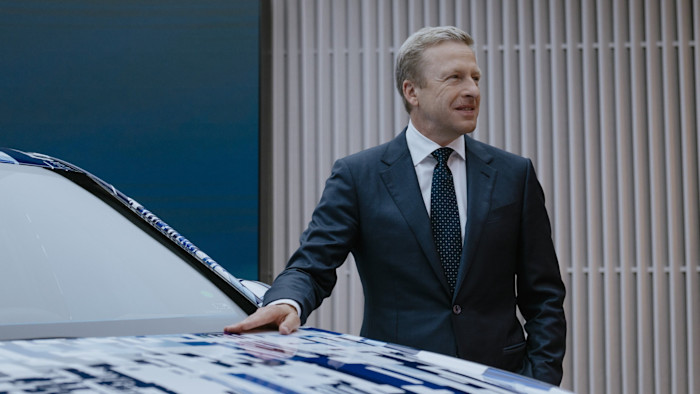
Group 1 - The CEO of BMW, Oliver Zipse, warned that ignoring China, the world's largest automotive market, could jeopardize future economic prosperity, emphasizing the importance of collaboration with China [1][3] - Zipse stated that those who overlook China's vast market and innovative potential are missing out on significant opportunities for global growth and economic prosperity [3] - Major automotive groups, including BMW, Volkswagen, and Mercedes-Benz, have experienced a decline in sales in the Chinese market, which has historically been a profit engine for these companies [3] Group 2 - The rise of domestic electric vehicle brands in China has intensified price competition for foreign automakers in the Chinese market [3] - Zipse highlighted that innovation and progress stem from open collaboration and the integration of global expertise, rather than isolation [3] - German Chancellor Merz emphasized Germany's commitment to free trade and opposition to protectionism, encouraging German companies to increase investment and cooperation with China [4]

没有方向盘、没有脚踏板,特斯拉新车来了
Feng Huang Wang· 2026-02-20 07:15
Core Insights - Tesla's first Cybercab autonomous vehicle has officially rolled off the production line at its Texas Gigafactory, marking a significant milestone in the company's Robotaxi service initiative [1] - The Cybercab is designed specifically for Tesla's Robotaxi service, featuring no steering wheel, pedals, or rearview mirrors, indicating a shift towards fully autonomous transportation [1] - Production of the Cybercab is set to begin in April, following the launch of the Robotaxi service in Austin, Texas, which initially utilized Model Y vehicles equipped with "full self-driving" software [1] Group 1 - The Cybercab is the first vehicle specifically designed for Tesla's Robotaxi service, emphasizing its unique features that cater to autonomous operation [1] - Elon Musk announced that testing of a Robotaxi without a safety driver is currently underway, with claims of achieving "perfect driving" during test rides [1] - The initial Robotaxi service launched in mid-2022 was limited to specific geographic areas and required a safety driver in the passenger seat [1]
方向盘消失之后:特斯拉Robotaxi真要来了
Jing Ji Guan Cha Bao· 2026-02-20 06:35
公开资料显示,该车型为两座纯电自动驾驶车辆,取消方向盘与踏板,完全依赖自动驾驶系统运行,被 定位为Robotaxi网络核心终端。 平完成商业部署 (原标题:方向盘消失之后:特斯拉Robotaxi真要来了) 在安全数据层面,特斯拉披露的统计显示,在监督模式下运行FSD的车辆发生重大碰撞与轻微碰撞前的 平均行驶里程均显著高于人工驾驶水平。其中重大碰撞平均间隔里程约为530万英里,明显高于人工驾 驶平均水平;轻微碰撞平均间隔里程约160万英里,同样远超行业均值。该数据被视为公司推进自动驾 驶商业化的重要技术背书。 2026年2月18日,特斯拉在官方社交平台确认,首辆专为无人出租场景打造的Cybercab已在美国得州超 级工厂正式下线。这标志着其自动驾驶商业化战略从概念验证与测试阶段,进入实车落地阶段。 Cybercab的推出意味着特斯拉自动驾驶战略进入关键执行阶段。公司计划于2026年4月启动规模化生 产,并推动Robotaxi网络逐步落地。此前特斯拉已在美国部分城市开展自动驾驶运营试点,测试商业化 模式与调度体系。马斯克曾表示,在获得监管批准的前提下,未来完全自动驾驶车辆有望覆盖美国相当 比例区域。 整体来看,首 ...
交银国际:1月乘用车内需阶段性承压 出口延续高增态势
Zhi Tong Cai Jing· 2026-02-20 06:23
Group 1 - The overall performance of the automotive market in Q1 2026 is relatively flat due to seasonal factors and prior consumption overextension, despite the support from the "trade-in" policy [1] - In January 2026, the retail volume of passenger vehicles in mainland China was 1.544 million units, a year-on-year decline of 13.9%, with domestic brands experiencing a 18% drop in retail volume [1] - The market share of domestic brands decreased by 3.5 percentage points to 57.5%, while joint venture brands performed better with a retail volume of 470,000 units, only a slight decline of 4% [1] Group 2 - The penetration rate of new energy vehicles (NEVs) significantly dropped to 38.6% in January, with NEV retail sales at 596,000 units, a year-on-year decline of 20% [2] - The penetration rate for domestic brand NEVs was 61.7%, down 19.2 percentage points, while luxury brands fell to 16.1%, a decrease of 23 percentage points [2] - The market share of new car manufacturers increased by 7.7 percentage points to 31.2% [2] Group 3 - The export of passenger vehicles continued to show strong momentum, with a total of 576,000 units exported in January, a year-on-year increase of 52% [3] - Domestic brands remain the main force in exports, with 476,000 units exported, a growth of 49%, while joint venture and luxury brands exported 100,000 units, achieving a growth rate of 65% [3] - The export of new energy passenger vehicles reached 286,000 units, a year-on-year increase of 103.6%, accounting for 49.6% of total exports, an increase of 12.5 percentage points [3]


特斯拉Grok人工智能服务将登陆欧洲9国
Huan Qiu Wang Zi Xun· 2026-02-20 03:52
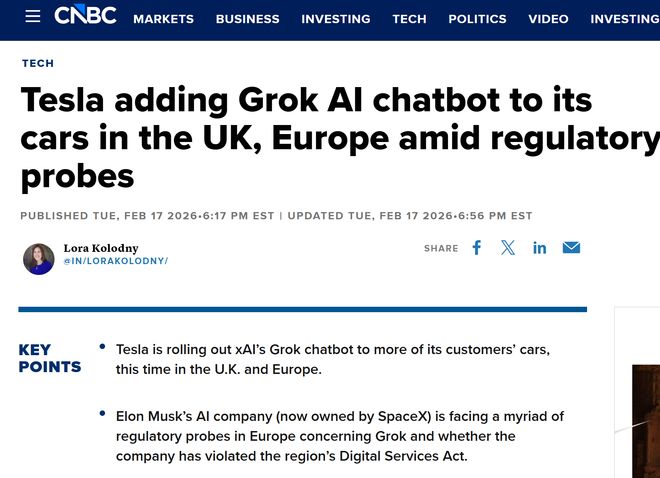
据特斯拉方面介绍,Grok人工智能服务具备依托实时信息解答各类问题的能力,同时还可实现导航目 的地的添加与编辑功能,能够为特斯拉车主提供个性化的出行向导服务,进一步丰富车载智能体验。 特斯拉此次为欧洲市场的车型导入全新人工智能服务,被业内认为是其丰富用户体验、发力欧洲市场的 重要举措,或对其在当地的市场表现带来积极影响。不过需要注意的是,当前xAI Grok因存在生成不雅 内容的问题,正在全球范围内引发舆论争议,欧盟也已针对该人工智能服务启动深度调查,其后续在欧 洲市场的落地与运营效果仍有待观察。(纯钧) 来源:环球网 【环球网科技综合报道】2月20日消息,据CNBC报道,近日,特斯拉欧洲、中东和非洲(EMEA)区 域官方X账户发布消息,由其关联企业xAI开发的Grok人工智能服务即将登陆欧洲市场,首批将率先在 英国、爱尔兰、德国、瑞士、奥地利、意大利、法国、葡萄牙、西班牙9个国家的特斯拉电动汽车上推 出。 ...
新风向!外资机构“组团”出击
Xin Lang Cai Jing· 2026-02-20 03:25
Group 1 - Institutional investors have been actively visiting nearly 70 listed companies since February 9, with a focus on industries such as machinery, automotive, and basic chemicals [1][7] - Key topics of inquiry include the pricing logic of dyes and memory products, as well as domestic and international capacity layout planning [1][7] - Foreign institutions like BNP Paribas and TX Capital are also involved in company research, focusing on the globalization of capacity and long-term growth logic in wind energy and PCB sectors [1][7] Group 2 - Recent fluctuations in prices of raw materials, chemicals, and electronic components have led institutions to question the reasons for price increases, their sustainability, and companies' response strategies [2][8] - Baichuan Co. reported that due to tight TMP supply and rising prices, many companies have decided to halt or reduce production, leading to market supply constraints [2][8] - The dye sector has also seen price increases, with Zhejiang Longsheng announcing a price hike of 5000 yuan per ton for certain dye products due to rising costs of raw materials [2][8] Group 3 - The pace of capacity release among listed companies has become another major focus for institutions [9] - Fule New Materials is accelerating the commercialization of flexible sensors, with plans to complete a formal production line by the first quarter of 2025, aiming for an annual capacity exceeding 10,000 units [10] - Chongde Technology is optimizing production processes to steadily increase capacity utilization, while Hars's Thai production capacity is progressing as planned, expected to meet its target by the end of 2026 [10] Group 4 - Foreign institutions have shown increased interest in A-share listed companies, with firms like Bank of America and Citigroup participating in research activities [11] - Tianshun Wind Power has been a popular subject of inquiry, with foreign investors asking about its 2026 shipment volume and capacity situation [11] - The company anticipates a surge in domestic offshore wind project tenders and construction, particularly in Guangdong, which will drive market demand [11] Group 5 - The PCB sector has gained attention, with Okoyi, a supplier of PCB drill rods, being closely monitored by foreign institutions [12] - The company has developed capabilities in ultra-fine nano hard alloy materials and currently has a production capacity of 1,300 tons of rod material [12] - Recent reports from foreign institutions are optimistic about the Chinese stock market, particularly in sectors like AI-enabled smart manufacturing, high-end equipment localization, and the trend of going global [12]

东方神秘力量太强,欧洲一败涂地?法国建议:把中国当日本来整
Sou Hu Cai Jing· 2026-02-20 03:08
大家好,今天犀哥这篇文章,主要来聊聊都2026年了,法国竟然逼中国和欧盟签署《新广场协议》?法 国人为什么这么做? 法国的"空想"报告 这份报告值得关注,因其智库背景特殊:它是为法国政府服务的高级机构,建议能直接传至爱丽舍宫、 被高层参考。 这份报告从头到尾都是空想,核心原因是它未看清当下世界格局,错把中国当作当年的日本、法国当作 当年的美国,既忽视欧盟内部分歧,也无视全球化规矩,最终只能纸上谈兵、无法落地。 要读懂其荒唐,需先回顾1985年《广场协议》,当年美国深陷巨额贸易赤字,召集日本、西德等国签署 协议,强行推动日元、马克兑美元升值。 彼时日本在安全和经济上高度依赖美国,无自主话语权,只能被动妥协,最终日元飙升导致日本出口崩 盘、资产泡沫破裂,陷入"失落的40年"至今未复苏,如今法国智库想复制这一模式,却忘了关键:时代 已变,中国绝非当年被动听话的日本。 两者的核心差距的是主权与实力。当年日本相当于美国在亚洲的"小弟",外交、安全皆看美国脸色,面 对不合理要求无力拒绝。 而中国是拥有完整独立主权、具备全球打击能力的核大国,更是全球唯一拥有完整工业体系的国家。 2月9号,法国"高等战略与规划委员会"通过《 ...
马斯克:自动驾驶技术,摄像头+激光雷达融合,更加不安全
Sou Hu Cai Jing· 2026-02-20 02:43
Core Viewpoint - The article discusses two main approaches to autonomous driving technology: Tesla's vision-based system using only cameras and the multi-sensor fusion approach that incorporates LiDAR and cameras, primarily adopted by Chinese automakers [1][3]. Group 1: Tesla's Approach - Tesla, led by Elon Musk, firmly supports the vision-based approach, arguing that using LiDAR is unnecessary and costly, with LiDAR systems previously priced over a thousand dollars compared to cameras costing around 10 dollars each [3]. - Musk's stance is based on the belief that the lowest cost solution is preferable, and he considers the use of LiDAR as a foolish choice due to its high expense [3]. Group 2: LiDAR and Multi-Sensor Fusion - Despite the reduction in LiDAR costs to a few hundred dollars due to advancements by Chinese companies, Tesla continues to rely solely on cameras, rejecting the multi-sensor approach that many believe to be superior [5]. - The multi-sensor fusion approach, which combines LiDAR and cameras, is seen as providing a "double insurance" by enhancing environmental perception through redundancy and multi-layered sensing capabilities [5]. Group 3: Risks of Multi-Sensor Systems - Tesla argues that using multiple sensors can lead to data inconsistencies between LiDAR and cameras, which may increase risks rather than mitigate them, as it creates ambiguity about which sensor data to trust [7]. - Musk believes that advancements in camera technology will allow for effective performance in low-light conditions and distance measurement, making LiDAR less relevant [7].