
制造业

Search documents
中上协:1月末上市公司境内股份总市值114.5万亿元 全市场五个板块总市值均创近5年历史新高
Mei Ri Jing Ji Xin Wen· 2026-02-26 08:07
Core Insights - As of January 31, 2026, there are 5,484 listed companies in China's domestic stock market, with 2,306 on the Shanghai Stock Exchange, 2,886 on the Shenzhen Stock Exchange, and 292 on the Beijing Stock Exchange [1] - In January, there were 9 new IPOs raising a total of 9.053 billion yuan, predominantly from manufacturing companies [1] - The total market capitalization of listed companies reached 114.5 trillion yuan, with all five market segments achieving a historical high in the past five years [1] Market Dynamics - The number of companies in the top 50 by market capitalization in the electronics, communications, and pharmaceutical sectors has increased to 15, nearly doubling compared to the beginning of the previous year [1] - In January, one company with a market capitalization exceeding 1 trillion yuan was added, along with five companies exceeding 100 billion yuan, and 115 companies exceeding 10 billion yuan [1] - Conversely, there was a reduction of 141 companies with market capitalizations below 5 billion yuan and 45 companies below 2 billion yuan [1] Valuation Metrics - The median market capitalization of listed companies at the end of January was 6.976 billion yuan, reflecting a 7% increase from the previous month [1]
习近平总书记关切事 | 经济大省勇挑大梁
Xin Hua She· 2026-02-26 06:01
Group 1 - Economic provinces are taking on significant responsibilities, contributing over 60% of the national GDP while occupying nearly 20% of the country's area [1] - Jiangsu has established joint innovation centers with hundreds of leading enterprises, successfully addressing nearly 100 technical demands in the past year [2] - High-tech manufacturing in provinces like Jiangsu, Zhejiang, and Sichuan has seen double-digit growth, with traditional industries being upgraded and new technologies emerging [3] Group 2 - Guangdong has optimized business approval processes, achieving the fastest processing times for individual business licenses in the country [4][5] - Economic provinces are leading deep reforms and high-level openness, with Guangdong's reforms serving as a model for the nation [6][7] - By 2025, major economic provinces are expected to achieve over 34 trillion yuan in total import and export volume, accounting for more than 75% of the national total [7] Group 3 - Ningbo Zhoushan Port has become a key hub for national development strategies, enhancing its capacity and connectivity [8] - Economic provinces are actively integrating into regional development strategies, with the Yangtze River Delta region generating over 34.6 trillion yuan in economic output [9][10] - Economic provinces are focusing on common prosperity, with Henan's rural income growth outpacing urban areas, showcasing a commitment to equitable development [11][12] Group 4 - Economic provinces are making significant strides in improving living standards, with Zhejiang's per capita disposable income surpassing 70,000 yuan for the first time [12] - A series of new initiatives in provinces like Shandong and Fujian are enhancing healthcare and employment, contributing to national stability [12] - Economic provinces are expected to continue leading in promoting common prosperity, with income disparities between urban and rural areas narrowing [12]
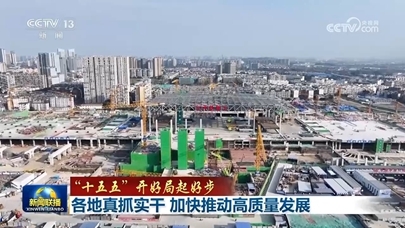
各地真抓实干 加快推动高质量发展
Yang Shi Wang· 2026-02-26 06:01
Group 1 - The article emphasizes the acceleration of high-quality development across various regions, establishing a solid foundation for the "14th Five-Year Plan" [2] - Major engineering projects are actively underway, including the construction of the Wenfu High-Speed Railway and the installation phase of the nuclear island for the No. 1 unit at the Liaoning Xudabao Nuclear Power Project, with a target of achieving a 3% growth in fixed asset investment in 2026 [2] - There is a strong push for the deep integration of technological and industrial innovation, with Hubei aiming to achieve over 30 significant technological breakthroughs and initiate 10 key projects in advanced AI chips and synthetic biology [2] Group 2 - The establishment of China's first clean energy and green computing scheduling center in Xining marks a significant step in collaborative computing power, with plans to enhance infrastructure for data storage and model training [3] - Tianjin is set to accelerate the construction of 300 landmark projects, including the Intelligent Connected Vehicle Research Base, and introduce 100 benchmark scenarios for "AI + manufacturing" [3] - Guangdong aims to create a high-end industrial cluster through innovative mechanisms and technological empowerment, fostering a modern industrial system with greater international competitiveness [3]

市场充满太多“非共识”机遇!汇丰晋信基金郑小兵:做一名“安静”的泛周期猎手,重点看好航空板块
Zhong Guo Zheng Quan Bao - Zhong Zheng Wang· 2026-02-26 05:16
Core Viewpoint - The colored metal sector, represented by gold, silver, and copper, has experienced significant price increases since 2025, making "cycles" a market focus. However, caution is advised as some popular colored metal varieties may be in the mid-to-late stages of their market cycle, indicating potential risks. Despite this, the market is presenting numerous investment opportunities through a cyclical lens [1][9]. Investment Framework - The investment strategy is supported by a four-dimensional framework: macroeconomic direction, industry trend analysis, individual stock selection based on safety and elasticity, and market sentiment for buy/sell points. This approach aims to identify high-value opportunities at the bottom of the cycle [1][12]. - The macroeconomic analysis includes a detailed outlook for 2026, highlighting the short-term downward pressure on the U.S. economy and the ongoing structural transformation in China [3][12]. - Industry comparisons focus on identifying sectors poised for upward trends that are currently undervalued, considering factors like ROE percentiles, PB percentiles, and trading crowding [3][12]. Stock Selection - Stock selection emphasizes two key criteria: sufficient safety margins and growth potential. The strategy involves setting clear price tolerance levels to manage downside risk while prioritizing companies with strong earnings elasticity [4][13]. - The investment style is characterized by a "left-side" trading approach, where purchases are made when market attention is low, and sales occur before market euphoria peaks [4][13]. Market Sentiment and Timing - The investment philosophy includes capturing value recovery during the early stages of market sentiment cycles. For instance, investments in the innovative drug sector were made when institutional holdings were at historical lows, followed by timely exits as market sentiment improved [5][14]. - The current hot market for colored metals is viewed with caution, as prices may have deviated significantly from fundamentals, suggesting a likelihood of mean reversion [6][15]. Sector Opportunities - The investment focus includes sectors like aviation, which is experiencing a fundamental shift in demand due to trends such as "silver-haired travel" and family tourism. Supply constraints and potential cost reductions in oil prices further support a positive outlook for aviation stocks [8][17]. - Brand consumption and manufacturing are also highlighted, with many domestic brands showing improvements in governance and efficiency. The anticipated end of the inventory cycle for overseas brands may trigger demand for Chinese supply chains and brands [8][17]. - The Hong Kong stock market is seen as a value opportunity, particularly in internet companies that possess strong safety margins and are well-positioned to benefit from advancements in AI technology [8][17].

广东:制造业与服务业协同发展白皮书发布
Zhong Guo Qing Nian Bao· 2026-02-26 01:27
Group 1 - The core theme of the Guangdong Provincial High-Quality Development Conference is the "coordinated development of manufacturing and services" to promote high-quality development and support the start of the 14th Five-Year Plan [1] - The "White Paper on Coordinated Development of Manufacturing and Services in Guangdong Province" was released, transforming top-level design into an actionable roadmap [1] - Guangdong's manufacturing sector accounts for approximately 1/8 of the national total, with industrial enterprise revenue consistently ranking first in the country [1] Group 2 - By 2025, Guangdong's GDP is projected to reach 14.58 trillion yuan, maintaining its position as the top province in China for 37 consecutive years [2] - The manufacturing value-added ratio is expected to reach one-third, while the service sector's value-added has been the highest in the country for 41 years, accounting for nearly 60% of GDP [2] - The coordinated development of manufacturing and services in Guangdong is transitioning from simple industrial support to deep integration and value co-creation, forming a new development pattern characterized by high-end leadership, model innovation, ecological prosperity, green empowerment, global layout, and organizational restructuring [2]
纵深推进融入大市场,河南重点这样干
He Nan Ri Bao· 2026-02-25 23:26
Core Viewpoint - The news highlights the strategic initiatives and progress made by Henan Province in integrating into the national unified market, showcasing significant growth in various economic indicators and infrastructure development. Group 1: Infrastructure Development - The construction of the Jiaoluo Ping High-Speed Railway is a key project in Henan's transportation network, contributing to the central region's economic rise [2] - The total length of highways in the province has surpassed 10,000 kilometers, with a comprehensive transportation network reaching 295,000 kilometers [9] - The annual cargo and mail throughput at Zhengzhou Airport has exceeded 1 million tons, marking a significant milestone in logistics [9] Group 2: Economic Indicators - The retail sales of consumer goods in Henan are projected to grow at the second-fastest rate in the country by 2025, with imports and exports expected to exceed 900 billion yuan, a growth of 14.1% [4] - The 2025 index for Henan's integration into the national unified market is set at 119, reflecting a 13.3% increase from 2024, with all five sub-indices showing upward trends [3] Group 3: Business Environment and Market Regulation - The number of business entities in Henan has reached 11.632 million, ranking fifth in the country, supported by comprehensive market regulation and credit management initiatives [7] - The province plans to implement credit restoration measures, aiming to restore 1,003,000 credit records by 2025 [7] Group 4: Innovation and Industry Development - Henan is transitioning from being a participant in the industrial chain to defining key segments, with a focus on enhancing innovation capabilities and developing a modern industrial system [6] - The province aims to establish 200 smart workshops and factories, promoting digital transformation in manufacturing [6] Group 5: Trade and International Cooperation - Henan is enhancing its international trade capabilities, with a focus on expanding the China-Europe Railway Express and improving customs clearance efficiency through the implementation of a "single window" system [5] - The province's service trade is expected to grow at the fastest rate in the country, with significant investments in countries along the Belt and Road Initiative [4][5]
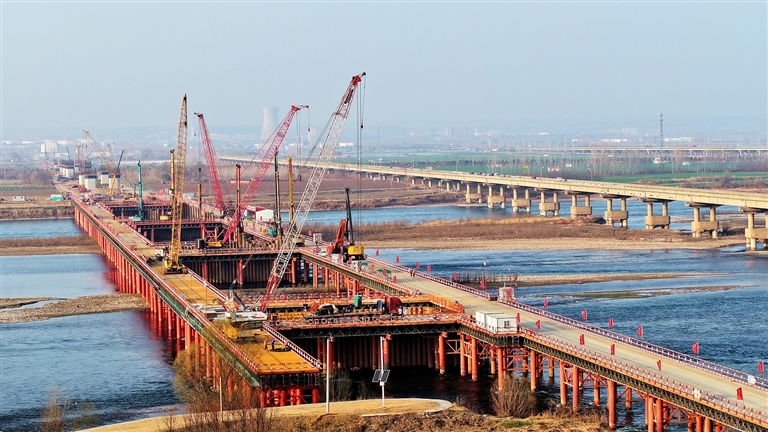
数字经济规模稳步增长
Jing Ji Ri Bao· 2026-02-25 22:06
Core Insights - The report indicates that by December 2025, China's internet penetration rate will exceed 80%, with the core digital economy's value added accounting for 10.5% of GDP, and the user base of generative artificial intelligence reaching 602 million, with applications deeply penetrating daily life and production [1] Group 1: Internet Infrastructure and Development - The new infrastructure is being proactively deployed, solidifying the digital foundation, with 4.838 million 5G base stations built, covering all towns and 95% of administrative villages, and 5G networks covering over 330 cities [1] - China has established 42 intelligent computing clusters, ranking among the top globally in intelligent computing scale, which strongly supports the rapid development of the artificial intelligence industry [1] Group 2: Role of SMEs in AI Integration - In the "Artificial Intelligence +" initiative, small and medium-sized enterprises (SMEs) are both beneficiaries and main players, using AI as a transformation tool to address challenges such as high costs and low efficiency [2] - SMEs are crucial for the practical implementation of AI, acting as the "last mile" in AI deployment [2] Group 3: Digital Transformation and Efficiency Gains - A significant number of high-level 5G factories have achieved global leadership, with average production capacity increasing by 25%, product quality improving by 21%, and operational costs decreasing by 19% [3] - 45.5% of SME employees reported that their companies adopted a hybrid business model, actively expanding online operations [3] Group 4: Policy Recommendations for AI Adoption - Future policies should target issues such as affordability and usability of AI tools, helping businesses save costs and providing operational guidance [3] - Establishing regional computing centers to share costs and offering lightweight AI toolkits will enable small factories and shops to access advanced technology affordably [3] Group 5: Strategic Opportunities in AI Development - The vast user base accumulated by the internet provides a fertile ground for the popularization and iterative optimization of AI technology, transforming users from mere consumers to active participants in value creation [4] - Encouraging cross-domain innovations in smart cities, smart homes, and connected vehicles will support the development of globally influential smart products and service ecosystems [4]
春节假期 合川接待游客365万+人次
Xin Lang Cai Jing· 2026-02-25 17:54
上游财经-重庆晨报记者 杨新宇 今年春节假期,合川文旅交出接待游客365.50万人次,同比增长96.93%的亮眼"成绩单"。 2月24日,合川高新区从"过节模式"一键切换"冲刺模式",管委会大楼灯火通明、挂图作战,企业车间 机械轰鸣、悬臂挥舞,政企同心抢开局、拼首季,一幅奋力夺取新春"开门红"的图景火热铺展。 ...
智慧城市算网攻坚战打响:1毫秒时延照进现实
Zheng Quan Ri Bao Zhi Sheng· 2026-02-25 16:08
Core Insights - The construction of a 1-millisecond (ms) urban computing network is becoming a national strategy in China, aimed at supporting the development of artificial intelligence and smart cities [5][9][10] - Companies are leveraging low-latency networks to enhance production efficiency and quality control, with significant improvements in manufacturing processes [2][3][4] Group 1: Industry Developments - Budweiser Snow Beer and Lantu Automotive are examples of companies utilizing advanced manufacturing technologies supported by 5G and AI, achieving high production capacities and efficiency [1][2] - The Sichuan Lingke Automotive manufacturing facility has a production capacity of 300,000 vehicles per year and employs AI for quality management and real-time data processing [2][3] - Sichuan Changhong's smart manufacturing plant has reduced order delivery times from 49 days to 11 days, showcasing the impact of AI and low-latency networks on operational efficiency [4] Group 2: Technological Advancements - The 1-ms urban computing network is designed to provide low-latency, broad scheduling, and inclusive computing services, facilitating high-end industrial development [5][6] - Over 100 cities in China are actively promoting the construction of 1-ms urban computing networks, which are expected to enhance various sectors including finance, governance, and manufacturing [5][9] Group 3: Investment and Economic Impact - The investment in 1-ms urban computing networks is projected to reach between 800 billion to 1 trillion yuan from 2025 to 2027, indicating strong market demand for high-speed, low-latency network equipment [9] - The development of the 1-ms urban computing network is seen as a strategic infrastructure that will reshape regional economic competitiveness and attract long-term capital investment [9][10]


哥伦比亚工农业出口15年来首次超过传统产品
Shang Wu Bu Wang Zhan· 2026-02-25 13:28
Core Insights - Colombia's non-traditional exports, including agriculture, food, and industrial products, surpassed traditional exports for the first time in 15 years in 2025 [1] Group 1: Export Performance - In 2025, Colombia's total export value reached $50.1999 billion, reflecting a year-on-year growth of 1.3% [1] - Exports of agriculture, food, and beverages grew by 33.2%, amounting to $15.3074 billion [1] - Manufacturing exports increased by 4.8%, totaling $11.0588 billion [1] Group 2: Traditional Exports Decline - Traditional exports, primarily consisting of fuel and mining products, saw a significant decline, dropping by 17.9% to $19.1901 billion [1] - The decrease in traditional exports was mainly attributed to reduced oil and coal exports [1] Group 3: Industry Trends - The rapid growth of non-traditional exports indicates a rising share of higher value-added products in Colombia's foreign trade [1]