科技行业

Search documents
全生命周期助科技企业参天成林 苏州市政府常务会议审议研究相关事项
Su Zhou Ri Bao· 2025-12-23 22:19
会议还审议研究了其他事项。 《若干措施》根据科技企业发展不同阶段的重点需求,分层分类提出选种育苗、培土润苗、扎根强 枝、育林参天、生态涵养等5大行动计划、20条重点举措,进一步强化企业创新主体地位,构建覆盖科 技企业全生命周期全链式扶持体系,明确到2028年,新增3万个科创项目,拥有科技型企业超10万家, 科创板上市企业达到70家等目标。会议指出,各地各部门要进一步完善企业扶持体系,加强源头培育, 前瞻谋划,科学评估,有针对性地引育潜力企业、潜力项目和技术人才,扎实做好全周期服务支持。要 构建市区联动工作机制,强化组织保障,加强协同配合,提高政策赋能、要素保障等工作的质效,确保 企业稳得住、留得下、发展好,推动形成科技企业扎根苏州、稳定发展的良好格局。 昨天(12月23日),市政府召开常务会议,审议并原则通过了《关于实施"成林计划"构建科技企业 全生命周期扶持体系的若干措施》及相关工作方案等事项。市委副书记、市长吴庆文主持会议。 ...
2026 年展望—浮沤危悬? 多元布局!
Sou Hu Cai Jing· 2025-12-23 16:39
Core Viewpoint - The article suggests that global risk assets are expected to lead in 2026, with increasing market differentiation and a focus on diversified investment strategies around three key themes while being cautious of four major risks [1][6]. Macroeconomic Overview - The core scenario anticipates a 60% probability of a soft landing for the US economy, with the Federal Reserve expected to cut rates by 75 basis points to 3.0% by the end of 2026. Factors supporting growth include easing trade tensions, increased infrastructure and defense spending in Germany, and targeted stimulus policies in China. There is a 15% risk of a hard landing and a 25% risk of an "unlanding" scenario, with inflation stabilizing but remaining above pre-pandemic levels [1][6][65]. Investment Themes - **Theme 1: Stock Market Growth Driven by AI** The stock market is expected to rise alongside discussions around artificial intelligence, with AI-driven profit growth offsetting some valuation pressures. The recommendation is to overweight US and Asian (excluding Japan) stocks, with a focus on technology, healthcare, and utilities sectors [2][21][23]. - **Theme 2: Emerging Market Debt Outperforming Developed Markets** Emerging market debt, both in USD and local currencies, is seen as attractive due to improved fiscal fundamentals, yield advantages, and expectations of a weaker dollar, which can help mitigate interest rate risks in developed markets [2][28][23]. - **Theme 3: Diversification Tools Highlighted** Gold is expected to continue its upward trend, with target prices of $4,350 per ounce in 3 months and $4,800 per ounce in 12 months. Alternative investment strategies and currencies like the Japanese yen and offshore RMB are also considered important diversification tools [2][30][31]. Asset Class Allocation - In the bond sector, preference is given to emerging market debt and developed market investment-grade government bonds, with opportunities seen in US Treasury Inflation-Protected Securities and short-term high-yield bonds. In the stock sector, there is an underweight position in European (excluding the UK), Japanese, and UK stocks, while overweighting US tech stocks, high-yield stocks of non-financial state-owned enterprises in China, and the Hang Seng Tech Index [2][22][23]. Risk Factors - Key risks include underperformance of AI, potential chain reactions from credit events, shifts in Federal Reserve policy, and unexpected hawkish stances from the Bank of Japan, which could lead to market volatility [3][23][33].


香港恒生指数收跌0.11% 恒生科技指数跌0.69%
Xin Lang Cai Jing· 2025-12-23 08:12
香港恒生指数收跌0.11%,恒生科技指数跌0.69%。诺比侃上市首日大涨超363%;黄金股继续上涨,万 国黄金集团涨超5%,山东黄金涨超4%,招金矿业涨超2%。药捷安康跌超18%,快手跌超3%。 ...

日本加息落地,利率达30年最高水平,为什么这次股市没有崩盘?
Sou Hu Cai Jing· 2025-12-22 15:36
Group 1 - The Bank of Japan raised interest rates by 25 basis points to 0.75%, marking the highest level in 30 years, yet the market remained stable with the Hang Seng Index rising by 0.81% and the Hang Seng Tech Index by 1.38% [1] - The difference between this rate hike and the previous one in August 2024 is that the market had already priced in a 90% probability of the hike, compared to only 47.5% before the last hike, indicating that the market was better prepared this time [1] - The U.S. is in a rate-cutting cycle, which mitigates liquidity concerns stemming from Japan's rate hike, contributing to a calm market environment [2] Group 2 - The U.S. Consumer Price Index (CPI) came in at 2.7%, significantly below the expected 3.1%, which has increased expectations for future rate cuts, leading to a surge in U.S. stock indices [3] - The notion of a global stock market crash may be misguided, as market behavior is often counterintuitive; when the market appears stable, it can be a sign of underlying risks [4] - The current bull market is primarily driven by liquidity rather than fundamentals, making it inherently fragile and susceptible to sudden downturns [6] Group 3 - The anticipated benefits of U.S. rate cuts are already reflected in market pricing, but the liquidity crisis resulting from Japan's rate hike is just beginning, with long-term implications expected as the supply of liquidity tightens [7][9] - The long-term adjustment of Japan's interest rate policy suggests that the impact will not be short-lived, and the U.S. economy faces a paradox where strong AI development does not align with the urgency for rate cuts [9]

瑞银:中国股市估值仍具上调潜力
Zhong Guo Xin Wen Wang· 2025-12-22 12:01
瑞银:中国股市估值仍具上调潜力 中新社上海12月22日电 (记者 姜煜)瑞银财富管理投资总监办公室(CIO)22日发表机构观点称,中国股市 估值仍具上调潜力。 CIO指出,人工智能(AI)的创新和相关支出,将推动中国科技行业2026年盈利大幅增长。有利的流动性 和合理的估值也将为中国股市进一步上行助一臂之力。 CIO分析,中国股市今年表现强劲,估值高于历史平均水平,但远低于之前的峰值,亦低于全球同类市 场。2025年是中国科技创新爆发的一年,AI价值链的各层面都取得显著进展。中国的新AI模型展现了 技术领先能力,而政策支持强化了科技生态系统的韧性。2026年盈利强劲增长将推动中国科技股走高。 流动性增强、企业盈利预期良好和资金持续流入都将为中国股市带来上升的动力。 来源:中国新闻网 编辑:王永乐 广告等商务合作,请点击这里 本文为转载内容,授权事宜请联系原著作权人 中新经纬版权所有,未经书面授权,任何单位及个人不得转载、摘编或以其它方式使用。 关注中新经纬微信公众号(微信搜索"中新经纬"或"jwview"),看更多精彩财经资讯。 在中国股市尤其是科技股的支撑下,CIO预计亚洲股市(日本除外)到2026年底将实 ...
恐惧与贪婪齐舞!AI狂潮下,美股明年注定“坐立难安”
Jin Shi Shu Ju· 2025-12-22 03:09
Group 1 - The core viewpoint of the articles is that the U.S. stock market is expected to experience significant volatility in 2026, driven by investor fears of missing out on AI-related gains while also worrying about a potential bubble burst [2][3][4] - The past 18 months have been characterized by significant sell-offs and rapid reversals, a trend likely to continue until 2026, with some strategists predicting that the AI boom will follow historical cycles of boom and bust [2][3] - Technology companies at the center of the AI investment boom have a substantial impact on the market, with their performance potentially offsetting declines in other sectors, thereby influencing the realized volatility of the S&P 500 [2][4] Group 2 - Strategists anticipate that stock volatility will be supported in 2026 due to the instability often associated with asset bubbles, predicting occasional declines exceeding 10% but also record rapid rebounds as traders realize the bubble has not burst [3][4] - UBS strategists emphasize that the question of whether the AI boom will continue or collapse makes holding contracts that increase volatility in the Nasdaq 100 index crucial for betting on both scenarios [3][4] - The VIX index is expected to maintain a median around 16 to 17 in 2026, but it could spike significantly during risk-off periods, influenced by both technical and macroeconomic factors [4][5] Group 3 - The popularity of dispersion trading, which bets on individual stock volatility rising while index volatility remains low, is expected to increase, with some funds taking contrary positions due to overcrowding in this strategy [5][6] - A fundamental volatility mechanism model proposed by strategists suggests dynamic switching between long and short volatility trades, indicating that a flattening yield curve signals buying volatility [6] - Overall, the low leverage in the U.S. corporate sector is seen as a precursor to a new AI-driven re-leveraging cycle, which could lead to higher credit spreads and stock volatility [6]

2026年资本市场展望:转型牛深入推进
Huafu Securities· 2025-12-21 05:33
证券研究报告|策略专题报告 2025年12月21日 转型牛深入推进 ——2026年资本市场展望 证券分析师: 朱斌 执业证书编号:S0210522050001 请务必阅读报告末页的重要声明 华福证券 华福证券 投资要点 华福证券 华福证券 ➢ A股牛市继续深入推进,但要注意各种影响因素。2024年2月以来,A股进入了一个新 的牛市周期。科技、转型,是本轮牛市主线。进入2026年后,预计外部不确定性增加 。市场或呈现波浪式前行的状态。 ➢ 国际宏观经济背景:美国经济风险增加,但政策存在变数。美联储2026年有望延续降 息节奏,甚至不排除更加宽松,但政策与现实的内在矛盾也将加剧。 ➢ 中国宏观经济格局:高质量发展迈上新台阶。2026年是"十五五"规划落地的第一年 ,规划相关领域板块预计将在政策助力下持续有所表现。 ➢ 中国资本市场:"转型牛"继续深入推进,注意海外冲击。预计2026年的资本市场仍 将是高波动的一年。 ➢ 投资建议:专注赛道。新质生产力作为经济转型的先锋,"十五五"重点聚焦板块值得 持续关注;消费板块有望在2026年实现阶段性反攻,也值得关注。 ➢ 风险提示:经济复苏不及预期;后续刺激政策不及预期; ...
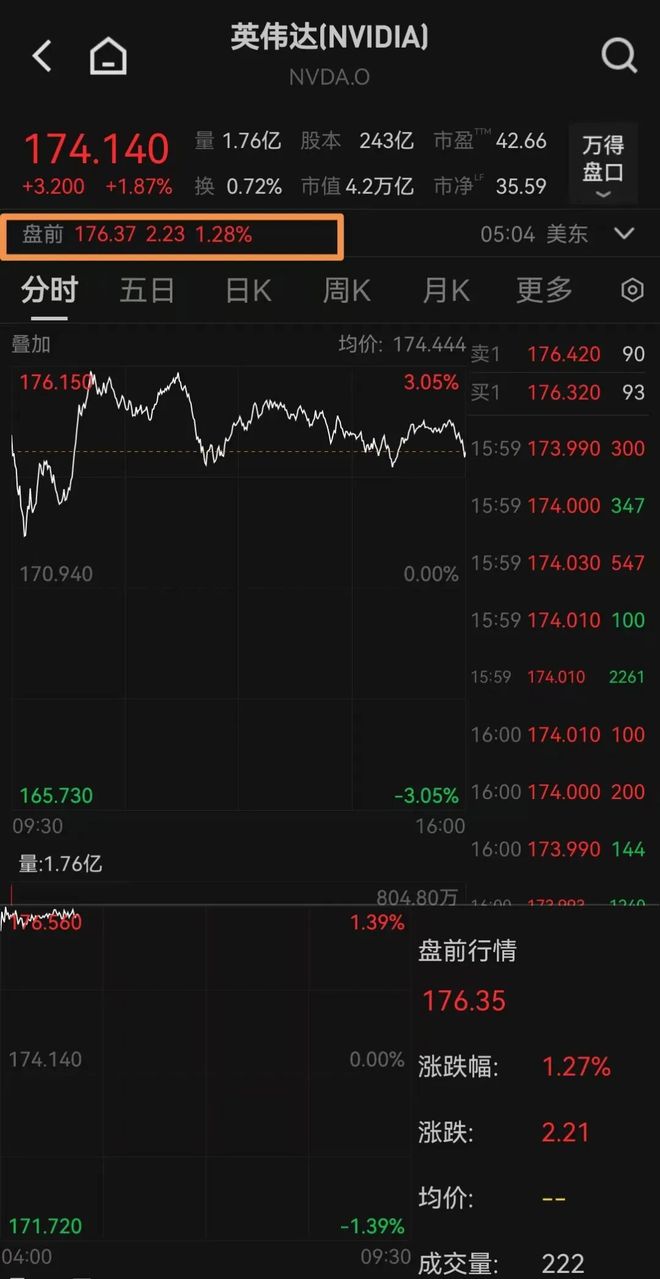
美股“七巨头”盘前普涨
Di Yi Cai Jing Zi Xun· 2025-12-19 11:12
Group 1 - The core viewpoint of the article highlights the pre-market performance of major US tech stocks, referred to as the "Big Seven," showing a general upward trend [1] - Nvidia and Tesla both experienced gains of over 1%, indicating strong investor interest and confidence in these companies [1] - Other notable tech stocks such as Google, Microsoft, Amazon, Meta, and Apple also saw positive movements, with increases ranging from 0.03% to 0.63% [1]





2026年中国经济展望:新旧动能转换与宏观治理下的稳增长
Bank of China Securities· 2025-12-19 06:14
Group 1 - The core viewpoint of the report emphasizes the transition from old to new growth drivers as a key factor influencing China's economic performance, particularly in the context of the real estate market adjustment and changes in domestic population and international geopolitical landscape [2][6][9] - The report forecasts that macroeconomic policies will maintain appropriate support, with a more active fiscal policy expected to arrange 12.28 trillion yuan in new government bonds, including a general public budget deficit of 5.88 trillion yuan, local government special bonds of 4.6 trillion yuan, and special government bonds of 1.8 trillion yuan [3][14] - It is anticipated that the GDP growth rate for 2026 will be around 4.7%, with domestic demand contributing more significantly to GDP growth, particularly through stable growth in household consumption and a recovery in investment driven by major project launches and government investment expansion [9][10][14] Group 2 - The report highlights that while the real estate market adjustment continues, its impact on economic growth is expected to weaken due to its declining share in the economy, with real estate investment declines projected to narrow from -16.5% in 2025 to between -10% and -15% in 2026 [10][12][44] - Inflationary pressures are expected to ease, with the CPI projected to rise by 0.5% in 2026, driven by a recovery in food prices and stable growth in non-rent service prices, although rental prices may continue to decline [38][41][44] - The external demand and trade policy environment are expected to remain relatively stable, with export growth projected at around 3% in 2026, reflecting a slight slowdown from 5.1% in 2025 [12][13]
追觅22.8亿收购嘉美包装引猜测,创始人称2026年底启动IPO
Sou Hu Cai Jing· 2025-12-19 02:22
Core Viewpoint - The article discusses the recent IPO activities of companies like Moer Thread and Chasing, highlighting the implications of the registration system on the listing process for entrepreneurial firms, particularly focusing on Chasing's significant acquisition of Jiamei Packaging and its potential connection to its upcoming IPO plans [2][4][10]. Group 1: IPO and Market Dynamics - Chasing's founder, Yu Hao, announced plans for multiple business IPOs under the Chasing ecosystem starting from the end of 2026 [4]. - The company spent approximately 2.28 billion yuan (around 22.8 million) to acquire Jiamei Packaging, which raises questions about the strategic rationale behind this investment in relation to its IPO [4][5]. - The overall issuance cost for Moer Thread's IPO was 424 million yuan, while Chasing's acquisition cost was significantly higher, indicating a potential overvaluation if the acquisition was intended to facilitate the IPO [9]. Group 2: Financial Performance and Growth - Chasing Technology has demonstrated a compound annual growth rate (CAGR) exceeding 100% from 2019 to 2023, with projected revenues of approximately 15 billion yuan in 2024 [10]. - The company reported that its revenue for the first half of the year surpassed the total revenue for 2024, indicating strong operational performance [10]. - Despite the acquisition of Jiamei Packaging, Chasing's financial metrics suggest that it does not require additional support from the packaging company for its IPO plans [11]. Group 3: Regulatory Environment - The article outlines the regulatory framework for companies seeking to list on the Sci-Tech Innovation Board, emphasizing that the assessment criteria have shifted from historical profitability to expected market valuation and other financial indicators [9][12]. - Companies can now qualify for listing based on projected market value, revenue, and R&D investment, allowing firms without current profitability to access the public market if they possess high growth potential [9].