
软件服务

Search documents
今日财经要闻TOP10|2026年2月11日
Xin Lang Cai Jing· 2026-02-11 12:31
Group 1 - The successful flight test of the Long March 10 rocket and the Dream Boat crewed spacecraft marks a significant milestone in China's manned lunar exploration program [1][9] - The Long March 10 rocket's first stage safely splashed down in the designated sea area as per the planned procedure [3][11] Group 2 - Ant Group has released the Ming-Flash-Omni 2.0, the industry's first unified audio generation model capable of generating voice, environmental sounds, and music simultaneously on the same audio track [5][11] - The model allows users to control various audio parameters such as tone, speed, pitch, volume, emotion, and dialect using natural language commands [5][11] Group 3 - The A-share market showed mixed results, with the Shanghai Composite Index up by 0.09% and the ChiNext Index down by 1.08% [14] - Small metals, oil and gas extraction, and chemical sectors saw active performance due to price increases, while sectors like film and tourism experienced declines [14] Group 4 - Tianji Co. received a notice from the China Securities Regulatory Commission regarding an investigation into suspected violations of information disclosure laws [15]

甲骨文劲升9.6%,标普逼近7000点,白银暴涨8%
Di Yi Cai Jing Zi Xun· 2026-02-11 08:45
Market Overview - US stock market experienced a broad rally on Monday, with the Dow Jones Industrial Average closing at 50,135.87, up 20.20 points or 0.04%, the Nasdaq Composite rising 0.90% to 23,238.67, and the S&P 500 increasing by 0.47% to 6,964.82 [2][3] - The software sector rebounded with the S&P 500 Software Services Index up 1.07% after a significant decline the previous week due to concerns over AI's impact on competition and profit margins [2] Stock Performance - Major tech stocks showed mixed results: Microsoft rose 3.13%, Meta increased by 2.41%, Tesla gained 1.51%, Google was up 0.40%, while Amazon fell 0.76% and Apple dropped 1.17% [4][5] - The Philadelphia Semiconductor Index increased by 1.42%, with Nvidia's stock rising 2.50% ahead of its upcoming earnings report, which is highly anticipated by investors [4] Corporate Developments - Oracle's stock surged by 9.64%, marking its largest intraday gain since December, following an upgrade from Davidson Investment Bank from "Neutral" to "Buy" [5] - Kroger's stock rose 3.85% after appointing former Walmart executive Greg Foran as CEO [6] Investor Sentiment - Investors remain cautious despite the recent rally, particularly regarding the ambitious capital expenditure plans of major tech companies, which total approximately $650 billion aimed at dominating the AI sector [7] - Concerns persist about the sustainability of the market rebound, with tech stock valuations shifting from a 17% premium to an 8% discount compared to the past five-year average [7] Economic Indicators - Investors are awaiting the delayed January non-farm payroll report and the January Consumer Price Index, both of which are expected to provide insights into the economic outlook [8] - The New York Federal Reserve's survey indicated a slight improvement in consumer expectations regarding inflation and the job market, with the median inflation expectation for the next year dropping to 3.1% from 3.4% in December [8] Commodity Market - International oil prices saw a late rally, with WTI crude oil rising by 1.27% to $64.36 per barrel and Brent crude increasing by 1.45% to $69.04 per barrel [9] - Precious metals experienced a strong rebound, with COMEX gold futures rising by 2.01% to $5,050.90 per ounce and silver futures increasing by 6.95% to $82.065 per ounce [9]


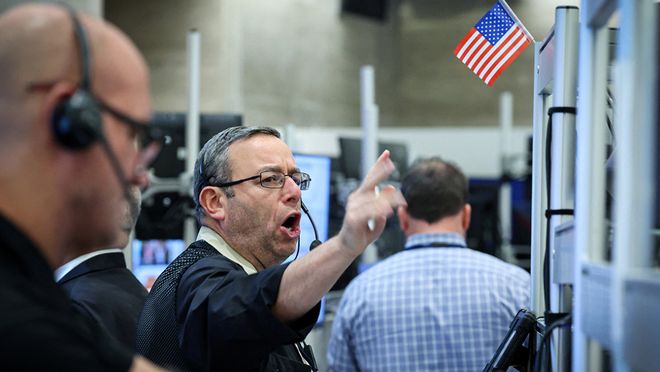
周一保险经纪崩了、周二财富管理崩了,美股遍寻“下一个AI受害者”
华尔街见闻· 2026-02-11 03:38
Core Viewpoint - The launch of Altruist Corp.'s AI tool for tax strategy planning has raised concerns about the future of traditional wealth management firms, indicating a potential disruption in their core business model [1][2][4]. Group 1: Market Reaction - Following the announcement of Altruist's AI tool, shares of major wealth management firms experienced significant declines, with Charles Schwab (SCHW) dropping 9.5% intraday and closing down 7.4%, while Raymond James Financial Inc. (RJF) and LPL Financial Holdings Inc. (LPLA) saw declines of over 9% and 11% respectively [2]. - The sell-off in wealth management stocks reflects broader market anxieties regarding AI's potential to disrupt financial advisory and wealth management services, leading to fears of efficiency gains being eroded by competition and long-term fee compression [4][6]. Group 2: Broader Industry Impact - The threat posed by AI to traditional business models is spreading across various sectors, with wealth management stocks being the latest to feel the impact [5]. - Prior to the wealth management stock declines, insurance brokerage stocks had already faced significant losses, with the S&P 500 Insurance Index dropping 3.9%, marking its largest single-day decline since October 2025 [7]. - The introduction of new AI tools by companies like Insurify has raised concerns about the potential threat to the consulting business of insurance brokers, although some analysts view these tools as efficiency enhancers rather than existential threats [9]. Group 3: Market Trends and Analyst Insights - The recent sell-off in stocks across software, financial services, and asset management sectors resulted in a combined market value loss of $611 billion [10]. - Since the launch of OpenAI's ChatGPT, the potential for AI disruption has been a hot topic, with investors previously focusing on beneficiaries of AI advancements, such as semiconductor and network equipment companies [12]. - Despite the current market turmoil, analysts project a 19% growth in earnings for S&P 500 software and services constituents by 2026, indicating a potential recovery in the sector [14].




英伟达离职15年,他想挑战黄仁勋
3 6 Ke· 2026-02-11 00:32
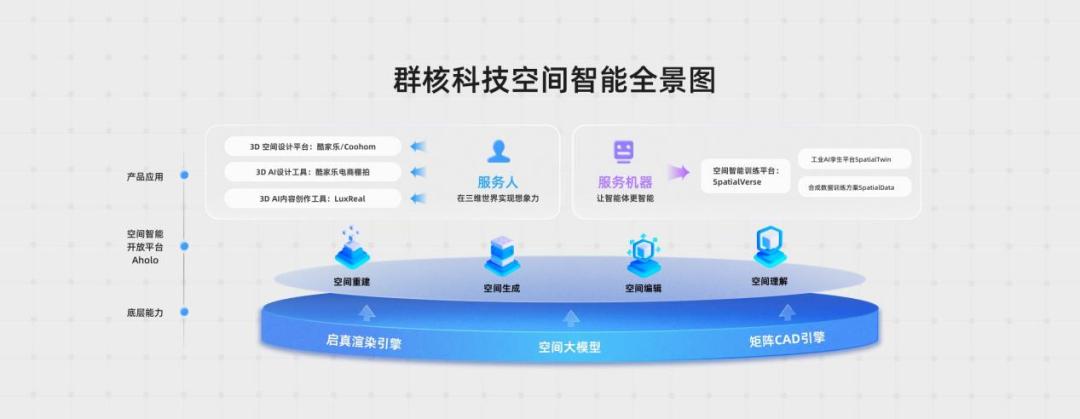
从英伟达离职,回到中国创业,又反向杀入黄仁勋的腹地,没有投资人不喜欢这样的故事。 典型代表是摩尔线程创始人张建中,他曾任英伟达全球副总裁、大中华区总经理,在2020年创立摩尔线程,也被称作"中国版英伟达"。2025年12月,摩尔 线程登陆科创板,市值一度超过3000亿元。 另一个代表是群核科技创始人黄晓煌。在美国攻读硕士研究生期间,黄晓煌曾加入英伟达任软件工程师,参与了CUDA开发。2011年,他从硅谷回到杭 州,与同学创立群核科技,其打造的"酷家乐"是中国最大的空间设计平台。但群核科技IPO的故事,要更为曲折。 2021年4月,群核科技在纳斯达克申请上市。那时候,一起排队的中国公司有30多家。但到了下半年,风云突变,群核也无奈撤回申请。 到了2025年2月,群核科技向港交所递表,摩根大通、建银国际为联席保荐人,又正值"杭州六小龙"声名鹊起。结果6个月内,申请未获批,招股书失效。 2025年8月22日,群核再次向港交所提交上市申请,目前仍在排队中。 云启资本创始管理合伙人毛丞宇在IDG时,主导了群核的第一轮机构投资,后来又持续加注。"杭州六小龙"火了之后,有一次他跟黄晓煌感叹,"运气和 命运还是蛮奇妙的。如果 ...

深蓝航天“星云二号”大型可回收火箭第二批次发动机首台产品热试车考核成功;工信部等五部门:综合应用卫星通信等方式为低空空域提供网络覆盖——《投资早参》
Mei Ri Jing Ji Xin Wen· 2026-02-11 00:11
Market News - The three major U.S. stock indices closed mixed, with the Dow Jones up 0.1%, the Nasdaq down 0.59%, and the S&P 500 down 0.33%. Major tech stocks had mixed performances, with Oracle rising over 2% and Tesla over 1%, while Google and Broadcom fell over 1% [1] - International oil prices slightly declined, with WTI crude oil down 0.26% at $64.19 per barrel and Brent crude down 0.09% at $68.98 per barrel. Precious metals also fell, with spot gold down 0.6% at $5029.01 per ounce and silver down 3.2% at $80.74 per ounce [1] Industry Insights - Deep Blue Aerospace announced significant progress in the development of its "Yunxing-2" reusable launch vehicle's core propulsion system, with the "Thunder-RS" engine achieving a thrust of 130 tons, marking it as the largest in China. This advancement indicates a shift towards high-density and rapid development in the rocket's propulsion system [2] - The satellite communication industry is projected to reach between 200 billion to 400 billion yuan by 2030, with an annual compound growth rate of 10%-28%. The industry is at a critical turning point from "concept validation" to "scale application," driven by technological maturity and cost reduction [2] - The Ministry of Industry and Information Technology released guidelines to enhance communication capabilities for low-altitude infrastructure, focusing on network coverage for low-altitude air routes and applications. This aims to improve network reliability and safety for low-altitude operations [3] - The low-altitude communication network is essential for the safety and scalability of low-altitude flight activities. The new guidelines address previous coverage issues and aim to optimize low-altitude communication networks, facilitating the development of the low-altitude economy [3] - Several robotics companies have announced partnerships for the 2026 Spring Festival Gala, indicating a significant step towards commercialization in the robotics industry. The global humanoid robot market is expected to see a shipment of approximately 18,000 units by 2025, reflecting a year-on-year growth of about 508% [4] - The humanoid robot industry is anticipated to enter a critical phase in 2025, with leading companies focusing on performance upgrades and cost reductions. This is expected to lead to substantial growth in domestic robot shipments, benefiting core supply chains and application scenarios [5]
今日A股市场重要快讯汇总|2026年2月11日
Sou Hu Cai Jing· 2026-02-11 00:07
隔夜美股市场表现强劲,道指续创盘中历史新高,最高至50471.58点[1]。明星科技股多数上扬,奈飞涨 超3%,迪士尼涨近3%,甲骨文、赛富时涨超2%,微软、台积电涨近2%,特斯拉涨超1%[2]。 同时,纳斯达克中国金龙指数表现活跃,收盘上涨0.88%,成分股中复朗集团涨27.27%,亿咖通科技涨 10.71%,海天网络涨10.42%,1药网涨9.44%,新氧涨9.09%[3]。盘前交易时段,该指数曾涨超1%,叮 咚买菜一度大涨16.97%[4]。 大宗商品方面,贵金属价格日内大幅波动。现货黄金突破5050美元/盎司,日内涨0.53%[5];纽约期金 突破5070美元/盎司,日内涨0.78%[6]。 现货白银与纽约期银则先扬后抑,现货白银曾突破81美元/盎司,日内涨0.43%,随后失守80美元/盎 司,日内跌3.98%[7][8];纽约期银同样突破81美元/盎司后回落,失守80美元/盎司,日内跌2.86%[9] [10]。 国内白银期货市场同步调整,白银连续主力合约日内跌2%,现报20142.00元[11]。 外汇市场上,美元兑日元跌幅扩大,最新报154.20,下跌1.07%[12]。 二、宏观经济与市场分析 ...
美股冲高回落,存储概念集体大跌,中概股逆势走高,重磅数据即将公布
2 1 Shi Ji Jing Ji Bao Dao· 2026-02-10 23:14
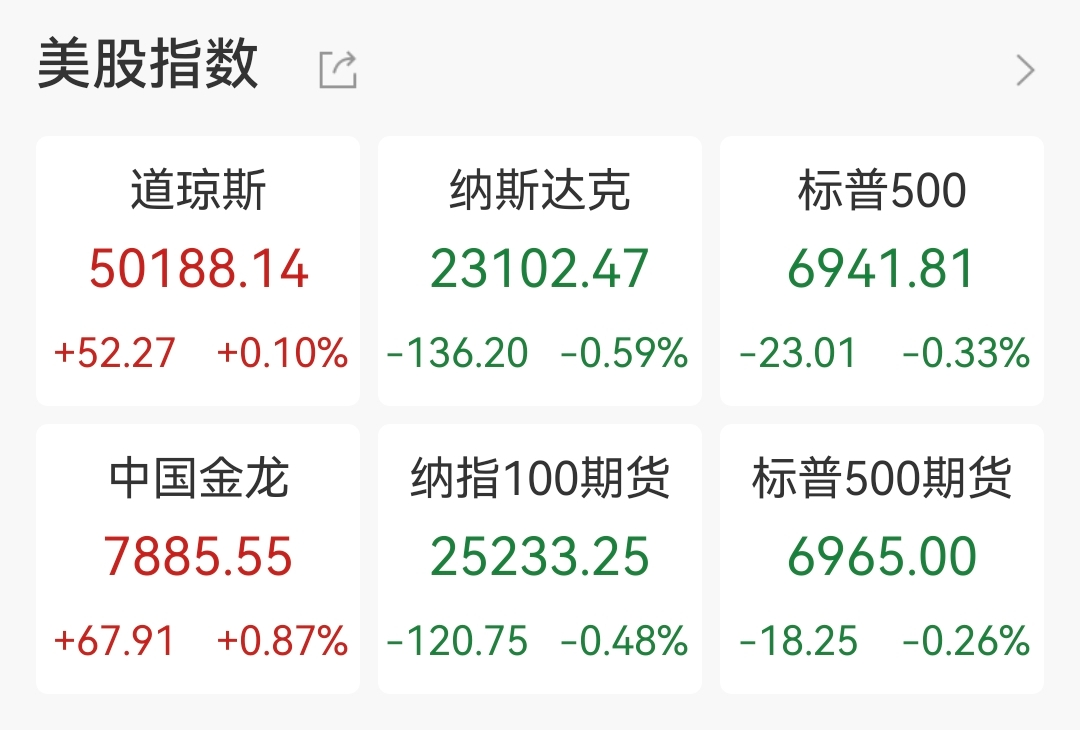
Market Performance - The US stock indices showed mixed results, with the Dow Jones increasing by 0.1% to a record close, while the S&P 500 and Nasdaq fell by 0.33% and 0.59% respectively [1][2] - The Dow reached a historical high for the third consecutive time, previously surpassing the 50,000 mark [1] Sector Performance - The software sector provided support to the market, with Datadog and ServiceNow rebounding approximately 14% and 4% respectively, and Unity's stock rising by 5% [2] - Major technology stocks mostly declined, with the Nasdaq's seven tech giants index dropping by 0.59%. Only Tesla saw an increase of nearly 2% [3][4] Company News - Datadog reported better-than-expected earnings, projecting a revenue of $3.43 billion for FY2025, a 28% year-over-year increase, with operating cash flow of $1.05 billion and free cash flow of $915 million [2] - Alphabet, Google's parent company, plans to raise nearly $32 billion through bond issuance, including a rare 100-year bond, marking a significant move in the tech sector [3] Chinese Stocks - The Nasdaq Golden Dragon China Index rose by 0.87%, with notable increases in stocks such as Dingdong Maicai (over 7%) and Sohu (over 4%) [5] Commodity Market - Gold prices experienced volatility, with spot gold down 0.78% to $5,019.46 per ounce, and silver down over 3% [6][7] Economic Data - US retail sales data showed stagnation in December, leading to increased bets on potential interest rate cuts by the Federal Reserve [7] - The probability of a 25 basis point rate cut by March is estimated at 19.6%, with a higher likelihood of maintaining current rates [7]
今夜,再创新高!
Zhong Guo Ji Jin Bao· 2026-02-10 16:14
Group 1 - The Dow Jones Industrial Average (DJIA) reached a new all-time high, fluctuating between a 200 to 300 point increase, marking its third consecutive record-breaking session [1][2] - Financial stocks, including Goldman Sachs and American Express, continued their upward trend, contributing to the DJIA's performance [2] - The software sector provided significant support to the market, with Datadog and ServiceNow rebounding approximately 14% and 4% respectively, while Unity's stock rose by 5% [3] Group 2 - Datadog reported better-than-expected earnings, projecting a revenue of $3.43 billion for fiscal year 2025, representing a 28% year-over-year growth, with a fourth-quarter revenue of $953 million, up 29% year-over-year [3] - The number of large customers for Datadog increased significantly, with annual recurring revenue (ARR) clients exceeding $1 million reaching 603, a 31% increase from the previous year [3] - AI application software stocks surged, with related ETFs rising over 2%, as market sentiment shifted following a previous decline attributed to AI competition concerns [4] Group 3 - The storage sector underperformed, with Western Digital dropping over 8% and SanDisk declining more than 5% [7] - Recent retail sales data indicated that U.S. consumer spending remained flat in December, falling short of economists' expectations for a 0.4% month-over-month increase [8] - The upcoming employment report and consumer price index (CPI) release are highly anticipated, with expectations for January non-farm payrolls to increase by 68,000, the best performance in four months [9]


2026年企业微信上门服务全解析:高效办公新选择
Sou Hu Cai Jing· 2026-02-10 16:13
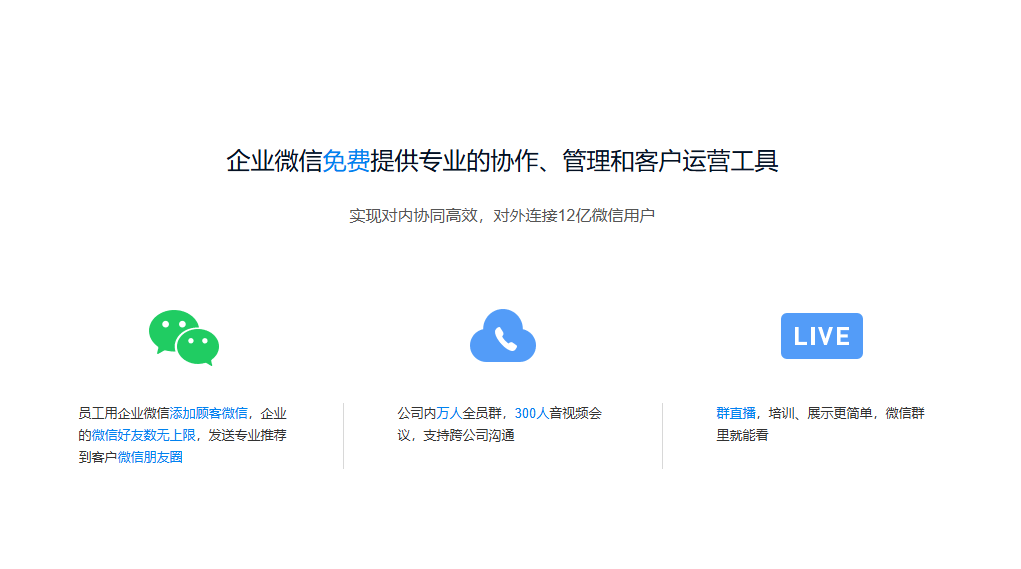
Core Insights - The article discusses how enterprises can achieve efficient integration of internal management and customer operations through a single platform, highlighting the potential of WeChat Work's on-site service model as a solution to this challenge. Group 1: Core Features of WeChat Work's On-Site Service - WeChat Work provides a comprehensive communication and collaboration tool that addresses traditional office pain points, such as information lag, with features like message read status and multi-platform synchronization. For instance, Tianhong Mall's 50,000 sales staff maintained real-time communication with 10 million customers, achieving an additional 16% sales during store closures [2]. - The intelligent customer operation system of WeChat Work allows unlimited addition of WeChat friends and sharing of professional content. For example, Baiguoyuan reduced the spoilage rate of perishable fruits from the industry average of 15% to 5% through a community pre-sale model [3]. - WeChat Work offers flexible internal management tools covering the entire office lifecycle, significantly improving efficiency. For instance, the Education Bureau of Haizhu District connected 290 schools with 220,000 parents, increasing notification handling efficiency by 300% [4]. Group 2: Industry Application Practices - In the retail sector, Tianhong Mall established 57,000 customer communities, achieving an annual online GMV of 5.1 billion, which accounted for 22% of total revenue [5]. - The education sector showcases a new paradigm of home-school collaboration, with the Haizhu District Education Bureau reducing health information collection time from 48 hours to 2 hours [6]. - In the government sector, Guizhou Province implemented mobile office coverage for all civil servants, reducing document approval delays by 70% [7]. Group 3: Technical Architecture and Security Assurance - WeChat Work supports public, private, and hybrid cloud deployment models, allowing for deep integration with core business systems while meeting security requirements [10]. - A comprehensive security protection system is in place, including transmission encryption and operational audits, which has led to a 40% decrease in customer complaints for China Bank [11]. - The platform offers over 200 open interfaces for seamless integration with ERP and OA systems, exemplified by BYD's real-time production data push to WeChat Work [12]. Group 4: Future Trends and Challenges - By 2026, WeChat Work will fully integrate with Tencent's large model, enabling features like intelligent customer service and automated report generation, which has already shown a 15% increase in sales conversion rates for a fast-moving consumer goods company [13]. - Tencent is developing a 3D virtual office for WeChat Work, which has demonstrated a 40% increase in creative collaboration efficiency compared to traditional video meetings [14]. - With the implementation of the Data Security Law, WeChat Work is optimizing data cross-border transmission and localization, successfully achieving GDPR certification for a multinational company [15]. Conclusion - The evolution of WeChat Work from a communication tool to a digital hub reflects a paradigm shift in enterprise management, with 15 million business users achieving internal and external collaboration through a single platform [16].

宝信软件:公司上下强化危机意识,形成聚焦向外开拓市场的激情
Zheng Quan Ri Bao Wang· 2026-02-10 13:46
Core Viewpoint - Baoxin Software (600845) is enhancing its crisis awareness and focusing on expanding its market presence while improving internal rankings to secure quality new contracts [1] Group 1: Market Strategy - The company is actively working to strengthen its marketing network within the steel industry and is also diversifying its client base by targeting non-steel industries [1] - Management is leading efforts to engage with the market and visit sites to better understand customer needs and opportunities [1] Group 2: Competitive Positioning - Baoxin Software is closely monitoring peer companies of similar scale to identify gaps and areas for improvement [1] - The company aims to capture high-quality clients and break into key customer segments [1]
