
铝业

Search documents
【金牌纪要库】卡塔尔氦气生产装置关停导致全球供应出现断层,海外半导体厂商被迫高价寻货,Ta具备大规模供应半导体级氦气的能力
财联社· 2026-03-16 04:24
Group 1 - Over 30% of the world's helium supply comes from Qatar, and the shutdown of production facilities has led to a global supply gap, forcing overseas semiconductor manufacturers to seek high-priced alternatives. A domestic company has the capability to supply semiconductor-grade helium on a large scale [1] - China's reliance on Russian helium is expected to increase from 44%, with two helium suppliers possessing mature import channels and distribution networks from Russia [1] - Geopolitical conflicts in the Middle East have resulted in a 10% loss of global aluminum production capacity, driving aluminum prices to continue rising, benefiting several domestic companies significantly [1]


铝产业链周报-20260316
Chang Jiang Qi Huo· 2026-03-16 03:47
1. Report Industry Investment Rating - Not provided in the document 2. Core View of the Report - The supply crisis of aluminum is still intensifying. It is recommended to allocate more positions while controlling the position size. Attention should still be paid to the development of the situation. The impact of the Middle East situation on aluminum prices is two - sided. Currently, the positive factors outweigh the negative ones, but it is not certain. The downstream start - up is gradually rising, entering the peak season rhythm, and the social inventory of aluminum ingots is still waiting for an inflection point [3]. 3. Summary by Directory 3.1. Weekly View - The price of domestic bauxite is temporarily stable, while the mainstream transaction price of Guinea bulk ore increased by $2.2 per dry ton week - on - week to $63 per dry ton. The operating capacity of alumina increased by 200,000 tons week - on - week to 93.7 million tons, and the national alumina inventory increased by 25,000 tons week - on - week to 5.309 million tons. The operating capacity of electrolytic aluminum increased by 10,000 tons week - on - week to 44.726 million tons. The downstream start - up rate of domestic aluminum processing leading enterprises increased by 2.4% week - on - week to 61.9% [3]. 3.2. Macroeconomic Indicators - The document presents data on the US Treasury yield curve (10 - year and 2 - year), the US dollar index, the US 10 - year Treasury yield and real yield, and the exchange rate of the US dollar against the RMB [5]. 3.3. Bauxite - The price of domestic bauxite is temporarily stable, but it is difficult to maintain in the long term due to the large difference in the real - time theoretical cost between domestic and imported ores used by alumina plants. The mainstream transaction price of Guinea bulk ore increased by $2.2 per dry ton week - on - week to $63 per dry ton. Although some mining enterprises have signed long - term shipping agreements, the increase in shipping costs and other factors have pushed up the price of imported ore from Guinea. The cost of bauxite has increased, but the supply of imported ore is increasing, and the ore price is still under pressure [8]. 3.4. Alumina - As of last Friday, the installed capacity of alumina was 114.62 million tons, remaining unchanged week - on - week, and the operating capacity was 93.9 million tons, increasing by 200,000 tons week - on - week, with an operating rate of 81.9%. The weighted price of domestic spot alumina was 2,700.4 yuan per ton, increasing by 26.8 yuan per ton week - on - week. The national alumina inventory was 5.345 million tons, increasing by 36,000 tons week - on - week. The market rumor that Guinea may restrict bauxite exports has led to a stronger alumina price, which should be viewed with caution [11]. 3.5. Important High - Frequency Data of Alumina - The document presents data on the basis, port inventory, north - south price difference, and external transportation volume of alumina [13][14][15][16]. 3.6. Electrolytic Aluminum - As of last Friday, the installed capacity of electrolytic aluminum was 45.422 million tons, remaining unchanged week - on - week, and the operating capacity was 44.726 million tons, increasing by 10,000 tons week - on - week. The blockade of the Strait of Hormuz will gradually affect the production of electrolytic aluminum in the region, and the sharp rise in European natural gas prices has raised concerns about aluminum plant production cuts in Europe. There are new investment and restart projects both at home and abroad [20]. 3.7. Important High - Frequency Data of Electrolytic Aluminum - The document presents data on the processing fee of 6063 aluminum rods, the forward curve of Shanghai aluminum, the pit - mouth price and car - board price of thermal coal, and the import profit of aluminum [22]. 3.8. Inventory - The document presents the social inventory data of aluminum rods and ingots, as well as the inventory data of Shanghai Futures Exchange aluminum futures and LME aluminum [24][25][26][27]. 3.9. Cast Aluminum Alloy - The start - up rate of leading recycled aluminum alloy enterprises increased by 2.5% week - on - week to 58.8%. However, due to policy uncertainty and tight supply of compliant raw materials in some regions, the overall start - up level has not returned to the pre - holiday level. The traditional peak season in March has been weak, and downstream procurement is mainly for rigid demand [30]. 3.10. Important High - Frequency Data of Cast Aluminum Alloy - The document presents data on the average price of profile aluminum, the forward curve of aluminum alloy futures, the seasonal trend of the price difference between ADC12 and A00, and the import profit of ADC12 aluminum alloy ingots [32][33][34][35]. 3.11. Downstream Start - up (First Part) - The start - up rate of domestic leading aluminum downstream processing enterprises increased by 2.4% week - on - week to 61.9%. The start - up rate of leading aluminum profile enterprises increased by 7.3% week - on - week to 51.8%, and the production of profile enterprises has fully returned to the pre - holiday normal rhythm. The start - up rate of leading aluminum plate and strip enterprises increased by 1% week - on - week to 70%, but the order volume of automobile plates has decreased [38][42]. 3.12. Downstream Start - up (Second Part) - The start - up rate of leading domestic cable enterprises increased by 2% week - on - week to 65%, and the production rhythm has further accelerated. The start - up rate of leading primary aluminum alloy enterprises increased by 1.8% week - on - week to 53%, but the spot trade is light due to the high aluminum price [46].
铝行业交流20260315
2026-03-16 02:20
铝行业交流 20260315 摘要 2026 年全球电解铝供给释放将显著低于预期,在建项目如阿达罗、信 发等普遍推迟 0.5-1 年,导致 2026 年存在 30-40 万吨供应缺口,看涨 窗口期拉长。 中东地缘冲突引发供应风险,卡塔尔 Qatalum 已减产 40%,若霍尔木 兹海峡封锁超 30 天,依赖海运的 900 万吨氧化铝进口及 460 万吨铝出 口将面临停摆。 莫桑比克 Mozal 铝厂(58 万吨)因电价谈判僵局面临 2026 年 3 月停 产风险,该厂消耗当地 40%电力,若关停将对全球 2026 年供应造成严 重冲击。 2026 年海外产量净增仅 51.5 万吨,较此前预测减半;2027 年 173.5 万吨的增量预测基于乐观复产假设,存在因能源价格及地缘政治扰动而 大幅下调的风险。 中国产量接近 4,500 万吨天花板,2026 年增量主要来自辽宁忠旺复产 (约 20 万吨),2027 年后国内基本无新增空间,供应结构由增量转向 存量博弈。 全球成本曲线分化明显,中东及印尼凭借能源与资源优势处于 1.2-1.4 万元/吨低位,而欧美火电铝厂成本普遍高于 2,500 美元/吨,复产动力 受限 ...
铝周报:沪铝或延续震荡偏强趋势-20260316
Hua Long Qi Huo· 2026-03-16 02:07
1. Report Industry Investment Rating - Not provided in the report 2. Core View of the Report - Aluminum prices are expected to show a mainly fluctuating and strengthening trend, with limited arbitrage opportunities. It is recommended to mainly observe option contracts [7][35] 3. Summary by Relevant Catalogs 3.1 Market Review - As of last week, the price of the main contract AL2604 of Shanghai aluminum futures showed a fluctuating trend, ranging from around 24,450 yuan/ton to a maximum of about 25,860 yuan/ton [9] 3.2 Macroeconomic Aspect - In February 2026, the national consumer price increased by 1.3% year - on - year. The average consumer price from January to February increased by 0.8% compared with the same period of the previous year. In February, the consumer price increased by 1.0% month - on - month [4][11][12] 3.3 Supply and Demand Situation - As of February 2025, the domestic alumina in - production capacity was 93.5 million tons, with a total capacity of 114.62 million tons and an operating rate of 81.57%. As of February 2026, the electrolytic aluminum in - production capacity was 44.916 million tons, with a total capacity of 45.402 million tons and an operating rate of 98.93% [15] - As of March 12, 2026, the total national aluminum rod inventory was 372,000 tons, a decrease of 7,500 tons compared with the previous period. Regionally, the inventory in Foshan was 162,000 tons, in Wuxi was 135,000 tons, and in Nanchang was 11,000 tons [22] 3.4 Inventory Situation - As of March 13, 2026, the electrolytic aluminum inventory on the Shanghai Futures Exchange was 416,425 tons, an increase of 21,927 tons from the previous week. As of March 12, 2026, the LME aluminum inventory was 447,300 tons, a decrease of 2,825 tons from the previous trading day, and the proportion of cancelled warrants was 38.77% [25] - As of March 12, 2026, the total social inventory of electrolytic aluminum was 1.2612 million tons, an increase of 35,000 tons from the previous day [26]
氧化铝周报:成本支撑,氧化铝短时震荡偏好-20260316
Tong Guan Jin Yuan Qi Huo· 2026-03-16 02:07
1. Report Industry Investment Rating - No relevant content provided 2. Core Viewpoints of the Report - Currently, the alumina supply side maintains stable production with limited supply pressure, and the consumption side has stable operating capacity, resulting in a relatively balanced situation [3][7]. - Due to the unexpected duration of the Middle - East conflict, the futures prices of caustic soda and coking coal have risen significantly, followed by the increase in spot prices. With an optimistic market sentiment, cost support and industrial chain effects may drive the alumina market to rise in the short term [3][7]. - In the medium - to - long term, the abundant ore supply and the pressure of new production capacity to be put into operation are expected to limit the upside potential of alumina [3][7]. 3. Summary by Related Catalogs Transaction Data - From March 6th to March 13th, 2026, the alumina futures (active) rose from 2832 yuan/ton to 2956 yuan/ton, an increase of 124 yuan/ton; the domestic alumina spot price rose from 2673 yuan/ton to 2698 yuan/ton, an increase of 25 yuan/ton; the spot premium decreased from - 118 yuan/ton to - 132 yuan/ton, a decrease of 14 yuan/ton; the FOB price of Australian alumina decreased from 306.5 dollars/ton to 304 dollars/ton, a decrease of 2.5 dollars/ton; the import profit and loss decreased from 3.23 yuan/ton to - 27.93 yuan/ton, a decrease of 31.2 yuan/ton [4]. - The exchange warehouse inventory increased from 337172 tons to 373960 tons, an increase of 36788 tons, and the exchange factory warehouse inventory increased from 0 tons to 1500 tons, an increase of 1500 tons [4]. - The prices of domestic bauxite in Shanxi, Henan, Guangxi, and Guizhou remained unchanged, while the CIF price of Guinea bauxite increased from 61.5 dollars/ton to 64 dollars/ton, an increase of 2.5 dollars/ton [4]. Market Review - The main alumina futures contract rose 124 yuan/ton last week, closing at 2956 yuan/ton. The national weighted - average spot price on Friday was 2698 yuan/ton, up 25 yuan/ton from the previous week [5]. - For bauxite, domestic mines' resumption of production has limited output release, and the overall supply shortage has not been significantly alleviated. Overseas, due to increased transportation costs and uncertain Middle - East situation, there are few offers for imported ore in late March and early April, and sellers are reluctant to sell [5]. - On the supply side, alumina supply has slightly increased. The operating capacity of alumina has changed little recently, and some southern enterprises' roasting furnaces have resumed normal production after maintenance. As of March 12th, China's alumina installed capacity was 113.9 million tons, the operating capacity was 89.5 million tons, and the operating rate was 78.58% [5]. - On the consumption side, the production of the electrolytic aluminum industry has continued to increase slightly, with no significant reduction or resumption of production. A new production capacity of an enterprise in Inner Mongolia is still being put into operation, slightly increasing the demand for alumina [5]. - In terms of inventory, the alumina futures warrant inventory last Friday was 374,000 tons, an increase of 36,788 tons from the previous week, and the factory warehouse inventory was 1500 tons, an increase of 1500 tons [5]. Market Outlook - On the ore side, due to increased overseas transportation costs and uncertain Middle - East situation, there are few offers for imported ore in late March and early April, and sellers are reluctant to sell, leading to a slight increase in ore prices. The resumption of domestic mines is slow, and the improvement of the supply shortage is very limited [3][7]. - On the supply side, the recent operating capacity of alumina has remained stable at 89.5 million tons, and holders' willingness to raise prices has increased, leading to an increase in spot quotes [3][7]. - On the consumption side, the electrolytic aluminum capacity has slightly increased, mainly executing long - term contracts. The recognition of the rising alumina price is low, and the enthusiasm for spot procurement is low [3][7]. - On the cost side, due to the rising prices of caustic soda and energy, the cost of alumina has increased. The warrant inventory last week was 374,000 tons, an increase of 36,788 tons from the previous week, and the factory warehouse inventory was 1500 tons, an increase of 1500 tons [3][7]. Industry News - Canyon Resources' Minim Martap bauxite project in Cameroon is progressing smoothly. The open - pit mining equipment has been delivered, and mining is planned to start before the end of March. The first batch of bauxite is expected to be produced in the early second quarter of 2026, with a first - phase capacity of 1.2 million tons. The first batch of CRRC locomotives is expected to arrive at Douala Port in the middle and late second quarter of 2026 for ore railway transportation [8]. - China National Machinery Industry No.1 Construction Corporation won the bid for the 6 - million - ton alumina second - phase project of Gansu Jiatang Aluminum Co., Ltd., marking an important milestone in its strategic adjustment and laying a foundation for further exploration of the regional market [8]. - The Federation of Indian Mineral Industries (FIMI) pointed out that due to concerns about supply disruptions caused by the West Asian crisis, international aluminum prices have risen above $3400 per ton. Although this has brought short - term benefits to Indian primary aluminum producers, the rising input costs have also brought long - term challenges. The transportation interruption in the Strait of Hormuz has increased freight costs, affecting the import of calcined petroleum coke (CPC) and raising the production costs of domestic smelters [8]. Related Charts - The report provides charts on alumina futures price trends, alumina spot prices, alumina spot premiums, alumina month - to - first - continuous spread, domestic bauxite prices, imported bauxite CIF prices, caustic soda prices, thermal coal prices, alumina exchange inventory, and alumina cost - profit [9][11][14][16][18][20][23].
宏观金融类:文字早评2026/03/16-20260316
Wu Kuang Qi Huo· 2026-03-16 01:56
1. Report Industry Investment Rating No relevant content provided. 2. Core Viewpoints of the Report - Amid the US - Iran conflict, global risk preferences are disturbed, oil prices are rising, and the Fed's interest - rate cut expectations are weakening. It is advisable to pay attention to the change in the war situation and control risks [4]. - The economic recovery's sustainability needs to be observed, and there is still room for loose monetary policy. The Iran geopolitical conflict and rising inflation may put pressure on the bond market, and the bond market is expected to continue to fluctuate [6]. - Gold prices are in a sideways consolidation. The Fed may be cautious about the interest - rate cut rhythm, suppressing precious metal prices in the short term. It is recommended to stay on the sidelines [8]. - Due to the Middle East conflict, copper prices may maintain a volatile operation; aluminum prices are expected to be relatively strong; zinc prices may break downward; lead prices may decline further; nickel prices will likely fluctuate; tin prices will probably have a high - level wide - range oscillation; lithium carbonate prices will oscillate widely; alumina prices suggest a wait - and - see strategy; stainless steel prices will maintain a volatile pattern; and casting aluminum alloy prices are expected to be relatively strong [11][13][16][17][18][20][22][25][26][28]. - Steel prices will likely maintain a weak and volatile operation; iron ore prices will oscillate widely; coking coal and coke prices may have a short - term upward pulse; glass prices will maintain a wide - range oscillation; soda ash prices will continue a relatively strong oscillation; manganese silicon and ferrosilicon prices may have short - term rebound opportunities; industrial silicon prices will oscillate under cost support; and polysilicon prices will be under pressure and oscillate [30][33][36][40][41][44][47][49]. - Rubber trading should be flexible and short - term; for crude oil, a short - position strategic allocation is recommended; methanol should be taken profit at high prices; urea should be short - sold; pure benzene and styrene suggest an empty - position wait - and - see; PVC and ethylene glycol may rebound but need to pay attention to risks; PTA processing fees are difficult to rise; PX valuations are expected to rise; polyethylene can be short - sold at high prices; and polypropylene's short - term is dominated by geopolitical conflicts and the long - term by production mismatch [56][58][61][63][65][67][69][72][74][76][79]. - Pig prices may remain weakly stable; egg prices may rise slightly; soybean meal prices suggest short - term wait - and - see; oil prices are bullish in the medium term; sugar prices may have a rebound space; and cotton prices suggest buying on dips [82][85][87][90][92][95]. 3. Summary by Relevant Catalogs 3.1 Macro - finance 3.1.1 Stock Index - **Market Information**: Trump won't reach a cease - fire agreement with Iran for now; China's "15th Five - Year Plan" sets energy production targets; domestic AI glasses' global share will reach 45% this year; Tesla's Terafab project will start in seven days, and Meta plans to cut 20% or more of its staff [2]. - **Strategy Viewpoint**: Affected by the US - Iran conflict, the Fed's interest - rate cut expectations are weakening, and it is advisable to pay attention to the war situation and control risks [4]. 3.1.2 Treasury Bonds - **Market Information**: On Friday, Treasury bond futures had different changes. The US launched investigations on multiple trade partners, and China and the US will hold economic and trade consultations. The central bank had a net withdrawal of funds [5]. - **Strategy Viewpoint**: The economic recovery's sustainability needs to be observed, and the bond market may be pressured by inflation. It is expected to continue to fluctuate [6]. 3.1.3 Precious Metals - **Market Information**: Gold and silver prices fell. The US PCE data shows inflation trends, and the US calls on countries to send warships to the Middle East [7]. - **Strategy Viewpoint**: Gold prices are in a sideways consolidation. The Fed's cautious attitude towards interest - rate cuts suppresses precious metal prices in the short term. It is recommended to stay on the sidelines [8]. 3.2 Non - ferrous Metals 3.2.1 Copper - **Market Information**: Due to the Middle East conflict, copper prices adjusted. LME and domestic inventories changed, and the spot premium was stable [10]. - **Strategy Viewpoint**: The Middle East conflict continues, and copper prices may maintain a volatile operation [11]. 3.2.2 Aluminum - **Market Information**: Aluminum prices回调 due to economic concerns. Inventory and processing fees changed [12]. - **Strategy Viewpoint**: The Middle East conflict threatens overseas supply, and domestic demand recovers. Aluminum prices are expected to be relatively strong [13]. 3.2.3 Zinc - **Market Information**: Zinc prices fell, and inventory and basis changed [14][15]. - **Strategy Viewpoint**: The zinc industry is weak, and zinc prices may break downward [16]. 3.2.4 Lead - **Market Information**: Lead prices fell, and inventory and basis changed [17]. - **Strategy Viewpoint**: Lead prices may decline further due to insufficient domestic demand and concentrated short positions [17]. 3.2.5 Nickel - **Market Information**: Nickel prices fell, and spot premiums, ore prices, and nickel - iron prices changed [18]. - **Strategy Viewpoint**: In the medium term, nickel prices are supported by policies. In the short term, they will likely fluctuate. It is recommended to buy low and sell high [18][19]. 3.2.6 Tin - **Market Information**: Tin prices fell. Supply is in a post - holiday recovery but limited, and demand is weakly recovering [20]. - **Strategy Viewpoint**: Tin supply is tight, and demand is weakly recovering. Tin prices will probably have a high - level wide - range oscillation [20]. 3.2.7 Lithium Carbonate - **Market Information**: Lithium carbonate prices fell, and inventory and ore prices changed [21]. - **Strategy Viewpoint**: Domestic production recovers, and demand is good. Lithium carbonate prices will oscillate widely [22]. 3.2.8 Alumina - **Market Information**: Alumina prices rose, and inventory and basis changed [23][24]. - **Strategy Viewpoint**: The ore price may rise, and the supply of alumina is tightening in the short term. It is recommended to stay on the sidelines and consider short - selling at high prices [25]. 3.2.9 Stainless Steel - **Market Information**: Stainless steel prices fell, and inventory and basis changed [26]. - **Strategy Viewpoint**: Supply pressure appears, demand is moderately released, and costs support prices. Stainless steel prices will maintain a volatile pattern [26]. 3.2.10 Casting Aluminum Alloy - **Market Information**: Casting aluminum alloy prices fell, and inventory and basis changed [27]. - **Strategy Viewpoint**: Costs are strong, demand recovers, and prices are expected to be relatively strong [28]. 3.3 Black Building Materials 3.3.1 Steel - **Market Information**: Steel prices rose, and inventory and basis changed [30]. - **Strategy Viewpoint**: Steel prices will likely maintain a weak and volatile operation, and the focus is on inventory digestion and demand verification [30]. 3.3.2 Iron Ore - **Market Information**: Iron ore prices rose, and inventory and basis changed [31]. - **Strategy Viewpoint**: Iron ore supply is fluctuating, and prices will oscillate widely. Pay attention to negotiations and geopolitical situations [33]. 3.3.3 Coking Coal and Coke - **Market Information**: Coking coal and coke prices rose, and inventory and basis changed [34][35]. - **Strategy Viewpoint**: Coking coal prices are affected by the Middle East conflict, and short - term prices may have an upward pulse. Long - term is optimistic [36][38]. 3.3.4 Glass and Soda Ash - **Market Information**: Glass and soda ash prices rose slightly, and inventory and basis changed [39][41]. - **Strategy Viewpoint**: Glass prices will maintain a wide - range oscillation, and soda ash prices will continue a relatively strong oscillation [40][41]. 3.3.5 Manganese Silicon and Ferrosilicon - **Market Information**: Manganese silicon prices rose slightly, and ferrosilicon prices fell slightly [42]. - **Strategy Viewpoint**: In the short term, look for short - term rebound opportunities. In the long term, pay attention to cost and supply - side factors [44][45]. 3.3.6 Industrial Silicon and Polysilicon - **Market Information**: Industrial silicon prices rose slightly, and polysilicon prices fell [46][48]. - **Strategy Viewpoint**: Industrial silicon prices will oscillate under cost support, and polysilicon prices will be under pressure and oscillate [47][49]. 3.4 Energy and Chemicals 3.4.1 Rubber - **Market Information**: The market trades the expectation of refinery shutdown, and there may be a second - wave market. Tire enterprise开工 rates changed, and inventory increased [51][54]. - **Strategy Viewpoint**: Trade flexibly in the short term and consider hedging [56]. 3.4.2 Crude Oil - **Market Information**: Crude oil and refined oil prices rose [57]. - **Strategy Viewpoint**: Adopt a short - position strategic allocation and consider relevant spread operations [58]. 3.4.3 Methanol - **Market Information**: Methanol prices changed, and MTO profit changed [59][60]. - **Strategy Viewpoint**: Take profit at high prices [61]. 3.4.4 Urea - **Market Information**: Urea prices changed, and basis changed [62]. - **Strategy Viewpoint**: Short - sell at high prices [63]. 3.4.5 Pure Benzene and Styrene - **Market Information**: Pure benzene and styrene prices rose, and basis and other indicators changed [64]. - **Strategy Viewpoint**: Suggest an empty - position wait - and - see [65]. 3.4.6 PVC - **Market Information**: PVC prices rose, and cost, inventory, and basis changed [66]. - **Strategy Viewpoint**: PVC prices may rebound but need to pay attention to risks [67]. 3.4.7 Ethylene Glycol - **Market Information**: Ethylene glycol prices rose, and supply, demand, and inventory changed [68]. - **Strategy Viewpoint**: Ethylene glycol prices may rebound but need to pay attention to risks [69]. 3.4.8 PTA - **Market Information**: PTA prices fell, and supply, demand, and inventory changed [70][71]. - **Strategy Viewpoint**: PTA processing fees are difficult to rise, and prices may rise but need to pay attention to risks [72]. 3.4.9 p - Xylene - **Market Information**: PX prices fell, and supply, demand, and inventory changed [73]. - **Strategy Viewpoint**: PX valuations are expected to rise but need to pay attention to risks [74]. 3.4.10 Polyethylene (PE) - **Market Information**: PE prices changed, and supply, demand, and inventory changed [75]. - **Strategy Viewpoint**: Short - sell at high prices [76][77]. 3.4.11 Polypropylene (PP) - **Market Information**: PP prices changed, and supply, demand, and inventory changed [78]. - **Strategy Viewpoint**: Short - term is dominated by geopolitical conflicts, and long - term by production mismatch [79]. 3.5 Agricultural Products 3.5.1 Hogs - **Market Information**: Hog prices fluctuated slightly, and supply is abundant [81]. - **Strategy Viewpoint**: Hog prices may remain weakly stable, and it is recommended to short - sell on rebounds for the near - term and wait and see for the far - term [82]. 3.5.2 Eggs - **Market Information**: Egg prices rose slightly, and supply is sufficient [83]. - **Strategy Viewpoint**: Egg prices may rise slightly, and it is recommended to short - sell on rebounds for the near - term and pay attention to cost support for the far - term [85]. 3.5.3 Soybean and Rapeseed Meal - **Market Information**: Soybean import and production data changed [86]. - **Strategy Viewpoint**: The USDA report is neutral, and it is recommended to wait and see in the short term [87]. 3.5.4 Oils - **Market Information**: Palm oil production, export, and inventory data changed [88][89]. - **Strategy Viewpoint**: Oils are bullish in the medium term [90]. 3.5.5 Sugar - **Market Information**: Global and domestic sugar production and supply data changed [91]. - **Strategy Viewpoint**: Sugar prices may have a rebound space, and it is recommended to buy on dips [92]. 3.5.6 Cotton - **Market Information**: Cotton production, export, and inventory data changed [93][94]. - **Strategy Viewpoint**: The USDA report is neutral, and it is recommended to buy on dips [95].
早报 | 央视3·15曝光7大行业乱象;中美经贸磋商在法国巴黎开始举行;特斯拉“造芯”真来了;美国拟宣布组建霍尔木兹海峡护航联盟
虎嗅APP· 2026-03-16 00:07
Group 1 - The article highlights various industry malpractices exposed during the CCTV "3·15" event, including the use of toxic substances in food production, fraudulent health products, and deceptive marketing practices targeting vulnerable populations [2] - The article reports on the establishment of a "maritime escort alliance" by the U.S. in the Strait of Hormuz, aimed at ensuring the safety of oil shipping routes, with discussions ongoing about the timing of this initiative [3][4] - The article mentions that Aluminium Bahrain BSC (Alba), the world's largest single-site aluminum smelter, has begun phased shutdowns of three production lines, affecting 19% of its total capacity due to supply chain disruptions caused by the Strait of Hormuz situation [7] Group 2 - Tesla's CEO Elon Musk announced the launch of the Terafab project, aimed at manufacturing AI chips, marking a significant expansion beyond its core electric vehicle business [8][10] - The article discusses the commencement of U.S.-China economic consultations in Paris, indicating ongoing trade discussions between the two nations [11] - The article notes that the Chinese regulatory authorities are taking action against various malpractices highlighted in the "3·15" event, including the investigation of companies involved in food safety violations and misleading marketing [12][20]


铝&氧化铝产业链周度报告-20260315
Guo Tai Jun An Qi Huo· 2026-03-15 11:13
1. Report Industry Investment Rating No relevant content provided. 2. Core Viewpoints of the Report - The Iranian event continues to ferment, and the actual passage situation in the strait is still worrying. The aluminum metal, which is most affected by the Iranian issue in the non - ferrous sector, has a rather entangled pricing on the disk. Overseas spot premiums are rising, and attention should be paid to the tightness of the overseas spot end. If the strait logistics continues to be blocked, LME aluminum may rise and drive up the domestic market. However, the disk pricing is hesitant, and aluminum may be dragged down by the TACO expectation. While paying attention to long - position opportunities in aluminum, protective positions should be constructed [3]. - In the short - term weekly micro - demand for electrolytic aluminum, it is still weak. Alumina spot prices are steadily rising slightly, and the inventory accumulation range is moderate. In the medium - term, the pressure of new supply and increased port imports is increasing, but the domestic spot circulation is still tight in the short - term, and the pressure of cost collapse at the ore end is temporarily relieved [4]. 3. Summary by Relevant Catalogs 3.1 Trading End: Spread, Trading Volume, and Position - **Price Spread**: The spot premium of A00 aluminum and alumina has weakened. The average SMM A00 aluminum premium changed from - 120 yuan/ton to - 130 yuan/ton, and the average SMM A00 aluminum (Foshan) premium changed from - 185 yuan/ton to - 190 yuan/ton. The premium of Shandong alumina to the current month changed from - 205 yuan/ton to - 301 yuan/ton, and that of Henan alumina changed from - 150 yuan/ton to - 251 yuan/ton [7]. - **Monthly Spread**: The spread of the near - month contract of SHFE aluminum has rebounded [10]. - **Trading Volume and Position**: The position of the main SHFE aluminum contract has decreased slightly, and the trading volume has decreased significantly. The position of the main alumina contract has decreased slightly but is still at a historical high, and its trading volume has also decreased slightly [13]. - **Position - to - Inventory Ratio**: The position - to - inventory ratio of the main SHFE aluminum contract has decreased, and that of alumina has decreased slightly and is at a historically low level [18]. 3.2 Inventory: Bauxite, Alumina, Electrolytic Aluminum, and Processed Materials - **Bauxite**: - Port inventory and inventory days have increased. As of March 13, the weekly imported bauxite port inventory of Shanghai Steel Union has increased by 20.95 tons compared with last week, and the port inventory days have remained basically the same. As of February, the bauxite port inventory and port inventory days of Aladdin have increased [23]. - In February, the bauxite inventory of 43 sample enterprises in the country decreased by 662.32 tons month - on - month, and the bauxite inventory days in the alumina plant decreased [28]. - As of March 13, the weekly Guinea port shipping volume of Shanghai Steel Union decreased by 6.29 tons compared with last week, and the Australian port shipping volume increased by 14.25 tons. The weekly Guinea sea - floating inventory decreased by 34.34 tons, and the Australian sea - floating inventory increased by 22.27 tons [29]. - As of March 6, the bauxite shipping volume from Weipa + Gove Port in Australia decreased by 22.52 tons compared with last week, and that from Boffa + Kamsar Port in Guinea increased by 188.88 tons. The bauxite arrival volume under the SMM caliber increased by 135.74 tons [34]. - **Alumina**: - The total national inventory continued to increase. This week, the total alumina inventory increased by 4.8 tons compared with last week. The in - plant inventory decreased, the electrolytic aluminum plant's alumina inventory increased, the port inventory increased, and the platform/on - the - way inventory decreased [43]. - The full - caliber inventory of Aladdin continued to increase. As of March 12, the national alumina inventory was 534.5 tons, an increase of 3.6 tons compared with last week. The in - plant inventory increased by 0.1 tons, the electrolytic aluminum plant's alumina inventory decreased by 2.2 tons, the port inventory increased by 3.3 tons, and the yard/platform/on - the - way inventory increased by 2.4 tons [49]. - **Electrolytic Aluminum**: This week, the inventory continued to increase. As of March 12, the social inventory of aluminum ingots increased by 4 tons to 131 tons [50]. - **Aluminum Rod**: This week, the spot inventory and in - plant inventory of downstream aluminum rods decreased [54]. - **Aluminum Profiles and Plate - Strip Foil**: As of February, the finished - product inventory ratio and raw - material inventory ratio of SMM aluminum profiles and plate - strip foil increased slightly [57]. 3.3 Production: Output, Production Capacity, and Operating Rate - **Bauxite**: In February, the domestic bauxite supply under the SMM caliber decreased slightly. The domestic bauxite supply remained stable, and the imported bauxite supply was an important factor driving the growth of the total domestic bauxite supply. In February, the bauxite output in Shanxi, Henan, and Guangxi under the Shanghai Steel Union and SMM calibers decreased slightly [62][65]. - **Alumina**: The capacity utilization rate remained stable. As of March 13, the total operating capacity of alumina in the country was 9.29 billion tons, with a weekly increase of 1.3 million tons. This week, the domestic metallurgical - grade alumina output was 1.785 million tons, an increase of 0.2 tons compared with last week, and the short - term supply - loose pattern has not been reversed [69]. - **Electrolytic Aluminum**: The operating capacity remained at a high level, and the proportion of molten aluminum decreased seasonally. As of February, the operating capacity of electrolytic aluminum continued to be at a high level, but the capacity utilization rate decreased slightly. As of March 12, the weekly output of electrolytic aluminum under the Shanghai Steel Union caliber was 859,700 tons, an increase of 0.2 tons compared with last week. The proportion of molten aluminum decreased seasonally, and the ingot - casting volume of aluminum ingots is expected to increase [75]. - **Downstream Processing**: - The output of aluminum plate - strip foil increased slightly. This week, the output of recycled aluminum rods increased by 16,900 tons, the output of aluminum rods increased by 25,200 tons, and the output of aluminum plate - strip foil increased by 7,000 tons [78]. - The operating rate of leading domestic aluminum downstream enterprises increased by 2.4%. The operating rate of aluminum plate - strip increased by 1 percentage point, and that of aluminum foil remained unchanged. The operating rates of aluminum profiles, aluminum cables, recycled aluminum alloys, and primary aluminum alloys also increased [79][86]. 3.4 Profit: Alumina, Electrolytic Aluminum, and Processed Materials - **Alumina**: In February, the profit of alumina continued to decline slightly. The profit of metallurgical - grade alumina under the Shanghai Steel Union caliber was 110.3 yuan/ton, and the smelting profit was under pressure. The profits of alumina in Shandong, Shanxi, and Henan decreased slightly, while the cost side of alumina in Guangxi was relatively strong, and its profit performance was better than other regions [88]. - **Electrolytic Aluminum**: The profit remained at a high level. However, the current global macro - economic situation is complex, and the overseas geopolitical conflicts have led to an increase in risk - aversion sentiment. The多变 trade policies have also increased uncertainties, which interfere with market expectations [98]. - **Downstream Processing**: The processing fee of aluminum rods decreased by 250 yuan/ton this week, and the downstream processing profit remained at a low level [99]. 3.5 Consumption: Import Profit and Loss, Export Profit and Loss, and Apparent Demand - **Import Profit and Loss**: The import profit and loss of alumina and SHFE aluminum have increased [108]. - **Export**: In February 2025, the total export volume of aluminum products decreased slightly, with a month - on - month decrease of 111,000 tons. The export demand for aluminum products was hindered by trade - policy adjustments, and the export profit and loss of aluminum processed materials showed differentiation [110][112]. - **Apparent Consumption**: The commercial - housing transaction area was at a low level, and the automobile sales volume was the same as the previous year [114].
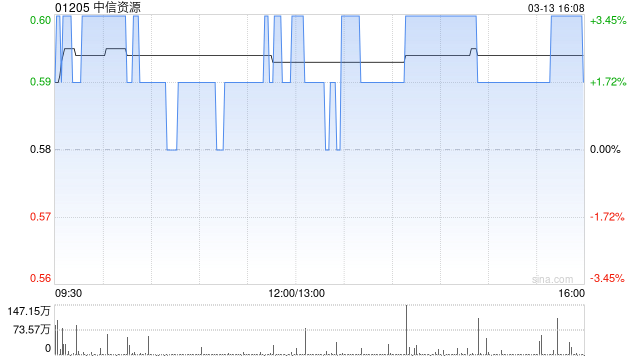
中信资源发布年度业绩 股东应占溢利1.71亿港元同比减少70.2%
Xin Lang Cai Jing· 2026-03-15 07:44
Group 1 - The core viewpoint of the article is that CITIC Resources (01205) reported its annual performance for the year ending December 31, 2025, showing a significant increase in revenue but a substantial decrease in profit attributable to shareholders [1][5]. Group 2 - The company achieved a revenue of HKD 14.965 billion, representing a year-on-year increase of 57.6% [1][5]. - The profit attributable to ordinary shareholders was HKD 171 million, which reflects a year-on-year decrease of 70.2% [1][5]. - Earnings per share were reported at HKD 0.0217 [1][5]. Group 3 - The decrease in profit is primarily attributed to several factors: a significant decline in the average selling prices of crude oil and coal, a substantial increase in the cost of raw materials, particularly alumina used in the Portland Aluminium Smelter, and the cessation of ownership in Alumina Limited from July 18, 2024, leading to a significant reduction in profits from joint ventures [1][5]. - Additionally, a joint venture involved in the extraction, production, and sale of oil, as well as the production and sale of road asphalt and clarified oil, reported losses due to a year-on-year decline in average crude oil prices [1][5].
铝周报:中东战事对供应的威胁仍在-20260314
Wu Kuang Qi Huo· 2026-03-14 14:05
1. Report Industry Investment Rating No information provided in the report. 2. Core Viewpoint of the Report The ongoing Middle East conflict and the planned maintenance of the Mozambique aluminum smelter by South32 pose significant threats to overseas aluminum supply. Overseas low inventories and strong spot prices are expected to continue. In China, the downstream operating rate is rising, the proportion of molten aluminum has returned to a relatively normal level, and with the decline in aluminum prices and the widening import losses, inventories are expected to peak and decline. In the short term, aluminum prices are expected to remain strong. The operating range of the main Shanghai aluminum contract is expected to be between 24,500 - 25,800 yuan/ton, and the operating range of LME aluminum 3M is expected to be between 3,350 - 3,580 US dollars/ton [12][13]. 3. Summary by Directory 3.1 Week - on - Week Assessment and Strategy Recommendation - **Supply**: As of the end of February 2026, China's electrolytic aluminum operating capacity was about 45.109 million tons. In February, electrolytic aluminum production increased by 2.1% year - on - year and decreased by 8.9% month - on - month. It is expected to rise in March. The proportion of molten aluminum continued to increase this week. In February 2026, overseas electrolytic aluminum production was 2.372 million tons, a year - on - year increase of about 2.5%. In March, the 40% production cut of Qatar Aluminum due to the Middle East conflict and the restricted raw material supply in the Middle East will bring significant disturbances to electrolytic aluminum production in the region, and the growth rate of overseas electrolytic aluminum production is expected to decline [12]. - **Inventory & Spot**: On March 12, aluminum ingot inventory was 1.31 million tons, a week - on - week increase of 40,000 tons. Bonded area inventory was 48,000 tons, a week - on - week increase of 1,000 tons. Aluminum rod inventory was 386,000 tons, a week - on - week decrease of 12,000 tons. On March 13, LME aluminum inventory was 445,000 tons, a week - on - week decrease of 12,000 tons. The spot discount of East China aluminum ingots fluctuated, and the LME market Cash/3M maintained a premium [12]. - **Import and Export**: From January to February 2026, the export volumes of unforged aluminum and aluminum products were 541,000 tons and 430,000 tons respectively, a year - on - year increase of 10.4% and 16.1% respectively. The cumulative export from January to February was 971,000 tons, a year - on - year increase of 12.9%. This week, the import loss of Shanghai aluminum spot widened [12]. - **Demand**: According to SMM research, in the first week after the Spring Festival, the operating rate of domestic downstream leading aluminum enterprises increased by 2.4% week - on - week to 61.9%. Among them, the operating rates of aluminum profiles and aluminum rods increased significantly, while the operating rate of aluminum foil remained stable. Recently, the decline in high - frequency real estate transaction data compared with last year has narrowed, and the photovoltaic production schedule is expected to be slightly better [12]. 3.2 Futures and Spot Market - **Futures Market**: Aluminum prices rose and then fell. Shanghai aluminum rose 0.99% to 24,960 yuan/ton during the week (as of Friday afternoon's close), and LME aluminum rose 0.23% to 3,439 US dollars/ton. The near - month contract was relatively strong, and the discount between the first - and third - month contracts narrowed [21][25]. - **Spot Market**: The spot discount of aluminum ingots in various regions fluctuated and narrowed, and the spot basis in East China increased. The LME aluminum Cash/3M maintained a premium [29][39]. 3.3 Profit and Inventory - **Profit**: The smelting profit of primary aluminum remained at a high level, maintaining a historical high [46]. - **Inventory**: On March 12, aluminum ingot inventory was 1.31 million tons, a week - on - week increase of 40,000 tons; bonded area inventory was 48,000 tons, a week - on - week increase of 1,000 tons; aluminum rod inventory was 386,000 tons, a week - on - week decrease of 12,000 tons. On March 13, LME global aluminum inventory was 445,000 tons, a week - on - week decrease of 12,000 tons, still at a multi - year low. In February 2026, the proportion of aluminum from India in LME aluminum ingot inventory increased to 36.2%, and the proportion of aluminum from Russia increased to 59.8% [49][53][56][59]. 3.4 Cost Side - **Bauxite Price**: Domestic bauxite prices were stable, and overseas bauxite prices rebounded [64]. - **Alumina Price**: Domestic alumina prices fluctuated and rebounded, and imported alumina prices rebounded slightly [69]. - **Electrolytic Aluminum Smelting Cost**: Anode prices remained stable, and thermal coal prices declined [74]. 3.5 Supply Side - **Alumina**: In February 2026, the operating capacity of alumina decreased month - on - month, and the monthly output decreased by 10.5% month - on - month and 0.7% year - on - year [79]. - **Electrolytic Aluminum**: As of the end of February 2026, China's electrolytic aluminum operating capacity was about 45.109 million tons. In February, electrolytic aluminum production increased by 2.1% year - on - year and decreased by 8.9% month - on - month. It is expected to rise in March, with a year - on - year increase of about 2.8%. In February 2026, overseas electrolytic aluminum production was 2.372 million tons, a year - on - year increase of about 2.5%. In March, the production cut of Qatar Aluminum due to the Middle East conflict and the planned maintenance of the Mozambique electrolytic aluminum plant by South32 are expected to lead to a decline in the production growth rate [82]. - **Molten Aluminum Proportion**: The processing fee of aluminum rods decreased, and the proportion of molten aluminum continued to increase this week. In February 2026, the domestic molten aluminum proportion decreased by 7.7 percentage points month - on - month to 64.4%. In March, with the resumption of work and production of downstream enterprises, the molten aluminum proportion is expected to increase by 9.2 percentage points month - on - month [85]. - **Provincial - Level Production of Electrolytic Aluminum**: In February 2026, the electrolytic aluminum production of each province decreased month - on - month compared with January [88]. 3.6 Demand Side - **Aluminum Product Output**: In December 2025, China's aluminum product output was 6.136 million tons, a year - on - year increase of 0.5%. The cumulative output from January to December was 67.504 million tons, a year - on - year decrease of 0.5%. As of March 9, the daily aluminum ingot delivery volume was 95,000 tons, which increased month - on - month but was still lower than the same period last year [92]. - **Downstream Operating Rate**: In February 2026, the operating rate of aluminum rods, aluminum profiles, and plate - strip - foil was weak. The operating rate of primary aluminum - based aluminum alloy ingots decreased month - on - month and increased slightly year - on - year. The operating rate of aluminum rods weakened seasonally. The operating rate of recycled aluminum alloy ingots decreased both year - on - year and month - on - month. The price difference between aluminum ingots and aluminum alloys narrowed month - on - month [95][99][103][108]. - **Terminal Demand**: In March 2026, the production schedule of household air conditioners decreased by 6.1% compared with the actual output of the same period last year, the production schedule of refrigerators increased by 1.6%, and the production schedule of washing machines decreased by 3.4%. The decline in high - frequency real estate transaction data compared with last year has narrowed, and the production schedule of photovoltaic modules in March increased month - on - month [111]. 3.7 Import and Export - **Primary Aluminum Import**: In December 2025, China's primary aluminum import volume was 189,000 tons, a month - on - month increase of 29.5% and a year - on - year increase of 17.2%. The cumulative import volume from January to December was 2.538 million tons, a year - on - year increase of 18.8%. The import loss of aluminum ingot spot widened [116]. - **Aluminum Product Export**: From January to February 2026, the export volumes of unforged aluminum and aluminum products were 541,000 tons and 430,000 tons respectively, a year - on - year increase of 10.4% and 16.1% respectively. The cumulative export from January to February was 971,000 tons, a year - on - year increase of 12.9% [123]. - **Recycled Aluminum Import**: In December 2025, the recycled aluminum import volume was 194,000 tons, a month - on - month increase of 31,000 tons. The cumulative import volume from January to December was 2.015 million tons, a year - on - year increase of 13.1% [123]. - **Bauxite and Alumina Import and Export**: In December 2025, China's bauxite import volume was 14.673 million tons, and the proportion of imported ore was 72.5%. The cumulative bauxite import from January to December was 200.532 million tons, a year - on - year increase of 26.3%. In December 2025, China's alumina export was 206,000 tons, a year - on - year increase of 9.3%. The cumulative alumina export from January to December was 2.548 million tons, a year - on - year increase of 42.7% [126].