公用事业

Search documents
港股异动 长和系售英国电网业务套现逾千亿港元 长实集团(01113)涨近4% 长和(00001)涨超2%
Jin Rong Jie· 2026-02-26 02:25
Group 1 - The core point of the article is that the Cheung Kong Group companies have collectively risen in stock prices following the announcement of the sale of their UK power network business to French utility company Engie for over HKD 110 billion [1] Group 2 - Cheung Kong Infrastructure Group, Power Assets Holdings, and Cheung Kong Holdings announced the sale of their stakes in UK Power Networks for HKD 443 billion, HKD 443 billion, and HKD 221.5 billion respectively, totaling over HKD 1,100 billion [1] - The companies indicated that the sale of UK Power Networks equity will generate significant accounting gains and the cash proceeds will be used for future investments and acquisitions [1]




科创债棱镜:科创债足够拥挤吗?
SINOLINK SECURITIES· 2026-02-25 15:25
1. Report Industry Investment Rating No relevant information provided. 2. Core View of the Report - The science and technology innovation bond market will continue to fluctuate in the short - term after the Spring Festival. Short - duration, high - grade bonds and ETF component bonds will perform better. The investment strategy can focus on 1 - 3 - year AAA bonds for their strong liquidity, which is convenient for band operations and controlling drawdowns [4][36] 3. Summary by Relevant Catalogs 3.1 First - level Issuance Scale and Structure - Supply of science and technology innovation bonds decreased before the festival. From February 9 to February 13, 2026, the new supply reached 29.28 billion yuan. Due to the holiday, the scale shrank significantly compared with the previous week. The issuance structure was mainly 1 - year - or - less varieties in the inter - bank market, and there were also 5 - year varieties issued by high - quality leading companies like CATL [2][12] - In terms of new bond subscriptions, science and technology innovation bonds were less popular than ordinary credit bonds. The market preferred to snap up high - grade, short - duration bonds, and ETF component bonds were more favored by institutions [2][12] 3.2 Second - level Trading Activity and Pricing - Rating of outstanding science and technology innovation bonds is highly concentrated. Bonds with an implied rating of AA+ or above account for 73.7%, and AA - rated medium - quality bonds account for 22.1%, reflecting the financing needs of some small and medium - sized science and technology innovation entities. The industry distribution is dominated by traditional industries, and bonds in the building decoration, public utilities, and comprehensive industries account for 38.8%. There is an excess spread of over 16bp in the textile and apparel, communication, and non - bank financial industries compared to all credit bonds in these industries [3][20] - In terms of liquidity, the weekly turnover rate of science and technology innovation bonds decreased by 0.11% week - on - week, in line with the pre - Spring Festival trading slump. The reading was between that of urban investment bonds and ordinary industrial bonds. The number of weekly transactions dropped below 800, and 1 - 3 - year varieties accounted for 51% of the transactions. Investors preferred low - volatility and high - liquidity targets [3][27] - From the yield perspective, science and technology innovation bonds showed a structural bull market in the week before the Spring Festival. The yield curve of short - duration, high - grade science and technology innovation bonds flattened, driven by loose capital and support from allocation funds. The yield of 3 - 5 - year exchange - traded science and technology innovation bonds rose slightly to 2.01%, with limited downward space in the future. The overall trading yield of science and technology innovation bonds was basically close to the market valuation, with an average low - valuation trading margin within 1.4bp [3][32] - Regarding the internal price comparison of science and technology innovation bonds, the spread between the index component bonds and non - component bonds widened to 27.1bp in the latest week, and the spread between inter - bank bonds and component bonds widened to 8.5bp. For the 1 - 3 - year segment, there is nearly 20bp of compression space between inter - bank bonds and index component bonds [4][36]
春节后资金回流分化:杠杆资金 “回血”,主力持续净流出
Di Yi Cai Jing· 2026-02-25 11:35
Group 1 - The core point of the article highlights a significant return of leveraged funds to the A-share market, with a total inflow of 34.6 billion yuan on the first trading day after the Spring Festival, indicating a shift in market sentiment and investment preferences [1][2][3]. Group 2 - After a substantial outflow of margin financing funds before the Spring Festival, which saw a net outflow of 755.35 billion yuan, the first trading day post-holiday marked a notable recovery with a net inflow of 346.32 billion yuan [2][3]. - The preference for leveraged funds has shifted dramatically, with significant buying in technology sectors such as electronics, computers, and defense, contrasting with the previous trend of selling in these areas [3][4]. - The main funds have continued to experience net outflows, with over 100 billion yuan leaving the market in the past two trading days, indicating a shift from high-value sectors to undervalued, cyclical sectors [6][7]. Group 3 - Specific stocks that attracted significant margin buying include Zhongji Xuchuang, with a net inflow of 1 billion yuan, and several others like Kingsoft Office and Guizhou Moutai, which also saw substantial interest [4][5]. - Conversely, stocks like Light Media and CATL faced heavy selling pressure, resulting in notable declines over the same period [5]. Group 4 - The overall market sentiment has improved, with A-share trading volume reaching 2.48 trillion yuan, reflecting a recovery in trading activity and investor confidence [6][7]. - Analysts predict that liquidity conditions may remain favorable post-holiday, driven by factors such as the relocation of household savings and increased inflows from various investment vehicles [7].
轻资产神话终结?HALO逻辑背后的资本迁徙
美股研究社· 2026-02-25 11:33
Core Viewpoint - The article discusses a shift in investment logic from traditional light-asset models to a focus on heavy assets with low obsolescence risk, termed HALO (Heavy Assets, Low Obsolescence) [1][2]. Group 1: Shift in Investment Focus - The emergence of AI as a highly efficient "copy machine" is leading to a reevaluation of profit distribution expectations, with traditional light-asset business models losing their premium [2][6]. - Investors are increasingly concerned with which companies are least likely to be replaced by AI, shifting the focus from "who understands AI best" to "who is hardest to replace" [2][10]. Group 2: Impact of AI on Asset Valuation - The valuation of technology companies has historically been based on light-asset models, with giants like Microsoft and Amazon thriving under this paradigm [4]. - The introduction of generative AI is changing the narrative, as it can automate tasks traditionally performed by software, leading to a potential compression of pricing power for single-function software [6][7]. Group 3: Heavy Asset Investment Opportunities - AI is not merely a software revolution but a transformation of foundational infrastructure, with significant investments projected in AI infrastructure by major cloud providers, estimated at nearly $1.5 trillion from 2023 to 2026 [9]. - The physical constraints of AI development, such as power supply and cooling systems, are becoming critical bottlenecks, making companies that can address these issues central to the AI economy [10][12]. Group 4: Long-term vs. Short-term Trends - The HALO strategy may represent a long-term trend rather than a temporary shift, as the demand for energy and computing power driven by AI is expected to be sustained [12][13]. - However, there are risks associated with potential overcapacity in computing power investments, which could lead to a reassessment of heavy asset valuations if AI monetization does not meet expectations [12][14]. Group 5: Broader Implications of HALO - The HALO logic emphasizes the importance of physical infrastructure in the AI era, suggesting that the future flow of profits may increasingly favor those involved in building and maintaining this infrastructure rather than just software developers [14]. - The article concludes that understanding this shift is crucial for investors, as it reflects a fundamental change in wealth distribution and the underlying logic of the economy in the AI age [14].


金融工程指数量化系列:高值偏离修复模型(突破型双位点)
Tai Ping Yang Zheng Quan· 2026-02-25 10:45
金融工程 证券研究报告 |深度研究报告 2026/2/25 金融工程指数量化系列—— 高值偏离修复模型(突破型双位点) 证券分析师: 刘晓锋 执业资格证书编码: S1190522090001 证券分析师: 孙弋轩 执业资格证书编码: S1190525080001 P2 目录 请务必阅读正文之后的免责条款部分 守正 出奇 宁静 致远 1、分档止损策略(突破型单位点) 2、分档止损策略(双位点) 3、后续展望 4、风险提示 1、分档止损策略(突破型单位点) 分档止损策略(突破型单位点): 8、X取5-10分别进行测试。 请务必阅读正文之后的免责条款部分 守正 出奇 宁静 致远 1、计算单个行业指数相对沪深300收盘价cl,以及cl对应的回撤曲线W。 2、使用迭代法计算cl的有效回撤V,若无法得到V,则直接判定该行业不适合此策略。 3、选取V的最大值的80%作为阈值T(T为正数),当W值大于T时,信号值s为1(看多),当W值 为0时,信号值s为0(平仓),当W为其他值时,信号值s等于前值。 4、将每次买入点b0与前高h0之间的空间化为X等分,则每一等分的空间为s0。 5、买入后,当收盘价cl首次高于b0+2*s0时 ...
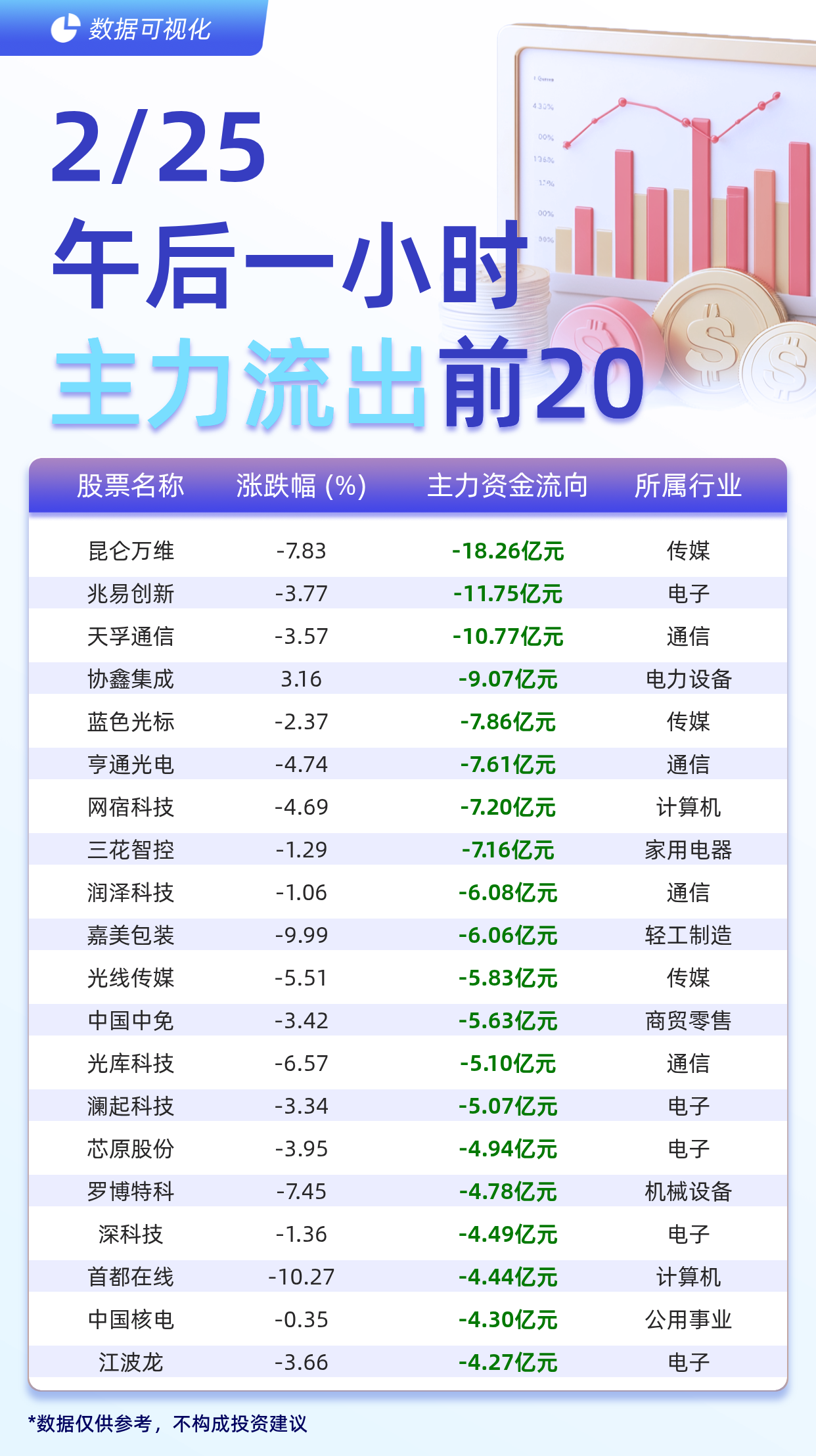
主力个股资金流出前20:昆仑万维流出18.26亿元、兆易创新流出11.75亿元
Jin Rong Jie· 2026-02-25 06:34
Group 1 - The main stocks with significant capital outflow include Kunlun Wanwei (-1.83 billion), Zhaoyi Innovation (-1.175 billion), and Tianfu Communication (-1.077 billion) [1] - The sectors affected by the capital outflow include Media, Electronics, and Communication, with notable declines in stock prices for companies like Kunlun Wanwei (-7.83%), Zhaoyi Innovation (-3.77%), and Tianfu Communication (-3.57%) [2][3] - Other companies experiencing substantial capital outflow include GCL-Poly Energy (-0.907 billion), BlueFocus (-0.786 billion), and Hengtong Optic-Electric (-0.761 billion) [1] Group 2 - The total capital outflow from the top 20 stocks indicates a trend of investor withdrawal from these sectors, particularly in Media and Electronics [1][2] - Companies like China Duty Free (-0.563 billion) and Guangku Technology (-0.510 billion) also show significant capital outflow, reflecting broader market concerns [3] - The overall market sentiment appears negative, with many stocks experiencing declines in both capital flow and stock price [2][3]






2025年经营者集中案件审结数量同比增长9.8%——精准监管维护公平竞争市场秩序
Jing Ji Ri Bao· 2026-02-24 22:08
Core Viewpoint - The article emphasizes the importance of antitrust enforcement in maintaining fair competition and highlights the efficiency of China's merger review process, which has seen a significant increase in case resolutions and supports healthy development across various ownership types in the economy [1]. Group 1: Merger Review Statistics - In 2025, the State Administration for Market Regulation (SAMR) concluded 706 merger cases, marking a 9.8% year-on-year increase, indicating a robust competitive market [1]. - The average acceptance time for cases was 17.9 days, and the average review time was 26.8 days, showcasing the efficiency of the review process [1]. - Unconditional approvals were granted for 244 transactions involving private enterprises, 379 involving state-owned enterprises, and 297 involving foreign enterprises, reflecting support for diverse ownership structures [1]. Group 2: Enforcement Actions - Since 2025, SAMR has initiated investigations into 13 illegal merger cases, with 5 cases resulting in public administrative penalties totaling 8.7 million yuan [2]. - The cases involved various sectors, including retail, construction, semiconductors, and human resources, with penalties primarily under 5 million yuan [2]. - Violations included failure to report mergers that met the reporting threshold and proceeding with mergers without approval during the review phase [2]. Group 3: Compliance Requirements - Companies are urged to fulfill reporting obligations for mergers that meet the reporting criteria and to comply with any conditional commitments made during the review process [3]. - Violations of conditional approvals will lead to legal consequences, emphasizing the need for adherence to antitrust regulations [3]. - Companies operating internationally must also comply with local antitrust laws when engaging in overseas markets [3].
马年A股喜迎“开门红”:周期“老登”领涨 科技、消费遇冷
Mei Ri Jing Ji Xin Wen· 2026-02-24 14:32
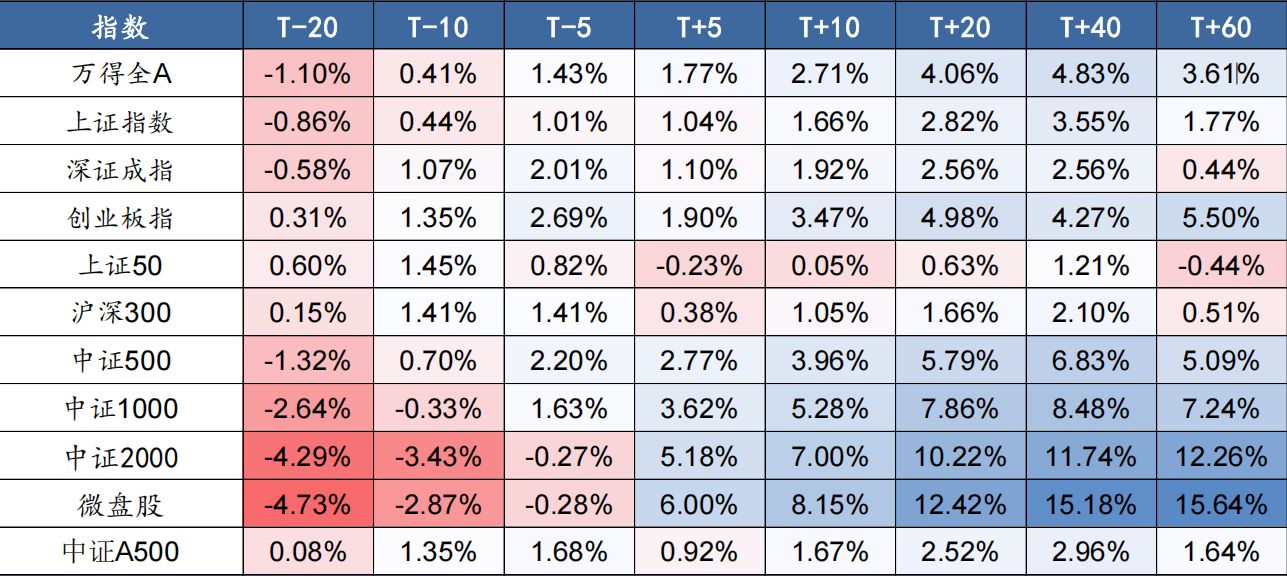
Group 1 - The A-share market experienced a broad increase on the first trading day of the Year of the Horse, with most core indices rising between 1% and 2% [1][2] - The Shanghai Composite Index rose by 0.87% to close at 4117.41 points, returning above the 4100-point mark [2] - The technology sector showed weaker performance, with the Sci-Tech 50 and Sci-Tech 100 indices declining by 0.34% and 1.55%, respectively [2] Group 2 - The market's "opening red" trend is attributed to the overseas markets showing upward trends during the Spring Festival holiday and a recovery demand following a significant adjustment before the holiday [4] - The spring market is expected to continue, with a short-term outlook of sector rotation and upward fluctuations [4] - Historical data since 2010 indicates a high probability of A-shares rising shortly after the Spring Festival, particularly in small-cap indices like the CSI 2000 and micro-cap stocks, which have shown average gains exceeding 10% in the 20 trading days post-holiday [4] Group 3 - The leading sectors today were traditional industries such as petrochemicals, building materials, basic chemicals, non-ferrous metals, coal, and steel, with significant gains [5][6] - The Petrochemical Index surged by 5.53%, while building materials, basic chemicals, and non-ferrous metals indices all rose over 3% [5][6] - In contrast, sectors like AI models, robotics, and consumer goods, which performed well in the Hong Kong market during the holiday, did not reflect similar trends in the A-share market [7] Group 4 - The recent improvement in the Producer Price Index (PPI) and the high valuations in the technology sector have led to a market shift towards traditional sectors [8] - The PPI for January showed a year-on-year decline of 1.4%, with a narrowing drop compared to previous months, indicating a potential recovery in pricing power across various industries [8] - The resource sector, particularly non-ferrous metals, has been a standout performer in the A-share market, with price increases becoming a central theme across multiple sectors [9] Group 5 - Looking ahead to the next 1-2 months, there is optimism for cyclical "old economy" assets, particularly as seasonal economic activities typically rise in March and April [13] - The period following the National People's Congress is expected to see accelerated implementation of macro policies, which could enhance market sentiment towards cyclical sectors [13]
金鹰基金:节后关注科技成长+顺周期+高股息的“三角组合”
Xin Lang Cai Jing· 2026-02-24 05:57
Core Viewpoint - The spring market excitement for 2026 has partially shifted to January, with a round of growth style realization before the festival, combined with regulatory easing and significant ETF outflows. It is expected that the overall index in February will mainly fluctuate, with a stronger performance anticipated after the festival. In this environment, a "structure-first, index-second" approach may be more suitable [1][8]. Group 1: Investment Focus Areas - **Technology Growth: AI + Humanoid Robots**: Focus on midstream components (gear reducers, servo motors, sensors, actuators), core materials, and some main body manufacturers. The resonance between the Spring Festival Gala and overseas world model progress may lead to a shift from "event-driven" to "scene landing" throughout the year. The computing chain includes storage chips, optical modules, PCB/IC substrates, and data center distribution and liquid cooling in power equipment, directly supporting the capital expenditure expansion of overseas cloud vendors. It is recommended to focus on large-cap leaders and some high-growth niche leaders while controlling overall valuation and position concentration to prevent short-term crowded trades and overseas volatility-induced pullbacks [2][9]. - **Cyclical Price Increases: Oil, Petrochemicals + Non-ferrous Metals + Building Materials/Chemicals**: Due to the rebound in oil prices and bulk commodity prices, marginal improvement in PPI, and the rhythm of the "14th Five-Year Plan" infrastructure commencement, it is suggested to pay attention to oil, petrochemicals, and oil and gas services. Additionally, focus on non-ferrous metals like copper and aluminum, steel building materials, and some chemical products with more sustainable price increases [3][10]. - **High Dividend Yield: Banks + Energy + Telecom/Public Utilities**: Before the festival, A-shares showed a clear preference for dividend and defensive sectors due to external disturbances and regulatory easing, with banks and food and beverage sectors being favored. After the festival, it may be beneficial to continue using high-dividend sectors like banks, energy, telecom, and public utilities as a base, which can hedge against overseas volatility and geopolitical risks while providing stable absolute returns in the context of macroeconomic stabilization and strong dividend yield and valuation attractiveness [4][11]. - **Domestic Consumption: Automotive Chain + Home Appliances + Travel Consumption**: Supported by the old-for-new policy and Spring Festival consumption data, the automotive and automotive electronics, home appliances, and white goods components benefit from the old-for-new policy and sales recovery. In the context of rising external demand and tariff uncertainties, these consumption directions, which are mainly driven by domestic demand and are policy-friendly, may exhibit both defensive and offensive characteristics [5][12].
新易盛、中际旭创均获融资资金买入约百亿元丨资金流向周报
2 1 Shi Ji Jing Ji Bao Dao· 2026-02-24 03:12
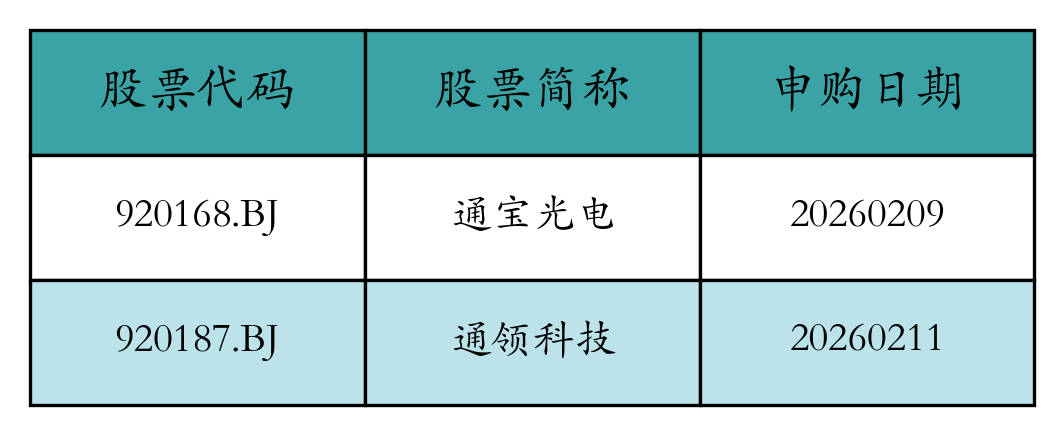
Market Overview - The Shanghai Composite Index increased by 0.41% to close at 4082.07 points, with a weekly high of 4142.56 points [1] - The Shenzhen Component Index rose by 1.39% to 14100.19 points, reaching a peak of 14296.48 points [1] - The ChiNext Index saw a 1.22% increase, closing at 3275.96 points, with a high of 3348.48 points [1] - In the global market, the Nasdaq Composite fell by 2.1%, the Dow Jones Industrial Average decreased by 1.23%, and the S&P 500 dropped by 1.39% [1] - In the Asia-Pacific region, the Hang Seng Index rose by 0.03%, while the Nikkei 225 Index increased by 4.96% [1] New Stock Issuance - Two new stocks were issued during the week: Tongbao Optoelectronics (920168.BJ) on February 9, 2026, and Tongling Technology (920187.BJ) on February 11, 2026 [2] Margin Trading - The total margin trading balance in the Shanghai and Shenzhen markets was 25,797.58 billion yuan, with a financing balance of 25,640.12 billion yuan and a securities lending balance of 157.46 billion yuan [3] - The margin trading balance decreased by 752.4 billion yuan compared to the previous week [3] - The Shanghai market's margin trading balance was 13,113.7 billion yuan, down by 356.66 billion yuan, while the Shenzhen market's balance was 12,683.88 billion yuan, down by 395.74 billion yuan [3] - A total of 3,486 stocks had margin buying, with 184 stocks having over 1 billion yuan in buying amounts, led by Xinyi Technology (103.25 billion yuan), Zhongji Xuchuang (98.63 billion yuan), and Wangsu Science and Technology (74.22 billion yuan) [3] Fund Issuance - Seven new funds were issued during the week, including Guoshou Anbao Enhanced Return Bond E, Huafu Anhua Bond D, Dongfanghong Monetary F, Bank of China Health Life Mixed C, Huitianfu Tiantianle Double Win Bond E, Nuoan Selected Return Mixed C, and Changsheng Electronic Information Theme Mixed C [5] Share Buybacks - Eight companies announced share buybacks, with the highest amounts executed by Luxshare Precision (002475), Hengyi Petrochemical (000703), Linyang Energy (601222), Kaiying Network (002517), and Huitai Medical (688617) [7] - The industries with the highest buyback amounts were electronics, petroleum and petrochemicals, and public utilities [8]