
玩具

Search documents
一天卖近2万件,江西老板娘造出义乌爆款,订单排到3月
3 6 Ke· 2026-01-25 00:55
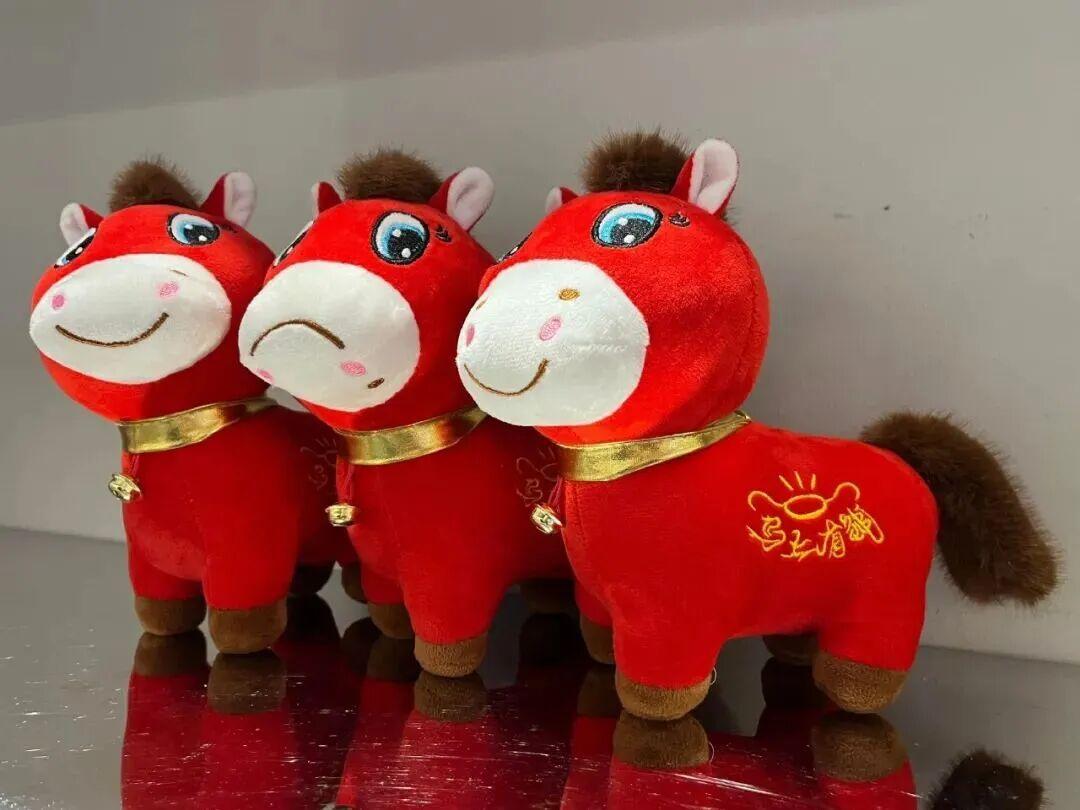
Core Insights - The "Crying Horse" plush toy, initially considered a defective product, unexpectedly became a viral sensation, leading to a surge in demand and sales [3][4][12] - The success of the "Crying Horse" highlights the effectiveness of Yiwu's supply chain and the ability of local businesses to capitalize on emerging trends [12][14] Group 1: Product Development and Market Response - The "Crying Horse" was created due to a manufacturing error, where the toy's mouth was sewn incorrectly, leading to a downturned expression that resonated with consumers [1][5] - Following its viral popularity, the production capacity of the "Crying Horse" increased from a few hundred to 15,000 units per day, with orders extending into March 2026 [5][9] - The toy's appeal lies in its emotional resonance, reflecting a shift in consumer preferences towards products that embody authenticity and relatability [13][14] Group 2: Sales and Distribution - The "Crying Horse" achieved significant sales, with reports indicating nearly 20,000 units sold in a single day, attracting both domestic and international buyers [3][4] - Orders for the toy have come from various countries, including South Africa, Russia, and Romania, indicating a strong global market interest [4][9] - The rapid response to market demand has led to the expansion of production lines and the introduction of new product variations, such as customized versions [9][10] Group 3: Consumer Trends and Emotional Marketing - The rise of the "Crying Horse" reflects a broader trend in emotional consumption, where consumers seek products that resonate with their feelings and experiences [13][14] - The success of the "Crying Horse" and similar products indicates a shift away from traditional festive representations towards more relatable and imperfect designs [13][14] - The emotional connection consumers feel towards these products enhances their social media shareability, contributing to organic marketing and brand visibility [12][13]

李亚鹏直播带货成总榜第一;理想汽车:批量闭店、裁员均为不实信息;马斯克称特斯拉FSD中国获批最快下个月?特斯拉中国回应丨邦早报
创业邦· 2026-01-24 01:10
Group 1 - Tesla's Full Self-Driving (FSD) system is expected to be approved in China as early as next month, according to CEO Elon Musk, although Tesla China has not confirmed this information [3] - Li Auto has denied rumors of mass store closures and layoffs, stating that only a few low-efficiency stores will be shut down this year, with a total of 548 retail centers planned by the end of 2025 [5] - The "Did You Die?" app's developer has been listed in the business anomaly directory due to being unreachable at their registered address, which the founder attributed to remote work [8] Group 2 - Suzuki plans to sell its vehicle manufacturing plant in Thailand to Ford, with the sale amount undisclosed, as Suzuki is set to withdraw from local production by 2024 [12] - MTG, the parent company of ReFa, announced the dissolution of its subsidiary in China due to continuous losses, despite the brand's online presence remaining operational [13] - The global humanoid robot market is projected to see explosive growth, with an estimated shipment of 18,000 units by 2025, marking a 508% year-on-year increase [21]



当温暖成为生产力
Xin Lang Cai Jing· 2026-01-23 20:58
Core Insights - The article highlights the unexpected popularity of a flawed plush toy, the "crying horse," which resonates with contemporary consumers' emotional needs for self-comfort and connection [1][5] - The rise of the "cute economy" is driven by a shift in consumer behavior, where emotional value is prioritized over practical utility in purchasing decisions [2][3] Group 1: Market Trends - The global plush toy market is projected to exceed $10 billion in 2024, with an annual growth rate of approximately 15% [2] - The proportion of adults purchasing plush toys for self-satisfaction has increased from 49% in 2019 to 63% in 2025, indicating a significant shift towards emotional purchasing motivations [2] Group 2: Cultural Impact - The "cute economy" is influencing various sectors, including cultural and commercial spaces, where products like museum merchandise and popular character toys are driving consumer engagement [2][3] - The phenomenon of "cuteness" is evolving into an emotional currency that connects diverse industries with consumers, fostering new business models and market opportunities [2][3] Group 3: Innovation and Development - "Cuteness" serves as a powerful driver of innovation, enhancing product recognition and emotional value across various designs, from small items to large-scale city brands [3][4] - Successful "cute" characters can be leveraged for extensive commercial opportunities, including collaborations and cross-industry applications, promoting a softer transformation in traditional sectors [3][4] Group 4: Strategic Recommendations - To sustain the "cute economy," companies should infuse cultural depth into their products, ensuring that "cuteness" transcends superficial appeal and resonates with deeper cultural narratives [4] - Quality control is essential for maintaining the emotional connection consumers seek, as the craftsmanship and materials directly impact the longevity of emotional engagement [4] - Encouraging consumer participation in co-creation can provide continuous inspiration and keep the "cute" concept vibrant and relevant [4]
资金动向 | 北水抛售阿里近15亿港元,连续6日加仓小米
Ge Long Hui· 2026-01-23 12:50
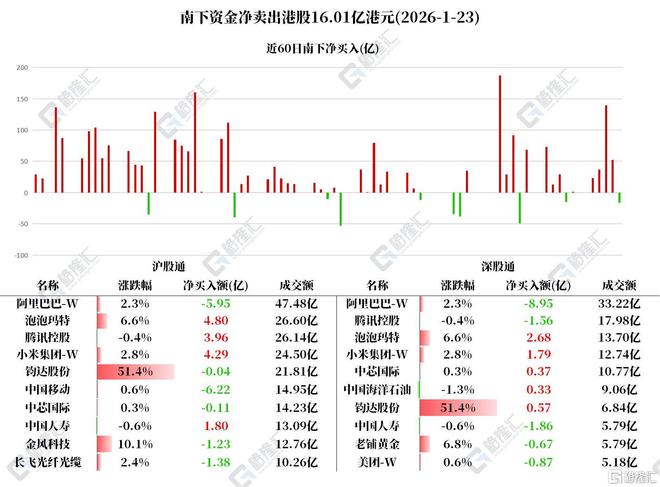
Group 1 - Southbound funds had a net sell of HKD 1.601 billion in Hong Kong stocks on January 23 [1] - Notable net purchases included Pop Mart at HKD 747 million, Xiaomi Group-W at HKD 608 million, and Tencent Holdings at HKD 240 million [2] - Significant net sells included Alibaba-W at HKD 1.49 billion, China Mobile at HKD 621 million, and Changfei Optical Fiber at HKD 138 million [2] Group 2 - Southbound funds have recorded a cumulative net inflow of approximately HKD 23.523 billion this week, which is an increase of HKD 13.5 billion compared to the previous week [5] - Xiaomi has seen continuous net purchases from southbound funds for six consecutive days, totaling HKD 3.07384 billion [4] - China Mobile has experienced net sells for 15 consecutive days, amounting to HKD 11.71603 billion [4] Group 3 - Pop Mart recently launched a Valentine's Day limited edition blind box series, which sold out quickly and generated significant social media buzz [6] - Xiaomi Group plans to repurchase up to HKD 2.5 billion of its Class B ordinary shares, with the buyback program starting on January 23 [6] - Tencent Holdings announced measures to combat false marketing and misinformation on its platform, enhancing governance of misleading content [6] Group 4 - Alibaba is preparing for the independent listing of its AI chip subsidiary, Pingtouge, with plans for internal restructuring and potential IPO exploration [6] - China Mobile has established a "Computing Power Special Office" to coordinate its computing power strategy and layout [7] - Changfei Optical Fiber is involved in the development of 6G technology, with over 300 key technology reserves formed in the first phase of trials [7]
每周回顾 高盛上调黄金目标价至5400美元/盎司;泡泡玛特情节人限定盲盒溢价超600%
Sou Hu Cai Jing· 2026-01-23 08:17
Group 1: Gold Market - Goldman Sachs raised its gold price target for 2026 from $4,900 to $5,400 per ounce, driven by private investors diversifying their portfolios to hedge against global policy risks [1] - Gold prices recently reached a historical high, surpassing $4,900 per ounce, with a year-to-date increase of over 14% [1] Group 2: Semiconductor Industry - A surge in demand from large cloud service providers has led Intel and AMD to sell out their server CPU capacity for 2026, prompting a planned price increase of 10-15% for server CPUs [1] - The semiconductor sector is viewed as a significant investment opportunity, particularly in the context of AI-driven innovations in computing architecture [1] Group 3: ByteDance and AI in Animation - ByteDance's animation sector has reached a peak daily expenditure of 30 million, with the overall market expected to grow to 22 billion yuan by 2026 [2] - AI integration in animation production is significant, with cost reductions of over 70% and efficiency improvements of over 80% [2] Group 4: Xiaomi's Share Buyback - Xiaomi announced a share buyback plan of up to 2.5 billion HKD, coinciding with a decline in its stock price, which has dropped 42.65% from its peak [3] - The buyback is seen as a response to the company's recent stock performance and rising industry storage costs [3] Group 5: Robotics Industry - Yushun Technology clarified that its humanoid robot shipments exceeded 5,500 units in 2025, with production volume surpassing 6,500 units [3] - The company is preparing for an IPO in the domestic market after completing its IPO guidance work [3] Group 6: Fund Management and Market Trends - Public funds increased their holdings in non-ferrous metals, chemical, and non-bank financial sectors during the fourth quarter of 2025, despite a generally volatile A-share market [5] - The total net asset value of public funds exceeded 37.64 trillion yuan by the end of 2025, marking a historical high [5] Group 7: IPO Developments - Qinheng Micro's IPO application for the Sci-Tech Innovation Board was terminated, marking the second IPO termination in 2026 [9] - Alibaba is reportedly planning to spin off its AI chip division, Pingtouge, for an independent IPO, reflecting a trend of domestic AI chip companies moving towards public offerings [11]

抽取概率遭人为改变 上海市市场监管部门提醒警惕盲盒“拆包换卡”
Xin Lang Cai Jing· 2026-01-23 04:27
Core Viewpoint - The rise of the blind box economy has led to consumer rights violations due to some businesses manipulating the odds of rare card appearances through deceptive practices like "packaging swaps" [1][2] Group 1: Regulatory Actions - The Shanghai Jiading District Market Supervision Administration has initiated investigations into Company A and Company B for trademark infringement related to blind box products [1] - Company B was found to have purchased products at significantly lower prices and failed to verify the legality of the goods, leading to altered odds that misrepresented consumer expectations [2] Group 2: Consumer Rights and Responsibilities - Consumers are advised to be cautious of misleading promotions such as "low price guarantees" and "hidden must-have items" to avoid excessive spending on blind boxes [3] - It is recommended that consumers check packaging for anti-counterfeiting labels and retain transaction receipts to verify product authenticity and odds information [3] Group 3: Industry Guidelines - Blind box operators must strictly adhere to sourcing verification obligations, ensuring the legality and accuracy of product odds [3] - Key information such as extraction rules, product distribution, and actual odds must be prominently displayed and consistent with what is offered [3]
中金:维持布鲁可跑赢行业评级 下调目标价至100港元
Zhi Tong Cai Jing· 2026-01-23 02:12
Core Viewpoint - CICC has downgraded the net profit forecasts for 2025 and 2026 for Blokko (00325) by 19% and 17% to 650 million and 870 million yuan respectively, while introducing a net profit forecast of 1.07 billion yuan for 2027. The target price has been reduced by 26% to 100 HKD, indicating a potential upside of 40% based on adjusted P/E ratios for 2026 and 2027 [1]. Group 1: Company Current Situation - CICC conducted a company survey and engaged in in-depth discussions with management regarding strategic reviews, new product performance, and international expansion. The firm believes that the company will focus on trending categories in 2026, which is expected to enhance performance certainty, with a continued emphasis on new product categories and international market performance [2]. Group 2: Focus on Key Categories in 2026 - In 2025, the company explored business boundaries through a global strategy targeting all demographics and price points. While the 9.9 yuan products for the lower market performed well, some categories, such as female-targeted products, did not meet internal goals, which diluted resources and affected profit performance. In 2026, the company plans to stabilize the new product launch rhythm and improve the success rate of individual products. Financially, with a mature team structure and stable personnel size, operational leverage is expected to manifest. The company aims to control the proportion of low-margin products, which, combined with economies of scale, is anticipated to stabilize and improve gross margins [3]. Group 3: Successful Development of Building Block Vehicles - The company has established building block vehicles as one of its two core strategic categories alongside building block figures, planning to maintain a monthly launch rhythm in 2026. This category is expected to contribute positively to gross margins. The core IP operation for building block figures continues to deepen, with the Transformers series effectively covering price points from 9.9 yuan to 249 yuan, while new SKU specifications for Ultraman are stimulating demand. The company’s all-demographic strategy is expected to see an increase in adult-targeted products in the second half of 2025 [4]. Group 4: Strong International Performance - In the second half of 2025, the company’s overseas business is expected to continue high growth, with a projected doubling in performance. Thanks to pricing strategies and product strength, the company maintains a price advantage despite North American tariffs and has successfully entered mainstream channels like Walmart. North America is anticipated to become the largest single overseas market in 2026, while the company plans to expand its presence in Southeast Asia, particularly in Thailand and Vietnam, supported by logistics and warehousing. Additionally, the European team is currently being built, indicating significant future potential [5].
中金:维持布鲁可(00325)跑赢行业评级 下调目标价至100港元
智通财经网· 2026-01-23 02:10
Core Viewpoint - CICC has downgraded the net profit forecasts for 2025 and 2026 for Blok (00325) by 19% and 17% to 650 million and 870 million HKD respectively, while introducing a net profit forecast for 2027 of 1.07 billion HKD, with a target price reduction of 26% to 100 HKD, indicating a potential upside of 40% from the current price [1] Group 1: Company Current Situation - CICC conducted a company survey and engaged in in-depth discussions with management regarding strategic reviews, new product performance, and overseas expansion [2] Group 2: Focus on Key Categories in 2026 - In 2026, the company plans to focus on key categories to enhance efficiency, having previously explored business boundaries across all demographics and price points in 2025. The company aims to stabilize the new product launch rhythm and improve the success rate of individual products while controlling the proportion of low-margin products [3] Group 3: Growth Potential from Building Block Vehicles - The company has established building block vehicles as one of its two core strategic categories alongside building block figures, planning to maintain a monthly launch rhythm in 2026. The core IP operation for building block figures continues to deepen, with effective coverage across various price segments [4] Group 4: Strong Overseas Performance - The company's overseas business is expected to continue high growth, with a projected doubling in the second half of 2025. The North American market is anticipated to become the largest single overseas market in 2026, supported by pricing strategies and product strength [5]
2026年,消费没有新故事?
虎嗅APP· 2026-01-22 23:59
Core Insights - The consumption market is undergoing a silent value reconstruction, characterized by both extreme "consumption downgrade" and sporadic "hotspot-style frenzy" [3][4] - Consumers are increasingly focused on practical value and emotional satisfaction, leading to a polarization in consumer personas [3][4] - The market is shifting towards a model where brands must provide genuine value rather than empty narratives, reflecting a collective negotiation between consumers and brands [4] Group 1: Market Trends - The year 2025 saw a significant increase in the popularity of second-hand platforms and discount supermarkets, indicating a shift towards practical consumption [3] - Despite some brands facing challenges, others like Mijia Ice City and Pop Mart have thrived, showcasing resilience in the market [4][5] - The trend of "not raising prices while upgrading consumption" is emerging as a key strategy for brands to navigate the current market environment [12] Group 2: Consumer Behavior - Consumers are now more discerning, focusing on the emotional value of products rather than just price, leading to a demand for higher quality and better experiences [40][41] - The rise of "K-shaped differentiation" in consumption indicates that while some sectors struggle, others are innovating and capturing market share [22] - The importance of emotional value in non-essential purchases, such as toys, is becoming more pronounced, as consumers seek joy and connection through their purchases [48][50] Group 3: Company Strategies - Companies are increasingly adopting a "four-dimensional warrior" approach, focusing on product upgrades, price optimization, user experience, and emotional connection with consumers [12][14] - The emphasis on localizing operations and decision-making is crucial for foreign brands to succeed in the Chinese market, as seen with companies like Bimbo [58][59] - Brands are encouraged to focus on core competencies and avoid unnecessary cost-cutting that could compromise product quality [42][44] Group 4: Future Outlook - The next few years are expected to see a continued emphasis on understanding and meeting diverse consumer needs, with a focus on value-driven products [60][61] - The market is likely to witness the emergence of new brands that prioritize consumer insights and long-term value creation [52][53] - The evolving landscape suggests that brands must adapt to changing consumer preferences and leverage emotional connections to thrive in a competitive environment [49][50]

布鲁可(00325.HK):新品类及出海持续向好 26年定调聚焦
Ge Long Hui· 2026-01-22 20:37
Company Overview - The company has conducted a recent survey and engaged in in-depth discussions with management regarding strategic reviews, new product performance, and international expansion [1] - In 2025, the company plans to conduct large-scale new product launches to experiment, while in 2026, it aims to focus on trending categories to enhance performance certainty, with a continued emphasis on new product categories and international performance [1] Strategic Focus - In 2026, the company intends to concentrate on key product categories, which is expected to improve quality and efficiency. In 2025, the company explored business boundaries with a global strategy, achieving good performance in the 9.9 yuan market segment, while some categories, such as female-oriented products, did not meet internal targets, leading to resource dispersion and profit drag [1] - The company plans to stabilize the new product launch rhythm and improve the success rate of individual products, while financial maturity and stable personnel size are expected to reveal operational leverage effects [1] - The company anticipates stabilizing and recovering gross margins by controlling the proportion of low-margin products and leveraging scale effects to dilute costs [1] Product Development - The company has successfully cultivated the building block vehicle category, which is expected to drive future growth. In 2026, it plans to maintain a monthly launch rhythm for this category, which is expected to contribute positively to gross margins [1] - The core IP operation for building block figures continues to deepen, with the Transformers series effectively covering price ranges from 9.9 yuan to 249 yuan, while new SKU specifications for Ultraman stimulate demand [1] - The company’s strategy for all demographics is progressing, with an expected increase in the proportion of adult-oriented products in the second half of 2025 [1] International Expansion - The company’s overseas business is expected to continue high growth, with a projected doubling in the second half of 2025. The pricing strategy and product strength have allowed the company to maintain a price advantage despite North American tariff impacts, successfully entering mainstream channels like Walmart [2] - North America is expected to become the largest single overseas market in 2026, while the company plans to expand its presence in Southeast Asia, particularly in Thailand and Vietnam, supported by logistics and warehousing [2] - The European team is still being built, indicating significant future potential in that market [2] Financial Forecast and Valuation - Due to some new products underperforming, the company has lowered its adjusted net profit forecasts for 2025 and 2026 by 19% and 17% to 650 million yuan and 870 million yuan, respectively, and introduced a new adjusted net profit forecast of 1.07 billion yuan for 2027 [2] - The current price corresponds to 18 and 15 times the adjusted P/E for 2026 and 2027, respectively. The target price has been reduced by 26% to 100 HKD, corresponding to 26 and 20 times the adjusted P/E for 2026 and 2027, indicating a potential upside of 40% from the current price [2]