锂电

Search documents
旺季效应显著,3月电池排产环增22%
HTSC· 2026-03-01 07:25
Investment Rating - The report maintains a "Buy" rating for key companies in the lithium battery supply chain, including Ningde Times, Yiwei Lithium Energy, Xinzhou Bang, Hunan YN, and Fulian Precision [9][22]. Core Insights - The lithium battery production in March shows a significant increase, with battery production reaching 145.5 GWh, up 21.7% month-on-month, indicating strong seasonal demand [1]. - The report highlights the robust demand for energy storage both domestically and internationally, driven by the electrification of commercial vehicles and ongoing price increases in the lithium battery supply chain [1][5]. - The introduction of capacity pricing mechanisms in China and reduced tariffs in the U.S. are expected to stimulate energy storage demand [2]. - The domestic market for new energy vehicles is experiencing a transitional phase with weaker demand, while European sales continue to grow [3]. Summary by Sections Lithium Battery Supply Chain - March production data indicates a strong seasonal effect, with significant month-on-month increases in production across various components: positive electrode at 195,000 tons (+23.3%), negative electrode at 163,000 tons (+16.4%), separator at 2.06 billion square meters (+8.7%), and electrolyte at 108,000 tons (+18.8%) [1]. - The report anticipates price increases across the lithium battery supply chain, including lithium hexafluorophosphate (6F), separators, and copper foil, as demand tightens [4][5]. Energy Storage - In January 2026, China added 3.78 GW/10.90 GWh of new energy storage capacity, marking a year-on-year increase of 62%/106% [2]. - The U.S. saw a 116% year-on-year increase in large-scale storage installations, supported by a reduction in tariffs following a court ruling [2]. New Energy Vehicles - Domestic sales of new energy vehicles in January 2026 reached 596,000 units, a decrease of 19.9% year-on-year, attributed to a transitional phase in the old-for-new policy [3]. - In contrast, European sales of new energy vehicles (BEV + PHEV) reached 289,000 units in January 2026, up 19.4% year-on-year, with expectations for continued growth due to new model launches and subsidies [3]. Company Recommendations - The report recommends several companies based on their strong performance and market position, including: - Hunan YN (301358 CH) with a target price of 112.98 - Ningde Times (300750 CH) with a target price of 566.18 - Fulian Precision (300432 CH) with a target price of 29.38 - Yiwei Lithium Energy (300014 CH) with a target price of 96.96 - Xinzhou Bang (300037 CH) with a target price of 78.00 [9][22].





四川6万吨碳酸锂项目启动!
起点锂电· 2026-03-01 03:16
Group 1 - The core theme of the article revolves around the significant developments in the lithium battery industry, particularly focusing on the launch of the second Lithium Battery Cylindrical Cell Technology Forum and the ranking of the top 20 cylindrical battery companies [1] - The Sichuan Tianhua Times New Energy Lithium Battery Materials Phase II project has commenced construction with a total investment of 3 billion yuan, aiming for an annual production capacity of 60,000 tons of battery-grade lithium carbonate by the first quarter of 2027 [2][3] - The project is expected to generate an additional annual sales revenue of 5.8 billion yuan and provide approximately 650 jobs, reinforcing Tianhua's strategic position in the southwestern region of China [2] Group 2 - Recent data indicates a strong upward trend in lithium carbonate prices, with spot prices rising from 152,000 yuan per ton to 172,300 yuan per ton between February 24 and February 27, marking an increase of 6.86% [3] - The futures market also reflects this trend, with the main contract for lithium carbonate reaching 173,700 yuan per ton, up over 11% during the same period, driven by supply disruptions and improved demand expectations [3] - Tianhua New Energy has established a stable supply chain through partnerships with lithium mines in Brazil, Zimbabwe, and Australia, with production bases in Yibin, Meishan, and Yichun, totaling capacities of 75,000 tons, 60,000 tons, and 30,000 tons respectively [3] Group 3 - Tianhua New Energy has a strong partnership with CATL, with joint investments in a lithium company and strategic collaborations for lithium carbonate projects, enhancing their market position [4][5] - The company's performance is projected to recover in 2026, with expected net profits ranging from 365 million to 435 million yuan, despite a significant decline in 2025 due to falling lithium prices [5][6] - The new production capacity from the Meishan project is anticipated to increase the proportion of lithium carbonate in Tianhua's product mix, mitigating risks associated with price fluctuations of single products [2][6] Group 4 - The company is focusing on next-generation battery materials, particularly solid-state battery materials, aiming for over 30% of revenue contribution by 2027, transitioning from a traditional lithium salt producer to a comprehensive new energy materials platform [6][7] - Tianhua's solid-state materials strategy includes partnerships for production capacity and technology development, indicating a robust pipeline for future growth [7][8] - Overall, the company is positioned for significant performance recovery in 2026, driven by the release of lithium salt capacity and a rebound in lithium prices, with solid-state materials serving as a long-term growth engine [8]


新能源行业周报:储能需求有望持续超我们预期,Rubin全液冷方案有望逐步起量-20260228
Guohai Securities· 2026-02-28 15:19
Investment Rating - The industry investment rating is "Recommended" (maintained) [1] Core Views - The report highlights that energy storage demand is expected to continue exceeding expectations, with the Rubin all-liquid cooling solution anticipated to gradually increase in volume [1] - The report emphasizes the acceleration of photovoltaic layouts by companies like Tesla and SpaceX, with Tesla aiming for an annual photovoltaic manufacturing capacity of 100GW within three years [4][5] - The report notes that the domestic offshore wind policy has reached a turning point, with project construction expected to accelerate in 2026 [5][6] - The report indicates that the lithium battery sector is entering a new phase of healthy and orderly development, with supply expected to fall short of demand in 2026 [7] - The report mentions that the UK is experiencing a surge in electricity demand due to proposed data center projects, which could exceed the current national peak demand [8] Summary by Sections Photovoltaics - Tesla is evaluating multiple sites in the U.S. to achieve a 100GW annual manufacturing capacity, with plans to expand its Buffalo factory to 10GW and potentially build a second factory in New York [4] - The report suggests that the current U.S. photovoltaic capacity construction cycle will accelerate, benefiting domestic manufacturers [4] Offshore Wind - Domestic offshore wind projects are being approved, with several projects expected to restart after delays [5] - The report anticipates a peak in pile bidding for offshore wind projects in 2026, driven by policy stimulation [6] Energy Storage - Qinghai Province has introduced a capacity price mechanism for power generation, which is expected to enhance the economic viability of energy storage projects [6] - Inner Mongolia has announced compensation standards for independent energy storage stations, with a total compensation amount potentially reaching 6.7 billion yuan in 2026 [6] Lithium Batteries - The lithium battery sector is expected to see a supply-demand imbalance in 2026, with high utilization rates and strong market demand [7] - The ultra-thin copper foil market is projected to double its share in 2026, driven by a shift towards thinner products [7] AIDC (Artificial Intelligence Data Center) - NVIDIA reported strong earnings, with a significant increase in data center business revenue, indicating robust growth in the AIDC sector [7] - The report highlights the potential for liquid cooling solutions to gain traction, driven by NVIDIA's new Rubin architecture [7] Power Grid - The UK is facing a significant increase in electricity demand due to proposed data center projects, raising concerns about grid capacity and energy transition [8] - The report suggests that AI is accelerating global power infrastructure expansion, with several companies recommended for investment in this sector [8]
吉利磷酸铁锂再“落子”
起点锂电· 2026-02-28 10:22
Core Viewpoint - The article highlights the strategic advancements of Geely in the lithium battery sector, particularly through the establishment of its subsidiary, Jiangxi Yiyuan New Energy Technology Co., Ltd., which marks a significant step towards self-sufficiency in battery materials and supply chain security [2][3]. Group 1: Production and Capacity - Jiangxi Yiyuan New Energy is set to process 40,000 tons of waste lithium iron phosphate batteries annually and aims to produce 30,000 tons of lithium iron phosphate precursor and 30,000 tons of lithium iron phosphate cathode materials [3]. - The project represents a closed-loop system from battery recycling to material regeneration and production, enhancing Geely's supply chain stability and reducing raw material costs [3][4]. Group 2: Market Dynamics - The lithium iron phosphate industry is entering a new upward cycle, with prices rebounding from approximately 30,000 yuan per ton in mid-2025 to a range of 57,000 to 63,000 yuan per ton for power-type lithium iron phosphate as of late February 2026, reflecting an overall increase of over 90% [5]. - Geely's self-produced capacity will help mitigate some price risks and stabilize production costs amid rising raw material prices [5][6]. Group 3: Sales and Product Strategy - In 2025, Geely plans to sell 3.02 million vehicles, with 1.687 million being new energy vehicles, where the Galaxy series, representing low-end brands, is expected to account for 73.5% of total new energy sales [6]. - The Galaxy series, priced between 68,800 and 100,000 yuan, is projected to achieve sales of 460,000 units, making it the best-selling passenger car in China across all categories in 2025 [6]. Group 4: Supply Chain Integration - The establishment of Yiyuan New Energy will enhance Geely's self-sufficiency in lithium iron phosphate, reducing reliance on external suppliers and strengthening its position in the industry [7]. - Geely has created an integrated ecosystem covering "resources - materials - batteries - vehicles," ensuring a stable supply of upstream raw materials through strategic acquisitions and partnerships [8]. Group 5: Future Outlook - Geely aims to achieve a battery production capacity of 70 GWh by 2027, with a target of 40% self-sufficiency in battery supply, supporting both new energy vehicles and energy storage sectors [10]. - The company has seen a significant increase in battery installation volume, with a year-on-year growth of 156% in the first half of 2025, positioning it among the fastest-growing companies in the sector [9][10].


未知机构:东吴电新锂电3月排产旺季将至碳酸锂上涨影响可控继续强推-20260228
未知机构· 2026-02-28 02:55
Summary of Conference Call Notes Industry Overview - The focus is on the lithium battery industry, particularly the impact of lithium carbonate prices and production dynamics in Zimbabwe [1][2]. Key Points Lithium Price Dynamics - Lithium prices are expected to experience a temporary spike, but the upper limit is considered manageable. The Zimbabwean government has announced a suspension of all raw mineral and lithium concentrate exports, leading to a significant increase in lithium carbonate futures prices, which opened at 188,000 and closed at 173,000 [1][2]. - Zimbabwe accounts for approximately 10% of total lithium mining capacity and is not expected to have a controlling influence on prices. The export ban is viewed as a temporary measure aimed at localizing processing capacity [2]. Impact on Battery Manufacturers - CATL (宁德时代) is expected to be less impacted by price fluctuations, maintaining unit profitability. The company is projected to produce 1.1 TWh this year, a 50% year-on-year increase, with a shipment volume of 900 GWh [3]. - The latest battery pricing has adjusted to around 0.4 yuan/Wh, reflecting cost increases. The impact of delayed adjustments in domestic energy storage orders is minimal, affecting profits by only about 2 billion [3]. Supply Chain and Profitability - The price increases across the supply chain are expected to be sustainable, with significant profit recovery anticipated. The separator prices have increased by 10-20%, and negotiations for further price hikes are underway [3]. - The profitability of various components, such as aluminum foil and lithium iron phosphate, has shown significant improvement, with projections for 2026 indicating substantial earnings for companies involved [3]. Investment Recommendations - A bullish outlook on the lithium battery sector is maintained, with recommendations to invest in leading battery manufacturers (e.g., CATL, Yiwei Lithium Energy, BYD) and high-quality lithium battery material producers [4]. - Specific companies in the supply chain, such as Enjie, Tianqi Lithium, and Ganfeng Lithium, are highlighted as strong investment opportunities [4][5]. Risks - The primary risk identified is increased competition within the industry, which could impact profitability and market dynamics [6].
海目星业绩快报:2025年净亏损8.76亿元
Ge Long Hui· 2026-02-27 11:40
Core Viewpoint - The company reported a significant decline in financial performance for the year 2025, with a notable drop in revenue and net profit, indicating challenges in the lithium battery and photovoltaic industries due to market competition and cyclical fluctuations [1] Financial Performance - The company achieved an operating revenue of 4.188 billion yuan, a year-on-year decrease of 7.43% [1] - The total profit amounted to -880 million yuan, reflecting a year-on-year decline of 322.86% [1] - The net profit attributable to the parent company was -876 million yuan, down 437.19% year-on-year [1] - The net profit attributable to the parent company after deducting non-recurring gains and losses was -952 million yuan, a decrease of 341.44% year-on-year [1] Challenges and Strategic Actions - The company's overall profitability is facing challenges due to fluctuations in the lithium battery and photovoltaic industries, as well as intensified market competition [1] - A comprehensive assessment of inventory with impairment indications was conducted, leading to the provision for inventory write-downs in accordance with accounting standards [1] - The company is increasing strategic R&D investments and actively promoting global market expansion, which has temporarily raised operational costs and impacted current profits, but is expected to lay a solid foundation for long-term sustainable development [1] Future Outlook - The company plans to continue deepening business transformation, optimizing business structure, strengthening core technological barriers, and steadily expanding its global market presence [1] - Efforts will be made to enhance overall competitiveness and risk resistance, accumulating momentum for achieving high-quality development and steady improvement in operating performance [1]

海目星(688559.SH)业绩快报:2025年净亏损8.76亿元
Ge Long Hui A P P· 2026-02-27 11:36
Core Viewpoint - The company reported a significant decline in financial performance for the year 2025, with a notable drop in revenue and net profit, indicating challenges in the lithium battery and photovoltaic industries due to market fluctuations and increased competition [1] Financial Performance - The company achieved an operating revenue of 4.188 billion yuan, a year-on-year decrease of 7.43% [1] - The total profit amounted to -880 million yuan, reflecting a year-on-year decline of 322.86% [1] - The net profit attributable to the parent company was -876 million yuan, down 437.19% year-on-year [1] - The net profit attributable to the parent company after deducting non-recurring gains and losses was -952 million yuan, a decrease of 341.44% year-on-year [1] Challenges and Strategic Actions - The company's overall profitability has faced challenges due to cyclical fluctuations in the lithium battery and photovoltaic industries, as well as intensified market competition [1] - A comprehensive assessment of inventory with impairment indications was conducted, leading to the provision for inventory write-downs in accordance with accounting standards [1] - The company has increased strategic R&D investments and is actively promoting global market expansion, which has temporarily raised operational costs and impacted current profits, but is expected to lay a solid foundation for long-term sustainable development [1] Future Outlook - The company plans to continue deepening business transformation, optimizing business structure, strengthening core technological barriers, and steadily expanding its global market presence [1] - Efforts will be made to enhance overall competitiveness and risk resistance, accumulating momentum for achieving high-quality development and steady improvement in operating performance [1]
公司与行业0226丨指数分化超2800股下跌 算力能否扛起主线?
Xin Lang Cai Jing· 2026-02-27 10:42
Core Insights - The market is experiencing a divergence with over 2800 stocks declining, raising questions about whether it can continue to rally after recent volume increases [1][2] - Nvidia's earnings report exceeded expectations, leading to a surge in demand for computing power hardware such as CPO, PCB, and liquid-cooled servers, potentially opening up new opportunities in the computing power market [1][2] - The AI industry chain is witnessing a sustained price increase from storage to materials, prompting discussions on the longevity of this trend [1][2] Industry Analysis - The upcoming GTC conference is anticipated to highlight investment opportunities in various sectors, prompting preemptive positioning [1][2] - Zimbabwe's sudden ban on lithium ore exports raises concerns about its impact on the lithium battery supply chain [1][2] - The emergence of new technologies like "iron-air batteries" may reshape the battery industry landscape [1][2] Investment Opportunities - Small metals and gas turbines are showing strong performance, leading to discussions on which sectors offer better investment value [1][2] - The AI application sector has been undergoing continuous adjustments, leading to questions about whether the current market trend has reached its end [1][2] - Analysts are set to explore the core logic behind index divergence and predict market trends, as well as assess opportunities and risks within the lithium battery supply chain and cyclical commodities [1][2]

碳酸锂:投机情绪仍存,谨慎参与
Xin Lang Cai Jing· 2026-02-27 10:36
Market Overview - The main contract for lithium carbonate futures closed at 173,660 yuan/ton, with a day-on-day increase of 4.31% [1][4] - Trading volume reached 402,400 lots, up 24.71% day-on-day; open interest was 375,200 lots, down 1,800 lots [1][4] - The price difference between LC2605 and LC2609 contracts was in a Contango structure, decreasing by 700 yuan/ton day-on-day [1][4] - Total warehouse receipts amounted to 38,451 lots, down 74 lots day-on-day [1][4] Industry Performance - The spot market prices in the lithium battery supply chain have risen, but actual transactions remain moderate with many inquiries on hold [1][4] - The lithium ore market price has stabilized, with the CIF price of 6% lithium concentrate from Australia increasing by 6.01% [1][4] - The lithium salt market prices have also stabilized, with battery-grade lithium carbonate priced at 173,000 yuan/ton and battery-grade lithium hydroxide at 163,000 yuan/ton [1][4] - Prices for downstream cathode materials have stabilized, with lithium iron phosphate increasing by 4.84% and ternary materials by 1.2% [1][4] Market News - The Zimbabwe Ministry of Mines has announced an immediate suspension of all raw ore and lithium concentrate exports [2][5] - Companies such as Shengxin Lithium Energy, Zhongmin Resources, Tianhua New Energy, and Yahua Group have lithium mining operations in Zimbabwe [2][5] - Zhongmin Resources stated that all Chinese exports of lithium concentrate from Zimbabwe are halted, awaiting further policy details [2][5] - Huayou Cobalt indicated that the ban mainly targets regulatory compliance for illegal exports, and the impact on their operations is currently uncertain [2][5] - Yahua Group confirmed that they had already shipped all lithium concentrate produced in Zimbabwe prior to the export suspension, thus not affecting their production [2][5] Insights - Post-Spring Festival, the speculative sentiment in the lithium carbonate futures market is strong, with an overall bullish atmosphere [2][5] - The current supply-demand dynamics for lithium ore remain tight, providing strong support for spot prices [2][5] - Upstream lithium ore profits are relatively high, with a need to monitor the resumption of lithium ore production and import increases [2][5] - Downstream battery cell profits are being squeezed by rising lithium carbonate prices, necessitating tracking of battery cell prices and demand capacity [2][5] - The technical analysis indicates a standard head-and-shoulders pattern in market trends [2][5] - The medium to long-term price forecast for lithium carbonate is estimated to reach 200,000 to 230,000 yuan/ton, while short-term price increases may be limited [2][5]
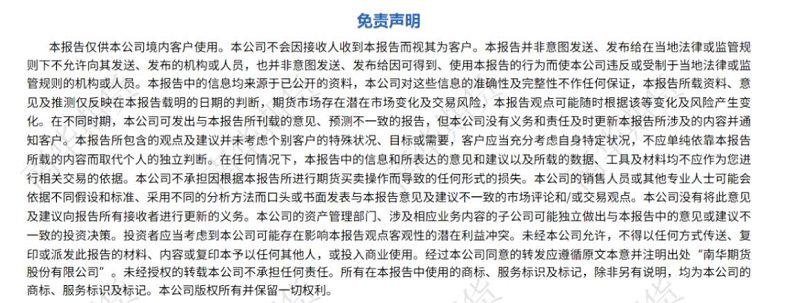
冲刺“开门红”!这家锂电企业24小时连轴转
Xin Lang Cai Jing· 2026-02-27 10:30
Video Player is loading. Play Video PlayMute Current Time 0:00 / Duration -:- Loaded: 0% Stream Type LIVE Seek to live, currently behind liveLIVE Remaining Time -0:00 1x Playback Rate Chapters Descriptions descriptions off, selected Subtitles Audio Track Picture-in-PictureFullscreen Green Blue Yellow This is a modal window. The media could not be loaded, either because the server or network failed or because the format is not supported. Beginning of dialog window. Escape will cancel and close the window. Te ...