
房地产开发

Search documents
国贸枫禾学子获新申请季福建唯一剑桥大学预录取offer
Sou Hu Wang· 2026-02-03 07:48
Core Viewpoint - The recent admission results from Cambridge University highlight the exceptional academic performance and comprehensive qualities of students from Guomao Fenghe, marking a significant achievement in international education in Fujian Province [1][4]. Group 1: Admission Achievements - Guomao Fenghe's student received the only pre-admission offer from Cambridge University in Fujian for this application season [1]. - This marks the third offer from Oxford/Cambridge for Guomao Fenghe, following previous admissions of its first graduating class to Oxford and the 2024 cohort to Cambridge [4]. - The total number of offers from top UK G5 universities has exceeded 75, including prestigious institutions such as Oxford, Cambridge, Imperial College, University College London, and London School of Economics [4]. Group 2: Academic Performance - The student showcased significant academic potential after transitioning to the A-Level program at Guomao Fenghe, excelling in various examinations and international competitions [3]. - Under the guidance of Guomao Fenghe teachers, the student successfully prepared application materials and passed the rigorous entrance exams and interviews at Cambridge [3]. Group 3: Cambridge University Overview - Cambridge University is recognized as a world-class institution, ranking 6th globally and 3rd in the UK according to the 2026 QS World University Rankings, and 4th globally and 2nd in the UK in the 2026 Times Higher Education World University Rankings [6]. - The university has a rich history of producing 126 Nobel laureates, 47 heads of state, and 217 Olympic medalists, underscoring its academic and educational strength [6]. Group 4: Admission Statistics - The minimum admission standard for Cambridge is an A-Level score of AAA, with most applicants achieving 4A or higher [8]. - In 2024, 2,308 applicants from mainland China submitted applications, with only 343 receiving offers, resulting in an offer rate of 14.9% [8][9]. - The mathematics program at Cambridge, which the student applied for, had a global application count of 2,032 for 2025, with 555 offers issued and 258 successful acceptances [10].


北京金店被挤爆,有人卖金还房贷
3 6 Ke· 2026-02-03 07:25
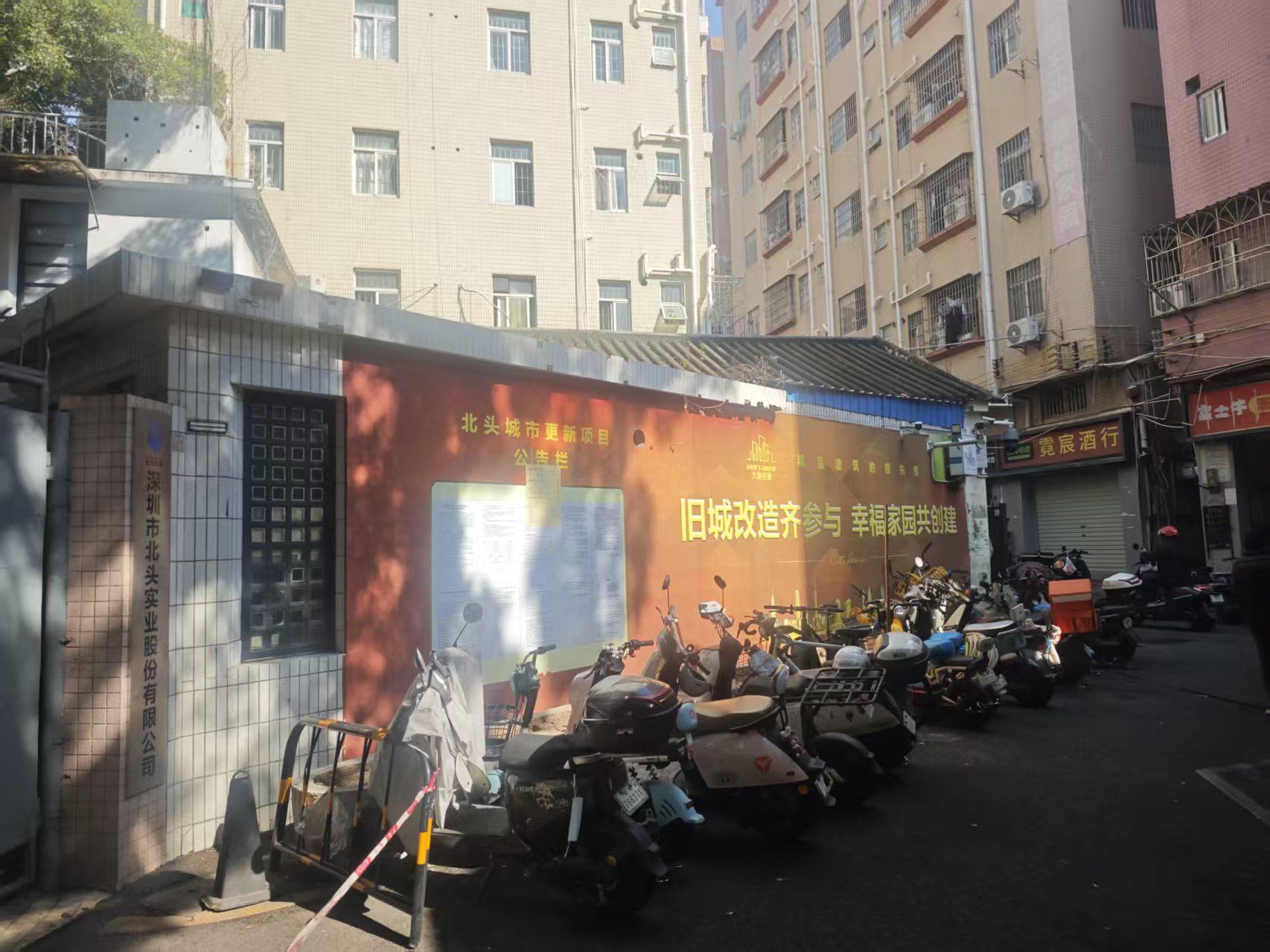
Core Viewpoint - The long-standing urban renewal project in Beitou Village, Shenzhen, has reached a critical breakthrough after 18 years, entering the administrative mediation phase, which signifies a substantial step towards demolition and redevelopment [1][4]. Group 1: Project Background and Progress - Beitou Village has a history of over 500 years and is a key part of the urban renewal in the Nanshan central area, often referred to as one of the "F4" villages [1]. - The project was first included in Shenzhen's urban renewal plan in 2008, with special planning approved in 2011, but faced significant delays due to complex property rights and difficulties in demolition coordination [4]. - A turning point occurred in June 2024 when the revised special planning for Beitou Village was approved, clearing obstacles for the project's restart [4]. Group 2: Challenges Faced - The project has faced three main challenges: "difficulties in demolition," "balancing interests," and "financing difficulties." The market-driven negotiation model has made it hard to achieve 100% owner agreement, leading to high costs and project stagnation [5]. - The decline in property values has not aligned with villagers' compensation expectations, complicating negotiations further [5]. - Financial institutions have become increasingly cautious about funding complex urban renewal projects, leading to a lack of investment and delayed progress [5]. Group 3: Policy and Market Dynamics - Shenzhen's current policy emphasizes "controlling inventory," with a significant number of urban renewal projects awaiting activation, particularly in the Nanshan core area due to its advantageous market conditions [6]. - The government's intervention in the administrative mediation phase is expected to facilitate the resolution of final signing challenges, indicating a shift towards more proactive policy support for stalled projects [6][12]. Group 4: Developer Involvement - The actual developer for the Beitou Village project is Jinhui Rong Real Estate, a wholly-owned subsidiary of Dazhu Holdings Group, which is well-known for its leadership in the laser industry and has diversified into real estate since 2008 [9][10]. - Dazhu Holdings has successfully developed multiple residential and commercial projects in Shenzhen, with a total development area exceeding 5 million square meters [9]. Group 5: Market Implications - The breakthrough in Beitou Village is expected to influence the overall dynamics of the Nanshan central area's urban renewal, with other projects like Xiangnan Village also showing rapid progress [11]. - The surrounding property prices have significantly increased, with the average listing price for nearby properties reaching nearly 100,000 yuan per square meter, highlighting the potential value of urban renewal [12].

太平洋房地产日报(20260202):西安4.6亿元成交5宗地块
Tai Ping Yang Zheng Quan· 2026-02-03 07:25
2026 年 02 月 02 日 行业日报 中性/维持 房地产 房地产 太平洋房地产日报(20260202):西安 4.6 亿元成交 5 宗地块 走势比较 (10%) (2%) 6% 14% 22% 30% 25/2/5 25/4/17 25/6/27 25/9/6 25/11/16 26/1/26 子行业评级 | 和运营 | | | --- | --- | | 房 地 产 开 发 房地产服务 | 无评级 无评级 | 推荐公司及评级 相关研究报告 <<太平洋房地产日报(20260127):宁 波挂牌 4 宗地块>>--2026-01-28 <<太平洋房地产日报(20260126):天 津调整公积金贷款政策>>--2026- 01-27 <<太平洋房地产日报(20260123):湖 南将推城市更新三年行动>>--2026- 01-24 房地产板块个股涨幅较大的前五名为阳光股份、荣丰控股、海南 高 速 、 中 天 服 务 、 亚 通 股 份 , 涨 幅 分 别 为 5.14%/5.00%/3.77%/2.80%/1.31%; 个股跌幅较大的为皇庭 B、皇庭国际、南山控股、财信发展、三湘 印象,跌幅分别为-10.3 ...
——2月信用债策略月报:关注长信用品种的博弈机会
Huachuang Securities· 2026-02-03 07:25
Group 1: Market Overview - In January, credit bond configuration sentiment was strong, leading to a significant compression of credit spreads, with 5-year credit spreads narrowing to the lowest point since 2025[12] - February's market outlook indicates a neutral to favorable pricing environment for bonds, with credit spreads expected to continue narrowing, particularly in the long-term credit segment[8] - The demand for credit bonds remains robust, especially for short-term products, driven by institutional investments and favorable monetary conditions[8] Group 2: Investment Strategies - For bonds with maturities of 5 years or less, focus on structural opportunities, particularly in the real estate sector, where sentiment is expected to improve[3] - Long-term credit bonds (over 5 years) are currently in a favorable positioning window, but investors should be cautious and take profits quickly as spreads compress[3] - Specific recommendations include targeting high liquidity bonds and those with favorable convexity, particularly in the 5.5-6 year and 7.5-8 year ranges[4] Group 3: Sector-Specific Insights - In the urban investment bond sector, low-grade bonds with maturities of 3 years or less still offer attractive yields, while medium to long-term bonds should focus on high-quality issuers[5] - The real estate bond market should concentrate on 1-2 year maturities, particularly for state-owned enterprises, as valuation recovery momentum is strong[5] - For coal bonds, short-term investments should be made cautiously, with a focus on high-rated issuers due to potential price fluctuations in the coal market[5]
行业投资策略周报:新房二手房成交同比提升,“三道红线”政策放松-20260203
CAITONG SECURITIES· 2026-02-03 07:17
Core Insights - The real estate sector has shown a decline of 2.1% over the past week, ranking 17th among 29 sectors in the market, while the Shanghai and Shenzhen 300 index and the Wind All A index experienced changes of 0.1% and -1.6% respectively [5][38]. - New home sales in 36 cities reached 1.425 million square meters last week, reflecting a week-on-week increase of 14.2% and a year-on-year increase of 146.5%. However, cumulative sales from January 1 to January 30 totaled 5.398 million square meters, down 30.3% year-on-year [5][10]. - The second-hand housing market saw a total transaction area of 1.706 million square meters across 15 cities last week, with a slight week-on-week decrease of 0.7% but a significant year-on-year increase of 744.4%. Cumulative sales for the same period reached 6.739 million square meters, up 15.8% year-on-year [5][16]. Real Estate Market Conditions - The inventory of new homes in 13 cities stands at 7.7738 million square meters, showing a slight decrease of 0.2% week-on-week and a year-on-year decrease of 3.8%. The average de-stocking period is 23.0 months, which is stable compared to the previous week but has increased by 6.7 months year-on-year [5][24]. - In terms of land transactions, the total area sold in 100 cities from January 26 to February 1 was 1.7955 million square meters, marking a week-on-week increase of 49.2% and a year-on-year increase of 419.7%. The average land price was 979 yuan per square meter, down 28.0% week-on-week and down 74.4% year-on-year [5][32]. Investment Recommendations - For mainland developers, the report recommends companies such as Binjiang Group and China Merchants Shekou in A-shares, and China Overseas Development and Greentown China in Hong Kong stocks, highlighting that sales growth expectations post-market recovery will drive valuation improvements [5][9]. - Light asset operation companies are also recommended, as they are expected to maintain stable fundamentals during the downturn. Suggested companies include Greentown Service for property management and China Resources Mixc Lifestyle for commercial management [5][9]. - For Hong Kong developers, the report suggests focusing on companies like Sun Hung Kai Properties and Henderson Land Development, which are expected to benefit from a recovering residential sales market [5][9]. Financing Conditions - In the realm of domestic credit bonds, real estate companies issued a total of 8 bonds last week, amounting to 4.96 billion yuan, which is a decrease of 42.9% week-on-week but an increase of 346.3% year-on-year. The net financing amount was -3.97 billion yuan due to repayments totaling 8.93 billion yuan [5][36].





机器人“住进”社区!华发股份让具身智能重构“理想家”
Xin Jing Bao· 2026-02-03 07:11
Core Insights - Embodied intelligence is being integrated into daily life in a vivid and practical manner, with various types of robots being deployed in community settings to enhance service delivery and operational efficiency [1][10][12] Group 1: Community Integration of Robots - Human-like robots are greeting and guiding visitors in residential areas, becoming part of the community service system [1] - Patrol robots equipped with thermal imaging are conducting surveillance, while cleaning and scent-dispensing robots are enhancing the living environment [1][9] - The introduction of robots in various roles, including security, home services, and educational support, signifies a shift towards a more automated and responsive community [1][9] Group 2: Smart Home Systems - A household management robot can execute over 40 different living scenarios through voice commands, transitioning home management from manual to automated responses [3][4] - The smart home system integrates various spaces and devices, breaking down data silos and enhancing the overall living experience by making it more seamless and user-friendly [5][6] Group 3: Safety and Security Enhancements - Community robots provide continuous surveillance and support, creating a 24/7 security network that enhances residents' safety [7][8] - The use of robots for cleaning, welcoming, and logistics in community settings reflects a comprehensive approach to service delivery, improving both efficiency and resident satisfaction [9] Group 4: Policy and Industry Development - The establishment of a policy framework in Zhuhai aims to accelerate the development of smart housing, integrating digital and intelligent solutions into real estate [10][11] - Companies like Huafa are leading the charge in embedding embodied intelligence into residential projects, creating replicable models for the industry [12][13] - The ongoing support for artificial intelligence and smart technologies is expected to redefine the concept of "good housing," focusing on integrated systems and long-term service capabilities [13]

37股获推荐,华盛锂电目标价涨幅超76%
2 1 Shi Ji Jing Ji Bao Dao· 2026-02-03 06:37
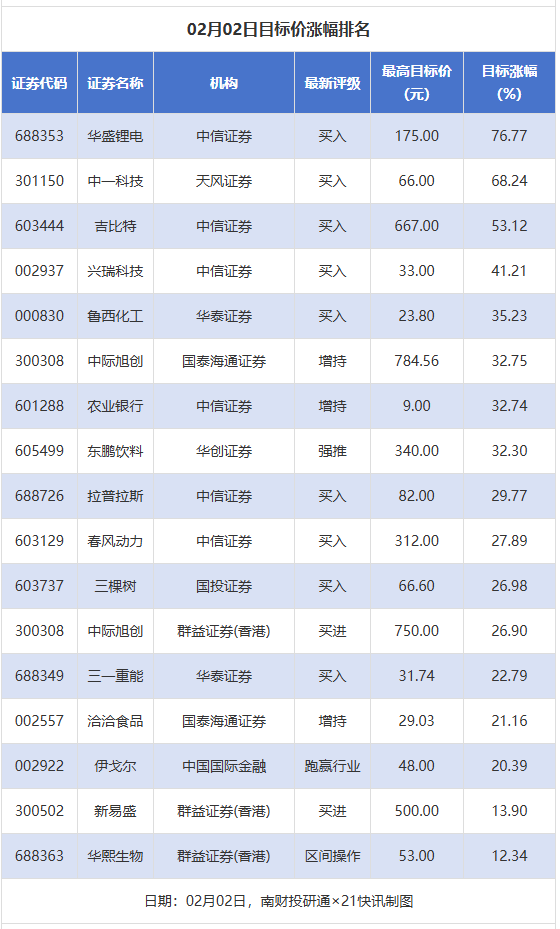
Group 1 - The core viewpoint of the article highlights the target price increases for several listed companies, with notable gains in the battery and gaming sectors [1][2]. - The companies with the highest target price increases include Huasheng Lithium Battery with a 76.77% increase, Zhongyi Technology with a 68.24% increase, and Gibit with a 53.12% increase [1][2]. - A total of 37 listed companies received recommendations from brokers on February 2, with Dongpeng Beverage receiving the most recommendations at four [3]. Group 2 - On February 2, brokers provided 12 new coverage ratings, including Aorijins receiving an "Outperform" rating from Guosen Securities, and Zhongyi Technology receiving a "Buy" rating from Tianfeng Securities [3][4]. - Other companies receiving new ratings include China Merchants Shekou and Huayuan Shares, both rated "Buy" by Huayuan Securities, and Xingshui Technology rated "Buy" by CITIC Securities [3][4]. - The sectors represented in the new coverage include packaging printing, real estate development, automotive parts, IT services, and chemical pharmaceuticals [4].

——2月信用债策略月报:关注长信用品种的博弈机会-20260203
Huachuang Securities· 2026-02-03 06:32
Group 1 - The report highlights that the credit spread for bonds with maturities of 5 years or less is expected to compress further or maintain low volatility, with a focus on the influx of investment into long-duration credit bonds [2][3] - In January, the credit bond market showed strong sentiment, driven by the implementation of new fund fee regulations and strong institutional allocation, leading to a significant compression of credit spreads [12][15] - The report suggests that long-duration credit bonds are currently in a favorable positioning window, but trading should be executed with timely profit-taking [3][4] Group 2 - The strategy for credit bonds emphasizes identifying structural opportunities in the short to medium-term bonds while positioning for long-duration credits and ensuring timely exits [3][4] - The report indicates that the performance of credit bonds typically outperforms interest rate bonds, with credit spreads narrowing during February, influenced by seasonal factors and market dynamics [17][23] - The analysis of the secondary market shows a general decline in credit bond yields and a compression of credit spreads across various categories [8][15] Group 3 - The report discusses specific sector strategies, including opportunities in urban investment bonds, real estate bonds, coal bonds, and steel bonds, highlighting the importance of selecting high-quality issuers and considering market conditions [5][6] - It notes that the net financing of credit bonds has decreased year-on-year but increased month-on-month, with a rising proportion of long-duration issuances [9][22] - The report emphasizes the need for careful selection of bonds based on liquidity, convexity, and market conditions, particularly for long-duration credit bonds [4][5]
增值税预缴税款管理办法
Sou Hu Cai Jing· 2026-02-03 06:21
Core Viewpoint - The Ministry of Finance and the State Taxation Administration have issued the "Management Measures for Prepaid Value-Added Tax" which will take effect on January 1, 2026, continuing the existing system and practices [1][3]. Group 1: General Provisions - The measures are formulated based on the relevant provisions of the "Implementation Regulations of the Value-Added Tax Law of the People's Republic of China" [3]. - Taxpayers (excluding individuals) must prepay value-added tax in accordance with the measures when certain conditions are met [3]. Group 2: Construction Services Across Administrative Regions - Taxpayers providing construction services across administrative regions must prepay value-added tax to the tax authority where the service occurs, based on the time the tax obligation arises [4]. - The prepayment rate for general taxation method is set at 2%, while for simplified taxation method it is 3% [4]. - The formula for calculating the prepaid tax is provided, allowing for deductions of subcontracting payments [4][5]. Group 3: Prepayment for Services with Advance Payments - Taxpayers using advance payment methods for construction services must prepay value-added tax to the tax authority where the service occurs [6]. - The prepayment rates remain the same as for construction services, with a calculation formula similar to that for construction services [7][10]. Group 4: Real Estate Project Sales - Real estate developers selling projects through pre-sale methods must prepay value-added tax to the tax authority where their institution is located [8]. - The prepayment rate for these transactions is set at 3% [8]. - Taxpayers must prepay the tax in the month following the receipt of advance payments [8]. Group 5: Transfer or Lease of Real Estate - Taxpayers transferring or leasing real estate not located in the same administrative area must prepay value-added tax to the tax authority where the real estate is located [9]. - The prepayment rates vary, with general taxpayers at 5% and small-scale taxpayers at 3% for transfers [11]. - A specific formula is provided for calculating the prepaid tax based on the total taxable amount [12]. Group 6: Oil and Gas Field Enterprises - Oil and gas field enterprises selling and producing services related to crude oil and natural gas across provinces must prepay value-added tax to the tax authority where the service occurs [13]. - The prepayment rates are 5% for Xinjiang and 3% for other regions [14]. - The calculation for prepaid tax follows a similar formula as other services [14]. Group 7: Collection Management - Small-scale taxpayers whose total price and advance payments do not reach the VAT threshold are exempt from prepayment [15]. - Prepaid VAT can be deducted from the current VAT payable, with any excess carried forward to the next period [15]. - Taxpayers must maintain detailed records of prepaid tax transactions and related documents [15][16].
地产债情绪修复到哪里?
Guolian Minsheng Securities· 2026-02-03 06:10
Report Industry Investment Rating - Not provided in the given content Core Views of the Report - In 2026, real estate policies remain "stable". Policies for the resident sector focus on "burden - reduction", while those for real - estate enterprises prioritize risk prevention. The phasing - out of the "Three Red Lines" policy and other measures may have contributed to a certain repair of the trading sentiment of real - estate entities [5][10][12]. - Although real - estate bonds have increased in trading volume and average trading duration, the high - valuation ratio remains above 60%. It is recommended to trade real - estate entities cautiously and choose short - duration state - owned enterprises within 1Y [20]. - The credit bond market is active this week. Considering the possible stable and loose funds and the allocation demand of amortized debt funds, the spreads of each term are likely to remain low and may narrow further. Investment strategies include basic allocation of short - term credit products and enhancing returns by considering 5 - 10Y secondary perpetual bonds or 5Y urban investment and industrial bonds [27]. - Different regions' urban investment platforms have different investment logics. For example, "economic powerhouses" can appropriately extend the duration to 5 years, regions with debt - resolution policies can consider a duration of less than 3 years, and prefecture - level cities with strong industrial bases can choose a 3 - 5Y duration [41][42][43]. Summary by Relevant Catalogs 1. This Week's Real - Estate Hot Events 1.1 The Gradual Exit of the "Three Red Lines" Policy - On January 28, 2026, regulatory authorities no longer required real - estate enterprises to report "Three Red Lines" indicators monthly. The "Three Red Lines" policy was introduced in August 2020, which set standards for real - estate financing and implemented differentiated debt - scale management based on enterprises' "line - crossing" situations [5][8]. 1.2 A Review of Real - Estate - Related Policies Since 2026 - For the resident sector, policies since January 1, 2026, include VAT adjustments for housing sales, tax - refund policies for home - replacement, and interest - rate cuts for existing housing loans. For real - estate enterprises, policies focus on risk prevention, such as loan extensions for projects on the "white list" and the implementation of project - company systems and host - bank systems [10][12]. 2. How Far Has the Sentiment of Real - Estate Bonds Recovered? 2.1 Recent Trading Conditions in the Real - Estate Bond Market - In January 2026, the trading volume of industrial urban investment real - estate bonds gradually increased, while that of urban investment real - estate bonds fluctuated. The high - valuation trading ratio of both industrial and urban investment real - estate entities remained between 60 - 70%. The daily peak trading volume of industrial real - estate bonds was 9.332 billion yuan on January 26, and that of urban investment real - estate bonds was 5.344 billion yuan on January 13. The trading activity of industrial real - estate entities increased significantly within the month [14]. 2.2 How Far Has the Trading Sentiment of Popular Industrial Real - Estate Entities Recovered? - Except for Vanke, the average YTM of popular industrial real - estate entities increased in January 2026. Some entities showed a phenomenon of trading pulling up the duration, which may explain the increase in average trading YTM. However, entities like Cinda Investment and Huafa Co., Ltd. had significant increases in trading yields without a significant increase in average duration at the end of the month, and their trading deviated significantly from the valuation, indicating that there may still be a large number of sell - offs [19][20]. 3. Investment Strategies - The credit bond market is active this week, with the trading volume increasing to about 1.74 trillion yuan. The average trading duration of urban investment bonds and industrial bonds in the secondary market has increased. In the primary market, the issuance of urban investment financial bonds has decreased. Considering the possible stable and loose funds and the allocation demand of amortized debt funds, the spreads of each term are likely to remain low and may narrow further [27]. - Allocation plans include basic allocation of short - term credit products with relatively controllable credit risks and enhancing returns by considering 5 - 10Y secondary perpetual bonds or 5Y urban investment and industrial bonds. Some 5 - 10Y secondary perpetual bonds still show certain relative value, and attention can also be paid to 5Y securities company subordinated bonds and 10Y secondary capital bonds [27][31]. - For urban investment platforms in different regions, different investment logics are proposed. For "economic powerhouses" such as Guangdong, Jiangsu, etc., the duration can be appropriately extended to 5 years; for regions with significant debt - resolution policies, a duration of less than 3 years can be considered; for prefecture - level cities with strong industrial bases, a 3 - 5Y duration is recommended [41][42][43]. 4. Primary Market Tracking - Relevant figures are provided, including this week's credit bond issuance, financial bond issuance, credit bond exchange review and registration, and credit bond association registration completion, but specific data analysis is not elaborated in the summary part [56][59][63][66]. 5. Secondary Market Observation 5.1 The "Volume" of Secondary Market Transactions - Figures show this week's credit bond trading scale and quantity, urban investment bond trading scale by province, industrial bond trading scale by industry, and the weighted trading duration of urban investment and industrial bonds by province [68][72][79][80]. 5.2 The "Price" of Secondary Market Transactions - Figures show this week's urban investment bond yields by term and implied rating, industrial bond yields by enterprise type (state - owned and private enterprises), and financial bond yields by province and variety [81][82][83][84][85].

