
能源化工

Search documents
贵金属“风暴”席卷年末市场:美股科技股遇冷,贵金属上演“高台跳水”
Jin Rong Jie· 2025-12-30 00:32
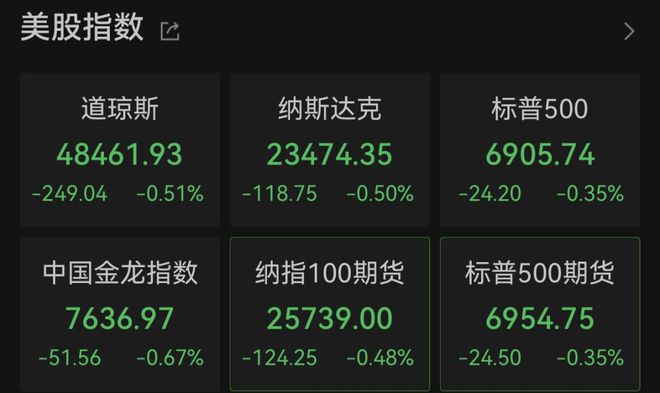
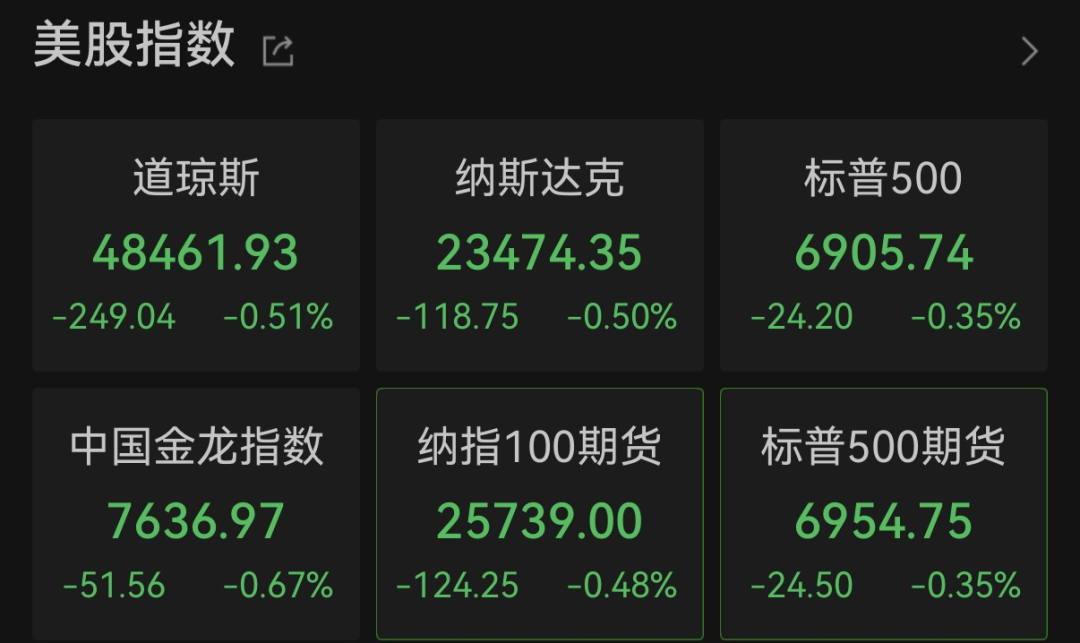
Group 1: Market Overview - The global financial market experienced a significant "precious metal storm" in the last week of 2025, with all three major U.S. stock indices closing down, particularly affected by the decline in technology stocks [1][2] - The Dow Jones Industrial Average fell by 0.51% to 48,461.93 points, the S&P 500 dropped by 0.35% to 6,905.74 points, and the Nasdaq Composite decreased by 0.50% to 23,474.35 points [2][3] Group 2: Precious Metals Market - Precious metals, particularly silver, experienced a dramatic drop after reaching new highs, with silver falling nearly 9% after hitting $82 per ounce, while gold futures dropped about 4.5%, marking the largest decline in nearly two months [4][8] - The sharp decline in precious metals negatively impacted mining stocks, with Harmony Gold down over 8%, AngloGold down nearly 7%, and Barrick Gold down over 4% [5][8] Group 3: Factors Behind the Decline - The decline in the precious metals market is attributed to multiple factors, including increased margin requirements set by the CME, which raised gold futures margin by 10% and silver futures by approximately 13.6%, leading to higher holding costs for traders [8] - The market was also experiencing a release of overbought sentiment, with silver prices having increased by over 185% in 2025, prompting concerns about a potential correction [8] - Additionally, profit-taking ahead of year-end contributed significantly to the sharp drop in precious metals [8] Group 4: Energy Sector Performance - In contrast to the precious metals market, the energy sector showed strength, with WTI crude oil futures rising by 1.84% to $58.08 per barrel and Brent crude oil futures increasing by over 2% to $61.94 per barrel, supported by geopolitical risks [6]

中信期货晨报:国内商品期市收盘涨跌参半,铂、钯跌停-20251230
Zhong Xin Qi Huo· 2025-12-30 00:30
1. Report Industry Investment Rating - No specific industry investment rating is provided in the report [1][2][3] 2. Core Viewpoints of the Report - **Overseas Macro**: The US economic aggregate in Q3 exceeded expectations, but growth momentum showed signs of marginal slowdown. The consumer confidence index in December dropped to 89.1, lower than the market expectation of 91.0. The Fed is likely to adopt a more cautious and accommodative approach. Factory orders in the manufacturing sector recovered moderately, and the differentiation in high - end manufacturing deepened [6] - **Domestic Macro**: In November, demand recovery was slow, with consumption and investment under pressure, and the year - on - year decline in industrial profits widened. However, the cumulative profits from January to November still showed a slight positive growth, indicating the economy is "stabilizing at a low level" with policy support. There are industry differentiations, with the equipment manufacturing industry leading the growth (+7.2%, some industries with high growth), the raw material manufacturing industry accelerating (+22.1%), the consumer goods industry turning positive, and the automobile industry slightly weakening (-0.3%). Profit improvement mainly relies on supply contraction and price recovery, and may be constrained in the future if demand fails to pick up and the base increases [6] - **Asset Views**: The macro environment is still favorable for the precious metals and non - ferrous metals sectors, but short - term risks need to be watched out for. In the precious metals sector, the risk of volatility in silver increases after a sharp rise, and further corrections are possible. In the non - ferrous metals sector, there are opportunities to buy on dips for commodities with more supply disruptions, such as copper, aluminum, and tin. Attention should also be paid to lithium carbonate with good supply - demand performance. For the domestic equity sector, a defensive strategy is recommended at the end of the year and during the policy window period [6] 3. Summary by Relevant Catalogs 3.1 Financial Market - **Stock Index Futures**: The CSI 300 futures, SSE 50 futures, CSI 500 futures, and CSI 1000 futures all had negative daily and weekly fluctuations, but different monthly, quarterly, and annual changes. For example, the CSI 300 futures had a daily decline of 0.61%, a weekly decline of 0.61%, a monthly increase of 3.08%, a quarterly decline of 0.17%, and an annual increase of 17.58% [2] - **Treasury Bond Futures**: Most Treasury bond futures had negative daily and weekly fluctuations. For example, the 2 - year Treasury bond futures had a daily decline of 0.07%, a weekly decline of 0.07%, etc [2] - **Foreign Exchange**: The US dollar index was flat, and different currency pairs had various changes. For example, the euro - US dollar exchange rate had no change in pips, and the US dollar - Japanese yen exchange rate was flat daily but had other period - specific changes [2] - **Interest Rates**: Various interest rates such as the 7 - day inter - bank pledged repo rate, 10Y Chinese Treasury bond yield, and 10Y US Treasury bond yield had different fluctuations [2] 3.2 Hot Industries - Different industries in the CITIC industry index had different price changes. The comprehensive finance, national defense and military industry, and petroleum and petrochemical industries had positive daily and weekly changes, while the pharmaceutical, food and beverage, and power equipment and new energy industries had negative daily and weekly changes [2] 3.3 Overseas Commodities - **Energy**: NYMEX WTI crude oil had a daily increase of 2.52%, while ICE Brent crude oil had a daily decline of 2.44%. NYMEX natural gas had a daily increase of 3.00%, and ICE UK natural gas was flat [2] - **Precious Metals**: COMEX gold and silver had significant increases, with COMEX gold having an annual increase of 72.85% and COMEX silver having a large annual increase [2] - **Non - Ferrous Metals**: LME copper, zinc, lead, etc. showed different price trends. LME copper had a flat daily price but positive changes over other periods [2] - **Agricultural Products**: CBOT soybeans, wheat, and other agricultural products had different price fluctuations. For example, CBOT soybeans had a daily decline of 0.37% [2] 3.4 Domestic Main Commodities - Different domestic commodities such as shipping (container shipping to Europe), precious metals (gold and silver), non - ferrous metals, black building materials, energy, chemicals, and agricultural products had various daily, weekly, monthly, and annual price changes. For example, container shipping to Europe had a daily decline of 0.09%, and gold had a daily decline of 0.90% [3] 3.5 Viewpoints Summary - **Financial**: The stock market is waiting for a main line, and the bond market has disturbing factors. Stock index futures are expected to rise in a volatile manner, stock index options to fluctuate, and Treasury bond futures to fluctuate [7] - **Precious Metals**: They are expected to rise in a volatile manner, with silver having greater elasticity [7] - **Shipping**: Attention should be paid to the resumption of voyages in the far - month contracts of container shipping to Europe [7] - **Black Building Materials**: The real - world pressure exists, and the disk performance is under pressure, with most varieties expected to fluctuate [7] - **Non - Ferrous Metals and New Materials**: Wait for the macro - level to become clearer, with basic metals in a state of shock and consolidation [7] - **Energy and Chemicals**: The pattern of strong aromatics and weak olefins remains unchanged, and different chemical varieties have different short - term outlooks, mostly in a state of shock [9] - **Agriculture**: The market is worried about the supply, with different agricultural products having different short - term trends, such as soybean meal leading the near - month contracts to rise [9]
黄金白银 集体重挫!美股全线下跌
Zhong Guo Zheng Quan Bao· 2025-12-29 23:03
当地时间12月29日,美国三大股指全线收跌,道指跌0.51%,标普500指数跌0.35%,纳指跌0.5%。万得美国科技七巨头指数跌0.60%,特斯拉跌超3%,英 伟达跌超1%。 消息面上,12月29日,美国芝商所集团宣布全线上调包括金、银、钯金、锂等在内的金属期货交易保证金,并在当地时间周一收盘后生效,其中,黄金期 货保证金上调10%,白银期货上调约13.6%,铂金上调约23%。此举引发国际金属期货价格出现多轮下跌。 | 贵金属 こ | | | | --- | --- | --- | | 伦敦金现 | 伦敦银现 | COMEX電金 | | 4331.668 | 72.200 | 4349.6 | | -200.742 -4.43% | -7.129 -8.99% | -203.1 -4.46% | | COMEX自银 | SHFE黄金 | SHFE白银 | | 71.600 | 975.80 | 17237 | | -5.596 -7.25% | -40.66 -4.00% -1650 -8.74% | | | 能源化工 它 | | | | NYMEX WTI原 | ICE布油 | ICE轻质低硫原 | | ...
人民币升值投资机会解读
2025-12-29 15:51
Summary of Key Points from Conference Call Records Industry or Company Involved - The analysis focuses on the impact of the appreciation of the Renminbi (RMB) on various industries, including upstream raw materials (utilities, non-ferrous metals, steel, energy and chemicals) and consumer goods (airlines, duty-free businesses) [1][3][4]. Core Insights and Arguments - **Cost Reduction**: The appreciation of the RMB reduces the cost of imported goods, benefiting industries reliant on imported raw materials, particularly upstream raw materials and consumer goods sectors [1][3]. - **Debt Servicing Pressure**: Airlines and real estate companies experience reduced pressure on dollar-denominated debt repayments due to RMB appreciation, enhancing profitability for airlines through exchange gains [1][3]. - **Valuation Enhancement**: The appreciation of the RMB is expected to enhance the valuation of core RMB assets, particularly in the financial sector (banks and insurance) and the Hong Kong stock market, potentially attracting foreign capital [1][3]. - **Gas Sector Benefits**: The gas sector benefits from lower procurement costs linked to international oil prices, while high-dividend thermal power sectors are less affected by exchange rate changes [1][4]. - **Airline Sector Gains**: Airlines benefit from direct exchange gains on aircraft purchases and leases, as well as reduced operational costs due to lower dollar-denominated expenses [5][6]. - **Real Estate Market Stability**: RMB appreciation expands the space for interest rate cuts, which is crucial for stabilizing the real estate market, attracting foreign investment in large-scale real estate projects [7]. Other Important but Possibly Overlooked Content - **REITs Market Growth**: The REITs market is showing robust growth, positively impacting the RMB-denominated real estate market and providing exit channels for related institutions [8][9]. - **Hong Kong Stock Market Dynamics**: The appreciation of the RMB increases the attractiveness of Hong Kong stocks, particularly in the technology sector, although the fundamental driver remains earnings per share (EPS) [2][10][11]. - **Investment Recommendations**: China Duty Free is highlighted as a key beneficiary of RMB appreciation due to its pricing structure and potential growth from policy catalysts and consumer behavior changes [13]. This summary encapsulates the critical insights from the conference call records, emphasizing the multifaceted impacts of RMB appreciation across various sectors and the potential investment opportunities arising from these dynamics.

美元流动性维持宽松,商品短期或偏稳运行
Guo Tou Qi Huo· 2025-12-29 13:36
1. Report Industry Investment Rating No relevant content provided. 2. Core Viewpoints of the Report - The commodity market as a whole rose 4% last week, with precious metals leading the way with a 9.69% increase. The short - term commodity market may run stably due to the loose dollar liquidity [2]. - The Fed's loose outlook and geopolitical risks support the strength of precious metals. The short - term market fluctuates greatly as various varieties hit new highs [2]. - The non - ferrous sector may oscillate strongly in the short term due to the weak dollar and the support from the expected contraction of mine supply [3]. - The black sector may oscillate as the demand and supply situation is complex, with factors such as changes in steel mill production and raw material supply [3]. - Oil prices continue to be under pressure due to the long - term loose supply - demand background, despite the geopolitical tension in Venezuela [3]. - The polyester chemical varieties may be affected by supply and demand changes, and attention should be paid to the downstream polyester load [4]. - The short - term trend of agricultural products and oils and fats is expected to be oscillatory, influenced by factors such as weather and export expectations [4]. 3. Summary According to Related Catalogs 3.1 Market Review - The overall commodity market rose 4% last week, with precious metals up 9.69%, non - ferrous metals up 4.97%, energy and chemicals up 2.98%, agricultural products up 2.53%, and black metals up 0.08%. Silver, PTA, and nickel were the top gainers, while tin, coke, and rebar were the top losers [2][6]. - The 20 - day average volatility of the commodity market increased, with only the black and coal - chemical related varieties showing a decline in volatility. The overall market scale increased, but only the precious metal and non - ferrous sectors had net inflows, with most funds concentrated in silver [2][6]. 3.2 Outlook for Different Sectors - **Precious Metals**: Supported by the Fed's loose policy and geopolitical risks, the shortage of spot makes silver, platinum, and palladium more favored by funds. The gold - silver ratio has fallen below the average. Exchange restrictions and risk warnings have led to large short - term market fluctuations [2]. - **Non - ferrous Metals**: The weak dollar and better - than - expected GDP growth in the US provide a neutral - warm macro environment. Although the inventory is increasing and the spot premium is weakening, the expected contraction of mine supply supports the price, and the sector may oscillate strongly in the short term [3]. - **Black Metals**: The demand for rebar decreased, production increased slightly, and inventory continued to decline. The slowdown of blast furnace production cuts and the stable molten iron output need attention to the sustainability of environmental protection restrictions. The supply of raw materials is relatively sufficient, and the sector may oscillate in the short term [3]. - **Energy**: The geopolitical tension in Venezuela increases the risk premium of crude oil, but the impact on global supply is limited. The US shale oil production remains high, and oil prices are under pressure due to the long - term loose supply - demand situation [3]. - **Chemical Industry**: Polyester varieties may face supply pressure from device restarts, but the strong expectation remains, and attention should be paid to the downstream polyester load [4]. - **Agricultural Products**: The improving weather in South America and the expected transition of La Nina to ENSO neutral increase the expectation of a bumper harvest in South America. The fundamentals of palm oil are less negative, and the short - term trend of oils and fats may be oscillatory [4]. 3.3 Commodity Fund Overview - Gold ETFs generally had positive returns last week, with the total scale of gold ETFs increasing by 0.77% and the total trading volume increasing by 29.04%. The total scale of commodity ETFs increased by 0.86% and the trading volume increased by 23.22% [36]. - Among them, the returns of different gold ETFs ranged from 3.21% to 3.60%, and the return of the silver fund was 17.43%, while the returns of energy - chemical, bean - meal, and non - ferrous metal ETFs were 4.25%, 1.69%, and 4.34% respectively [36][38].
南华期货金融期货早评-20251229
Nan Hua Qi Huo· 2025-12-29 05:21
1. Report Industry Investment Ratings No specific industry investment ratings are provided in the report. 2. Core Views of the Report - The market last week was characterized by the strong rise of non - ferrous metals and the accelerated appreciation of the RMB. There are risks of correction in non - ferrous metals and uncertainties in the long - term appreciation of the RMB [2]. - The stock index is expected to be volatile and strong in the short term, but there is pressure to continue rising; the bond market is not pessimistic in the medium term, and short - term trading should maintain a band - trading idea [5][7][8]. - The SCFI European line has a complex market situation with both positive and negative factors, and there are uncertainties in the future trend [9][10][12]. - In the non - ferrous metals market, platinum and palladium have high - level volatility, and there are opportunities for long - term price increases but short - term risks; gold and silver are still strong, but silver has high price risks; copper, aluminum, zinc, tin, etc. have different price trends and influencing factors [14][19][21]. - In the black market, steel prices are expected to be volatile, iron ore is neutral with price support and pressure, and the situation of coking coal and coke depends on factors such as production resumption [33][34][36]. - In the energy and chemical market, the oil price is in a low - level shock, and the performance of various chemical products such as LPG, PTA - PX, MEG - bottle chips, etc. is affected by factors such as supply and demand and macro - policies [44][45][48]. - In the agricultural products market, the supply and demand of live pigs need to be verified, the performance of oilseeds, oils, cotton, sugar, etc. is affected by factors such as supply and demand relationship and policy [82][83][86]. 3. Summaries According to Relevant Catalogs Financial Futures - **Macro**: The market is influenced by factors such as the two - main - line characteristics of non - ferrous metals and RMB appreciation, and there are risks in the short - term rise of non - ferrous metals and uncertainties in the long - term appreciation of the RMB [1][2]. - **RMB Exchange Rate**: There is a discussion about the long - term appreciation of the RMB, but there are limitations in applying relevant theories. The narrowing of the Sino - US interest rate differential is the core trigger for appreciation, and there are potential risks [4]. - **Stock Index**: The stock index is expected to be volatile and strong in the short term, but there is pressure to continue rising, and it is necessary to pay attention to the breakthrough of the index [5][7]. - **Treasury Bond**: The bond market is not pessimistic in the medium term, and short - term trading should maintain a band - trading idea [8]. - **Container Shipping European Line**: The SCFI European line has a complex market situation with both positive and negative factors, and there are uncertainties in the future trend [9][10][12]. Commodities Non - Ferrous Metals - **Platinum & Palladium**: There is high - level volatility, and the long - term price is expected to rise, but there are short - term risks. Attention should be paid to factors such as policy adjustments and market supply and demand [14][15][17]. - **Gold & Silver**: They are still strong, but silver has high price risks, and short - term trading should be cautious [19][20]. - **Copper**: The price is affected by the game between industrial and speculative funds, and there are risks in trading around the New Year [21][23]. - **Aluminum Industry Chain**: Aluminum is expected to be volatile and strong, alumina has an oversupply situation, and cast aluminum alloy is recommended to pay attention to the price difference with aluminum [24][25]. - **Zinc**: It is expected to be in a wide - range shock [26][27]. - **Tin**: It is expected to be in a wide - range shock, and there is limited upward space in the short term [27]. - **Lithium Carbonate**: There is a risk of short - term callback, but there are opportunities to build long positions in the medium and long term [28][29]. - **Industrial Silicon & Polysilicon**: Industrial silicon has limited short - term improvement in fundamentals, and polysilicon is in a shock state. Attention should be paid to technical aspects [30][31]. - **Lead**: It is expected to be in a shock range [32]. Black Metals - **Rebar & Hot - Rolled Coil**: Steel prices are expected to be volatile, with support from the cost side and pressure from demand [33][34]. - **Iron Ore**: The fundamentals are neutral, with price support from steel mill replenishment demand and pressure from high supply [35][36]. - **Coking Coal & Coke**: The future trend depends on factors such as the resumption of domestic mines and the production of iron and steel enterprises [37][38]. - **Silicon Iron & Silicon Manganese**: They are expected to be volatile and strong in the short term, but the upward space is limited [39][40]. Energy and Chemicals - **Pulp - Offset Paper**: The pulp market is neutral, and the offset paper market has a slight increase in valuation. Attention should be paid to downstream demand [42][44]. - **Crude Oil**: The core contradiction is the game between short - term geopolitical risk premiums and weak fundamentals, and it is in a low - level shock [45]. - **LPG**: The near - term is supported, and the future is under pressure. Attention should be paid to marginal changes [46][47]. - **PTA - PX**: There is a situation of strong expectation and weak reality. PX has a good supply - demand pattern, but there is a risk of callback [48][51]. - **MEG - Bottle Chips**: The demand side is weak, and the valuation is under pressure. The market is expected to be affected by macro - narratives [53][54]. - **Methanol**: It is recommended to buy at a low level [55][56]. - **PP**: It is expected to be in a shock pattern, and the focus is on the scale of device maintenance in January [58][59]. - **PE**: It is expected to be in a bottom - shock pattern, and the upward space is limited [61][62]. - **Pure Benzene - Styrene**: They have rebounded at a low level, but it is not recommended to chase high prices [63][64]. - **Fuel Oil**: High - sulfur fuel oil has a weak cracking situation, and low - sulfur fuel oil has limited cracking drive. Both are recommended to wait and see [65][67]. - **Rubber**: It is expected to be in a wide - range shock pattern, and different rubber varieties have different trading strategies [68][70]. - **Urea**: It is recommended to try to buy the far - month contract [71][72]. - **Soda Ash & Caustic Soda & Glass**: Soda ash has an oversupply expectation; glass has high inventory and low - season pressure; caustic soda is in a weak state and is expected to be in a wide - range shock [73][74][76]. - **Log**: It can be considered to use an option double - selling strategy [78][79]. - **Propylene**: It is necessary to pay attention to marginal changes, and the price is expected to be in a low - level shock [80][81]. Agricultural Products - **Live Pigs**: The supply and demand in the peak season need to be verified. The short - term is based on fundamentals, and the long - term can be bullish [82]. - **Oilseeds**: The short - term is affected by weak reality, but there are opportunities for phased rebounds [83][84]. - **Oils**: They are expected to be in a wide - range shock in the short term, and palm oil is relatively strong [86]. - **Cotton**: There is a risk of short - term callback, but there is upward space in the long term. Attention should be paid to downstream orders and policy changes [87][88]. - **Sugar**: There is pressure for the price to rise further in the short term [89]. - **Eggs**: The long - term egg - laying hen capacity is excessive, and short - term trading should be cautious [90]. - **Apples**: There is pressure on the disk due to the slowdown in consumption, and there are opportunities to build long positions after a pullback [91][92]. - **Red Dates**: They are expected to be in a low - level shock in the short term, and the long - term price is under pressure [93].
同耕一块田 共促一盘棋——中煤鄂能化公司以高质量党建推动高质量发展纪实
Zhong Guo Hua Gong Bao· 2025-12-29 03:49
Core Viewpoint - The company is actively implementing the "Erneng Xiangxin·Green Intelligence Pioneer" brand to integrate party building with production and operation, aiming for high-quality development in the energy and chemical industry [2][3][6]. Group 1: Brand Development - The "Erneng Xiangxin·Green Intelligence Pioneer" brand was officially launched in July 2025, emphasizing the company's commitment to energy security and the integration of party leadership into corporate governance [2][6]. - The brand focuses on developing new energy and materials, promoting a multi-dimensional coupling development model of "coal-electricity-chemicals-new" [2][3]. - The company aims to accelerate the implementation of green hydrogen and ammonia projects, exploring new paths for low-carbon development [2][3]. Group 2: Party Building Integration - The company emphasizes that strengthening party building is essential for state-owned enterprises, integrating it into all aspects of corporate governance and operations [3][6]. - The "Six Steps Deep Integration" method has been implemented to ensure that party building resonates with core business operations, enhancing internal motivation [7]. - The company has established a brand theme for each party branch, promoting a culture of excellence and accountability among employees [8][11]. Group 3: Talent Development - The company recognizes talent as a core competitive advantage and has established a "Five-Ring Collaborative" talent value chain to enhance talent development [14][15]. - A total of 30% of the new recruits in 2023 were full-time master's degree holders, reflecting an improvement in educational standards [14]. - The company has implemented a multi-dimensional evaluation mechanism for talent selection, ensuring that capable individuals are recognized and promoted [17]. Group 4: Green and Low-Carbon Initiatives - The company is currently constructing a green low-carbon industrial demonstration park, with significant progress on projects such as a 10,000 tons/year liquid sunshine project and a coal-electricity integration project [19][21]. - The 10,000 tons/year liquid sunshine project is the first of its kind in China, utilizing a fully self-owned process for CO2 to green hydrogen methanol production [22]. - The company aims to align with national "dual carbon" strategies, promoting a comprehensive industrial chain from green electricity to green hydrogen and green chemicals [22].
国泰君安期货商品研究晨报-20251229
Guo Tai Jun An Qi Huo· 2025-12-29 02:04
Report Industry Investment Ratings No specific industry investment ratings were provided in the report. Core Views of the Report The report offers daily research and analysis on various futures commodities, presenting the latest market trends and price movements of each product, along with corresponding trading strategies. It also provides detailed fundamental data and macro - industry news for each commodity to assist investors in making decisions [1][2]. Summary by Commodity Precious Metals - **Gold**: Inflation is moderately declining, with a trend intensity of 0. The prices of domestic and international gold futures and spot markets showed varying degrees of increase, and ETF holdings slightly increased. Macro - industry news includes the upcoming 2026 National Two Sessions and China's continued implementation of an active fiscal policy [6][8]. - **Silver**: It is in a high - level adjustment phase, with a trend intensity of 0. Domestic and international silver prices increased significantly, and trading volume and positions changed. ETF holdings slightly decreased [6]. - **Platinum and Palladium**: Platinum has strong bullish sentiment, and palladium is in an upward - trending oscillation, both with a trend intensity of 1. The prices of platinum and palladium futures and spot markets showed significant increases, and trading volume and positions changed [23][25]. Base Metals - **Copper**: The strength of overseas spot markets supports price increases, with a trend intensity of 1. Domestic and international copper futures prices increased, and inventory decreased. Macro - industry news includes China's fiscal policy and production data from Peru and Kazakhstan [9][11]. - **Zinc**: It shows a slightly upward - trending oscillation, with a trend intensity of 0. Domestic and international zinc prices had slight changes, and inventory increased. Macro - industry news includes China's industrial profit data and fiscal policy [12][14]. - **Lead**: Weak demand restricts price increases, with a trend intensity of 0. Domestic and international lead prices increased slightly, and inventory decreased. Macro - industry news includes China's fiscal policy and industrial profit data [15][16]. - **Tin**: Supply is disrupted again, with a trend intensity of 1. Domestic and international tin prices increased, and inventory decreased. Macro - industry news includes the upcoming 2026 National Two Sessions and China's fiscal policy [18][20]. - **Aluminum, Alumina, and Cast Aluminum Alloy**: Aluminum follows the upward trend of copper; alumina has a "self - competing" policy orientation; cast aluminum alloy follows electrolytic aluminum, all with a trend intensity of 1. The prices of aluminum, alumina, and cast aluminum alloy futures and spot markets had certain changes, and inventory and other data also changed [21][22]. - **Nickel and Stainless Steel**: For nickel, there is a game between capital and industrial forces, and attention should be paid to the emergence of structural opportunities; for stainless steel, fundamentals limit its elasticity, and attention should be paid to Indonesian policy risks, both with a trend intensity of 0. The prices of nickel and stainless - steel futures and spot markets had certain changes, and there were many industry news items related to Indonesia [27][31]. Energy and Chemicals - **Carbonate Lithium**: The difference between reality and expectations increases the divergence between bulls and bears, with high - level oscillations, and a trend intensity of 0. The prices of carbonate lithium futures and spot markets increased, and inventory and other data changed. Macro - industry news includes the price increase of battery - grade carbonate lithium and the production line maintenance plan of Anda Technology [32][34]. - **Industrial Silicon and Polysilicon**: Industrial silicon should pay attention to the boost from sentiment on the market; polysilicon oscillates within a range with large fluctuations, with a trend intensity of 1 for industrial silicon and 0 for polysilicon. The prices of industrial silicon and polysilicon futures and spot markets had certain changes, and inventory and other data also changed. Macro - industry news includes the price competition order compliance guidance in the photovoltaic industry [36][38]. - **Iron Ore**: It fluctuates repeatedly at a high level, with a trend intensity of 0. The price of iron - ore futures increased slightly, and spot prices also increased. Macro - industry news includes China's industrial profit data [39][40]. - **Rebar and Hot - Rolled Coil**: Both are in low - level oscillations, with a trend intensity of 0. The prices of rebar and hot - rolled coil futures decreased slightly, and spot prices also had certain changes. Macro - industry news includes production, inventory, and demand data in the steel industry [41][44]. - **Silicon Ferrosilicon and Manganese Ferrosilicon**: Both are subject to market information disturbances and have wide - range oscillations, with a trend intensity of 0. The prices of silicon ferrosilicon and manganese ferrosilicon futures decreased, and spot prices had certain changes. Macro - industry news includes the price changes of silicon ferrosilicon and manganese ferrosilicon [46][48]. - **Coke and Coking Coal**: Coke has an expectation of a fourth - round price reduction and fluctuates repeatedly; coking coal is affected by year - end production cuts and fluctuates repeatedly, both with a trend intensity of 0. The prices of coke and coking - coal futures decreased, and spot prices also had certain changes. Macro - industry news includes the CCI metallurgical coal index and production suspension in Yunnan [50][54]. - **Log**: It oscillates at a low level, with a trend intensity of 0. The price of log futures had slight changes, and spot prices were stable. Macro - industry news includes the LPR quotation [55][58]. - **Para - Xylene, PTA, and MEG**: Para - xylene and PTA are in high - level oscillation markets; MEG has limited upward space and still faces medium - term pressure, all with a trend intensity of 1. The prices of para - xylene, PTA, and MEG futures increased, and spot prices also had certain changes. Market dynamics include the restart of production devices [59][66]. - **Rubber**: It shows a slightly upward - trending oscillation, with a trend intensity of 1. The price of rubber increased, and the market had a positive sentiment. The import volume of natural rubber is expected to increase, and the inventory accumulation rate may slow down [67][70]. - **Synthetic Rubber**: The price center moves upward, with a trend intensity of 0. The price of synthetic rubber increased, and inventory increased slightly. The short - term price center of butadiene - styrene rubber moves upward, but the near - term fundamentals limit the upward elasticity [71][73]. - **Asphalt**: The spot price is temporarily stable, with a trend intensity of 0. The price of asphalt futures had slight changes, and inventory and production data also changed. Market information includes production volume and inventory data [74][85]. - **LLDPE**: The basis is weak, and spot transactions are concentrated in the middle stream, with a trend intensity of 0. The price of LLDPE futures increased, and the basis weakened. The upstream price increased, and inventory shifted to the middle stream [86][88]. - **PP**: Multiple PDH units are planned to be overhauled in January, and the market stabilizes and oscillates, with a trend intensity of 0. The price of PP futures decreased slightly, and the basis was under pressure. The downstream demand was weak, and the PDH profit was at a low level [89][91]. - **Caustic Soda**: The short - term rebound height is limited, and attention should be paid to the delivery pressure in January, with a trend intensity of 0. The price of caustic - soda futures and spot prices had certain changes. The market followed the rebound of alumina, but the supply pressure was high [92][94]. - **Pulp**: It oscillates, with a trend intensity of 0. The price of pulp futures had slight changes, and spot prices were relatively stable. The market was affected by multiple factors, and there was no clear one - sided drive [96][101]. - **Methanol**: It oscillates, with a trend intensity of 0. The price of methanol futures decreased slightly, and inventory increased. The market oscillated in a weak fundamental and strong macro environment [102][106]. - **Urea**: It oscillates in the short term, with a trend intensity of 0. The price of urea futures decreased slightly, and inventory decreased. The market drive was neutral, and there was support at the bottom [107][110]. - **Styrene**: It oscillates in the short term, with a trend intensity of 0. The price of styrene futures increased, and the processing fee was expected to be at a medium - high level. The supply and demand structure supported the price, but there were also risks [111][114]. Agricultural Products - **LPG and Propylene**: LPG has a short - term tight supply, and attention should be paid to the realization of downward drivers; propylene's spot supply and demand are tightening, and there is an expectation of a stop - falling rebound, both with a trend intensity of 0. The prices of LPG and propylene futures had certain changes, and industry news includes CP paper - cargo prices and device maintenance plans [115][121]. - **PVC**: The short - term rebound height is limited, with a trend intensity of 0. The price of PVC futures and spot prices were relatively stable, and the market was in a high - production and high - inventory pattern [123][126]. - **Fuel Oil and Low - Sulfur Fuel Oil**: Fuel oil mainly shows a night - session adjustment trend and may remain strong in the short term; low - sulfur fuel oil oscillates in a narrow range, and the spot price difference between high - and low - sulfur fuels in the external market is temporarily stable, both with a trend intensity of 0. The prices of fuel oil and low - sulfur fuel - oil futures had certain changes, and spot prices also changed [128]. - **Short - Fiber and Bottle Chips**: Both are in high - level oscillations, with a trend intensity of 0. The prices of short - fiber and bottle - chip futures increased, and spot prices also increased. The market trading atmosphere was good [130][131]. - **Offset Printing Paper**: It is advisable to wait and see, with a trend intensity of 0. The price of offset - printing - paper futures increased slightly, and spot prices were stable. The market trading was light, and the price was stable [133][136]. - **Pure Benzene**: It oscillates mainly in the short term, with a trend intensity of 0. The price of pure - benzene futures increased, and inventory increased. The market is expected to rebound after the first - quarter pressure [138][139]. - **Palm Oil and Soybean Oil**: Palm oil rebounds in the short - term rhythm with limited height; soybean oil has little driving force from US soybeans, and range operation is recommended, both with a trend intensity of 0. The prices of palm oil and soybean - oil futures increased slightly, and industry news includes production and export data of palm oil and soybean - growing conditions [141][146]. - **Soybean Meal and Soybeans**: Overnight US soybeans closed down, and Dalian soybean meal may adjust; soybeans oscillate, both with a trend intensity of 0. The price of soybean - meal futures increased, and spot prices also increased. The US soybean market was affected by multiple factors [147][149]. - **Corn**: Attention should be paid to the spot market, with a trend intensity of 0. The price of corn futures increased, and spot prices also increased. Market information includes corn prices in different regions [150][153]. - **Sugar**: The market atmosphere is strong, with a trend intensity of 0. The price of sugar futures increased, and industry news includes production and import data at home and abroad [154][157]. - **Cotton**: The area expectation is undetermined, and the futures price回调, with a trend intensity of 0. The price of cotton futures had certain changes, and spot prices increased. The spot trading of cotton was light, and the demand of the cotton - textile industry was weak [159][164]. - **Eggs**: It oscillates and adjusts, with a trend intensity of 0. The price of egg futures increased, and spot prices also increased. The market was relatively stable [166]. - **Hogs**: Contradictions continue to accumulate, and it is strong in the short term, with a trend intensity of 1. The price of hog futures and spot prices increased, and industry news includes warehouse - receipt registration and anti - dumping determination [168][172]. - **Peanuts**: Attention should be paid to the purchase of oil mills, with a trend intensity of 0. The price of peanut futures had slight changes, and spot prices were stable. The market supply and demand were relatively balanced [174][176].
俄乌“和平计划”中关键的领土问题就尚未达成一致
Dong Zheng Qi Huo· 2025-12-29 00:41
1. Report Industry Investment Ratings No relevant content provided in the given text. 2. Core Views of the Report - The geopolitical situation, especially the Russia - Ukraine conflict, continues to impact various markets, causing uncertainties and fluctuations in financial and commodity markets [1][11][18]. - Market sentiment and trading volumes are affected by holidays such as Christmas and New Year, leading to relatively light trading and narrow - range fluctuations in some markets [1][2]. - Different industries show different trends. For example, some commodities are expected to be affected by supply - demand changes, policy adjustments, and cost factors, resulting in price fluctuations and investment opportunities [25][36][45]. 3. Summary by Relevant Catalogs 3.1 Financial News and Reviews 3.1.1 Macro Strategy (Gold) - Key issue in the Russia - Ukraine "peace plan" regarding territory remains unresolved. After Christmas, overseas market trading is light. On Friday, gold price rose 1%, and silver price soared 10% due to a short - squeeze. The short - squeeze may be nearing its end. With the New Year's holiday approaching and the exchange increasing margin requirements, short - term market volatility is expected to intensify. It is recommended to hold a light position during the holiday [1][11]. 3.1.2 Macro Strategy (Foreign Exchange Futures - US Dollar Index) - The Russia - Ukraine conflict is likely to continue as the territorial issue remains unresolved, and the US dollar index is expected to remain volatile [15][16][17]. 3.1.3 Macro Strategy (US Stock Index Futures) - Ukraine attacked a Russian refinery, increasing geopolitical risks. Although the market is trading lightly, the year - end seasonal performance of US stocks is strong, and the market risk appetite remains high. US stocks are expected to oscillate with an upward bias [18][19]. 3.1.4 Macro Strategy (Treasury Bond Futures) - The central bank conducted 93 billion yuan of 7 - day reverse repurchase operations, with a net injection of 36.8 billion yuan. The problem of fragile institutional trading behavior is being alleviated, and long - term bonds are in the process of bottom - building. It is not recommended to chase short - term varieties. Long - term varieties are suitable for allocation when interest rates rise, and trading positions can buy on dips and exit quickly [20][21]. 3.1.5 Macro Strategy (Stock Index Futures) - The A - share market has shown a strong performance, with the Shanghai Composite Index achieving an 8 - day consecutive increase. The market sentiment is positive, and it is recommended to allocate evenly in long positions of each stock index [23][24]. 3.2 Commodity News and Reviews 3.2.1 Agricultural Products (Soybean Oil/Rapeseed Oil/Palm Oil) - In the week of December 20 - 26, 2025, the actual soybean crushing volume in domestic oil mills decreased. In December, the production of Malaysian palm oil decreased, and exports increased. Although palm oil is expected to accumulate inventory in December, the supply pressure is gradually easing. It is recommended to wait for further signals of supply pressure release before going long on palm oil. For international and domestic soybean oil, there are potential factors for price increases, but the impact may be limited due to sufficient inventory [25][26]. 3.2.2 Agricultural Products (Soybean Meal) - The estimated soybean crushing volume in domestic oil mills in January 2026 is expected to increase year - on - year. The domestic market is mainly affected by customs policies and national reserves. It is necessary to continue to pay attention to these two factors, which will mainly affect the unilateral trend of the March contract and the 3 - 5 spread [27][29]. 3.2.3 Agricultural Products (Sugar) - Brazil's sugar production in the 26/27 season is expected to decrease by 5%. Thailand's sugar production progress is slow, and the international sugar market's supply - demand may tighten in the first quarter. However, the overall supply surplus expectation limits the upward driving force. Domestically, new sugar production is accelerating, and the upward space of the market is limited. It is necessary to pay attention to the overseas market's driving effect and the terminal's stocking demand [31][33]. 3.2.4 Agricultural Products (Cotton) - In November 2025, Japan's clothing imports entered the off - season. As of December 11, the weekly signing data of US upland cotton was strong, but the export signing progress for the 25/26 season still lags. Zhengzhou cotton has increased in position and broken through previous highs, mainly due to speculation on the expected reduction of cotton - planting area in Xinjiang and the rise of chemical fiber futures prices. It is necessary to pay attention to the downstream transmission situation and the risk of a decline due to capital withdrawal [34][36][38]. 3.2.5 Black Metals (Rebar/Hot - Rolled Coil) - Before the New Year's Day holiday, steel prices are expected to continue to oscillate. The de - stocking speed of the five major steel products has not changed significantly, and the finished products have not yet entered the inventory - accumulation stage. It is necessary to pay attention to the export policy changes at the beginning of the year. It is recommended to adopt an oscillating trading strategy [41][42]. 3.2.6 Non - ferrous Metals (Copper) - Macro and capital factors continue to drive copper prices up, and the short - term upward momentum is not weak. The fundamental situation deviates from the capital situation. Copper prices are expected to remain strong in the short term, and a long - term bullish strategy is recommended for the medium - term [45]. 3.2.7 Non - ferrous Metals (Polysilicon) - The spot price of polysilicon has increased, and the inventory is rising. In the off - season of demand from January to February, polysilicon may be "priced but not traded", but the peak - season expectation cannot be falsified. It is recommended to pay attention to the opportunity to go long on dips and hold positions carefully [47][48]. 3.2.8 Non - ferrous Metals (Industrial Silicon) - The production of industrial silicon in some regions has changed slightly, and the inventory is increasing. The current production reduction scale is not enough to reverse the inventory - accumulation pattern. It is recommended to pay attention to the opportunity to sell short on rebounds [50]. 3.2.9 Non - ferrous Metals (Lead) - The spot price difference of lead is in a discount state. The supply of recycled lead may be tightened due to environmental protection. The terminal demand is differentiated, and the inventory is declining. It is recommended to adopt an oscillating trading strategy [53]. 3.2.10 Non - ferrous Metals (Zinc) - The raw material inventory of smelters has increased, and the demand has recovered slightly. The domestic social inventory has decreased, and there is a possibility of inventory accumulation in January. Zinc prices are expected to be volatile in the short term and easy to rise but difficult to fall in the medium - term. It is recommended to pay attention to the opportunity to buy on dips [56][57]. 3.2.11 Non - ferrous Metals (Nickel) - A company has terminated a nickel project. The Indonesian government plans to adjust the nickel production quota and the tax - calculation formula, which may increase the smelting cost. The nickel market is currently in surplus, and it is recommended that the previous long - positions track and stop profits and pay attention to the implementation of Indonesian policies [59][61]. 3.2.12 Non - ferrous Metals (Lithium Carbonate) - The price of lithium carbonate has risen sharply, and the inventory is decreasing. The supply may decline slightly in January, and the demand side has many production - reduction and maintenance news. It is recommended that the previous long - positions track and stop profits, not chase the high, and pay attention to the opportunity to go long on dips in the medium - term [64][65]. 3.2.13 Energy Chemicals (Carbon Emissions) - The EU carbon price has been oscillating. The expected reduction of quota supply in 2026 is expected to support the price in the long - term, but short - term profit - taking by some investors may suppress the upward momentum. The price is expected to oscillate in the short term [66][67]. 3.2.14 Energy Chemicals (Crude Oil) - Russia has extended the export ban on gasoline and diesel to February 2026. Geopolitical conflicts and supply - surplus expectations are disturbing the market. Oil prices are expected to oscillate and find the bottom in the process of verifying the surplus [68][69][70]. 3.2.15 Energy Chemicals (Bottle Chips) - The export prices of polyester bottle chips have risen, and the market trading atmosphere is good. With the commissioning of new devices and the restart of previously overhauled devices, the processing cost pressure may increase. The bottle - chip market is expected to follow the rise of polyester raw materials [71][73].
东华能源:子公司拟出售含贵金属废催化剂资产
Mei Ri Jing Ji Xin Wen· 2025-12-26 11:40
Group 1 - Donghua Energy announced a collaboration with Xuzhou Haotong New Materials Technology Group to sign a framework contract for the comprehensive utilization of precious metal-containing waste catalysts [1] - The company's revenue composition for the first half of 2025 indicates that production and sales account for 99.35%, while other businesses contribute 0.55% and warehousing 0.09% [1] - As of the announcement, Donghua Energy's market capitalization stands at 12.6 billion yuan [1]
