房地产

Search documents
2026年可能会迎来大变局,两套房以上或面临4个难题,太真实
Sou Hu Cai Jing· 2025-12-28 08:10
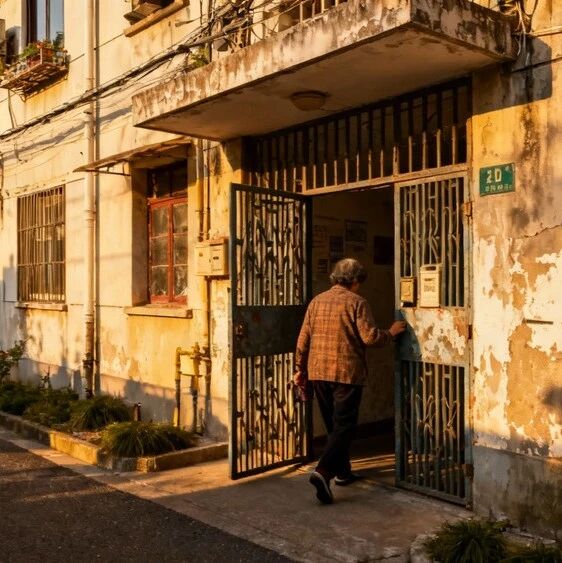
在这样的变局里,最难受的,往往不是没房的,而是——手里有两套房、三套房,甚至更多的家庭。 不是制造焦虑,而是希望你提前看懂大势,早做准备。 难题一:想卖掉变现,越来越难 先说句扎心的话: ——以前,谁家要是有两三套房,那就是妥妥的"人生赢家"; ——现在,越来越多手里握着多套房的人,反而开始慌了:有的卖不掉,有的租不出去,有的还要背着 一大堆房贷。 如果你仔细看这两年中央和各地对房地产的表态,会发现一个很明确的信号: 2025年是深度调整的一年,2026年作为"十五五"开局之年,很大概率会迎来一轮真正的"规则重塑"。 第一个难题,非常现实: ——你以为手里的房子是"资产",真想变现的时候,才发现它更像"重资产"。 最近这几年,很多地方出现了同一个现象: 二手房挂牌量持续飙升,一套房子挂出去,动不动就是半年一年没人看; 想成交,就得一降再降,"以价换量"成了常态 。 为什么会这样? 一方面,新房价格在回调,开发商打折促销、以旧换新政策不断,买家更愿意去买一手房; 另一方面,很多多套房家庭手里的都是早年买的二手房:房龄老、装修旧、小区一般,品质完全比不上 现在的新盘。 再加上,各地政策明显在"偏心"新房和改善盘: ...

陈茂波:明年香港经济可望保持良好势头 将持续巩固提升在金融市场的优势领域
Zhi Tong Cai Jing· 2025-12-28 06:17
Economic Outlook - The Hong Kong economy is expected to maintain a positive momentum in the coming year, supported by moderate global economic expansion and strong growth from mainland China and Asia [1] - The anticipated interest rate cuts are expected to enhance the business and investment climate in Hong Kong [1] Financial Market Developments - The Hong Kong stock market has shown significant performance, with the Hang Seng Index rising approximately 29% year-to-date, marking the best performance since 2017 [2] - The IPO fundraising in Hong Kong has exceeded HKD 270 billion, ranking first globally, with four listings among the top ten new stocks worldwide [2] - The average daily trading volume in the Hong Kong stock market reached nearly HKD 260 billion in the first eleven months of the year [2] Real Estate Market Trends - The residential property market remains active, with nearly 57,000 transactions recorded in the first eleven months, a year-on-year increase of about 16% [2] - Property prices have increased by approximately 3%, while rental prices have risen by about 4% [2] - The office market has also improved, with transaction volumes increasing by 74% year-on-year in the first ten months [2] Economic Growth Drivers - Hong Kong's economy has shown growth for the third consecutive year, driven by strong export performance and fixed capital investment, which rose by 2.5% in the first three quarters [3] - Private consumption has increased by 0.9% in the first three quarters, reversing the decline from the previous year [3] Financial Sector Initiatives - Hong Kong aims to enhance its position as an international financial center by attracting high-quality companies from Southeast Asia, the Middle East, and other regions to list in the city [3] - The development of green finance, fintech, and the expansion of fixed income and currency markets are key areas of focus [3] Innovation and Technology Development - Hong Kong is accelerating the establishment of an international innovation and technology hub, particularly in collaboration with cities in the Guangdong-Hong Kong-Macao Greater Bay Area [4] - The city is focusing on artificial intelligence and biotechnology as core industries, with initiatives to support their development [4][5] International Trade and Supply Chain Management - Hong Kong is enhancing its role as a trade center, providing services for mainland enterprises looking to expand internationally [5] - The establishment of a specialized program for mainland enterprises aims to support their global operations through comprehensive services [5]
国务院拟放开放宽除个别超大城市外的落户限制
Xin Lang Cai Jing· 2025-12-28 04:45
Core Viewpoint - The report presented by the State Council highlights the progress and challenges in establishing a sound urban-rural integration development system, showing an increase in urbanization rate and a decrease in the income disparity between urban and rural residents from 2019 to 2024 [1][6]. Group 1: Urbanization and Population Mobility - The urbanization rate of the national resident population is projected to rise from 62.7% in 2019 to 67% by 2024 [1][6]. - The ratio of per capita disposable income between urban and rural residents is expected to decrease from 2.64 to 2.34 [1][6]. - The report emphasizes the need for further optimization in addressing resource shortages in urban education and public housing due to population influx [1][6]. Group 2: Policy Initiatives for Urban-Rural Integration - The report outlines the removal of residency restrictions in cities with a permanent population of less than 3 million, and further relaxation of conditions in cities with populations between 3 million and 5 million [2][7]. - The proportion of non-resident students in public schools or receiving government-funded private school placements has increased to 97% [2][7]. - Approximately 500 million high-quality farmers and over 1.43 million returnees have been cultivated, with a significant number of urban talents moving to rural areas [2][7]. Group 3: Agricultural and Rural Investment - The general public budget for agriculture, forestry, and water resources is expected to reach 2.7 trillion yuan in 2024, an 18.4% increase from 2019 [3][8]. - Financial support for agriculture is increasing, with a continuous rise in agricultural loans [3][8]. - The report identifies ongoing issues in the equitable exchange of urban-rural resources and the need for improved public resource allocation [3][8]. Group 4: Future Directions for Urban-Rural Integration - Future initiatives will focus on fully integrating agricultural migrants into urban areas, including the relaxation of residency restrictions and equal access to public services [4][10]. - There will be efforts to strengthen the rural talent pool by encouraging urban professionals to serve in rural areas and enhancing training for farmers [4][10]. - The report emphasizes the need for further reforms in rural land systems and increased financial support for rural development projects [5][11].
【固收】信用债发行量环比上升,各行业信用利差涨跌互现——信用债周度观察(20251222-20251226)(张旭/秦方好)
光大证券研究· 2025-12-28 00:20
Group 1: Primary Market - In the week from December 22 to December 26, 2025, a total of 267 credit bonds were issued, with a total issuance scale of 427.70 billion, representing a week-on-week increase of 15.42% [4] - Among the issued bonds, industrial bonds accounted for 117 issues with a scale of 219.26 billion, a week-on-week increase of 34.26%, making up 51.26% of the total issuance [4] - City investment bonds totaled 110 issues with a scale of 71.36 billion, a week-on-week decrease of 18.87%, representing 16.69% of the total issuance [4] - Financial bonds had 40 issues with a scale of 137.08 billion, a week-on-week increase of 14.92%, accounting for 32.05% of the total issuance [4] - The average issuance term for credit bonds was 2.74 years, with industrial bonds averaging 2.36 years, city investment bonds 3.25 years, and financial bonds 2.35 years [4] - The overall average coupon rate for credit bonds was 2.26%, with industrial bonds at 2.12%, city investment bonds at 2.41%, and financial bonds at 2.23% [4] Group 2: Secondary Market - The total trading volume of credit bonds was 1782.75 billion, reflecting a week-on-week increase of 28.47% [7] - The top three categories by trading volume were commercial bank bonds, corporate bonds, and medium-term notes, with commercial bank bonds at 630.89 billion (up 38.88%), corporate bonds at 521.31 billion (up 15.93%), and medium-term notes at 347.64 billion (up 40.63%) [7] - In terms of credit spreads, the largest increase for AAA-rated industries was in pharmaceuticals, up 5.1 basis points, while the largest decrease was in real estate, down 1.3 basis points [6] - For AA+ rated industries, the largest increase was in household appliances, up 6.4 basis points, and the largest decrease was in textiles and apparel, down 9.8 basis points [6] - The AAA-rated credit spread increased the most in Gansu, up 8.7 basis points, while the largest decrease was in Jilin, down 2.9 basis points [6]

【宏观】特朗普如何激活美国地产:现实与挑战——解构美国系列第十六篇(赵格格/周欣平)
光大证券研究· 2025-12-28 00:20
Core Viewpoint - The article argues that Trump's housing reform is unlikely to boost the U.S. real estate market, which remains in a "weak supply and demand" state despite significant interest rate cuts by the Federal Reserve in 2024-2025 [4][5]. Group 1: Current Market Conditions - The U.S. real estate market has not entered a recovery cycle due to limited reductions in mortgage rates, which remain above 6%, significantly higher than the average of 4.3% for existing mortgages [5]. - Demand is declining due to high home prices, elevated mortgage rates, and an affordability crisis, with new and existing home sales expected to be lower in 2025 compared to 2024 [4]. - Supply is constrained by a "lock-in effect" in the existing home market and a decrease in new home supply due to rising material tariffs and interest rate fluctuations, leading to sustained high home prices [4][5]. Group 2: Future Outlook - As the 2026 midterm elections approach, Trump's housing reform is anticipated to focus on lowering mortgage costs, activating the supply market, and further interest rate cuts [6][7]. - However, significant interest rate cuts may not effectively translate to lower mortgage rates due to legislative and judicial constraints, as well as tariff risks and construction cycle delays, suggesting a baseline expectation of a weak recovery in the U.S. real estate market by 2026 [7]. Group 3: Forward-Looking Indicators - To observe the U.S. real estate cycle, it is important to construct forward-looking variables, particularly the spread between current mortgage rates and existing mortgage rates [8]. - Historical data indicates that a spread of 90-100 basis points, corresponding to around 5% mortgage rates, could signal the start of a new real estate cycle, with a corresponding 10-year U.S. Treasury yield expected to be around 3.2%-3.3% [8].

四川:因城施策控增量、去库存、优供给
Sou Hu Cai Jing· 2025-12-27 22:42
Core Insights - The Sichuan Provincial Economic Work Conference outlined six key tasks for economic development in 2024, focusing on expanding effective demand and enhancing innovation [1] Group 1: Economic Development Strategies - The first task is to expand effective demand and continuously explore new spaces for domestic demand growth [1] - The second task emphasizes the integration of technological innovation and industrial innovation to foster new productive forces [1] - The third task involves deepening reforms and expanding openness to enhance the momentum for high-quality development [1] Group 2: Social and Regional Development - The fourth task focuses on promoting coordinated development, deepening urban-rural integration, and regional collaboration [1] - The fifth task aims to ensure the improvement of people's livelihoods and enhance the quality of life [1] Group 3: Risk Management - The sixth task is to actively and prudently address risks in key areas, ensuring safety in development [1] - Specific measures include controlling increments, reducing inventory, and optimizing supply in the real estate sector [1] - The conference also highlighted the importance of utilizing various support policies to systematically resolve debt risks and stabilize energy prices [1]
张军扩:扩内需的三点思考
Xin Lang Cai Jing· 2025-12-27 14:33
Core Viewpoint - The demand issue has become the most decisive factor affecting the sustained and stable growth of China's economy, with expanding domestic demand ranking first in economic work for two consecutive years [2][3]. Group 1: Demand Issues - The main contradiction in China's economic operation has gradually shifted from the supply side to the demand side, indicating that resolving demand issues is crucial for achieving stable and sustainable economic growth [3]. - Despite various external shocks, China's economy has shown resilience, with major macroeconomic indicators remaining stable, laying a good foundation for achieving the annual growth target of around 5% [2][3]. Group 2: Consumption Demand - The insufficient consumption demand in China is attributed to both short-term market fluctuations and deeper structural issues, necessitating both immediate stimulus policies and long-term solutions [4]. - Structural reasons for low consumption rates include a long-term low consumption rate among residents, estimated to be 10-20% below the international average, indicating significant potential for expanding domestic demand [5][6]. Group 3: Investment Demand - Investment demand remains significant and should be supported through institutional and policy innovations, emphasizing that effective investment is still crucial for economic growth [8]. - The "14th Five-Year Plan" suggests that effective investment should focus on new urban construction models and enhancing rural infrastructure, with a notable emphasis on revitalizing idle rural land and improving the investment environment for private and foreign investments [8].

生娃“奖房子” 真金白银鼓励生育 | 新京报快评
Xin Jing Bao· 2025-12-27 11:33
Core Viewpoint - The policy in Zhushan County, Hubei, which rewards childbirth with housing subsidies, aims to address the declining birth rate in China by directly linking fertility incentives to housing needs, thereby reducing the financial burden on young families [1][2]. Group 1: Policy Details - The policy offers a housing subsidy of 25 square meters for a second child and 50 square meters for a third child, which can be combined for a maximum of 75 square meters, translating to a subsidy worth over 300,000 yuan based on local housing prices of 4,000-5,000 yuan per square meter [1]. - The initiative is part of a broader trend where local governments are shifting from merely advocating for childbirth to providing tangible incentives, such as free early childhood education and birth subsidies, to stimulate birth rates [1][2]. Group 2: Economic Implications - The policy is expected to alleviate housing pressures for families with multiple children, thereby sending a clear signal of governmental support for childbirth [1][3]. - By linking fertility incentives to housing, the policy may also help reduce inventory in the local real estate market and lower the barriers for rural populations to urbanize, which is particularly relevant for small and medium-sized cities [2][3]. Group 3: Broader Context - The approach of providing direct housing rewards for childbirth is seen as a step forward in encouraging fertility through tangible benefits, which could stimulate related industries and contribute to economic growth [3]. - Successful examples from other regions, such as Tianmen City, demonstrate that combining birth and housing subsidies can lead to increased real estate investment and fiscal revenue growth, indicating a positive feedback loop between fertility incentives and economic development [3].
海外买家发力!奥克兰“风水豪宅”超RV$70万成交!楼市又传重大信号,买房更难了?
Sou Hu Cai Jing· 2025-12-27 06:38
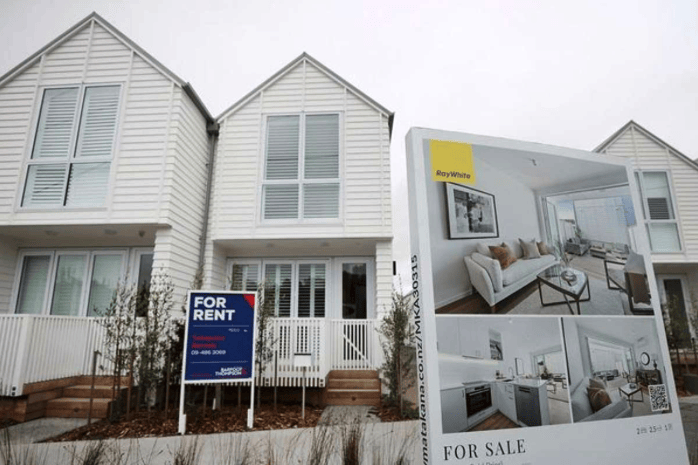
Core Insights - The New Zealand housing market data for November indicates that buying a home has become increasingly difficult for first-time buyers, with rising prices overshadowing slight decreases in mortgage rates [1][2]. Price Trends - The lower quartile price of homes in New Zealand rose from 600,000 NZD in October to 620,000 NZD in November, marking a monthly increase of 20,000 NZD or 3.3% [2][6]. - Over the past three months, this price segment has seen a total increase of 40,000 NZD, equating to a 6.9% rise since August [2][6]. Mortgage Rates - The average two-year fixed mortgage rate slightly decreased from 4.51% in October to 4.49% in November, a reduction of 0.02% or 5.9% [4][6]. - Despite this decrease, the impact on affordability for first-time buyers is minimal due to the concurrent rise in home prices [4][7]. Repayment Burden - For first-time buyers making a 10% down payment, weekly mortgage repayments increased from 720 NZD in August to 746 NZD in November, a rise of 26 NZD or 3.6% [5][6]. - For those making a 20% down payment, weekly repayments rose from 560 NZD to 579 NZD, an increase of 19 NZD or 3.4% [5][6]. - The proportion of mortgage repayments to household income for those with a 10% down payment increased from 33% to 34%, while for those with a 20% down payment, it rose from 25.6% to 26.4% [5][6]. Market Dynamics - The interplay between rising home prices and declining mortgage rates has worsened the situation for first-time buyers, who now face higher down payments and debt levels to enter the market [7]. - Analysts suggest that the recovery in lower-end market prices may indicate a shift in overall market sentiment, but it poses challenges for young buyers struggling with down payments [7]. Regional Variations - The most expensive area remains Herne Bay with a median price of 2.6 million NZD, followed by Westmere and Ponsonby at 2.2 million NZD and Remuera at 2 million NZD [8]. - The most affordable area is Wellington city center with a median price of 318,706 NZD, attributed to its status in the apartment market [13][14]. Rental Market - The rental market has shown signs of weakness, with declining rents in major cities like Auckland, Wellington, and Christchurch, which is unusual [15]. - The largest rent increase was observed in Gladstone, Wellington, with an 18% rise, while the most significant decline occurred in Long Bay, Auckland, with a 17.1% drop [15]. Luxury Market Activity - The luxury market in New Zealand has seen notable transactions, including a recent sale of a cliff-top mansion in Auckland for over 10 million NZD, highlighting continued interest from overseas buyers [18][24]. - The property was designed with feng shui principles and sold after a brief negotiation period, indicating a robust demand for high-end real estate [20][24].
楼市明年到底会不会回暖
虎嗅APP· 2025-12-27 02:45
Core Viewpoint - The article discusses the recent surge in Shanghai's real estate market, highlighting that the transaction volume has exceeded 20,000 units for two consecutive months, which is a significant achievement given the current market conditions [5][6]. Group 1: Market Trends - Shanghai's second-hand housing market has shown strong performance, with an average monthly transaction volume of 20,000 units throughout the year, which is remarkable during a perceived downturn [5]. - The current main buyers in the market are not the typical demographics, but rather long-term workers in Shanghai who are now considering purchasing homes due to favorable pricing [9][10]. Group 2: Buyer Demographics - The purchasing power of buyers has shifted significantly, with 50% of current demand now coming from properties priced below 2 million, compared to 3 million three years ago, indicating a substantial change in buyer profiles [7][8]. - Over 70% of buyers are now looking for properties priced below 3 million, reflecting a dramatic increase in the low-price segment of the market [8]. Group 3: Market Dynamics - The increase in transactions is attributed to the affordability of older, smaller properties in central areas, which are appealing to new buyers who are sensitive to price [10][11]. - The current market activity is driven by a new class of buyers who are entering the market, which could potentially lead to a broader recovery in the real estate sector [12][14]. Group 4: Future Outlook - The article expresses optimism for the upcoming year, suggesting that if the market maintains a transaction volume of 20,000 units in January, a positive trend is expected to continue into the spring [15].