钢铁

Search documents
A股市场运行周报第77期:春季攻势“结构变化”,继续坚持“两法应对”-20260124
ZHESHANG SECURITIES· 2026-01-24 07:00
Core Insights - The market has shown signs of "cooling down," with major broad indices exhibiting divergence. The weight indices, such as the Shanghai Composite and CSI 300, have fallen below the 20-day moving average, entering a phase of consolidation, while most growth indices remain above the 20-day line, indicating continued upward potential [1][4][54] - The current market state is characterized by "strong small caps and weak large caps," with weight indices in a consolidation phase and growth indices remaining active. This trend is expected to persist in the short term, while the overall nature of a "systematic slow bull" remains unchanged for the quarter [1][4][54] Market Overview - The market experienced a "cooling down" period from January 19 to January 23, 2026, with a noticeable decline in trading volume. The Shanghai Composite Index rose by 0.83%, while the Shanghai 50 and CSI 300 fell by 1.54% and 0.62%, respectively, both breaking below the 20-day moving average. In contrast, growth indices such as the CSI 500, CSI 1000, and National 2000 saw increases of 4.34%, 2.89%, and 3.33%, respectively, continuing to reach new highs in this bull market [2][12][53] - Sector performance showed that 24 out of 31 primary industries rose, with cyclical sectors like construction materials, oil and petrochemicals, steel, and real estate experiencing significant gains of 9.23%, 7.71%, 7.31%, and 5.21%, respectively. Meanwhile, the financial sector weakened, with banks and non-banking financials declining by 2.70% and 1.45% [15][53] Market Sentiment and Capital Flow - The average daily trading volume in the Shanghai and Shenzhen markets was 2.7 trillion yuan, reflecting a decrease compared to the previous week. The main futures contracts showed a premium, indicating a bullish sentiment among investors [21][27] - The latest margin trading balance was 2.69 trillion yuan, down by 0.24% from the previous week. In terms of ETFs, the most significant inflow was seen in the non-ferrous metals sector, while the coal sector experienced the largest outflow [27][32] Valuation Insights - The dynamic valuation model indicates that the valuation levels of major indices have increased. As of January 23, 2026, the PE-TTM for the Shanghai Composite Index was 17.1, at the 97.03 percentile, while the Shenzhen Component Index was at 33.31, at the 87.97 percentile. The ChiNext Index had a PE-TTM of 42.98, at the 35.39 percentile [44][45] Strategic Recommendations - Based on the assessment of "market cooling, index divergence, and the dominance of growth," it is recommended to maintain medium-term positions without fear of short-term fluctuations and to participate in the upcoming market momentum. Short-term positions should be cautious of volatility and avoid chasing highs [5][55] - The strategy includes balancing medium-term positions across sectors with high economic prospects and relatively reasonable stock prices, particularly in the "two electric and non-mechanical" sectors (electronics, new energy, chemicals, non-banking, and machinery). Additionally, consider the CSI 500, CSI 1000, and National 2000 indices for relative returns [5][55]
A股市场运行周报第77期:春季攻势“结构变化”,继续坚持“两法应对”
ZHESHANG SECURITIES· 2026-01-24 06:24
Market Overview - The A-share market has shown signs of "cooling," with major indices displaying divergence, particularly the Shanghai Composite Index rising by 0.83% while the Shanghai 50 and CSI 300 fell by 1.54% and 0.62%, respectively, both breaking below the 20-day moving average[12] - Growth indices such as the CSI 500, CSI 1000, and National CSI 2000 have performed better, rising by 4.34%, 2.89%, and 3.33%, respectively, continuing to reach new highs in this bull market[12] Sector Performance - Among the 31 sectors, 24 saw gains while 7 experienced declines, indicating a trend of lagging sectors catching up, with cyclical industries like construction materials, oil and petrochemicals, and real estate rising by 9.23%, 7.71%, and 5.21% respectively[15] - The financial sector weakened, with banks and non-bank financials declining by 2.70% and 1.45% respectively, while the previously strong communication sector showed signs of reversal, dropping by 2.12%[15] Market Sentiment and Capital Flow - The average daily trading volume in the Shanghai and Shenzhen markets decreased to 2.7 trillion yuan, reflecting a decline in market activity[22] - The margin trading balance fell by 0.24% to 2.69 trillion yuan, with the most significant net inflow seen in the non-ferrous ETF, amounting to 19.5 billion yuan[27] Economic Indicators - China's GDP for 2025 exceeded 140 trillion yuan, growing by 5.0% year-on-year, with industrial output increasing by 5.9% and service sector growth at 5.4%[49] - The People's Bank of China lowered the re-lending and re-discount rates by 0.25%, with new rates set at 0.95%, 1.15%, and 1.25% for different terms[49] Investment Strategy - The report suggests maintaining a balanced mid-term portfolio in sectors with high economic activity and reasonable valuations, particularly in the "two electricity, chemical, non-bank, and machinery" sectors, while also considering lower-positioned media and computer stocks[53] - Investors are advised to focus on the CSI 500, CSI 1000, and National CSI 2000 for relative returns, especially in a "broad-based rally" scenario[53]
严查地方违规补贴、整顿政府采购秩序,多部委发布会为2026年“反内卷”划重点
Xin Lang Cai Jing· 2026-01-24 04:11
Core Viewpoint - The Chinese government is enhancing its procurement policies to ensure equal treatment of domestic and foreign products, aiming to eliminate discrimination and promote a unified national market by 2026 [2][3]. Group 1: Government Procurement Policy - Starting January 1, 2026, the government procurement policy will officially implement equal treatment for all types of suppliers, prohibiting discrimination based on ownership, organization form, equity structure, investor nationality, or other unreasonable conditions [3]. - The Ministry of Finance has encouraged foreign entities to report any violations of these procurement regulations, emphasizing transparency and fairness in the procurement process [2]. Group 2: Economic Development and Market Competition - The Chinese government is focusing on building a unified national market and addressing "involution" in competition as key tasks for high-quality economic development [3][4]. - Recent data indicates a positive trend in economic indicators, with the core Consumer Price Index (CPI) rising by 1.2% year-on-year in December 2025, and manufacturing profits increasing by 5.0% from the previous year [4][5]. - The government acknowledges existing issues of weak demand and insufficient supply, emphasizing the need to expand domestic demand and optimize supply to achieve a dynamic balance in the economy [5]. Group 3: Regulatory Measures and Market Order - The government plans to implement targeted measures to enhance the effectiveness of the unified market, including refining market operation rules and addressing barriers in procurement and investment [7][8]. - A comprehensive approach will be taken to regulate local government economic promotion behaviors, particularly concerning illegal subsidies and incentives in attracting investments [8]. - The establishment of a clear framework for encouraging and prohibiting local government actions in investment will be prioritized to ensure compliance and fair competition [8].


十九城产业新坐标·河南经济新方位丨周口:港口焕新 通道生“金” 周口临港产业驶入新蓝海
He Nan Ri Bao· 2026-01-24 03:38
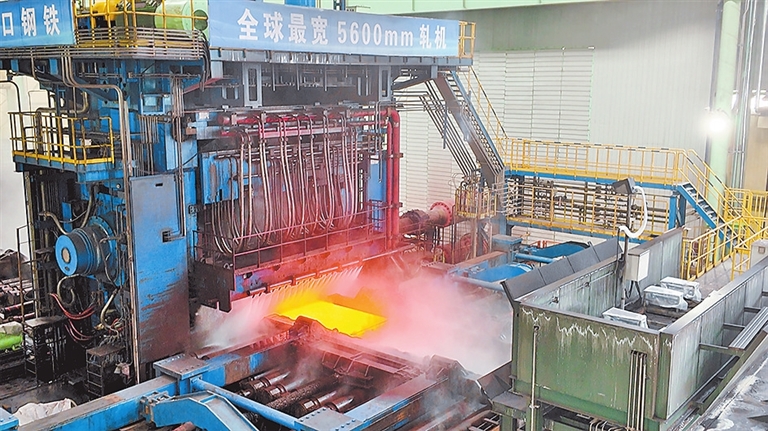
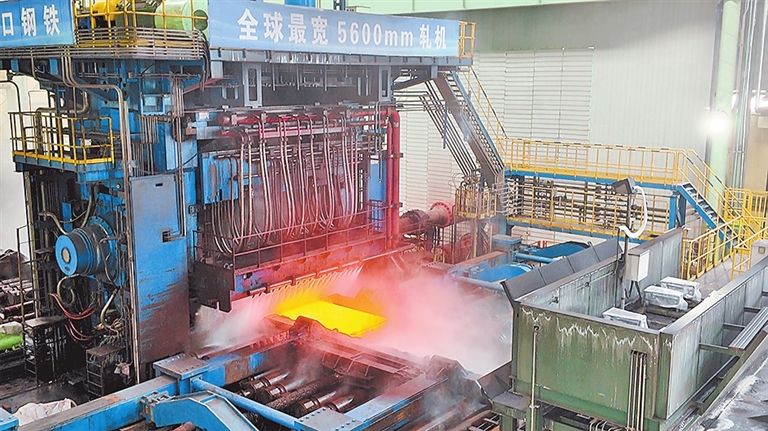
Group 1 - The company, Zhou Steel, operates the world's first 5600mm ultra-wide plate production line, which is a core equipment for producing high-quality special steel plates, with a maximum width of 5300mm and thickness of 300mm [1][4] - The production line is fully operational and features remote intelligent control across multiple processing stages, enhancing efficiency and precision in steel production [1] - Zhou Steel's strategic location near the Shenqiu Port allows for significant cost savings in transportation, with water transport costing approximately 22 yuan per ton compared to 110 yuan per ton by rail [3][5] Group 2 - Zhoukou has developed a modern inland port system, "One Port, Ten Areas, One Core," which is the largest and most capable inland port cluster north of the Yangtze River, facilitating economic transformation from "channel economy" to "economic channel" [3][5] - The port has opened 43 domestic and international shipping routes, including 19 foreign trade routes, expanding the cargo distribution range to cover nine provinces in central and western China and major global trade zones [3] - The province's plan aims for the total scale of the coastal industry to exceed one trillion yuan by 2030, with more than nine coastal industrial clusters expected to emerge [5]

山东一线报道 |“超碳一号”,年可发电1.2亿度
Xin Hua Wang· 2026-01-24 02:17
Core Viewpoint - The "Supercritical Carbon Dioxide Working Fluid High-Efficiency Power Generation Technology" is being promoted by leading steel and chemical companies in Shandong, aiming to accelerate green, low-carbon, and high-quality development [1][2]. Group 1: Technology and Development - The "Supercarbon No. 1" is the world's first commercial supercritical carbon dioxide power generation unit, achieving full industry chain autonomy and has operated safely for 1500 hours without faults [1]. - This technology represents a significant transformation in steam power generation, leading Western countries by at least five years [1]. - The technology offers higher efficiency, a more compact system, flexible response, and environmental friendliness, aligning with the green transformation needs of traditional industries in Shandong [1]. Group 2: Economic Impact - The investment payback period for "Supercarbon No. 1" is approximately five years, with an expected annual power generation of 120 million kWh and annual revenue exceeding 70 million yuan, while saving around 20,000 tons of standard coal annually [2]. - The technology can be widely applied in industries such as steel, coking, and cement, effectively converting heat sources generated during production into electricity [2]. Group 3: Industry Collaboration and Future Plans - Several companies, including Shandong Steel Group and Shandong Hengxin Group, have signed agreements to construct supercritical carbon dioxide power generation units by 2026 [2]. - Shandong Hengxin Group plans to integrate this technology into a new gas-steam combined cycle power generation system, while Shandong Steel Group will apply it in a new sintering machine at its Rizhao premium steel base [2]. Group 4: Policy and Strategic Importance - Shandong is focusing on becoming a pioneer in green, low-carbon, and high-quality development, emphasizing the importance of energy technology transformation and the need for a clean, low-carbon energy transition [3]. - The development of "Supercarbon No. 1" reflects the integration of technological and industrial innovation, positioning the company as a leader in green low-carbon technology engineering [3].

2026年1月中旬流通领域重要生产资料市场价格变动情况
Guo Jia Tong Ji Ju· 2026-01-24 01:32
Core Viewpoint - The monitoring of market prices for 50 important production materials across nine categories indicates a mixed trend in price changes, with 29 products experiencing price increases, 13 seeing declines, and 8 remaining stable in mid-January 2026 compared to early January 2026 [2][4]. Group 1: Price Changes in Major Categories - In the black metal category, rebar prices increased by 10.9 yuan per ton (0.3%), while seamless steel pipe prices decreased by 2.7 yuan per ton (-0.1%) [4]. - In the non-ferrous metal category, electrolytic copper rose by 85.9 yuan per ton (0.1%), while lead ingot prices fell by 107.1 yuan per ton (-0.6%) [4]. - Chemical products showed varied results, with pure benzene increasing by 231.3 yuan per ton (4.4%) and sulfuric acid decreasing by 3.2 yuan per ton (-0.3%) [4]. Group 2: Energy and Coal Prices - In the petroleum and natural gas sector, liquefied natural gas (LNG) prices rose by 121.7 yuan per ton (3.4%), while gasoline prices fell by 4.9 yuan per ton (-0.1%) [4]. - Coal prices also varied, with anthracite coal increasing by 41.2 yuan per ton (4.8%) and coking coal rising by 7.1 yuan per ton (0.5%) [4]. Group 3: Agricultural and Forestry Products - In agricultural products, soybean prices increased by 12.9 yuan per ton (0.3%), while white sugar prices decreased by 1.5 yuan per ton (0.0%) [5]. - In forestry products, natural rubber prices fell by 7.5 yuan per ton (0.0%), and pulp prices decreased by 99.7 yuan per ton (-1.8%) [5]. Group 4: Monitoring Methodology - The price monitoring includes data from over 2,000 wholesalers, agents, and distributors across more than 300 trading markets in 31 provinces [8][9]. - The methodology involves on-site price collection, as well as inquiries via phone and electronic communication [9].
【环球财经】世界钢铁协会:2025年俄罗斯钢铁产量同比减少4.5%
Xin Hua Cai Jing· 2026-01-24 01:28
世界钢铁协会报告显示,2025年,俄罗斯钢铁产量约为6780万吨,比上年减少4.5%。 2025年12月,俄罗斯钢铁产量为580万吨,比上年同期减少4.4%。 2025年12月,俄罗斯和其他独联体国家以及乌克兰的钢铁产量为690万吨,较上年同期下降2.7%。2025 年全年,这些国家的钢铁产量为8130万吨,同比下降4.4%。 根据该协会报告,2025年全年全球粗钢产量约为18.494亿吨,比上年减少2%。 世界钢铁协会是世界上最大的工业协会之一,其成员公司约占全球钢铁产量的85%。 (文章来源:新华财经) ...
北方首个,“10万亿俱乐部”再扩容
Mei Ri Jing Ji Xin Wen· 2026-01-24 00:25
Economic Growth in Shandong - Shandong Province is projected to achieve a GDP of 10,319.7 billion yuan in 2025, marking a 5.5% increase from the previous year, making it the third province in China and the first in Northern China to surpass the 10 trillion yuan GDP milestone [1] - By 2025, the primary industry in Shandong is expected to reach an added value of 677.5 billion yuan (up 4.0%), the secondary industry 40,541 billion yuan (up 5.0%), and the tertiary industry 55,881 billion yuan (up 6.1%) [1] Industrial and Economic Indicators - Shandong's industrial added value is anticipated to grow by 7.6%, retail sales of consumer goods by 5.1%, and total foreign trade by 4.5%, all exceeding the national average [3] - The province has faced challenges due to a high reliance on traditional industries, which constituted 70% of its economy, prompting a necessary transition towards modernization and innovation [3] Transition and Development Strategy - The establishment of the Shandong New and Old Kinetic Energy Conversion Comprehensive Experimental Zone in 2018 initiated a dual approach to upgrade traditional industries while fostering new sectors [3] - During the 14th Five-Year Plan period, Shandong's industrial added value increased from 2.3 trillion yuan to 3.3 trillion yuan, reflecting a growth of over 40% [3] - By 2025, advanced production capacity in key industries like steel and petrochemicals is expected to exceed 40%, with high-tech industries accounting for 55.3% of the total output [3] Future Economic Goals - Shandong aims to become a significant economic growth pole in Northern China, with plans to elevate Qingdao to a 2 trillion yuan economy and support cities like Weifang, Linyi, and Jining in reaching the trillion yuan mark [3][4]
全省规上工业增加值同比增长8.4% 拼出产业新速度
He Nan Ri Bao· 2026-01-23 23:51
Group 1 - The core viewpoint highlights the resilience and growth of Henan's industrial sector, with significant increases in industrial value and investment despite economic pressures, showcasing a robust recovery and transformation [1] - Henan's industrial added value increased by 8.4% year-on-year, while industrial investment grew by 13.3%, ranking first and second among ten major industrial provinces in China [1] - The province is focusing on enhancing its industrial chains, with notable projects such as the first large-diameter bearing for the world's largest radio telescope and the launch of a rocket assembly base, indicating a strategic push in aerospace and new energy vehicles [1] Group 2 - The emergence of "zero-carbon factories" and the establishment of numerous intelligent and green factories reflect a shift towards sustainable and digital manufacturing practices in Henan [2] - The province has cultivated 16 top-tier intelligent factories, 323 provincial-level intelligent workshops, and 467 green factories, leading to an 8.3% reduction in energy consumption per unit of industrial added value [2] - Traditional industries are undergoing transformation, with significant advancements in high-tech manufacturing projected to grow by 16.6% by 2025, indicating a strong future for innovative sectors [2] Group 3 - A comprehensive support system for enterprises has been established, including a monitoring mechanism for 1,600 key companies and incentives for full-capacity production, demonstrating a commitment to fostering industrial growth [3] - The province has effectively addressed issues raised by 12,000 enterprises through initiatives aimed at enhancing government-business interactions, showcasing a proactive approach to industrial challenges [3] - By 2025, Henan's industrial sector is expected to emerge stronger, symbolizing the province's ambition to transition from an agricultural base to a manufacturing powerhouse [3]


十九城产业新坐标·河南经济新方位丨港口焕新 通道生“金” 周口临港产业驶入新蓝海
He Nan Ri Bao· 2026-01-23 23:37
Core Insights - The article highlights the operational success of Zhoukou Steel's (周钢) world-first 5600mm ultra-wide plate production line, which is a significant advancement in the steel industry [1][3] - Zhoukou's strategic positioning as a modern inland port is emphasized, showcasing its development into a logistics hub that enhances regional economic growth [2][4] Group 1: Company Developments - Zhoukou Steel's ultra-wide plate production line, which is 17 meters tall and weighs 3100 tons, is set to begin trial operations by the end of October 2024, allowing for plate widths up to 5300mm and thicknesses up to 300mm [1] - The company has optimized its logistics by utilizing water transport for nearly all of its iron ore, with an annual transport volume of approximately 3 million tons, significantly reducing transportation costs compared to rail [4] Group 2: Industry and Regional Impact - Zhoukou's port development strategy includes the establishment of a modern inland shipping hub, with the first phase of the Zhoukou Port Center scheduled to open in December 2025, marking it as the first dedicated container terminal in the province [2] - The port system, described as "one port, ten zones, and one core," aims to transform the regional economy from a "channel economy" to an "economic channel," facilitating better integration into the national market [4] - By 2030, the province's port industry is projected to exceed a trillion yuan in total scale, with the emergence of over nine trillion-level port industry clusters, positioning Zhoukou at the forefront of this development [4]