啤酒

Search documents
食品饮料行业周报:板块回调,优质公司投资价值逐步显现-20250802
Shenwan Hongyuan Securities· 2025-08-02 13:41
Investment Rating - The report maintains a positive outlook on the food and beverage industry, particularly on leading traditional consumer companies that have adjusted and now possess long-term investment value from a dividend and yield perspective [3][7]. Core Insights - The report highlights that the head companies in traditional consumption have adjusted and now show long-term investment value. The food stocks with new consumption characteristics are expected to differentiate based on performance in the future. The report emphasizes the importance of identifying companies with long-term competitiveness and improvement potential [3][7]. - In the liquor sector, slow macro demand recovery and limited consumption scenarios are expected to exert pressure on sales and financial statements this year. Key recommendations include Guizhou Moutai, Shanxi Fenjiu, and Luzhou Laojiao, with a focus on Wuliangye, Jiansi Yuan, and Yingjia Gongjiu [3][7]. - For the mass consumer goods sector, cost advantages are expected to support profitability, with new products and channels driving growth. The report recommends head companies in mature sectors like dairy and beer, while also highlighting growth opportunities in new retail formats and categories driven by consumer trends [3][7][9]. Summary by Sections 1. Weekly Insights on Food and Beverage - The food and beverage sector experienced a decline of 2.17% last week, with liquor down 2.40%, underperforming the Shanghai Composite Index by 1.24 percentage points [6][42]. - The report notes that the liquor sector's heavy stock holdings have decreased, with the white liquor sector's heavy stock holdings accounting for 6.79% of fund equity investments, down 1.71 percentage points from the previous quarter [8][9]. 2. Market Performance of Food and Beverage Sectors - The food processing sector outperformed the benchmark by 0.36 percentage points, while other sectors like beverage dairy and liquor underperformed by 0.54 and 1.32 percentage points, respectively [42][43]. 3. Key Company Updates - Companies like Yili and Qingdao Beer are highlighted for their strong performance and growth potential, with Yili expected to improve its financials due to inventory reduction and brand clearing strategies [9][12]. - New product launches from companies like Jinzai Foods and Youyou Foods are noted, with a focus on innovative products and channel growth driving future performance [12][13].




消费变化,百威中国如何让啤酒讲出新故事?
Sou Hu Cai Jing· 2025-08-02 09:12
Group 1: Event and Market Trends - The "Tomorrowland" music festival will debut its first official indoor version in Shanghai this November, marking its first appearance in China [1] - The event has generated significant buzz on social media, with nearly 300,000 discussions, and will feature a diverse lineup of international DJs and cutting-edge visual effects [1] - The collaboration between Budweiser China and the event is particularly significant amid fluctuations in the beer industry [1] Group 2: Changing Consumer Behavior - Beer consumption patterns in China are shifting, especially among younger adults, who prefer outdoor experiences like music festivals over traditional venues [3] - The role of beer has evolved into being an "emotional companion" in these new social settings [3] - The number of new beer SKUs launched in 2024's first three quarters indicates a strong trend towards craft and fresh beer concepts, accounting for over 50% of all new SKUs [4] Group 3: Competitive Landscape - The competition among major beer brands is intensifying, particularly in the price segments above 10 yuan and between 6-8 yuan [5] - Budweiser Group's strategy focuses on flagship brands, with Budweiser and Harbin Beer being the primary brands in China, aiming to create differentiation in the market [5][6] - The "flagship brand, mega platform" strategy is designed to connect major brands with globally relevant events, contributing to a projected 4.6% net profit growth for Budweiser in 2024 [5][6] Group 4: Channel and Digital Transformation - The traditional on-premise beer sales channels are declining, while non-on-premise channels like convenience stores are experiencing strong growth [11] - Budweiser China has developed a new digital model through its B2B platform "BEES," which has expanded to over 320 cities [12] - Non-on-premise channels now account for approximately 50% of Budweiser China's business, with higher profit margins compared to on-premise channels [12] Group 5: Product Innovation and Health Trends - There is a growing consumer preference for healthier beer options, with products like "0 sugar" and non-alcoholic beers gaining popularity [12] - Budweiser's new Harbin zero-sugar product saw a 70% sales increase among young consumers in the first quarter of this year [12] - The market for non-alcoholic beer is projected to reach 69.1 billion yuan by 2029, reflecting a significant trend towards health-conscious consumption [12]



百威亚太上半年净利大跌24.4%:中国市场遭遇夹击,高端领域“腹背受敌”
Hua Xia Shi Bao· 2025-08-02 08:20
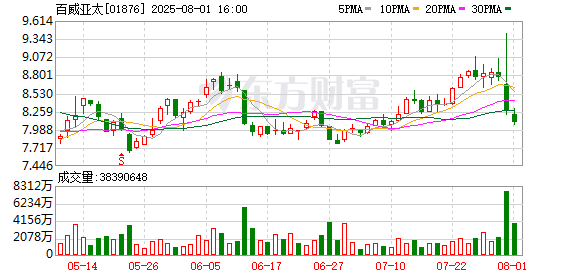
Core Insights - Budweiser APAC continues to show no signs of recovery in its performance, with sales, revenue, and net profit all declining in the first half of 2025 compared to the previous year, particularly in the Chinese market [2][3][4] - The company has faced ongoing pressure from a deteriorating external consumption environment and has shifted its strategic focus towards the popular 8-10 RMB price segment, although competitors like Yanjing Beer and China Resources Beer have already established a presence in this market [2][5][6] Financial Performance - In the first half of 2025, Budweiser APAC's sales volume was 4.363 billion liters, a year-on-year decrease of 6.3%, with revenue at $3.136 billion, down 7.7%, and net profit at $409 million, down 24.4% [3][4] - The company's revenue from the Western Asia-Pacific region, which includes China, accounted for $2.522 billion, representing 80.4% of total revenue, but also saw a decline of 8.3% year-on-year [3] Market Challenges - The Chinese market remains weak, with sales down 8.2% and net revenue down 10.2% in the first half of 2025, continuing a trend of over 10% declines in 2024 [4][5] - The new CEO, Cheng Yanjun, acknowledged that the poor performance in China is due to regional layout issues and weak on-premise channels, compounded by over-reliance on coastal provinces and a lack of expansion in non-on-premise channels [4][6] Competitive Landscape - The high-end beer market in China is facing significant competition, with brands like China Resources Beer and Qingdao Beer gaining market share, while Budweiser APAC's high-end strategy has been hindered by late entry into the sub-premium segment [5][6] - Analysts suggest that while Budweiser APAC's late entry into the 8-10 RMB price segment presents challenges, there are still opportunities to leverage the Harbin brand in non-on-premise channels [6][7] Strategic Adjustments - Budweiser APAC is reallocating resources from the super-premium segment to focus on the core++ (8-10 RMB) segment, with plans to invest more in the Harbin brand and enhance marketing efforts in non-on-premise channels [5][6] - The company aims to maintain brand premium and visibility through sports/IP marketing and to innovate differentiated products to meet consumer demands in the competitive landscape [7]
百威亚太(01876.HK)2025年中报点评:延续去库 务实调整
Ge Long Hui· 2025-08-01 19:21
Core Viewpoint - The company reported a decline in revenue and profitability for the first half of 2025, with a total revenue of $3.14 billion, a normalized EBITDA of $980 million, and a normalized net profit of $470 million, reflecting year-on-year decreases of 7.7%, 10.6%, and 14.1% respectively [1] Group 1: Financial Performance - In Q2 2025, the company achieved a revenue of $1.68 billion, with a year-on-year decline of 4.6% in reported terms and 3.9% in organic terms [1] - The normalized EBITDA for Q2 2025 was $500 million, showing a year-on-year decrease of 5.7% in reported terms and 4.5% in organic terms [1] - The normalized net profit for Q2 2025 was $240 million, reflecting a year-on-year decline of 6.3% [1] Group 2: Regional Performance - In the Asia-Pacific West region, revenue declined by 2.7% year-on-year in Q2 2025, while normalized EBITDA showed a 1.4% organic growth due to a low base effect [1] - The China region continued to experience inventory reduction, with a revenue decline of 6.4% year-on-year in Q2 2025, driven by policy impacts and a focus on inventory reduction [1] - The Indian market showed strong growth in high-end and ultra-high-end products, offsetting the weak demand in China, contributing to a more stable performance in the Asia-Pacific West region [1] Group 3: Future Outlook - The company expects to continue its inventory adjustment in Q3 2025, with a potential return to normal growth in Q4 2025 due to low base effects [3] - The non-current drinking channel in China is being expanded, with high-end and ultra-high-end products gaining a larger share compared to current drinking channels [3] - The Indian region is anticipated to maintain its growth momentum, with double-digit growth in high-end and ultra-high-end products [3]
百威亚太(1876.HK)2025年半年度业绩点评:销量继续承压 吨价已止跌回升
Ge Long Hui· 2025-08-01 19:21
Core Insights - Budweiser APAC reported Q2 2025 revenue of $1.675 billion, with an organic year-on-year decline of 3.9% [1] - Normalized EBITDA for Q2 2025 was $498 million, reflecting an organic year-on-year decrease of 4.5% [1] - Net profit attributable to the parent company was $175 million, down 31.1% year-on-year [1] Revenue and Profitability - Q2 2025 sales volume reached 23.887 million hectoliters, showing an organic year-on-year decline of 6.2% [1] - Revenue per hectoliter increased by 2.4% year-on-year in Q2 2025 [1] - Gross margin for Q2 2025 was 51.8%, with an organic year-on-year increase of 0.71 percentage points [1] - Normalized EBITDA margin was 29.7%, reflecting an organic year-on-year decrease of 0.21 percentage points [1] Regional Performance - In the Western Asia-Pacific region, Q2 2025 revenue and normalized EBITDA saw organic year-on-year declines of 2.7% and increases of 1.4%, respectively, with sales volume down 5.6% [2] - In the Eastern Asia-Pacific region, Q2 2025 revenue and normalized EBITDA experienced organic year-on-year declines of 8.4% and 26.5%, respectively, with sales volume down 10.4% [2] - In South Korea, Q2 2025 sales volume saw a high single-digit decline, primarily due to early shipments, while revenue management measures led to low single-digit growth in revenue per hectoliter [2] China Market Insights - In China, Q2 2025 revenue and normalized EBITDA experienced organic year-on-year declines of 6.4% and 4.0%, respectively, with sales volume down 7.4% [3] - Despite the decline in sales volume, revenue per hectoliter increased by 1.1% year-on-year due to product mix optimization [3] - The company has focused on non-immediate consumption channels, which have shown year-on-year growth in both sales volume and revenue [3] Inventory Management and Future Outlook - The company has been actively managing inventory, achieving a reduction in inventory levels compared to the previous year and significantly below the industry average [3] - The weak performance in the immediate consumption channel is expected to continue into the second half of the year, with ongoing inventory control measures [3] - Profit forecasts for net profit attributable to the parent company have been revised down for 2025-2027 to $690 million, $737 million, and $782 million, reflecting decreases of 8%, 8%, and 7%, respectively [3]
德统计局:德国啤酒销量跌至自1993年统计以来最低水平
news flash· 2025-08-01 19:02
Core Insights - German beer sales have dropped to the lowest level since statistics began in 1993, with sales falling below 4 billion liters for the first time in the first half of 2025 [1] - In the first half of this year, beer sales decreased by 6.3% (26.2 million liters) compared to the same period last year, totaling 3.9 billion liters, continuing the downward trend in German beer sales [1] - Beer sales in the first half of 2020 were approximately 4.3 billion liters, indicating a significant decline over the past few years [1] Sales and Consumption - Over 80% of total beer sales are for domestic consumption, with domestic sales decreasing by 6.1% [1] - Exports of beer also saw a decline, dropping by 7.1% [1]
百威亚太(01876):边际有改善,前路仍漫长
Haitong Securities International· 2025-08-01 15:10
Investment Rating - The report maintains a "Neutral" rating for Budweiser Brewing Co APAC with a target price of HK$7.90, while the current price is HK$8.09 [2][6]. Core Insights - The company is experiencing marginal improvements, but the recovery process is slower than expected, with total sales volume in 25H1 declining by 6.1% year-on-year and revenue decreasing by 5.6% year-on-year [3][10]. - The Chinese market continues to face challenges, with sales volume and revenue down by 8.2% and 9.5% respectively in 25H1, although there are signs of marginal improvement in Q2 [4][11]. - The South Korean market is undergoing structural adjustments, while the Indian market shows resilience with double-digit revenue growth in Q2 [5][12]. Financial Performance Summary - For 2024A, the company expects revenue of US$6.246 billion, with a projected decline of 8.9% year-on-year. The net profit is estimated at US$726 million, reflecting a decrease of 14.8% [2][9]. - The gross profit margin is projected to be 50.4% for 2024A, with a gradual increase to 51.1% by 2027E [2][9]. - The earnings per share (EPS) for 2025-2027 are estimated to be USD 0.05, USD 0.05, and USD 0.06 respectively [6][13]. Market Analysis - In the Chinese market, the on-premise channel remains weak, and the transformation is still in its early stages, with a focus on premium products in non-on-premise channels [4][11]. - The company has been actively managing inventory, achieving better-than-historical inventory levels by the end of Q2 2025, which supports future sales growth [4][11]. - In South Korea, the company implemented a price increase of 2.9% for core brands, but the market response was neutral, and overall performance remains under pressure [5][12]. Investment Recommendations - The report suggests that if the company can overcome challenges related to channel transformation and expense control, it may reverse the decline in market share in China, laying the groundwork for medium- to long-term recovery [6][13].
【领导调研】国家市场监管总局发展研究中心党委书记、主任叶宝文赴顺义调研
Sou Hu Cai Jing· 2025-08-01 14:54
Core Viewpoint - The visit by the National Market Supervision Administration's Development Research Center emphasizes the importance of enhancing market regulation and service efficiency to support regional economic development [8]. Group 1: Field Research - The delegation inspected various facilities including inspection and testing rooms, grassroots party building, law enforcement equipment, and information technology construction at the Nanfaxin Market [5]. - At the Yanjing Beer Group, the delegation learned about the company's scale, economic indicators, main products, and quality development strategy [5]. Group 2: Discussion and Feedback - The head of the district market supervision bureau reported on key initiatives such as quality chain strengthening, work style construction, and the promotion of a positive market supervision atmosphere [6]. - The director of the Development Research Center praised the local market supervision efforts, highlighting the proactive approach of the staff and their contribution to regional development [8]. Group 3: Strategic Recommendations - The administration emphasized the need to clarify the purpose of market regulation as service-oriented, advocating for optimized regulatory methods and the use of the "reductive principle" to ensure business development [8]. - There is a call to explore ways to enhance service efficiency through the application of artificial intelligence in grassroots market supervision [8]. - The importance of fulfilling primary market supervision responsibilities and maintaining a good business order in the region was stressed [10]. - Recommendations were made to improve consumer rights protection through reforms such as complaint diversion and small-value arbitration to enhance the consumption environment and boost market confidence [10]. - The necessity of adhering to lawful administration and ensuring that public power operates within the framework of the law was highlighted [10].

青岛国际啤酒节火热进行,啤酒美食均“上新”
Xin Lang Ke Ji· 2025-08-01 14:03
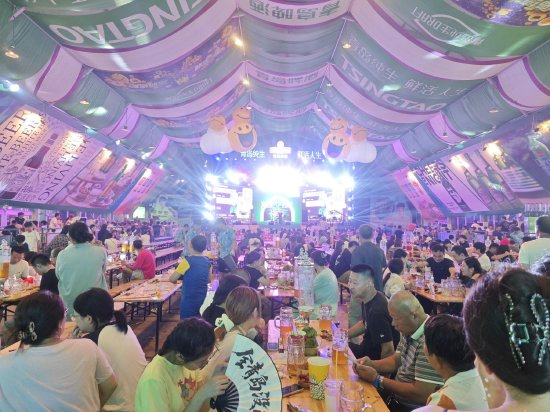
值得注意的是,今年首次亮相的1903大蓬的"啤酒交易所"火爆出圈。除了本地游客外,还有大量外地游 客围观拍照打卡。 8月1日,近日第35届青岛国际啤酒节正在举行。本届啤酒节首次推出专属IP定制酒,上新RADLER新产 品。此次RADLER新品推出的两款不同口味,一款为柠檬味果汁啤酒,一款为混合莓味果蔬汁啤酒,两 款产品外包装均以"金、绿、红、蓝"四色的啤酒节主题IP交融。 在西海岸新区金沙滩啤酒城,青岛啤酒1903大篷以"世界酒航海家"为主题全新升级打造的啤酒游轮,可 以俯瞰整个1903大篷;在老城区,1903酒馆mix打造全国独家"微醺疗愈"啤酒新范式,同时青岛啤酒还 以啤酒为主题,推出"以物换酒"、"啤酒保龄球"、"啤酒圈圈乐"、"酒搭默契考验"等趣味互动活动;在 崂山会场,青岛啤酒打造了"一城双景"的差异化交互体验。 责任编辑:刘万里 SF014 有游客表示,第一次感觉到打酒像炒股一样,"自己先买到的啤酒过一会涨价了,这种情绪价值是其他 地方难以给予的。" 另外,在西海岸和市南老城会场,青啤特派员还携带着青岛啤酒畅享欢聚打酒包,提供随时随地、想喝 就喝的新体验。今年啤酒节还新推出智能化服务,灵活的机械臂 ...
当一场国际音乐节落地,百威中国如何把握潮流密码?
36氪· 2025-08-01 13:34
Core Viewpoint - The beer industry is adapting to an emotion-driven consumption era, aiming to connect with each generation of young adults through cultural experiences and events [2][12]. Group 1: Cultural Engagement and Consumer Trends - The upcoming Tomorrowland music festival in Shanghai, initiated by Budweiser, highlights the brand's commitment to engaging with young consumers through cultural events [4][5]. - A McKinsey report indicates that 64% of consumers prioritize emotional consumption, with younger consumers placing even greater emphasis on the emotional value of products [8]. - Brands must create deeper cultural connections and experiential systems rather than relying solely on price competition to resonate with consumers [9]. Group 2: Budweiser's Strategic Approach - Budweiser's strategy focuses on "Megabrands & mega platforms," targeting global young adults' favorite IPs to foster connections [12][15]. - The brand's involvement in Tomorrowland is not just sponsorship but a key part of creating a "beer + scene + culture + social" experience [14]. - Budweiser has successfully established its flagship brands, such as Harbin Beer and Budweiser, with a 40% market share in the premium segment, according to Euromonitor [16]. Group 3: Market Performance and Innovations - Harbin Beer has seen a 70% sales increase in the young consumer segment due to its innovative zero-sugar products linked to NBA events [18]. - The "flagship brand + super platform" strategy has proven effective, allowing Budweiser to enhance its market presence and consumer engagement [19][23]. - The brand's partnerships with major cultural events like the FIFA World Cup and Tomorrowland are essential for amplifying its market influence and connecting with consumers [21][23].