汽车零部件

Search documents
汽车零部件、机器人主线周报:周五交易热度触底反弹,富临精工拟引进宁德31.75亿元战略投资-20260118
Soochow Securities· 2026-01-18 11:54
Investment Rating - The industry investment rating is "Overweight," indicating an expected outperformance of the industry index relative to the benchmark by more than 5% over the next six months [49]. Core Insights - The automotive parts sector has shown a weekly increase of 1.65%, ranking second among the SW automotive sector, with a year-to-date increase of 5.07% [2][10]. - The robotics sector has also performed well, with a weekly increase of 1.81% and a year-to-date increase of 5.62%, outperforming the automotive parts sector by 0.16% [2][22]. - Key developments include 富临精工 planning to issue 3.175 billion yuan in stock to 宁德时代, which will become a significant shareholder [2][33]. - Investment recommendations include focusing on product-oriented companies and those entering high-value segments to enhance average selling prices (ASP) in the automotive parts sector, and identifying certainty opportunities in the robotics sector [2][44]. Summary by Sections Automotive Parts Sector Weekly Review - The automotive parts sector has shown a strong performance with a 1.65% increase this week and a 5.07% increase year-to-date, ranking second in the SW automotive sector [2][10]. - The sector's PE (TTM) is at 84.66% historical percentile, and PB (LF) is at 79.21% historical percentile, indicating a favorable valuation [20]. Robotics Sector Weekly Review - The robotics index increased by 1.81% this week and 5.62% year-to-date, with a notable outperformance against the automotive parts sector [2][22]. - The latest PE (TTM) for the robotics sector is at 92.18% historical percentile, and PB (LF) is at 93.83% historical percentile, suggesting strong valuation metrics [32]. Key Company Tracking - Notable weekly performance includes 新泉股份 (+16.24%), 恒帅股份 (+11.36%), and 岱美股份 (+8.76%) [2][37]. - Significant corporate actions include 双环传动's capital increase of 100 million yuan to its subsidiary and 福达股份's completion of a convertible bond issuance of 470 million yuan [2][42]. Investment Recommendations - For the automotive parts sector, recommended stocks based on EPS include 福耀玻璃, 星宇股份, and 敏实集团, while PE recommendations include 拓普集团 and 银轮股份 [2][44].


晚间公告|1月18日这些公告有看头
第一财经网· 2026-01-18 11:37
Major Events - Rongbai Technology is under investigation by the China Securities Regulatory Commission (CSRC) for allegedly misleading statements regarding a major contract announcement [1] - Rongbai Technology clarified that the previously announced total contract amount of 120 billion yuan was an estimate and that the actual sales scale will depend on real orders and material prices [2] - LZ Group's subsidiary has signed a strategic cooperation agreement with a leading domestic new energy vehicle company to establish a joint innovation laboratory [3] - Tian Tie Technology announced that its controlling shareholder has been released on bail, and the investigation is unrelated to the company's daily operations [4] Performance Outlook - Longi Green Energy expects a net loss of 6 billion to 6.5 billion yuan for 2025 due to ongoing challenges in the photovoltaic industry, including low prices and rising costs [5] - GuiGuang Network anticipates a net loss of 1.07 billion to 1.35 billion yuan for 2025, citing increased market competition and stricter project payment requirements [6][7] - Rui Ming Technology projects a net profit of 370 million to 400 million yuan for 2025, representing a year-on-year increase of 27.58% to 37.92% [8] - Oke Yi expects a net profit of 96 million to 110 million yuan for 2025, with a year-on-year growth of 67.53% to 91.96% due to rising prices of raw materials [8] - Guolian Minsheng forecasts a net profit of 2.008 billion yuan for 2025, a 406% increase compared to the previous year, attributed to the acquisition of Minsheng Securities [9] Shareholding Changes - Chuhuan Technology's employee shareholding platform plans to reduce its stake by up to 3% [10] - San Da Membrane announced that Qingyuan (China) plans to reduce its stake by up to 3% [11]


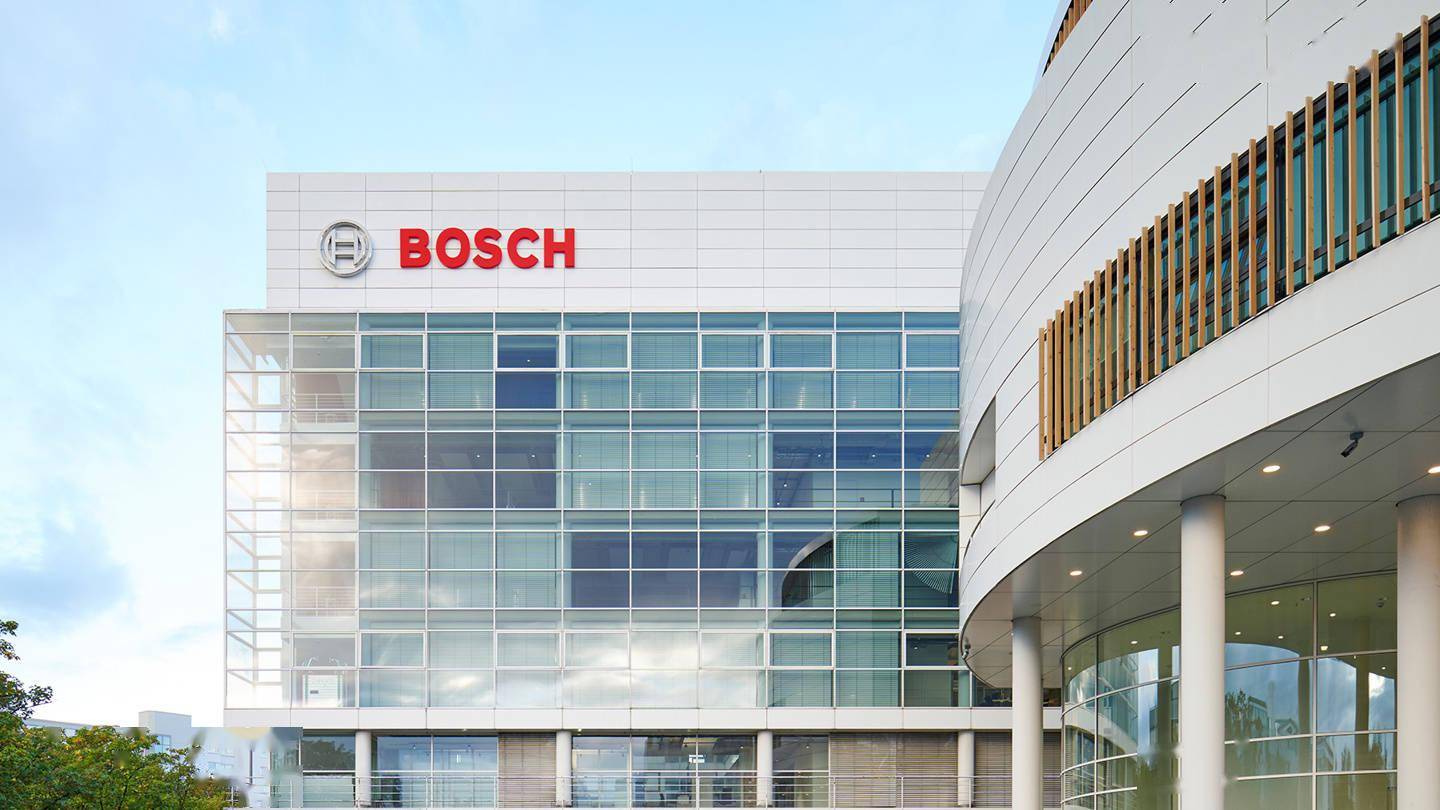
汽车零部件巨头博世CEO:2025年公司销售额未达标、利润率不足2%
Sou Hu Cai Jing· 2026-01-18 10:55
Core Viewpoint - Bosch Group's CEO Stefan Hartung informed employees that the company will not meet its sales targets for 2025, indicating challenges ahead for the automotive parts supplier [1][3] Group 1: Sales Performance - Preliminary performance data for 2025 shows Bosch's sales at approximately €91 billion (about 737.45 billion RMB), a slight increase from €90 billion in 2024 [3] - The sales growth is primarily attributed to Bosch's acquisition of Johnson Controls-Hitachi Air Conditioning for €7.4 billion; excluding this acquisition, actual revenue has declined [3] Group 2: Profitability Outlook - The internal memo indicates that Bosch's profit margin for 2025 is expected to be "significantly below 2%" of revenue [3] - CEO Hartung noted that due to tariff costs and restructuring expenses, the company anticipates a substantial decline in earnings for 2025 [3] - Bosch aims to achieve a long-term operational profit margin of at least 7% only after 2027 [3]

智能电动汽车行业深度报告:从AIDC液冷看汽零投资新机会
Western Securities· 2026-01-18 05:45
Investment Rating - The industry investment rating is "Overweight" and has been maintained from the previous rating [9]. Core Insights - Liquid cooling technology is expected to become the mainstream cooling solution for AIDC due to the increasing demand for AI computing power and the rising power density of server cabinets, which traditional air cooling cannot meet [6][24]. - The global data center liquid cooling component market is projected to reach $15.7 billion by 2027, with a CAGR of 35% from 2025 to 2027 [7][37]. - Automotive parts suppliers are expected to become upstream component suppliers for liquid cooling systems, with several companies having Tier 1 supply capabilities [8]. Summary by Sections AIDC Liquid Cooling Industry Chain and Core Components - The current mainstream solution is cold plate liquid cooling, while immersion liquid cooling offers better efficiency but is limited by high coolant costs [7][29]. - Key components for upgrading include CDU, liquid cooling plates, manifolds, and UQDs, which have a higher value proportion [7][8]. Investment Opportunities for Automotive Parts Suppliers - Automotive parts companies can leverage existing customer bases and strong business capabilities to collaborate with Taiwanese and local manufacturers in the liquid cooling supply chain [8]. - Recommended companies include Yinlun, Minth Group, Feilong, Meilixin, Chuanhuan Technology, Zhongding, Xiangxin Technology, Sulian Technology, and Pengling [8]. Liquid Cooling Technology as the Mainstream Cooling Solution - The average power density of server cabinets is expected to exceed 25 kW by 2025, making traditional air cooling inadequate [24]. - Liquid cooling can achieve a PUE of less than 1.25, aligning with policy directives for energy efficiency [6][19]. Market Size and Growth Projections - The global data center market is projected to reach $128.9 billion by 2025, with a CAGR of 13% from 2019 to 2025 [13]. - The penetration rate of liquid cooling systems in data centers is expected to grow to 30% by 2027 [41]. Key Components and Their Evolution - The evolution of liquid cooling components, particularly the liquid cooling plates and UQDs, is driven by the increasing power requirements of GPUs, with significant upgrades expected in the next generation of GPUs [46][48]. - The design of CDU is also evolving to enhance heat exchange efficiency and prevent leaks, which are critical for the industry's advancement [61][66].




全球最大的汽车供应商预警:利润率跌破2%
新华网财经· 2026-01-18 04:00
2024年,博世营业利润率已经从2023年的4.8%下降至3.5%。哈通在邮件中指出,2025年博世利润缩水部分源于高昂的高达31亿欧元的重组成本,即为裁 员等计划拨备的准备金,约占销售额的3.5%。 该报道还称,博世2025年营收约为910亿欧元,略高于2024年的900亿欧元。然而,这一增长主要得益于收购江森自控-日立公司所带来的约40亿欧元收 入。若剔除该并购影响,按可比口径计算,博世去年的实际营收实则出现下滑。 博世将于1月30日发布2025年财报数据。今年1月8日,哈通在接受媒体采访时就已对2025年财报发出预警,他预计,2025年博世盈利将出现大幅下滑,并 直言2026年也将充满挑战,公司至少要到2027年才有可能实现其设定的7%的长期营业利润率目标。他将原因归结于高昂的关税、疲软的经济增长抑制了 消费者支出。 为应对经营压力,博世的裁员措施也已启动。2025年10月,由于电动汽车需求未达预期、传统内燃机业务逐步退出以及中国市场竞争白热化等原因,博世 宣布在其核心的移动出行部门削减1.3万个工作岗位,并计划在2030年底前完成。这一轮裁员博世是继2024年宣布裁员9000人之后的又一次加码。 博世 ...

新泉股份(603179):全球化战略加速 机器人构筑成长新曲线
Xin Lang Cai Jing· 2026-01-18 02:26
Core Viewpoint - The company, a leading player in the domestic automotive interior sector, is expanding its business into the seating market to enhance its average selling price (ASP) boundaries [1] Group 1: Product and Revenue Breakdown - The company has a comprehensive product matrix for automotive interior and exterior assemblies, with major products including instrument panel assemblies, door panel assemblies, interior accessories, and bumper assemblies [1] - In the first half of 2025, the instrument panel assembly is expected to contribute 4.36 billion yuan, accounting for 64.4% of total revenue, making it the primary product [1] - Door panel assemblies and bumper assemblies are projected to account for 23.0% and 4.6% of total revenue, respectively [1] Group 2: Market and Clientele - The company has achieved coverage in both passenger and commercial vehicle sectors, with key clients including Tesla, Chery, Geely, and other leading domestic automakers [1] - In 2025, Tesla, Chery, and Geely are expected to achieve sales of 1.636 million, 2.631 million, and 3.025 million vehicles, respectively, with year-on-year changes of -9%, +8%, and +39% [1] Group 3: Business Expansion and Acquisitions - In May 2025, the company acquired Anhui Ruqi to expand into the complete vehicle seating sector, enhancing its collaboration with Chery [1] - The seating business has already contributed 200 million yuan in revenue in the first half of 2025, with an ASP close to 1,200 yuan [2] Group 4: Global Strategy and Capacity Expansion - The company is accelerating its globalization strategy and expanding production capacity, with overseas markets expected to become a new growth point [2] - In April 2025, the company invested 45 million euros in Slovakia for capacity expansion and established subsidiaries in Munich and Ingolstadt, Germany, in May and June [2] - The company has established production bases in Malaysia, Mexico, and Slovakia, with revenue and net profit from the Mexico base reaching 1.68 billion yuan and 140 million yuan, respectively, in the first three quarters of 2025 [2] Group 5: New Growth Areas - The company has established a wholly-owned subsidiary, Changzhou Xinquan Intelligent Robot Co., Ltd., with an investment of 100 million yuan to accelerate its entry into the robotics sector [3] - The subsidiary will focus on the research, design, manufacturing, and sales of components related to intelligent robots, with plans for mass production of various robot parts [3] Group 6: Financial Projections - The company is expected to achieve revenues of 16.22 billion, 19.40 billion, and 22.73 billion yuan from 2025 to 2027, with year-on-year growth rates of +22.3%, +19.6%, and +17.2% [3] - The projected net profit attributable to the parent company is expected to be 990 million, 1.31 billion, and 1.63 billion yuan for the same period, with year-on-year growth rates of +1.5%, +31.7%, and +25.2% [3]

2026年首家暂缓审议丨IPO一周要闻
Sou Hu Cai Jing· 2026-01-18 00:07
Group 1: IPO Market Dynamics - The domestic and international capital markets have seen frequent IPO activities recently, marking an active start to the year [2] - Zhejiang Xingsheng Technology Co., Ltd.'s IPO was postponed on the day of its review, becoming the first IPO project to be postponed in 2026 on the Shanghai and Shenzhen stock exchanges [2] - The Hong Kong IPO market remains active, with 20 companies submitting listing applications covering high-growth sectors such as consumer retail, semiconductors, biomedicine, agriculture, and logistics [2] Group 2: Companies Approved for IPO - Suzhou Lianxun Instrument Co., Ltd. passed the review on January 14, becoming the first company to be approved for the Sci-Tech Innovation Board in 2026 and the first in the semiconductor industry to pursue A-share listing this year [2] - Lianxun Instrument's revenue grew from 214 million yuan in 2022 to 789 million yuan in 2024, with a projected net profit of 140 million yuan in 2024 [3][4] - Hangzhou Gaote Electronic Equipment Co., Ltd. successfully passed the review for the ChiNext Board on January 13, focusing on new energy battery management systems [5] Group 3: Financial Performance of Companies - Tianhai Automotive Electronics Group Co., Ltd. reported revenues of 6.557 billion yuan in 2022, increasing to 12.523 billion yuan in 2023, with a net profit of 324 million yuan in 2022 [6] - China Academy of Sciences Shenyang Scientific Instrument Co., Ltd. achieved revenues of 698 million yuan in 2022, projected to reach 1.082 billion yuan in 2024 [8] Group 4: New Listings in Hong Kong - Five companies listed on the Hong Kong market from January 12 to 16, including global third-largest digital image sensor supplier Omnivision Technologies, which saw a first-day closing price increase of 16.22% [9] - The storage chip leader Zhaoyi Innovation debuted with a first-day closing price increase of 38.27%, reflecting strong market recognition for hard technology [9] Group 5: Upcoming IPO Applications - The hard technology sector is prominent among new applications, with companies like Weizhao Semiconductor and Platinum Electronics focusing on power management chips and server power supplies [11] - Biomedicine and consumer sectors also show promise, with companies like Yinuo Micro Pharmaceuticals and Qian Dama seeking capital to expand their market presence [11][12]
新浪财经资讯AI速递:昨夜今晨财经热点一览 丨2026年1月18日
Xin Lang Cai Jing· 2026-01-17 23:25
Group 1: Policy Changes and Industry Impact - The Ministry of Finance and the State Taxation Administration announced the cancellation of export tax rebates for photovoltaic products starting April 1, 2026, with battery product rebates gradually phasing out, aimed at curbing low-price competition in overseas markets [1][10] - The photovoltaic industry is currently not profitable, and this policy is expected to directly reduce company revenues, causing short-term pain [1][10] - Experts believe that while the policy may help rationalize overseas market prices, addressing the issue of "involution" requires technological breakthroughs and industry self-discipline [1][10] Group 2: Commodity Price Fluctuations - Recent significant increases in tomato prices across multiple regions in China have been observed, with retail prices ranging from 5 to 18 yuan per pound, and wholesale prices rising over 80% year-on-year [1][11] - The price surge is attributed to continuous rainfall during the summer and autumn seasons, leading to plant damage and reduced yields [1][11] - It is expected that prices will significantly decline by late January as new batches of tomatoes come to market [1][11] Group 3: Market Challenges and Company Responses - Shenzhen's Shui Bei and Cheng Xing Silver Tower have been accused of delivery delays, with some merchants claiming losses exceeding 300,000 yuan, and over 350 people in a rights protection group [1][12] - The past year saw a 214% increase in spot silver prices, leading many silver merchants to adopt a "payment before delivery" model, which has raised credit risks due to market volatility [1][12] - Legal experts advise investors to verify qualifications and clarify delivery and refund terms when signing contracts, emphasizing the importance of preserving evidence [1][12] Group 4: Resource Supply and Industry Development - The first shipment of 200,000 tons of iron ore from the world's largest iron ore project, Simandou, has arrived at Zhejiang Shengsi Port, marking the full integration of its supply chain [1][13] - The project, located in Guinea, has a massive reserve and is expected to supply 120 million tons annually once fully operational, significantly enhancing China's direct supply and security of iron ore resources for the steel industry [1][13] Group 5: Economic Indicators and Trends - China's total electricity consumption is projected to exceed 10 trillion kilowatt-hours for the first time in 2025, reaching 10.4 trillion kilowatt-hours, a 5% year-on-year increase, setting a new global record for a single country [1][14][15] - This milestone reflects the strong resilience and large scale of the Chinese economy, driven by stable macroeconomic conditions, increased electrification, and sustained high temperatures [1][14][15] - Notably, electricity consumption in emerging industries such as new energy vehicles and the digital economy is growing rapidly, while high-energy-consuming industries are experiencing a slowdown, indicating a shift towards high-tech and high-value-added sectors [1][14][15] Group 6: Corporate Financial Health - Bosch, the world's largest automotive supplier, has warned that its operating profit margin will fall below 2% in 2025, significantly lower than its long-term target of 7% [1][4][15] - The company's revenue is approximately 91 billion euros, but actual revenue has declined when excluding acquisition impacts [1][4][15] - The profit reduction is primarily due to restructuring costs of 3.1 billion euros and market challenges, prompting Bosch to initiate layoffs to cope with the pressures of electrification, weak demand, and intense competition [1][4][15]
全球最大汽车供应商预警利润跌破2%
Ge Long Hui A P P· 2026-01-17 23:21
Core Viewpoint - Bosch, the world's largest automotive parts supplier, is facing significant financial pressure in 2025, with profit margins expected to fall below 2%, far from the target [1] Group 1: Financial Performance - Bosch's operating profit margin is projected to decline from 4.8% in 2023 to 3.5% in 2024 [1] - The company anticipates revenues of approximately €91 billion in 2025, slightly above the €90 billion expected for 2024, primarily driven by the acquisition of Johnson Controls-Hitachi, contributing around €4 billion in revenue [1] - Excluding the impact of the acquisition, Bosch's actual revenue for the previous year showed a decline on a comparable basis [1] Group 2: Cost and Restructuring - A significant factor in the profit decline is attributed to a restructuring cost of €3.1 billion, which includes provisions for layoffs, accounting for about 3.5% of sales [1] - The CEO, Stefan Hartung, has indicated that the company will face challenges in achieving its long-term operating profit margin target of 7% until at least 2027 [1] Group 3: Economic Environment - Hartung has cited high tariffs and weak economic growth as factors suppressing consumer spending, contributing to the anticipated profit decline in 2025 and challenges in 2026 [1]
给自己列一张负面清单:打死也不碰的5类公司,投资瞬间变简单!
Sou Hu Cai Jing· 2026-01-17 23:15
Core Viewpoint - The most effective way to invest in stocks is not to find the best stocks but to first eliminate high-risk companies from consideration [1] Group 1: High Customer Concentration - Companies with excessively high customer concentration are at risk; if a major client relationship falters, the company may face immediate crisis [4] - For instance, the automotive parts company Jie Feng Power relies on Chery Automobile for over 70% of its revenue, with the top five clients accounting for more than 93% [4] - A warning signal is if a single client's revenue exceeds 50% or if the top five clients account for over 80% of total revenue [4] Group 2: Financial Integrity - Companies involved in financial fraud or under regulatory investigation are likely to experience significant performance declines and stock price drops [5] - Financial fraud is increasingly sophisticated, making it hard for ordinary investors to detect; however, regulatory warnings are clear indicators of internal control issues [5] - A company that has received a regulatory warning or has significant accounting corrections should be avoided [5] Group 3: Long-term Losses - Companies that report continuous losses are essentially "money-burning machines," often masking their poor performance with one-time gains [6] - A typical sign of such companies is two consecutive years of negative net profit or reliance on non-recurring gains for profitability [6] - The risk of delisting is increasing for companies with long-term losses, with 45 and 52 companies expected to be delisted in 2023 and 2024, respectively [6] Group 4: High Debt Levels - Companies with high debt and high shareholder pledge ratios indicate a strained financial situation, making them vulnerable to market fluctuations [7] - Jie Feng Power exemplifies high debt, with an asset-liability ratio of 78.72%, significantly above the industry average of 38.71% [7] - Warning signals include an asset-liability ratio far exceeding the industry average and shareholder pledges over 60% [8] Group 5: Industry Trends - Companies in declining industries face shrinking market demand and lack competitive advantages, leading to inevitable obsolescence [9] - Indicators of such companies include a market size decline over two consecutive years and a gross margin below the industry average [9] - Companies with low R&D investment and no core patents or technologies should also be avoided, as they are likely to be value traps [9] Conclusion - The core of investing is not about how much can be earned but ensuring that losses are minimized; establishing a negative list serves as a safety measure for investments [10] - By filtering out high-risk companies, the remaining options will be safer and more reliable [10]