黄酒

Search documents
8月15日证券之星午间消息汇总:事关稳定币!香港金管局、香港证监会联合声明
Sou Hu Cai Jing· 2025-08-15 03:47
Macroeconomic News - In July, the total retail sales of consumer goods reached 38,780 billion yuan, a year-on-year increase of 3.7%. Excluding automobiles, retail sales amounted to 34,931 billion yuan, growing by 4.3%. From January to July, total retail sales reached 284,238 billion yuan, up 4.8%, with non-automobile retail sales at 257,014 billion yuan, increasing by 5.3% [1] - Fixed asset investment (excluding farmers) from January to July was 288,229 billion yuan, a year-on-year increase of 1.6%. Private fixed asset investment saw a decline of 1.5% [1] - The industrial added value above designated size grew by 5.7% year-on-year in July, with a month-on-month increase of 0.38%. From January to July, the year-on-year growth was 6.3% [1] Industry News - The Hong Kong Monetary Authority and the Securities and Futures Commission issued a joint statement regarding recent market fluctuations related to stablecoins, emphasizing a cautious approach to licensing applications for stablecoin issuers and the need for high standards [3] - Financial regulatory authorities in Shanghai, Guangdong, Zhejiang, and Anhui have proposed measures to combat "involution" in the banking sector, targeting practices like mortgage rebates and urging banks to adopt differentiated competition strategies for sustainable development [3] - New regulations for 3C certification of mobile power lithium batteries are now in effect, prohibiting the production, import, or sale of non-certified products, leading to a significant market shift towards certified products [4] Sector Opportunities - CITIC Securities reports that Solid Oxide Fuel Cells (SOFC) have high efficiency and carbon reduction potential, with a projected market size of 7 billion USD in data centers over the next three years, suggesting investment in SOFC component manufacturers and companies involved in SOFC technology development [5] - CITIC Jiantou notes that tungsten product prices are reaching new highs due to decreased supply from domestic quotas and environmental inspections, while foreign production increases are below expectations, indicating a favorable price outlook [5] - Tianfeng Securities highlights the transformation of the yellow wine industry towards high-end, youthful, and national recognition, suggesting investment in leading companies that have successfully navigated this transition, such as Kuaijishan and Guyuelongshan [6]
A股三大指数集体低开,多元金融等板块跌幅居前
Feng Huang Wang Cai Jing· 2025-08-15 01:36
Market Overview - A-shares opened lower with the Shanghai Composite Index down 0.18%, Shenzhen Component down 0.28%, and ChiNext down 0.20% [1] - U.S. stock markets struggled to maintain gains, with the S&P 500 up 0.03% at 6468.54 points, Nasdaq down 0.01% at 21710.67 points, and Dow Jones down 0.02% at 44911.26 points [2] - Chinese concept stocks saw a collective decline, with the Nasdaq China Golden Dragon Index down 2.13% [3] Company Performance - JD.com fell 2.86% after releasing its earnings report, while Weibo surged 11.28%, Youdao rose 9.91%, and Xunlei increased by 12.72% [4] Industry Insights - **Steel Industry**: CITIC Securities suggests that strict production limits could restore steel profits, with China exporting 67.983 million tons of steel from January to July, a year-on-year increase of 11.4% [5] - **Pet Medical Industry**: CICC indicates that the pet medical sector is poised for growth, transitioning to a second growth curve in the pet economy, characterized by high barriers and profitability [6] - **Robotics in Welding**: Huatai Securities notes that the shift of teaching-free robots from steel structures to shipbuilding could benefit related companies, as these robots address labor shortages in welding [7] - **Yellow Wine Industry**: Tianfeng Securities believes that the yellow wine sector is on the verge of revival, driven by leading companies promoting nationalization, premiumization, and targeting younger demographics [8]
天风证券:龙头引领破局,黄酒复兴可期
Zheng Quan Shi Bao Wang· 2025-08-15 00:07
Core Viewpoint - The yellow wine industry is undergoing a transformation driven by policy support and cultural confidence, focusing on "premiumization, youthfulness, and nationalization" to reshape market perception [1] Industry Summary - The yellow wine market is expected to experience a breakthrough, initiating a revival path for leading companies in conjunction with the industry [1] - The transformation practices of leading companies are centered around achieving success in premiumization and nationalization [1] Company Summary - Two leading yellow wine companies, Kuaijishan (601579) and Guyuelongshan (600059), have made significant progress in premiumization and nationalization, indicating their growth potential [1]


天风证券:关注在高端化、全国化方向已经取得成就的黄酒龙头的成长空间
Mei Ri Jing Ji Xin Wen· 2025-08-15 00:02
Core Viewpoint - The yellow wine industry is expected to experience a revival driven by leading companies that are advancing nationalization, premiumization, and targeting younger demographics [1] Industry Summary - The yellow wine sector has historically faced limitations in pricing, regional distribution, market scenarios, and target demographics [1] - Recent efforts by industry leaders to promote nationalization and premiumization are breaking through these barriers [1] - The industry is poised for growth under the leadership of key players who are likely to be the first to benefit from the revival [1] Company Summary - Leading companies in the yellow wine industry are achieving success in premiumization and nationalization [1] - There is significant growth potential for these leading companies as they capitalize on the industry's revival [1]
天风证券:黄酒龙头引领破局,行业复兴可期
Xin Lang Cai Jing· 2025-08-14 23:55
Group 1 - The core viewpoint is that the yellow wine industry is experiencing a breakthrough due to the efforts of leading companies promoting "nationalization, high-end positioning, and youthfulness" [1] - The industry is expected to revive under the leadership of these key players, who are likely to be the first to benefit from the revival [1] - It is recommended to pay attention to the growth potential of leading yellow wine companies that have already achieved success in high-end and national strategies [1]
食品饮料行业2025年中报业绩前瞻
Changjiang Securities· 2025-08-14 14:14
Investment Rating - The investment rating for the food and beverage industry is "Positive" and maintained [10] Core Insights - The liquor industry is undergoing adjustments, with leading brands in high-end and regional segments remaining relatively stable. The industry is currently in a phase of active destocking, with expectations of demand recovery as macroeconomic conditions improve. High-end brands such as Kweichow Moutai and Wuliangye are recommended [5][18] - The yellow wine sector is entering a new price increase cycle, with significant concentration in the market. Leading brands are collaborating strategically and expanding into new markets, particularly focusing on high-end product lines [6][19] - The mass consumer goods segment is facing pressure from the restaurant chain demand, but certain sub-sectors like dairy products and condiments show promising growth potential. The dairy sector is expected to stabilize with the introduction of child-rearing subsidies, while condiment companies are managing inventory pressures effectively [7][22][24] Summary by Sections Liquor Industry - The liquor industry is currently in a destocking phase, with a short-term impact from policy changes. However, the demand structure differs from previous cycles, and recovery is anticipated as consumer confidence improves. High-end brands are expected to perform well, with Kweichow Moutai projected to achieve a 7% revenue growth in Q2 2025 [5][18] - The yellow wine market has seen a significant increase in concentration, with the top three brands holding approximately 43% market share as of 2023. Price increases are expected for key products, with brands like Kuaijishan actively promoting high-end offerings [6][19] Mass Consumer Goods - The dairy sector is experiencing a slight decline in production, but demand is showing signs of improvement. The introduction of a national child-rearing subsidy is expected to enhance long-term demand for dairy products [7][22] - The condiment industry is managing inventory pressures better than in previous years, with leading companies expected to achieve stable growth despite short-term challenges. Key players include Haitian Flavoring and Qianhe Flavoring [24] - The beer sector is facing challenges in the on-premise consumption channel, but companies are adapting by exploring new retail channels. Qingdao Beer and Yanjing Beer are highlighted as key recommendations [25][27] Restaurant Supply Chain - The restaurant supply chain is entering a new normal with stable demand. The total revenue for the restaurant sector in the first half of 2025 reached 27,480 billion yuan, reflecting a year-on-year growth of 4.3%. Companies are seeking new channels for growth, with recommendations for Guoquan and Lihai Foods [8][28] Key Individual Stocks - Kweichow Moutai is expected to maintain a strong market position with a projected revenue of 396.5 billion yuan in Q2 2025, reflecting a 7.26% year-on-year increase [31] - Wuliangye is anticipated to outperform the industry average, with revenue and profit growth expected to remain positive [31] - Yili Group is projected to achieve a revenue growth of around 8% in Q2 2025, benefiting from a favorable inventory situation [39]





大消费产业跟踪报告2025年第1期:黄酒复兴:破局与价值重塑
Huachuang Securities· 2025-08-08 05:06
Investment Rating - The report does not explicitly state an investment rating for the yellow wine industry Core Insights - The yellow wine industry is experiencing a revival, driven by its health benefits and cultural significance, aligning with new consumer trends towards health and quality [8][9] - The industry is currently in a phase of stock competition, with market concentration increasing among leading companies [21][31] - The yellow wine market is primarily concentrated in the Jiangsu, Zhejiang, and Shanghai regions, which account for approximately 75% of the total production [38][41] Summary by Sections 1. Introduction - The report focuses on the yellow wine industry, analyzing its current state and exploring effective paths for value reconstruction [8] 2. Overview of Yellow Wine - Yellow wine is one of the three ancient wines globally, with a history dating back over 9,000 years, deeply intertwined with Chinese culture [9][10] - It is defined as a low-alcohol fermented beverage made from various grains, with an alcohol content of 14%-20% [10][11] 3. Industry Development Status - The yellow wine industry is characterized by a small market share, accounting for less than 2% of the total wine sales in China as of 2023 [21][24] - The number of large-scale yellow wine enterprises has decreased by approximately 28% from 2016 to 2023, indicating a trend towards market concentration among leading firms [21][26] - The industry faces challenges such as limited national promotion, reliance on traditional distribution channels, and an aging consumer demographic [23][43][45] 4. Restructuring the Value of the Yellow Wine Industry - The industry is entering a golden period for value reconstruction, focusing on high-end product positioning, innovation, and cultural empowerment [8][23] - Companies are actively developing new products to cater to younger consumers, such as fruit-flavored and health-oriented yellow wines [50] - There is a shift from product consumption to cultural consumption, leveraging the historical and cultural significance of yellow wine to attract younger demographics [50] 5. Future Outlook for the Industry - The yellow wine industry is expected to enter a phase of value enhancement, with initial signs of transformation becoming evident [8][21] - Despite challenges in market penetration and consumer recognition, the industry is poised for sustainable growth as it overcomes existing difficulties [8][21]

会稽山20250807
2025-08-07 15:04
Summary of the Conference Call for Kuaijishan Company Overview - Kuaijishan is undergoing modernization and diversification efforts, including acquisitions of Wuzhanmao and Tang Song, but has not yet established a core business from these attempts [2][4] - The company aims to become a benchmark for Chinese yellow wine through high-end, youthful, and fashionable strategies under the leadership of Zhongjianxin Holdings [5] Financial Performance - The proportion of mid-to-high-end revenue increased from 60% in 2022 to 67.3% in 2024, nearing the peak of 2019 [2][7] - The compound annual growth rate (CAGR) for mid-to-high-end yellow wine revenue is projected at 21.4% from 2022 to 2024, significantly outpacing the 3.7% growth for regular yellow wine [2][7] - Revenue is heavily concentrated in the Jiangsu, Zhejiang, and Shanghai regions, accounting for 88.8% of total revenue, with Zhejiang alone contributing 62.1% [2][8] Strategic Initiatives - The company has implemented a dual-brand strategy with Kuaijishan and Lanting, focusing on enhancing brand recognition through tasting events and factory tours [4][6] - Collaborations with KOLs on platforms like Douyin have attracted younger consumers, with notable sales increases in the Shaoxing region [4][17] Market Dynamics - The yellow wine industry is experiencing a recovery, with total revenue for large-scale yellow wine enterprises reaching 8.547 billion yuan in 2023, although still below 2022 levels [12] - The industry is characterized by a high market concentration, with the top three companies (Guyuelongshan, Kuaijishan, and Jinfeng Wine Industry) holding a combined market share of approximately 43% [13] Consumer Trends - The primary consumption scenario for yellow wine remains home drinking, accounting for about 55%, but there is potential for expansion into business banquets as economic conditions improve [11] - The company is exploring innovative product categories, such as sparkling yellow wine, to appeal to younger demographics [17][18] Governance and Management - Kuaijishan has a clear governance structure following the change of controlling shareholder and actual controller in 2022, enhancing execution efficiency [9] - A share repurchase plan was initiated to boost market confidence, with 9 million shares repurchased by February 2024 [9] Future Outlook - The company is expected to benefit from price elasticity due to coordinated price increases by distributors, which could enhance profitability [19] - Despite high current valuations, there is significant potential for profit expansion as reforms deepen and new products are launched [20]
古越龙山连跌6天,鹏华基金旗下1只基金位列前十大股东
Sou Hu Cai Jing· 2025-08-01 15:46
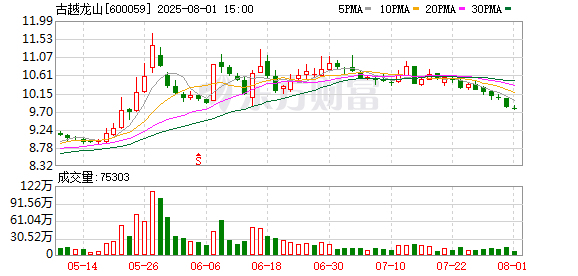
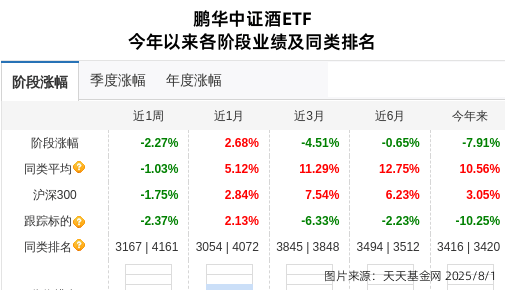
Core Viewpoint - Gu Yue Long Shan has experienced a decline in stock price over six consecutive trading days, with a cumulative drop of -5.87% [1] Company Overview - Zhejiang Gu Yue Long Shan Shaoxing Wine Co., Ltd. is a leading enterprise in China's yellow wine industry, recognized as one of the 520 national key enterprises and holds significant positions within the China Alcoholic Drinks Association [1] - The company ranks seventh among the top ten enterprises in the Chinese light industry brewing sector [1] Financial Performance - The financial report indicates that Penghua Fund's Penghua Zhongzheng Wine ETF is among the top ten shareholders of Gu Yue Long Shan, having reduced its holdings in the second quarter of this year [1] - Year-to-date performance of the ETF shows a return of -7.91%, ranking 3416 out of 3420 in its category [2] ETF Performance Summary - The ETF's performance over various periods is as follows: - Year-to-date: -7.91% - Last 6 months: -0.65% - Last 3 months: -4.51% - Last month: +2.68% - Last week: -2.27% [2] - The average performance of similar funds shows a year-to-date return of +10.56% [2] Fund Manager Profile - The fund manager of Penghua Zhongzheng Wine ETF is Zhang Yuxiang, who has a background in engineering and has been with Penghua Fund since March 2011 [3][4] - Zhang has extensive experience in quantitative research and has managed various funds, including those focused on the stock market and specific sectors [3][4]

古越龙山:累计回购公司股份1375.21万股
Zheng Quan Ri Bao· 2025-08-01 13:41
Group 1 - The company, Guyue Longshan, announced a share buyback plan, intending to repurchase 13.75 million A-shares by July 31, 2025 [2] - The repurchased shares represent 1.51% of the company's total share capital [2]