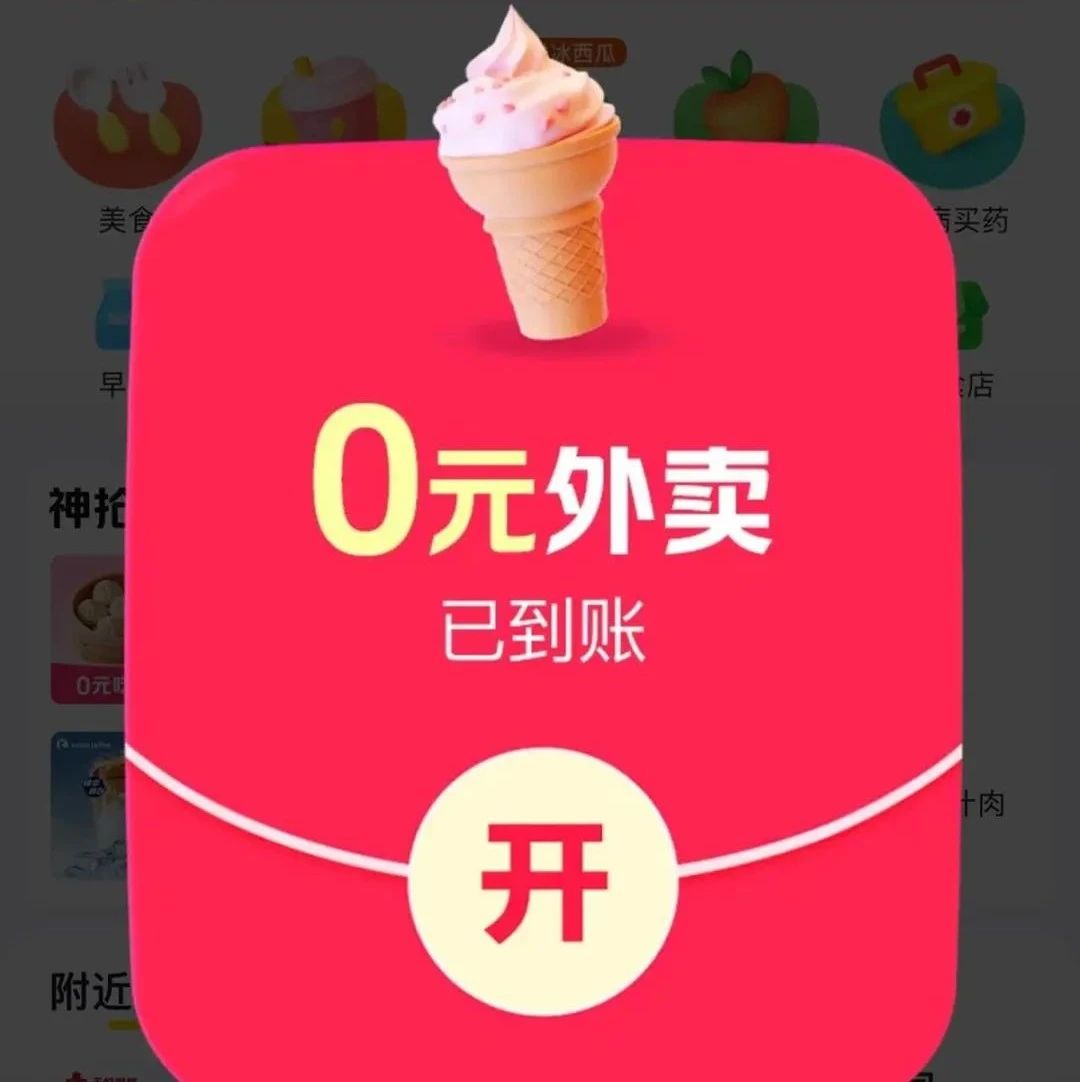
外卖

Search documents
宗庆后遗产再起风波:突现3名美籍私生子女状告宗馥莉;罗马仕中层:五个老板全跑马来西亚;周杰伦快手账号签名删除“全网唯一”丨邦早报
创业邦· 2025-07-13 00:56
Group 1 - The article discusses a legal dispute involving Kelly Zong, the heir and chairman of Wahaha, who is being sued by three alleged half-siblings for control over a bank account containing assets related to a 15 billion RMB inheritance [1] - The plaintiffs claim to be the half-siblings of Kelly Zong, challenging the previous assumption that she was the only child of Zong Qinghou [1] - The lawsuit has brought to light family dynamics and potential implications for the management of Wahaha's assets [1] Group 2 - A report indicates that five core executives of Roma Technology have gone missing, allegedly fleeing to Malaysia amid product issues [3] - The company has faced significant consumer backlash, with 180,000 refund requests pending due to product problems [3] - Concerns have been raised about the quality of components sourced from suppliers, particularly regarding battery cells [3] Group 3 - Tesla's legal battle continues as a female car owner responds to a court ruling requiring her to apologize and pay damages, asserting that the case is not solely about product quality [3] - The ongoing legal disputes highlight the challenges faced by automotive companies in managing consumer perceptions and legal liabilities [3] Group 4 - Nvidia's CEO Jensen Huang has recently sold 225,000 shares of the company, valued at approximately $36.4 million, as part of a pre-established stock sale plan [12] - This sale comes amid heightened investor interest in Nvidia's leadership in the AI sector, which has significantly boosted its stock price [12] Group 5 - Volvo's CEO emphasizes the importance of adapting to the Chinese market to maintain competitiveness against new entrants in the electric vehicle sector [25] - The company aims to focus on local consumer preferences and collaborate with Chinese partners to enhance product offerings [25] Group 6 - Kraft Heinz is reportedly planning to split its operations after a decade of consolidation following its merger in 2015 [25] - The company is exploring various options for the split, although final decisions have yet to be made [25] Group 7 - The Chinese mobile operator China Mobile has awarded a contract worth 120 million RMB for humanoid robot manufacturing to two companies [20] - This procurement reflects the growing interest and investment in robotics within the telecommunications sector [20] Group 8 - Xiaomi is set to open a flagship store in Shenzhen, showcasing its commitment to expanding its retail presence [15] - The new store will feature advanced architectural design and is part of Xiaomi's broader strategy to enhance customer engagement [15]


欧盟、墨西哥回应美征收30%关税;特朗普称不会解雇美联储主席;甘肃省提级调查褐石培心幼儿园幼儿血铅异常问题;“外卖战”又来了丨每经早参
Mei Ri Jing Ji Xin Wen· 2025-07-12 22:43
Group 1 - The Chinese Ministry of Finance allocated 197 million yuan to support agricultural disaster recovery in seven provinces affected by floods and typhoons, focusing on crop replanting and infrastructure repair [3] - The "National Uranium No. 1" project successfully produced its first barrel of uranium, marking a significant breakthrough in China's natural uranium production capacity, which is expected to enhance energy resource security [4] - The Chinese mobile company, China Mobile, awarded contracts worth 124 million yuan for humanoid robot manufacturing to Zhiyuan Robotics and Yuzhu Technology, indicating a strong emphasis on the robotics sector [9] Group 2 - Meituan reported a record high of 150 million daily orders in its instant retail segment, with an average delivery time of 34 minutes, reflecting the growing demand for convenient consumer services [8] - The competitive landscape in the food delivery sector intensified as Meituan and Taobao launched significant discount campaigns, indicating aggressive marketing strategies to capture consumer spending [7] - NIO's CEO responded to claims about Xiaomi's electric vehicle range, asserting that NIO's performance remains unmatched, highlighting the competitive dynamics in the electric vehicle market [12]



0元购!外卖"大战"继续
Wind万得· 2025-07-12 22:16
Core Viewpoint - The article discusses the ongoing competition among major food delivery platforms in China, highlighting aggressive subsidy strategies and promotional campaigns aimed at increasing user engagement and market share. Group 1: Promotional Strategies - Meituan and Taobao Flash Sale are actively distributing various discount coupons to attract consumers, with prices for many beverages dropping below 10 yuan after coupon application [2][3] - Taobao Flash Sale has launched a "Super Saturday" campaign, offering consumers a total of 188 yuan in delivery consumption red envelopes over the next 100 days, aiming to create a new promotional holiday [3] - Meituan is employing strategies like "0 yuan for milk tea" and "25 yuan off 20 yuan" to stimulate order volume significantly [5][6] Group 2: Market Dynamics - The food delivery market in China has surpassed 1 trillion yuan, with over 5.92 million users expected by the end of 2024, indicating a strong growth trajectory [11] - The competition is intensifying with the entry of JD.com into the market, leading to a "three-legged" competitive landscape alongside Meituan and Ele.me [11] - The current market is characterized by a "dual oligopoly" structure, with Meituan and Ele.me holding the majority of market share [11] Group 3: Financial Implications - High investment levels in subsidies are expected to lead to significant losses for the major platforms, with projections indicating losses of 410 billion yuan for Alibaba, 260 billion yuan for JD.com, and a reduction of 250 billion yuan in EBIT for Meituan over the next 12 months [15] - The recent surge in daily order volume for Taobao Flash Sale increased from over 10 million orders on May 2 to over 80 million orders by July 5, showcasing the effectiveness of subsidy strategies [5][8] Group 4: Consumer Behavior and Market Trends - The current subsidy war is primarily targeting low-priced items, particularly in the beverage and fast food categories, which are expected to benefit from increased consumer spending [16] - The platforms are focusing on enhancing operational efficiency and brand influence while competing for user and market share [7]



爆了!新一轮周末“外卖大战”又来了
Sou Hu Cai Jing· 2025-07-12 16:43
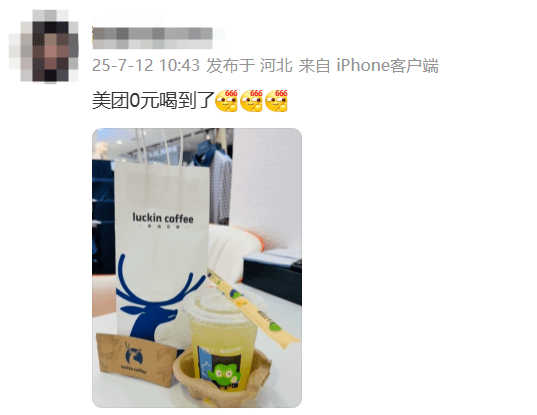
Core Viewpoint - A new round of intense competition in the food delivery sector has emerged, with major platforms like Meituan and Taobao Flash Sale issuing substantial discount coupons to attract consumers [11][12]. Group 1: Promotions and Discounts - On July 12, Meituan and Taobao Flash Sale launched significant promotional campaigns, with users reporting receiving 0 yuan drinks [1][4]. - Meituan's app displayed notifications for 0 yuan delivery offers, while Taobao Flash Sale offered various large discount coupons, with promotions starting as low as 1.9 yuan for popular brands [4][7]. - On July 11, Meituan teased a new wave of discounts, while Taobao Flash Sale announced a "188 yuan coupon package" valid over the weekend [8][9]. Group 2: Historical Order Volume - On July 5, Meituan reported a record-breaking day with over 1.2 billion orders, including more than 1 billion food orders [11]. - Taobao Flash Sale and Ele.me also reported significant activity, with Taobao Flash Sale achieving over 80 million daily orders and more than 2 billion active users [11]. Group 3: Competitive Strategies - Taobao Flash Sale initiated a massive subsidy plan worth 500 billion yuan aimed at providing direct discounts to consumers and merchants over the next 12 months [12]. - Reports indicated that July 5 was a critical day for Alibaba's food delivery service, aiming to surpass Meituan's order volume with a target of 90 to 100 million orders [13]. - In response to Alibaba's aggressive strategy, Meituan also rolled out numerous discount coupons to maintain its market position [14].
疯狂星期六 外卖大战又升级!
Zhong Guo Ji Jin Bao· 2025-07-12 12:31
Core Viewpoint - The recent escalation in the food delivery battle in China has led to significant promotional activities, including "0 yuan milk tea/coffee" offers, which have attracted widespread consumer attention and participation [2][3][5]. Group 1: Market Dynamics - Major food delivery platforms, including Meituan and Alibaba's Taobao Shanguo, have initiated large-scale subsidies to attract users, with promotions such as free drinks and substantial discounts [2][5]. - The competition has intensified since late June, with investment banks like Goldman Sachs and HSBC lowering Alibaba's target stock price by an average of 8% due to the ongoing fierce market rivalry [12]. - The battle is costly, with Nomura estimating that Alibaba, Meituan, and JD.com spent approximately $4 billion on various discounts in the second quarter alone [12]. Group 2: Financial Implications - Analysts predict that Alibaba's aggressive investment in food delivery and instant retail will significantly weaken its near-term profit expectations, leading to a 15% reduction in its target stock price [13]. - Goldman Sachs forecasts that Alibaba may incur losses of 41 billion yuan (approximately $5.7 billion) in its food delivery business over the next 12 months, which could represent about one-third of its net profit for the fiscal year ending in March [12]. Group 3: Competitive Landscape - The competition is expected to persist longer than anticipated, with major players currently in a stronger financial position and possessing more cash reserves [12]. - All platforms aim to become the "daily essential app" for users, and the subsidy war is unlikely to cool down until a balance is reached among the main competitors [12].
疯狂星期六
中国基金报· 2025-07-12 12:23
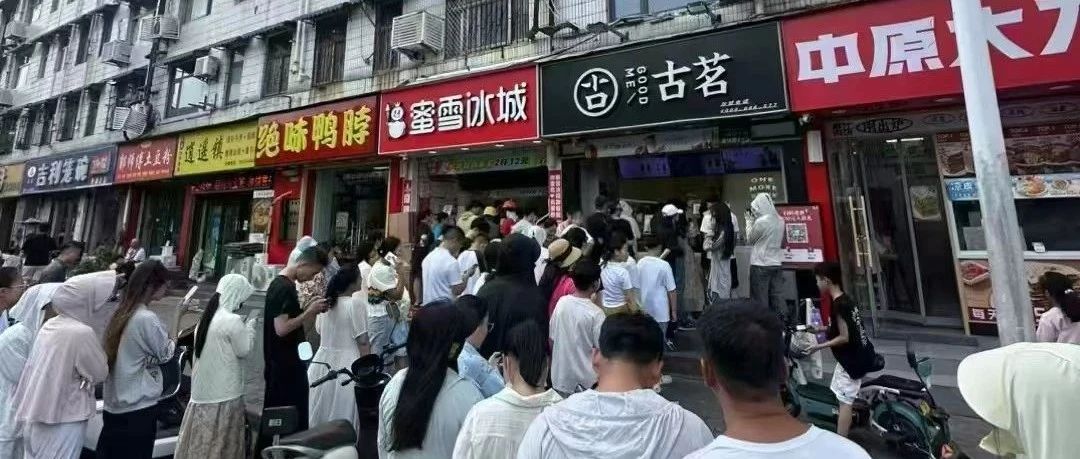
Core Viewpoint - The recent escalation in the food delivery battle in China has led to significant promotional activities, including "0 yuan" offers for beverages, indicating a fierce competition among major platforms like Meituan and Alibaba [2][9]. Group 1: Promotional Activities - On July 12, major food delivery platforms initiated large-scale subsidies, particularly featuring "0 yuan milk tea/coffee" promotions that went viral online [2]. - Meituan launched a "0 yuan delivery" campaign, allowing users to redeem free drinks from popular brands, with only a minimal delivery fee if not picked up in-store [3]. - Alibaba's Taobao Shanguo introduced various discount coupons, including "18.8 yuan free order cards," covering multiple meal times, enabling users to achieve "0 yuan purchase" [5]. Group 2: Market Impact - The promotional activities led to a surge in orders at beverage stores, with some locations experiencing order numbers exceeding four digits and wait times surpassing one hour [7]. - Investment banks, including Goldman Sachs and HSBC, have lowered Alibaba's target stock price by an average of 8% due to the intensified competition in the food delivery sector [9]. - Analysts predict that Alibaba's aggressive investment in the food delivery and instant retail sectors will significantly weaken its near-term profit outlook, with potential losses in the food delivery business reaching approximately 41 billion yuan (around 5.7 billion USD) over the next year [10].
马云刘强东杀入2万亿赛道,京东阿里绝不能输,美团则想赢更多
Sou Hu Cai Jing· 2025-07-12 11:31
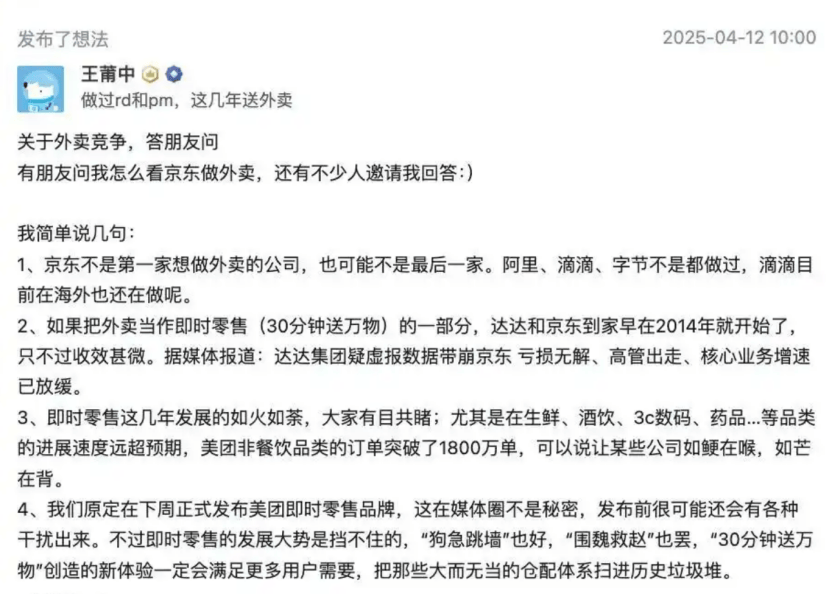
Group 1 - JD.com officially entered the food delivery market on February 11, 2025, with a recruitment plan for "quality dining merchants" and introduced three key strategies: quality merchants, zero commission, and social security for delivery riders [1][4] - By April 2025, JD.com’s food delivery service achieved over 10 million daily orders, and by June 1, this number increased to over 25 million [2][3] - JD.com has established a significant presence with 120,000 full-time delivery riders and 1.5 million restaurant partners, maintaining daily orders above 25 million during the 618 shopping festival [3][4] Group 2 - Meituan's response to JD.com's entry was relatively subdued, focusing on providing new insurance for riders and announcing the independent launch of Meituan Flash Purchase, which aims for "30-minute delivery of everything" [5][6] - Meituan's strategic shift includes optimizing its operations by exiting unprofitable areas while expanding its focus on instant retail, including Flash Purchase and small supermarkets [11][12] - By July 5, 2025, Meituan reported over 120 million daily orders, with over 100 million coming from food delivery, indicating a strong market position [15][28] Group 3 - Alibaba's entry into the market with Taobao Flash Purchase in April 2025, which quickly surpassed 60 million daily orders, indicates a significant competitive threat to both JD.com and Meituan [8][9] - The integration of Ele.me and Fliggy into Alibaba's e-commerce group reflects a strategic move to enhance its instant delivery capabilities [8][25] - The competition has intensified, with Meituan, JD.com, and Alibaba all vying for dominance in the instant retail space, leading to a significant increase in daily order volumes across platforms [15][29] Group 4 - Meituan's concept of "instant retail" was first introduced in 2021, predicting a market size exceeding 1 trillion yuan within five years, with a focus on meeting immediate consumer needs [20][21] - Meituan Flash Purchase has achieved a scale of 175 billion yuan in the past year, with expectations to exceed 400 billion yuan by 2026 [21][22] - The competition is characterized by a shift from traditional food delivery to a broader instant retail model, with all three companies focusing on enhancing their logistics and delivery capabilities [29][30] Group 5 - The ongoing battle for market share in instant retail is marked by aggressive strategies from JD.com and Alibaba, who view Meituan as a significant competitor [30][32] - Meituan's strategy of "30-minute delivery of everything" poses a direct challenge to traditional retail models, potentially disrupting the market for JD.com and Alibaba [32][33] - The competition is expected to be prolonged and intense, with all players aiming to secure their positions in the rapidly evolving instant retail landscape [30][33]

外卖大战又爆了!0元奶茶点到爆单,小龙虾一口价16.18元,上海点午饭3.4元吃饱
21世纪经济报道· 2025-07-12 11:23
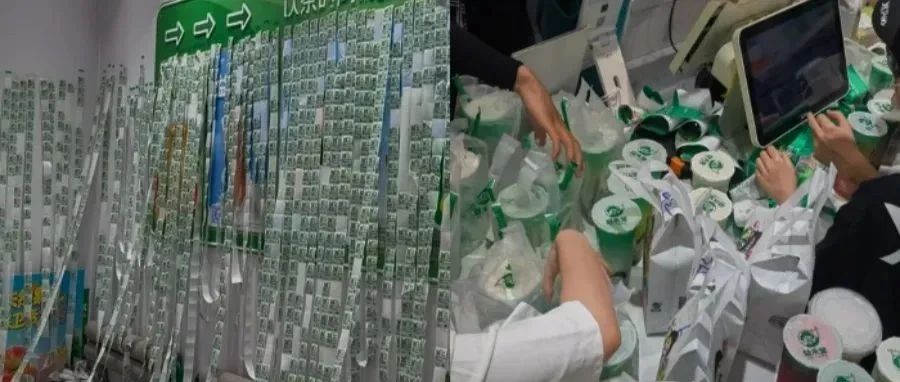
Core Viewpoint - The article discusses the resurgence of the "takeaway war" in China, highlighting significant discounts and promotions offered by major platforms like Meituan and Taobao Flash Purchase, which have led to a surge in consumer orders and impacted delivery riders and merchants [1][26][30]. Group 1: Promotions and Consumer Behavior - On July 12, platforms like Meituan and Taobao Flash Purchase issued large discount coupons, leading to a spike in consumer interest and orders [1][13]. - Consumers reported paying as little as 0.01 yuan for drinks due to these promotions, with some transactions showing discounts of up to 22.4 yuan [5][9]. - The hashtag FreeMilkTea trended on social media, indicating widespread consumer engagement with these promotions [2]. Group 2: Impact on Delivery Riders - Delivery riders experienced a significant increase in order volume, with some reporting daily earnings exceeding 1,000 yuan due to the high number of orders generated by the promotions [25][26]. - The influx of orders led to reports of riders completing up to 200 deliveries in a day, showcasing the intense demand created by the promotional activities [26][27]. Group 3: Merchant Challenges - While consumer orders surged, many merchants struggled to keep up with the demand, leading some to temporarily remove items from their menus due to overwhelming order volumes [27]. - Reports indicated that some merchants faced operational challenges, with long wait times for customers and overwhelmed staff [27][29]. Group 4: Competitive Landscape - The article notes that the competition among platforms has intensified, with Meituan and Taobao Flash Purchase both launching aggressive promotional strategies to capture market share [30][31]. - Alibaba announced a plan to inject 50 billion yuan into consumer and merchant subsidies over the next 12 months, indicating a strong defensive strategy against Meituan [31]. - Analysts predict that the ongoing competition will pressure overall industry profitability, with platforms needing to balance high delivery costs against consumer incentives [34][36]. Group 5: Future Outlook - The article suggests that the future of instant retail will depend on the platforms' ability to integrate supply chains and enhance delivery capabilities, particularly for non-standard products [37][38]. - The market for instant retail in China is projected to reach 1.2 trillion yuan by 2024, with the top three players' market share declining from 82% in 2020 to 67% [38].
喜娜AI速递:今日财经热点要闻回顾|2025年7月12日
Sou Hu Cai Jing· 2025-07-12 11:21
Group 1: A-Share Market Dynamics - A-shares have shown strong recovery since July, with the Shanghai Composite Index breaking through 3500 points, driven by blue-chip stocks, and discussions about reaching 4000 points by year-end are ongoing [2][5] - The market is characterized by a "three-force resonance" of policy, capital, and fundamentals, with some analysts optimistic about further gains while others caution against uncertainties [2][5] - Several brokerage firms have reported significant profit increases, with some firms projecting over 10 times growth in earnings [2][5] Group 2: Insurance Capital Market Stability - The Ministry of Finance has announced a new long-cycle assessment for state-owned commercial insurance companies, combining annual and multi-year evaluations to encourage stable long-term investments [2][5] - This initiative aims to enhance the role of insurance funds as a stabilizing force in the capital market, potentially increasing A-share investment proportions [2][5] Group 3: Competition in the Food Delivery Sector - The food delivery market has seen a resurgence in subsidy wars, with major players like Meituan and Taobao launching significant promotions [2][5] - Concerns have been raised about the sustainability of these subsidies, suggesting that competition may become a regular occurrence [2][5] Group 4: Rare Earth Prices and Company Performance - Rare earth prices have been on the rise, with companies like Northern Rare Earth and Baotou Steel planning to increase transaction prices for rare earth concentrates [3] - Northern Rare Earth has reported substantial profit growth, with its market capitalization nearing 100 billion yuan [3] Group 5: Nvidia Stock Performance - Nvidia's stock has reached an all-time high, with a market capitalization of $4.02 trillion, while CEO Jensen Huang has been reducing his stake in the company [3] - Huang's recent stock sales amount to approximately 600,000 shares, valued at around $96 million [3] Group 6: Bitcoin and Cryptocurrency Market Trends - Bitcoin has surged to a record high of $118,865, reflecting a 26% increase year-to-date and a 41% rise over the past three months [3] - The overall cryptocurrency market capitalization has expanded to approximately $3.7 trillion, driven by increased investor confidence [3] Group 7: U.S. Tariff Policies and Market Impact - The U.S. has seen its tariff revenue exceed $100 billion for the first time, with potential new tariffs on various countries raising market concerns [4] - This situation has led to predictions of delayed interest rate cuts by the Federal Reserve, with adjustments to forecasts for rate changes [4] Group 8: Semiconductor Industry Mergers and Acquisitions - The semiconductor industry is experiencing a wave of mergers and acquisitions, with a record number of significant restructuring cases since 2020 [5] - Analysts expect that 15 semiconductor companies will see net profit growth exceeding that of 2024, with some previously unprofitable firms likely to return to profitability [5] Group 9: Performance of Listed Companies - Multiple listed companies have released positive earnings forecasts for the first half of 2025, particularly in the brokerage and gold sectors, with some brokerages projecting over 10 times profit growth [5] - The global gold ETF has seen an increase of $38 billion in holdings during the first half of the year, indicating a continued trend of central bank gold purchases [5]
爆了!周末外卖战又开打! 大额券“满18.8减18.8”,小龙虾一口价16.18元,0元喝奶茶点到爆单,有茶饮店忙到闭店
凤凰网财经· 2025-07-12 11:16
Core Viewpoint - The article discusses the resurgence of a "takeout war" in China, highlighting significant promotional activities by major platforms like Meituan and Taobao Flash, which are offering substantial discounts and coupons to attract consumers and increase order volumes [1][29]. Group 1: Promotional Activities - On July 12, Meituan and Taobao Flash launched new promotional campaigns, including large discount coupons, leading to a surge in consumer engagement and orders [1][15]. - Consumers reported receiving various discount coupons, such as "0 yuan takeout" offers from popular beverage brands, allowing them to enjoy products at little to no cost [5][7][13]. - Taobao Flash announced a "Super Saturday" campaign, promising consumers significant savings on takeout orders every Saturday for the next 100 days [17][24]. Group 2: Market Response - The promotional activities resulted in a dramatic increase in order volumes, with reports of some stores experiencing overwhelming demand and operational challenges due to the influx of orders [21][22]. - Meituan's order volume reportedly exceeded 1.2 billion on July 5, with over 1 billion being food orders, indicating a strong market response to the promotional strategies [29]. - The competition has led to a notable increase in earnings for delivery riders, with some reporting daily earnings exceeding 1,000 yuan due to the high volume of orders [29]. Group 3: Strategic Implications - Analysts suggest that while the current subsidy war may attract users in the short term, platforms must find a balance between subsidy costs and profitability in the long run [30]. - The ongoing competition is characterized by a shift towards a more strategic approach, focusing on long-term market share rather than immediate profits [30][31]. - Major players like Meituan, Taobao, and JD are adopting distinct strategies: Meituan focuses on defending its market position, Taobao aims for aggressive market capture, and JD emphasizes quality dining experiences [31].