
餐饮

Search documents
人民锐评:“西贝事件”,应成为共识契机
中国能源报· 2026-01-20 10:25
Core Viewpoint - The "Xibei incident" serves as an opportunity for consensus building in the context of public discourse surrounding the food industry, particularly regarding the safety and pricing of pre-prepared meals [4][5]. Group 1: Industry Issues - The initial controversy focused on the safety standards and pricing of pre-prepared meals, which could have been a valuable opportunity to promote standardization and transparency in the restaurant industry [4]. - The recent closure of 102 stores and the potential job loss for 4,000 employees highlight the significant impact of public perception and discourse on business operations [4][5]. Group 2: Regulatory Environment - In 2024, six government departments issued a document emphasizing the need for unified national standards for the safety and quality of pre-prepared meals, reflecting the growing integration of such products into urban lifestyles [5]. - The document also calls for reasonable pricing and the promotion of consumer rights, ensuring that consumers are informed and can make choices regarding pre-prepared meals [5]. Group 3: Public Discourse and Trust - The ongoing debate surrounding the "Xibei incident" illustrates the necessity for a more rational and constructive public discourse, aiming to resolve specific issues rather than fostering a polarized environment [4][6]. - A healthy and rational discussion can enhance consensus, improve standards, and foster a more transparent market, ultimately contributing to a resilient economic and social environment [6].

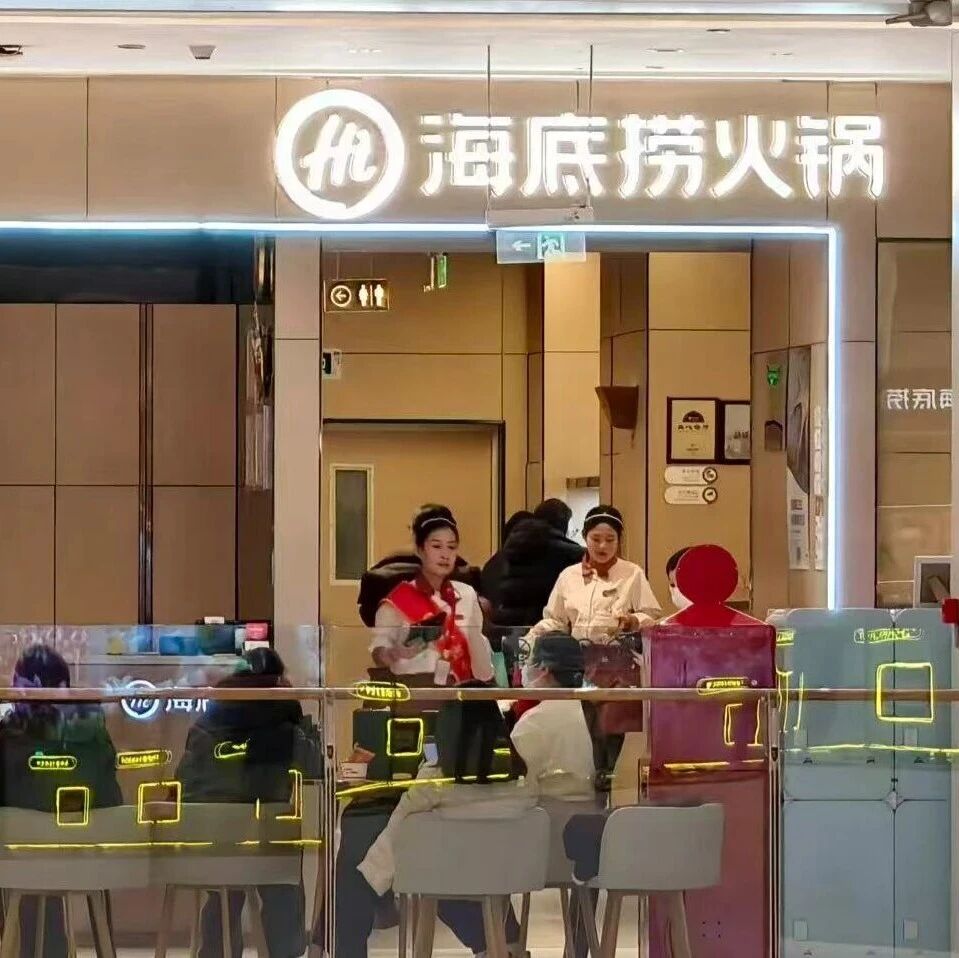
张勇回归,少帅上位:海底捞的“第二曲线”能否真的跑通?
虎嗅APP· 2026-01-20 10:17
Core Viewpoint - The recent leadership changes at Haidilao, including the return of founder Zhang Yong as CEO and the appointment of four experienced female executives to the board, signify a strategic pivot aimed at stabilizing the core hotpot business while accelerating the growth of the newly formed "Pomegranate Plan" [2][4][10]. Group 1: Leadership Changes - Zhang Yong's return as both Chairman and CEO is interpreted as a move to enhance decision-making efficiency and is seen as a strategic restructuring rather than a mere reaction to past challenges [6][10]. - The appointment of four internal executives, aged 35-44, to the board reflects a shift towards empowering younger leaders with operational backgrounds, transforming the board into a training ground for future leaders [10][11]. Group 2: Strategic Initiatives - The "Pomegranate Plan," launched in August 2024, aims to transition Haidilao from a single-brand operation to a multi-brand ecosystem, with a focus on diversifying its restaurant offerings [9][10]. - Since the initiation of the "Pomegranate Plan," Haidilao has successfully incubated 14 new restaurant brands, contributing significantly to revenue growth, with other restaurant income reaching 597 million yuan, a 227% year-on-year increase [13]. Group 3: Market Response and Future Outlook - Market reactions to the governance changes have been mixed, with Goldman Sachs maintaining a neutral rating while other firms like Citigroup have raised target prices, indicating confidence in the multi-brand strategy [14]. - The long-term challenge for Haidilao lies in nurturing these new brands to become substantial growth drivers while maintaining the core hotpot business, reflecting the broader challenges faced by leading companies in the restaurant industry during periods of transformation [14].

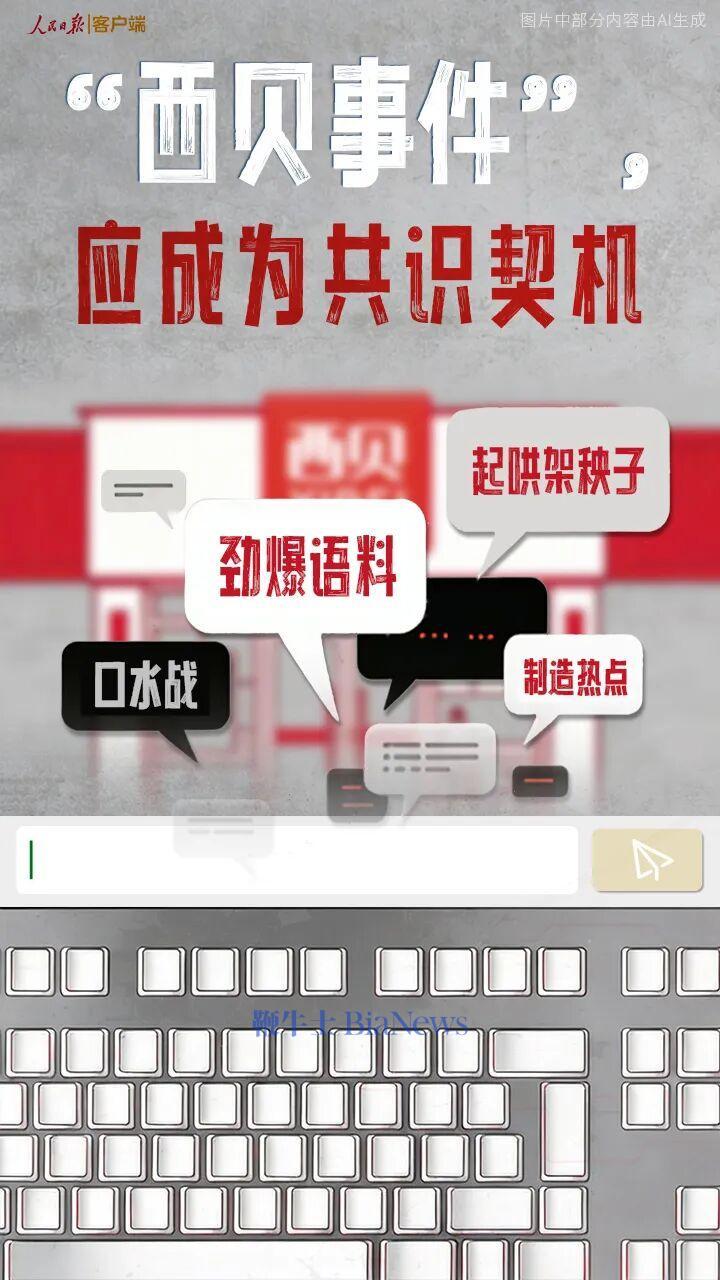
人民日报三评西贝关店事件:自媒体不是私域不可肆意
Xin Lang Cai Jing· 2026-01-20 09:49
Core Viewpoint - The article discusses the impact of online public opinion on businesses, particularly focusing on the recent crisis faced by the restaurant chain Xibei due to negative comments from influential online figures [1][6]. Group 1: Online Public Opinion and Business Impact - A comment from an online influencer stating "almost all are pre-made dishes, and they are so expensive" triggered a dispute, leading to a business crisis for Xibei [1][6]. - Many entrepreneurs feel anxious about the complex and severe nature of the online public opinion environment, but the article suggests that there is no need for excessive worry as the overall situation has improved in recent years [1][6]. Group 2: Responsibilities of Influencers - The Xibei incident serves as a mirror reflecting the responsibilities that come with the media attributes of self-media; influencers must not treat their platforms as private domains [2][7]. - Influencers with large followings have a significant impact on public opinion and should contribute to creating a clear online space, fulfilling their social responsibilities [2][7]. Group 3: Negative Influences of Self-Media - Recent irresponsible behaviors from a minority of self-media can be categorized into several types, including misinterpretation of government policies, biased views on public issues, and using public sentiment for personal gain [3][8]. - The article highlights that the comment from influencer Luo Yonghao, while perceived as consumer feedback, was a public expression that could ignite public emotions, demonstrating the potential for online disputes to affect offline consumer behavior [3][8]. Group 4: Legal and Regulatory Framework - The Private Economy Promotion Law explicitly states that no individual or entity should maliciously harm the rights of private economic organizations through online channels [4][9]. - The article notes recent actions taken against accounts that spread false information and the importance of creating a healthy online public opinion environment to promote the healthy and high-quality development of the private economy [4][9].
张勇又回来了
36氪· 2026-01-20 09:46
Core Viewpoint - The return of Zhang Yong, the founder and chairman of Haidilao, to the CEO position after nearly four years is a significant move that reflects the company's adaptability and the importance of leadership during challenging times [5][6][20]. Leadership Changes - Haidilao has experienced multiple CEO transitions, with Yang Lijuan taking over in March 2022 during a critical period, leading to significant restructuring and recovery from a historical loss of 4.16 billion yuan [6][14]. - The management styles of the three CEOs—Zhang Yong, Yang Lijuan, and Gou Yiqun—differ significantly, with Yang being decisive and action-oriented, while Gou focuses on logical processes and management [8][14]. - Zhang Yong's leadership is characterized by a strategic vision, while Yang Lijuan is known for her execution and reform capabilities [8][12]. Financial Performance - Following the announcement of Zhang Yong's return, Haidilao's stock price increased by 7.6%, indicating positive market sentiment [8]. - In the first half of 2025, Haidilao reported a revenue of 20.7 billion yuan, a year-on-year decline of 3.7%, and a core operating profit of 2.4 billion yuan, down 14.0% [18]. Future Challenges and Strategies - Haidilao aims to establish a smart operational platform covering various aspects of its business, including customer service and employee management, to enhance efficiency and decision-making [17]. - The company is facing challenges related to its expansion strategy, including how to manage a diverse brand portfolio and ensure effective resource allocation [20]. - The traditional approach of leveraging experienced leaders for new initiatives is emphasized, as Zhang Yong's involvement suggests a need for strong leadership to navigate upcoming challenges [20].

人民日报:「西贝事件」,应成为共识契机
Ren Min Ri Bao· 2026-01-20 09:00
Core Viewpoint - The ongoing debate between Luo Yonghao and Jia Guolong highlights significant issues regarding the safety standards and pricing of pre-prepared food, which could serve as an opportunity for the restaurant industry to enhance standardization and transparency [4][6]. Group 1: Industry Impact - The conflict has led to the closure of 102 stores and the potential job loss or reassignment of 4,000 employees, indicating a severe impact on the business [4]. - The discussion surrounding pre-prepared food is not merely about the product itself but also about establishing unified national safety standards to ensure quality and safety [7]. Group 2: Consumer Rights and Market Regulation - The regulatory bodies have previously issued guidelines emphasizing the need for clear labeling of pre-prepared food to protect consumer rights and ensure informed choices [7]. - The debate serves as a critical moment to examine consumer trust, industry norms, and the overall public discourse environment, which is essential for fostering a resilient economic landscape [7]. Group 3: Public Discourse and Consensus Building - The extensive public debate presents an opportunity to build consensus rather than merely engage in polarizing arguments, which can detract from addressing the core issues [5][4]. - A healthy and rational public discourse can reveal problems, enhance consensus, and drive improvements in the industry, ultimately benefiting both businesses and consumers [7].
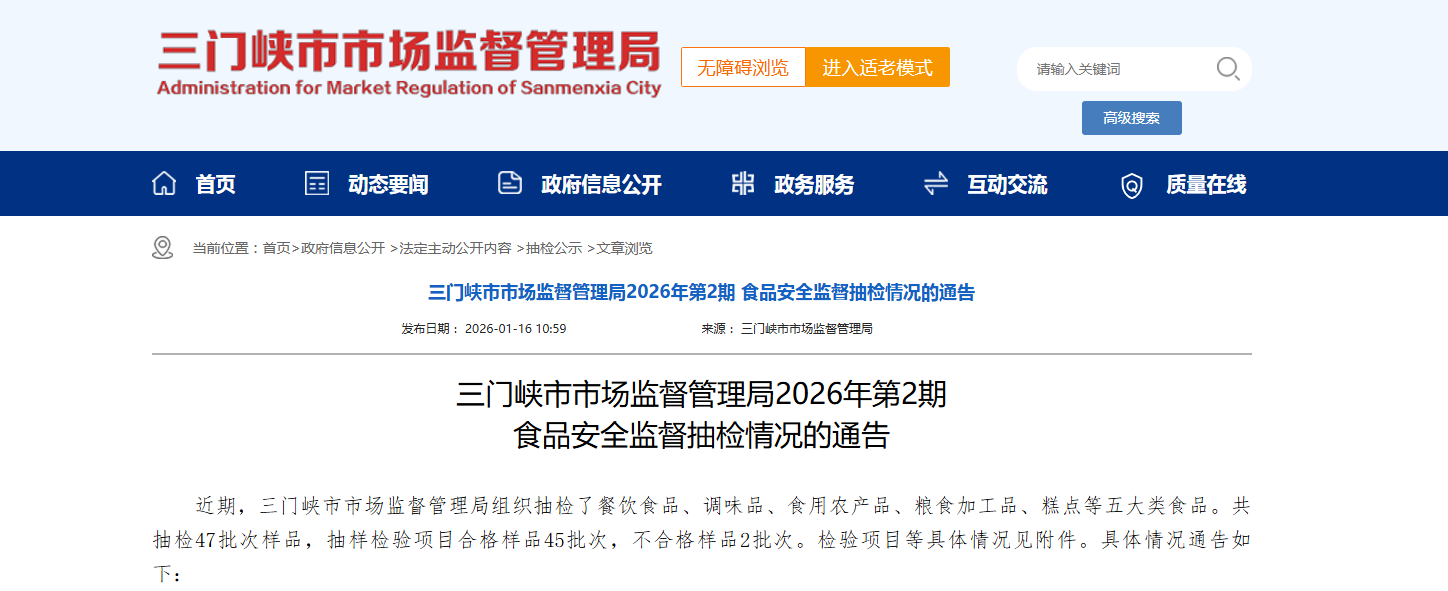
河南省三门峡市市场监督管理局2026年第2期食品安全监督抽检情况的通告
Xin Lang Cai Jing· 2026-01-20 08:39
Group 1 - The Sanmenxia Market Supervision Administration conducted a food safety inspection, sampling 47 batches of food products across five categories, with 45 batches passing and 2 batches failing [3] - The non-compliant products were identified from two individual catering businesses in Yima City, both failing for the presence of coliform bacteria, which should not be detected according to standards [3] - The inspection was carried out by the Henan Food and Salt Industry Inspection Technology Research Institute [3] Group 2 - The Sanmenxia Market Supervision Administration has mandated the Yima City market regulatory department to take legal action against the involved businesses, including recalling non-compliant products and implementing risk control measures [3] - Consumers are advised to pay attention to food safety and report any issues to the food safety supervision hotline at 12315 [3]
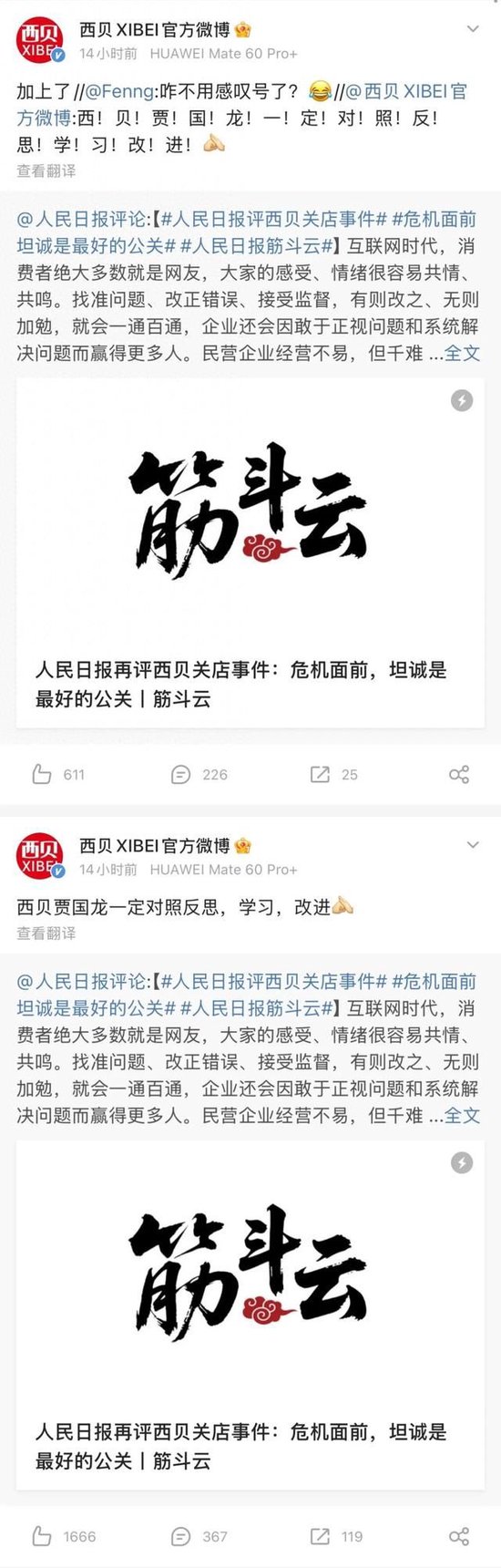
西贝回应人民日报评论,加上了15个感叹号
Xin Lang Cai Jing· 2026-01-20 08:00
Core Insights - The article emphasizes that in the internet age, consumer sentiments are easily shared and resonate widely, suggesting that companies should acknowledge issues, correct mistakes, and accept supervision to gain consumer trust [1][7] - It highlights the challenges faced by private enterprises but asserts that gaining consumer recognition in the digital era is achievable [1] - The commentary expresses confidence that leaders like Jia Guolong can adapt their thinking and skills to create new development opportunities for their companies, contributing to economic growth [1] Company-Specific Developments - On January 15, Xibei announced the closure of 102 stores nationwide, reigniting a dispute between founder Jia Guolong and entrepreneur Luo Yonghao regarding pre-prepared dishes [6][12] - Following the announcement, Jia Guolong stated on social media that he would respond to Luo Yonghao's accusations of "serious defamation" later that evening, which garnered significant public attention [12] - The online dispute concluded with both Jia Guolong and Luo Yonghao's accounts being silenced [12] Public Relations and Consumer Engagement - The People's Daily published a commentary on January 18, addressing the Xibei store closure and stating that the online public opinion environment should not hinder corporate development [7][12] - Xibei's official Weibo account later echoed the sentiment of self-reflection and improvement in response to the commentary [2][8]
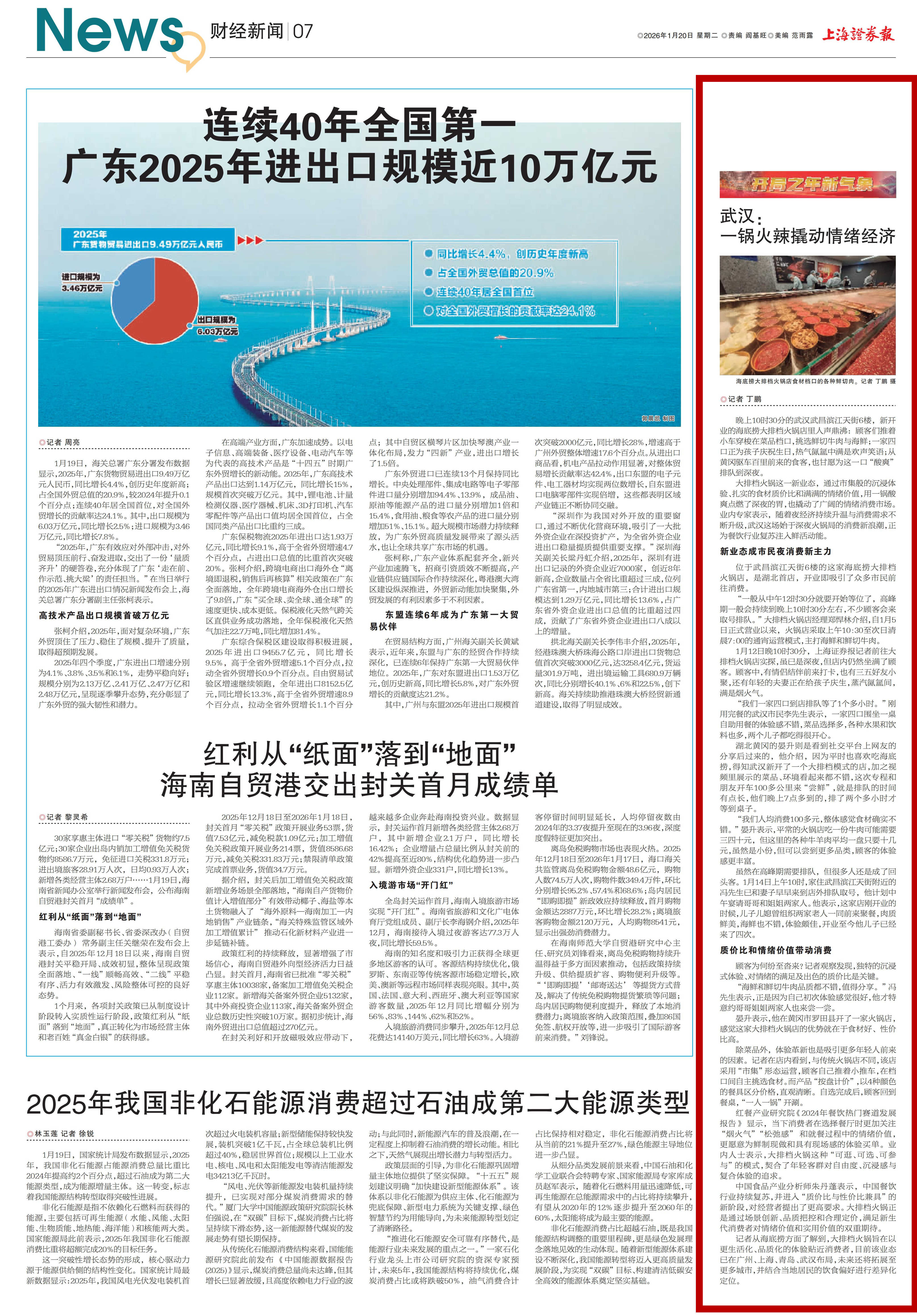
《上海证券报》聚焦武汉:一锅火辣撬动情绪经济
Shang Hai Zheng Quan Bao· 2026-01-20 07:52
Group 1: Guangdong Trade Performance - In 2025, Guangdong's goods trade import and export reached 9.49 trillion RMB, a year-on-year increase of 4.4%, marking a historical annual high [4] - Exports amounted to 6.03 trillion RMB, up 2.5% year-on-year, while imports were 3.46 trillion RMB, increasing by 7.8% [4] - Guangdong accounted for 20.9% of the national foreign trade total, contributing 24.1% to the national foreign trade growth [4] Group 2: Quarterly Trade Growth - Guangdong's import and export growth rates for the four quarters of 2025 were 4.1%, 3.8%, 3.5%, and 6.1%, showing a steady upward trend [5] - The quarterly trade volumes were 2.13 trillion, 2.41 trillion, 2.47 trillion, and 2.48 trillion RMB, indicating a gradual increase [5] Group 3: High-tech Product Exports - High-tech product exports from Guangdong exceeded 1 trillion RMB for the first time, with a year-on-year growth of 9.5% [6] - The growth in high-tech exports reflects Guangdong's resilience and potential in the face of complex external environments [5][6] Group 4: Night Economy and New Consumption Trends - The newly opened Haidilao Dapaidang hotpot restaurant in Wuhan has attracted significant consumer interest, indicating a revival in the dining industry [12] - The restaurant operates from 10:30 AM to 7:00 AM, focusing on seafood and fresh-cut beef, and has seen long queues since its opening [13] - The unique immersive experience and high quality-to-price ratio are key factors driving consumer traffic to the new dining format [15][18]
创始人重新出任CEO 海底捞能否突破增长瓶颈?
Zhong Guo Jing Ying Bao· 2026-01-20 07:33
Core Viewpoint - Haidilao International Holding Ltd. is facing challenges with declining revenue, profit, and table turnover rates, prompting the return of founder Zhang Yong as CEO to strengthen confidence and unify strategic decision-making [1][3][5] Performance Decline - The company announced that from January 13, 2026, Zhang Yong will resume the role of CEO, following the resignation of Guo Yiqun [2] - In 2024, Haidilao achieved revenue of 42.755 billion yuan, a year-on-year increase of 3.1%, while profit rose by 4.6% to 4.7 billion yuan [3] - In the first half of 2025, revenue fell by 3.7% to 20.703 billion yuan, and profit decreased by 13.7% to 1.755 billion yuan, attributed to a decline in table turnover rates and initial adjustments in product and service innovation [3] Management Changes - The change in CEO is linked to unsatisfactory performance metrics in 2025, including revenue, net profit, and table turnover rates, alongside management issues highlighted by public controversies [3][5] - Zhang Yong's return aims to address these challenges and enhance management efficiency by promoting frontline managers to decision-making roles [3][5] Market Environment - The overall restaurant market is undergoing transformation, with intensified competition in the hot pot sector, leading to operational challenges for large-format restaurants like Haidilao [4][5] - The company has initiated a franchise model to tap into demand in lower-tier cities, with over 70% of franchise applications coming from third-tier cities and below [6] Growth Strategies - Haidilao is implementing the "Red Pomegranate Plan" to encourage the incubation of new restaurant brands, having launched 11 new brands with a total of 74 outlets by the end of 2024 [5] - The company is also focusing on diversifying consumer scenarios, with nearly 30 night snack-themed stores and over 50 standard version theme stores operational by mid-2025 [5] - In the first half of 2025, the takeaway business saw a revenue increase of nearly 60%, indicating a shift towards enhancing service delivery channels [5]
——12月经济数据点评:基本面延续偏弱,通胀回升是亮点
Shenwan Hongyuan Securities· 2026-01-20 05:45
Group 1 - The core viewpoint of the report indicates that China's GDP growth rate for 2025 reached 5%, aligning with market expectations, but the economy still faces challenges such as weak domestic demand and external disturbances [1][3] - The report highlights a significant decline in fixed asset investment driven by the real estate sector, with a year-on-year decrease of 17.2% in real estate investment for December 2025 [3][12] - Consumer spending showed limited improvement, with retail sales growth for the year at 3.7%, down 0.3 percentage points from the previous month, primarily affected by declines in automobile sales and dining [3][24] Group 2 - Industrial value-added growth for December 2025 was reported at 5.9%, a decrease of 0.1 percentage points from November, indicating a divergence in production chains, with traditional sectors like steel and cement continuing to contract [3][6] - Inflation showed signs of recovery, with the Consumer Price Index (CPI) rising to 0.8% year-on-year in December, supported by an increase in food prices, particularly vegetables due to adverse weather conditions [3][10] - Fixed asset investment continued to decline, with a cumulative year-on-year decrease of 3.8% in December, reflecting a broader trend of reduced investment across various sectors [3][12]