
数据中心

Search documents
马来西亚贸易与数字部长:马来西亚投资发展局将批准所有新的数据中心项目和投资。
news flash· 2025-07-22 03:12
Core Viewpoint - The Malaysian Investment Development Authority (MIDA) will approve all new data center projects and investments in Malaysia [1] Group 1 - The announcement indicates a strong governmental support for the data center industry in Malaysia [1] - This move is expected to attract more foreign and domestic investments in the technology and digital infrastructure sector [1] - The approval of new data center projects aligns with Malaysia's strategy to enhance its digital economy and infrastructure [1]
马来西亚贸易及数字部长:政府将在十月建立数据中心框架,以简化数据中心政策和发展。
news flash· 2025-07-22 03:12
马来西亚贸易及数字部长:政府将在十月建立数据中心框架,以简化数据中心政策和发展。 ...
一体化示范区数据中心集群建设有了新进展
Guo Ji Jin Rong Bao· 2025-07-21 10:02
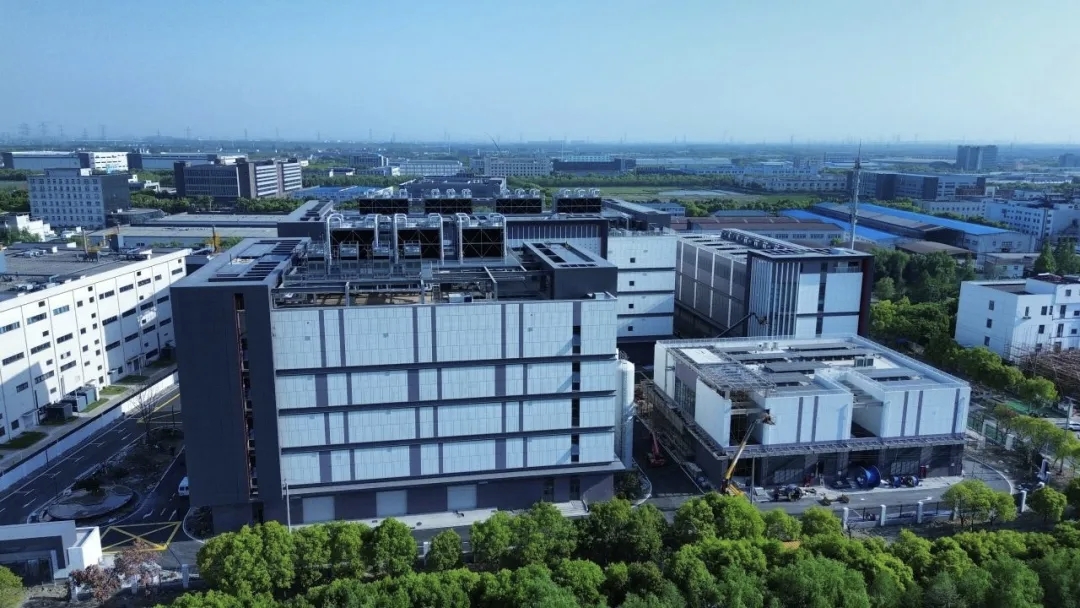
青浦云湖数据中心是我国首个实现多元异构算力调度的全国性平台,建设内容包括2栋数据机房、1栋生产厂房、1栋110kV变电站、生产辅助用房、 室外总体,建成后总计提供约4000个机柜能力。 近日,示范区数据中心集群项目取得了新进展:中国电信算力高效调度示范项目(青浦云湖数据中心)、中国移动长三角(上海)5G生态谷项目通 过综合验收,吴江算力调度中心已接入全国一体化算力网络,阿里巴巴长三角智能计算基地两栋数据中心大楼已交付投运,中国电信长三角国家枢纽嘉兴 算力中心项目的B1、B2、C1、C3楼进入竣工验收阶段。 阿里巴巴长三角智能计算基地目前两栋数据中心大楼已交付投运。项目全部建成后,可支撑20万台服务器和万卡级智算集群部署。 此外,中国电信长三角国家枢纽嘉兴算力中心,该项目建设覆盖工业互联网、IT设备制造、人工智能等全产业链,可提供约1.56万架机柜资源。 中国移动长三角(上海)5G生态谷,该项目是长三角地区首个算力可自主调度、绿色节能示范数据中心,包括2栋约48000平方米建筑面积的数据中 心,可提供总共4768个机架的装机能力,形成云+大数据+AI能力中心,项目建成后将服务于中国移动九天大模型及华为盘古大模型 ...

特朗普上台半年,政策运作仍在“走钢丝”
日经中文网· 2025-07-21 07:22
美国特朗普政府7月20日迎来了上台半年。对高关税导致物价急剧上涨和经济恶化的悲观论有所减弱, 减税和放宽限制等重视增长的政策正在推动企业投资。不过,根据市场压力、交易与谈判反复修正轨道 的危险并未消失…… 主要向美国特斯拉供货的松下控股决定推迟在美国投资建设的电池工厂的满负荷生产。有分析认为,随 着美国政府停止对纯电动汽车(EV)的支持,存在电池产能过剩的风险。 企业正在考虑以高关税长期持续作为前提的选项。日本汽车车灯巨头小糸制作所的专务董事、首席财务 官(CFO)大嶽孝仁指出,"不只是要在特朗普政权时期坚持下去"。 美国特朗普政府7月20日迎来了上台半年。对高关税导致物价急剧上涨和经济恶化的悲观论有所减弱, 减税和放宽限制等重视增长的政策正在推动企业投资。不过,根据市场压力、交易与谈判反复修正轨道 的危险并未消失,特朗普的政策运作仍在"走钢丝"。 最近半年来,特朗普政权接二连三出台政策。以来自中国的进口商品为开端,从2月起逐步提高关税,4 月公布了大规模对等关税。此外,还推进联邦政府的裁员,7月通过了大而美法案(OBBB)。 通过减税和放宽限制实现"小政府"和保护主义性质的高关税,都是为了促进民营企业的对美 ...

大摩最新测算:到2028年,AI资本支出将推动科技巨头增加1万亿美元债务
Hua Er Jie Jian Wen· 2025-07-21 06:52
Group 1 - Morgan Stanley predicts a financing gap of $1.5 trillion for global data center investments by 2028, requiring approximately $2.9 trillion in total investment [1][2][3] - The capital expenditure driven by AI is expected to significantly impact macroeconomic conditions, contributing up to 40 basis points to U.S. GDP growth between 2025 and 2026 [1] - The annual investment demand for data centers is projected to exceed $900 billion by 2028, highlighting the scale of AI-related investments [2] Group 2 - Spending by hyperscale cloud service providers has surged from approximately $125 billion two years ago to an estimated $200 billion in 2024, with expectations to surpass $300 billion in 2025 [3] - The credit market is anticipated to play a crucial role in filling the financing gap, with both public and private markets becoming increasingly important [4] - The current market environment, characterized by ample credit dry powder and attractive real yields, is favorable for long-term investors such as insurance companies and sovereign wealth funds [4] Group 3 - Specific predictions for major financing channels include $200 billion from unsecured corporate bonds, $150 billion from asset-backed securities (ABS) and commercial mortgage-backed securities (CMBS), and approximately $800 billion from private credit markets [5] - Private credit is viewed as a key funding channel due to its adaptability to the complex and globalized financing needs associated with AI infrastructure [6] - Despite the inherent uncertainties in predicting financing channels, the credit market is expected to play an increasingly important role in supporting AI-driven technological expansion [6]
财达证券每日市场观察-20250721
Caida Securities· 2025-07-21 02:33
Market Performance - The CSI All Share Index showed a steady upward trend, closing in the green, with metal and energy sectors leading gains, while gaming and consumer electronics sectors experienced significant declines[1] - On July 18, the Shanghai Composite Index rose by 0.5%, the Shenzhen Component Index increased by 0.37%, and the ChiNext Index gained 0.34%[3] Fund Flows - On July 18, net inflows into the Shanghai Stock Exchange reached 19.758 billion yuan, while the Shenzhen Stock Exchange saw net inflows of 6.016 billion yuan[3] - The top three sectors for net inflows were small metals, chemical products, and industrial metals, while consumer electronics, communication equipment, and gaming sectors faced the largest outflows[3] Economic Indicators - During the 14th Five-Year Plan period, China's foreign trade is projected to grow by 32.4% compared to the end of the 13th Five-Year Plan, maintaining its position as the world's largest trading nation for eight consecutive years[4] - Service consumption in China is expected to grow at an average annual rate of 9.6% from 2021 to 2024, outpacing goods consumption[6] Industry Developments - The first integrated green electricity data center project in Inner Mongolia has been launched, utilizing a total installed capacity of 300,000 kW, including 200,000 kW from wind power and 100,000 kW from solar power[9] - In the first half of 2025, domestic polysilicon production averaged 100,000 tons per month, with a significant year-on-year decrease of 47.4% in February's production[11] ETF Market Trends - The scale of domestic bond ETFs reached a record high of 481.057 billion yuan as of July 17, with a net inflow of 244.574 billion yuan for the year, marking a 176.7% increase[12] - Haitong Fund became the first fund company to surpass 100 billion yuan in bond ETF scale, with its six bond ETFs totaling 101.041 billion yuan[13]

“申”度解盘 | 顺势而为,保持战略仓位
申万宏源证券上海北京西路营业部· 2025-07-21 02:02
Market Overview - The market continues to show strength, with all three major indices closing in the green for the week, remaining above the five-week moving average, indicating a gradually improving situation [3] - Market sentiment remains high, with good inter-sector connectivity and increased trading volume, suggesting active market participation [3] Industry Commentary - Several catalysts in the technology sector warrant attention: 1. The lifting of restrictions on H20 sales to China, which will support ongoing investments in AI by major manufacturers, potentially boosting orders across the entire supply chain [4] 2. Continuous new highs in overseas technology indices, reflecting a sustained confirmation of high demand for AI, which may positively impact the domestic AI industry [4] 3. Recent advancements in AI models, particularly those released by Elon Musk, demonstrate significant improvements in reasoning and knowledge capabilities, indicating promising future developments in AI applications [4] - The performance forecast for July indicates that companies in the technology sector, particularly those benefiting from surging demand and technological advancements, are receiving heightened market attention [4] - There is potential for further expansion in the technology sector, with a recommendation to adjust portfolio structures to include defensive positions in sectors like coal and free cash flow, while maintaining a focus on high-growth AI technology areas supported by policy [4]

外媒:特朗普政府威胁对进口铜征收50%关税,全球最大铜生产商发出警告
Huan Qiu Wang· 2025-07-20 07:31
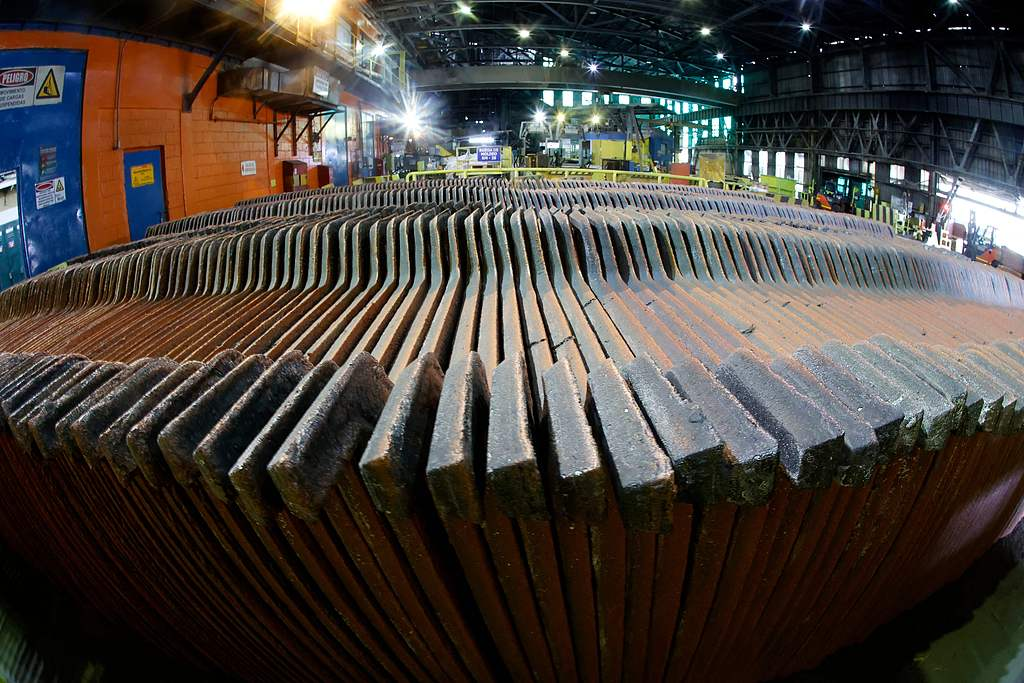
Core Viewpoint - The impending 50% tariff on copper imports announced by the U.S. government is causing significant anxiety in the market, particularly among major copper producers and industrial users [1][3]. Group 1: Tariff Announcement and Market Reaction - The U.S. will impose a 50% tariff on imported copper starting August 1, 2025, as stated by President Trump [1]. - Maximo Pacheco, chairman of Chile's state copper company, warns that this tariff is creating market uncertainty [1][3]. - There is ambiguity regarding whether the tariff applies to refined copper, semi-finished products, or copper ore, leading to confusion among mining companies and industrial users [3]. Group 2: Industry Concerns and Economic Impact - Executives express concern over the tariff's implications, with potential negative effects on key U.S. industries such as electric vehicles, data centers, and defense [3]. - Analysts warn that the tariff could lead to significant cost increases across various sectors, as copper is widely used in electronics, automotive, construction, and data centers [4]. - The U.S. consumes nearly half of its copper from imports, primarily from Chile, making the economy vulnerable to tariff-induced cost pressures [4].
2025年释放AI时代的潜力报告(英文版)-高盛
Sou Hu Cai Jing· 2025-07-19 13:11
Group 1 - The core viewpoint of the report is that artificial intelligence (AI) is driving a historic transformation in computing, requiring significant capital and infrastructure support while facing challenges such as surging power demand [1][2][3] - AI is fundamentally changing the computing paradigm, with AI data centers being more complex and resource-intensive than traditional cloud computing, projected to require 50 times more power by 2027 [1][2][29] - The demand for AI infrastructure is expected to lead to an investment of $1 trillion by hyperscale companies by 2027, with a significant focus on GPUs and data centers [1][31] Group 2 - Power demand is identified as a critical bottleneck for AI development, with global data center power demand expected to surge by 160% by 2030, necessitating new capacity to meet this growth [2][46] - The aging U.S. power grid infrastructure, with an average age of 40 years, is struggling to accommodate the increasing demand, leading companies to explore diverse power supply solutions [2][3] - Data centers are becoming strategic assets in geopolitical contexts, with countries leveraging them for influence, and companies like Amazon and Google expanding their presence in regions with favorable energy conditions [2][3] Group 3 - The capital requirements for AI infrastructure are immense, with projected needs of $2 trillion for digital infrastructure and $3 trillion for power by 2030 [3][46] - Innovative financing solutions are emerging, including joint ventures and asset securitization, to meet the capital demands of AI data centers [3][38] - The report emphasizes the necessity for cross-industry collaboration, policy support, and innovative capital tools to address the challenges posed by power and geopolitical factors [3][46]

AI数据中心能源:美国以核裂变为“现实依托”,可控核聚变短期难奏效
Haitong Securities International· 2025-07-18 12:57
Investment Rating - The report suggests a positive outlook on the nuclear fission industry as a viable energy source for AI data centers, while indicating that nuclear fusion remains a long-term prospect [6]. Core Insights - Meta is rapidly expanding its AI data center capabilities, planning to invest $68 billion in capital expenditures by 2025, with a focus on building multiple hyperscale data centers [2][9]. - The Hyperion project in Louisiana is set to become the largest single AI data center globally, with an initial capacity of 2 GW, expanding to 5 GW [2][10]. - The energy supply strategy for AI data centers includes short-term reliance on natural gas turbines and long-term commitments to renewable energy and nuclear power [3][4]. Summary by Sections Investment Strategy - Meta's capital expenditure strategy reflects a strong commitment to AI development, with significant investments planned for the construction of multi-GW data centers [2][10]. - The company is also raising nearly $29 billion through financing to support its ambitious projects [2][9]. Energy Supply and Infrastructure - The report highlights the energy bottleneck as a critical factor for the expansion of AI data centers, with Meta implementing natural gas turbines to meet initial power demands [3]. - In the medium to long term, Meta is securing renewable energy agreements and a 20-year nuclear power agreement to ensure a stable, low-carbon energy supply [3][4]. Nuclear Energy Outlook - Nuclear fission is currently viewed as the most feasible "firm power" option for AI data centers, while nuclear fusion is still in the experimental phase and may take decades for commercial viability [4][6]. - The U.S. government is actively supporting nuclear energy expansion, with plans to add 300 GW of nuclear capacity by 2050 [4].
