
低空经济

Search documents
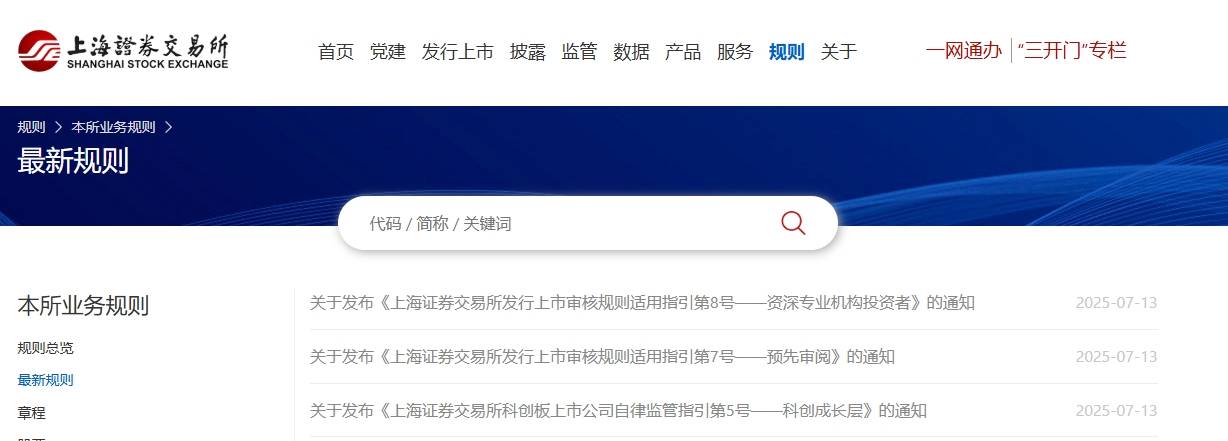
亏损企业上市,科创板第五套标准新规来了
Sou Hu Cai Jing· 2025-07-13 13:46
Group 1 - The core point of the news is the reintroduction of the fifth listing standard for the Sci-Tech Innovation Board, allowing companies with no profits or revenue to go public, particularly benefiting special industries [1][3][4] - The fifth listing standard requires a minimum market value of 4 billion yuan, and companies must have significant market potential and approved core products for certain industries, such as biomedicine [4][5] - The new regulations expand the eligible industries for the fifth standard to include artificial intelligence, commercial aerospace, and low-altitude economy, aiming to accelerate the establishment of typical cases [9][10] Group 2 - The introduction of a system for qualified professional institutional investors is part of the new regulations, which will help assess the reliability of companies applying under the fifth standard [10][11][17] - A pre-review mechanism has been established to protect sensitive information for technology companies, allowing them to apply for confidentiality during the listing process [18][19][20] - The establishment of a Sci-Tech Growth Layer is part of the new regulations, with specific criteria for companies to enter this layer, indicated by a "U" in their stock abbreviation [23][25][29]

万亿低空经济现人才缺口,顶尖高校密集开设低空专业,头部企业提前“抢人”
Bei Jing Shang Bao· 2025-07-13 09:04
Core Insights - The rapid development of China's low-altitude economy has triggered a competition for "high-end" talent, with leading companies collaborating with domestic and international universities to accelerate talent cultivation in this sector [1][3][5] Group 1: Industry Collaboration - Leading low-altitude companies are actively engaging in talent cultivation through partnerships with universities, adopting an "industry + education" integration model [3][4] - Companies like WoFei ChangKong and YiHang Intelligent are establishing deep collaborations with multiple universities, including Beijing University of Aeronautics and Astronautics and Nanjing University of Aeronautics and Astronautics, focusing on research projects and targeted talent training [3][4] - YiHang Intelligent has formed strategic partnerships with institutions such as the Civil Aviation Flight University of China and Tsinghua University to promote industry-academia collaboration [4] Group 2: Educational Initiatives - Numerous prestigious universities have begun offering programs related to low-altitude technology and engineering, responding to the increasing demand for talent in the low-altitude industry [5][7] - New undergraduate programs in low-altitude technology and engineering have been established at universities including Beijing University of Aeronautics and Astronautics and Nanjing University of Aeronautics and Astronautics [5][7] - The Civil Aviation Administration of China estimates that the low-altitude economy market will reach 1.5 trillion yuan by 2025 and 3.5 trillion yuan by 2035, highlighting the urgent need for skilled professionals [5] Group 3: Talent Demand and Specialization - The demand for low-altitude talent is evolving, with a shift towards more specialized skills in areas such as eVTOL, flight control systems, and airworthiness certification [8][10] - The establishment of low-altitude technology and engineering programs aims to provide students with systematic training in low-altitude aircraft development and operation, enhancing the alignment between educational outcomes and industry needs [8][10] - The industry is increasingly requiring high-skilled, multidisciplinary talent capable of integrating knowledge from various fields, including AI, network communication, and new energy technologies [10][11] Group 4: Avoiding Talent Homogeneity - As more universities introduce low-altitude programs, there is a need to avoid homogenized teaching and practice content, focusing on targeted and direction-specific training that aligns with the unique characteristics of each institution [13] - The emphasis on cross-disciplinary training in low-altitude technology and engineering programs is crucial to meet the diverse needs of the industry [11][13]
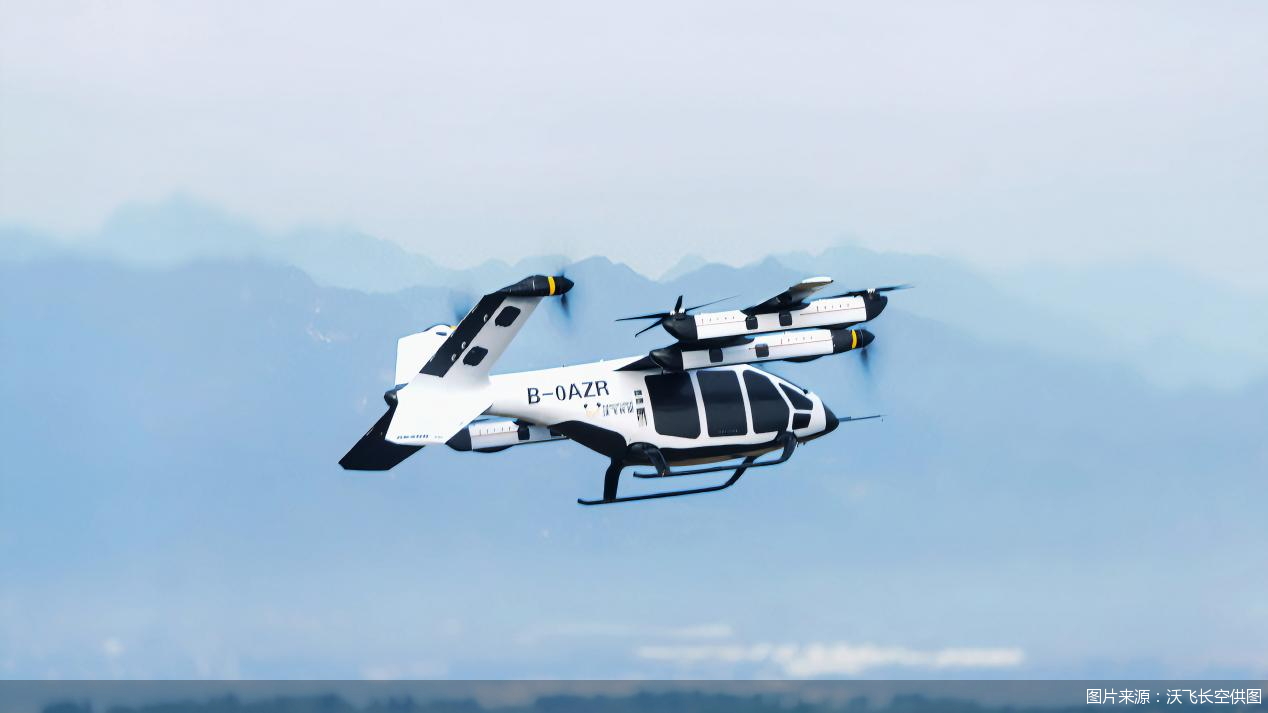
深港科学家 串门打“飞的” 河套深港科技创新合作区深圳园区与光明科学城探索建设“空中快线”与“产业廊道”
Shen Zhen Shang Bao· 2025-07-13 00:31
Group 1 - The concept of a "scientist route" aims to enhance the efficiency of research collaboration between Shenzhen and Hong Kong by utilizing low-altitude transportation technologies like eVTOL, allowing researchers to commute quickly and flexibly [1][2] - The "One Park, One City" initiative is driving the development of a low-altitude technology corridor, reshaping the innovation landscape of the Greater Bay Area and providing a broad application prospect for low-altitude technology [1][2] - The Light District is establishing a comprehensive ecosystem for the low-altitude economy, integrating R&D, high-end manufacturing, application scenarios, and services, with key players like Meisi Advanced and Xinwangda [2] Group 2 - The Light District is planning new infrastructure such as eVTOL take-off and landing points to support the implementation of low-altitude technologies [2] - Support measures include policy coordination, the establishment of a low-altitude economic special policy, and the creation of a dual-currency venture capital fund to facilitate cross-border collaboration [2] - Future applications will include cross-border low-altitude logistics, the "scientist route" shuttle service, and joint emergency rescue operations, enhancing the practical use of low-altitude technologies [2][3]
协同打造产业链条 推动低空经济稳健落地
Zhong Guo Chan Ye Jing Ji Xin Xi Wang· 2025-07-12 23:28
Core Viewpoint - The low-altitude economy is emerging as a significant new sector, integrating various industries such as aviation, transportation, logistics, and tourism, and is expected to drive traditional industry transformation and regional economic development [1] Policy Environment - The Chinese government has intensified its focus on the low-altitude economy, with over twenty provinces and cities prioritizing it as a key development industry, and the market size projected to exceed 500 billion yuan by 2024 [2] - The Central Economic Work Conference in December 2023 emphasized the importance of developing strategic emerging industries, including the low-altitude economy [2] - A series of policies have been introduced, including the "Green Aviation Manufacturing Development Outline (2023-2035)" which aims for eVTOL pilot operations by 2025 [2] Industry Development - 2024 is anticipated to be a pivotal year for the development of the low-altitude economy and drone regulations in China, marking unprecedented opportunities [3] - The low-altitude economy requires a new set of rules distinct from traditional economic models, emphasizing regulatory awareness and product planning that aligns with operational support [5] Regulatory Standards - Airworthiness certification is crucial for ensuring the safety of low-altitude aircraft, necessitating innovative assessment methods to keep pace with the complexity of new technologies like eVTOL and drones [6][7] - The establishment of a comprehensive airworthiness regulatory framework is urgent, particularly for unmanned aerial vehicles, to ensure product quality and safety [8] Industry Collaboration - A robust low-altitude economy relies on a complete industrial chain, necessitating collaboration across upstream, midstream, and downstream sectors [9] - Upstream, there is a pressing need to overcome challenges in key materials and components, with companies increasing R&D investments to enhance product autonomy [9] - Midstream, improving the manufacturing standards of low-altitude aircraft is critical, alongside the development of essential infrastructure [10] - Downstream, expanding diverse operational scenarios such as low-altitude logistics and tourism is vital for market demand stimulation [10] Safety and Regulation - Safety is a non-negotiable aspect of low-altitude economic development, requiring a well-defined safety regulatory system and enhanced safety education for enterprises and personnel [11] - The establishment of a real-time monitoring platform for low-altitude flights is essential for ensuring public safety and airspace order [11] Conclusion - The successful implementation of the low-altitude economy is a complex system engineering task that requires coordinated efforts in policy guidance, airworthiness certification, industry collaboration, technological innovation, and safety regulation [12]
21专访|李世鹏:解码深圳低空经济的“先行密码”
2 1 Shi Ji Jing Ji Bao Dao· 2025-07-11 08:28
Core Insights - Shenzhen is leading the development of low-altitude economy in China, with significant experiences to share [1][2] - The essence of low-altitude economy is an upward extension of ground transportation rather than a simple downward expansion of traditional aviation [3] - Safety is a non-negotiable bottom line for the development of low-altitude economy [6][7] Government and Policy - The Shenzhen government has recognized the importance of low-altitude economy and has implemented policies early, including the establishment of intelligent low-altitude infrastructure [2] - Shenzhen has introduced the "Shenzhen Special Economic Zone Low-altitude Economy Industry Promotion Regulations," becoming the first in the country to regulate this field [2] Development Methodology - Low-altitude economy requires a new management system based on digital means and must follow a phased planning and hierarchical management approach [1][4] - The development of low-altitude economy should match local infrastructure with the level of economic development, avoiding overly ambitious plans [4][5] Safety Considerations - Low-altitude flight safety is more complex than traditional civil aviation due to the urban environment and the presence of people and vehicles on the ground [6][7] - Monitoring technology is a significant bottleneck in ensuring safety, as existing technologies cannot fully meet the requirements for tracking all types of low-altitude flying vehicles [7] Investment Opportunities - The recent decline in financing for low-altitude economy aligns with the natural progression of new industries, where initial enthusiasm may wane if growth expectations are not met [8] - Long-term investors should focus on sectors related to flying vehicles, low-altitude flight, and infrastructure within the low-altitude economy [8]
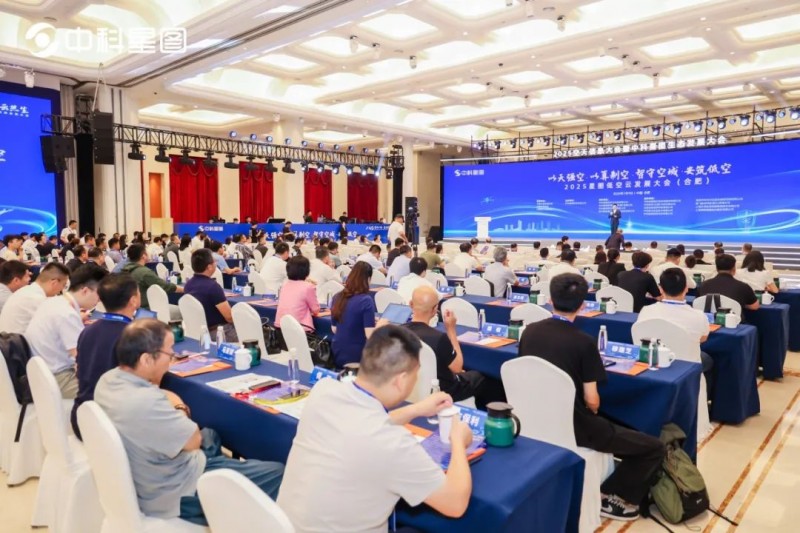
2025星图低空云发展大会在合肥举办
Cai Fu Zai Xian· 2025-07-11 06:38
Group 1 - The 2025 Low Altitude Cloud Development Conference was successfully held in Hefei, focusing on building a low-altitude safety defense and promoting sustainable development of the low-altitude economy, with over 800 experts and industry elites in attendance [1][3][5] - The conference emphasized the importance of safety, innovation, and collaboration in the development of the low-altitude economy, which is seen as a strategic emerging industry for the country [3][5][7] - Various organizations, including China Transportation Association and China Information Association, are actively involved in enhancing low-altitude safety systems and promoting high-quality development of the low-altitude industry [5][7] Group 2 - Experts shared insights on the role of aerospace information technology in ensuring the safety of low-altitude economic development, highlighting its potential to become a trillion-dollar industry under favorable policies [11] - The conference featured discussions on low-altitude services empowering urban governance, with successful practices from Chongqing as a case study [13] - A collaborative ecosystem was established among 30 companies to focus on low-altitude safety technology research and resource integration, aiming for high-quality development of the low-altitude economy [15] Group 3 - The introduction of various low-altitude platforms and solutions, such as the low-altitude management platform and the low-altitude planning platform, aims to enhance local government capabilities in managing low-altitude traffic and safety [20][22] - The conference showcased innovative technologies, including AI applications in low-altitude logistics and electromagnetic safety systems, to address challenges in the low-altitude economy [24][40] - The importance of capital market support for low-altitude safety and the integration of financial services into the low-altitude infrastructure was discussed, indicating a growing interest in this sector [28] Group 4 - The conference highlighted the significance of collaboration between telecommunications and low-altitude services, with companies like China Mobile presenting their strategies for building a reliable low-altitude capability system [42] - The role of eVTOL technology in transforming urban transportation and its potential impact on the low-altitude economy was emphasized, showcasing its future significance [48] - The event concluded with a call for joint efforts to strengthen safety measures and develop a new ecosystem for low-altitude economic growth, focusing on technology collaboration and safety enhancement [52]

低空经济地级市强力突围!山东“三核”之外,滨州潍坊破局
Qi Lu Wan Bao· 2025-07-11 02:59
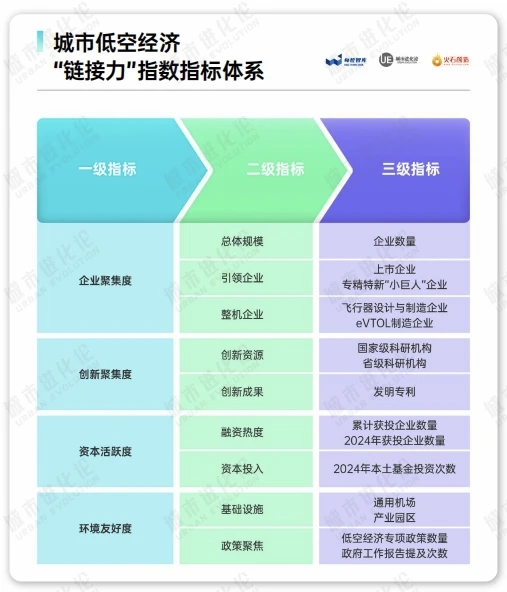
Core Insights - The low-altitude economy is emerging as a new competitive arena for cities, with both major and smaller cities making significant strides in this sector [1][2] - The "Linkage Power" Index for low-altitude economy ranks cities based on their ability to integrate resources, with a focus on enterprise concentration, capital activity, innovation, and environmental friendliness [2][4] Group 1: Low-Altitude Economy Development - The report identifies 50 cities excelling in low-altitude economy, including not only major cities like Beijing, Shanghai, and Shenzhen but also smaller cities such as Zhuhai, Shaoxing, and Wuhu [1][4] - Shandong province showcases a similar trend with its three core cities—Qingdao, Jinan, and Yantai—ranking in the top 50, while other cities like Binzhou and Rizhao also demonstrate potential [1][5] Group 2: Regional Highlights - Guangdong province leads with six cities in the top 50, projecting a low-altitude economy scale exceeding 300 billion yuan by 2026, supported by a robust industrial ecosystem [4][20] - Shandong aims to achieve a low-altitude economy scale of over 100 billion yuan by 2027, leveraging its comprehensive industrial base [4][7] Group 3: Infrastructure and Policy - The report emphasizes the importance of infrastructure and supportive policies in fostering low-altitude economic growth, with cities like Weifang initiating significant projects [17][21] - Shandong's "Action Plan" outlines the construction of 35 general airports and 400 digital low-altitude aircraft takeoff platforms by 2027 [21][22] Group 4: Employment and Innovation - The low-altitude economy is creating new job opportunities, particularly in sectors like agricultural drone operation, which has seen significant salary increases [15][16] - The establishment of innovative platforms, such as the first drone intelligent shared processing center in Binzhou, signals a shift towards large-scale application in the industry [12][14] Group 5: Market Growth and Future Projections - The number of low-altitude economy enterprises in China reached 14,707 by 2024, marking a 55.6% increase since 2020, indicating a shift towards large-scale development [20][21] - The low-altitude economy market in China is projected to reach 1.5 trillion yuan by 2025, highlighting the sector's growth potential [21][20]
【策略】望向新高——2025年中期策略(张宇生/郭磊/王国兴)
光大证券研究· 2025-07-10 16:07
Core Viewpoint - The article discusses the potential for market recovery and growth in the second half of the year, driven by factors such as sustained corporate profit recovery, liquidity, and the rise of emerging industries [3][4][5]. Group 1: Market Outlook - The upcoming deadline for "reciprocal tariffs" in the U.S. is unlikely to resolve trade issues within the 90-day period, leading to a gradual spread of external uncertainties beyond tariffs [3]. - Global equity assets have rebounded to relatively high levels since the beginning of the year, indicating that investors believe the most severe impacts of tariff issues are behind them [3]. - Domestic policies are expected to remain proactive to mitigate extreme risks similar to those faced earlier in the year, while the domestic economy is anticipated to maintain resilience [3]. Group 2: Factors Contributing to Market Expectations - The sustained recovery of corporate profits, driven by improved domestic demand, real estate data, and new financial tools, is expected to continue supporting A-share performance [4]. - High liquidity in the capital markets, coupled with active micro-level funding and ongoing policy support for equity markets, is likely to attract more incremental capital [4]. - Emerging industries, particularly in AI, robotics, and semiconductors, are gaining momentum due to policy support and external pressures, positioning them as new growth points for the economy [4]. Group 3: Sector Focus - In the consumer sector, three areas of focus include: 1) domestic demand subsidies related to home appliances and consumer electronics; 2) offline service consumption, particularly in Hong Kong's dining and tourism sectors; 3) new consumption trends [6]. - In the technology sector, attention is directed towards AI, robotics, semiconductor supply chains, defense, and low-altitude economy [6]. - The dividend sector is highlighted for its high-quality stock selections [6]. Group 4: Market Trends - The market is expected to reach new highs in the second half of the year, transitioning from policy-driven to fundamentals and liquidity-driven dynamics, with potential parallels to the market performance in 2019 [5]. - There are still existing expectation gaps regarding the sustainability of fundamental improvements, continued capital inflows, and opportunities arising from emerging industries [5].

人民网:武汉硚口赴沪揽获20个前沿产业项目
Ren Min Wang· 2025-07-10 10:58
Core Insights - The event "Walking into the Yangtze River Delta, Discovering New Opportunities" was held in Shanghai, focusing on collaboration between Wuhan and Shanghai, with nearly a hundred entrepreneurs from various sectors attending [1][2] - A total of 20 key projects were signed, including those in artificial intelligence, modern commerce, healthcare, and low-altitude economy, with a total signing amount of 6.8 billion yuan [1][4] Group 1: Strategic Positioning - Wuhan is positioned as the core of the Yangtze River Economic Belt, while Shanghai serves as the leading city in the Yangtze River Delta, aiming for resource sharing and complementary advantages [2] - Historical ties between Wuhan and Shanghai were highlighted, emphasizing their deep-rooted connections through trade and education [2] Group 2: Innovation and Development - The event featured an "AI Promotion Officer" showcasing the industrial strengths and innovative potential of Qiaokou District [3] - Key industry scenarios were presented, focusing on health, artificial intelligence, low-altitude economy, and urban renewal, indicating significant investment opportunities [3][4] Group 3: Policy and Support Measures - The signing of projects aligns with Qiaokou's strategic focus on artificial intelligence, modern commerce, and healthcare, aiming for high-quality regional development [4] - A series of supportive policies were introduced, including financial incentives for talent and innovation, with annual funding of 15 million yuan for AI initiatives and 10 billion yuan for health-related projects [4][5] Group 4: Future Outlook - Qiaokou aims to transform its economy by developing modern commerce, healthcare, and technology services, establishing key functional areas to enhance its role as a consumption center and a model for green development [5] - Entrepreneurs expressed strong interest in collaboration, recognizing Qiaokou's historical depth, industrial foundation, and innovative spirit as attractive factors for investment [5]

A股市场2025年中期投资策略报告:从“山重水复”到“柳暗花明”-20250710
CHINA DRAGON SECURITIES· 2025-07-10 10:21
Group 1: Core Insights - The report emphasizes that the long-term bull market is not over, and investors should focus on growth opportunities [8][119] - The easing of trade friction between China and the U.S. has led to improved bilateral trade conditions, with both sides reducing tariffs [8][50] - The report highlights the importance of policy-driven capital inflows into the market, which are expected to stabilize market performance [8][91] Group 2: U.S. Tariff Policy Impact - The U.S. tariff policy has caused significant short-term disruptions to its major trading partners, with trade balances showing varying degrees of decline [8][14] - The report notes that the U.S. economy has shown resilience despite the negative impacts of tariff policies, with a rebound in service sector PMI [8][30] - Historical analysis indicates that U.S. tariff policies often lead to self-inflicted economic consequences, typically resulting in negotiations or retractions [8][44] Group 3: Industry Themes and Opportunities - The report identifies several key sectors for investment, including defense and military, low-altitude economy, stablecoins, AI technologies, and autonomous robotics [8][119] - The defense and military sector is highlighted due to geopolitical tensions, which are expected to drive demand and performance [8][119] - The low-altitude economy is projected to grow significantly, with market size estimates reaching 1.5 trillion yuan by 2025 [8][119] Group 4: Economic Recovery and Consumer Trends - Domestic consumption is gradually recovering, with retail sales showing a year-on-year growth of 6.4% in May [8][64] - The report indicates that infrastructure investment is expected to remain stable, supported by government policies and funding [8][70] - The real estate market is stabilizing, with a reduction in the inventory of unsold properties and a narrowing decline in housing prices [8][73]